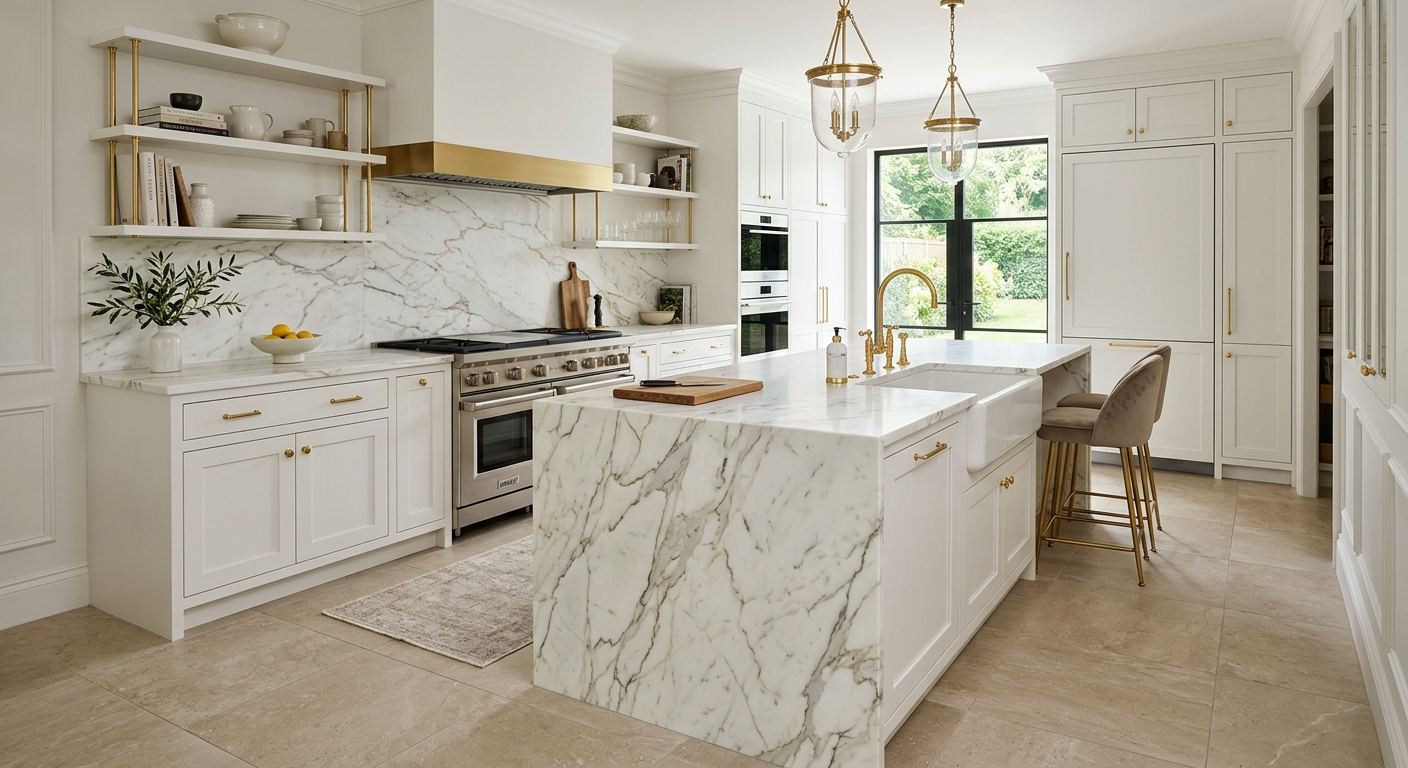
Kitchen renovation options and costs in Capreol
In Capreol, homeowners usually start their kitchen plan by comparing what they can afford to change right now versus what they’ll want to upgrade later. With a population of 3,260 (Statistics Canada, 2021 Census), you’ll find a smaller pool of contractors than in the big GTA centres, so scheduling can be tighter during spring and early summer. At the same time, Capreol’s buyers often benchmark against the broader Toronto economic region (Toronto, Mississauga, Brampton, Markham, Vaughan), where higher home values commonly push kitchens toward more premium finishes.
That region trend matters for resale expectations: many homeowners aim to invest in the kitchen in the same “value-recovery” range seen across higher-priced pockets—often 8–15% of home value when they’re planning a full refresh with upgraded cabinets and tops. The good news is you don’t have to jump straight to that tier; you can keep the project in the mid-range by focusing on cabinets, counters, and practical layout upgrades.
Cost in Capreol isn’t driven by a harsh tropical climate—your day-to-day is more about moisture cycling and winter indoor humidity swings, which can reveal early when a subfloor or countertop substrate wasn’t properly prepped. In the Toronto region, labour availability is generally steady, but higher finish tiers increase material lead times (quartz, stone, and custom millwork), so timelines can stretch even when trades are available. If you’re in the West Parry Sound–adjacent housing pockets with older homes (common around local lake and forest areas), expect more prep work and sometimes more floor level corrections.
To help you compare realistic scopes, here are typical renovation tiers you’ll see for Capreol projects.
| Renovation Tier |
What's Included |
Typical Duration |
Price Range |
| Cosmetic refresh (paint, hardware, new appliances only) |
Cabinet paint or refresh (no box replacement), new hardware, matching trim touch-ups, appliance swap, minor drywall patching |
1–2 weeks |
$8,000–$15,000 |
| Mid-range full renovation (new cabinets, counters, sink, tile) |
New semi-custom or upgraded stock cabinets, quartz or good laminate counters, sink and faucet, backsplash tile, updated lighting, remove/replace one section of flooring if needed |
4–7 weeks |
$25,000–$55,000 |
| High-end full renovation (custom cabinets, stone counters, island) |
Fully custom millwork, stone countertops, island with upgraded base and lighting, premium backsplash (stone or upgraded tile), upgraded appliances package, possible structural/layout work |
7–12 weeks |
$65,000–$90,000 |
| Cabinet refacing only (new doors + drawer fronts, same boxes) |
Remove doors/drawers, install new fronts and hardware, re-surface exposed areas, optional new hardware + updated backsplash trim |
1–3 weeks |
$8,000–$35,000 |
| Countertop swap only (laminate to quartz or stone) |
Remove existing laminate, install quartz/stone, seal where needed, reinstate backsplash edges and new sink cut-out (if applicable) |
3–7 days |
$3,000–$15,000 |
| Backsplash tile installation only |
Surface prep, tile supply and installation, grout/caulk finishing, tie-in to existing counters and wall edges |
2–5 days |
$2,000–$10,000 |
Prices are estimates only and vary by project scope, site access and material selection.
What affects the price of kitchen renovation in Capreol
In Ontario, two homeowners can receive quotes for the “same” kitchen that differ by 30–50% because Toronto-area pricing is largely driven by finish choices and how much hidden work the job uncovers once demo starts. In practice, local home values and household income expectations determine whether you’re shopping stock/refresh solutions or stepping into semi-custom and stone. In higher-value pockets of the Toronto economic region, homeowners often default to quartz or natural stone and semi-custom cabinetry because the upgrade cost is more easily recovered at resale. In more price-sensitive areas, laminate and stock cabinets stay common, keeping you closer to the lower half of the range (for example, mid-range full renos often land between $25,000–$55,000).
Layout changes are the wild card regardless of finish level. Removing a wall, adding an island, or moving a gas line (where applicable) can jump the job from “finish work” into trades coordination: framing, plumbing/gas, electrical, inspections, and sometimes structural engineering review—cost that can’t be reduced by choosing a cheaper cabinet door style.
In Capreol, a few local conditions regularly raise costs even when homeowners keep the design conservative: older housing often has uneven subfloors, which means extra prep before new cabinets sit perfectly; winter moisture swings can expose weak drywall behind older backsplashes; and if you’re replacing laminate counters with quartz, any sink cut-out changes can require countertop adjustments that aren’t visible on day one. If you’re targeting the high-end tier (often $65,000–$90,000 when an island and stone are included), be prepared for longer lead times for custom millwork and heavier stone templates.
| Price Factor |
Why It Matters |
Cost Impact |
| Cabinet tier — stock vs. semi-custom vs. fully custom millwork |
Materials, build quality, hardware options, and how well it fits awkward layouts |
Largest variable cost; can swing most full-reno budgets by tens of thousands |
| Countertop material — laminate vs. quartz vs. granite vs. stone |
Price per square foot plus labour for templates, fabrication complexity, and sealing requirements |
Laminate is lowest; quartz/stone is mid-to-high and often increases the total by a meaningful margin |
| Layout change — wall removal, island add, plumbing/gas move |
Triggers extra trades, permits/inspections, and potential structural/framing work |
Most unpredictable line item; often the reason bids diverge 30–50% |
| Appliance package tier — builder vs. mid-range vs. pro-grade |
Electrical requirements, venting/hood compatibility, and finishes (stainless, panel-ready, etc.) |
Can add thousands quickly without changing cabinetry or counter choice |
| Flooring — refinish existing vs. full replacement |
How much demo you need for cabinet base and how level the existing floor is |
Refinish keeps cost down; replacement increases material and labour |
| Backsplash — ceramic tile vs. marble vs. full-height slab |
Pattern matching, cutting around outlets, and finishing details (caulk vs. grout lines) |
Full-height or marble increases labour and waste; tile is a controllable mid-cost option |
| Electrical — new circuits for island, under-cabinet lighting |
New receptacles, lighting transformers/drivers, and code-compliant panel capacity |
Often required for islands and “clean look” lighting; can materially change the quote |
| Permit fees and licensed trade requirements |
Work that involves gas, electrical circuits, structural changes, or plumbing movement requires proper approvals |
Adds admin and inspection costs; also affects scheduling and coordination |
Permits & regulations in Ontario
In Ontario, a straightforward cabinet and countertop swap usually doesn’t trigger a permit—if you’re keeping existing plumbing and electrical locations in place and not altering structural elements. However, once your plan includes moving plumbing supply/drain lines, relocating a gas appliance (stove) or venting components, removing a load-bearing wall, or adding new electrical circuits (common for island outlets and under-cabinet lighting), you’re typically in permit-and-inspection territory. Gas work must be done by a licensed gas fitter, and electrical work must be completed by a licensed electrician. Both should be inspected where required, and the contractor should document approvals properly.
Here’s how a homeowner in Capreol can verify a contractor before signing. Step one: ask for licence information for the relevant trades (gas fitting, electrical) and confirm it through the appropriate Ontario licensing registry/verification tool the contractor provides. Step two: request a Certificate of Insurance—liability coverage that matches kitchen renovation risk (jobsite injury and property damage). Step three: confirm Workers’ Safety and Insurance Board (WSIB/WCB) coverage for workers. Step four: ensure the contractor can provide a clearance letter or proof of coverage status (as applicable) for your project.
Finally, confirm permit responsibility in writing—whether the contractor pulls permits, schedules inspections, and covers associated fees. It should be spelled out in your contract scope, not left as a verbal assumption.
Cabinets, countertops and layout decisions in Capreol
For most Capreol kitchens, the biggest value decisions come down to three choices: cabinet tier, countertop material, and layout changes. Cabinet tier affects speed and fit. Stock cabinets are the fastest route and keep your budget closer to the lower end, while semi-custom is the most popular balance for families who want better interior storage without pushing fully custom pricing. Custom cabinets create a “built-for-your-home” look, but they’re where schedules and budgets can stretch—especially if you’re also adding an island.
Countertops are the second lever. Laminate is budget-friendly and practical for many homes, but it’s less forgiving when it comes to heat exposure and long-term wear at busy edges. Quartz is a common middle ground in Ontario because it resists staining and performs well in everyday cooking, including the humidity cycling that can show up in older homes with changing indoor moisture in winter. Granite/natural stone looks premium and can be very durable, but it often requires specific sealing and careful installation planning. Butcher block offers warmth and repairability—yet it demands more maintenance, especially with spills and wet-cleaning habits.
Layout is where you get (or don’t get) justification. If your kitchen feels tight, adding an island or opening into a more functional circulation path can be worth the cost because it improves everyday flow. But the moment you need plumbing or gas relocation, your budget may move from a typical mid-range full renovation toward the higher tier. For example, a quartz swap plus modest cabinet upgrades might keep you around $25,000–$55,000, while pairing an island with stone countertops and custom millwork can push into $65,000–$90,000.
| Option |
Durability |
Maintenance |
Best For |
Price Range |
| Stock cabinets (big-box) |
Good for typical use; may require adjustments for uneven walls and older floor levels |
Low day-to-day care; hinges/hardware quality affects longevity |
Fast installs and budget-focused refreshes |
$8,000–$25,000 |
| Semi-custom cabinets (local dealer) |
Very durable with better storage options and more size flexibility |
Low maintenance; solid hardware selection matters |
Most Capreol renovations that balance cost and resale appeal |
$20,000–$45,000 |
| Custom cabinets (local millwork shop) |
Highest fit and build quality; ideal for awkward layouts |
Low care; longevity depends on material and finish system |
When you want a tailored look and maximum storage |
$35,000–$70,000 |
| Laminate countertop |
Resists stains well but can be impacted by heat and heavy cutting if not protected |
Use trivets; avoid standing water at seams |
Best value when you want a clean look without high stone costs |
$3,000–$7,000 |
| Quartz engineered countertop |
Very durable for daily cooking; consistent surface performance |
Low maintenance; wipe clean, and follow installer sealing guidance at sink cut-outs |
Busy households and kitchens targeting Ontario resale appeal |
$6,000–$12,000 |
| Granite / natural stone countertop |
Strong impact and heat resistance depending on the stone |
Sealing schedule required; consider edges and pattern for wear visibility |
Premium look when you’re ready for periodic care |
$7,000–$14,000 |
| Butcher block countertop |
Durable but can scratch; excellent for repair/refresh |
Regular oiling; manage spills promptly |
Warm, casual styles and homeowners willing to maintain |
$4,000–$10,000 |
| Marble countertop |
High-end look; more sensitive to acids and etching than quartz |
Requires careful cleaning and routine sealing/etch management |
Lower-splash, “show” surfaces or homeowners who cook carefully |
$9,000–$15,000 |
How to choose a kitchen renovation contractor in Capreol
Choosing the right contractor in Capreol is mostly about verifying credibility and getting quotes that match your exact scope. Start with Ontario licensing and coverage: ask whether the contractor holds the necessary trade licences for gas and electrical work (and confirm those licences through the Ontario online verification process). Request a Certificate of Insurance showing liability coverage, and confirm WSIB/WCB coverage for workers—then ask for proof such as a clearance letter or equivalent documentation your contractor can provide. Don’t assume coverage “is included”; get it in hand before work begins.
Next, request 2–3 itemised written quotes with a labour + materials breakdown instead of a single lump sum. Your quote should specify what’s included for demo, disposal, cabinet installation, countertop template/fabrication responsibility, and electrical/gas scope where applicable. Read the scope for exclusions: if permits are required for electrical circuits, gas relocation, or structural changes, confirm who pulls the permit and who schedules inspections. Warranty should be spelled out—how long workmanship is covered, the manufacturer/product warranty length, and whether warranties transfer to you. For payment, never pay more than 10–15% upfront; hold back a portion until the job is complete and deficiencies are corrected. Finally, get a start date and a completion timeline estimate in writing, including lead-time assumptions for cabinets and stone.
- Match the quote to your drawings: cabinets, countertop edges, appliance sizes, and backsplash dimensions.
- Confirm who supplies and installs appliances and whether rough-ins are included.
- Ask for proof of insurance (liability) and confirm jobsite coverage limits.
- Verify WSIB/WCB clearance or equivalent proof before scheduling.
- Check that licensed trades are used for gas fitting and electrical circuits.
- Ensure disposal (dump fees and hauling) is included or clearly excluded.
- Confirm drywall patch/paint responsibility for demo areas and cut-ins.
- Ask how they handle uneven floors and subfloor corrections.
- Get a detailed schedule: template date, install date, and inspection milestones.
- Confirm warranty details in writing (workmanship + product/manufacturer).
- Require clear change-order procedures and pricing for upgrades.
- Set a holdback plan so you control quality at close-out.
Red flags in Capreol kitchens: contractors who won’t provide insurance/WSIB proof; quotes that aren’t itemised (no line-by-line clarity on labour vs materials); vague scope language like “allowance” without numbers; asking for large upfront deposits beyond 10–15%; and no written timeline or warranty terms.
Frequently asked questions — kitchen renovation in Capreol
What is the difference between a galley and open-concept kitchen?
In Capreol, a galley kitchen typically has two parallel counter runs with a corridor between them. It can be very efficient for cooking, but it often feels closed off and can limit where people gather. An open-concept kitchen removes or redesigns walls to blend the kitchen with dining or living space, improving sightlines and social flow. That openness usually changes costs because you may need additional electrical outlets, different lighting plans, and sometimes more structural work depending on the wall. If the plan includes a wall removal or major plumbing/gas adjustments, expect budgeting to move from a refresh toward a mid-range or high-end renovation—often in the $25,000–$90,000 territory depending on cabinets and countertops.
How do I get accurate kitchen renovation quotes in Capreol?
To get accurate quotes in Ontario (and specifically for Capreol projects), start by sharing clear measurements and a short list of what you want to keep versus replace. Provide photos of your current cabinets, countertop, backsplash, and appliance locations—older homes often hide surprises behind those surfaces. Ask for 2–3 itemised quotes that break out labour and materials, including demo/disposal, cabinet installation, countertop template/fabrication responsibility, plumbing/gas/electrical scope, and whether permits are included when required. A good contractor will schedule an on-site visit for measurements and will confirm site access (stairs, parking distance) because those affect labour hours. For budgeting, remember that a cabinet refacing can sit around $8,000–$35,000, while a full renovation typically spans the broader $25,000–$90,000 range.
What's the best countertop material for a busy Capreol kitchen?
For a busy Capreol kitchen, quartz is usually the best “set-and-forget” option for many homeowners in Ontario. It handles everyday cooking well, resists staining, and tends to hold up nicely through the seasonal humidity cycling that can occur in older housing stock. If you want a premium natural look, granite is also durable, but you’ll need to follow sealing guidance. Laminate can be a smart budget move when the goal is staying closer to the lower-end refreshes, but it’s more sensitive to heat and long-term edge wear. Marble looks high-end but is more prone to etching from acidic foods—great if you’re careful. As a ballpark, quartz installs commonly land within $6,000–$12,000, while laminate is often lower at $3,000–$7,000.
How do I add an island to my Capreol kitchen?
Adding an island in Capreol starts with checking your available walking space and whether your layout can support new circulation. The next step is deciding the island’s function: seating, storage, or cooktop/sink. Costs rise quickly if plumbing or gas relocation is needed, since those triggers permits and licensed trade work. Many projects choose an island with prep/storage only and keep major plumbing/gas where it is, then add electrical for outlets and under-cabinet lighting—again requiring licensed electrical work. You’ll also want a plan for countertop support (especially if you’re using heavy stone) and for backsplash continuity. In the Toronto economic region, island additions are a common driver of budgets toward the mid-range full reno or even high-end territory, with full projects often falling between $25,000–$90,000 depending on cabinets, stone, and whether structural changes are involved.
How much does a kitchen renovation cost in Capreol?
In Capreol, a realistic kitchen renovation budget usually depends on how much you change: cabinets, countertops, layout, and whether you add electrical/gas/plumbing work. A cosmetic refresh (paint, hardware, new appliances only) can be relatively modest, often around $8,000–$15,000. A mid-range full renovation with new cabinets, counters, a sink, and backsplash typically sits in the $25,000–$55,000 band. If you’re going custom with stone countertops and an island, budgets commonly move into the $65,000–$90,000 range. Cabinet refacing alone is often $8,000–$35,000, and countertop swaps are commonly $3,000–$15,000 depending on material. The biggest swings come from layout changes and the cabinet/counter tier you select.
How long does a kitchen renovation take in Capreol?
Timelines in Capreol are driven by scope and material lead times. A cosmetic refresh is often 1–2 weeks, especially when appliances are readily available. Cabinet refacing can typically take about 1–3 weeks. A countertop swap is usually a few days once measurements and templates are done—commonly 3–7 days total. For a mid-range full renovation, plan for about 4–7 weeks, assuming trades scheduling stays on track and materials arrive when expected. High-end projects with custom cabinetry and stone countertops can run 7–12 weeks due to fabrication and coordination. If your renovation includes structural work, new circuits, or gas/plumbing changes, it can extend the schedule because of permits and inspection windows required in Ontario. The key is locking the design early so templates and ordering don’t stall the project.