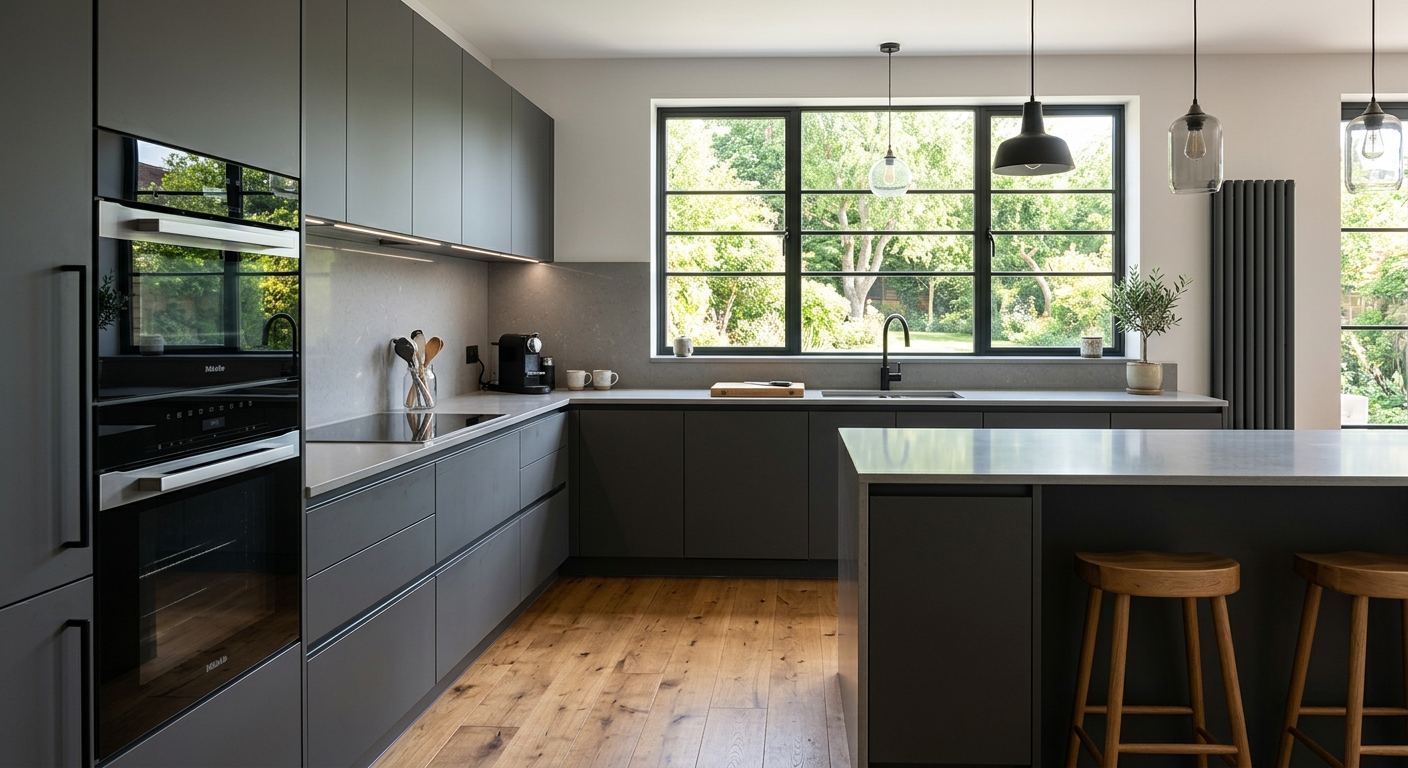
Kitchen renovation options and costs in Bells Corners
Bells Corners homeowners often start kitchen planning with two questions: “What can I afford?” and “Will it hold resale value?” With a local population of 9,272 (Statistics Canada, 2021 Census), the area sits within the Toronto economic region, where renovation choices tend to track the market value of nearby homes. In practice, higher-priced pockets around the GTA commonly push budgets toward the 8–15% of home value range for kitchen upgrades, so many owners gravitate to semi-custom cabinetry, quartz counters, and upgraded appliance packages rather than doing a purely cosmetic refresh.
That’s also why contractor availability and lead times can feel different than you’d expect in smaller centres: demand is steady, and crews in the west end of Ottawa-style commuting corridors often prioritize projects with clear design decisions and permit readiness. Toronto’s climate doesn’t usually drive “baseline” kitchen pricing, but it does affect material handling and site scheduling—wet weather and temperature swings can slow tile and cabinet-set timelines, particularly for floors that need acclimation before install.
Within Bells Corners, demand is especially strong in and around the family-oriented corridors where older bungalow kitchens meet 1990s-era finishes—replacing dated cabinets and counters is one of the quickest ways to modernize the space without changing the whole footprint. Next, compare the most common renovation tiers and what they typically include, so you can match your scope to a realistic budget.
| Renovation Tier |
What's Included |
Typical Duration |
Price Range |
| Cosmetic refresh (paint, hardware, new appliances only) |
Cabinet paint or refinishing where feasible, new hardware, appliance swap, touch-up caulking/silicone, basic clean-up |
3–7 days |
$8,000–$15,000 |
| Mid-range full renovation (new cabinets, counters, sink, tile) |
Semi-custom or quality stock cabinets, quartz/laminate counters, new sink and faucet, backsplash tile, under-cabinet lighting (typical), flooring refinishing or limited replacement |
3–5 weeks |
$25,000–$55,000 |
| High-end full renovation (custom cabinets, stone counters, island) |
Fully custom millwork, natural stone (quartz high-end or granite/stone), island with cabinetry, extended backsplash, upgraded appliance package, more complex electrical, potential flooring replacement |
6–10 weeks |
$70,000–$90,000 |
| Cabinet refacing only (new doors + drawer fronts, same boxes) |
Refacing, new doors/drawers/trim, new hardware, optional paint/stain on exposed areas, re-seal joints, minor adjustments to alignments |
1–2 weeks |
$8,000–$28,000 |
| Countertop swap only (laminate to quartz or stone) |
Removal and install of new counters, cut-outs for sink and cooktop, edge profile upgrades, silicone/caulking, disposal |
3–7 days |
$6,000–$15,000 |
| Backsplash tile installation only |
Tile supply and install for standard backsplash height, caulking/grout, surface prep, trim where needed |
2–5 days |
$2,000–$8,000 |
Prices are estimates only and vary by project scope, site access and material selection.
What affects the price of kitchen renovation in Bells Corners
Two quotes for what looks like the “same” kitchen in Toronto can differ by 30–50% because contractors price risk differently: finish selections, how much demolition is required, how many trades are needed, and how ready the site is (drawings, approvals, utility locations) all change the labour hours. In Ontario, local home values and typical household purchasing power shape the finish tier far more than climate. In higher-value neighbourhoods across the Toronto economic region, homeowners more often choose quartz or natural stone and semi-custom cabinetry because the renovation cost is easier to recover on resale. In more price-sensitive pockets, the same layout is commonly paired with laminate tops or stock/refaced cabinetry to keep the project nearer the low–mid range.
In Bells Corners specifically, you’ll see a few repeatable cost drivers. First, replacing old base cabinets with new ones often uncovers uneven floors and old shims—straightening that subfloor can add cost even when you’re keeping the same footprint. Second, older plumbing runs can force changes to sink locations or trap access; moving a drain line is where budgets start to drift toward the higher end of the $25,000–$90,000 full-reno band. Third, island builds can raise electrical and ventilation complexity; when you add under-cabinet lighting plus a dedicated circuit, the electrical portion climbs quickly even if finishes stay mid-range.
Finally, material pricing and scheduling matter. A straight countertop swap can land around the $3,000–$15,000 countertop band, but if you’re also changing edges, updating the backsplash, and dealing with seasonal humidity delays, your total can land closer to a mid-range full renovation at the $25,000–$55,000 level.
| Price Factor |
Why It Matters |
Cost Impact |
| Cabinet tier — stock vs. semi-custom vs. fully custom millwork |
Custom boxes, door styles, and internal upgrades (dovetail drawers, organizers) change material and install time |
$8,000–$35,000 for install/refacing-equivalent impacts; full projects typically widen accordingly |
| Countertop material — laminate vs. quartz vs. granite vs. stone |
Material cost, template/edge complexity, and install difficulty vary widely; stone also has extra handling requirements |
$3,000–$15,000 for countertop installation alone, higher for complex islands/edges |
| Layout change — wall removal, island add, plumbing/gas move |
Utility relocation and structural work drive the most unpredictable labour and inspection costs |
$5,000–$25,000 depending on scope |
| Appliance package tier — builder vs. mid-range vs. pro-grade |
Pricing and electrical/vent requirements change; some premium models require different clearances and installation details |
$2,000–$12,000 swing is common |
| Flooring — refinish existing vs. full replacement |
Kitchen renovations often reveal water staining and subfloor issues once old materials come off |
$2,000–$10,000 typical range impact |
| Backsplash — ceramic tile vs. marble vs. full-height slab |
Higher-cost tile/stone requires more precise layout, additional trim, and longer install time |
$2,000–$10,000 |
| Electrical — new circuits for island, under-cabinet lighting |
New circuits add licensed labour, materials, and inspection lead time |
$500–$4,500 depending on how many runs are added |
| Permit fees and licensed trade requirements |
Permits and inspections add administrative cost and scheduling, especially when utilities are moved |
$300–$3,000 common permit/administration impacts |
Permits & regulations in Ontario
In Ontario, some kitchen updates are permit-light, while others require permits and licensed trades—especially when you’re touching plumbing, gas, structural elements, or electrical circuits. Cabinet and countertop swaps typically do not require a permit because you’re replacing finishes in place. A straightforward refacing project also usually stays in the no-permit zone as long as you are not altering plumbing, gas, or moving electrical locations.
Permits and licensed trade involvement usually are required when you move plumbing supply lines or drain lines, relocate a gas stove or oven, and when you add or relocate electrical circuits—commonly for island outlets and under-cabinet lighting. Removing a load-bearing wall or doing structural work generally triggers permits and inspections. Gas work must be done by a licensed gas fitter; electrical work must be done by a licensed electrician. In both cases, inspections are part of the compliance chain.
For a homeowner in Bells Corners, the practical verification steps are straightforward. Ask for the contractor’s Ontario licence details and liability insurance certificate before signing. Confirm WSIB/WCB coverage from the certificate (or clearance letter where applicable) so you’re not left holding costs if a worker is injured. Then verify each subcontractor: look for the licensed gas fitter’s and electrician’s credentials, and insist the permit responsibility is clearly stated in the written contract—who pulls the permit, who pays the fees, and what inspections are scheduled.
Cabinets, countertops and layout decisions in Bells Corners
In Bells Corners, the three decisions that most affect your budget—and how satisfied buyers will be later—are cabinet tier, countertop material, and whether you change the layout. (1) Cabinet tier: stock is the fastest and cheapest option, semi-custom is usually the best balance for today’s Toronto resale expectations, and fully custom delivers the tightest fit and most storage personalization. (2) Countertop material: laminate can be a smart budget move, while quartz typically offers the most “upgrade feel” for the cost because it resists staining and handles everyday kitchen wear well. (3) Layout changes: open-concept wall removal and island additions can be justified when they meaningfully improve circulation and create a functional work triangle—just know that plumbing and ventilation moves can be the main price jump.
Toronto-area resale buyers often expect clean lines, durable surfaces, and modern storage—especially in homes with older kitchen stock. In terms of climate, seasonal freeze-thaw and humidity swings don’t usually destroy counters directly, but they can expose installation issues: slabs and tiles need proper acclimation and curing, and wood products benefit from controlled scheduling to prevent cabinet warping or grout cracking. That’s why we plan timelines with your installer’s recommended dry-in period.
Here’s a concrete example: upgrading from laminate to quartz can move you from roughly the $3,000–$8,000 countertop band into the higher end of the $10,000–$15,000 range when you add an upgraded edge profile and quartz for an island. If the rest of your project is mid-range, that upgrade is often justified because it gives you a visible, “whole kitchen” impression without the unpredictability of a full layout rewrite.
| Option |
Durability |
Maintenance |
Best For |
Price Range |
| Stock cabinets (big-box) |
Good durability with proper installation; limited customization for irregular spaces |
Low—wipe clean, re-tighten hardware as needed |
Fast projects and homeowners keeping costs predictable |
$8,000–$18,000 |
| Semi-custom cabinets (local dealer) |
Very durable for everyday use; better drawer upgrades and standard sizes that fit most homes |
Low to moderate—keep hinges adjusted and avoid soaking seams |
Most Bells Corners renos where resale-friendly storage matters |
$18,000–$35,000 |
| Custom cabinets (local millwork shop) |
Excellent durability; tailored fit improves long-term alignment and closing performance |
Low—routine cleaning, periodic hardware checks |
Unique layouts, ceiling heights, and premium storage requests |
$35,000–$65,000+ |
| Laminate countertop |
Moderate durability; can chip or wear on edges with heavy impact |
Easy cleaning; protect seams and avoid standing water at cut-outs |
Budget-conscious upgrades with a modern cabinet look |
$3,000–$7,000 |
| Quartz engineered countertop |
High durability and stain resistance; consistent finish across the slab |
Low—wipe and go; no sealing required in normal use |
Resale-focused kitchens wanting “premium” without stone-care hassles |
$8,000–$15,000 |
| Granite / natural stone countertop |
Very durable but more variable; edges and seams should be installed carefully |
Moderate—may require periodic sealing depending on stone type |
Homeowners who want natural movement and a luxury look |
$10,000–$18,000 |
| Butcher block countertop |
Durable but sensitive to water and heat if not maintained |
Higher—regular oiling/sanding and prompt drying after messes |
Warm, casual styles where owners maintain surfaces |
$6,000–$12,000 |
| Marble countertop |
Beautiful but softer; can etch or stain with acids without careful use |
Moderate to high—sealing and gentle cleaning needed |
Display-forward kitchens and lower-spill households |
$12,000–$22,000+ |
How to choose a kitchen renovation contractor in Bells Corners
Choosing a kitchen contractor in Bells Corners is mostly about verifying coverage and getting clear paperwork before you commit. Start with Ontario licensing: ask the contractor for their proof of registration and any trade affiliations that apply to the scope. Then verify liability insurance—request the certificate of insurance and confirm the effective dates align with your project timeline. For worker protection, check WSIB/WCB coverage by obtaining documentation showing coverage or clearance; this protects you if a worker is injured on your property. If they can’t provide these documents promptly, that’s a sign to keep looking.
Next, get 2–3 itemised written quotes. You want labour and materials broken out, not a single lump sum number. Confirm whether permits are included, who pulls them, and whether disposal/dump fees are covered. A proper quote should also list what’s excluded: underlay/floor prep, plumbing adjustments, drywall patching, or rework to meet code after opening walls. Warranty matters too—insist on workmanship warranty length and what it covers, plus the product manufacturer warranty terms and whether any warranties are transferable to future owners.
For payment schedule, keep your deposit reasonable: never pay more than 10–15% upfront, and hold back a final amount until key milestones and punch list items are completed. Finally, demand a timeline in writing: start date, cabinet/counter fabrication lead times, and an estimated completion date based on the selected materials.
- Request proof of Ontario registration/licensing and confirm it matches the work scope.
- Get liability insurance certificate (and verify it covers your address and project period).
- Confirm WSIB/WCB coverage or clearance documentation before work starts.
- Obtain 2–3 itemised quotes with a labour/materials breakdown.
- Ask whether permits are included and who is responsible for pulling them.
- Confirm disposal/dump fees, concrete/asphalt cutting, and site protection are included.
- Verify who handles electrical, gas (if applicable), plumbing, and inspections.
- Ask for a detailed scope: what’s included in demolition, drywall patching, and painting.
- Review warranty terms for workmanship and manufacturer coverage; ask if transfer is allowed.
- Use a staged payment schedule; avoid paying more than 10–15% upfront.
- Require a written start date, lead-time assumptions, and completion estimate.
- Walk the jobsite together and confirm measurements, cabinet elevations, and appliance fit before ordering.
Red flags we commonly see in Bells Corners: vague scopes (“allowances” with no details), no WSIB/WCB paperwork, quotes that ignore permits when plumbing/electrical is changing, refusal to itemize labour vs materials, and payment requests that exceed 10–15% upfront with no milestone plan. If you see any of these, slow down and request revisions to the contract.
Frequently asked questions — kitchen renovation in Bells Corners
Custom vs stock cabinets — is custom worth it?
In Bells Corners, “custom worth it” usually depends on your layout and resale goals. If you have irregular wall lengths, unique appliance dimensions, or want tailored storage (pantry bays, lift systems, deep drawers), custom can pay off in daily use and a cleaner final look. If your kitchen is straightforward and measurements fit standard lines, semi-custom often delivers the best value. Stock cabinets can be a smart move for speed and predictable budgeting, but you may compromise on door/drawer interiors and filler trim looks—especially noticeable in modern kitchens with darker finishes.
Budget-wise, a mid-range renovation with semi-custom cabinetry typically lands around the $25,000–$55,000 range, while fully custom projects commonly push toward the $70,000–$90,000 territory when paired with stone counters and an island. If you’re aiming to keep total costs controlled, upgrade counters and hardware first rather than jumping to fully custom millwork.
How do I choose a kitchen contractor in Bells Corners?
Start by verifying Ontario compliance the way you’d verify a tradesperson for any high-risk home task. Ask for proof of liability insurance and WSIB/WCB coverage before work begins, and confirm the contractor’s licensing/registration details match the scope. Then compare quotes that are itemised—labour, materials, and allowances—so you can see whether one bid is cheap because it excludes tile backsplash, disposal, electrical adjustments, or drywall patching.
In Bells Corners, kitchens often include small surprises once walls open, so choose a contractor who explains the “what if” scenarios and documents responsibilities in the contract. Get a clear schedule with cabinet and countertop lead times, and ask who pulls permits if plumbing/electrical work is involved. A good contractor will also provide a workmanship warranty and address how manufacturer warranties apply to cabinets and counters.
What order do kitchen renovation steps happen in?
Most kitchen renos in Bells Corners follow a reliable sequence. First comes site protection and demolition, then rough-in work for electrical, plumbing, and (if applicable) ventilation. If you’re adding circuits for island outlets or under-cabinet lighting, that rough-in happens before drywall is closed. Next, the drywall repair, priming, and any required surface prep take place so cabinetry sets on a stable, level substrate. After that, cabinets install, followed by countertop templating and fabrication. Counters go in after cabinet alignment is final, and then you install sinks, cooktops, and backsplash tile.
Finally, you handle finishing details: paint touch-ups, trim, caulking/silicone, appliance hookups, and the last punch list. This order helps prevent rework. If you’re doing a full renovation in the $25,000–$55,000 band, coordinating countertop lead times is essential so your project doesn’t stall between cabinet install and final surfaces.
Can I live at home during a kitchen renovation in Bells Corners?
Often yes, but it depends on how disruptive your scope is and how much of the kitchen you can isolate. In Bells Corners, many homeowners stay home for a mid-range renovation by setting up a temporary kitchenette in another room and keeping daily pathways clear. If you’re only doing a countertop swap or backsplash tile installation, you can usually continue normal routines with minimal disruption. For cabinet installs and a full tear-out, living onsite is more realistic when the contractor can sequence work so you’re not without water or safe access for extended periods.
Be prepared for dust control and staged access. Also plan for lead-time gaps—when counters are being fabricated, you may need to cook elsewhere for a short window. If you’re planning a larger, high-end refresh near the $70,000–$90,000 range, expect longer time spans and more trade coordination, which makes “living in” a bigger logistics challenge. Your contractor should offer a clear daily work plan and protective measures before starting.
Should I renovate my kitchen before selling in Bells Corners?
Often, yes—if your kitchen is dated enough that buyers will factor it into their offers, but no, if you overspend for the neighbourhood’s expectations. In the Toronto economic region, kitchens are one of the first rooms buyers judge, and owners frequently invest in upgrades that look “current” and durable. The best strategy is typically a mid-range renovation that refreshes the visual centre: upgraded cabinets, durable counters (quartz is a common sweet spot), and a clean backsplash. That approach aligns with the $25,000–$55,000 band many homeowners target before listing.
If you plan to go high-end with custom millwork and stone counters, you should be confident your buyer pool supports it—otherwise you risk spending toward the $70,000–$90,000 range without full resale recovery. For older housing stock in Bells Corners, addressing functional issues first (storage, workable layouts, lighting) usually beats purely cosmetic changes because it reduces the “renovation fear” many buyers feel when they open the walls.
What's the most popular kitchen style in Bells Corners right now?
Right now in Bells Corners, the most requested look is a clean, modern transitional style: flat-panel or simple shaker cabinets, neutral colours (greige, warm whites, and greys), and countertops that read upscale in daylight. Quartz is especially popular because it delivers that consistent, polished finish many buyers associate with a “new kitchen,” and it generally pairs well with both warm and cool cabinet tones. Hardware is trending toward matte black or brushed metal for contrast, and backsplashes often use large-format tile or simple patterns to keep the room visually calm.
On the appliance side, homeowners often choose a balanced mid-range package rather than going fully pro-grade—then spend the saved budget on better cabinetry and lighting. If you’re budgeting in the $25,000–$55,000 range, this style is usually achievable with semi-custom cabinetry and a quartz upgrade. It also photographs well for listings, which matters when buyers are comparing multiple open houses across the Toronto economic region.