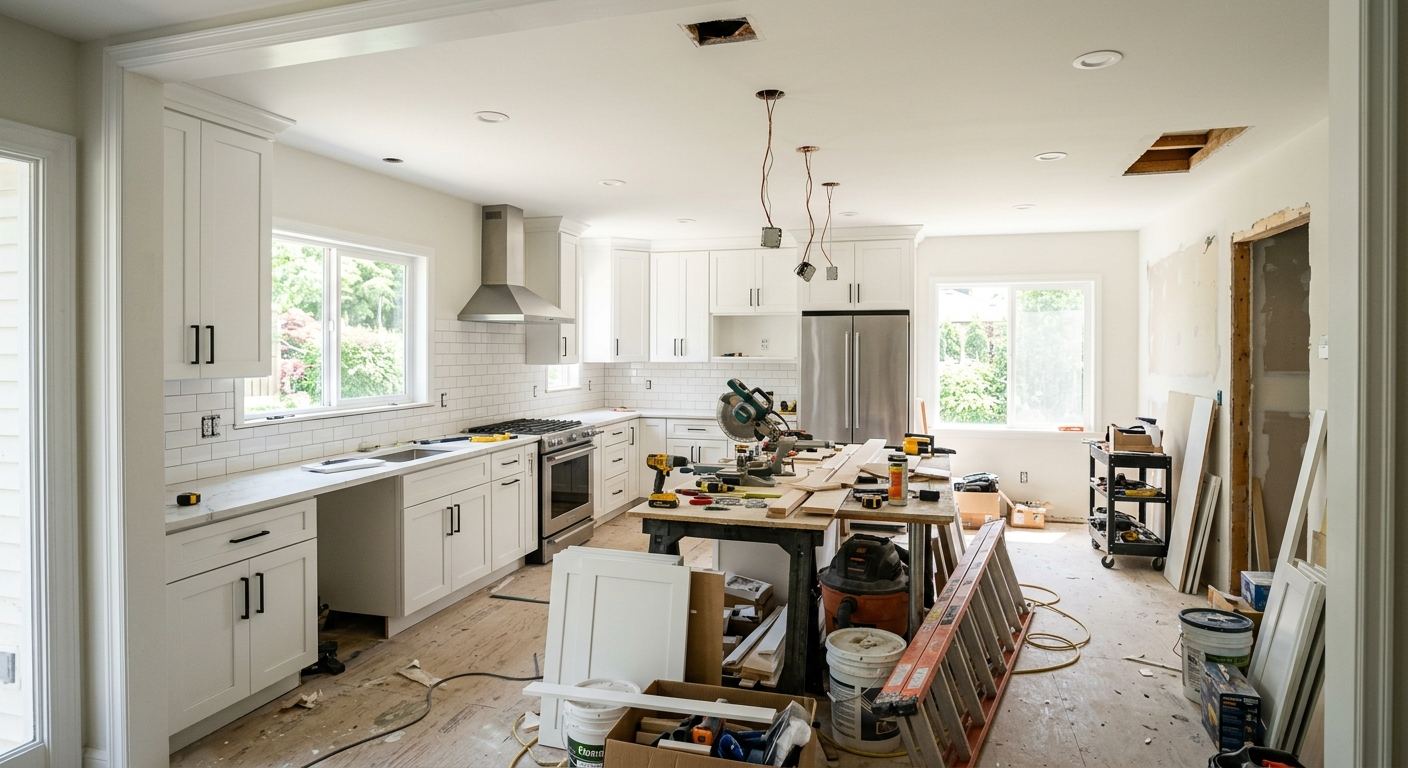
Kitchen renovation options and costs in Corso Italia-Davenport
Corso Italia-Davenport homeowners usually start their planning by asking what they can do within a realistic budget—and the answer depends on your finish tier and how much of the kitchen you’re changing. With a local population of 14,133 (Statistics Canada, 2021 Census), the community is largely established housing stock, so many projects are measured against resale expectations in the Toronto market. In higher-value parts of the GTA, kitchens commonly attract finish preferences that push projects toward quartz, natural stone, and more custom cabinetry; those choices are strongly tied to household earning capacity and property values more than to weather. In Toronto, a typical “mid-range” approach often lands when homeowners aim for durable, buyer-friendly upgrades without full custom millwork, while “high-end” kitchens trend toward custom storage, premium stone, and upgraded appliance packages.
Ontario pricing still isn’t driven by climate the way people assume: temperature and humidity can stress some materials, but kitchen renovation cost is largely determined by labour availability, material sourcing, and scope risk (especially plumbing, electrical, and layout changes). That’s why contractor demand is especially high in and around Davenport Road–Eglinton corridors and the established residential pockets near the neighbourhood’s retail strips, where upgrades are frequent and timelines matter.
Below is a practical comparison of common renovation scopes so you can line up your expectations before you request quotes.
| Renovation Tier |
What's Included |
Typical Duration |
Price Range |
| Cosmetic refresh (paint, hardware, new appliances only) |
Paint, cabinet hardware, appliance swap, minor caulking/trim, basic cleanup |
3–7 days |
$8,000–$20,000 |
| Mid-range full renovation (new cabinets, counters, sink, tile) |
New cabinets (stock/semi-custom), quartz or laminate counters, sink & tap, backsplash tile, new flooring transition where needed |
2–5 weeks |
$25,000–$60,000 |
| High-end full renovation (custom cabinets, stone counters, island) |
Custom millwork, stone counters, island build, upgraded appliance package, full backsplash/tile work, enhanced lighting and finishes |
5–10 weeks |
$60,000–$90,000+ |
| Cabinet refacing only (new doors + drawer fronts, same boxes) |
Refacing, new doors/drawer fronts, new hardware, adjusted trim/finishing |
1–3 weeks |
$8,000–$35,000 |
| Countertop swap only (laminate to quartz or stone) |
Removal and disposal, new countertop install, sink cut-out (as needed), basic sealing/finishing |
2–7 days |
$3,000–$15,000 |
| Backsplash tile installation only |
Tile supply & installation, edge trims, surface prep, grout/seal, caulking |
3–10 days |
$2,000–$10,000 |
Prices are estimates only and vary by project scope, site access and material selection.
What affects the price of kitchen renovation in Corso Italia-Davenport
Even when two homeowners request the “same” kitchen renovation in Ontario, Toronto-area quotes can diverge by 30–50% because the pricing teams are responding to different risk levels and design choices. The biggest driver is finish tier: cabinetry type, countertop material, and how much stone/tile coverage you choose. Layout changes are the next variable, because moving plumbing supply/drain lines or adding an island often triggers electrical work, longer lead times, and more site labour. Market conditions matter too—higher-value pockets of the Toronto economic region typically see homeowners defaulting to quartz or stone counters and semi-custom cabinetry because buyers often view those upgrades as durable, high-appeal features on resale. In more price-sensitive areas of Mississauga and Brampton, laminate and stock options are still common to keep budgets closer to the lower end of the $25,000–$90,000 full-renovation band.
In Corso Italia-Davenport specifically, a few local realities move the needle. First, many homes are older and may need careful assessment of cabinet box condition and subfloor level—if the framing is out of plane, cabinet installation takes longer and floor patching costs rise. Second, electrical service and routing can be more constrained in established houses; adding under-cabinet lighting or dedicating a circuit for an island can raise the mid-range cost even when the visible finishes stay the same. Third, if you upgrade from laminate to quartz countertops, you’re often adding heavier templates, more precise cut-outs, and additional sealing/finishing time—this is why countertop-only jobs typically sit in the $3,000–$15,000 band, while full conversions jump quickly into the $25,000–$60,000 range.
Bottom line: climate alone doesn’t explain the spread. Scope and market-driven finish choices do.
| Price Factor |
Why It Matters |
Cost Impact |
| Cabinet tier — stock vs. semi-custom vs. fully custom millwork |
Custom boxes, storage inserts, and made-to-measure frames increase shop time and installation precision |
$10,000–$40,000+ |
| Countertop material — laminate vs. quartz vs. granite vs. stone |
Material cost, thickness, fabrication complexity, and edging options vary significantly |
$2,000–$20,000+ |
| Layout change — wall removal, island add, plumbing/gas move |
Triggers permits, structural checks, longer labour, and coordination between trades |
$5,000–$25,000+ |
| Appliance package tier — builder vs. mid-range vs. pro-grade |
Higher-end models cost more and may need different venting/trim clearances |
$1,500–$12,000+ |
| Flooring — refinish existing vs. full replacement |
Prep, underlayment, and matching transitions can add time, especially in older homes |
$1,000–$8,000+ |
| Backsplash — ceramic tile vs. marble vs. full-height slab |
Labour intensity rises with intricate patterns, slab alignment, and moisture-proofing details |
$2,000–$15,000+ |
| Electrical — new circuits for island, under-cabinet lighting |
Licensed work, inspection scheduling, and additional wiring paths drive cost |
$800–$6,000+ |
| Permit fees and licensed trade requirements |
Certain work requires permits and inspections; failure to plan delays and rework costs |
$500–$5,000+ |
Permits & regulations in Ontario
In Ontario, a straightforward cabinet or countertop swap usually does not require a permit, because you’re not changing a building’s plumbing, electrical, gas, or structural conditions. Replacing cabinets in the same footprint and switching laminate to quartz/stone typically fall into “no-permit” territory. However, Corso Italia-Davenport renovations often become permit-relevant quickly if the scope goes beyond finishes.
What commonly DO require a permit and licensed trades includes: moving plumbing supply or drain lines (sink relocation), relocating a gas stove or changing gas-related connections, removing a load-bearing wall or making structural changes, adding new electrical circuits (for an island receptacle or under-cabinet lighting), and any work that triggers inspections. Gas work must be done by a licensed gas fitter, and electrical work must be done by a licensed electrician—both require inspections where applicable.
Here’s how a homeowner can verify credentials in a practical, step-by-step way. First, ask the contractor for their Ontario licence details (and confirm with the relevant provincial registry for trades when you can). Second, request a current certificate of insurance (liability) naming you as an interested party where appropriate. Third, confirm WSIB/WCB coverage for workers—ask for proof of clearance/coverage documentation. Finally, ensure the contract clearly states which permits the contractor will pull and who is responsible for inspections; before any signature, insist on that responsibility in writing, not just by email.
Cabinets, countertops and layout decisions in Corso Italia-Davenport
In Corso Italia-Davenport kitchens, three decisions tend to determine both your budget and your resale appeal: (1) cabinet tier (stock, semi-custom, or custom), (2) countertop material (laminate, quartz, granite, butcher block, marble), and (3) whether you change the layout (open-concept wall removal, island addition, or plumbing/gas relocation). Toronto buyers generally expect clean lines, durable surfaces, and functional storage at most price points—but the exact “look” shifts with the total spend. This is why finish tier matters more than climate for most cost outcomes, even though Ontario’s freeze-thaw and humidity swings can still expose weak sealing around countertops and sinks.
Cabinet tier is the fastest way to shape the work. Stock cabinets are the quickest and usually the most budget-friendly because sizing and lead times are standardized. Semi-custom cabinets are popular locally because they offer better storage planning (corner solutions, appliance garages, improved drawer layouts) while staying closer to mid-range budgets. Custom cabinets cost the most, but they’re justified when your kitchen has awkward angles, deep pantry needs, or you want an island or ceiling-height design that matches nearby trim.
Countertops follow a similar logic: laminate is cost-effective, quartz is the common “best value” upgrade, and granite/stone can be premium—especially when you include complex edging and thicker slabs. For an example: if you’re in the $25,000–$60,000 mid-range full renovation band, adding quartz instead of laminate can be a sensible trade. But moving plumbing to relocate the sink or stove is where the same kitchen can jump out of that band because it’s labour-heavy and often requires permits and licensed trades.
Below are realistic comparisons so you can align durability, maintenance, and resale-friendly expectations with your target budget.
| Option |
Durability |
Maintenance |
Best For |
Price Range |
| Stock cabinets (big-box) |
Solid for standard layouts; hinges and drawer motion depend on product line |
Low day-to-day effort; avoid impact damage on corners |
Fast timelines and budget-focused renovations |
$8,000–$20,000 |
| Semi-custom cabinets (local dealer) |
Better internal storage and more options for doors/drawers |
Easy cleaning; keep hardware tightened with seasonal checks |
Most Corso Italia-Davenport mid-range projects |
$15,000–$35,000 |
| Custom cabinets (local millwork shop) |
Highest fit and finish; excellent for irregular spaces and full-height designs |
Low ongoing maintenance; design supports long service life |
Premium renovations and distinctive storage layouts |
$30,000–$60,000+ |
| Laminate countertop |
Good for daily use; edges and seams are the weak points if quality is low |
Wipe clean; avoid prolonged standing water at seams |
Cost control with a modern look |
$2,000–$5,000 |
| Quartz engineered countertop |
Very durable and consistent; resists stains better than many naturals |
Minimal—clean with mild soap; protect from extreme heat |
Most “best value” upgrades in Ontario resale markets |
$4,500–$12,000 |
| Granite / natural stone countertop |
Highly durable; unique veining and strong performance when properly sealed |
Periodic sealing and careful heat protection |
High-end, natural look for statement kitchens |
$7,000–$18,000+ |
| Butcher block countertop |
Durable but can scratch; sensitive to standing water near sink edges |
Oil/seasoning schedule; clean and dry thoroughly |
Warm, rustic styling and kitchens used heavily for food prep |
$3,500–$9,000 |
| Marble countertop |
Beautiful but softer; can etch or stain without careful care |
Frequent maintenance and protective practices recommended |
Premium bathrooms-to-kitchen crossover aesthetic |
$8,000–$20,000+ |
How to choose a kitchen renovation contractor in Corso Italia-Davenport
Choosing the right contractor in Corso Italia-Davenport starts with verification, not promises. For Ontario work, confirm the contractor’s liability insurance (request a certificate of insurance) and proof they can cover their workers under WSIB/WCB for workplace injury coverage. Ask for the clearance/coverage documentation rather than accepting a verbal “yes.” If they’re working with gas or electrical components, ensure those licensed trades are named in the scope and that the appropriate documentation will be provided for inspection.
Next, get 2–3 itemised written quotes that separate labour and materials instead of lump-sum totals. A proper quote should show cabinet supply, hardware, countertop fabrication/installation, plumbing/electrical allowances, tile/backsplash labour, disposal, and any permit-related items. Read the scope carefully: does it include permit pull (when required), protection of floors/fixtures, and construction waste disposal? Also check warranty terms—look for a workmanship warranty (often tied to the installation), plus manufacturer warranties for cabinets, countertops, and appliances. Ask whether warranties are transferable to a future owner (helpful for resale).
For payment scheduling, keep deposits conservative: never pay more than about 10–15% upfront for start-up purchases, and hold back the remainder until key milestones are complete. Finally, insist on a start date and an estimated completion window in writing, because GTA material lead times can shift if fabrication becomes backlogged.
- Verify insurance certificate is current and matches the contractor entity name.
- Confirm WSIB/WCB coverage for workers and request proof of clearance/coverage.
- Ask which permits (if any) are included and who is responsible to pull them.
- Demand a detailed line-item quote: labour, materials, fabrication, and installation.
- Check whether countertop fabrication includes template, cut-outs, and sink hardware allowances.
- Ensure electrical scope lists circuits, fixture types, and switch/receptacle locations.
- Clarify disposal: old cabinet/counterhaul removal, bagging, and landfill fees.
- Confirm backsplash scope includes surface prep and waterproofing around wet zones.
- Ask for a written workmanship warranty and how service calls are handled.
- Use a milestone-based payment plan (holdback until completion and sign-off).
- Confirm appliance responsibilities: disconnect/reconnect and any trim/vent requirements.
- Request a schedule that accounts for lead times on cabinets and stone fabrication.
Red flags to watch in Corso Italia-Davenport: (1) quotes that won’t itemise labour vs materials, (2) “permit handled” claims without specifying what permits and by whom, (3) refusal to provide insurance and WSIB/WCB proof, (4) large upfront payments beyond 15%, and (5) no written warranty terms or vague completion dates. If any of those show up, get a second quote before signing.
Frequently asked questions — kitchen renovation in Corso Italia-Davenport
Should I reface or replace my cabinets?
If your cabinet boxes are solid, refacing is often the most cost-effective path to a fresh look. In Corso Italia-Davenport, many older homes have good cabinet carcasses but dated doors, drawer fronts, and hardware. Refacing typically fits when you want a visible update while staying closer to the cabinet refacing band of $8,000–$35,000. Replace is usually the better choice when boxes are water-damaged, sagging, or when you want major storage redesign, new corners, or a significantly different layout. If you’re already planning electrical and plumbing changes, replacement can reduce redo-work. A contractor should assess box levelness and wall condition before recommending one option.
Do I need a permit for a kitchen renovation in Ontario?
Often, cabinet and countertop swaps in Ontario don’t require a permit, especially when the work stays in the same footprint and doesn’t alter plumbing, gas, electrical, or structure. However, if you move a sink, relocate plumbing supply/drain lines, adjust a gas stove/connection, remove a load-bearing wall, or add new electrical circuits (common with island receptacles and under-cabinet lighting), permits and licensed trades are typically involved. In Corso Italia-Davenport, many kitchens run into this once homeowners choose an island or change the plumbing route. Before signing, confirm in writing which permits the contractor will pull, who will complete the inspections, and which trade is responsible.
What's the ROI on a kitchen renovation?
In Toronto-area markets, kitchens tend to influence buyer perception more than many other renovations, especially when durable materials are chosen. That said, ROI isn’t automatic: it depends on how much you spend versus what buyers expect for your local segment. Many homeowners aim to keep projects within realistic bands—mid-range full renovations commonly land around $25,000–$60,000, while higher-end builds can push toward $60,000–$90,000+. Because Corso Italia-Davenport sits within a larger Toronto economic region where finish expectations are often higher, buyer-friendly upgrades like quartz counters and better cabinetry usually protect resale value more than purely cosmetic changes. The safest ROI comes from improving function (storage, lighting, layout) plus maintaining a consistent, timeless finish tier.
How do I budget for a kitchen renovation?
Budgeting starts with choosing a tier and limiting surprises. A realistic Toronto-region planning range for a full kitchen renovation is $25,000–$90,000, depending on cabinetry, countertop material, and whether you change layout. Build in contingencies because older homes can require extra prep: subfloor leveling, patching, and correcting out-of-square framing are common. Also, separate allowances in your quote for items like appliance package tier, flooring transitions, and electrical scope. If your goal is to stay mid-range, consider targeted scope: new counters, a backsplash, and semi-custom storage without moving plumbing or gas. If you do move sink/stove or add an island, expect the budget to rise beyond a cosmetic refresh.
Can I move my kitchen sink or stove?
Yes, but it’s rarely “simple.” Moving a sink usually means extending or rerouting plumbing supply and drain lines, which can trigger Ontario permit needs and requires careful coordination with a licensed plumber. Moving a gas stove involves gas-related work that must be done by a licensed gas fitter and typically also involves permits/inspections. In Corso Italia-Davenport, older venting routes and cabinetry layouts can limit easy routing and increase labour. You may also need electrical changes for disposal units, dishwashers, and island-style receptacles. If you want a cost-effective outcome, consider whether you can adjust the layout without fully relocating plumbing—sometimes small rearrangements deliver most of the functional gain for less risk.
What's the most cost-effective kitchen upgrade?
The most cost-effective upgrade is usually either (1) upgrading the most visible durable surfaces, or (2) improving the “daily-use” elements without structural work. For many homeowners in Corso Italia-Davenport, a countertop upgrade is a high-impact option: a countertop swap-only project often sits around $3,000–$15,000, depending on quartz versus laminate and how many cut-outs you have. Another strong option is a backsplash installation, typically $2,000–$10,000, because it modernises the space quickly with manageable labour. If your cabinets are in good condition, refacing can also deliver a dramatic refresh within the $8,000–$35,000 band. The least cost-effective upgrades are usually major layout moves done solely for aesthetics.