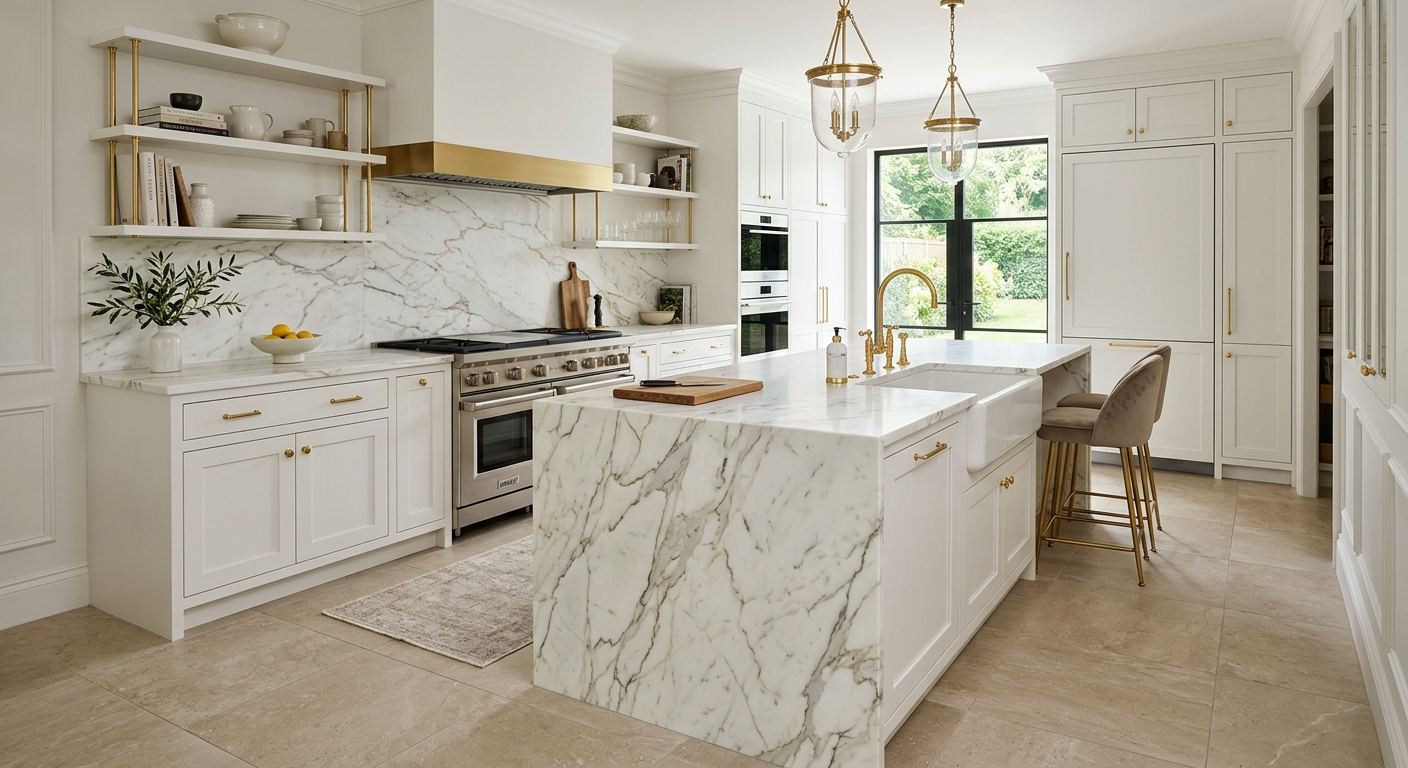
Kitchen renovation options and costs in Woburn
In Woburn, Ontario, homeowners typically start with a simple question: “What will a kitchen renovation cost?” The answer depends less on weather than you’d expect and more on what buyers in the Toronto region will pay for. Toronto-area demand is tied to local household economics—Woburn sits within a wider Toronto economic region of 53,485 people (Statistics Canada, 2021 Census), and kitchens here are priced in line with regional expectations. In higher-value pockets across the Toronto area, many owners aim to recoup a meaningful share of the investment at resale, so finish choices tend to move toward semi-custom cabinetry, quartz, and premium appliance packages rather than only paint and hardware.
Costs can still swing with timing and trade availability, especially during spring and early summer when contractors book out faster for multi-trade work like electrical, plumbing, and tile. While Ontario’s freeze–thaw cycles matter for exterior drainage and slab stability, kitchen-renovation pricing is more sensitive to labour rates and materials supply than to climate itself. Where you see the biggest practical effect is interior humidity control—kitchens with exterior-facing exterior walls can need more careful ventilation and caulking details around stone and tile to reduce long-term movement issues.
In Woburn, renovations are especially in demand among homeowners in established residential pockets near the busier Hwy 7 corridor, where families often refresh kitchens to match modern layouts. If you’re weighing a refresh versus a full build, the comparison below will help you map your scope to a realistic budget—then we’ll break down what drives those numbers.
| Renovation Tier |
What's Included |
Typical Duration |
Price Range |
| Cosmetic refresh (paint, hardware, new appliances only) |
Cabinet paint or touch-ups, new hardware, appliance swap (like-for-like), minor caulking, optional under-cabinet LED lighting |
3–7 days |
$8,000–$18,000 |
| Mid-range full renovation (new cabinets, counters, sink, tile) |
New semi-custom or upgraded stock cabinets, quartz or good laminate counters, sink + faucet, backsplash tile, countertop install, basic electrical for lighting |
3–6 weeks |
$25,000–$60,000 |
| High-end full renovation (custom cabinets, stone counters, island) |
Custom cabinetry, premium stone (granite/stone/quartz slabs), larger island with enhanced lighting, upgraded tile/backsplash, sink changes, more electrical and plumbing coordination |
6–12 weeks |
$70,000–$90,000+ |
| Cabinet refacing only (new doors + drawer fronts, same boxes) |
Refacing veneer/laminate, new doors/drawer fronts, new hardware, sealing and minor touch-ups; reusing existing cabinet frames |
1–2 weeks |
$8,000–$35,000 |
| Countertop swap only (laminate to quartz or stone) |
Remove old tops, set new quartz/stone, integrate sink cut-out (where possible), basic plumbing reset for the sink |
3–7 days |
$3,000–$15,000 |
| Backsplash tile installation only |
Ceramic/porcelain backsplash, surface prep, tile install, grout/sealant, cleanup and caulking |
3–6 days |
$2,000–$10,000 |
Prices are estimates only and vary by project scope, site access and material selection.
What affects the price of kitchen renovation in Woburn
In Woburn (and across Ontario), you can receive wildly different quotes for what sounds like the same kitchen. It’s common to see a 30–50% spread because contractors price risk, access, and unknowns differently—especially around subfloor condition, old plumbing/electrical rough-ins, and how much layout work is really required once cabinets come out. Even when the finish tier matches, one contractor may include more labour for surface prep, disposal, or electrical coordination, while another may price those “site realities” as add-ons.
The biggest driver here is local housing economics, not climate. In higher-value Toronto-area pockets, homeowners more often choose quartz or natural stone and semi-custom cabinetry because the cost is easier to justify at resale. In more price-sensitive areas across the region, laminate tops and stock or refaced cabinets remain common because they deliver a strong look without pushing budgets upward. If your target budget is closer to the mid-range full renovation band (for example, around $25,000–$60,000), you’ll typically see better ROI with semi-custom cabinetry and a durable quartz option. If you’re moving into higher-end builds (often $70,000–$90,000+ for larger, custom layouts), you should expect premium millwork, upgraded stone, and more structural and trade coordination.
Two practical Woburn examples that raise costs: (1) older kitchens with undersized electrical feeds may require new circuits for under-cabinet lighting and an island; (2) if the home has had water staining near the sink wall, subfloor and drywall prep can expand quickly. On the flip side, kitchens with newer framing and straight walls can keep costs closer to the low end of the price bands, because cabinet installation and tile setting are less labour-intensive.
| Price Factor |
Why It Matters |
Cost Impact |
| Cabinet tier — stock vs. semi-custom vs. fully custom millwork |
Higher tiers use better hardware, wider customization, and more precise fit/finish; they also affect lead time and waste reduction |
Often the largest single swing; can move you across mid-range to high-end |
| Countertop material — laminate vs. quartz vs. granite vs. stone |
Material choice drives slab cost, cut complexity, and installation time (templating, edge profiles, sink integration) |
Laminate is lowest; stone/quartz typically adds mid-to-high thousands |
| Layout change — wall removal, island add, plumbing/gas move |
Changes trigger demolition, structural review, new rough-ins, and inspections; they add the most uncertainty |
Can push a “refresh” into a full renovation budget |
| Appliance package tier — builder vs. mid-range vs. pro-grade |
Premium appliances cost more and may require electrical/gas spec changes plus ventilation upgrades |
Large variance, especially with venting and custom trim |
| Flooring — refinish existing vs. full replacement |
Removing cabinets can uncover uneven subfloors; matching finishes and transitions adds labour |
Refinishing is cheaper; full replacement adds materials and install time |
| Backsplash — ceramic tile vs. marble vs. full-height slab |
More expensive tile increases material and may require extra framing/prep for large surfaces |
Full-height slab can add several thousand |
| Electrical — new circuits for island, under-cabinet lighting |
New lighting, outlets, and island power require licensed work and inspection coordination |
Typically increases the “known work” portion of your quote |
| Permit fees and licensed trade requirements |
Work involving plumbing, gas, electrical circuits, or structural changes triggers permits and inspections |
Usually a few thousand when multiple trades and inspections are required |
Permits & regulations in Ontario
In Ontario, many “finish-only” kitchen changes don’t trigger permits, but several common renovation moves do. Cabinet and countertop swaps generally do not require permits when you’re not changing the underlying plumbing, drain, gas, or electrical rough-in. If you’re simply painting cabinets, swapping doors, replacing countertops, or installing a new backsplash over existing surfaces, most projects stay in the no-permit zone.
Permits (and licensed trade work with inspections) typically apply when you move or modify: plumbing supply or drain lines (sink relocation, dishwasher drain changes, adding a new water line), gas connections for a range or cooktop, and electrical circuits (for example, adding dedicated circuits for island outlets, installing a new vent fan where it requires electrical work, or upgrading wiring capacity). Removing a load-bearing wall is also a permitted and engineered/inspected type of scope, because it affects the structure.
For a homeowner in Woburn, the simplest verification process is: (1) ask your contractor for their Ontario licence references for the trades involved (gas and electrical in particular), and confirm that those trades are licensed for the specific scope; (2) request a current certificate of insurance showing general liability (and confirm WSIB/WCB coverage if they employ workers); (3) ask for proof of clearance/coverage documents where applicable; and (4) confirm permit responsibility in writing—who pulls the permit, who pays the fees, and who schedules the inspections. In practice, you should not sign until the contract spells out what requires permits and which items are included versus excluded.
Cabinets, countertops and layout decisions in Woburn
When you renovate a kitchen in Woburn, the three decisions that most strongly shape both cost and buyer appeal are cabinet tier, countertop material, and layout changes. Cabinet tier affects how quickly you can finish the job and how “custom” the kitchen feels: stock cabinets are the fastest and cheapest, semi-custom is the most popular mid-range option, and custom cabinetry delivers the best fit but typically costs the most. Countertops then set the durability and maintenance tone. Laminate is budget-friendly and good for light use, quartz is the mainstream choice for stain resistance and easy daily care, while natural stone (granite/stone/marble) can look spectacular but demands more sealing and more careful cleaning.
Layout changes usually cost more than homeowners expect. Removing an open wall (or adding one for separation), installing an island, or relocating plumbing/gas can turn a straightforward renovation into a multi-trade project with more demolition and inspection coordination. In Toronto resale terms, buyers increasingly expect functional circulation—so paying for a sensible island or an improved work triangle can justify costs when the space gain is real. In Woburn homes where older plumbing runs are in awkward locations behind cabinets, trying to “save money” by moving everything can erase the savings quickly.
Climate plays a role mostly through performance details: Ontario’s seasonal humidity swings mean sealing around sinks and protecting stone and tile edges matters long-term. If you want a concrete example, upgrading from laminate to quartz on a typical mid-range renovation often adds material and install cost in the mid-to-high thousands—so it’s usually worth it if you’re already planning a full kitchen in the $25,000–$60,000 range. If your budget is closer to a cosmetic refresh, spending heavily on a full countertop swap may not align with your overall ROI compared with targeted cabinet paint/hardware and a backsplash upgrade.
| Option |
Durability |
Maintenance |
Best For |
Price Range |
| Stock cabinets (big-box) |
Good for everyday use; more limitations on sizes and finishes |
Low maintenance; keep hardware tightened and clean regularly |
Budget-conscious refreshes and faster timelines |
$8,000–$25,000 |
| Semi-custom cabinets (local dealer) |
Very solid construction; better colour/door style selection and fit options |
Low maintenance; hinges and slides still benefit from periodic checking |
Most Toronto-area homeowners targeting resale-friendly quality |
$20,000–$45,000 |
| Custom cabinets (local millwork shop) |
Excellent fit and finish; best for unusual layouts and full-height designs |
Low day-to-day upkeep; requires careful protection during install |
High-end renovations and complex needs (islands, pantries, details) |
$35,000–$70,000+ |
| Laminate countertop |
Resistant to stains but can be vulnerable to heat and edge damage |
Easy daily cleaning; avoid prolonged heat exposure and aggressive scrubbing at seams |
First-pass budgets and rentals/low-traffic homes |
$3,000–$8,000 |
| Quartz engineered countertop |
Highly durable; great resistance to staining and everyday impacts |
Low maintenance; wipe clean and use a soft cloth to protect finish |
Busy family kitchens and resale-friendly upgrades |
$6,000–$15,000 |
| Granite / natural stone countertop |
Very durable for day-to-day use; unique patterning with strong heat tolerance |
Typically needs periodic sealing; use non-abrasive cleaners |
Premium look with durable performance |
$8,000–$20,000 |
| Butcher block countertop |
Great for knife work; can be sensitive to standing water and impact |
Regular oiling and drying routine; protect from spills near sink |
Warm, traditional styles and experienced upkeep |
$5,000–$14,000 |
| Marble countertop |
Heat tolerant and beautiful; more prone to etching/staining |
Requires careful cleaning and sealing; avoid acidic cleaners |
Showpiece kitchens where aesthetics matter most |
$10,000–$25,000+ |
How to choose a kitchen renovation contractor in Woburn
Choosing the right contractor in Woburn is mostly about verification and clarity. First, confirm Ontario licensing where it applies: gas work must be completed by a licensed gas fitter, and electrical work must be done by a licensed electrician. Ask for their proof before work starts. For liability protection, request a current certificate of insurance and verify coverage limits match the scale of your project. If the contractor employs workers, confirm WSIB/WCB coverage and ask for the appropriate clearance documentation. You’re not being difficult—this is the only way to protect yourself if something goes wrong.
Second, get 2–3 itemised quotes with labour and materials broken out (cabinets, counters, install labour, tile prep, plumbing/electrical allowances). Avoid “lump sum” pricing unless every allowance is clearly specified. Read the scope carefully for exclusions: is demo included, who disposes of waste, are permits included, and is countertop templating part of the plan? Warranty should be in writing too—ask for workmanship warranty length, the product/manufacturer warranty for cabinets and counters, and whether it is transferable if you sell the home.
Finally, manage money responsibly. Never pay more than about 10–15% upfront; use a holdback until the job is complete and punch list items are addressed. Get your timeline in writing with a start date, key milestones (template, fabrication, install), and an estimated completion date.
- Ask who is pulling permits (if needed) and whether fees are included
- Request licence proof for gas and electrical trades before signing
- Confirm liability insurance and WSIB/WCB coverage documentation
- Get itemised labour/material breakdowns (no vague allowances)
- Verify countertop templating and installation scheduling is included
- Clarify demolition scope and whether disposal is included
- Confirm backsplash waterproofing/edge sealing details in wet zones
- Ask what happens if a product is delayed (lead times are common)
- Request a written change-order process for scope creep
- Review the warranty: workmanship length + product warranty terms
- Ensure payments follow progress milestones, not large up-front sums
- Get a detailed schedule and start/completion dates in writing
In Woburn, common red flags include contractors who won’t provide written insurance/coverage proof, quotes that omit disposal or permit responsibility, change orders handled informally by text only, and overly optimistic timelines that ignore cabinet/counter fabrication lead times. Another warning sign: a firm that won’t discuss how they protect floors and finishes during demo, or who uses “allowance pricing” for major stone/cabinet items without a clear basis.
Frequently asked questions — kitchen renovation in Woburn
Do I need a permit for a kitchen renovation in Ontario?
Often, you don’t need a permit for purely cosmetic work in Ontario, and that’s similar for many kitchen refreshes in Woburn. Cabinet and countertop swaps typically fall under “finish-only” changes when you’re not altering plumbing/drain lines, moving gas equipment, or changing electrical circuits. However, permits and licensed trade work are usually required when you move plumbing supply/drains (like relocating a sink), relocate or modify gas lines for a stove/cooktop or hood with gas, remove a load-bearing wall, or add electrical circuits for outlets and under-cabinet/ island lighting. Your contractor should confirm which tasks trigger permits and take responsibility for pulling them if required.
Before signing, ask for the scope in writing: “permit included?” and “who schedules inspections?” If you’re staying in the $8,000–$18,000 cosmetic refresh range, the scope is frequently permit-light; once you’re in mid-range full renovations at $25,000–$60,000 with layout changes, permit-related work is more common.
What's the ROI on a kitchen renovation?
Kitchen ROI in Woburn is usually strongest when the renovation addresses what buyers see first: a clean, modern cabinet look, durable countertops, and a layout that works. In the Toronto economic region, homeowners often invest a larger share of property value into kitchens where resale expectations are higher, but ROI still depends on how much you change versus what you upgrade. Big structural/layout changes (moving plumbing/gas, opening walls, adding an island) can be high cost—so ROI is strongest when the change genuinely improves storage, traffic flow, and functionality rather than just matching a trend.
A practical approach is to target the spend to your kitchen’s condition. If you’re upgrading within a mid-range budget (for example, $25,000–$60,000), buyers often respond well to semi-custom cabinetry, quartz counters, and a professionally installed backsplash. If your project goes high-end (often $70,000–$90,000+), ROI can be harder to guarantee unless the home and layout can support that “premium kitchen” value signal. A contractor who can walk you through comparable resale outcomes is worth the time.
How do I budget for a kitchen renovation?
Budgeting in Woburn is easiest when you start with the tier that matches your desired outcome, then add realistic allowances for “what we discover after demo.” For many homeowners, a cosmetic refresh lands around $8,000–$18,000, while a mid-range full renovation typically fits within $25,000–$60,000. If you’re planning custom cabinetry, stone counters, and an island with enhanced electrical/plumbing, you should plan for the high-end band, commonly $70,000–$90,000+.
Also budget for uncertainty: older kitchens may have dated subfloor layers, moisture-damaged drywall near the sink wall, or electrical that needs upgrades when adding outlets for an island. Set aside a contingency for site conditions and confirm what your contractor includes (demo, disposal, protection of floors, and permit handling). A good quote is itemised and transparent—so you can compare bids without guessing.
Can I move my kitchen sink or stove?
Yes, but in Ontario you should expect that moving a sink or stove typically means permits and licensed trade involvement. Moving a kitchen sink usually involves relocating plumbing supply and drain lines, which triggers the need for proper rough-in work and inspections. Moving a stove or cooktop is more complicated if gas is involved—gas relocation should be done by a licensed gas fitter, and the ventilation plan (range hood type and ducting) must match the system. In Woburn homes, the biggest practical challenges are where the existing rough-ins run through floors/walls and whether you can maintain proper slopes for drains.
If you’re only swapping the sink in the same location, it may stay closer to countertop installation or “refresh” pricing. But if you’re relocating the fixtures as part of a full renovation, your scope is usually closer to the mid-range or high-end bands (often $25,000–$60,000 for mid-range layouts, and up to $70,000–$90,000+ when custom millwork and extensive trade work are involved). Ask your contractor for a rough-in plan and costed options before you commit.
What's the most cost-effective kitchen upgrade?
The most cost-effective upgrade is usually the one that delivers the biggest visual change without triggering expensive trades. In many Woburn kitchens, repainting cabinets and upgrading hardware provides an immediate refresh, especially when you’re not moving plumbing or rewiring. For a step up, a backsplash update with proper prep and sealing can significantly modernize the room for a relatively low portion of the overall budget. If your cabinets are structurally sound, refacing (new doors/drawer fronts) can also be a smart middle ground.
If you want a single “bang-for-buck” move that still reads premium, a countertop upgrade is often the best value per square foot—especially going from laminate to quartz—because it improves the look and daily durability. That said, the cost-effectiveness depends on where your renovation sits. A cosmetic refresh typically falls around $8,000–$18,000, while a full renovation that includes cabinets and counters usually lands in the $25,000–$60,000 range. The best choice is usually the one that fits your existing layout and avoids relocating gas or plumbing.
Custom vs stock cabinets — is custom worth it?
Custom cabinets can be worth it in Woburn when your kitchen layout is unusual, you need full-height storage, you’re building around awkward corners, or you want a very specific door style and fit. That’s where custom shines: better alignment, tailored sizes, and often better integration of features like pantries, appliance garages, and islands. If your kitchen is fairly standard, stock cabinets can deliver a great look at a lower price and often with faster lead times.
From a budgeting perspective, stock and semi-custom options are the most common paths for homeowners aiming at $25,000–$60,000. Custom cabinetry is more common when you’re moving toward high-end renovations (often $70,000–$90,000+), especially if you’re also adding an island and upgrading counters and lighting. The key question is whether the custom fit reduces waste and improves functionality enough to justify the additional cost.
If you’re unsure, ask your contractor to quote three tiers for your exact layout: stock, semi-custom, and custom—then compare not only the cabinet line item but also the countertop and installation labour impacts.