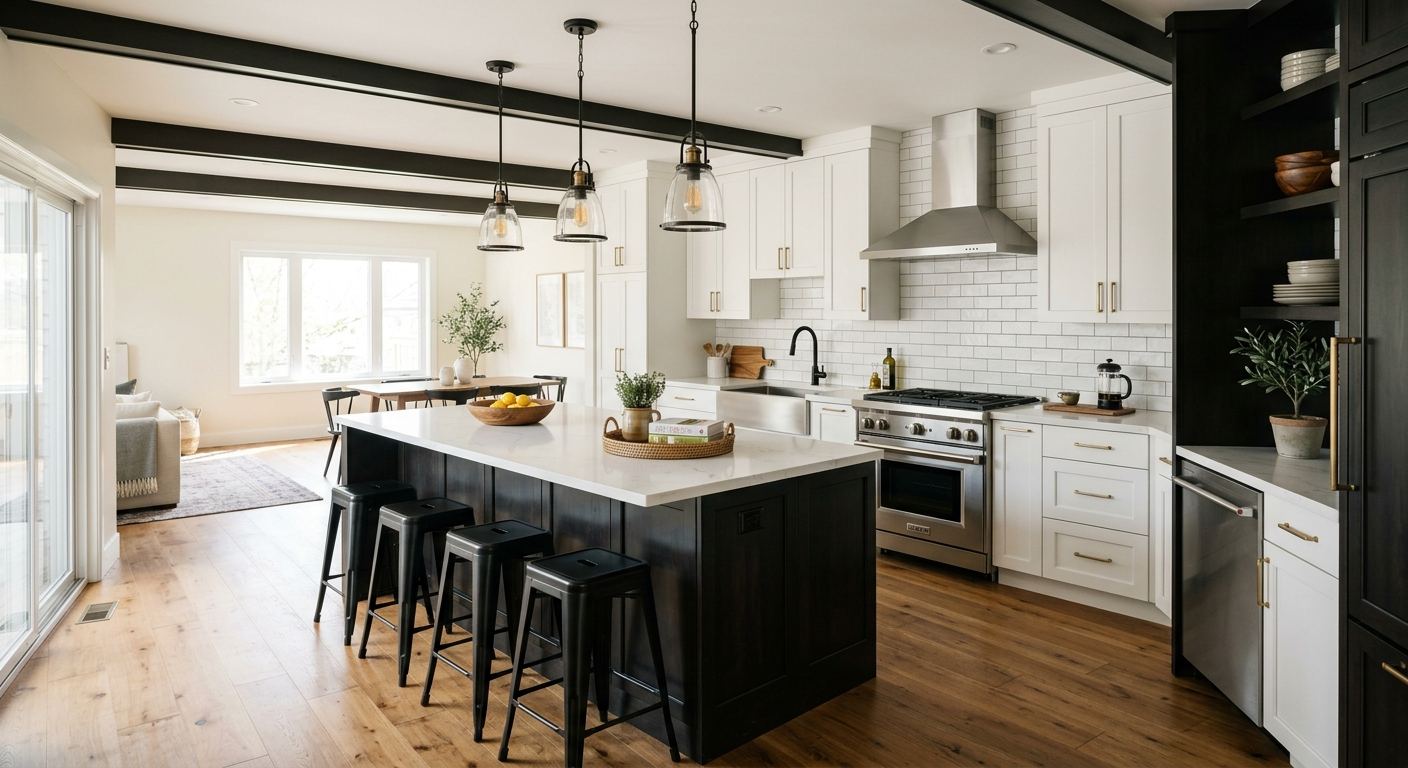
Kitchen renovation options and costs in West Hill
In West Hill, homeowners usually start their kitchen plan by asking what they can do within a realistic budget for their neighbourhood and resale goals. With a population of 27,392 (Statistics Canada, 2021 Census), the area fits into the broader Toronto housing market where buyers expect kitchens to feel bright, clean, and durable—especially in day-to-day cooking zones. Even though West Hill is not a “weather-driven” market, the Toronto region is value-driven: many owners weigh renovation cost against the home’s resale potential, and higher-price pockets in the GTA tend to push projects toward quartz, natural stone accents, and more tailored cabinetry.
Toronto-area demand also affects availability. When multiple homes in the same season need cabinetry, countertop fabrication slots can tighten, and that’s when lead times start to influence project totals. Winter humidity and temperature swings don’t typically change the final material cost, but they can affect scheduling for flooring transition details and drywall/paint cure times—so contractors plan around curing and ventilation rather than rushing installs.
In West Hill, trade demand is especially strong around older apartment clusters and family neighbourhood streets where owners renovate to modernize layouts without moving major services. If you’re deciding between a simple refresh and a full rebuild, the tier you choose will dictate the labour scope, material pricing, and schedule. Use the comparison below to align your expectations before you request quotes.
| Renovation Tier |
What's Included |
Typical Duration |
Price Range |
| Cosmetic refresh (paint, hardware, new appliances only) |
Cabinet paint or repaint, new hardware/handles, backsplash touch-up or replacement (small section), appliance swap, basic caulking and trim reinstalls |
3–7 business days |
$8,000–$18,000 |
| Mid-range full renovation (new cabinets, counters, sink, tile) |
New semi-custom or refaced cabinets, countertop replacement, sink and tap, full backsplash tile, new flooring transition as needed, drywall/paint patching |
3–5 weeks |
$25,000–$55,000 |
| High-end full renovation (custom cabinets, stone counters, island) |
Fully custom cabinetry, quartz or natural stone counters, island build, upgraded appliance package, under-cabinet lighting, upgraded backsplash (feature wall), more extensive electrical/plumbing coordination |
6–10 weeks |
$65,000–$90,000 |
| Cabinet refacing only (new doors + drawer fronts, same boxes) |
Remove/replace doors and drawer fronts, new panels, veneer/laminate treatment, re-install hardware, adjust hinges and pulls, minor patching |
1–3 weeks |
$12,000–$35,000 |
| Countertop swap only (laminate to quartz or stone) |
Measure/template, disconnect/reconnect sink and cutouts as needed, install new quartz/stone, new seam and edge finishing, basic silicone/caulk refresh |
2–7 business days (longer if stone/quartz lead time varies) |
$3,000–$15,000 |
| Backsplash tile installation only |
Tile supply and installation for standard backsplash area, layout, backer prep, waterproofing as required, grout/seal, caulking at edges |
3–10 business days |
$2,000–$10,000 |
Prices are estimates only and vary by project scope, site access and material selection.
What affects the price of kitchen renovation in West Hill
In Toronto and the wider Ontario market, quotes for what looks like the “same job” can vary by 30–50% because contractors price risk and coordination differently—especially when plumbing, electrical, and structural trades overlap. Local finish expectations also shift the budget quickly. In higher-value Toronto-area pockets, homeowners often choose quartz or stone counters and semi-custom cabinetry because the kitchen upgrades are easier to recover in resale. In more price-sensitive areas of the GTA, laminate and stock cabinets are still common, keeping projects in the low–mid range and balancing resale with affordability.
In West Hill specifically, home age plays a big role in whether hidden costs appear. Older kitchens can have outdated shutoffs, undersized electrical runs, or less-than-flat wall planes; correcting that can add labour before anyone installs cabinets. Moisture behaviour also matters: Ontario’s freeze–thaw cycle and winter indoor humidity don’t change cabinet material pricing, but they can affect drywall finishing timelines and flooring transition details—so a job that slips by a week can add overhead even if material prices stay the same.
Concrete examples: if your current laminate countertop has old cutouts and you’re moving a sink, expect additional work to rebuild substrate and adjust cabinet framing. If you add an island, you’ll likely need new electrical for outlets and possibly under-cabinet lighting, which is usually where the unpredictable cost shows up. If you keep services where they are, you can often stay closer to a mid-range full renovation budget (for example, around $25,000–$55,000)—but if you go custom with stone and an island, budgets commonly move into the high-end band (roughly $65,000–$90,000).
| Price Factor |
Why It Matters |
Cost Impact |
| Cabinet tier — stock vs. semi-custom vs. fully custom millwork |
Higher tiers use better materials, more options (heights, interiors), and more on-site fitting time |
Often the biggest swing within a full renovation; can shift total by tens of thousands of dollars |
| Countertop material — laminate vs. quartz vs. granite vs. stone |
Material pricing, edging/seaming, and fabrication lead times change the installed cost |
Typically adds thousands of dollars; stone/quartz premium tiers increase the overall range |
| Layout change — wall removal, island add, plumbing/gas move |
Structural coordination and new rough-ins are labour- and permitting-intensive |
One of the most unpredictable impacts; can move a project from mid-range into high-end |
| Appliance package tier — builder vs. mid-range vs. pro-grade |
Pro-grade appliances cost more and may require additional electrical/venting planning |
Can increase overall budget significantly even if cabinetry stays the same |
| Flooring — refinish existing vs. full replacement |
Repairing or matching existing floors is often harder than replacing; thresholds and transitions matter |
Replacement tends to add cost, but clean patchwork can reduce labour and waste |
| Backsplash — ceramic tile vs. marble vs. full-height slab |
Tile complexity, patterning, and stone installations raise labour and material costs |
Full-height or premium stone escalates faster than typical 3–4 foot backsplashes |
| Electrical — new circuits for island, under-cabinet lighting |
New circuits require licensed work, inspection, and proper load planning |
Unexpected electrical needs are a common reason budgets rise mid-project |
| Permit fees and licensed trade requirements |
Work that changes plumbing/gas or adds electrical circuits typically requires permits and inspections |
Costs are variable by scope; compliance adds time but reduces risk |
Permits & regulations in Ontario
In Ontario, many “finish-only” kitchen changes do not require a permit. For example, cabinet swaps that keep plumbing and gas where they are (including refacing or new doors) generally do not need a permit. Countertop replacements on existing base cabinets are typically also permit-free. However, once you change the functional infrastructure, permits and licensed trades almost always come into play.
In practical terms for West Hill homeowners:
- Typically DOES require a permit: moving plumbing supply or drain lines, relocating a sink position, relocating or adding a gas line or gas appliance connections (including range/hood setups that involve gas), removing a load-bearing wall, adding or relocating electrical circuits (for example, outlets for an island, dedicated circuits for appliances, or under-cabinet lighting tied to new wiring).
- Typically does NOT require a permit: paint, hardware, replacing cabinets in the same footprint, and swapping countertops; backsplash tile is usually permit-free when it doesn’t change services.
Step-by-step verification:
- Ask your contractor for proof of Ontario licence status where applicable, plus liability insurance certificate and WSIB/WCB coverage information (or a clearance letter if provided by the contractor’s setup).
- Verify insurance dates and that kitchen renovation-related work is covered under their general liability policy.
- Confirm WSIB/WCB standing by requesting the most current document; contractors should be able to provide this without hesitation.
- In the written contract, specify who is responsible for permits: the contractor or the homeowner. Always confirm “permit pull included” versus “permit by homeowner” before signing.
Cabinets, countertops and layout decisions in West Hill
For a West Hill kitchen, the three highest-impact decisions are (1) cabinet tier, (2) countertop material, and (3) whether you change the layout. Cabinet tier affects both the look and the fit: stock cabinets are the fastest and cheapest because sizes are standardized; semi-custom is the most popular mid-range choice for families who want better door styles and storage options without fully custom lead times; custom cabinets provide the best alignment for unusual wall angles, sloped ceilings, and tailored storage. Countertops then determine how “premium” the kitchen feels: laminate can be very cost-effective, while quartz offers a strong durability-to-maintenance balance. Natural stone (granite/marble) is beautiful but can be higher in price and, for marble especially, may need more careful sealing and stain management.
Layout is where the Toronto resale strategy becomes real. Buyers often pay attention to whether the kitchen works: open-concept flow, a correctly positioned island, and clear circulation. In West Hill’s typical housing stock, many homes were built with older service layouts, so moving plumbing or gas lines is expensive relative to “cosmetic” upgrades. If you can add value by improving function without moving major services—like changing cabinet configuration or adding an island with nearby power—you may stay closer to $25,000–$55,000 for a mid-range full renovation. If you want full custom millwork plus stone counters and a true re-plan, budgets are more often in the $65,000–$90,000 range.
One dollar example: upgrading from a standard laminate countertop to quartz can be the difference between a “good-looking refresh” and a resale-ready, easier-to-maintain finish. Even when the cabinet tier stays mid-range, a well-installed quartz top plus updated hardware can deliver a noticeable upgrade without triggering the heavier costs of relocating plumbing/gas.
| Option |
Durability |
Maintenance |
Best For |
Price Range |
| Stock cabinets (big-box) |
Good day-to-day durability, but limited custom heights and fewer storage add-ons |
Low—wipe clean; minor touch-ups as needed for chips/edges |
Fast timelines and budget control |
$8,000–$18,000 |
| Semi-custom cabinets (local dealer) |
Very solid for family kitchens; better internal options and door/finish variety |
Low; depends on finish type, but generally easy to maintain |
Most West Hill renovations aiming for resale value |
$18,000–$35,000 |
| Custom cabinets (local millwork shop) |
Excellent; tailored fit and upgraded construction options |
Low, but higher quality hardware and finishes may require careful cleaning practices |
Unusual layouts, full custom storage, premium finishes |
$35,000–$60,000 |
| Laminate countertop |
Moderate; can chip or scorch if misused, and seams need care |
Easy cleaning; avoid prolonged heat exposure and aggressive abrasives |
Budget-conscious refreshes and rental-friendly upgrades |
$3,000–$7,000 |
| Quartz engineered countertop |
High; resists staining and is very durable for daily cooking |
Low—typical wipe-down with mild cleaners |
Toronto-area resale expectations and everyday durability |
$7,000–$12,000 |
| Granite / natural stone countertop |
High; very durable, but hardness varies by stone type and edges |
Usually requires periodic sealing (varies by stone and finish) |
Premium look with natural variation |
$10,000–$15,000 |
| Butcher block countertop |
Good for prep; can be dented/cut-marked without care |
Requires oiling/maintenance to reduce dryness and staining |
Warm, traditional kitchens and avid home cooks |
$6,000–$11,000 |
| Marble countertop |
Beautiful but more susceptible to etching and staining than quartz/granite |
Higher care—sealing and gentler cleaning routines |
Statement kitchens where appearance is the priority |
$12,000–$15,000 |
How to choose a kitchen renovation contractor in West Hill
Choosing the right kitchen contractor in West Hill is mostly about proof and clarity. Start by verifying Ontario compliance: request the contractor’s insurance certificate (liability coverage) and confirm WSIB/WCB status with a clearance letter or current documentation. If they work around gas or electrical, ensure those trades are properly licensed for their scope and that permits (when required) are handled correctly. A reliable contractor won’t treat this as “extra”—they’ll treat it as part of professional risk management.
Next, get 2–3 itemised written quotes instead of a single lump sum. The best quotes break down labour and materials so you can compare apples to apples: cabinet supply, hardware, install labour, countertop fabrication/templating, sink and tap provisions, tile materials, disposal, drywall/paint patching, and any electrical/plumbing rough-ins. Read the scope carefully: are permits included, are inspections included, and is disposal/rubbish handling part of the price?
Warranty matters too. Ask for workmanship warranty length (and what it covers), plus product/manufacturer warranty details for cabinets and countertops. Also ask whether warranties are transferable if you sell the home.
Finally, protect your cash flow. Never pay more than 10–15% upfront; hold a portion back until the job is complete and walkthrough items are resolved. For timelines, insist on a start date and completion estimate in writing, because countertop lead times can compress or expand based on fabrication schedules.
- Confirm liability insurance and WSIB/WCB coverage before work begins.
- Use itemised quotes with labour and material line items, not a single total.
- Check whether demolition, debris removal, and disposal are included.
- Verify what’s included in drywall/paint patching and cabinet-wall finishing.
- Ask who pulls permits when plumbing/gas/electrical changes are involved.
- Confirm countertop templating and seam/edge details in writing.
- Request a cabinet spec sheet (materials, finish, warranty terms).
- Confirm electrical scope in the estimate (new circuits, lighting, outlets).
- Review payment schedule; keep 10–15% holdback for punch list.
- Get a written timeline that accounts for material lead times.
- Ask how they handle site protection (floors, stairs, ventilation).
- Schedule a walkthrough before final invoice and document punch list items.
Red flags I often see with kitchen contractors in West Hill: quotes that avoid line items and lump everything together, reluctance to provide insurance/WSIB/WCB proof, missing or vague warranty terms, payment demands above 20% upfront, and “no permit needed” claims even when moving plumbing, electrical circuits, or gas connections.
Frequently asked questions — kitchen renovation in West Hill
What's the most cost-effective kitchen upgrade?
If you’re renovating in West Hill and want the biggest impact per dollar, focus on changes that strongly affect day-to-day look and function without triggering major trades. In most GTA homes, swapping hardware and refreshing cabinet fronts (paint or refacing) plus updating a backsplash can create a “new kitchen” feel at a controlled cost. If your cabinet boxes are structurally sound, refacing is often more cost-effective than full replacement because it avoids extensive demolition and rebuild.
For a tighter budget, plan for a tier like a countertop swap or a backsplash-only project. Typical budgets fit the established bands—for example, countertop work commonly lands around $3,000–$15,000, while backsplash tile installation alone is often $2,000–$10,000. When you avoid moving plumbing or gas, your contractor can also keep scheduling steady and reduce the risk of delays.
Custom vs stock cabinets — is custom worth it?
Custom cabinets are worth it when your kitchen has constraints that stock cabinets can’t solve well—out-of-square walls, odd corners, ceiling-height targets, or a storage plan you can’t achieve with standard sizes. In West Hill, many homes have older layouts where a tailored plan improves usability. Custom millwork can also deliver better finishing quality and more consistent alignment, which matters when buyers compare kitchens during resale.
That said, most homeowners don’t need fully custom to get a premium look. Semi-custom cabinets are often the sweet spot for the resale-focused Toronto market. If you’re trying to stay in the mid-range full renovation band (around $25,000–$55,000), semi-custom typically gives you the visual upgrade without the larger production and installation time associated with fully custom builds. If your budget trends toward the high-end band (roughly $65,000–$90,000), custom becomes easier to justify alongside stone counters and an island.
How do I choose a kitchen contractor in West Hill?
Start with verification and then compare quotes like-for-like. In Ontario, insist on proof of liability insurance and WSIB/WCB coverage (or a clearance letter). A legitimate contractor should provide documentation without pressure. If the project includes electrical upgrades (like new island outlets or under-cabinet lighting) or gas work, confirm that the right licensed trades are involved and that inspections are coordinated.
Then request 2–3 itemised quotes with labour and materials broken out—cabinet supply and install, countertop templating and fabrication, tile labour, disposal, drywall/paint patching, and any permit/inspection costs when services change. Make sure the written scope states what’s included and what’s excluded (for example, whether disposal is included, and whether permit pull is included). Finally, protect yourself with a payment schedule: don’t allow high upfront payments, and hold a portion back until punch list items are complete. If a contractor won’t sign a detailed contract, it’s a major risk—especially in a busy Toronto-season schedule.
What order do kitchen renovation steps happen in?
A sensible kitchen renovation sequence protects your schedule and prevents rework. In West Hill, a typical order is: (1) measure and confirm cabinet/countertop specs, (2) demolition and site protection, (3) rough-ins (plumbing/electrical) if you’re changing services, (4) permits/inspections where required, (5) install base cabinets, (6) install countertops after templating is approved, (7) complete sink/tap connections and backsplash tile, and (8) finish trim, paint touch-ups, and final appliance hookups.
If you’re only swapping counters or adding a backsplash, the order compresses. Countertop-only projects usually require templating first, then countertop fabrication, then installation after cabinets are protected and sink cutouts are confirmed. For many kitchens, lead times can affect the entire timeline—so a contractor should provide a step-by-step schedule in writing, not just a start date.
Can I live at home during a kitchen renovation in West Hill?
Often yes, but it depends on how extensive the job is. For cosmetic refreshes or backsplash/countertop work that doesn’t disturb major plumbing or electrical, many homeowners continue living in the home with minimal disruption. For mid-range and high-end renovations that include cabinet replacement and tile, you can typically live at home if you have a workable alternative space (a temporary microwave/coffee station and an accessible path to a sink). Contractors should also protect floors and keep dust contained, especially during demo and drywall/paint phases.
If your renovation involves wall removal, significant re-plumbing, or electrical rewiring, the disruption can be larger and may require more staged access. Even so, the schedule can be managed. Plan around countertop lead times and drying/curing windows for paint and grout. In many West Hill projects, homeowners choose staged meals off-site while the kitchen is partially functional—then resume normal use once countertops and major connections are complete. The safest approach is to discuss daily access, temporary cooking options, and clean-up practices before work starts.
Should I renovate my kitchen before selling in West Hill?
Usually, yes—if the renovation is targeted and you keep choices aligned with Toronto-area buyer expectations. Kitchen buyers in the GTA often want a modern, clean finish and durable surfaces, and a renovation can improve perceived value. However, over-improving beyond what the home’s market can support is a risk, so scope matters more than “luxury for luxury’s sake.”
A smart approach is to choose a tier that fits your resale strategy: a mid-range refresh that upgrades cabinets and surfaces without moving plumbing/gas commonly supports better ROI than a full custom rebuild when the layout doesn’t need change. For budgets, many homeowners aim for the mid-range band like $25,000–$55,000, or they do focused upgrades that fall into countertop and backsplash pricing ranges (such as $3,000–$15,000 for countertops and $2,000–$10,000 for backsplash tile).
Also consider Ontario’s housing stock: if your kitchen is in an older home with outdated services, a contractor should address any electrical/plumbing upgrades needed so inspections won’t stall the sale. If you’re considering selling soon, ask for a renovation timeline with realistic start and completion dates in writing.