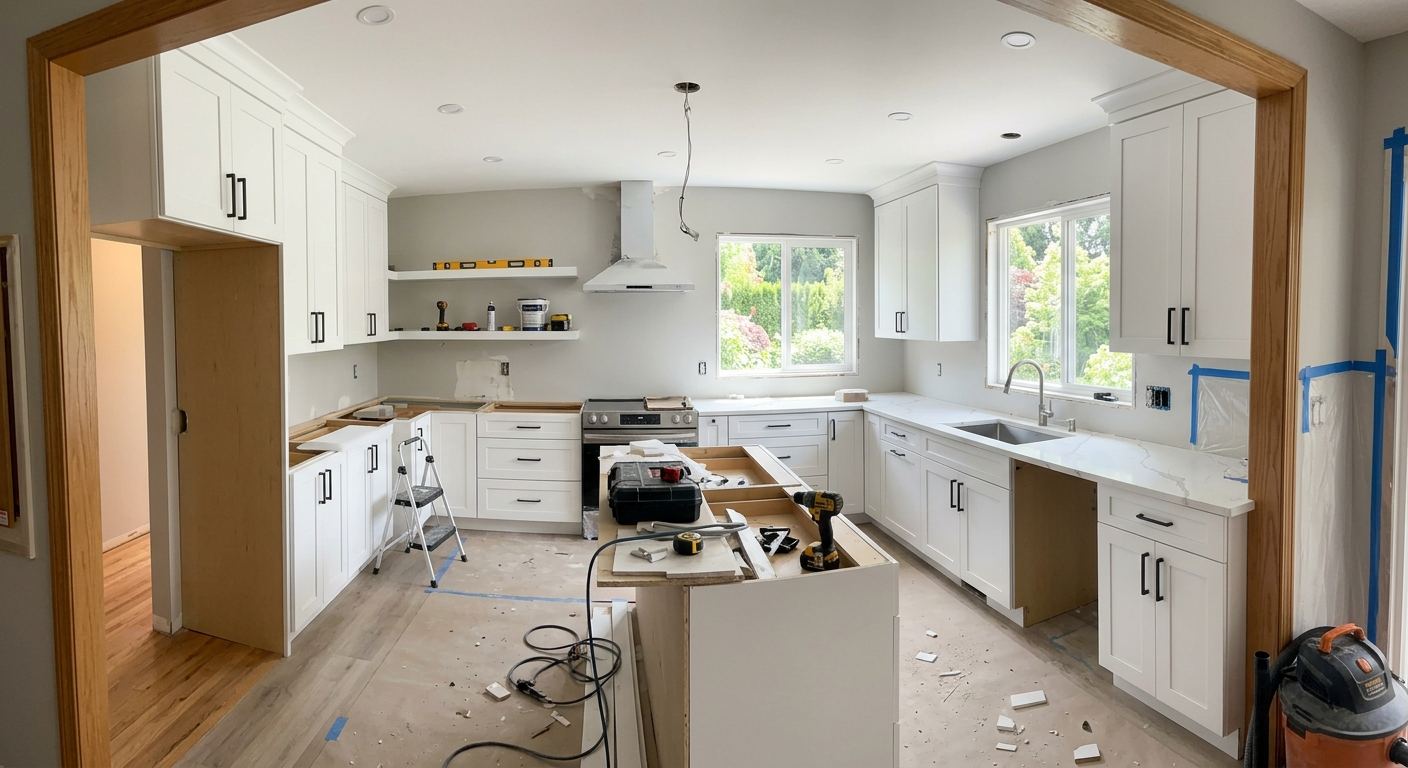
Kitchen renovation options and costs in Temiskaming Shores
Temiskaming Shores homeowners typically look at kitchen renovations as a mix of practicality, resale value, and how long they plan to stay put. With a median household income of $71,500 (Statistics Canada, 2021 Census), most families can comfortably plan a mid-range refresh, while the 72.3% homeowner household share helps drive steady demand for longer-lasting materials. In this city, the “finish tier” is less about weather and more about the type of home owners live in—77.5% of dwellings were built before 1981, so many kitchens involve older layouts, aging ventilation, and out-of-date electrical routing. That said, Northeast Ontario’s winter conditions still influence scheduling: access can be tighter, floors can take longer to dry after subfloor repairs, and installers may build in extra time for cold-weather protection when exterior doors/windows are disturbed.
In high-demand parts of town—especially around Haileybury and the broader West Temiskaming area—contractors see repeat work because these neighbourhoods have a large stock of detached homes and active owner-occupant communities. As a result, you’ll often see a clear split between “hybrid” renovations (new counters, partial cabinet updates, updated backsplash and lighting) and full gut projects where the electrical and plumbing are reworked end-to-end. If you’re planning a full renovation, typical budgets for Temiskaming Shores usually land inside the $30,000–$80,000 band, while cabinet installs/refacing commonly fall between $6,000–$25,000 depending on door style and box condition. Next, here’s a practical breakdown of what each renovation tier usually includes so you can compare apples to apples.
| Renovation Tier |
What's Included |
Typical Duration |
Price Range |
| Cosmetic refresh (paint, hardware, new appliances only) |
Surface prep, repainting cabinets/walls, new hardware/pulls, appliance installation, basic caulking and touch-ups |
3–7 days |
$4,000–$12,000 |
| Mid-range full renovation (new cabinets, counters, sink, tile) |
New cabinet installation or refacing (new doors/fronts), countertops, sink + faucet, backsplash tile, updated lighting, minor plumbing/electrical adjustments as needed |
2–4 weeks |
$30,000–$55,000 |
| High-end full renovation (custom cabinets, stone counters, island) |
Custom or semi-custom millwork, stone countertops (premium finish), island build, full backsplash detail work, upgraded appliance package, expanded lighting and trim details |
4–8 weeks |
$55,000–$80,000 |
| Cabinet refacing only (new doors + drawer fronts, same boxes) |
Door and drawer front replacement, new hardware, hinge adjustments, repaint/stain refinishing of box areas, basic cleaning and alignment |
1–2 weeks |
$6,000–$18,000 |
| Countertop swap only (laminate to quartz or stone) |
Removal and install of new countertops, undermount sink cut-outs as needed, backsplash reset, caulking and sealing |
3–7 days |
$3,500–$15,000 |
| Backsplash tile installation only |
Surface prep, tile install (ceramic or similar), grout and sealing, edge trimming, cleanup |
2–5 days |
$2,500–$12,000 |
Prices are estimates only and vary by project scope, site access and material selection.
What affects the price of kitchen renovation in Temiskaming Shores
Even when homeowners in Temiskaming Shores request “the same” kitchen, quotes can swing by 30–50% across Ontario and the broader Northeast because labour availability, trade scheduling, and the way contractors price risk (older wiring, uneven subfloors, hidden water staining) aren’t consistent. The bigger driver is local purchasing power: where incomes support semi-custom and premium stone, homeowners more often choose quartz or stone countertops and higher-tier cabinet packages, and those choices widen the upper range of full renovations (often within the $30,000–$80,000 band). In more modest scenarios, people target a “hybrid” upgrade—laminate or good-quality mid-grade tops, stock or partially updated cabinetry, plus updated backsplash and lighting—to keep ROI sensible.
Climate plays a secondary role. In Temiskaming Shores, cold snaps and freeze-thaw cycles don’t directly force you into a particular finish tier, but they can add cost indirectly through scheduling and drying times after subfloor repairs. For example, kitchens in pre-1981 homes frequently require more labour to straighten cabinets due to older framing and uneven walls, which affects install time and sometimes triggers extra shimming or drywall replacement—adding cost even if the finish choices stay mid-range. Another common cost mover is venting and electrical routing: relocating a hood duct or adding under-cabinet lighting typically brings additional labour because trades need access behind upper cabinets. Finally, layout changes are the most unpredictable: removing a wall to open sightlines, adding an island, or moving plumbing/gas lines can push the job well beyond a countertop-only plan, even with the same appliance choices.
Concrete examples we see locally: (1) homes with older galvanized plumbing often require selective replacement near the sink, not the entire line, which can add material and call-backs; (2) if the project begins in late fall, contractors may schedule slower and protect finishes from moisture changes, lengthening timelines; (3) if you’re moving the sink to free up counter space, countertop fabrication must match new cut-outs and undermount sink specs, which can narrow your material options and raise the countertop installation cost within the $3,500–$15,000 range.
| Price Factor |
Why It Matters |
Cost Impact |
| Cabinet tier — stock vs. semi-custom vs. fully custom millwork |
Higher tiers provide better fit, more layout options, upgraded hardware/finishes, and stronger warranty support |
Typically adds several thousand dollars; cabinet installs/refacing can land from the mid-$ to upper-$ range (often within $6,000–$25,000) |
| Countertop material — laminate vs. quartz vs. granite vs. stone |
Material cost, fabrication complexity, and installation labour vary widely; premium slabs also increase transport and handling time |
May shift countertop installation totals substantially, commonly within $3,500–$15,000 |
| Layout change — wall removal, island add, plumbing/gas move |
Changes require demolition, re-framing, new rough-in pathways, and more trade coordination |
Often the largest variability; can push a project from mid-range to full-renovation budgets |
| Appliance package tier — builder vs. mid-range vs. pro-grade |
Electrical/venting requirements and dimensions differ; premium models may need specific clearances and installation hardware |
Can add or reduce several thousand depending on whether upgrades include ventilation and matching trim |
| Flooring — refinish existing vs. full replacement |
Demolition scope changes subfloor prep, underlayment, and leveling requirements |
Full replacement commonly increases totals beyond a “cabinets + counters” baseline |
| Backsplash — ceramic tile vs. marble vs. full-height slab |
Premium materials increase material cost and require more precise prep and finishing details |
Can range widely, often within $2,500–$12,000 for installation scope |
| Electrical — new circuits for island, under-cabinet lighting |
Additional circuits and receptacle placement require planning, inspection, and licensed electrical work |
May add noticeable cost even when finishes are “budget,” depending on re-wiring needs |
| Permit fees and licensed trade requirements |
Work that touches plumbing, electrical, or load-bearing structures requires permits and inspection scheduling |
Increases administrative and labour time; can delay start dates if paperwork isn’t handled correctly |
Permits & regulations in Ontario
For kitchen renovations in Ontario, the biggest rule of thumb is this: cabinet and countertop swaps usually don’t require permits, but anything that changes plumbing, gas, structural walls, or adds electrical circuits typically does. Cabinet door replacement, refacing, and countertop installation on the existing base are generally treated as finish work. By contrast, moving supply/drain lines, relocating a gas stove/range, removing a load-bearing wall, or adding new electrical circuits (for example, powering an island receptacle cluster or adding multiple under-cabinet light runs) triggers permitting and licensed-trade involvement. Gas work must be completed by a licensed gas fitter, and electrical work must be done by a licensed electrician, with inspections required for the permitted scope.
For a Temiskaming Shores homeowner, verify before you sign. Step one: ask the contractor which permit(s) they will pull and what scope the permit covers, and confirm responsibility in writing (who pulls, who pays, and what happens if inspectors require changes). Step two: check the contractor’s liability insurance certificate of insurance (COI) and ensure coverage matches the work type and the jobsite address. Step three: confirm WSIB/WCB coverage for any workers performing installation or labour on the project—request clearance letters or proof directly from the contractor. Step four: for gas and electrical subcontractors, ask for their trade licence details and inspection confirmation. Good contractors will provide these documents quickly and without pressure to “sign first.”
Cabinets, countertops and layout decisions in Temiskaming Shores
When planning a Temiskaming Shores kitchen renovation, three decisions determine most of the price and also the long-term satisfaction: (1) cabinet tier (stock, semi-custom, or custom), (2) countertop material (laminate, quartz, granite, butcher block, or marble), and (3) layout changes (open-concept wall removal, island addition, or plumbing/gas relocation). In a market where many homes are older—77.5% built before 1981—layout and rough-in constraints matter. Even if you choose premium surfaces, an inefficient layout or poorly planned plumbing can undermine workflow.
Cabinet tier is tied to both fit and durability. Stock cabinets are typically the fastest and cheapest, but they offer fewer options for exact wall-to-wall dimensions and corner configurations. Semi-custom cabinets are usually the sweet spot in Northeast Ontario because they balance pricing with better door styles, storage upgrades, and easier adjustments for irregular older walls. Custom cabinetry costs more, but it’s justified when you need distinctive moulding lines, built-in pantry/desk modules, or a layout that works around existing structural beams.
Countertops are where homeowners “feel” the quality. Laminate is budget-friendly and can be very practical, but it’s more sensitive to heat and seam placement. Quartz is the most common premium choice because it resists staining and handles everyday spills well, and it typically lands in a realistic middle-to-upper countertop installation range. Quartz or stone also tends to align with what resale-focused buyers expect in higher-finish homes, while laminate or stock-focused packages suit entry-level budgets.
Layout changes are the most cost-justified when they create real storage and working space—not just aesthetics. For example, adding an island can cost more because of electrical and possible plumbing coordination, but it’s often worth it if you gain seating, improve traffic flow, and can keep the sink/dishwasher zone functional. If your goal is mainly to modernize, a cabinet refacing plus countertop upgrade (often within $6,000–$25,000 for cabinets and $3,500–$15,000 for countertops) can deliver a big visual lift without paying for full rough-in changes.
| Option |
Durability |
Maintenance |
Best For |
Price Range |
| Stock cabinets (big-box) |
Good for daily use; limited flexibility in sizing and upgrades |
Standard cleaning; check for soft-close consistency |
Budget-conscious renovations and quick turnarounds |
$6,000–$14,000 |
| Semi-custom cabinets (local dealer) |
Very solid construction; better variety of storage and door styles |
Low—wipe-clean surfaces; replaceable hardware |
Most “mid-range full renovation” projects and resale-friendly upgrades |
$14,000–$22,000 |
| Custom cabinets (local millwork shop) |
Highest fit and finish potential; supports complex layouts |
Low to moderate depending on finish; keeps detailing sharp with proper care |
Unique layouts, built-ins, and premium kitchens that need precise alignment |
$22,000–$35,000 |
| Laminate countertop |
Durable for light-to-moderate use; seams and edge chips are the weak points |
Wipe clean; avoid prolonged heat and overly wet exposure at seams |
Cost-controlled refreshes and hybrid upgrades |
$3,500–$7,500 |
| Quartz engineered countertop |
High resistance to stains and everyday wear; consistent surface |
Low—routine cleaning only; minimal sealing compared to natural stone |
Busy families wanting premium look without high maintenance |
$7,500–$12,500 |
| Granite / natural stone countertop |
Very durable; can be tougher but depends on slab selection and sealing |
Needs sealing and careful care; heat protection still recommended |
Premium aesthetics and stone lovers who want unique patterns |
$10,000–$15,000 |
| Butcher block countertop |
Durable but not impervious; can dent/scratch without proper care |
Regular oiling and moisture management required |
Warm farmhouse look and homeowners comfortable with periodic maintenance |
$6,000–$10,500 |
| Marble countertop |
High-end look; softer surface makes it more prone to etching |
Ongoing maintenance; requires careful cleaning to avoid staining |
Statement kitchens with lower “wear and tear” lifestyles |
$12,000–$18,000 |
How to choose a kitchen renovation contractor in Temiskaming Shores
Choosing the right contractor matters a lot in Temiskaming Shores because many kitchens involve older framing, mixed electrical ages, and tight floorplans where timelines slip quickly. Start by verifying Ontario licensing for the trades doing work that legally needs it. Cabinet installation may not require the same approvals as electrical or gas, but if your contractor is coordinating those scopes, they should transparently list who is licensed and for what work. Ask for liability insurance certificates for the jobsite, and confirm WSIB/WCB clearance so you’re not exposed if an injury occurs on your property. For trade checks, request licence details and coverage documents directly—don’t rely on verbal assurances.
Next, insist on 2–3 itemised written quotes. The best quotes break labour and materials apart (cabinets, countertops, tile, demo, disposal, electrical/plumbing allowance, and any permitting costs) instead of one lump sum. Read the scope carefully: confirm what’s included for permits, who pulls them, whether disposal is part of the price, and what happens if hidden conditions are found behind the old backsplash or in the subfloor. Warranty matters too—get the workmanship warranty length in writing and ask whether product warranties are transferable to you if you sell the home. Finally, control cashflow: never pay more than 10–15% upfront, and use a holdback until the job is complete and punch-list items are corrected. Get a start date and completion estimate in writing, along with key milestones (demo, rough-in, install, final inspection if required).
- Request COI and WSIB/WCB clearance before scheduling materials.
- Get electrician and gas fitter details in writing if your plan includes circuits or venting.
- Insist on an itemised quote with allowances clearly marked.
- Confirm disposal and dumpster/recycling logistics are included or priced separately.
- Ask who is responsible for permit applications and inspection scheduling.
- Clarify what’s included for demolition protection (floor coverings, dust control).
- Confirm countertop templating date and lead times for slab delivery.
- Verify backsplash details: waterproofing approach and surface prep.
- Ask about cabinet mounting method and wall condition assessment for older homes.
- Confirm warranty coverage for both labour and materials, including transferability.
- Use a payment schedule tied to completed stages, not “progress” alone.
- Make sure timelines include inspection delays if permits are required.
Red flags in Temiskaming Shores: (1) refusing to provide itemised quotes or only offering lump sums; (2) asking for large upfront payments beyond 10–15% without milestones; (3) vague answers about permits or licensed trades; (4) no written warranty terms or no product documentation; (5) “we’ll deal with it later” language when hidden conditions are likely in pre-1981 homes.
Frequently asked questions — kitchen renovation in Temiskaming Shores
Can I live at home during a kitchen renovation in Temiskaming Shores?
Yes, many Temiskaming Shores homeowners do, especially for cosmetic refreshes or hybrid upgrades like cabinet refacing and countertop swaps. The main factor is scope: a full mid-range renovation can take 2–4 weeks, and temporary kitchen setups work better when demolition is contained. For example, if you’re doing countertops only (often in the $3,500–$15,000 range), you can usually keep using the sink area after the install is complete, with limited downtime. If your renovation includes layout changes (moving plumbing or adding electrical circuits), plan for a longer period where the kitchen is partially unusable. A good contractor will schedule rough-in work first, protect floors, and create a realistic daily workflow so you still have access to a safe cooking and washing plan.
Should I renovate my kitchen before selling in Temiskaming Shores?
In many cases, yes—but it depends on your home’s condition and the buyer segment you’re targeting. With a large share of homes built before 1981, minor modernization can help buyers see your house as move-in ready, particularly with updated counters, lighting, and a refreshed backsplash. If you’re aiming for a price jump that buyers will actually pay for, choose upgrades that “look finished” and function well: new cabinet fronts or semi-custom cabinets, quartz or premium laminate tops, and a clean lighting plan. A full renovation budget in Temiskaming Shores commonly falls into the $30,000–$80,000 band; that’s best when your kitchen is dated enough that buyers will discount the home if you don’t update it. If your layout is solid, a hybrid approach often delivers a smarter ROI with less disruption and fewer surprises.
What's the most popular kitchen style in Temiskaming Shores right now?
Right now, many homeowners in Temiskaming Shores are trending toward bright, practical, “transitional” kitchens: simple shaker-style cabinet doors, warmer whites/creams or light greys, and a stone-look surface that reads clean in northern winter lighting. Quartz is popular because it matches that modern look while being low-maintenance, and it photographs well for listings. You’ll also see a lot of updated backsplash work—often ceramic tile with a straightforward pattern rather than highly ornate designs—because it’s easier to maintain and suits both older and newer home finishes. The style choices often align with budget reality: mid-range renovations tend to pair semi-custom or high-quality stock cabinetry with quartz or durable laminate, while entry-level refreshes focus on paint, hardware, and a countertop upgrade.
How do I know if I need to update my kitchen plumbing in Temiskaming Shores?
Look for warning signs and plan based on what your renovation touches. If you’re moving the sink, dishwasher, or changing the dishwasher location, you’ll likely need plumbing updates to match new supply/drain runs and comply with proper installation practices. In older homes common in Temiskaming Shores (77.5% built before 1981), homeowners often discover corrosion, aging shutoffs, slow drains, or poor under-sink venting during demolition. Even if everything “works,” we sometimes replace near-fixture sections when they’re difficult to access after cabinets go in. A countertop-only project (often $3,500–$15,000) might not require plumbing changes, but a mid-range full renovation with sink replacement and cabinet changes can reveal plumbing work that’s best handled during rough-in, not after the finishes are installed.
What is the difference between a galley and open-concept kitchen?
A galley kitchen is typically a narrow, corridor-like layout with counters along two parallel walls—great for smaller footprints and efficient work zones. An open-concept kitchen usually removes or opens walls to connect the kitchen to living/dining space, improving sightlines and how light moves through the home. In Temiskaming Shores, many older homes were built with separated rooms; converting to open-concept can create value, but it’s also where cost uncertainty spikes because removing a wall may involve permitting, structural assessment, and additional electrical/plumbing coordination. If you’re considering an island, you’ll also need clear traffic space—especially in kitchens where there isn’t much room to begin with. If your goal is primarily cosmetic, staying galley with smart storage upgrades can be a more budget-stable approach than full structural changes.
How do I get accurate kitchen renovation quotes in Temiskaming Shores?
To get accurate quotes in Ontario and in Temiskaming Shores, bring your contractor more than just photos. Provide your measurements, a rough layout note (what stays vs. what moves), and confirm what you want to change: cabinets, counters, backsplash, lighting, and whether plumbing/gas lines will move. Ask for itemised labour and materials breakdown—not just a total—so you can compare like-for-like. Request clarity on allowances for tile, countertop fabrication, and any electrical/plumbing work. Also ask what’s included for permits and disposal. Finally, be realistic about budget bands: a full renovation often lands in the $30,000–$80,000 range, while cabinet refacing may be closer to $6,000–$25,000 depending on doors and hardware. When hidden conditions appear (common in older housing stock), a detailed scope reduces the chance of surprise costs.