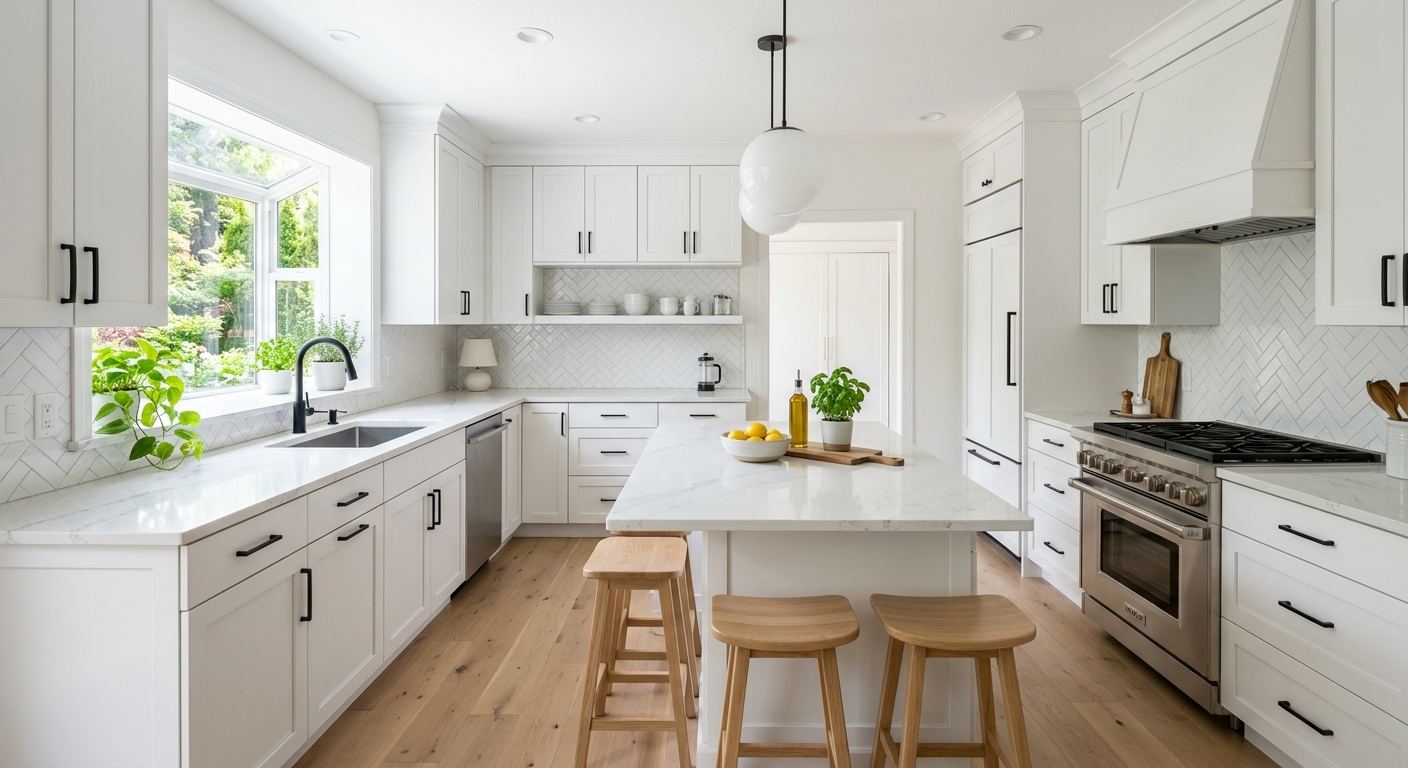
Kitchen renovation options and costs in Kensington-Chinatown
Kensington-Chinatown is a lively, older Toronto neighbourhood where many homes were built decades ago, so kitchen renovations often come with real-world constraints like out-of-level floors, older drain lines, and wiring that needs updating. With a population of 17,945 (Statistics Canada, 2021 Census), the local contractor pool is steady, and demand is especially strong in pockets around Ossington-area bustle and the denser streets close to the market corridor, where homeowners update kitchens to keep resale appeal. Pricing expectations also track the broader Toronto economic picture: in a higher-value city market, finishes trend more upscale, and many owners aim for cabinetry and countertop tiers that buyers recognize on listing day.
Across the Toronto economic region, renovation costs are shaped far more by home values and household spending patterns than by climate. While Toronto winters are real—salt-air exposure and humidity swings can be tough on adhesives, caulking, and cabinet finishes—contractors price kitchens primarily based on materials, labour, and the complexity of the existing plumbing/electrical setup. In Kensington-Chinatown, you’ll often see projects cluster into the mid-range when homeowners want a practical refresh, while higher-end builds are common when the layout change (often an island or a more open flow) makes the kitchen feel “new” rather than merely updated. That’s why the same countertop choice can land in very different totals once labour for demolition, re-plumbing, and electrical upgrades are counted.
Below are typical options homeowners compare in Kensington-Chinatown, with realistic price bands to help you translate design ideas into a budget before you call for quotes.
| Renovation Tier |
What's Included |
Typical Duration |
Price Range |
| Cosmetic refresh (paint, hardware, new appliances only) |
Cabinet paint/stain or repaint, new hardware, new appliances (no layout change), patch/prime, basic caulking, existing backsplash retained or minor refresh |
2–4 weeks |
$25,000–$35,000 |
| Mid-range full renovation (new cabinets, counters, sink, tile) |
Semi-custom or stock cabinets, quartz or good laminate counters, sink + faucet, backsplash tile, flooring refinishing or replacement allowance, light electrical updates for lighting, painting |
6–10 weeks |
$45,000–$65,000 |
| High-end full renovation (custom cabinets, stone counters, island) |
Custom cabinetry, premium quartz/natural stone, island with upgraded lighting, upgraded appliance package allowance, full-height backsplash option, heavier electrical scope (often more circuits), flooring replacement allowance |
10–14 weeks |
$75,000–$95,000 |
| Cabinet refacing only (new doors + drawer fronts, same boxes) |
Door/drawer/front replacement, new pulls/hinges, surface prep, optional new crown/trim, existing layout maintained, counters generally retained |
3–6 weeks |
$8,000–$22,000 |
| Countertop swap only (laminate to quartz or stone) |
Removal of old top, new quartz/stone/template/install, sink cut-outs (reuse existing sink if acceptable), minor sealant and caulking, backsplash tie-in allowance |
1–2 weeks (plus template lead time) |
$3,000–$12,000 |
| Backsplash tile installation only |
Tile supply allowance, demo as needed, cement board/adhesive prep, tile install, grout/seal, caulking transitions |
1–3 weeks |
$2,000–$8,000 |
Prices are estimates only and vary by project scope, site access and material selection.
What affects the price of kitchen renovation in Kensington-Chinatown
If you get two quotes for the “same kitchen,” it can still differ by 30–50% across Toronto and Ontario because contractors price risk and complexity differently. Labour and materials are fairly comparable province-wide, but the real swing comes from what’s discovered after demo: out-of-square framing, old shutoffs, inadequate electrical capacity, and whether walls truly can be opened without structural and permit complexity. In high-value Toronto pockets, owners often default to quartz or natural stone counters and semi-custom cabinetry because the cost is more easily recovered on resale. In more price-sensitive areas, laminate and stock cabinets dominate, keeping projects closer to the mid-range while still improving the kitchen’s “look.”
In Kensington-Chinatown, the two most common cost drivers that push jobs toward the $25,000–$90,000 full-renovation band are (1) layout change and (2) finish tier. For example, adding an island isn’t just “cabinetry”—it usually triggers new electrical for under-cabinet or pendant lighting and sometimes plumbing changes, which is where totals can jump quickly into the high-end range. Conversely, a kitchen that stays in its current footprint—new counters, refreshed cabinetry fronts, and a properly finished backsplash—can often land closer to the lower end of the full renovation band, especially when you avoid moving a gas line or rerouting drains.
Concrete Kensington-Chinatown examples: older homes frequently need extra prep for tile and cabinet mounting, which adds labour for shimming and substrate rebuild. Also, kitchen ventilation choices matter—poor venting can increase moisture cycling around cabinets and backsplash; that risk affects which sealants and finishing systems contractors recommend. Climate itself doesn’t set the budget, but Toronto’s humidity swings and salt-air exposure through winter can make workmanship details more critical, which is why you’ll see variance in labour allowances for sealing, caulking, and ventilation upgrades.
| Price Factor |
Why It Matters |
Cost Impact |
| Cabinet tier — stock vs. semi-custom vs. fully custom millwork |
Custom boxes/doors, specialty finishes, and better tolerances reduce rework but raise material cost and install labour |
Typically +$10,000 to +$35,000 across full projects |
| Countertop material — laminate vs. quartz vs. granite vs. stone |
Pricing varies widely by slab type, thickness, edge profiles, and complexity of cut-outs; installation and sealing differ too |
Often +$2,000 to +$15,000 versus laminate |
| Layout change — wall removal, island add, plumbing/gas move |
Structural assessment, permit steps, subfloor work, and trade coordination add unpredictable labour |
Commonly +$8,000 to +$25,000 (or more) for island/plumbing moves |
| Appliance package tier — builder vs. mid-range vs. pro-grade |
Electrical/venting requirements and premium dimensions can affect cabinetry fit and install time |
Often +$1,500 to +$10,000 |
| Flooring — refinish existing vs. full replacement |
Older subfloors may need remediation; matching existing finishes can be labour-intensive |
Typically +$2,000 to +$12,000 |
| Backsplash — ceramic tile vs. marble vs. full-height slab |
Stone and full-height installs require more surface prep, seaming, and careful sealing |
Often +$1,000 to +$6,000 |
| Electrical — new circuits for island, under-cabinet lighting |
Lighting, outlets, and dedicated circuits need licensed work and may require panel adjustments |
Commonly +$1,500 to +$7,500 |
| Permit fees and licensed trade requirements |
Permits, inspections, and licensed trade scheduling can add cost and timeline uncertainty |
Often +$500 to +$4,000 depending on scope |
Permits & regulations in Ontario
In Ontario, not every kitchen update triggers a permit. In general, cabinet and countertop swaps usually do not require permits when the work stays within the existing footprint and you are not moving plumbing or gas. That means replacing countertops (including laminate to quartz) or installing new cabinet fronts/boxes in the same locations is typically straightforward.
Permits and licensed trade involvement are commonly required when you change services or building structure. Typical permit-needed work includes: moving plumbing supply or drain lines (sink relocation), relocating a gas line for a stove/range, removing a load-bearing wall, adding electrical circuits (for an island, new vent hood controls, or additional outlets), and any work that requires inspection by the applicable authorities. Gas work must be performed by a licensed gas fitter, and electrical work must be done by a licensed electrician—both should be inspected where required.
For homeowners in Kensington-Chinatown, a good verification process is simple and protects you: (1) ask your contractor for their licence numbers and confirm them using the appropriate online licensing registry, (2) request a current certificate of liability insurance and ensure coverage is adequate for renovation work, and (3) confirm WSIB/WCB coverage (or an accepted equivalent) before work starts. Also get clear documentation in writing about who pulls permits. In Ontario, permit responsibility belongs in your contract—don’t rely on verbal assurances.
Cabinets, countertops and layout decisions in Kensington-Chinatown
In Kensington-Chinatown, the biggest “bang for the buck” in a kitchen renovation usually comes from three decisions: cabinet tier, countertop material, and whether you change the layout. Cabinet tier sets the foundation. Stock cabinets are fastest and cheapest; semi-custom (the most popular mid-range choice) balances cost with better sizing; custom cabinets maximize fit and storage but add both material and labour. Countertop choice then locks in day-to-day performance. Laminate is budget-friendly, but seams and heat/moisture exposure can matter in Toronto’s humidity swings; quartz tends to be the sweet spot for durability and low maintenance; natural stone brings character but costs more and can require sealing depending on the stone and finish. Layout is the decision that can double complexity: removing a wall for an open-concept flow or adding an island can be worth it if the space gain improves circulation and resale appeal.
Resale expectations in Toronto also influence these choices. At lower budgets, buyers notice refreshed paint, clean lines, and a modern backsplash—but they may not expect premium stone. As budgets move upward, buyers more often look for quartz/natural stone counters, upgraded hardware, and better lighting over islands and work zones. Toronto housing stock is also older in Kensington-Chinatown, so relocating plumbing/gas or opening up walls often reveals dated rough-ins, which can increase costs beyond what homeowners expect.
Here’s a practical dollar example: upgrading from laminate to quartz is often a relatively easy win—if your total is around the mid-range full renovation band (roughly $45,000–$65,000), a countertop swap can be a meaningful quality jump without touching plumbing. But when you add an island and move plumbing/electrical, you can easily step into high-end territory (approaching $75,000–$95,000) even if the cabinet tier is only semi-custom—because the labour coordination and licensed trades drive the total.
| Option |
Durability |
Maintenance |
Best For |
Price Range |
| Stock cabinets (big-box) |
Durable for daily use; fit and finish varies by room conditions |
Low maintenance; handle chips/impacts promptly |
Fast refreshes and tighter budgets where footprint stays the same |
$8,000–$18,000 |
| Semi-custom cabinets (local dealer) |
Good durability; more options for sizing and interior organization |
Low to moderate; wipe and re-seal around wet zones as needed |
Most Kensington-Chinatown remodels aiming for resale-ready finishes |
$18,000–$35,000 |
| Custom cabinets (local millwork shop) |
Excellent durability and precise fit; best for awkward layouts |
Low maintenance; proper adjustment prevents door stress over time |
Owners who want maximum storage and a tailored look |
$35,000–$60,000 |
| Laminate countertop |
Decent day-to-day durability; seams can be a weak point if mishandled |
Wipe clean; avoid prolonged heat and water pooling near seams |
Cost-controlled renovations that prioritize a modern cabinet look |
$3,000–$6,000 |
| Quartz engineered countertop |
Highly durable, resistant to staining and everyday impacts |
Low maintenance; easy wipe-down, minimal sealing requirements |
The mid-to-high value sweet spot for Toronto resale appeal |
$6,000–$12,000 |
| Granite / natural stone countertop |
Very durable; variety in hardness and finish affects performance |
Often needs periodic sealing depending on the stone and finish |
Premium look with natural variation and strong heat resistance |
$8,000–$15,000 |
| Butcher block countertop |
Strong for chopping but can scar if abused |
Requires regular oiling and careful drying around sink edges |
Heritage/cozy design styles and families who genuinely cook daily |
$5,000–$10,000 |
| Marble countertop |
Stunning appearance; more sensitive to etching and staining than quartz |
Higher maintenance (sealing, careful cleaning, wipe spills quickly) |
High-end styling where homeowners accept more upkeep |
$10,000–$18,000 |
How to choose a kitchen renovation contractor in Kensington-Chinatown
Choosing the right contractor in Kensington-Chinatown is mostly about confirming credentials and preventing “scope drift.” Start with Ontario licensing and coverage. Ask for the licence information relevant to the trades they’re using (general contractor plus any electricians/gas fitters where needed), then verify the licence status through the appropriate online registry. Next, request a certificate of liability insurance and confirm the policy is current. Finally, confirm WSIB/WCB coverage (or an accepted equivalent where applicable) so you’re not left exposed if a worker is injured on your site.
When you request quotes, insist on 2–3 itemised documents rather than one lump sum. Good quotes separate labour and materials, list demolition and disposal, specify what’s included in cabinet install, lighting/electrical allowances, and show countertop templating and install steps. Scope clarity matters in older Toronto homes—your quote should say whether plumbing rough-in repairs or subfloor prep are included, and who’s responsible if the wall isn’t plumb after demo.
Warranty should be explicit: workmanship warranty length, product/manufacturer warranty details, and whether coverage transfers if you sell the home. For payment, avoid big upfront deposits—aim for no more than 10–15% at the beginning, then hold back a portion until the job is complete and clean. Get a written start date and a completion estimate, with lead-time assumptions for cabinets and stone/quartz templates.
- Confirm relevant Ontario licences for the trades involved before signing.
- Verify liability insurance is active and ask for the coverage certificate.
- Ask for proof of WSIB/WCB coverage (or equivalent) and keep it with your contract.
- Require 2–3 itemised quotes showing labour vs materials breakdown.
- Check the scope for demolition and disposal—who hauls waste?
- Confirm whether permit pulling and inspection scheduling are included.
- Look for a line item for countertop templating and cut-outs (sink, cooktop).
- Ask how they handle electrical scope for island lighting/outlets and what’s included.
- Ensure layout changes (if any) list plumbing/gas steps and approvals.
- Read warranty terms for workmanship (length and exclusions).
- Use a payment schedule: 10–15% upfront maximum, then progress payments with holdback.
- Get a start date and staged timeline in writing, including material lead times.
Red flags in Kensington-Chinatown: a contractor who won’t provide insurance/coverage proof; “lump sum only” quoting without itemised labour/materials; refusing to put permit responsibility in the contract; vague timelines that ignore cabinet or stone lead times; and pressure tactics to increase deposits before any drawings, measurements, or contract scope are finalized.
Frequently asked questions — kitchen renovation in Kensington-Chinatown
Do I need a permit for a kitchen renovation in Ontario?
In Ontario, cabinet and countertop replacements typically do not require a permit when you’re keeping the same footprint and not altering services. For most Kensington-Chinatown projects, that means a cabinet swap or quartz installation alone is usually permit-light. However, permits become relevant when you move plumbing supply/drain lines (for example, relocating a sink), relocate gas lines for a stove or range, remove a load-bearing wall, or add electrical circuits—especially for island outlets and new lighting. Also remember that gas work must be done by a licensed gas fitter and electrical work by a licensed electrician, with inspections where required.
What's the ROI on a kitchen renovation?
ROI depends on what you do and your target buyer. In Toronto’s higher-value market, homeowners often recover more value when the renovation improves functionality and finishes buyers expect—think quartz or natural stone tops, durable cabinet tiers, and clean backsplash detailing. A modest refresh may look great but usually won’t carry the same resale impact as a mid-range full renovation that updates cabinetry, countertops, sink and tile. If you’re spending in the $45,000–$65,000 range for a full renovation, it’s more likely to align with buyer expectations in Kensington-Chinatown than a purely cosmetic update. Big layout changes and island plumbing/electrical can add cost; ROI can be strong when the space gain matches the home’s layout and circulation.
How do I budget for a kitchen renovation?
Budgeting starts with choosing your tier and then planning a realistic “surprises” amount for older Toronto builds. Many Kensington-Chinatown homes have dated rough-ins, so even a straightforward refresh can involve extra labour for leveling, electrical adjustments, or finishing transitions. For full kitchens, realistic budgets commonly fall into $25,000–$90,000, based on finish tier and whether you change the layout. I recommend building your budget in three buckets: cabinetry/countertops (finish-driven), demolition plus carpentry/electrical/plumbing allowances (complexity-driven), and flooring/backsplash/paint/trim (finish-driven). If you’re tempted to stretch for premium stone, do it where the “daily impact” is greatest—countertops and backsplash often deliver the clearest payoff.
Can I move my kitchen sink or stove?
Yes, you can usually move a sink or stove, but it’s the area most likely to increase total cost and trigger permits. Moving a sink typically means rerouting drain and supply lines, which can require permit steps and licensed plumbing work. Moving a stove can involve relocating gas lines, which must be handled by a licensed gas fitter and often requires inspection. In Kensington-Chinatown’s older homes, you may also run into space constraints behind walls or under floors, which adds labour. If you want to keep costs closer to the lower end of the full-renovation bands, consider keeping the sink within the same plumbing “zone” and changing finishes instead—like countertops and backsplash—unless the layout gain is truly worth it.
What's the most cost-effective kitchen upgrade?
For many Kensington-Chinatown homeowners, the most cost-effective upgrade is often a countertop refresh paired with a backsplash upgrade, because it visibly modernizes the kitchen without the highest-risk scope. If you swap laminate for quartz or stone and add a well-installed backsplash, you can get a big aesthetic change with fewer hidden surprises than moving plumbing or electrical. Countertop installation alone commonly sits around $3,000–$12,000, and backsplash tile installation only often runs about $2,000–$8,000 depending on tile choice and wall height. That said, if your cabinets are structurally fine but look dated, cabinet refacing can also be a smart value move—new doors and drawer fronts can modernize the kitchen faster than a full cabinet replacement.
Custom vs stock cabinets — is custom worth it?
Custom cabinets are worth it when you need a tailored fit, have an awkward space, or want specialty storage that stock systems can’t match cleanly. In Kensington-Chinatown, older walls may be out of square, and custom work can reduce gaps and awkward finishing transitions—so the end result looks intentional, not patched. Stock cabinets are typically the quickest path and can keep you closer to the budget range for refresh-style projects, while semi-custom is often the best balance for resale-focused renovations. If you’re already budgeting for a full renovation in the $45,000–$65,000 range, moving to fully custom may push you toward the upper end unless you keep the layout stable and choose a mid-range countertop tier. The “worth it” question usually comes down to how much of your kitchen buyer attention is on cabinetry fit and storage.