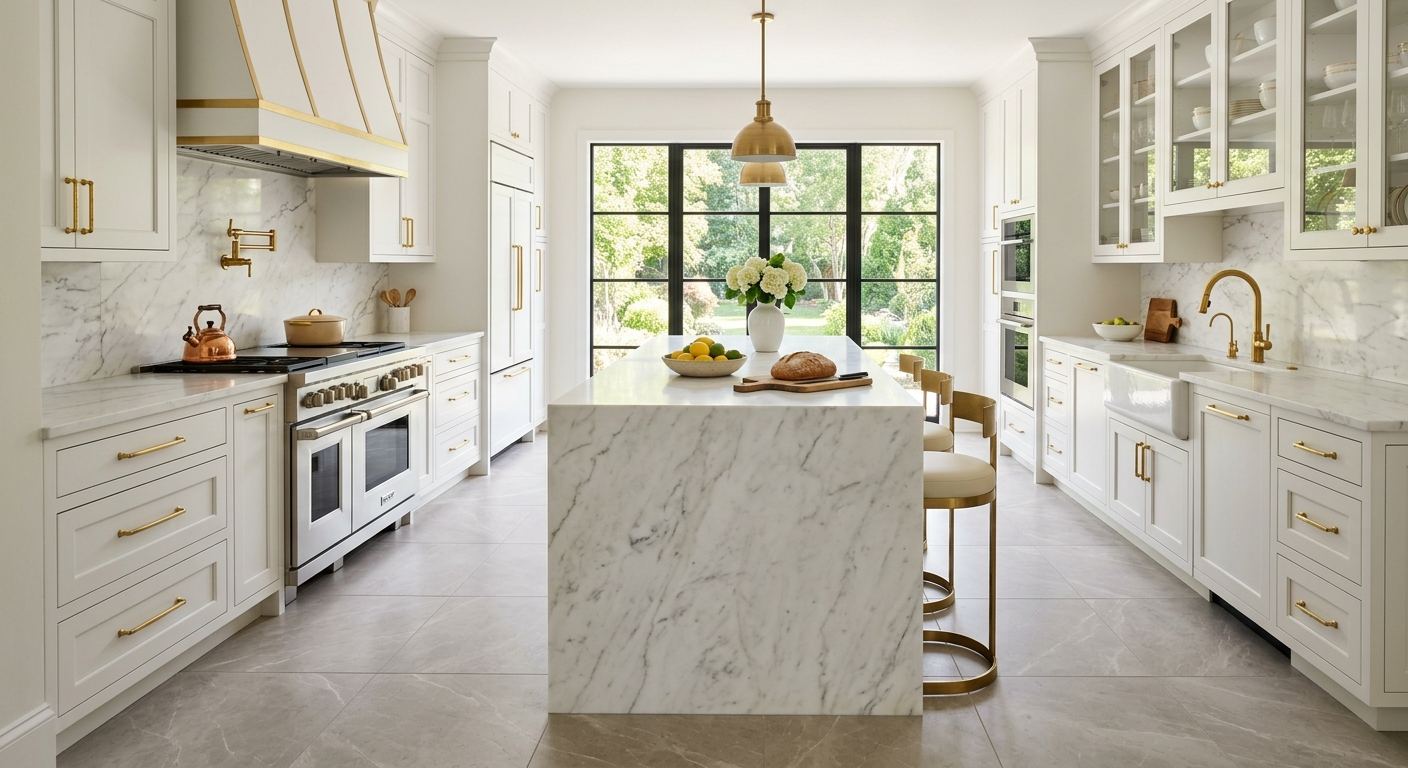
Kitchen renovation options and costs in South Pender Harbour
In South Pender Harbour, British Columbia, kitchen renovations are usually priced more around finish expectations and resale positioning than around the weather itself. With a local population of 1,187 (Statistics Canada, 2021 Census), the project market is smaller, so you’ll often book trades a bit earlier if you want tighter timelines—especially for cabinetry and countertop crews. In the Lower Mainland–Southwest, homeowners’ income and home values tend to push buyers toward upgraded materials; that’s why the same kitchen footprint can land in noticeably different cost bands from one household to another. Practically, that means homeowners who are investing for long-term use often choose semi-custom cabinetry and quartz, while refresh projects stay more restrained with paint, hardware, and selected appliance swaps.
Climate influences costs indirectly in this coastal region: humidity and salt-air can accelerate wear on some finishes and hardware, so contractors may recommend moisture-tolerant cabinet finishes, sealed stone, and better ventilation. At the same time, renovation pricing in the Lower Mainland–Southwest is driven more by expected finish level than climate alone, and availability of experienced installers tends to follow higher-volume centres in the region.
If you’re working in the popular residential pockets near Madeira Park Road and the broader community around town amenities, kitchen rebuild demand often rises when owners refresh for downsizing or when older homes need updated layouts and ventilation. Use the tiers below as a planning baseline before you start comparing contractor quotes.
| Renovation Tier |
What's Included |
Typical Duration |
Price Range |
| Cosmetic refresh (paint, hardware, new appliances only) |
Cabinet paint or refinish, new hardware, appliance swap, minor caulking/trim touch-ups |
1–2 weeks |
$8,000–$22,000 |
| Mid-range full renovation (new cabinets, counters, sink, tile) |
New semi-custom or upgraded stock cabinets, quartz or laminate counters, sink and faucet, backsplash tile, labour for plumbing/electrical within existing locations |
4–7 weeks |
$40,000–$85,000 |
| High-end full renovation (custom cabinets, stone counters, island) |
Custom millwork, premium stone (quartz/stone slabs), island design, upgraded hardware, full backsplash (often to full height), lighting/electrical upgrades, coordinated plumbing for island/feature |
7–12 weeks |
$85,000–$120,000 |
| Cabinet refacing only (new doors + drawer fronts, same boxes) |
Refaced cabinet doors/drawer fronts, new hardware, fresh trim, optional new sink base or minor box adjustments |
2–4 weeks |
$8,000–$38,000 |
| Countertop swap only (laminate to quartz or stone) |
Remove and install counters, new sink cut-out as needed, reseal/finish transitions |
3–10 days |
$6,500–$12,000 |
| Backsplash tile installation only |
Surface prep, tile installation, grout/seal, trim transitions at counters and cabinets |
3–6 days |
$1,500–$6,000 |
Prices are estimates only and vary by project scope, site access and material selection.
What affects the price of kitchen renovation in South Pender Harbour
In the Lower Mainland–Southwest, you can see the same kitchen renovation come in 30–50% apart depending on the finish tier chosen and how complex the trades package becomes. That variation often comes less from coastal climate and more from the region’s higher end-of-market expectations: where home values and household incomes support premium finishes, homeowners more commonly default to quartz or stone counters and semi-custom cabinetry—so budgets naturally move toward the higher renovation band. In more modest scenarios, laminate and stock cabinetry dominate because the goal is typically value and speed, with less cost tied to custom millwork.
Layout changes are the biggest swing factor regardless of material. Removing a wall, adding an island, or moving a gas line or plumbing supply/drain can push costs fast because it requires demolition, re-framing (if needed), licensed trades, inspections, and often electrical rework. For example, a mid-range full renovation ($40,000–$85,000) can remain reasonable if the sink and stove stay in roughly the same locations and you keep plumbing straightforward. But once you add an island with a new water line or venting strategy for a range hood, costs can drift toward the high-end full renovation ($85,000–$120,000) even if the cabinets aren’t fully custom.
In South Pender Harbour specifically, two conditions commonly raise or lower cost. First, older homes may have dated electrical runs and limited capacity for under-cabinet lighting and island circuits, which can add labour and material. Second, coastal humidity can reveal cabinet finish issues during demo—if previous coatings weren’t moisture-resistant, you may need additional prep, sealing, or replacement of compromised areas.
| Price Factor |
Why It Matters |
Cost Impact |
| Cabinet tier — stock vs. semi-custom vs. fully custom millwork |
Custom and semi-custom offer better fit, storage layouts and finish options; they also require more shop time and planning. |
$10,000–$45,000 difference across full projects |
| Countertop material — laminate vs. quartz vs. granite vs. stone |
Material cost plus fabrication/installation complexity drives price; stone may require sealing and careful handling. |
$3,000–$12,000 installed range (countertop-only band), higher with complex edges |
| Layout change — wall removal, island add, plumbing/gas move |
Demolition, new framing, venting, and licensed plumbing/gas/electrical work are labour- and inspection-intensive. |
Often +$8,000–$30,000 versus “no-move” scopes |
| Appliance package tier — builder vs. mid-range vs. pro-grade |
Pro-grade units can require different electrical/venting specs and more expensive delivery/trim kits. |
Can swing +$2,500–$12,000 |
| Flooring — refinish existing vs. full replacement |
If the floor is warped or water-damaged, you can’t safely “work around” it without redoing sections. |
$0–$8,000 depending on condition and coverage |
| Backsplash — ceramic tile vs. marble vs. full-height slab |
Natural stone and taller installs increase material waste, fabrication, and labour. |
$1,500–$6,000 typical, higher for full-height premium finishes |
| Electrical — new circuits for island, under-cabinet lighting |
New circuits require permit/inspection and can expose wiring issues behind walls. |
$1,500–$7,500+ |
| Permit fees and licensed trade requirements |
Work that touches gas/plumbing/electrical and structural elements generally triggers permits, inspections, and scheduling. |
Commonly +$800–$5,000 in administrative and trade scheduling impacts |
Permits & regulations in British Columbia
In British Columbia, many kitchen “surface” updates do not require permits. Cabinet and countertop swaps typically fall under a straightforward renovation scope—if you’re not changing plumbing/drain locations, not relocating gas appliances, and not altering electrical circuits beyond simple in-kind replacements, you generally don’t trigger the permit pathway. However, the moment you move plumbing supply/drain lines, relocate gas (stove/range hood with gas), remove a load-bearing wall, or add new electrical circuits (for example, dedicated island receptacles or new lighting circuits), permits and licensed trades usually come into play.
Step one for a South Pender Harbour homeowner is to define the scope in writing: which appliances are staying put, which are being moved, and whether any wall is being removed. Step two is to confirm who is responsible for pulling permits before anyone starts work—this should be clearly stated in the contract. Step three is to verify licences and insurance: ask your contractor for their certificate of insurance (liability coverage) and proof of the relevant licensed trade (gas fitter for gas work; electrician for electrical work). For licensing checks, review the trade’s licence details using the appropriate public registry information and ensure the licence name matches the invoice. Finally, request an inspection plan where applicable and keep copies of permit numbers and inspection documents.
Cabinets, countertops and layout decisions in South Pender Harbour
The three most consequential decisions in a South Pender Harbour kitchen renovation are: (1) cabinet tier, (2) countertop material, and (3) layout changes. These choices shape both your daily usability and your resale appeal in the Lower Mainland–Southwest, where buyers commonly expect clean lines, durable surfaces, and storage that makes the kitchen feel “bigger” even if the footprint doesn’t change.
Cabinet tier affects speed and fit. Stock cabinets install fastest and are typically the lowest cost, but semi-custom and custom millwork better accommodate out-of-square walls and odd recesses often found in older local homes. Countertops are where many budgets swing: laminate can be cost-effective, but quartz or natural stone generally delivers superior heat resistance and long-term appearance—important in a coastal climate where spills and humidity can be more noticeable over time. Layout decisions are the “justify it or don’t” category. An open-concept wall removal or island addition can be worth the cost if it improves traffic flow and creates real prep and seating space. If your kitchen is already functional, shifting budgets into better cabinets and counters often delivers stronger ROI.
Here’s a realistic dollar example: if your plan is a countertop swap only, moving from laminate to quartz can fit within the countertop installation band (about $3,000–$12,000 installed), and you avoid the cost of cabinet redesign. But if you add an island and move plumbing/gas to support an island sink or cooktop, you’re often paying layout-change costs that commonly push projects toward the higher renovation band ($85,000–$120,000) compared with a mid-range build ($40,000–$85,000) that keeps fixtures in the same general locations.
| Option |
Durability |
Maintenance |
Best For |
Price Range |
| Stock cabinets (big-box) |
Good everyday durability; fit may be less precise in older/uneven framing. |
Minimal; keep hinges adjusted and wipe moisture promptly. |
Fast timelines and straightforward layouts |
$8,000–$22,000 |
| Semi-custom cabinets (local dealer) |
Very durable with better organization options and improved sizing for local quirks. |
Low; choose moisture-resistant finishes for coastal air. |
Most South Pender Harbour mid-range remodels |
$20,000–$45,000 |
| Custom cabinets (local millwork shop) |
Highest durability and best fit; best for complex storage and architectural constraints. |
Low; proper sealing and quality hardware selection matter. |
Homes that need made-to-fit solutions and premium resale appeal |
$45,000–$75,000+ |
| Laminate countertop |
Decent impact resistance; seams need care and can show wear if abused. |
Wipe spills quickly; avoid heavy heat directly on the surface. |
Budget-focused upgrades where the look is prioritized |
$3,000–$6,500 |
| Quartz engineered countertop |
Highly durable and consistent; excellent resistance to everyday staining. |
Simple care; avoid extreme heat and use trivets. |
Busy households aiming for long-term appearance |
$6,500–$12,000 |
| Granite / natural stone countertop |
Very strong and heat resistant; natural variation is a feature. |
May require periodic sealing depending on stone type. |
Owners who want premium, unique patterns |
$7,500–$14,000 |
| Butcher block countertop |
Durable but susceptible to moisture if not maintained correctly. |
Regular oiling and prompt drying are important. |
Warm, rustic style kitchens and careful-maintenance households |
$4,500–$10,000 |
| Marble countertop |
Beautiful but softer; can etch or stain without disciplined care. |
Use pH-neutral cleaners; sealing and prompt wipe-ups are required. |
Showpiece kitchens where maintenance is acceptable |
$9,000–$18,000+ |
How to choose a kitchen renovation contractor in South Pender Harbour
Choosing the right contractor in South Pender Harbour starts with proof, not promises. In British Columbia, cabinet and countertop work may not require the same licensing as gas or electrical, but your overall project still needs the right qualified trades. Ask for their liability insurance certificate (make sure the policy is current and the project is covered), and verify the relevant licensed trade credentials for any gas or electrical scope. When checking WSIB/WCB coverage in the context of hiring, request documentation that indicates appropriate workplace coverage where applicable and confirm the policy details align with the contractor’s legal business name. If the contractor can’t provide documentation promptly, that’s a red flag.
Next, get 2–3 itemised written quotes—not just a lump sum. A proper quote should break labour and materials line-by-line (demolition, cabinet supply, installation, countertop fabrication and install, tile labour, plumbing/electrical allowances). Read the scope for what’s excluded: permit pull responsibility, disposal/haul-away, drywall repairs, cabinet reveal/trim details, and whether appliance installation is included. Warranty matters too: confirm workmanship warranty length and what it covers, and ask whether product warranties are through the manufacturer and whether they’re transferable to you as the homeowner.
For payment scheduling, never pay more than 10–15% upfront. Hold back a portion until key milestones are complete, such as cabinets set, countertops installed, and final caulking/finishing finished. Finally, require a start date and a realistic completion estimate in writing, since cabinet and countertop lead times commonly drive the schedule in this region.
- Confirm contractor name matches invoices and insurance documentation.
- Request proof of liability insurance before signing.
- Verify gas work is performed by a licensed gas fitter; verify electrical by a licensed electrician.
- Ask who pulls permits and whether it’s included in the quote.
- Get an itemised breakdown for labour and materials (no hidden “allowances” without explanations).
- Confirm disposal/haul-away is included or clearly priced.
- Require clarity on drywall patching, painting touch-ups, and floor protection during install.
- Check that product cut sheets are listed for cabinets/counters and any tile selections.
- Confirm countertop templates and fabrication responsibility are included in the timeline.
- Ask for workmanship warranty duration and what triggers service calls.
- Use a milestone payment schedule; keep a holdback until punch list completion.
- Make sure the timeline reflects realistic lead times and weather/coastal humidity curing requirements for finishes.
Red flags to watch in South Pender Harbour: (1) a quote that won’t provide insurance or licence documentation, (2) refusal to itemise labour/materials or relying on vague “allowances,” (3) promises of instant cabinet fabrication without acknowledging lead times, (4) ambiguous permit responsibility, and (5) asking for a large upfront payment well beyond 10–15%.
Frequently asked questions — kitchen renovation in South Pender Harbour
How do I budget for a kitchen renovation?
Budgeting in South Pender Harbour comes down to choosing your renovation tier early. Start by deciding whether you’re doing a cosmetic refresh, a mid-range full renovation, or a higher-end rebuild, then match cabinets and countertops to that tier. As a practical guide, a mid-range full renovation often lands around $40,000–$85,000, while higher-end full renovations that include custom cabinetry, premium stone, and an island frequently fall into $85,000–$120,000. In the Lower Mainland–Southwest, finish expectations and resale positioning are major cost drivers, so don’t assume “same size kitchen” means “same price.” Also set aside contingency for older wiring, minor framing adjustments, or moisture prep needs common in coastal British Columbia homes.
Can I move my kitchen sink or stove?
Yes, you can often move a kitchen sink or stove in South Pender Harbour, but the permit and trade requirements can change quickly depending on what moves where. Moving a sink typically involves plumbing supply and drain changes; relocating a stove can involve electrical for the range plus gas considerations if it’s a gas appliance. In British Columbia, moving plumbing lines or relocating gas generally triggers permits and requires licensed trades to complete the work and pass inspection. If you’re moving fixtures across the kitchen, demolition and re-framing costs can also increase, even when cabinets are staying put. If you want to manage budget, consider keeping the sink and stove in the same general locations and focus savings on cabinets, counters, and ventilation upgrades within the existing service routes.
What's the most cost-effective kitchen upgrade?
For most homeowners in British Columbia, the most cost-effective upgrade is usually a targeted cosmetic refresh paired with one high-impact surface decision. If your cabinets are structurally sound, cabinet refacing or a paint-and-hardware refresh can deliver a big visual change without the full teardown cost. A backsplash tile install is also relatively efficient and can modernize the kitchen quickly (often around $1,500–$6,000). If you want a single “wow” surface and your budget allows, upgrading counters from laminate to quartz is often a strong value path because it improves day-to-day durability and appearance (countertop installation frequently sits in the $3,000–$12,000 band, depending on size and edge details). The key is to avoid layout changes unless you’re gaining clear function, since plumbing/gas moves are what most often inflate the total project cost.
Custom vs stock cabinets — is custom worth it?
Custom cabinets can be worth it in South Pender Harbour when you have layout constraints, out-of-square walls, or you want integrated storage that’s hard to achieve with stock. Stock cabinets are typically the fastest and lowest cost, while semi-custom is the most common “best balance” for mid-range renovations. Fully custom millwork usually costs more, but it can reduce gaps, improve storage planning, and create a tailored look that buyers notice during showings. If your goal is a mid-range project, staying with semi-custom cabinets and allocating the budget to quartz counters often creates a better ROI than paying for full custom throughout. In higher-end builds, custom makes more sense when you’re also adding an island and upgrading hardware/lighting as a complete design package.
How do I choose a kitchen contractor in South Pender Harbour?
Choose a contractor by verifying documentation, comparing itemised quotes, and matching the contractor’s experience to your scope in British Columbia. Start by asking for proof of liability insurance and ensure any gas or electrical work is covered by the correct licensed trades (gas fitter for gas work; electrician for electrical work). Request the workmanship warranty details in writing and confirm whether manufacturer warranties on cabinets/counters are transferable to you. Get 2–3 quotes that list labour and materials separately—demolition, cabinet supply, countertop fabrication, tile, and allowances—so you can compare apples to apples. Confirm permit responsibility upfront for any job that involves plumbing/gas moves, structural wall changes, or new electrical circuits. For payment, keep the deposit to 10–15% and hold back until the punch list is complete to reduce the risk of delayed or incomplete finishing.
What order do kitchen renovation steps happen in?
In South Pender Harbour, a typical kitchen renovation sequence starts with planning and approvals, then site protection and demolition. After demolition, trades rough-in work comes next: plumbing and electrical rough-outs (and gas work if applicable) before walls are closed. Once the rough work is approved, drywall repairs and flooring prep happen, followed by cabinet installation and level/shim adjustments. Countertops are templated after cabinets are secured; fabrication then follows, and installation occurs when cabinets are stable. Tile/backsplash is usually installed after countertops are set to ensure clean alignment. Final steps include painting touch-ups, hardware installation, appliance hookup (as included), caulking, sealing stone if required, and a final punch list. If your project includes electrical lighting, plan the under-cabinet and island lighting install near the finish stage, after outlets and circuits are confirmed.