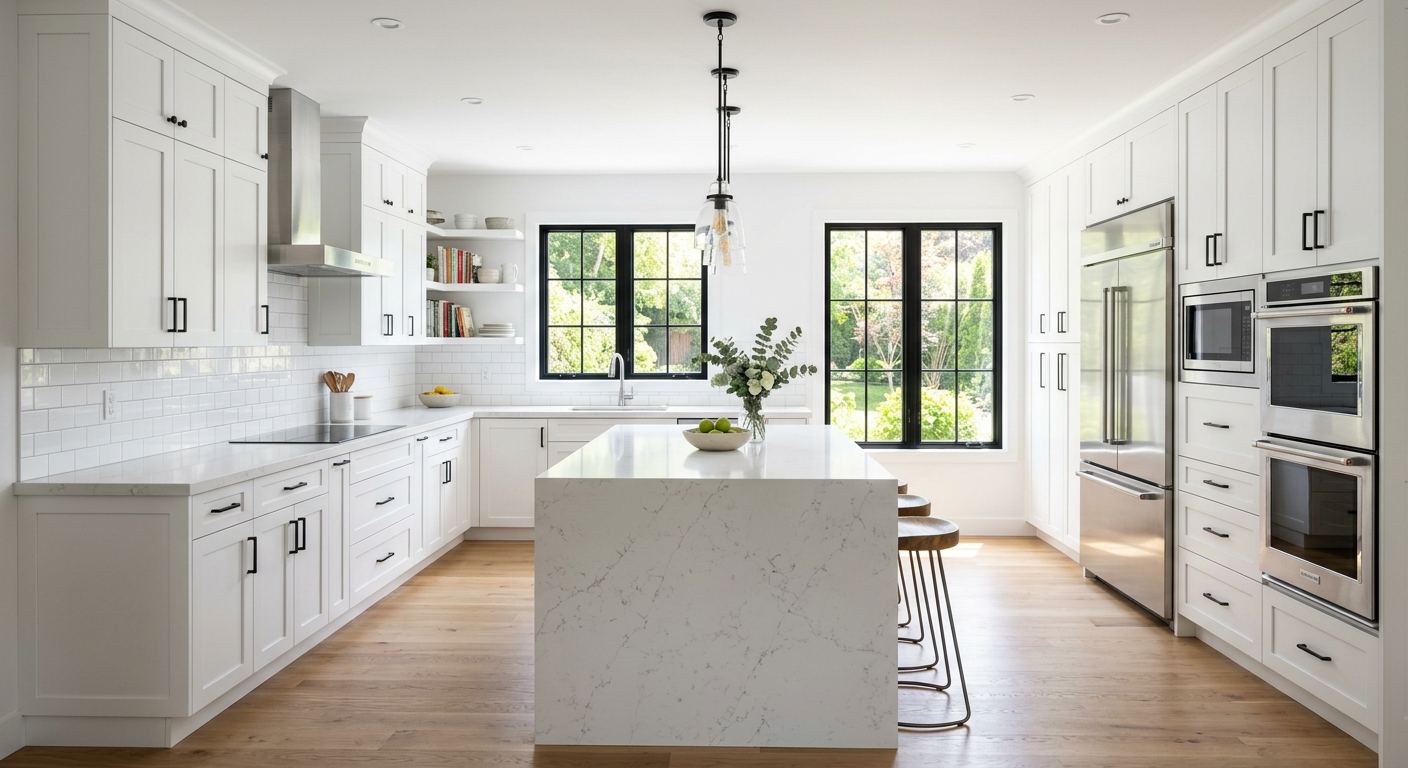
Kitchen renovation options and costs in Garden City
Kitchen renovations in Garden City, British Columbia typically start with a decision about how much of the existing kitchen you’ll reuse. With a city population of 5,885 (Statistics Canada, 2021 Census), you’ll find most renovation work feeds into a regional labour pool serving the Lower Mainland–Southwest, where contractor availability can tighten around peak spring–summer scheduling. In this broader region, many homeowners weigh renovation cost against resale expectations; higher-value households tend to pursue finishes that photo well and hold up under daily use, and that pattern is common across Metro Vancouver and adjacent areas. Even though Garden City itself is smaller than Vancouver, the market “pull” is still there when homes trade near the higher end of the local spectrum (Statistics Canada, 2021 Census).
In the Lower Mainland–Southwest, your climate does matter—humidity and frequent rain mean wood components and finishes should be chosen for moisture resilience—but pricing is more often driven by home value and the expected finish tier than by weather alone. That’s why the same kitchen size can land as a restrained refresh or jump into a premium rebuild once cabinetry, stone counters, and layout changes get included. If you’re in demand for design-led cabinetry, the trade tends to be especially active around the Garden City/City Centre corridor where families look to update kitchens for everyday liveability and resale readiness. From there, the tiers below help you compare what you’re actually buying before you request quotes.
| Renovation Tier |
What's Included |
Typical Duration |
Price Range |
| Cosmetic refresh (paint, hardware, new appliances only) |
Cabinet paint/coat or spot refinishing, new pulls/hinges, new appliances set (no plumbing or electrical changes), touch-up caulking/trim |
1–3 weeks |
$8,000–$25,000 |
| Mid-range full renovation (new cabinets, counters, sink, tile) |
New semi-custom or stock cabinets, countertops, sink and tap, backsplash tile, under-cabinet lighting allowances (if applicable), flooring tile/finish refresh, basic plumbing updates |
4–8 weeks |
$40,000–$85,000 |
| High-end full renovation (custom cabinets, stone counters, island) |
Fully custom millwork, quartz or natural stone counters, island build (or expanded peninsula), upgraded hardware, full-height or premium slab/stone backsplash, enhanced lighting and electrical planning, more complex plumbing/electrical coordination |
8–14 weeks |
$85,000–$120,000 |
| Cabinet refacing only (new doors + drawer fronts, same boxes) |
New door/drawer fronts, veneer/refacing of cabinet faces, hardware swap, reinstallation; countertops and layout typically unchanged |
2–5 weeks |
$8,000–$35,000 |
| Countertop swap only (laminate to quartz or stone) |
Remove/install existing countertop, new quartz/stone surface, sealant/edge finishing; often limited changes to sink/tap and backsplash unless bundled |
3–7 days (plus lead time) |
$3,000–$12,000 |
| Backsplash tile installation only |
Tile removal (if needed), surface prep, tile install, grout/seal, caulking to adjacent surfaces; may include electrical cover plates adjustment |
3–10 days |
$1,500–$6,000 |
Prices are estimates only and vary by project scope, site access and material selection.
What affects the price of kitchen renovation in Garden City
In the Lower Mainland–Southwest, it’s common to see the same kitchen renovation scope come in 30–50% apart across British Columbia. That gap usually isn’t weather—it’s market finish expectations and how quickly labour and trades need to move to match homeowners’ timelines. In higher-value neighbourhoods around the region, owners more often default to quartz or stone counters, upgraded hardware, and semi-custom or custom cabinetry because the renovation cost is easier to “recover” when the home is listed. In more modest markets, laminate and stock cabinets still offer the best ROI, keeping the job closer to the mid-range renovation band (for example, $40,000–$85,000) instead of pushing toward the high-end rebuild ceiling (up to $120,000).
Lower Mainland–Southwest conditions also influence cost through scheduling and material lead times, especially when multiple trades must coordinate lighting, plumbing, and ventilation in a narrow working window. While humidity in the coastal climate can raise the importance of proper cabinet sealing and ventilation, it rarely changes the permit path; it more often changes product choice and install detail. In Garden City specifically, two common cost drivers are older homes with dated plumbing runs that require more labour to access, and kitchens with limited working space where dust control and staging increase on-site time.
Concrete examples you’ll see in Garden City: (1) swapping laminate for quartz can move a “countertop-only” request into a broader package once the installer discovers sink flange/edge alignment needs, pushing you toward the upper part of the $3,000–$12,000 band; and (2) adding an island or relocating plumbing/gas line typically costs more than upgrading finishes—so the same budget can buy a nicer cabinet tier in a like-for-like layout, but a less premium finish when you change the plan.
| Price Factor |
Why It Matters |
Cost Impact |
| Cabinet tier — stock vs. semi-custom vs. fully custom millwork |
Custom boxes, spacing, and hardware allowances change both material cost and install time; tight fits reduce rework but increase planning |
Can swing most of the budget; often the biggest difference between a $40,000–$85,000 mid-range job and an $85,000–$120,000 high-end rebuild |
| Countertop material — laminate vs. quartz vs. granite vs. stone |
Material pricing and fabrication complexity affect lead time, edges, seams, and sink cut-out options |
Laminate stays near the lower end of countertop installs; quartz/natural stone commonly pushes toward the upper $3,000–$12,000 range, and more if plumbing/backsplash changes are bundled |
| Layout change — wall removal, island add, plumbing/gas move |
Structural and service changes add trades coordination, longer demolition/repair periods, and higher contingency |
Often adds the most unpredictable cost regardless of finish level; can push the same kitchen from mid-range into high-end territory |
| Appliance package tier — builder vs. mid-range vs. pro-grade |
Pro-grade units can require different venting, electrical needs, and installation clearances |
May add several thousand dollars; also affects how many changes ripple into cabinetry openings |
| Flooring — refinish existing vs. full replacement |
Protected flooring during demolition versus replacement; uneven subfloors may require prep |
Refinishing or careful protection keeps costs lower; full replacement adds both materials and labour |
| Backsplash — ceramic tile vs. marble vs. full-height slab |
Tile is labour-intensive but flexible; stone/slab is heavier, needs precision, and can require more fabrication |
Tile-only work commonly sits in the $1,500–$6,000 band; premium stone can move beyond that when extended full-height |
| Electrical — new circuits for island, under-cabinet lighting |
More power points/lighting means additional planning, licensed electrician time, and inspection scheduling |
Costs rise quickly when island outlets, GFCI needs, or rewiring are required |
| Permit fees and licensed trade requirements |
Permits and inspections cost time and add admin; licensed trade availability affects schedule |
Usually not the biggest line item, but it can shift timelines and indirectly increase labour days |
Permits & regulations in British Columbia
In British Columbia, some kitchen updates are straightforward, while other work triggers permits and licensed trades. Cabinet and countertop swaps typically do not require permits when you’re not moving plumbing or electrical components. However, if you’re relocating plumbing supply or drain lines, moving a gas stove/range hood that involves gas, removing a load-bearing wall, or adding new electrical circuits (for example, outlets on an island or under-cabinet lighting that requires new wiring), permits are generally required and licensed trades must perform the work. Gas-related alterations must be completed by a licensed gas fitter, and electrical work must be done by a licensed electrician; both require inspections as part of the process.
For a homeowner in Garden City, the verification steps should be done before signing and before demolition. First, ask for the contractor’s business information and check licences through the appropriate provincial online registry tools for the relevant trades. Second, request certificates of insurance (liability) and confirm the coverage limits match kitchen remodel risks like site staging, falls, and tool use; get this in writing. Third, confirm the workers’ compensation coverage (WSIB/WCB) so you’re not exposed if a subcontractor is injured onsite—ask for the clearance letter or proof of coverage documentation. Finally, keep a copy of the permit numbers and inspection dates (when applicable). Make it explicit in your contract who pulls permits, who schedules inspections, and who pays the permit fees—those details prevent disputes mid-project.
Cabinets, countertops and layout decisions in Garden City
The three most consequential decisions in a Garden City kitchen renovation are: (1) cabinet tier (stock, semi-custom, or custom), (2) countertop material (laminate, quartz, granite, butcher block, or marble), and (3) layout changes (open-concept wall removal, island addition, or plumbing/gas relocation). In the Lower Mainland–Southwest resale market, buyers typically expect a clean, durable surface and cabinetry that looks intentional—especially in homes priced for family move-in convenience. That expectation is why mid-range renovations often sit in the $40,000–$85,000 band, while full custom builds commonly push toward $85,000–$120,000 when you add an island and upgrade cabinetry and stone.
On climate: coastal humidity means you should plan for good ventilation (range hood ducting where required) and choose cabinet systems that can handle moisture without swelling. Good sealing and proper gap finishing matter as much as the material. Laminate can still work well, but it’s less forgiving for chips at edges. Quartz and natural stone are harder-wearing for daily cooking, but they cost more and require accurate templates—especially if you change the layout.
Here’s a dollar example: if you’re deciding between stock cabinets and semi-custom for a typical mid-sized kitchen, the upgrade can be worth it when it improves drawer storage and fit around awkward corners. For instance, adding semi-custom cabinetry may move your cabinet portion higher within the overall mid-range band; but if that budget forces you to cut down on countertop quality, you may lose the “premium” feel buyers pay for. Meanwhile, layout changes are only justified when the space gain is real—an island that improves circulation can pay off, but moving plumbing/gas almost always increases labour and coordination costs more than upgrading finishes alone.
| Option |
Durability |
Maintenance |
Best For |
Price Range |
| Stock cabinets (big-box) |
Good for everyday use; durability depends on door core and finish quality |
Low—wipe down; touch up minor chips promptly to protect edges |
Fast refreshes and tighter budgets |
$8,000–$25,000 |
| Semi-custom cabinets (local dealer) |
Very good—better sizing options and hardware integration |
Low—plan for normal wipe-down; keep hardware tightened |
Most Garden City renovations seeking a resale-friendly finish |
$20,000–$55,000 |
| Custom cabinets (local millwork shop) |
Excellent—best fit, stronger joinery options, and more storage tailoring |
Low to moderate—durable finishes, but hinges/drawers benefit from proper adjustment |
Design-led kitchens, tricky layouts, and maximum longevity |
$35,000–$80,000 |
| Laminate countertop |
Moderate—surface is stain-resistant, but edges/chips can happen with impact |
Low—avoid harsh abrasives; manage moisture at seams |
Budget-conscious projects where layout is unchanged |
$3,000–$6,500 |
| Quartz engineered countertop |
High—hard, consistent surface that resists staining and everyday wear |
Low—routine cleaner, minimal sealing; protect from extreme heat |
Mid-range to premium remodels in the Lower Mainland–Southwest |
$6,500–$11,000 |
| Granite / natural stone countertop |
High—natural durability and heat tolerance vary by stone type |
Moderate—often benefits from periodic sealing and careful seam detailing |
Premium looks with natural variation |
$8,000–$12,000 |
| Butcher block countertop |
Moderate to high—resilient to impact, but can scratch and requires care |
Moderate—oil/finish maintenance; wipe promptly to limit moisture swelling |
Warm, traditional kitchens where maintenance is acceptable |
$5,000–$10,000 |
| Marble countertop |
Moderate—beautiful but more susceptible to etching/staining |
Moderate—requires careful cleaning; sealing matters |
Design-forward kitchens with lighter day-to-day wear |
$9,000–$14,000 |
How to choose a kitchen renovation contractor in Garden City
Choosing the right contractor in Garden City comes down to proof, not promises. First, verify British Columbia trade licensing that matches the work: ask which tasks will be done by licensed electricians and licensed gas fitters (when gas is involved), and confirm the contractor’s overall authority to manage the scope. For liability insurance, request a certificate of insurance and confirm the contractor carries enough coverage for the scale of a kitchen build. For workers’ compensation, confirm WSIB/WCB coverage with the appropriate clearance letter or proof of coverage—this protects you if a worker is injured onsite.
Second, request 2–3 itemised written quotes with labour and material breakdowns, not a single lump sum. Make sure the quote includes whether permits are pulled by the contractor, and whether disposal/dump fees are included. Third, read exclusions line-by-line: note what’s assumed for demolition, subfloor repairs, patching/drywall, and whether old cabinets are removed and hauled away. Fourth, confirm warranty terms: workmanship warranty length, product/manufacturer warranty, and whether warranties are transferable to a new owner (important for resale). Fifth, use a sensible payment schedule—never more than about 10–15% upfront, and keep a holdback until key milestones are complete (for example, install completion and final punch list).
Finally, timeline clarity matters. Get the start date and an estimated completion date in writing, and ask what happens if countertop fabrication lead times change. A reputable team will plan around lead times, not ignore them.
- Request licence details relevant to your scope (electrician/gas fitter for those trades).
- Confirm liability insurance with a certificate and coverage limits.
- Confirm WSIB/WCB clearance for any workers/subcontractors.
- Get 2–3 itemised quotes (labour + materials), not just a total.
- Ensure permits responsibility and inspection scheduling are written in the contract (when required).
- Confirm disposal/dump fees and whether recycling/landfill is included.
- Ask what’s included in demolition and what’s excluded (e.g., drywall patching).
- Check warranty length for workmanship and whether it’s transferable.
- Verify cabinet/countertop product warranty terms and cut-out responsibility around sink edges.
- Confirm the payment schedule: keep 10–15% as holdback until completion/punch list.
- Get start date, milestones, and a completion estimate in writing.
- Demand a clear change-order process with written approvals before extra charges.
Red flags to watch for in Garden City: (1) “all-in” pricing with no material lists or labour breakdowns; (2) refusal to provide insurance/WCB clearance documentation; (3) vague timelines that don’t account for cabinet and stone fabrication lead times; (4) no written scope for permits or licensed trade responsibility when electrical/gas/plumbing changes are included; and (5) large upfront payments with no holdback tied to completion.
Frequently asked questions — kitchen renovation in Garden City
Can I move my kitchen sink or stove?
Yes, you can move a kitchen sink or stove in Garden City, British Columbia, but it’s usually where the project becomes more complex. A sink move generally involves changes to plumbing supply and/or drain lines, which typically triggers permits and requires licensed plumbers. Moving a stove can involve plumbing only if it’s electric, but if it’s gas you’ll be dealing with a licensed gas fitter and gas line routing plus inspections. Because this work adds labour and scheduling coordination, it often costs more than upgrading finishes. If you’re aiming for a mid-range renovation (often $40,000–$85,000), plan your plumbing/gas move early so contractors can accurately scope layout, cabinet base adjustments, and countertop cut-outs.
What's the most cost-effective kitchen upgrade?
The most cost-effective upgrade in many Garden City homes is usually a combination of high-impact, low-demolition changes—think cabinet hardware plus a fresh paint/finish on existing cabinets, paired with new appliances if your layout is staying the same. When you want more visual change without full demolition, cabinet refacing (new doors and drawer fronts while keeping the boxes) is another strong value option. For many homeowners, that kind of scope often sits within the $8,000–$35,000 range depending on size and finish. If you want the “new kitchen” feel for the least disruption, consider redoing backsplash tile and upgrading lighting, because these upgrades transform the look while limiting changes to plumbing and electrical.
Custom vs stock cabinets — is custom worth it?
Custom cabinets can be worth it, but only if your kitchen has a real reason for them—awkward dimensions, unusual corners, or you want storage design that stock can’t deliver. In the Lower Mainland–Southwest, many buyers respond strongly to a cohesive, built-in look, and semi-custom is often the “sweet spot” for resale-friendly results without runaway costs. Stock cabinets are typically fastest and cheapest, and you can still get a modern look with good colours and hardware. If you jump to fully custom millwork, the budget usually climbs into the high-end renovation ceiling (up to $120,000) when paired with stone counters and island complexity. If your layout is straightforward, semi-custom often delivers the best balance of fit, durability, and long-term satisfaction.
How do I choose a kitchen contractor in Garden City?
Start by verifying the contractor’s ability to deliver your specific scope safely and legally in British Columbia. Ask for proof of liability insurance, and confirm workers’ compensation coverage via WSIB/WCB clearance documentation. For work that triggers licensed trades—especially electrical, gas, and any plumbing relocations—request confirmation that licensed electricians/gas fitters will perform those tasks. Then compare 2–3 itemised quotes with a labour-and-material breakdown. Make sure the scope clearly states what’s included for disposal, any drywall patching, permit pulling (where applicable), and whether the quote covers countertop templating and installation coordination. Finally, check warranty terms for workmanship and products, including whether warranties are transferable to a future buyer.
What order do kitchen renovation steps happen in?
A typical kitchen renovation sequence in Garden City starts with demolition and rough-in planning. If you’re moving plumbing or electrical, the licensed trades handle rough-ins after demolition and before walls are closed—this is also when permits and inspections are scheduled where required. Next comes cabinet install, then countertop templating and fabrication lead time. Once cabinets and countertops are set, the backsplash, flooring touches, and final trim happen. Appliances connect at the end, and under-cabinet lighting is completed right before finishing so you don’t have to re-open surfaces. This order matters for lead times: if stone fabrication slips, it can delay install and your completion date, so a good contractor locks in templates and timelines early.
Can I live at home during a kitchen renovation in Garden City?
Often yes, but it depends on the scope and whether your kitchen is being fully rebuilt or just refreshed. For a cosmetic refresh or cabinet refacing, many Garden City homeowners remain at home because demolition is minimal and the work is more contained. For mid-range full renovations (commonly $40,000–$85,000) or high-end rebuilds with an island and stone counters (up to $120,000), living onsite is possible but usually requires setting up a temporary cooking area and protecting adjacent rooms from dust. The key is a contractor who sequences work cleanly, uses dust control measures, and keeps electrical/plumbing downtime predictable. Ask about work hours, dust containment, and whether you’ll have access to a functional sink and fridge during the longest cabinet/countertop lead time period.