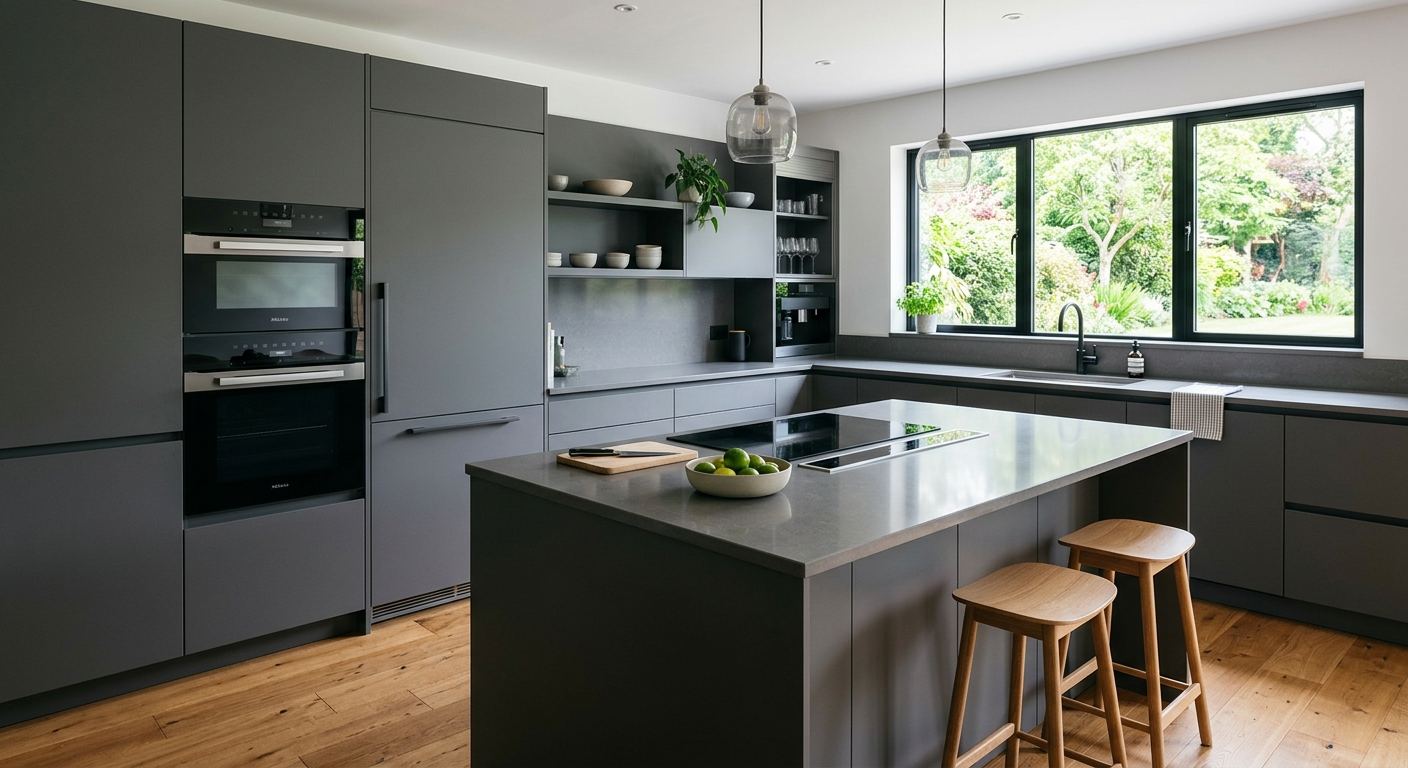
Kitchen renovation options and costs in Ambleside
In Ambleside, kitchen renovation choices tend to follow your home’s value and the finish level expected by today’s buyers, not just the calendar and weather. With a population of 11,998 in 2021 (Statistics Canada, 2021 Census), the Lower Mainland–Southwest market is active enough that contractors are busy year-round, but your scope still drives pricing. In neighbourhoods of the Lower Mainland–Southwest where household income supports premium upgrades, homeowners often move faster to semi-custom cabinetry and stone counters because they’re easy to appraise and market on resale. That’s also why the same kitchen size can look “normal” in one part of the region and “premium” in another.
BC’s coastal climate doesn’t usually swing kitchen labour availability the way it does in harsher regions, but it can affect material handling and scheduling—humidity and marine air can be tougher on some finishes and woodwork if storage and installation methods aren’t controlled. Still, in the Lower Mainland–Southwest, pricing is more heavily influenced by home value, expected resale return, and the labour/trade mix needed for cabinetry, electrical, and plumbing. In Ambleside—especially the West Van–area style properties near the seawall corridor—kitchen contractors are often in demand because many homes are either older (requiring careful service upgrades) or designed with layouts that make island and lighting changes more complex.
Below are the common renovation tiers clients choose in Ambleside, plus what typically fits in each scope. Use these as starting points, then line up your measurements, cabinet selections, and any layout or utility moves before you compare quotes.
| Renovation Tier |
What's Included |
Typical Duration |
Price Range |
| Cosmetic refresh (paint, hardware, new appliances only) |
Cabinet paint or touch-up, new hardware, appliance swap, basic caulking and re-sealing, minor trim/finishing |
3–7 days |
$12,000–$30,000 |
| Mid-range full renovation (new cabinets, counters, sink, tile) |
New cabinetry (stock or semi-custom), new countertop, sink and faucet, backsplash tile, disposal/straightforward plumbing reconnect |
2–4 weeks |
$40,000–$85,000 |
| High-end full renovation (custom cabinets, stone counters, island) |
Custom or fully custom millwork, stone counters (often quartz or natural stone), island build, upgraded hardware/lighting, design-led layout changes |
4–8 weeks |
$85,000–$120,000 |
| Cabinet refacing only (new doors + drawer fronts, same boxes) |
Door/drawer replacement, new panels as needed, hinges/rollers, veneer/trim work, hardware changes |
1–2 weeks |
$8,000–$35,000 |
| Countertop swap only (laminate to quartz or stone) |
Remove and replace existing countertop, cut-outs (sink/cooktop as applicable), re-caulk and seal, minor backsplash tie-in |
3–7 days |
$6,000–$12,000 |
| Backsplash tile installation only |
Surface prep, tile supply (if selected), install and grout, caulking to walls and counters |
3–6 days |
$1,500–$6,000 |
Prices are estimates only and vary by project scope, site access and material selection.
What affects the price of kitchen renovation in Ambleside
You’ll often see kitchen renovation quotes in Ambleside that vary by 30–50% for the same “square footage” scope across the Lower Mainland–Southwest and the broader province because the biggest cost drivers aren’t weather—they’re what level of finish and complexity you choose. In higher-value parts of Metro Vancouver, homeowners more frequently opt for quartz or stone counters and semi-custom cabinetry, along with upgraded hardware and lighting, which pushes total projects upward compared with more restrained refresh jobs. In more modest markets, laminate and stock cabinets dominate because they deliver a stronger ROI for comparable budgets. Climate matters, but mainly at the margins (storage conditions for wood products, drying time for finishes, and how quickly dust-control can be managed in enclosed homes).
In Ambleside specifically, local home values and buyer expectations typically influence the finish tier more than temperature does. That’s why many projects land in the mid-range ($40,000–$85,000) when the plan stays practical, and move toward the high-end ($85,000–$120,000) when you add an island, increase cabinetry depth, or change utilities. Two common Ambleside cost examples: (1) older service runs behind the walls can require additional plumbing and valve work once the wall is opened, which adds labour even if cabinetry selections stay mid-range; (2) homes with tighter access near entryways often require careful material staging and slower work sequencing, especially for stone countertop templating and install.
Finally, layout changes are the most unpredictable cost regardless of materials. Removing a wall, adding an island, or moving a gas line can create a chain reaction—new electrical circuits, new plumbing tie-ins, permit steps, patching, and schedule impacts—so those items tend to widen quote gaps more than paint or tile does.
| Price Factor |
Why It Matters |
Cost Impact |
| Cabinet tier — stock vs. semi-custom vs. fully custom millwork |
Custom fit, unique door styles, integrated storage, and build quality change labour and install time |
$ typically shifts the cabinet portion by thousands |
| Countertop material — laminate vs. quartz vs. granite vs. stone |
Material price, cut complexity, and install handling drive cost; stone also changes template and labour demands |
$ can move countertop totals from the low band to the high band quickly |
| Layout change — wall removal, island add, plumbing/gas move |
Forces structural work, new framing and subfloor work, plus plumbing/electrical rework |
$ often adds the largest, most variable “quote gap” |
| Appliance package tier — builder vs. mid-range vs. pro-grade |
Electrical draw, ventilation requirements, and fit/finish tolerances differ |
$ adds variability even when cabinets stay the same |
| Flooring — refinish existing vs. full replacement |
Some floors survive a demo cleanly; others need full replacement for level and appearance consistency |
$ can add a few thousand depending on subfloor and material type |
| Backsplash — ceramic tile vs. marble vs. full-height slab |
Stone slabs and specialty patterns require more cutting, handling, and labour |
$ commonly separates standard tile from premium looks |
| Electrical — new circuits for island, under-cabinet lighting |
Rewiring and adding circuits require licensed electrician work and can extend timelines |
$ typically increases cost when walls must be opened |
| Permit fees and licensed trade requirements |
Certain utility moves and structural changes trigger permit and inspections |
$ adds cost and scheduling steps, regardless of finish tier |
Permits & regulations in British Columbia
In British Columbia, some kitchen changes are straightforward from a permit standpoint, while others clearly require permits and licensed trades. Generally, swapping cabinets and countertops in place typically does not require a permit—if you’re not altering the rough-in plumbing, drainage, venting, gas lines, or the structural framing. Many homeowners in Ambleside start with these low-disruption upgrades because they control budget and timeline.
Work that typically DOES require a permit: moving plumbing supply or drain lines; relocating a gas stove and changing gas routing; removing a load-bearing wall or making structural changes; adding new electrical circuits (for example, wiring a kitchen island or adding major power for ventilation); and any electrical work beyond minor like-for-like connections.
Work that typically does NOT require a permit: installing new cabinets and counters where the plumbing and gas hookups remain in the same locations; backsplash replacement that doesn’t affect wiring or plumbing; and like-for-like appliance swaps (as long as the existing connections are unchanged).
How a homeowner verifies licensing (step-by-step): (1) Ask the contractor for their current licence number (where applicable) and proof they’re set up to pull permits if required; (2) request a certificate of insurance showing liability coverage and ask the effective dates; (3) confirm trade coverage documents—what your trades carry in their insurance/coverage package—so you’re not left holding unexpected replacement costs; (4) for electrical and gas work, ensure those permits (and inspections) are handled by the licensed trades themselves; and (5) keep copies of everything in writing—permit responsibilities belong in your contract before any demo starts.
Cabinets, countertops and layout decisions in Ambleside
When you renovate a kitchen in Ambleside, the three most consequential decisions are (1) cabinet tier, (2) countertop material, and (3) layout changes. These choices shape how your kitchen feels day-to-day, but they also determine where your renovation budget goes, especially in the Lower Mainland–Southwest resale market. Buyers here often expect a clean, modern look with durable surfaces and storage that feels intentional—so mid-range upgrades can have an outsized impact compared to “cosmetic only” improvements.
1) Cabinet tier: Stock cabinets are typically fastest and cheapest. Semi-custom cabinets are the most popular mid-range option because you can adjust heights, drawers, and some interior storage without paying custom-millwork rates. Custom cabinets are the highest cost but are the best fit for non-standard wall lengths or built-in features around windows and ceilings.
2) Countertops: Laminate is budget-friendly but can show wear sooner. Quartz engineered counters offer strong stain resistance and stable looks in BC’s humid coastal conditions. Natural stone (granite/other stone) brings unique veining but is more expensive and requires careful sealing practices.
3) Layout changes: Open-concept wall removal and island additions can be justified when you’re gaining usable workspace and better traffic flow. However, if you’re moving plumbing or a gas line, costs can jump into permit and licensed trade territory—often pushing a mid-range project toward the high-end band.
A realistic example: moving from laminate to quartz often fits within the ($6,000–$12,000) countertop install band, while adding an island with electrical and (if needed) plumbing changes is the kind of decision that can push a project from the mid-range ($40,000–$85,000) band toward ($85,000–$120,000), even if cabinet choices stay mid-range.
| Option |
Durability |
Maintenance |
Best For |
Price Range |
| Stock cabinets (big-box) |
Solid for typical use; fit depends on your wall conditions |
Low—cleaning and hardware upkeep only |
Fast timelines, budget planning, straightforward measurements |
$12,000–$25,000 |
| Semi-custom cabinets (local dealer) |
Better internal storage and door/drawer options; good tolerance for typical BC homes |
Low—standard cabinet care |
Most Ambleside renovations aiming for durability and resale appeal |
$25,000–$45,000 |
| Custom cabinets (local millwork shop) |
Highest build quality and fit; best when walls/windows/ceilings aren’t standard |
Low, but expect more detailed finishing care based on materials |
Challenging layouts and design-led builds |
$45,000–$80,000 |
| Laminate countertop |
Prone to wear at edges and seams with heavy use |
Wipe-clean; avoid prolonged heat exposure and abrasive pads |
Budget-first refreshes |
$3,000–$6,000 |
| Quartz engineered countertop |
Very durable; resists stains and daily impacts well |
Low—routine cleaning, minimal sealing needs |
Busy households wanting a premium, consistent look |
$6,000–$12,000 |
| Granite / natural stone countertop |
Extremely hard; variety in porosity depending on stone type |
Periodic sealing and careful stain management |
Premium aesthetics and unique stone character |
$8,000–$15,000 |
| Butcher block countertop |
Durable for cooking; needs good care at seams/edges |
Oil/condition regularly and protect from moisture exposure |
Warm, classic looks and light-to-moderate use |
$5,000–$10,000 |
| Marble countertop |
Beautiful but more susceptible to etching and staining |
Higher maintenance—requires careful cleaning and sealing |
Design-led kitchens where appearance is the priority |
$10,000–$20,000 |
How to choose a kitchen renovation contractor in Ambleside
Choosing the right contractor in Ambleside is less about “who seems busy” and more about how clearly they can prove compliance, control scope, and protect you from change orders. In British Columbia, confirm licensing and coverage before work begins. For electrical and gas-related scope, make sure licensed trades will be used and that inspections are included where required. Ask for their certificate of insurance (liability) and verify the effective dates overlap with your planned project window. For coverage expectations, request proof of the coverage your contractor and their subcontractors carry—so you’re not left dealing with injuries or property damage without recourse.
Next, get 2–3 itemised written quotes (not lump sums). The best quotes break labour and materials out separately—cabinet supply and install, countertop supply and install, demo/disposal, tile labour, electrical scope, and plumbing scope—so you can compare apples to apples. Read the scope line by line: what’s excluded? Is permit pulling included if required, or is it “by homeowner”? Is disposal included (dump fees and haul-away), and who handles protection and dust control?
Warranty matters: ask for a workmanship warranty length, whether product warranties are provided by the manufacturer, and if warranties are transferable if you sell within the coverage period. Payment schedule is another major protection point—never accept a plan with more than 10–15% upfront, and hold back the remainder until punch-list items are complete. Finally, ensure you receive a written start date and an estimated completion timeline.
- Ask for proof of liability insurance with matching project dates and address.
- Confirm which work needs permits and who is responsible for pulling them.
- Verify licensed trades are assigned for electrical and gas if that scope is included.
- Request itemised pricing (labour vs materials) and compare like-for-like selections.
- Get a disposal/haul-away line item—don’t assume demo waste is included.
- Ensure dust protection and jobsite access details are included (especially for occupied homes).
- Confirm countertop templating responsibility and how changes affect schedule.
- Ask for warranty terms in writing: workmanship and product/manufacturer warranty.
- Set a payment schedule with a 10–15% maximum deposit and a holdback until completion.
- Require a detailed timeline with milestones (demo, rough-in, cabinets, countertops, finish).
- Clarify how change orders are priced and capped (e.g., labour rates and material markups).
- Check that the contract states who verifies measurements and tolerances before fabrication.
Red flags to watch for in Ambleside: (1) quotes that don’t list disposal, plumbing/electrical scope, or backsplash/tile labour separately; (2) refusing to provide licensing/insurance documents or “handling permits later”; (3) pushing for large upfront payments beyond 10–15% without a schedule; (4) vague timelines like “about a month” with no milestones; and (5) no written warranty details for workmanship or product coverage.
Frequently asked questions — kitchen renovation in Ambleside
Can I live at home during a kitchen renovation in Ambleside?
Often, yes—many homeowners in Ambleside renovate while living in the home, particularly when the scope is a cosmetic refresh or a focused band like cabinet installation/refacing and countertop swaps. The key is sequencing. A full mid-range renovation may take 2–4 weeks, so you’ll typically need a temporary setup for cooking (a toaster oven, kettle, or portable induction) and a safe zone for dust control. Contractors who do this well schedule demolition and rough-ins in phases so you can still access a working sink and fridge area, even if the main kitchen is under construction. Coastal humidity in the Lower Mainland–Southwest also means good ventilation and drying control matter for finishes—so confirm the plan for curing times and dust suppression before you start.
Should I renovate my kitchen before selling in Ambleside?
It depends on your buyer pool and the condition of your current kitchen. In Ambleside and the broader Lower Mainland–Southwest, kitchens tend to be a major decision point, so updates that improve durability and visual quality can help—especially if you’re moving from older surfaces to quartz counters and updated cabinetry. If your goal is resale, a mid-range full renovation in the $40,000 – $85,000 band can be a sensible target when the layout is practical and utilities stay mostly where they are. If you can’t justify high-cost changes like full custom cabinetry or extensive utility relocation, a cosmetic refresh or cabinet refacing often gives better ROI. Your local realtor’s input on what buyers expect for your specific home value segment is worth using before committing to full demolition.
What's the most popular kitchen style in Ambleside right now?
While tastes vary by home and neighbourhood, the most common direction in Ambleside renovations is a clean, modern look with warm-neutral materials, white-to-light cabinetry, and durable countertops—often quartz. Many homeowners choose semi-custom cabinetry because it balances cost with better storage layouts, soft-close hardware, and practical drawer sizing. Quartz counters are also popular because they hold up well to everyday cooking and typical coastal humidity patterns when installed and sealed correctly. If you’re targeting the high-end band $85,000 – $120,000, you’ll see more islands, statement lighting, and custom details like integrated storage and upgraded hardware. For budget-conscious updates, homeowners often stick to a cosmetic refresh or limited tile/backsplash changes to maintain a cohesive, updated appearance.
How do I know if I need to update my kitchen plumbing in Ambleside?
Look for warning signs first: slow drains, frequent clogs, leaks under the sink, old shutoff valves, or water staining around plumbing connections. If your home is older, it’s also common to discover ageing supply lines once demo begins. Even if you’re not moving the sink location, renovation can reveal issues that require patching or rerouting, which is why a good contractor includes a plumbing assessment in the pre-planning stage. Plumbing updates can also be triggered when you change layout—especially if you add an island or move the sink—because that may require new supply and drainage tie-ins. In BC, moving plumbing supply or drain lines typically involves permits and licensed trades, so confirm the scope early to avoid surprise change orders.
What is the difference between a galley and open-concept kitchen?
A galley kitchen is a narrow layout where counters and cabinets run on two parallel walls, often with a walkway through the middle. An open-concept kitchen combines kitchen space with adjacent living or dining areas, usually by removing a wall or reorganising the flow so the kitchen visually connects to the rest of the home. In Ambleside, open-concept upgrades are popular when homes allow it, but wall removal and structural considerations can significantly affect schedule and cost—especially if electrical, plumbing, or ventilation changes are needed. Many homeowners choose to keep a galley layout and update finishes (cabinets/counters/backsplash) because it’s cheaper and often lands in the mid-range or refresh tiers rather than the high-end rebuilds.
How do I get accurate kitchen renovation quotes in Ambleside?
To get accurate quotes, provide the same baseline information to each contractor: photos, measurements, your appliance list (or desired tier), and a clear plan on whether you’re keeping utilities in the same locations. Ask for itemised written quotes that break out labour and materials—cabinet supply vs install, countertop supply vs install, tile/backsplash labour, and any electrical or plumbing work. Make sure you understand what’s included for disposal, permit pulling responsibility, and jobsite protection. Quote accuracy also depends on selecting your countertop material and cabinet tier early because templating and ordering can’t be done “in theory.” If your budget is anchored around the mid-range $40,000 – $85,000 band or the high-end $85,000 – $120,000 band, communicate that target so options are realistic. Finally, confirm the timeline milestones in writing and identify potential variables like stone templating lead times and any hidden service issues.