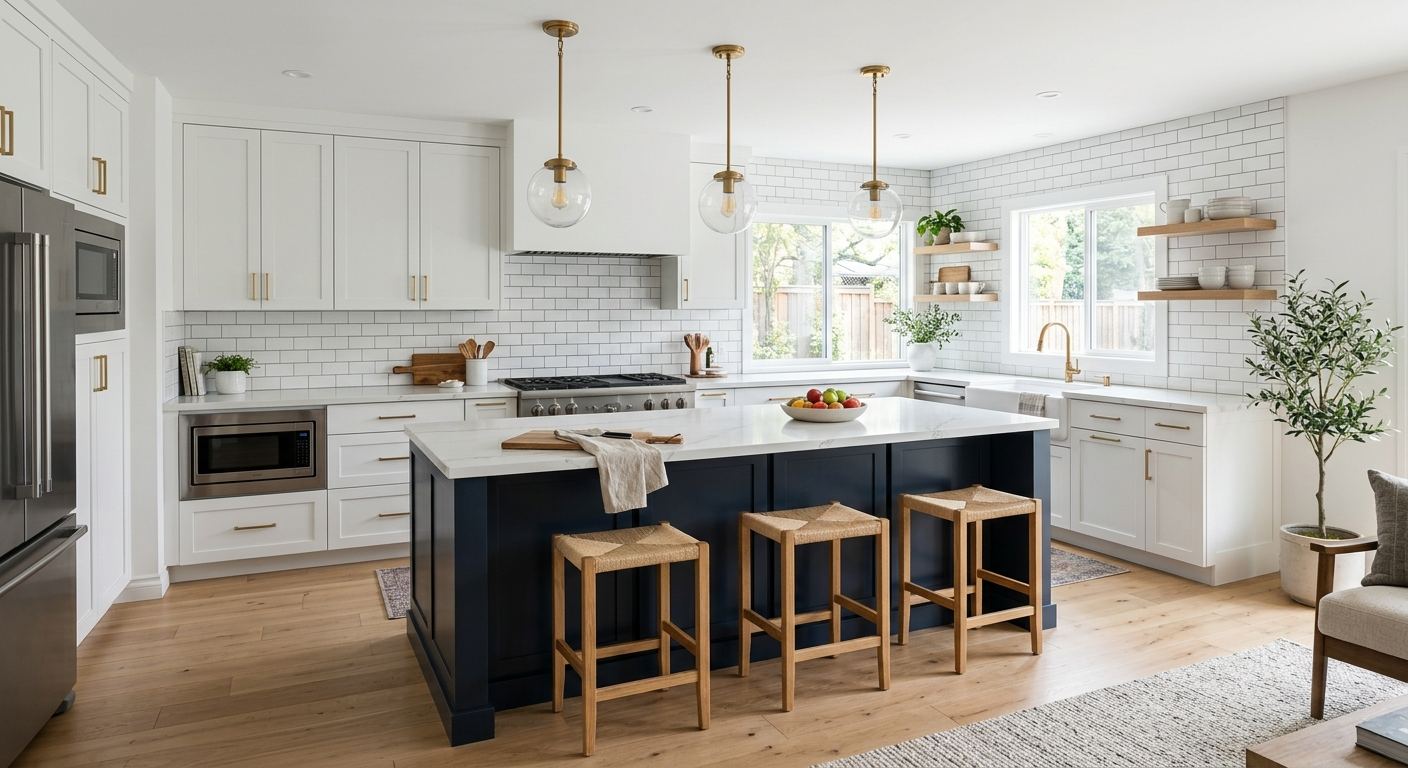
Kitchen renovation options and costs in Lakeview Heights
In Lakeview Heights, kitchen renovations tend to follow the broader Lower Mainland–Southwest pattern: homeowners want a clean, resale-friendly look without overpaying for work they can’t see. With a 2021 population of 3,694 (Statistics Canada, 2021 Census), the local market is smaller, so contractor availability can tighten during peak renovation seasons, especially when multiple projects compete for the same cabinet makers and tile crews. At the same time, Lower Mainland buying expectations remain elevated, and the pricing conversation often starts around overall household affordability and home equity rather than climate alone—finish upgrades are chosen because they “match the neighbourhood” and help protect resale value.
Across British Columbia, the biggest drivers are home value, income, and the expected finish level. In higher-value Metro Vancouver-adjacent areas, owners more often choose semi-custom or custom cabinetry, quartz or stone counters, and design-led layouts (rather than a paint-and-hardware refresh). The climate still matters for durability and maintenance choices—humidity swings and cold, damp winters can accelerate wear on particleboard cores and grout if the wrong products are selected—but it’s usually not the reason prices jump by 30–50%. Instead, labour rates, scheduling, and material selections push totals upward.
On practical terms in Lakeview Heights, the trade is especially busy around the family-oriented pockets near local school corridors where multi-phase renovations are common. If you’re planning timelines around school schedules, the right tier selection early on helps you lock pricing and reduce change orders—so let’s compare typical options and ranges below.
| Renovation Tier |
What's Included |
Typical Duration |
Price Range |
| Cosmetic refresh (paint, hardware, new appliances only) |
Paint, new cabinet hardware, faucet swap, appliance replacements (no cabinet box changes), basic caulking, disposal coordination |
1–2 weeks |
$8,000–$18,000 |
| Mid-range full renovation (new cabinets, counters, sink, tile) |
New semi-custom cabinets, countertop (quartz or laminate), sink + faucet, backsplash tile, updated plumbing fixtures (no major move), flooring refinishing or selective replacement, under-cabinet lighting (if included) |
4–8 weeks |
$40,000–$85,000 |
| High-end full renovation (custom cabinets, stone counters, island) |
Custom millwork, stone countertops (quartz/stone), island build with seating, full backsplash treatment, upgraded appliance package, likely electrical/plumbing rework for island, premium hardware and trim details |
8–14 weeks |
$85,000–$120,000 |
| Cabinet refacing only (new doors + drawer fronts, same boxes) |
Replace doors/drawer fronts, new drawer systems (where needed), cabinet finishing, new hardware; reuse existing boxes and layout |
2–5 weeks |
$20,000–$45,000 |
| Countertop swap only (laminate to quartz or stone) |
Remove and replace existing countertop, fabricate/install quartz or stone, sink cut-out adjustments, new caulking, optional backsplash edge detail |
3–7 days for install (plus lead time) |
$5,000–$12,000 |
| Backsplash tile installation only |
Surface prep, waterproofing membrane where appropriate, tile supply and install, grout + sealant, trim and transitions at cabinets |
1–2 weeks |
$1,500–$6,000 |
Prices are estimates only and vary by project scope, site access and material selection.
What affects the price of kitchen renovation in Lakeview Heights
If you get two quotes for the “same” kitchen in the Lower Mainland–Southwest, it’s common to see a 30–50% spread because the scope interpretation changes: one contractor prices in better allowances for labour protection, another includes electrical upgrades or permit handling, and finish tiers can be matched differently to your home’s resale target. In British Columbia, local home value and typical household income expectations often shape what owners choose—more than weather does. In higher-value {region} markets (including much of the Metro Vancouver orbit), homeowners default to quartz or stone counters and semi-custom cabinetry because the upgrade is easier to recoup at sale. In more modest-value areas, laminate and stock cabinets still dominate because the renovation cost stays closer to a comfortable ROI window.
In Lakeview Heights specifically, a few conditions consistently move cost either up or down. First, many homes are older with narrower runs and wiring placed for older appliance layouts—adding an island or upgrading under-cabinet lighting often means new electrical circuits and drywall patching. Second, if your current cabinet boxes are sagging or poorly secured, a refacing approach can require corrective framing before the doors go on, pushing you toward a full cabinet replacement. Third, tile performance matters in this coastal climate; if prep and waterproofing are skipped, grout discolouration and adhesion issues show up faster, especially around sink and behind the stove.
To anchor it in real numbers, a mid-range full renovation commonly sits around the $40,000–$85,000 band, while premium upgrades that include custom cabinetry and stone islands are what carry you toward the $85,000–$120,000 band. Even when finish choices are controlled, layout and service changes are the wildcard—moving plumbing or a gas appliance supply can reshape both the schedule and the budget.
| Price Factor |
Why It Matters |
Cost Impact |
| Cabinet tier — stock vs. semi-custom vs. fully custom millwork |
Determines box construction quality, fit/finish, storage features, and lead time |
Typically shifts total by tens of thousands; stock keeps you near the low end, custom pushes high-end totals |
| Countertop material — laminate vs. quartz vs. granite vs. stone |
Material cost and fabrication complexity (edges, seams, sink integration) |
Laminate is usually the lowest; quartz/stone increases per-linear-foot pricing and can add installation complexity |
| Layout change — wall removal, island add, plumbing/gas move |
Changes structural considerations and requires re-routing services |
Often the largest unpredictable component; can add significant labour, patching, and coordination costs |
| Appliance package tier — builder vs. mid-range vs. pro-grade |
Drives electrical requirements, ventilation needs, and rough-in planning |
Upgrading can raise allowances quickly; ventilation and power requirements can add labour |
| Flooring — refinish existing vs. full replacement |
Flooring replacement affects removal, subfloor work, and transitions at doorways |
Refinishing tends to keep cost restrained; full replacement adds demo and material/finish time |
| Backsplash — ceramic tile vs. marble vs. full-height slab |
Impacts material weight, pattern matching, and waterproofing/detailing effort |
Ceramic is usually mid-cost; premium stone or full-height work increases labour and material waste risk |
| Electrical — new circuits for island, under-cabinet lighting |
Requires licensed electrician work and may trigger panel upgrades |
Can add several thousand dollars depending on circuit complexity and panel capacity |
| Permit fees and licensed trade requirements |
Some scopes require permits, inspections, and coordination between trades |
Most projects add a modest line item, but permit-driven scheduling can affect overall labour costs |
Permits & regulations in British Columbia
In British Columbia, many kitchen upgrades can be done without permits. A cabinet refresh, painting, swapping cabinet doors, replacing countertops, or installing a backsplash typically do not require permits. However, permits and licensed trades are commonly required when you change building services or structural elements. For example, moving plumbing supply lines or drain lines, relocating a gas stove or making changes tied to gas range/hood venting, removing a load-bearing wall, or adding new electrical circuits (like dedicated lines for an island, GFCI upgrades, or additional lighting) generally requires a permit and inspections.
In Lakeview Heights, a good way to protect yourself is to verify responsibility before signing. Ask your contractor to list the exact scope that triggers permits in writing and to confirm who pulls them. Step-by-step, you can verify three things: (1) the contractor’s licence status (use the appropriate provincial online registry for the trade you’re hiring), (2) liability insurance via a current certificate of insurance that matches the scope and project address, and (3) workers’ compensation coverage for employees (WSBC coverage). Request a clearance letter or proof of coverage that includes the contractor’s firm name.
If gas appliances or gas piping are involved, ensure work is performed by a licensed gas fitter and inspected as required. For electrical work, confirm a licensed electrician is completing rough-in and final connection work, with the appropriate inspection sign-off. When permit responsibility is unclear, change orders become expensive—so get it clearly assigned in your contract.
Cabinets, countertops and layout decisions in Lakeview Heights
Your kitchen renovation outcome in Lakeview Heights usually comes down to three decisions that affect cost, durability, and resale appeal: cabinet tier, countertop material, and layout changes. First, choose cabinet tier. Stock cabinets are the fastest and cheapest, but they’re less forgiving if your walls aren’t perfectly square. Semi-custom cabinets are the most popular mid-range approach in the Lower Mainland–Southwest because they balance lead time with better storage options. Custom cabinets offer the tightest fit and maximum storage, but they cost more and can extend timelines due to fabrication.
Second, pick your countertop material based on real daily use. Laminate is budget-friendly and can look great when installed properly, but it’s less resistant to heat and heavy cutting without a protectant. Quartz is a strong middle ground for British Columbia households—durable and low maintenance—while granite/natural stone offers distinct character but needs more careful sealing habits. For busy kitchens near wet zones (sink and dishwasher), good installation and sealing details matter as much as the material.
Third, decide whether to change the layout. Open-concept wall removal and island additions can make the space feel larger and work better for entertaining, but they add the most unpredictable costs because you’re also changing electrical, plumbing, and sometimes structural elements. A simple rule: spend where you gain usable space. If your island won’t meaningfully improve traffic flow or storage, you’re often better investing the difference into upgraded cabinet interiors and quartz rather than paying for service relocation.
As a dollar example, upgrading from laminate to quartz on a typical mid-range kitchen often keeps you within the $40,000–$85,000 band for the project. But adding an island and moving plumbing can quickly push you toward the $85,000–$120,000 band—especially when electrical for island outlets and ventilation planning are included.
| Option |
Durability |
Maintenance |
Best For |
Price Range |
| Stock cabinets (big-box) |
Good for light-to-medium daily use; depends on box stability and finish quality |
Low effort; focus on proper installation to prevent misalignment and moisture swelling |
Fast timelines, straightforward layouts, budget-focused renovations |
$8,000–$20,000 |
| Semi-custom cabinets (local dealer) |
Strong day-to-day durability with better storage configurations and finish options |
Low effort; occasional hardware tightening and wipe-down routines |
Most Lakeview Heights remodels targeting resale-ready mid-range finishes |
$18,000–$45,000 |
| Custom cabinets (local millwork shop) |
Highest fit and finish; excellent for irregular walls and specialty storage needs |
Low effort; longevity depends on material choice and proper sealing at wet zones |
Design-led kitchens, island builds, and maximum storage/fit |
$35,000–$70,000 |
| Laminate countertop |
Moderate; can chip or burn if subjected to heat and abuse without protection |
Easy cleaning; use trivets for hot pans and avoid prolonged water standing at seams |
Budget renovations and rental-style durability priorities |
$3,000–$6,000 |
| Quartz engineered countertop |
High; resists staining and is strong for everyday prep |
Very low maintenance; avoid abrasive pads and handle hot cookware with care |
Busy family kitchens that still need an upscale look |
$6,000–$10,000 |
| Granite / natural stone countertop |
High strength; varies by stone type and thickness |
Typically requires periodic sealing and careful stain prevention |
Homeowners who want natural variation and classic premium appearance |
$7,000–$12,000 |
| Butcher block countertop |
Very resilient for cutting; can dent if heavy objects are dropped |
Requires oiling and consistent moisture management to avoid drying/cracking |
Casual warmth, prep-focused kitchens, and owners willing to maintain it |
$5,000–$9,000 |
| Marble countertop |
Elegant but softer than quartz; can etch from acidic foods |
Higher maintenance; sealing and quick cleanup of spills are essential |
Design-led kitchens where aesthetics outweigh aggressive day-to-day prep |
$8,000–$14,000 |
How to choose a kitchen renovation contractor in Lakeview Heights
Start by verifying British Columbia trade credentials the right way. For plumbing/gas-related scopes, confirm the licensed gas fitter details and ensure inspections align with the permit requirements. For electrical work, confirm a licensed electrician is performing rough-in and final connections. Ask every contractor for liability insurance (certificate of insurance matching the project address and dates) and proof of workers’ compensation coverage (WSBC), including a clearance letter. Don’t accept “we’re covered” without documentation—ask to see it before the first invoice.
Next, get 2–3 itemised written quotes that break labour and materials down by scope, not just a single lump sum. You want line items for demo, cabinet install, countertop fabrication/install, tile and waterproofing, electrical and plumbing allowances, disposal, and any permit coordination. Read the scope carefully for exclusions: is old countertop disposal included, who handles permits if required, and what happens if the existing subfloor needs correction? A quote that’s cheap because it excludes removal/disposal often becomes expensive after.
Warranty matters in kitchens where moisture and vibration are constant. Ask for the workmanship warranty length (and whether it’s tied to specific trades) and the manufacturer warranty terms for cabinets, countertops, and hardware. Confirm whether warranties are transferable if you sell the home. On payments, a safe schedule is never more than 10–15% upfront, with the remainder tied to milestones. Aim for a holdback until completion and final walkthrough. Finally, require a written start date and completion estimate, including a realistic lead-time window for cabinets and stone.
- Verify BC trade licences where applicable (electrical, gas, plumbing).
- Request current certificate of insurance and confirm coverage limits.
- Provide WSBC clearance letter/proof of coverage.
- Demand an itemised quote: labour, materials, and allowances separated.
- Confirm who pulls permits and who pays permit/inspection-related fees.
- Check whether disposal and dump fees are included in writing.
- Ask how they handle lead-time delays for cabinets/quartz/stone.
- Review the change-order process and how “extras” are priced.
- Clarify flooring transitions and subfloor prep responsibilities.
- Get warranty details in writing: workmanship and product coverage.
- Confirm payment milestones and keepholdback until completion.
- Require schedule dates and a coordination plan for trades.
Red flags I see with Lakeview Heights kitchen contractors: quotes that only list a total without scope detail, refusal to provide insurance/WSBC proof, vague answers on permits responsibility, starting work before confirming cabinet/counter lead times, and missing or unclear warranty terms. If any of these show up, pause and ask for revisions before you sign.
Frequently asked questions — kitchen renovation in Lakeview Heights
What’s the most popular kitchen style in Lakeview Heights right now?
In Lakeview Heights and across much of the Lower Mainland–Southwest, the most requested look right now is a bright, clean transitional style: shaker-style or simple slab fronts, warm white or light greige paint/stain, and quartz countertops that read modern without being too cold. Owners often add brushed or satin hardware and a practical island—mainly to improve everyday workflow and to match what buyers expect in resale listings. Because the local market is smaller (3,694 residents in Lakeview Heights per Statistics Canada, 2021 Census), you’ll also notice many renovations are planned around lead times, so contractors steer homeowners toward commonly stocked cabinet styles for faster turnaround.
How do I know if I need to update my kitchen plumbing in Lakeview Heights?
You may need plumbing updates if you’re moving the sink location, adding a dishwasher, upgrading to a new faucet with different connections, or if the existing lines show age-related issues. Typical warning signs include slow drains, recurring leaks under the sink, corrosion at shutoff valves, damp drywall near supply lines, or inconsistent water pressure. In older Lakeview Heights homes, it’s also common to find plumbing routes that don’t match modern appliance rough-ins; if you’re making a layout change (like an island), re-routing becomes more likely. Plumbing changes are also where permits and inspections can come into play in British Columbia, so confirm early whether the contractor’s scope includes repairs vs. only cosmetic swaps.
What is the difference between a galley and open-concept kitchen?
A galley kitchen is a long, narrow layout with counter runs on two facing walls, often with limited space for seating. It can work very well for efficiency, but storage and traffic flow can feel tight, especially when you add two cooks’ work zones. An open-concept kitchen removes barriers between kitchen and living/dining areas to improve sightlines and movement—this is where wall removal and electrical/plumbing coordination often become part of the job. In British Columbia, open-concept projects also tend to attract mid-range-to-premium finishes because buyers perceive the renovation as a lifestyle upgrade. If you want the flexibility of open space without major service moves, some homeowners choose partial knockdowns or targeted island additions instead.
How do I get accurate kitchen renovation quotes in Lakeview Heights?
For accurate quotes in Lakeview Heights, the key is itemised scope and clear assumptions. Provide your contractor with measurements, appliance list, photos, and whether you’re keeping the same layout. Ask for a labour-and-materials breakdown—not a single lump sum—and confirm what’s included for demo, disposal, plumbing/electrical work, and countertop templating. Also ask who handles permits if any service changes are required in British Columbia. A common issue is comparing a “mid-range” scope that quietly upgrades finishes versus one that stays at laminate/stock. If your target is mid-range (often around the $40,000–$85,000 band), make sure the quote specifies cabinet tier, countertop type, backsplash coverage, and whether the island includes power and seating.
What’s the best countertop material for a busy Lakeview Heights kitchen?
For most busy Lakeview Heights households, quartz is usually the best balance of durability and low maintenance. It resists staining well, handles everyday prep without needing the same sealing attention natural stone can require, and it fits well with the modern resale look in the Lower Mainland–Southwest. If your home sees lots of hot pots, heavy baking trays, and frequent direct heat exposure, you’ll still want trivets even with quartz. Laminate can work for a tighter budget, but it’s more prone to surface damage from heat and sharp impacts. Natural stone like granite adds premium character, while butcher block suits cooks who are willing to oil and maintain it.
How do I add an island to my Lakeview Heights kitchen?
Adding an island is mostly a layout and services question. First, check clearances so you don’t block traffic flow; island installs require enough room for people to pass comfortably while drawers and doors are open. Next, decide whether the island is purely storage/counter space or if you’re adding power and seating. In British Columbia, electrical work for new outlets and often under-cabinet lighting typically requires a licensed electrician and may require permitting depending on the scope. If the island requires plumbing (like a second sink) or involves moving a gas appliance, expect coordination and permits. Budget-wise, islands are a common reason projects move toward the $85,000–$120,000 band in higher-finish builds, especially when plumbing/electrical reroutes are needed.