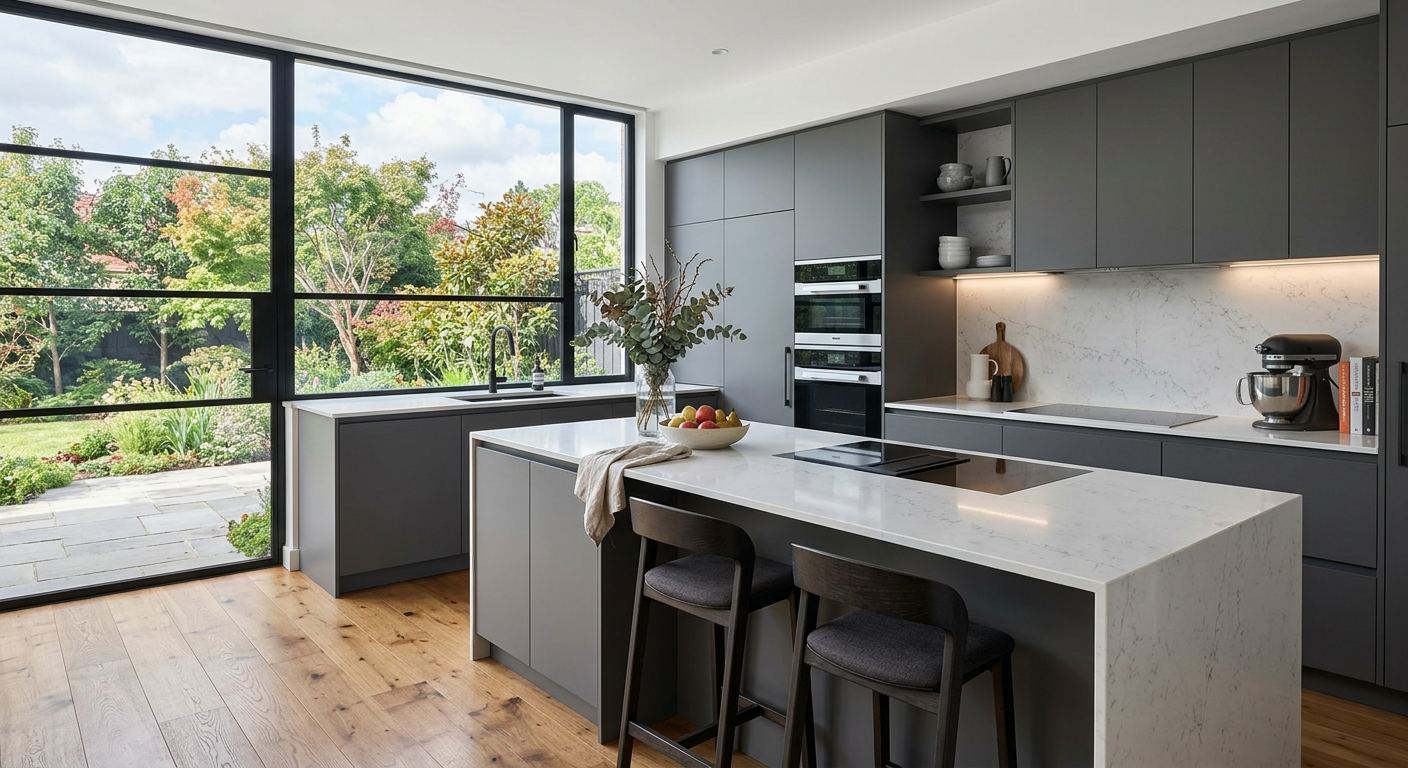
Kitchen renovation options and costs in Walnut Grove
Kitchen renovations in Walnut Grove usually start with a simple decision: do you want a refresh, a mid-range rebuild, or a true premium upgrade. With a 2021 population of 25,683 in the community (Statistics Canada, 2021 Census), you’ll find contractors who can handle everything from fast appliance-led makeovers to full cabinetry-and-stone projects. In the Lower Mainland–Southwest, pricing is driven more by household purchasing power and the expected finish level than by the weather itself—so many owners tailor the kitchen to match local resale expectations. In higher-value areas across Metro Vancouver, it’s common to see semi-custom or custom cabinetry paired with quartz or stone counters, because the cost is easier to recover on resale; that pattern is reflected across the region even when projects are in Surrey/Abbotsford-style market tiers.
For Walnut Grove specifically, the market includes a mix of newer and older housing stock. In older homes, uneven subfloors, dated electrical, and cabinetry that isn’t square can add labour and “hidden demo” costs. On top of that, the Lower Mainland–Southwest labour pool is relatively busy year-round, so scheduling and material lead times can affect your total budget—especially for stone slabs and custom millwork. If you’re located near the commercial hub and busier corridors of Walnut Grove, trades demand can be higher because access and staging space are tighter on the busiest streets.
To help you compare apples-to-apples, use the tiers below as a practical starting point, then we’ll break down what pushes your quote up or down.
| Renovation Tier |
What's Included |
Typical Duration |
Price Range |
| Cosmetic refresh (paint, hardware, new appliances only) |
Cabinet paint or refinishing (if needed), new hardware, new faucet, and appliance-only swap (no cabinet box changes). Optional minor touch-ups to drywall and caulking. |
1–3 weeks |
$8,000–$18,000 |
| Mid-range full renovation (new cabinets, counters, sink, tile) |
New stock or semi-custom cabinetry, new countertops (quartz or laminate), sink and faucet, backsplash tile, basic plumbing updates, and updated trim. Usually includes flooring protection and cleanup. |
3–7 weeks |
$40,000–$75,000 |
| High-end full renovation (custom cabinets, stone counters, island) |
Fully custom cabinetry or premium semi-custom, stone counters (granite/stone), island with upgraded hardware, under-cabinet lighting, higher-end backsplash (feature tile or slab), and more complex layout/electrical coordination. |
6–12+ weeks |
$85,000–$120,000 |
| Cabinet refacing only (new doors + drawer fronts, same boxes) |
Door/drawer front replacement, matching end panels, new pulls/knobs, and careful prep. Counters/appliances may stay unless you add a countertop swap. |
2–4 weeks |
$8,000–$35,000 |
| Countertop swap only (laminate to quartz or stone) |
Remove existing tops (and dispose), install new substrate where required, install new quartz/stone tops, integrate sink cut-out, and seal edges. Backsplash is optional unless noted. |
1–2 weeks |
$3,000–$12,000 |
| Backsplash tile installation only |
Tiling and setting (including surface prep), grouting, sealing where appropriate, and finishing around outlets. Typically assumes cabinets and counters are already complete. |
3–7 days |
$1,500–$6,000 |
Prices are estimates only and vary by project scope, site access and material selection.
What affects the price of kitchen renovation in Walnut Grove
In the Lower Mainland–Southwest, quotes for the same “looks-like-each-other” kitchen can swing by about 30–50% across British Columbia because the price is tied to finish tier, labour complexity, and how much the contractor has to “repair around” what’s already in the home. Cabinet quality and countertop choice often create the biggest jump, but the true wildcard is scope: moving plumbing/electrical, changing the layout, or dealing with out-of-square framing. That’s why two homeowners can both call it a “mid-range renovation” and still land in different totals.
Local home values and median-income purchasing power steer what finish tier people select. In higher-value Lower Mainland–Southwest markets, homeowners default to quartz or stone counters and semi-custom cabinetry because the perceived value holds on resale. In more modest tiers, laminate and stock cabinets dominate because they deliver a noticeable refresh at a better ROI. Regardless of tier, layout changes are the least predictable line item: removing a wall, adding an island, or moving a gas line tends to add coordination labour and inspection time, often overriding differences between laminate and quartz.
In Walnut Grove, a few concrete conditions commonly raise costs. First, older cabinetry installations can hide damaged toe-kick framing, requiring rebuilding before new cabinets go in; that can add material and carpentry hours. Second, if your kitchen is tied into dated knob-and-tube or older service panels, electrical upgrades may be needed to support under-cabinet lighting or island outlets—pushing labour upward. Third, the region’s busy schedule can lengthen lead times for quartz slabs and semi-custom door styles, which can increase your on-site labour window (and therefore total cost). For budgeting, it’s helpful to anchor around the band where you expect to land—mid-range full renovations often sit near $40,000–$75,000, while custom rebuilds with stone/complex cabinetry commonly move toward $85,000–$120,000.
Below are the main factors contractors use to build a quote, and how each one typically affects your total.
| Price Factor |
Why It Matters |
Cost Impact |
| Cabinet tier — stock vs. semi-custom vs. fully custom millwork |
Higher tiers cost more per linear foot and require more measuring, fitting, and finishing time. |
- Stock: lowest
- Semi-custom: mid-range
- Custom: highest (often drives total upward)
|
| Countertop material — laminate vs. quartz vs. granite vs. stone |
Material cost, fabrication complexity, and edge/detail options increase pricing—especially for island slabs. |
- Laminate: restrained budget
- Quartz: common mid-to-premium
- Granite/natural stone: premium
|
| Layout change — wall removal, island add, plumbing/gas move |
Changes affect structure, venting, rough-ins, inspection sequencing, and finishing tolerances. |
- Can swing the project by tens of thousands
- Unpredictable based on existing conditions
|
| Appliance package tier — builder vs. mid-range vs. pro-grade |
Electrical and ventilation requirements can differ, and integration work may increase. |
- Builder: lowest
- Mid-range: balanced
- Pro-grade: highest and more detailed installation
|
| Flooring — refinish existing vs. full replacement |
Protect/refinish requires less demo; replacement adds subfloor prep and install time. |
- Refinish: lower labour
- Replace: adds materials + days on site
|
| Backsplash — ceramic tile vs. marble vs. full-height slab |
Large-format tile/slab increases cuts, alignment effort, and risk of rework. |
- Ceramic: predictable
- Marble: premium labour/material
- Full-height: highest
|
| Electrical — new circuits for island, under-cabinet lighting |
New circuits require licensed electrical work and inspection; lighting adds wiring/finish time. |
- Minimal upgrades: lower
- New circuits: noticeable increase
|
| Permit fees and licensed trade requirements |
Some work requires permits/inspections, which impacts scheduling and adds administrative costs. |
- Often minor for refreshes
- Major for plumbing/gas/electrical/layout changes
|
Permits & regulations in British Columbia
In British Columbia, a countertop swap or a straightforward cabinet-and-surface refresh typically does not require a permit. However, once you’re moving plumbing supply or drain lines, relocating a gas appliance connection, removing a load-bearing wall, or adding electrical circuits for things like island outlets or new lighting, permits and licensed trades are usually required. Gas work for a stove/range or any relocation related to gas must be completed by a licensed gas fitter, and electrical work must be done by a licensed electrician—both require inspections as applicable. The key for Walnut Grove homeowners is that permit responsibility must be crystal-clear in your written contract before work starts, because contractors sometimes treat it differently depending on whether they’re moving systems or only replacing finishes.
Here’s a practical step-by-step you can follow. First, ask your contractor for a copy of each trade’s licence details (or licence number) and confirmation they are insured. Next, verify liability insurance via their certificate of insurance (COI) and ensure the coverage is current for your project’s dates. For coverage for worker-related claims, ask which coverage they carry and provide documentation you can keep with your records (many renovations involve subcontractors, so it’s normal to request proof per trade). Third, ask for written confirmation of inspections—who books them, and what work is contingent on pass/fail. Finally, confirm which items are within your contractor’s scope versus yours (for example, permit applications, site waste handling, and any structural engineering requirements if the plan includes removing walls).
Cabinets, countertops and layout decisions in Walnut Grove
If you want the biggest “wow per dollar” in a Walnut Grove kitchen, focus on the three decisions that shape both daily use and resale value: (1) cabinet tier, (2) countertop material, and (3) layout changes. Cabinet tier determines how quickly your kitchen comes together and how well it fits real walls—stock is fastest and cheapest, semi-custom is the most common sweet spot, and custom millwork delivers the best fit for older framing that isn’t perfectly square. Countertops influence both maintenance and long-term appearance; quartz tends to be the practical choice for most families in the Lower Mainland–Southwest, while natural stone can look exceptional but often adds cost and sealing/maintenance considerations depending on the stone type.
Layout is where cost justifications get real. In this region, the resale market tends to reward functional flow—especially if you’re adding an island with seating or opening sightlines. But if your plan includes moving plumbing or a gas line to reposition a sink or cooktop, that cost can outweigh the savings of choosing laminate over quartz. For example, upgrading to quartz might be a difference of a few thousand dollars, but relocating plumbing/electrical for an island can easily add several thousand more in labour and coordination; if the space gain is minimal, it’s often better to keep the plumbing “as-is” and adjust cabinet layout around it.
Climate-wise, British Columbia homes see seasonal humidity swings, and older homes can have minor movement in framing. That’s another reason quality installation and shimming matter—especially for custom or semi-custom cabinets. If you want a budget anchor, many Walnut Grove homeowners end up in the mid-range renovation band around $40,000–$75,000, while premium island + stone projects often push toward $85,000–$120,000.
| Option |
Durability |
Maintenance |
Best For |
Price Range |
| Stock cabinets (big-box) |
Solid for everyday use; fit depends on whether your walls are reasonably square. |
Low. Wipe clean; tighten hardware as needed. |
Budget-first refreshes with a practical, fast timeline |
$8,000–$25,000 |
| Semi-custom cabinets (local dealer) |
Better sizing and door/drawer options; more forgiving for typical Walnut Grove wall variation. |
Low to moderate; keep hinges adjusted over time. |
Most mid-range full renovations aiming for resale-ready finishes |
$20,000–$55,000 |
| Custom cabinets (local millwork shop) |
Excellent fit and integration for odd dimensions, islands, and built-ins. |
Low; durable finishes, but requires professional installation. |
Premium layouts where perfect fit and unique storage matter |
$45,000–$90,000 |
| Laminate countertop |
Good for regular use but can be less resilient to heat and heavy impact than engineered stone. |
Low; avoid prolonged heat exposure and sharp cutting directly on the surface. |
Value projects keeping the budget in check |
$3,000–$6,500 |
| Quartz engineered countertop |
Very durable and consistent; holds up well to daily cooking. |
Low; wipe clean, no routine sealing typically required. |
Most homeowners balancing look, durability, and maintenance |
$6,000–$12,000 |
| Granite / natural stone countertop |
Strong natural durability; performance varies by stone and seal quality. |
Moderate; often benefits from periodic sealing depending on finish. |
Premium appearance where you want unique natural variation |
$8,000–$14,000 |
| Butcher block countertop |
Durable with proper care; susceptible to water ingress at seams if poorly installed. |
Moderate; regular oiling and careful drying are recommended. |
Family kitchens that want warmth and a food-prep-friendly surface |
$5,500–$11,000 |
| Marble countertop |
Visually striking but generally more prone to etching/staining than quartz. |
Moderate to high; sealing helps but maintenance is still part of ownership. |
Design-forward kitchens where you’re comfortable with care |
$10,000–$18,000 |
How to choose a kitchen renovation contractor in Walnut Grove
Choosing the right contractor in Walnut Grove starts with verifying three things: British Columbia licensing (when applicable to the trade scope), liability insurance, and worker coverage documentation. Ask your contractor to provide their business licence details and to name which work each subcontractor will handle (cabinet installation, electrical, plumbing/gas, tile, etc.). For liability insurance, request a current certificate of insurance (COI) and confirm coverage limits are appropriate for your project. For worker-related coverage, request proof of WCB-related coverage for the trades doing work on-site—especially if multiple subcontractors are involved. Don’t rely on verbal assurances; keep copies in your renovation folder.
Next, get 2–3 itemised written quotes. You want a breakdown that separates labour and materials, not a single lump sum that hides what changes cost. Carefully read what’s excluded: permit pull included or not, disposal/skip included or not, drywall patching included or not, and whether flooring protection is part of the scope. Confirm warranty terms: workmanship warranty length, which parts are covered, and whether product warranties are from the manufacturer and transferable if you sell your home.
Finally, protect your cash flow and timeline. Never pay more than 10–15% upfront, and use a holdback until the job is complete and verified. Get a written start date and a completion estimate tied to materials lead times (especially quartz and custom door/drawer styles), and require a scope sign-off before demolition begins.
- Request itemised quotes with labour/material line items and quantities.
- Confirm permit responsibility in the contract (who pulls permits, who pays fees).
- Verify insurance with a current COI before work starts.
- Ask for WCB/WC-related coverage proof for trades working on your site.
- Ensure electrical and gas/plumbing changes are booked by licensed trades.
- Confirm disposal is included (or specify who hauls demo waste).
- Get start date and completion estimate in writing, including lead-time assumptions.
- Ask who protects floors and how damage claims are handled.
- Clarify backsplash scope (materials and tile setting) if you’re adding tile.
- Confirm countertop templating and what happens if measurements shift.
- Check warranty: workmanship duration and exclusions, plus manufacturer warranty terms.
- Use a payment schedule with a holdback until punch-list completion.
Red flags in Walnut Grove include: quotes that don’t specify whether plumbing/electrical/layout changes include permits; “cash deal” pricing with no written contract or no insurance/coverage proof; a schedule that ignores stone/cabinet lead times; vague exclusions (no disposal, no drywall patching, or no under-cabinet lighting wiring); and payment requests above 10–15% upfront without a detailed work plan.
Frequently asked questions — kitchen renovation in Walnut Grove
How long does a kitchen renovation take in Walnut Grove?
In Walnut Grove and the broader Lower Mainland–Southwest, timelines depend mostly on scope and material lead times. A cosmetic refresh (paint/hardware/appliances only) is often 1–3 weeks, while a mid-range full renovation with new cabinets, counters, sink, and tile typically lands around 3–7 weeks. If you’re doing a high-end upgrade—custom cabinetry, an island, and stone counters—plan for 6–12+ weeks because templating and fabrication add time, and trades must coordinate inspections. Older homes can also slow things down if floors are uneven or electrical needs upgrading. The best way to protect your schedule is to lock cabinet and countertop selections early and confirm start dates in your written contract.
Quartz vs granite countertops — which is better?
“Better” depends on how you use the kitchen. Quartz is engineered for consistency: it resists stains well and typically requires less day-to-day care, which is why it’s a common choice in British Columbia renovations. Granite looks distinct with natural variation and can be an excellent premium surface, but maintenance depends on the stone and finish—sealing may be part of ownership. From a budgeting standpoint, quartz countertops commonly fit the mid-to-premium bands (often around $6,000–$12,000 for installation scope), while granite/natural stone often trends higher (frequently $8,000–$14,000). If you want lower maintenance and a consistent look for resale buyers, quartz usually wins; if you want unique natural character and are comfortable with periodic care, granite can be a great fit.
Should I reface or replace my cabinets?
Refacing can be the smart choice when your existing cabinet boxes are structurally sound, level, and well attached. In that scenario, you get a fresh look (new doors/drawer fronts and hardware) without the mess and labour of full demolition, which helps control costs—cabinet refacing is often in the $8,000–$35,000 range depending on size and finish. Replace makes more sense if boxes are sagging, badly out of square, water-damaged near sinks, or if you want major layout/storage changes. For Walnut Grove homes with older framing or uneven walls, replacing or semi-custom installation may provide a tighter, more reliable fit. The fastest way to decide is a professional assessment of box condition, wall squareness, and whether you’re keeping existing plumbing positions.
Do I need a permit for a kitchen renovation in British Columbia?
Many kitchen cosmetic changes in British Columbia don’t require permits—for example, swapping countertops, changing cabinet doors/hardware, repainting, and installing a backsplash are typically treated as finish work. Permits are typically required when you change building systems or structure: moving plumbing supply/drain lines, relocating a gas connection for a stove or related hood work, removing a load-bearing wall, or adding new electrical circuits (like outlets for an island or new under-cabinet lighting runs). Because requirements can vary by exact scope, confirm in writing what permits your contractor will pull and what work will be inspected. Before you sign, ask who applies for permits, who books inspections, and to see documentation from the licensed electrician/gas fitter/plumber involved.
What's the ROI on a kitchen renovation?
ROI depends on your starting condition, the finish tier you choose, and whether the renovation improves function for how local buyers see value. In the Lower Mainland–Southwest, kitchens that feel “resale ready”—clean lines, durable counters, and practical storage—tend to carry more value than purely cosmetic changes that don’t address layout or wear. That said, there’s no guaranteed dollar-for-dollar return, and over-improving beyond your neighbourhood’s expectations can reduce ROI. A realistic approach is to target the band that matches the market: many projects stay in the mid-range full renovation band of $40,000–$75,000, while premium custom rebuilds can reach $85,000–$120,000. Where you usually get the best payback is not only the materials, but also the flow—good lighting, safe electrical, and a workable workspace.
How do I budget for a kitchen renovation?
Budgeting well starts with separating “must-have” from “nice-to-have.” Begin by choosing your renovation tier—cosmetic refresh, mid-range full renovation, or high-end full renovation—then build the scope from there. For a kitchen refresh in Walnut Grove, many homeowners start in the cosmetic/partial range, while mid-range full renovations commonly fall near $40,000–$75,000. If you’re planning an island, custom cabinetry, and stone, it’s safer to plan for premium pricing around $85,000–$120,000. Also include a contingency for older homes (hidden electrical, uneven subfloors, or cabinet box surprises) and consider that lead times for quartz and custom millwork can extend labour days. Get itemised quotes with permits, disposal, and trade scope clearly stated, and request a written payment schedule with a holdback.