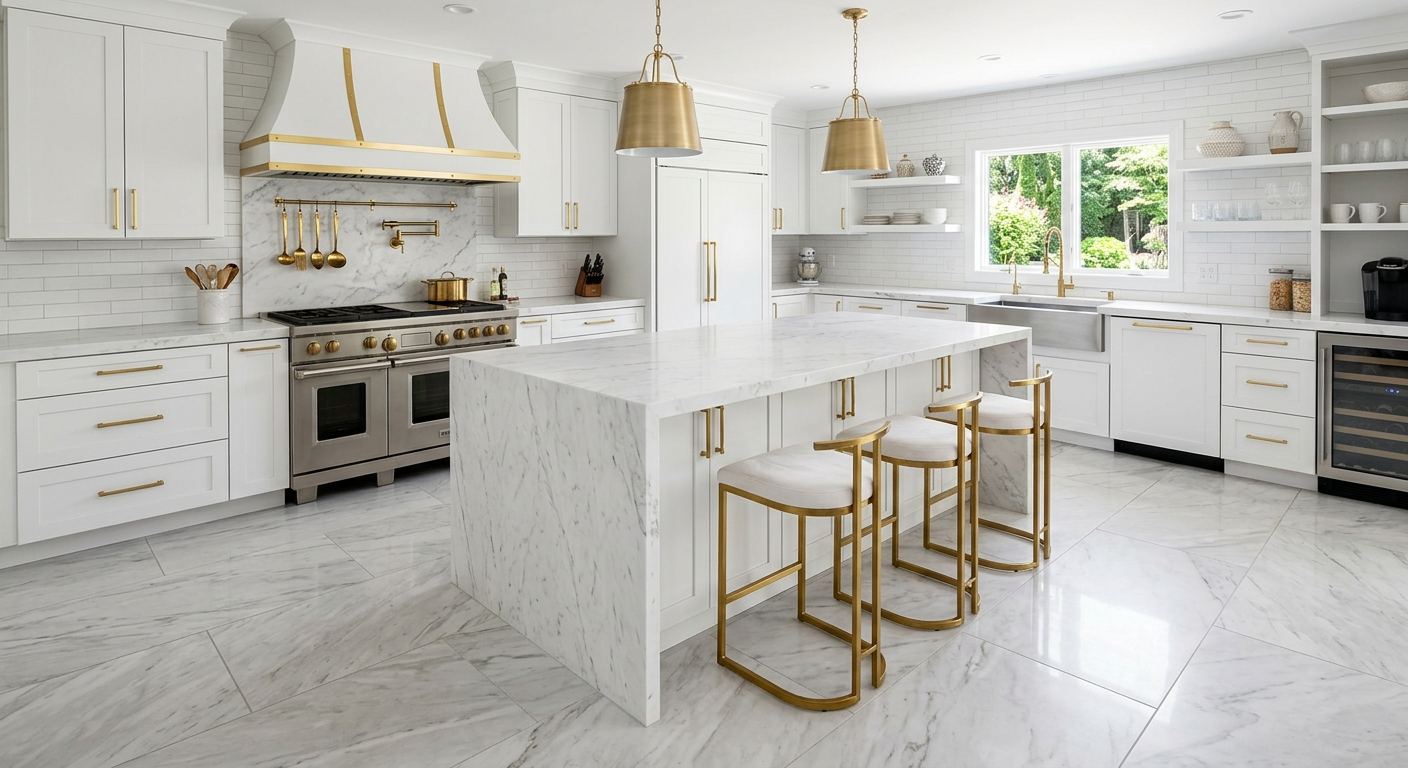
Kitchen renovation options and costs in Dollarton
Dollarton homeowners usually start their kitchen plan with a simple question—“What will it cost here?”—but the answer depends heavily on what you’re changing, what finish level you want, and how closely your plan matches the expectations of buyers in the Lower Mainland–Southwest. The region’s market tends to reward practical upgrades, especially where the home value supports a higher-end finish tier at resale (Statistics Canada, 2021 Census). With a 2021 population of 2,692 in Dollarton (Statistics Canada, 2021 Census), fewer trades can mean more scheduling pressure, but pricing is still driven mainly by regional demand and project complexity rather than weather. That said, the damp coastal climate across Metro Vancouver can affect demolition timelines and ventilation needs, particularly if moisture-sensitive materials need careful handling or if ducting/air quality work is added.
In practical terms, lower-cost projects are often framed as a cosmetic refresh—paint, new hardware, and swap-in appliances—while mid-range renovations focus on cabinets, counters, and key surfaces. Higher-end jobs trend toward semi-custom or custom cabinetry, stone counters, and island configurations, which is why the same kitchen size can land very differently across the Lower Mainland–Southwest. For neighbourhood demand, trades are especially busy around the Dollarton core and the broader North Shore-style residential pockets where open layouts and family-friendly storage are common. Next, use the table below to compare typical renovation tiers and what you can realistically expect in timing and budget.
| Renovation Tier |
What's Included |
Typical Duration |
Price Range |
| Cosmetic refresh (paint, hardware, new appliances only) |
Paint/stain touch-ups, new cabinet hardware, appliance swaps, minor trim repair, basic cleaning |
1–3 weeks |
$8,000–$25,000 |
| Mid-range full renovation (new cabinets, counters, sink, tile) |
New semi-custom or stock cabinets, countertop install, sink and faucet, backsplash tile, under-cabinet lighting (optional), new tile flooring (partial/selected) |
4–9 weeks |
$40,000–$80,000 |
| High-end full renovation (custom cabinets, stone counters, island) |
Fully custom cabinetry, quartz or natural stone countertops, island build, upgraded hardware, extended backsplash, higher-end sink/faucet, more complex lighting and trim details |
8–14 weeks |
$85,000–$120,000 |
| Cabinet refacing only (new doors + drawer fronts, same boxes) |
New doors/drawer fronts, new hardware, repainting boxes as needed, sealing and alignment adjustments |
2–5 weeks |
$8,000–$30,000 |
| Countertop swap only (laminate to quartz or stone) |
Template, removal of existing surface, disposal, quartz/stone install, seam placement, sink cutout adjustments |
1–3 weeks |
$12,000–$35,000 |
| Backsplash tile installation only |
Tile supply allowance, surface prep, waterproofing where required, tile setting and grouting, finishing at edges |
3–7 days |
$1,500–$6,000 |
Prices are estimates only and vary by project scope, site access and material selection.
What affects the price of kitchen renovation in Dollarton
Across the Lower Mainland–Southwest and British Columbia, the same “standard” kitchen can come back from contractors with a 30–50% difference in total price. In most cases, it’s not the climate—it’s the finish tier and the local market expectations around it. In higher-value areas of the Lower Mainland–Southwest, homeowners more often choose quartz or stone counters and semi-custom cabinetry because buyers see those upgrades as durable and easier to justify on resale; in more modest pockets, laminate and stock cabinets are common because they deliver a strong ROI per dollar. Climate plays a supporting role: Dollarton’s coastal conditions can slow drying/curing cycles for finishes and may require more careful prep if there’s underlying moisture exposure behind older backsplashes or around plumbing lines.
Layout changes also create the most unpredictable costs. Removing a wall, adding an island, or moving a gas line can drive pricing beyond what’s expected from “materials only,” because you’re paying for trades, testing, and sometimes permit steps. For example, if you’re upgrading from a laminate countertop to quartz, many projects in this tier land in the broader countertop band of about $3,000–$12,000 just for installation—but if you also rework sink cutouts or add an island, that number climbs quickly. Similarly, switching from stock cabinets to semi-custom can move a mid-range renovation into the $40,000–$80,000 range, while a custom rebuild with an island and stone counters commonly pushes toward $85,000–$120,000.
In Dollarton specifically, two common cost drivers are older wall finishes (more prep and patching) and the way coastal humidity affects adhesive/caulking removal during demolition. If your kitchen is in a home with original 1970s–1990s finishes, plan more labour for stubborn tile backer prep and electrical refinishing once surfaces are opened. The third common variable is site constraints—tight access, parking limitations, and protected entryways near the North Shore-style streets can add labour time for moving materials and managing dust control.
| Price Factor |
Why It Matters |
Cost Impact |
| Cabinet tier — stock vs. semi-custom vs. fully custom millwork |
Build method, options, drawer upgrades, and lead times change both material and install effort |
Often shifts a full kitchen by $10,000–$45,000 depending on scope |
| Countertop material — laminate vs. quartz vs. granite vs. stone |
Material price and fabrication complexity affect install labour and number of seams |
Can add roughly $3,000–$18,000 across typical swaps |
| Layout change — wall removal, island add, plumbing/gas move |
Structural, mechanical, and routing work increases coordination and risk |
Typically $5,000–$35,000 depending on what moves |
| Appliance package tier — builder vs. mid-range vs. pro-grade |
Price, ventilation requirements, and fit/finish complexity vary |
May swing $4,000–$20,000 even before cabinets are considered |
| Flooring — refinish existing vs. full replacement |
Protecting and matching existing finishes can be cheaper than full removal and re-lay |
Usually $1,500–$10,000 difference |
| Backsplash — ceramic tile vs. marble vs. full-height slab |
Weight, pattern matching, and sealing requirements change labour and material waste |
Often $1,500–$6,000 for tile-only jobs; more for full-height slabs |
| Electrical — new circuits for island, under-cabinet lighting |
Adding outlets/lighting increases licensed labour and inspection steps |
Typically $1,000–$7,500 based on number of locations |
| Permit fees and licensed trade requirements |
Permits add administration and can extend timelines; licensed trades cost more than handyman work |
Often $500–$4,000 plus schedule coordination |
Permits & regulations in British Columbia
In British Columbia, simple cabinet and countertop swaps typically do not require a permit because they’re considered non-structural finish work. Replacing doors and drawer fronts, swapping countertops in place, and installing a backsplash usually fall under work that most homeowners can schedule without permit paperwork. However, once you start moving plumbing supply/drain lines, relocating gas components, removing a load-bearing wall, or adding new electrical circuits, permits and licensed trades are typically required.
Specifically, work that commonly does require a permit in BC includes: moving sink drain or supply lines; relocating a dryer/venting path if tied into the kitchen layout; relocating a gas stove/range; installing or moving a gas-fired range hood where gas connections are altered; removing or altering a load-bearing wall; and adding electrical circuits for an island (new receptacles) or upgrading to new lighting layouts that require added wiring pathways. Work that typically does not require permits includes: painting, replacing cabinet faces (refacing), installing cabinets where plumbing/electrical routes don’t change, swapping counters on existing cabinet bases, and tile backsplash installation where no plumbing/electrical is moved.
For a homeowner in Dollarton, verifying a contractor is straightforward. Step one: confirm the contractor’s business details and licensing for the specific trades they provide (and that they use licensed electricians/gas fitters where required). Step two: ask for a certificate of insurance and confirm liability coverage is current. Step three: request proof of workplace coverage (commonly WCB/WCB-equivalent coverage) if workers are employed. Finally, ask for the expected permit responsibility in the written contract—who pulls permits, who schedules inspections, and who covers changes if the inspector requests documentation.
Cabinets, countertops and layout decisions in Dollarton
Three decisions usually determine whether a Dollarton kitchen renovation feels “worth it” on day one—and again on resale: (1) cabinet tier, (2) countertop material, and (3) layout changes. For cabinets, stock is typically the fastest and most affordable, semi-custom is the most popular mid-range balance, and custom millwork offers the best fit for awkward corners and full-height storage. In the Lower Mainland–Southwest resale market, buyers often expect clean lines, durable storage, and counters that look contemporary under natural daylight and evening lighting—so quartz and stone frequently become the visual “make-or-break” element.
Countertops follow a simple durability logic in a coastal climate. Laminate can be a budget win, but it’s more susceptible to damage around the sink and seams over time. Quartz engineered stone is popular because it resists staining and holds up well to everyday use, while natural stone (granite or marble) can be beautiful but may require sealing and more careful maintenance, especially near water exposure. In pricing terms, you can sometimes justify a countertop upgrade by keeping cabinetry simple. For example, moving from laminate to quartz can be a meaningful uplift without changing layout, and countertop installation typically sits in the $3,000–$12,000 band—whereas a full custom rebuild often climbs into the $85,000–$120,000 range once you add island work and complex cabinetry.
Layout changes—like removing an open-concept wall, adding an island, or relocating plumbing/gas—are the biggest cost swings. They’re justified when you gain real function: better circulation, improved storage, or a more efficient work triangle that suits how your household cooks. If your goal is a higher-end look without the highest structural risk, consider keeping the plumbing where it is and investing the budget into semi-custom storage and durable quartz counters.
| Option |
Durability |
Maintenance |
Best For |
Price Range |
| Stock cabinets (big-box) |
Good day-to-day durability; less flexibility for unusual wall dimensions |
Routine cleaning; hinges/hardware upgrades can extend life and feel |
Fast refreshes and practical layouts |
$8,000–$25,000 |
| Semi-custom cabinets (local dealer) |
Excellent balance of durability and stronger drawer/door options |
Standard wipe-downs; finish choices can be more stain/impact forgiving |
Most Dollarton mid-range renovations aiming for buyer-ready storage |
$20,000–$55,000 |
| Custom cabinets (local millwork shop) |
Highest fit and finish; best for maximizing storage in older layouts |
Standard care; build quality typically supports longer service life |
Complex spaces, fully tailored islands, and premium design goals |
$45,000–$90,000 |
| Laminate countertop |
Moderate durability; can chip at edges if impacted; seam quality matters |
Wipe clean; avoid standing water at seams; gentle cleaners preferred |
Budget-forward projects that still want a refreshed look |
$3,000–$7,000 |
| Quartz engineered countertop |
High durability; strong stain resistance and consistent patterning |
Low maintenance; routine cleaning only, minimal sealing compared to stone |
Most popular “family-proof” choice for busy households |
$7,000–$14,000 |
| Granite / natural stone countertop |
Very durable surface; material hardness varies by stone type |
May require periodic sealing; keep oils/acidic spills controlled |
Homeowners prioritizing natural variation and premium appearance |
$9,000–$18,000 |
| Butcher block countertop |
Solid for prep-heavy kitchens; susceptible to cuts if not cared for |
Regular oiling; sanding/refinishing possible after wear |
Warm, traditional styles and households that actively maintain surfaces |
$4,000–$10,000 |
| Marble countertop |
Luxurious and durable in thickness, but more prone to etching/staining |
Higher maintenance; sealing and careful cleaning routines |
Design-led kitchens where appearance is the priority |
$10,000–$25,000 |
How to choose a kitchen renovation contractor in Dollarton
Choosing the right contractor in Dollarton starts with verification. In British Columbia, ensure the contractor is using licensed trades for electrical work and gas work (if applicable), and that they can provide proof of liability insurance and workplace coverage. How to check: (1) licensing—ask which specific trades they hold themselves versus which are subcontracted, then confirm that subcontractors are properly licensed for the scope; (2) insurance—request a certificate of insurance and ensure coverage limits are current for the project size; (3) workplace coverage—ask for confirmation of WCB/WCB-equivalent coverage for employees and subcontractor coordination. If they can’t provide documentation before you sign, that’s a major warning.
Next, get 2–3 itemised written quotes. Not “lump sum only”—you want a labour and materials breakdown that shows cabinet supply/installation, countertop fabrication and install, backsplash prep, disposal, and any electrical/plumbing allowances. Read the scope carefully: what’s excluded (paint touch-ups, wall patching, subfloor repairs, permit pulling, protection/dust control)? Confirm whether permit pulls and inspections are included and who pays if a permit extension is needed. Warranty matters too—ask for the workmanship warranty length, what it covers (materials vs labour), whether product warranties are direct from the manufacturer, and whether warranties transfer if you sell the home. For payment, keep your initial deposit conservative: never more than 10–15% upfront, and use a holdback until key milestones are complete. Finally, insist on a written start date and completion estimate tied to material lead times.
- Ask for proof of liability insurance (certificate) and ensure it matches the renovation scope.
- Confirm which trades are licensed (electrical, gas) and that the contractor manages inspections.
- Request itemised labour and materials quotes, including disposal and protection measures.
- Verify countertop fabrication responsibilities (templating, fabrication errors, seam placement).
- Confirm who handles permits, if required, and whether permit fees are included.
- Check warranty terms: workmanship length, exclusions, and product/manufacturer coverage.
- Use a milestone payment schedule; avoid paying the full amount before completion.
- Require a detailed scope for demolition, wall patching, and drywall finishing levels.
- Ask about lead times for cabinets and how changes affect the timeline.
- Clarify what happens if inspections fail or revisions are needed.
- Confirm dust control practices and site protection for floors and stairways.
- Ensure contract language states change orders require your written approval.
In Dollarton, watch for red flags: (1) quotes that aren’t itemised and only list a single bottom-line number, (2) no written timeline or unclear lead-time assumptions, (3) refusal to provide insurance/licence documentation, (4) “we don’t need permits” when you’re moving plumbing or gas, and (5) payment requests exceeding 10–15% upfront with no milestone holdback.
Frequently asked questions — kitchen renovation in Dollarton
Custom vs stock cabinets — is custom worth it?
If you have a straightforward layout with standard wall dimensions, stock cabinets can be a smart way to save money in Dollarton. For most homeowners, however, semi-custom is the “sweet spot” because you get better drawer storage, more finish options, and more flexibility for toe-kick runs and corner storage without paying full custom millwork rates. Custom is worth it when your kitchen has awkward angles, non-standard openings, or you want a tailored island and integrated storage that matches your lifestyle. In higher-value Lower Mainland–Southwest resale expectations, custom and semi-custom also tend to photograph well—buyers notice fit and finish. Budget-wise, cabinet tiers can drive total project cost significantly; a mid-range full renovation often sits around $40,000–$80,000, while high-end builds with custom cabinetry and stone commonly move toward $85,000–$120,000.
How do I choose a kitchen contractor in Dollarton?
Start by confirming British Columbia requirements are handled correctly for the work involved. Ask your contractor how they verify licensed coverage for electrical and gas work (as applicable), and request proof of liability insurance and workplace coverage. Then get 2–3 itemised quotes so you can compare apples-to-apples: cabinet supply vs installation, countertop templating and fabrication, backsplash prep, and disposal. Read the scope for what’s excluded, including patching/drywall finishing level and whether permit pulling is included if you’re moving plumbing or adding circuits. Warranty terms should be clear: workmanship duration and what happens if there’s a manufacturing defect. In a busy coastal market like the North Shore area, you also want a contractor who schedules lead times realistically so your kitchen doesn’t stall.
What order do kitchen renovation steps happen in?
A typical sequence starts with design and measurements, then demolition, followed by rough-in work (plumbing/electrical changes) if you’re moving sink/dishwasher supply, relocating gas, or adding island circuits. After rough-in, the installer completes any framing/drywall patching that’s needed for new cabinetry layouts. Next comes cabinet installation, then countertop templating and fabrication (often scheduled to start soon after cabinets are set). Countertops install next, followed by backsplash tile and finish carpentry. Finally, appliances, trim, caulking, and paint touch-ups wrap the job. This order matters in Dollarton because coastal humidity can affect how quickly surfaces cure—so a good contractor won’t rush sealers and paint before substrates are stable.
Can I live at home during a kitchen renovation in Dollarton?
Many homeowners do live at home during a renovation in Dollarton, especially for cosmetic refreshes or partial work like refacing or a countertop swap. For a mid-range full renovation with cabinet and tile changes, living in the home is usually possible if you can create a temporary kitchen zone—often a small sink setup and a microwave/induction hot plate outside the work area. For high-end rebuilds involving layout changes (moving plumbing, adding an island, or significant electrical), living onsite becomes harder because demolition and dust control take over more time. The contractor should explain daily site management and dust barriers, and clarify whether there’s an option for after-hours access or temporary cooking arrangements. If your project includes extended countertop fabrication lead times, the living arrangement planning can be easier.
Should I renovate my kitchen before selling in Dollarton?
Often, yes—especially if your current kitchen is dated and the renovation targets what local buyers expect: clean storage lines, durable counters, and a functional layout. In the Lower Mainland–Southwest, homeowners commonly choose upgrades that are easy to see and feel when buyers do their walkthroughs. If you’re staying in the mid-range scope, a practical approach is to focus on semi-custom or quality stock cabinetry, a quartz countertop, and a refreshed backsplash rather than relocating plumbing for an entirely new layout. If you already have decent cabinetry and only need a modern surface, a countertop swap or refacing can be more cost-efficient. As a budgeting reality check, mid-range renovations typically fall around $40,000–$80,000, and a cosmetic refresh may land lower—yet the resale impact depends on how worn your existing surfaces are.
What's the most popular kitchen style in Dollarton right now?
In Dollarton and the wider North Shore and Lower Mainland–Southwest buyer market, the most common “safe bet” style is a modern, bright look: clean-lined cabinetry (often flat or gently recessed), warm neutrals, and durable countertops like quartz in light-to-mid tones. Pairing that with an updated backsplash—frequently a subtle, easy-care tile or a design-led pattern—keeps the kitchen feeling current without over-personalizing it. Hardware choices matter too; upgraded pulls and consistent finishes (brushed metal or matte black depending on the palette) are small changes that buyers notice quickly. Style also influences cost: when owners choose stone counters and island-ready layouts, total budgets tend to align with higher renovation tiers such as $85,000–$120,000 for full high-end projects.