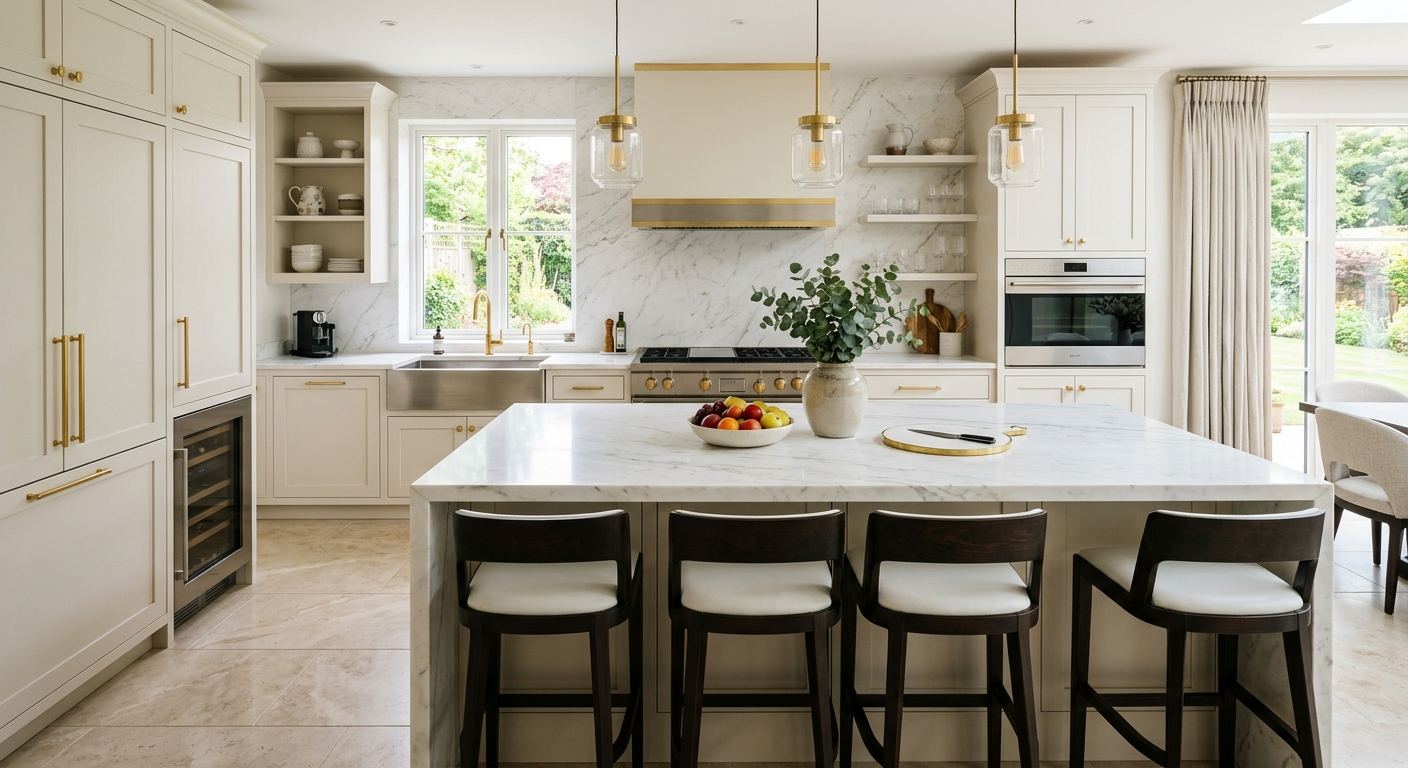
Kitchen renovation options and costs in Sardis
Sardis homeowners usually start their kitchen renovation planning by deciding how “deep” they want to go: a quick refresh, a mid-range upgrade, or a full rebuild. With a population of 10,010 (Statistics Canada, 2021 Census), the local market tends to be practical and design-conscious rather than ultra-luxury—though finish expectations rise quickly in the broader Lower Mainland–Southwest when houses are priced for higher resale value. In our region, the typical renovation tier is often driven less by the weather and more by household purchasing power and the finish level buyers expect at showings.
Lower Mainland–Southwest costs are also shaped by contractor availability and how projects are staged. While coastal conditions don’t “raise” labour rates the way remote construction can, humidity swings and winter wet periods can slow install sequencing—especially for flooring, cabinet leveling, and drying time for finishes. In Sardis, trade demand is especially strong in the Agassiz–Sardis corridor and surrounding Chilliwack-area commuting routes, where cabinetry installs and countertop fabrication schedules can get tight.
That’s why the same kitchen size can land anywhere from a restrained update to a premium rebuild. If you’re staying in the $40,000–$120,000 full-renovation band, you’re typically budgeting for full cabinet and countertop work plus common supporting trades. If you’re targeting a smaller scope, the cabinetry/refacing and countertop swap tiers can keep costs far closer to the $8,000–$50,000 and $3,000–$12,000 ranges. Use the table below to compare realistic options in Sardis, then align your selections to your resale goals and your tolerance for layout disruption before you request quotes.
| Renovation Tier |
What's Included |
Typical Duration |
Price Range |
| Cosmetic refresh (paint, hardware, new appliances only) |
Cabinet paint or trim paint, new hardware, new sink/faucet only if reusing plumbing, appliance swap, touch-up caulking/trim |
1–3 weeks |
$8,000–$20,000 |
| Mid-range full renovation (new cabinets, counters, sink, tile) |
New stock or semi-custom cabinets, new counters, sink and faucet, backsplash and/or tile, plumbing minor adjustments, basic lighting updates |
4–8 weeks |
$35,000–$75,000 |
| High-end full renovation (custom cabinets, stone counters, island) |
Custom cabinetry, quartz/stone counters, island build-out, upgraded hardware and detailing, full backsplash, electrical additions, more extensive layout coordination |
8–14 weeks |
$75,000–$120,000 |
| Cabinet refacing only (new doors + drawer fronts, same boxes) |
New door and drawer fronts, veneer/finish over existing boxes, new hardware, optional new backsplash and minor trim work |
2–5 weeks |
$10,000–$35,000 |
| Countertop swap only (laminate to quartz or stone) |
Remove old top, fabricate and install new countertop, seam layout, sink cut-outs, caulking and polish, basic backsplash tie-in if needed |
1–3 weeks |
$8,000–$18,000 |
| Backsplash tile installation only |
Tile supply and install, underlayment prep, waterproofing membrane where required, grout and finishing |
3–7 days |
$1,500–$6,000 |
Prices are estimates only and vary by project scope, site access and material selection.
What affects the price of kitchen renovation in Sardis
In Sardis and across the Lower Mainland–Southwest, quotes for the same “looks-like” kitchen can vary by 30–50% between contractors and between British Columbia markets. The biggest reason isn’t climate—it’s what local buyers typically pay for and what they expect at resale. When home values and income levels support premium finishes, homeowners more often choose semi-custom cabinetry, quartz or natural stone counters, and upgraded hardware. That raises both material costs and the complexity of installation. In lower-cost scopes, laminate and stock cabinets dominate because they deliver a strong ROI per dollar.
Layout changes are the wildcard regardless of finish tier. Removing a wall, adding an island, or moving a gas line (or venting) turns a “surface” renovation into a coordination-heavy rebuild—plumbing, electrical, and sometimes structural steps all get involved. In practice, that unpredictability is what pushes many projects out of the $40,000–$120,000 full-renovation band and into the upper portion of the range even when homeowners originally planned a mid-range refresh.
Here are a few concrete Sardis examples we see often: older homes may have out-of-spec cabinet wall straightness, requiring more shimming and reworking before countertops go in; that can add installation time. Coastal humidity can slow paint cure and flooring acclimation, which affects scheduling and can increase labour days if trades are waiting on each other. Conversely, if your existing plumbing stack and vent locations are workable, you can keep costs lower even while upgrading counters—often a simple quartz swap can outperform a full layout change for the money.
| Price Factor |
Why It Matters |
Cost Impact |
| Cabinet tier — stock vs. semi-custom vs. fully custom millwork |
Custom work requires more measuring, fabrication time, and finish detailing; semi-custom balances speed with better fit. |
Often shifts a full kitchen from mid-range to upper-range totals (commonly several tens of thousands). |
| Countertop material — laminate vs. quartz vs. granite vs. stone |
Material price, fabrication complexity, and seam layout determine total installed cost. |
Laminate is typically lowest; quartz and natural stone add significant cost (commonly a few thousand to many thousands). |
| Layout change — wall removal, island add, plumbing/gas move |
Triggers extra trades, potential structural considerations, and more demolition and patching. |
Can add major cost regardless of finish tier; often the #1 cause of quote variance. |
| Appliance package tier — builder vs. mid-range vs. pro-grade |
Pro-grade units can require ventilation planning, higher power needs, and premium trim kits. |
May swing budgets by several thousand or more, especially when upgrading exhaust. |
| Flooring — refinish existing vs. full replacement |
If floors need removal for plumbing or if old subfloor is uneven, replacement is the practical path. |
Refinish can save money; replacement adds materials plus demolition and reinstall costs. |
| Backsplash — ceramic tile vs. marble vs. full-height slab |
Natural stone and full-height applications require more precise prep, support, and finishing. |
Tile installs are usually lower; premium stone can meaningfully increase the backsplash line item. |
| Electrical — new circuits for island, under-cabinet lighting |
New circuits and panel capacity checks add licensed labour and time. |
Commonly adds a few hundred to several thousand depending on how far wiring runs. |
| Permit fees and licensed trade requirements |
Some work must be permitted and inspected, and licensed trades are typically scheduled accordingly. |
Can add administrative costs and delays if not planned early. |
Permits & regulations in British Columbia
In British Columbia, a straightforward cabinet and countertop swap typically does not require a permit. If you’re replacing existing counters, installing new cabinet boxes where the footprint stays the same, and doing standard finishes with no change to plumbing, gas, or electrical circuits, most projects stay in the “no-permit” lane. However, permits and licensed trades do come into play when the work touches systems or structure. For example, moving plumbing supply or drain lines, relocating a gas stove or altering a range hood venting plan, adding or relocating a vent or ducted hood, removing a load-bearing wall, or adding new electrical circuits (such as for an island with receptacles or under-cabinet lighting) typically requires permits and inspections.
If you’re in Sardis, verify expectations in writing before you sign. Step-by-step, start by asking your contractor to list each scope item and whether it triggers a permit. Then confirm trade licensing: gas work must be done by a licensed gas fitter, and electrical work by a licensed electrician—both should provide documentation for the job and the inspection schedule. For insurance, request a current certificate of insurance showing liability coverage, and confirm how work coverage is handled for workers (in British Columbia, employers should have the appropriate coverage in place; your contractor should provide evidence and be willing to explain it).
Finally, ensure the permit responsibility is spelled out in your contract. A good process is: contractor pulls permits (when required), schedules inspections, and hands you the completion/clearance documentation where applicable.
Cabinets, countertops and layout decisions in Sardis
Your three highest-impact decisions in a Sardis kitchen renovation are (1) cabinet tier, (2) countertop material, and (3) layout changes. Cabinet tier affects fit, finish, and installation time. Stock cabinets are usually the fastest and most budget-friendly, while semi-custom is the most popular mid-range choice because it improves layout flexibility without the long lead times of fully custom work. Custom cabinets offer the best fit and detailing, but they’re where budgets climb quickly.
Countertops should match how you actually use the kitchen. Laminate is budget-friendly and can look great when the seams and edges are done neatly, but it’s less ideal for heavy wear and can be more sensitive to heat and sharp impacts. Quartz and natural stone are more durable and align with the finish level many buyers expect in the Lower Mainland–Southwest at higher resale price points. In Sardis’s coastal climate, moisture exposure and humidity can also make good cabinet install practices (leveling and sealing) more important, because countertop drops and edge detailing show every irregularity.
Layout changes are only “worth it” when they create real function: better traffic flow, improved work triangle, or meaningful storage. If you’re adding an island, it’s often justified when you can maintain clearance for movement and create seating that genuinely replaces lost counter space. For a dollar example: homeowners sometimes choose a quartz upgrade plus upgraded hardware within a mid-range package to get a visible result without triggering full plumbing and electrical moves. If that same homeowner insists on a major re-plumb for an island placement, the project can jump toward the upper full-renovation band.
| Option |
Durability |
Maintenance |
Best For |
Price Range |
| Stock cabinets (big-box) |
Good day-to-day strength; limited in custom sizes and niche storage |
Wipe-clean surfaces; tune-ups mostly relate to installation accuracy |
Time-sensitive refreshes and straightforward layouts |
$8,000–$25,000 |
| Semi-custom cabinets (local dealer) |
Very solid construction with better internal options and finish choices |
Low—typical care with damp cloth and proper hardware tightening |
Most Sardis mid-range remodels targeting better storage and fit |
$20,000–$55,000 |
| Custom cabinets (local millwork shop) |
Highest durability and best tailoring around uneven walls and unique footprints |
Low; hinges and drawers benefit from periodic hardware checks |
Hard-to-fit spaces and design-led layouts |
$45,000–$90,000 |
| Laminate countertop |
Moderate impact resistance; can show wear at seams with heavy use |
Low; avoid heat and prolonged wet exposure |
Budget-conscious upgrades with a clean, modern look |
$3,000–$8,000 |
| Quartz engineered countertop |
High durability; resists staining and everyday wear |
Low—routine cleaner only; avoid harsh abrasives |
Busy households wanting a premium look with minimal upkeep |
$7,000–$14,000 |
| Granite / natural stone countertop |
Very durable; natural variation adds character |
Typically needs sealing depending on stone and finish |
Premium look for higher-end remodels |
$9,000–$16,000 |
| Butcher block countertop |
Good for cutting and warmth; needs care around seams and moisture |
Regular oiling and prompt drying |
Family kitchens where maintenance time is acceptable |
$4,500–$10,000 |
| Marble countertop |
Beautiful but more prone to etching and staining |
Higher maintenance—careful cleaning and stain/etch prevention |
Low-to-moderate wear kitchens and design-forward aesthetics |
$10,000–$22,000 |
How to choose a kitchen renovation contractor in Sardis
Choosing the right contractor in Sardis starts with verifying British Columbia licensing and making sure insurance is real—not just promised. For gas work, confirm the contractor uses a licensed gas fitter; for electrical, ensure a licensed electrician is on the job. Ask each contractor to provide proof of liability insurance before work begins, and request evidence of coverage for workers as applicable. Then check credentials using the appropriate online licensing registry and cross-reference the names on the quote with the certificate details on insurance paperwork and any contractor documentation they supply.
Next, get 2–3 itemised written quotes. You want a labour-and-material breakdown (cabinet supply, demo, installation labour, countertop fabrication/installation, plumbing/electrical allowances, disposal, and finishes), not a single “all-in” number. Read the scope carefully: what’s excluded (old cabinet removal, disposal, patch and paint, flooring repairs), is permit pulling included, and who pays for inspections if the scope changes? Confirm warranty terms too—workmanship warranty length, product/manufacturer warranty coverage, and whether it transfers if you sell the home.
For payment scheduling, avoid large early payments. A practical rule on remodels is to keep upfront deposits to about 10–15%, then use progress payments tied to milestones, with a holdback until the punch list is complete. Finally, demand a timeline in writing: the start date, key milestones (demo, cabinet install, countertop template, final inspection), and an estimated completion window.
- Confirm BC licensing for trades used on your job (gas and electrical in particular).
- Request a current certificate of liability insurance.
- Ask how worker coverage is handled and request supporting documentation.
- Require 2–3 itemised quotes with separate line items for labour and materials.
- Clarify exclusions: disposal, drywall patching, flooring touch-ups, caulking and trim finishing.
- Confirm whether permits (if required) are pulled by the contractor or you.
- Ask for a demolition schedule that avoids waiting on cabinet lead times.
- Confirm countertop template timing and responsibility for corrections.
- Get warranty details in writing: workmanship, product coverage, and transferability.
- Use a milestone-based payment plan with a holdback until completion.
- Request a written start/completion estimate and a change-order process.
- Check references for recent Lower Mainland–Southwest kitchen installs similar to your scope.
Red flags in Sardis include: a “permit-free” claim when your scope includes plumbing/gas or added electrical circuits, quotes that don’t break out disposal and demolition, refusing to put warranty terms in writing, pressure to pay more than about 10–15% upfront, and vague timelines without milestones for cabinet lead times and countertop templating.
Frequently asked questions — kitchen renovation in Sardis
What is the difference between a galley and open-concept kitchen?
A galley kitchen has counters on two parallel walls with a corridor between—efficient for work flow but limited for entertaining. An open-concept kitchen removes barriers so the kitchen blends with living/dining spaces, which is why it’s so popular across the Lower Mainland–Southwest. In Sardis, many homes have older layouts where walls may be load-bearing, so going fully open can trigger permits and licensed trades if it includes structural or electrical/plumbing changes. Pricing-wise, staying in a mid-range scope with minimal changes can keep you closer to the $40,000–$75,000 band, while adding an island and opening up the plan often pushes kitchens toward more complete renovations.
How do I get accurate kitchen renovation quotes in Sardis?
For accurate quotes in Sardis, start by choosing your scope and selections (cabinet tier, countertop material, backsplash, and whether you’re moving plumbing or electrical). Then request 2–3 itemised estimates where labour and materials are separated—demo, disposal, cabinet install, countertop fabrication and installation, and any electrical/plumbing allowances. Photos help, but a site visit matters because wall straightness, existing plumbing locations, and subfloor condition change the real labour hours. Make sure the quote states what’s included for permits (if required), patching, and finishing. A good contractor will also confirm cabinet lead times and countertop templating dates so your timeline doesn’t slip.
What's the best countertop material for a busy Sardis kitchen?
For busy Sardis households, quartz is often the best “set it and forget it” option: it handles everyday wear well, resists staining, and typically requires only routine cleaning. If you want a premium natural look, granite or other stone can be excellent, though some stones may require periodic sealing depending on finish. Laminate can be a smart budget choice for a refresh, but it may show wear faster in high-traffic areas and around seams. When comparing budgets, quartz swaps commonly land in the $3,000–$12,000 countertop range, while natural stone can push the installed cost higher depending on slab selection and edge details. Your contractor should also advise on seam placement and heat protection for your specific layout.
How do I add an island to my Sardis kitchen?
Adding an island typically means planning for clearance, storage, and—if applicable—re-routing plumbing or electrical for sinks and receptacles. If the island placement is near existing plumbing and electrical lines, you can often control cost; if it requires moving a gas line or significant drain/supply runs, costs climb quickly. In most cases, the island also affects countertop templating, toe-kick and base framing, and backsplash coverage. Because islands commonly involve electrical additions, permits and a licensed electrician may be required for new circuits. A practical approach is to start with a layout that maximizes what you can reuse; many homeowners who keep changes limited to cabinet/counter upgrades land closer to the mid-range band, while full re-plumbing pushes projects higher.
How much does a kitchen renovation cost in Sardis?
Kitchen renovation cost in Sardis generally depends on whether you’re doing a refresh, replacing cabinets and counters, or rebuilding the layout. For a full kitchen renovation, a realistic band in the Lower Mainland–Southwest is about $40,000–$120,000, with mid-range projects clustering around practical layouts and standard stone/quartz selections. If you’re focused on cabinet work only, cabinet installation or refacing often sits around $8,000–$50,000. Countertops alone commonly range from $3,000–$12,000, and backsplash tile installations typically fall between $1,500–$6,000. The biggest cost drivers are cabinet tier, countertop choice, and how much plumbing/gas/electrical you change—not the day-to-day weather.
How long does a kitchen renovation take in Sardis?
Typical timelines in Sardis vary by scope. A cosmetic refresh can take about 1–3 weeks when paint, hardware, and appliance swaps are straightforward. Mid-range full renovations usually take 4–8 weeks, largely depending on cabinet delivery and countertop fabrication scheduling. High-end full renovations—especially those with custom cabinetry and island build-outs—often run 8–14 weeks because fabrication and install coordination are more complex. Climate can affect drying times and floor acclimation, and that can create delays if multiple trades are waiting on curing or leveling. For planning, ask your contractor for a written start date, milestone dates (cabinet install and countertop templating), and an estimated completion window so you’re not guessing during lead-time periods.