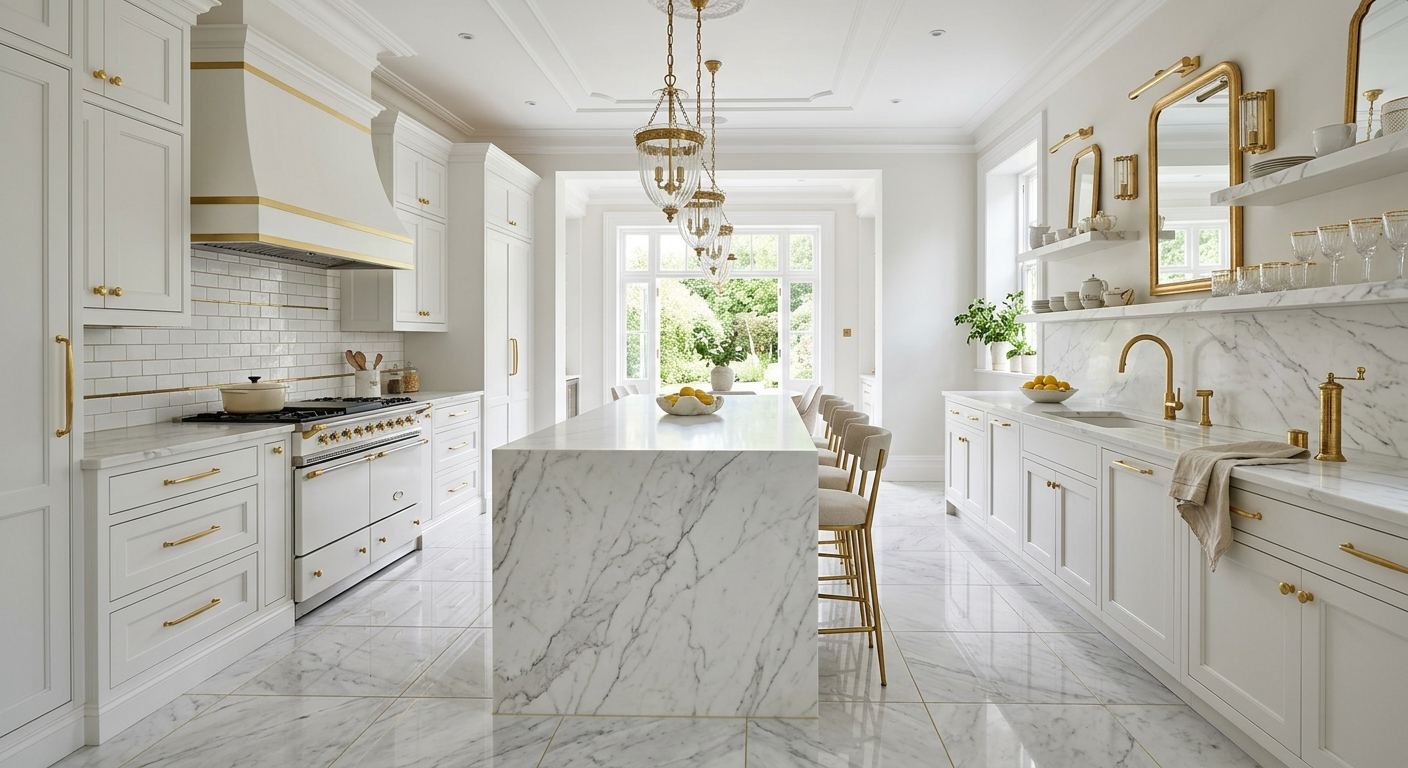
Kitchen renovation options and costs in Castlegar
Castlegar kitchen renovations typically start with a practical question: how much change do you want for the money. With a median household income of $81,000 (Statistics Canada, 2021 Census) and a housing stock where 64.5% of homes were built before 1981, many homeowners plan a refresh-to-mid-range approach that updates worn surfaces without triggering a full layout rebuild. That said, Castlegar’s mix of older homes and varying buyer expectations means finish level still matters—especially because many households want durable, easy-clean materials that hold up to damp winters and wet shoulder seasons.
In the Kootenay market, costs are driven more by local home values and household income than by climate alone. Contractors still price within the broader British Columbia range, where mid-range full renovations commonly land around $35,000 to $45,000 nationally and modest-to-mid jobs typically sit in the $30,000 to $70,000 band for our city tier. When homeowners choose quartz or natural stone and semi-custom cabinetry, the job often climbs toward the upper end because it’s labour-intensive to install and finish precisely, particularly in older homes with uneven walls and legacy plumbing runs.
Neighbourhoods with older, family-oriented housing—like Rossland Avenue and the West Kootenay Highway corridor area—see steady demand for mid-range upgrades, especially when owners want modern storage and better lighting without tearing out everything. Use the table below to compare the most common project types and what they usually include before you request itemised quotes.
| Renovation Tier |
What's Included |
Typical Duration |
Price Range |
| Cosmetic refresh (paint, hardware, new appliances only) |
Cabinet paint (or touch-up), new hardware, appliance swap (no plumbing/gas changes), minor wall/ceiling prep, basic countertop cleaning/polish where applicable |
3–7 days |
$5,000–$12,000 |
| Mid-range full renovation (new cabinets, counters, sink, tile) |
New cabinets (stock to semi-custom), new countertops (laminate or entry quartz), sink + taps, backsplash tile, flooring patching, basic lighting upgrades, disposal and trim refinishing |
3–6 weeks |
$30,000–$50,000 |
| High-end full renovation (custom cabinets, stone counters, island) |
Custom cabinetry, premium quartz/granite/stone, island build, more extensive electrical (under-cabinet, island pendants), upgraded backsplash (tile to slab options), detailed finish work and tighter tolerances for older framing |
6–10 weeks |
$55,000–$70,000 |
| Cabinet refacing only (new doors + drawer fronts, same boxes) |
Door/drawer replacement, new pulls/knobs, sanding and refinishing where needed, optional paint update to match, backsplash often left as-is unless specified |
1–3 weeks |
$8,000–$20,000 |
| Countertop swap only (laminate to quartz or stone) |
Remove existing top, template and install new countertop, seam planning, sink cut-out or minor rework, caulking and backsplash re-join where needed |
3–10 days |
$4,500–$12,000 |
| Backsplash tile installation only |
Tile supply and labour, surface prep, thinset, grout, sealing where required, finishing trims and cleanup; countertop edge typically masked |
2–5 days |
$1,200–$5,000 |
Prices are estimates only and vary by project scope, site access and material selection.
What affects the price of kitchen renovation in Castlegar
In Castlegar and across the Kootenay region, homeowners often see quotes for the “same” kitchen swing by 30–50%. The main reason is that labour and material allowances are highly sensitive to local site conditions, cabinet and countertop choices, and how much the layout actually changes. Even when finishes look comparable, one contractor may price stock materials and straight installs, while another allows for longer tile runs, more scribing, extra patching for older walls, or added electrical for modern lighting. British Columbia pricing also reflects broader market rates—so your scope definition can matter as much as your chosen materials.
Local home values and median income shape the finish tier far more than climate. In higher-value pockets of the region, homeowners commonly default to quartz or stone counters and semi-custom cabinetry because the renovation cost is easier to recover on resale. In more modest projects, laminate and stock cabinets dominate because they deliver a noticeable visual change with better ROI. Price bands reflect this: a mid-range full renovation often sits around $30,000–$50,000, while high-end builds with islands and custom millwork typically push toward $55,000–$70,000.
Three Castlegar examples that routinely move the budget: (1) older pre-1981 framing can be out of square, requiring extra cabinet shimming and longer installation time; (2) plumbing runs from earlier layouts may force disconnects and re-routing that add labour even if the footprint stays the same; and (3) wet-season humidity can highlight poor substrate preparation for backsplash tile, so thorough backer/priming work is essential. Finally, weather can affect scheduling (drying times, ventilation, and material lead times), so quoting accurately depends on confirming what needs to be repaired vs replaced.
| Price Factor |
Why It Matters |
Cost Impact |
| Cabinet tier — stock vs. semi-custom vs. fully custom millwork |
Higher tiers cost more in materials and require more labour for fit, adjust, and finishing. |
Often shifts the total by $8,000–$25,000 depending on kitchen size and layout complexity. |
| Countertop material — laminate vs. quartz vs. granite vs. stone |
Material pricing and installation difficulty vary; stone also needs careful templating and seam planning. |
Typical difference can be $3,000–$8,000 for comparable kitchen footprints. |
| Layout change — wall removal, island add, plumbing/gas move |
Any reconfiguration changes rough-ins, structural considerations, and trade coordination. |
Frequently adds $5,000–$20,000 beyond a straight replacement. |
| Appliance package tier — builder vs. mid-range vs. pro-grade |
Pro-grade units cost more and may require different clearances, ventilation, and sometimes electrical upgrades. |
Commonly changes the appliance portion by $1,500–$6,000. |
| Flooring — refinish existing vs. full replacement |
If the existing floor is level and compatible, costs stay lower; older subfloors can add prep work. |
Often moves flooring allowance by $2,000–$8,000. |
| Backsplash — ceramic tile vs. marble vs. full-height slab |
Tile is labour- and trim-heavy; slabs need more precision cutting and may require extra substrate prep. |
Usually varies by $1,000–$6,000 depending on coverage and material. |
| Electrical — new circuits for island, under-cabinet lighting |
New circuits trigger permitting, licensed work, and inspection scheduling. |
Typical range is $800–$4,500, with islands pushing higher. |
| Permit fees and licensed trade requirements |
Moving plumbing/electrical/gas work requires permits and inspection coordination. |
Can add $500–$3,000 in direct costs plus scheduling time. |
Permits & regulations in British Columbia
In British Columbia, many kitchen “swap” tasks don’t require a permit, but several common renovation moves do. Cabinet and countertop swaps are typically treated as non-structural changes: you can replace cabinets or change countertops without pulling permits as long as you’re not altering rough-in plumbing, gas connections, or electrical circuits.
Where permits and licensed trades become necessary is when you change services or the structure. Work that generally DOES require a permit and inspection includes: moving plumbing supply or drain lines (for example, relocating a sink), relocating or installing gas connections (stove/range with gas, and any gas-related range hood changes), removing a load-bearing wall, and adding new electrical circuits (often needed when you add an island with outlets or under-cabinet lighting that requires additional wiring). Gas work must be done by a licensed gas fitter, and electrical work must be done by a licensed electrician; both typically require inspections after installation.
To verify a contractor in Castlegar, ask for their licence details and proof before signing. Step one: check their credentials with the relevant online licence registry for the trades they claim to perform. Step two: request a certificate of insurance showing liability coverage. Step three: confirm WSIB/WCB coverage documentation (or equivalent coverage proof) so you’re not exposed if a worker is injured on site. Step four: insist on written confirmation of who is pulling permits and scheduling inspections, because responsibility should be explicit in your contract.
Cabinets, countertops and layout decisions in Castlegar
For most Castlegar homeowners, the biggest cost-impact decisions come down to three choices: (1) cabinet tier, (2) countertop material, and (3) layout changes. Cabinet tier affects both upfront cost and the “fit-and-finish” that buyers notice in resale—especially in older pre-1981 kitchens where walls may not be perfectly straight. In our market, stock cabinets are the fastest route; semi-custom is the sweet spot for a mid-range full renovation; and custom cabinetry is typically reserved for higher-end projects where you want built-ins that feel tailored and maximize storage.
Countertop material is where durability meets day-to-day maintenance. Laminate is budget-friendly but needs care around heat and sharp impacts. Quartz is popular because it’s hard, consistent, and easy to clean, making it a strong choice for family kitchens. Granite/natural stone looks premium but can require periodic sealing depending on the stone. Butcher block brings warmth but needs ongoing oiling and protection, while marble is elegant yet more sensitive to acids and staining.
Finally, layout changes are where costs become unpredictable regardless of finish level. Removing a wall, adding an island, or moving plumbing/gas lines can require rough-in work and licensed trades, which is often the difference between a $30,000–$50,000 mid-range job and something closer to the $55,000–$70,000 high-end band. For a realistic dollar example: upgrading from entry quartz to higher-grade stone may add roughly $2,500–$6,000, but adding an island with moved plumbing and new electrical circuits can add far more, because it involves additional coordination time and inspection steps.
| Option |
Durability |
Maintenance |
Best For |
Price Range |
| Stock cabinets (big-box) |
Good everyday durability; best with standard sizing and careful installation. |
Low—typically wipe-clean, with touch-up paint for minor wear. |
Fast renovations, tight budgets, and straight layouts. |
$8,000–$18,000 |
| Semi-custom cabinets (local dealer) |
Very good durability; better sizing options and stronger fit in older homes. |
Low—similar care to stock, with more finish and hardware choices. |
Most mid-range full renovations in Castlegar. |
$14,000–$30,000 |
| Custom cabinets (local millwork shop) |
Excellent durability with tailored carcasses and robust finishing. |
Low—built for longevity; requires the right installer for alignment. |
Maximizing storage, awkward spaces, and premium resale presentation. |
$25,000–$50,000 |
| Laminate countertop |
Moderate to good; sensitive to heat and deep scratches. |
Easy daily cleaning; avoid hot pans and use trivets. |
Budget-focused remodels that still want a refreshed look. |
$2,500–$5,500 |
| Quartz engineered countertop |
High durability; resists stains and daily wear very well. |
Low—wipe-clean; minimal sealing needs. |
Busy households wanting an easy-care premium surface. |
$4,500–$10,500 |
| Granite / natural stone countertop |
High durability; natural variation and strong heat resistance. |
Moderate—may require periodic sealing. |
Premium look seekers who want natural character. |
$6,500–$14,000 |
| Butcher block countertop |
Good durability if maintained; can dent and scratch. |
High—oiling and sealing for longevity. |
Casual, warm kitchens where you’ll maintain the surface. |
$3,500–$9,000 |
| Marble countertop |
Moderate; can etch with acidic foods and drinks. |
Moderate to high—use gentle cleaners and protect from staining. |
Design-forward kitchens with lighter day-to-day wear. |
$8,000–$18,000 |
How to choose a kitchen renovation contractor in Castlegar
Choosing the right contractor in Castlegar starts with verifying British Columbia licensing, insurance, and worker coverage. For licensing: ask which trades will actually be on your job (carpentry, electrical, gas fitting, plumbing where relevant) and confirm credentials through the applicable online registries. For insurance: request a current certificate of liability insurance and verify the coverage aligns with the work scope. For worker protection: ask for proof of WSIB/WCB coverage (or equivalent documentation) so you’re protected if there’s an on-site injury.
Next, get 2–3 itemised written quotes—not just a lump sum. Itemisation matters because it reveals whether labour, disposal, electrical provisions, and substrate preparation are included, or if they’re hidden in “allowances” that can balloon mid-project. Read the scope carefully for exclusions: demo haul-away, permit pulling, temporary protection for floors, and whether painting/touch-ups are covered. Confirm who is responsible for ordering and storing cabinets and countertops, and whether lead times are included in the schedule.
Warranty should be in writing. Look for a workmanship warranty length (often 1 year, sometimes longer) and separate manufacturer/product warranties for cabinets, countertops, and appliances. Also confirm whether warranties are transferable if you sell your home. Payment scheduling should be controlled: never pay more than about 10–15% upfront, and use holdback until completion and punch-list items are resolved. Finally, request a start date and a completion estimate in writing, with a clear contingency plan if materials arrive late.
- Verify the exact trades listed on the quote match the work you plan (electrical/gas/plumbing).
- Confirm licensing through British Columbia online registries before work begins.
- Request current liability insurance documentation and ensure dates are valid.
- Ask for WSIB/WCB coverage proof (or equivalent) for workers on site.
- Get at least two itemised quotes with labour and materials broken out—no single “all-in” number.
- Ensure demo, haul-away/disposal, and site protection are explicitly included.
- Check whether permit pulling is included and who pays for permits/inspections if required.
- Confirm countertop templating responsibility and timeframe so lead times don’t derail install day.
- Review what “electrical allowances” include (under-cabinet lighting, island outlets, new circuits).
- Ask about backsplash prep requirements (backer board, priming, moisture-resistant substrate where needed).
- Confirm warranty terms: workmanship, product coverage, and whether warranties transfer on resale.
- Use a payment schedule with a small deposit and holdback until punch-list completion.
Red flags in Castlegar: (1) quotes that don’t specify countertop material grade or cabinet tier, (2) vague scope language like “electrical included” without circuit/outlet details, (3) insistence on a large upfront payment (well beyond 10–15%), (4) no written schedule or inability to explain lead times, and (5) reluctance to provide proof of insurance and worker coverage.
Frequently asked questions — kitchen renovation in Castlegar
How do I budget for a kitchen renovation?
Start by deciding your tier based on how much you’ll change. In Castlegar, many homeowners land in a mid-range full renovation tier that typically sits around $30,000–$50,000, especially when they replace cabinets and counters and add backsplash tile without major layout rework. If you’re considering custom cabinetry and an island with premium surfaces, budgets often approach the high-end band of $55,000–$70,000. Budgeting is easier when quotes are itemised: cabinets (stock vs semi-custom), countertops (laminate vs quartz), and plumbing/electrical changes are usually the biggest drivers. Also plan for older home realities—since 64.5% of homes in the area were built before 1981 (Statistics Canada, 2021 Census), some extra shimming, patching, or substrate prep is common.
Can I move my kitchen sink or stove?
Yes, you can move a sink or stove in British Columbia, but it’s often where permits and licensed trades come into play. Moving a sink usually means altering plumbing supply and/or drain lines, which typically requires permitting and inspection coordination. Moving a stove can involve electrical for ignition/controls and, if it’s gas, it triggers licensed gas-fitting work and inspection requirements. In older Castlegar homes, the existing rough-ins may be tucked in awkward locations, which can increase labour even if the final footprint looks similar. If you’re aiming to keep costs closer to a mid-range refresh, consider changing finishes and hardware first, then only relocate plumbing/gas if the space gain is clearly worth it.
What's the most cost-effective kitchen upgrade?
If your layout is working, the most cost-effective upgrades are usually ones with big visual impact and low disruption. For many Castlegar homeowners, that means either a cabinet refacing or a countertop swap plus backsplash. Cabinet refacing (new doors and drawer fronts while keeping the boxes) often costs far less than replacing everything, and it can move you into a “fresh” look quickly. Another strong option is swapping to quartz if you’re currently on laminate—quartz offers a meaningful durability and appearance upgrade with relatively predictable installation when template measurements are accurate. For reference, countertop-only projects typically fit within $4,500–$12,000, depending on material and sink cut-outs, while backsplash-only tile work often sits around $1,200–$5,000.
Custom vs stock cabinets — is custom worth it?
Custom cabinets can be worth it when you have an awkward space, need maximum storage, or want built-ins that match an exact layout. In Castlegar, though, many homeowners choose semi-custom for the best balance of cost and fit, particularly because a significant share of homes are older (Statistics Canada, 2021 Census). Stock cabinets are the fastest and cheapest route, and they often work well if your walls are reasonably square and your measurements are standard. Custom usually pays off when you’re also doing a high-end renovation and moving into premium countertop and lighting packages, where the overall project aims for top resale appeal. If you’re trying to stay closer to a $30,000–$50,000 mid-range build, semi-custom plus a quartz upgrade is commonly a better return than paying the custom cabinet premium for the entire run.
How do I choose a kitchen contractor in Castlegar?
Choose a contractor based on proof, process, and clarity. First, verify licensing in British Columbia for any trades involved—especially electrical and gas-related work. Ask for current liability insurance and confirm WSIB/WCB coverage documentation so you’re not exposed if something happens on site. Next, get 2–3 itemised quotes where labour and materials are separated (cabinets, countertops, backsplash tile, electrical scope, disposal). Make sure the written scope lists what’s included and excluded: permit pull responsibility (when required), demolition/haul-away, and whether floor protection and patching/touch-up painting are covered. Finally, check warranty terms for workmanship and products, and confirm the payment schedule—generally no more than 10–15% upfront, with holdback until completion. A contractor who rushes you or won’t share documentation is usually the wrong fit.
What order do kitchen renovation steps happen in?
A typical sequence helps prevent delays, especially with countertop templating and electrical rough-ins. In Castlegar projects, the order usually goes: site walk and measurements, then planning for services (electrical/plumbing/gas) and permits if needed; demo and disposal; rough-in work by licensed trades (only where you’re moving lines or adding circuits); cabinet installation base/walls preparation; cabinet install; countertop templating and fabrication; countertop install; sink and appliance connections (as applicable); backsplash installation; then final trim, caulking, painting/touch-ups, and final hardware adjustment. If you’re doing tile, substrate prep is done early enough to cure properly. Your contractor should provide a written timeline showing countertop lead time so you’re not stuck with cabinets installed but surfaces waiting weeks.