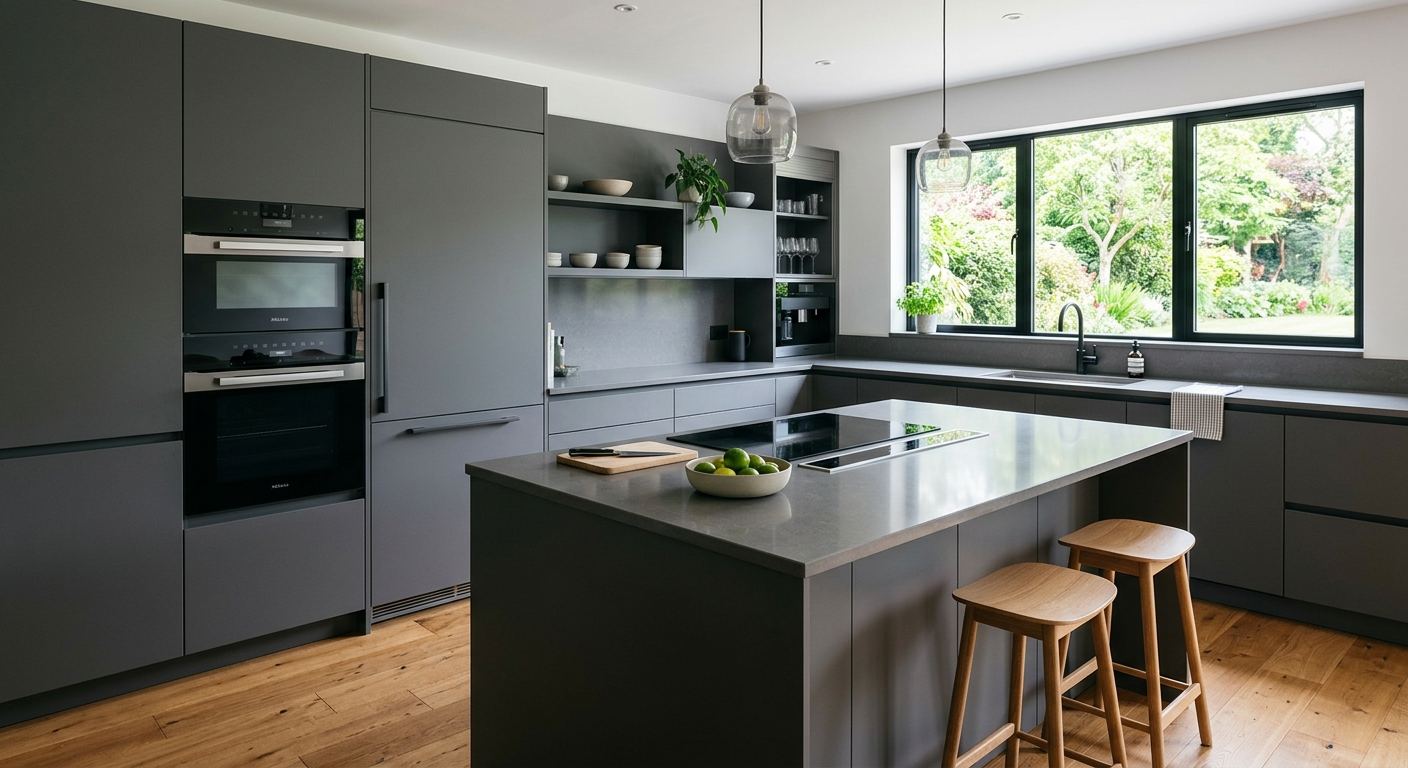
Kitchen renovation options and costs in Bowen Island
Kitchen renovations in Bowen Island come down to matching your expectations to what buyers typically want on the Lower Mainland–Southwest, even though the island setting can affect access logistics. With a median household income of $111,000 and 84.9% of households owning (Statistics Canada, 2021 Census), many homeowners lean toward a durable “family-friendly” finish rather than the cheapest possible surfaces. At the same time, Bowen Island’s housing stock is older—36.8% of homes were built before 1981 (Statistics Canada, 2021 Census)—so updates often uncover original electrical, dated plumbing layouts, or uneven subfloor that can add cost even when the visible changes are “only cosmetic.”
In this region, kitchen pricing is driven more by the home value and the finish tier than by climate. British Columbia’s coastal weather mainly influences ventilation choices, caulking/priming systems, and moisture-tolerance for tile and underlayment; it doesn’t usually swing labour rates like a major climate zone would. Availability and travel time can still affect scheduling: projects near areas like Snug Cove often see higher demand for skilled trades in the summer, so timelines and crew availability can influence your total price.
Most homeowners choose between a cosmetic refresh, a mid-range full renovation, or a high-end rebuild with an island and premium materials. Use the table below as a practical starting point, and then tailor it to your layout, cabinet tier, and countertop choice.
| Renovation Tier |
What's Included |
Typical Duration |
Price Range |
| Cosmetic refresh (paint, hardware, new appliances only) |
Cabinet paint or touch-ups, new hardware, appliance swap (where plumbing/electrical remains unchanged), minor caulking, basic cleaning/trim work |
1–3 weeks |
$8,000–$20,000 |
| Mid-range full renovation (new cabinets, counters, sink, tile) |
Semi-custom or stock cabinets, countertop install, sink + faucet change, tile backsplash, flooring patch/replace as needed, basic lighting updates |
4–8 weeks |
$40,000–$80,000 |
| High-end full renovation (custom cabinets, stone counters, island) |
Custom millwork, quartz/stone counters, island construction (often with plumbing/electrical), full-height backsplash options, upgraded hardware and lighting package |
8–14 weeks |
$80,000–$120,000 |
| Cabinet refacing only (new doors + drawer fronts, same boxes) |
Door/drawer-front replacement, new hardware, veneer/finish on visible surfaces, selective caulking and alignment fixes |
2–5 weeks |
$8,000–$30,000 |
| Countertop swap only (laminate to quartz or stone) |
Remove and reinstall counters, new undermount sink cut-outs as required, basic edge profile upgrades, cleanup and sealing (where applicable) |
1–3 weeks |
$12,000–$25,000 |
| Backsplash tile installation only |
Tile supply/installation on existing wall surfaces, grout/seal, transitions around outlets and corners, waterproofing where required |
1–3 weeks |
$1,500–$6,000 |
Prices are estimates only and vary by project scope, site access and material selection.
What affects the price of kitchen renovation in Bowen Island
Even when two homeowners ask for the “same” kitchen—same size, similar layout—the quotes can differ by 30–50% across the Lower Mainland–Southwest and other parts of British Columbia because the deciding variables are the finish tier and the amount of hidden work, not the coastal weather alone. In high-value Greater Vancouver-style markets, homeowners frequently choose quartz or stone counters and semi-custom cabinetry because the renovation cost is more easily recovered on resale; in more modest scopes, laminate and stock cabinets dominate because they deliver ROI without pulling many trades into the project. On Bowen Island, the homeowner mix and 84.9% homeownership tends to support mid-to-durable finishes, and that pushes pricing toward complete, resale-ready upgrades rather than “quick fixes.”
Layout changes are where Bowen Island projects often diverge—removing a wall, adding an island, or moving a gas line/plumbing feed can add labour, permits, and schedule complexity regardless of whether you select laminate or quartz. For example, shifting plumbing to support a new island can add cost even if your cabinet tier stays mid-range. Conversely, sticking with the existing sink location can keep a mid-range renovation closer to the $40,000–$80,000 band, while adding an island and custom storage pushes many builds toward the $80,000–$120,000 band.
Two Bowen Island-specific realities also matter: older homes (36.8% built before 1981) can require additional electrical corrections and patching once cabinets come out, and coastal conditions make proper ventilation and moisture-tolerant installation more important around tile and grout. If the project includes under-cabinet lighting or new outlets near the island, expect more electrical work because that’s not typically a “same-day” swap.
| Price Factor |
Why It Matters |
Cost Impact |
| Cabinet tier — stock vs. semi-custom vs. fully custom millwork |
Higher tiers require more custom measuring, fabrication time, and labour-intensive installation for perfect reveals. |
Typically shifts cabinet portion of the job by thousands, often the biggest driver of total cost movement. |
| Countertop material — laminate vs. quartz vs. granite vs. stone |
Material supply cost, template/installation complexity, and edge profiling vary widely. |
Can swing the countertop line item from low thousands to high thousands, and influence labour for undermount details. |
| Layout change — wall removal, island add, plumbing/gas move |
Creates structural, plumbing, gas (where applicable), and electrical scope; typically triggers permits and inspections. |
Often adds the most unpredictable cost and can extend timelines by weeks. |
| Appliance package tier — builder vs. mid-range vs. pro-grade |
Power requirements, venting needs, and finishing details differ, affecting cabinet clearances and trim. |
Moderate to high impact depending on whether venting/plumbing/electrical must be adjusted. |
| Flooring — refinish existing vs. full replacement |
Existing floors may be damaged during demolition; full replacement adds material and subfloor prep. |
Can add several thousand dollars, especially if subfloor correction is needed. |
| Backsplash — ceramic tile vs. marble vs. full-height slab |
Stone and full-height work increases templating, waterproofing details, and install labour. |
Ranges from manageable add-ons to premium scope that rivals part of the countertop budget. |
| Electrical — new circuits for island, under-cabinet lighting |
New circuits, GFCI/RCD requirements, and lighting runs require licensed work and sometimes permit updates. |
Can add noticeable cost while also affecting scheduling for inspection sign-offs. |
| Permit fees and licensed trade requirements |
Work that changes services (gas/plumbing/electrical) typically requires permits and inspection coordination. |
Usually a smaller line item than materials, but it adds administrative time and scheduling risk. |
Permits & regulations in British Columbia
In British Columbia, a typical cabinet and countertop swap often does not require a permit because you’re replacing finishes within the existing framework. That said, permits generally become necessary when you change services or a structural condition. In practical terms, these kitchen tasks commonly require permits and licensed trades: relocating or modifying plumbing supply/drain lines, relocating a sink or dishwasher connection, moving or adding a gas line (stove/range and some venting setups), removing a load-bearing wall, and adding new electrical circuits (for example, dedicated power for an island, additional receptacles, or new under-cabinet lighting that requires a circuit change). Electrical and gas work must be done by licensed professionals, followed by required inspections.
For Bowen Island homeowners, the safest process is to verify before you sign the contract and again before the work starts. Step-by-step: (1) ask the contractor for their BC licence details and confirm they use licensed trades for electrical/gas when those scopes are included; (2) request a certificate of insurance (liability) and keep it in your project binder; and (3) confirm work coverage documentation (WSIB/WCB coverage) for the crew or subcontractors involved.
In your written agreement, confirm who pulls permits, who pays the permit fees, and who schedules inspections. It should be clear in the contract because “we’ll handle it” is not the same as having it named line-by-line.
Cabinets, countertops and layout decisions in Bowen Island
In Bowen Island, the three decisions that most strongly shape your budget and long-term satisfaction are: (1) your cabinet tier, (2) countertop material, and (3) whether you change the layout. Cabinet tier sets the tone for storage quality and visual fit—stock is fastest and cheapest, semi-custom is the most popular mid-range option, and custom millwork delivers the best tailoring for older or irregular kitchen walls you often see in homes built before 1981. For countertops, laminate can look sharp and work within a budget, but quartz (engineered stone) and natural stone options bring better resistance to staining and everyday wear.
Layout changes—especially open-concept wall removal, adding an island, or relocating plumbing/gas—can be justified when the space gain supports how you actually use the kitchen (hosting, family routines, or accessibility). In Lower Mainland–Southwest resale expectations, many buyers like a functional island, clean sightlines, and durable counters that read well in natural daylight and evening lighting. Coastal BC climate also means you’ll want ventilation and moisture-aware installation around sinks, tile backsplashes, and grout lines.
Here’s a concrete budgeting example: if you’re choosing between laminate and quartz and you stay with the same sink location (no plumbing move), the cost increase for quartz is usually easier to absorb within a mid-range renovation. But if your plan includes an island with plumbing relocation, that “extra” money is better spent where it moves the value—good cabinets and durable quartz—because the island-related trades and permits already add major cost. In that scenario, a full mid-range renovation often lands near $40,000–$80,000, while custom cabinet + stone counter combinations can push a full project toward $80,000–$120,000.
| Option |
Durability |
Maintenance |
Best For |
Price Range |
| Stock cabinets (big-box) |
Good for everyday use; durability depends on door and finish quality |
Minimal—use gentle cleaners; touch up minor chips quickly |
Freshen-up projects and tighter budgets with a straightforward layout |
$8,000–$25,000 |
| Semi-custom cabinets (local dealer) |
Strong build with improved internal hardware and better fit options |
Low—regular cleaning and keeping hinges aligned |
Most Bowen Island homeowners aiming for resale-friendly storage and finishes |
$25,000–$55,000 |
| Custom cabinets (local millwork shop) |
Excellent fit and finish; best for irregular walls, special storage, and high-load areas |
Low—designed for longevity, but hinges/adjustments may need occasional tuning |
High-end renovations with islands, pantries, and design-led layouts |
$55,000–$90,000 |
| Laminate countertop |
Decent surface for daily cooking; vulnerable at seams and to heavy impact |
Wipe clean; avoid prolonged standing water at edges |
Budget-conscious renovations that want a “new look” quickly |
$3,000–$6,000 |
| Quartz engineered countertop |
High durability and stain resistance; consistent colour and pattern |
Low—no sealing; clean with manufacturer-approved products |
Families and resale-targeted projects that want a premium look without extra upkeep |
$6,000–$10,000 |
| Granite / natural stone countertop |
Very durable with natural heat tolerance; variability in pattern and porosity |
May need periodic sealing depending on stone type |
Owners who want unique veining and a higher-end statement |
$8,000–$12,000 |
| Butcher block countertop |
Durable but requires protective oils; sensitive to cuts through to the core |
Regular oiling and gentle cleaning; promptly address spills |
Warm, cottage-style kitchens and homeowners who’ll treat the surface intentionally |
$5,000–$9,000 |
| Marble countertop |
Beautiful but softer; can etch or stain more easily than quartz/most stones |
Higher care—use protective habits and appropriate cleaners |
Design-led kitchens where appearance matters most and owners maintain diligently |
$9,000–$14,000 |
How to choose a kitchen renovation contractor in Bowen Island
Choosing the right contractor in Bowen Island starts with verifying credentials and making sure the team matches your actual scope. In British Columbia, ask for proof of licensing for the relevant trades (especially electrical and gas if your plan includes new circuits or gas line work), and request documentation for liability insurance. For coverage, confirm WSIB/WCB information for the workers/subcontractors involved—this matters if injuries occur on-site.
Next, get 2–3 itemised written quotes, not lump sums. You want labour and materials separated so you can see what’s included: cabinet supply vs. install, countertop template and install, tile backer prep, disposal, and any allowance items (like flooring patching or electrical revisions). Read the scope carefully for exclusions and make sure permit responsibility is stated—some contractors include permit pulls and inspections in their process, others don’t. Ask whether site protection, dumpster fees, and waste hauling are included.
For warranty, confirm the workmanship warranty length and what it covers (e.g., cabinet alignment, caulking failures, tile grout issues). Also ask about product/manufacturer warranties and whether they’re transferable if you sell the home. On payment schedule, avoid large upfront deposits—many reputable projects start with 10–15% maximum and use a holdback until punch-list items are complete. Finally, demand a clear timeline: start date and a completion estimate in writing, tied to cabinet and countertop lead times.
- Confirm trade licensing for electrical/gas where your scope requires it.
- Request a current certificate of liability insurance.
- Verify WSIB/WCB coverage for workers and subcontractors.
- Get itemised quotes with labour + materials breakdown (no “all-in” only).
- Check exactly what’s included for demolition, disposal, and site protection.
- Confirm whether permit pulling and inspection scheduling are included.
- Ask how allowances are handled if materials change.
- Review the warranty: workmanship term and product warranty details.
- Use a payment schedule with 10–15% upfront and a holdback for completion.
- Ensure lead times for cabinets and countertops are realistic and stated.
- Get a written start date and completion estimate before signing.
- Clarify who handles unexpected conditions (old wiring, uneven subfloor).
Red flags I see with some Bowen Island kitchen contractors: they won’t provide itemised quotes; they won’t put permit responsibility in writing; they ask for more than 30% upfront without a deposit justification; they use vague exclusions like “everything else” with no allowances; or they refuse to name a workmanship warranty term and process for punch-list fixes.
Frequently asked questions — kitchen renovation in Bowen Island
How long does a kitchen renovation take in Bowen Island?
Most Bowen Island kitchen renovations take about 4–8 weeks for a mid-range full renovation (cabinets, counters, sink, and tile), assuming cabinet and countertop lead times align. Cosmetic refreshes can be much faster—often 1–3 weeks—because there’s no demolition-heavy work and fewer trades involved. High-end full renovations with custom cabinetry and an island commonly run 8–14 weeks due to fabrication time, templating, and coordination between trades. Older homes (36.8% built before 1981 in the area) can also add time if electrical correction or subfloor patching is discovered once cabinets come out. If your project falls between $40,000–$80,000 or $80,000–$120,000, use the quote’s schedule plus material lead times to set a realistic completion target.
Quartz vs granite countertops — which is better?
“Better” depends on how you cook and maintain. Quartz is usually the practical winner for most Bowen Island households because it’s very consistent, highly stain-resistant, and typically requires no sealing—so daily life stays simple. Granite is durable and heat-tolerant, and it offers unique natural veining that some homeowners love for aesthetics. However, granite may be more porous depending on the stone, and some types require periodic sealing to keep performance strong. In resale terms on the Lower Mainland–Southwest, both read well, but quartz often supports broader buyer preferences due to uniform looks and lower maintenance habits. Budget-wise, granite/natural stone commonly sits higher than quartz in installed cost, so if you’re planning a mid-range renovation you may protect your overall scope by choosing quartz and putting money into cabinet storage or layout.
Should I reface or replace my cabinets?
If your cabinet boxes are in good shape—straight, firmly attached, and the layout works—refacing can be a cost-effective way to modernize the kitchen without demolition. Many refacing projects land in the $8,000–$30,000 range, and timelines are often shorter than a full replacement. Replace cabinets when boxes are damaged, poorly installed, sagging, or when you want major changes to interior storage (pull-outs, pantry redesign, or updated sizing) that refacing can’t achieve. Refacing is also less disruptive if your flooring and backsplash are already recent. In Bowen Island’s older housing stock (36.8% pre-1981), we sometimes see deeper issues behind older doors—soft face frames, moisture exposure near sinks, or outdated electrical/bathroom-adjacent wiring routes—so a thorough in-person assessment matters before you commit.
Do I need a permit for a kitchen renovation in British Columbia?
Often, simple swaps like replacing cabinets and countertops typically do not require permits because you’re updating finishes without changing services. In British Columbia, permits are commonly needed when you move plumbing supply/drain lines, relocate gas (for example, changes affecting stove/range gas connections), remove a load-bearing wall, or add new electrical circuits (like power and receptacles for an island, or significant lighting circuit changes). Electrical and gas work must be done by licensed trades, and inspections are part of the process. For Bowen Island homeowners, the key step is confirming permit responsibility in the contract—who pulls the permits, who schedules inspections, and who pays the fees. Ask your contractor for the written scope before work begins so you’re not surprised mid-project.
What's the ROI on a kitchen renovation?
ROI varies because it depends on how far you go (cosmetic refresh vs. full renovation), your neighbourhood expectations, and how much of the upgrade matches what buyers notice. In the Lower Mainland–Southwest, kitchens with durable, resale-friendly choices—good cabinetry fit, quartz/stone counters, and a functional layout—tend to perform better than projects that look impressive but don’t improve day-to-day utility. It’s also easier to justify higher-cost upgrades when your plan supports long-term recovery on resale, especially in higher-value markets where buyers expect more “designer” finishes. That said, you can still protect value with mid-range scopes: staying around $40,000–$80,000 while improving the big visual elements (cabinets, counters, backsplash, and lighting) can be smarter than overspending on premium materials when the layout doesn’t change. Your contractor can help you align materials and layout to your likely buyer profile.
How do I budget for a kitchen renovation?
Start with your renovation tier and then budget for the “invisible” parts of the job: electrical corrections, plumbing adjustments, subfloor prep, disposal, and any allowances for material changes. A good approach for Bowen Island homeowners is to choose a realistic target range first—cosmetic refreshes often sit around $8,000–$20,000, while mid-range full renovations commonly fall near $40,000–$80,000 and high-end projects can reach $80,000–$120,000. Build a contingency for older homes and unexpected conditions, especially since 36.8% of local dwellings were built before 1981. Then request 2–3 itemised quotes so you can compare apples-to-apples: cabinet tier, countertop material, tile scope, permit work, and what’s included for demolition and haul-away.