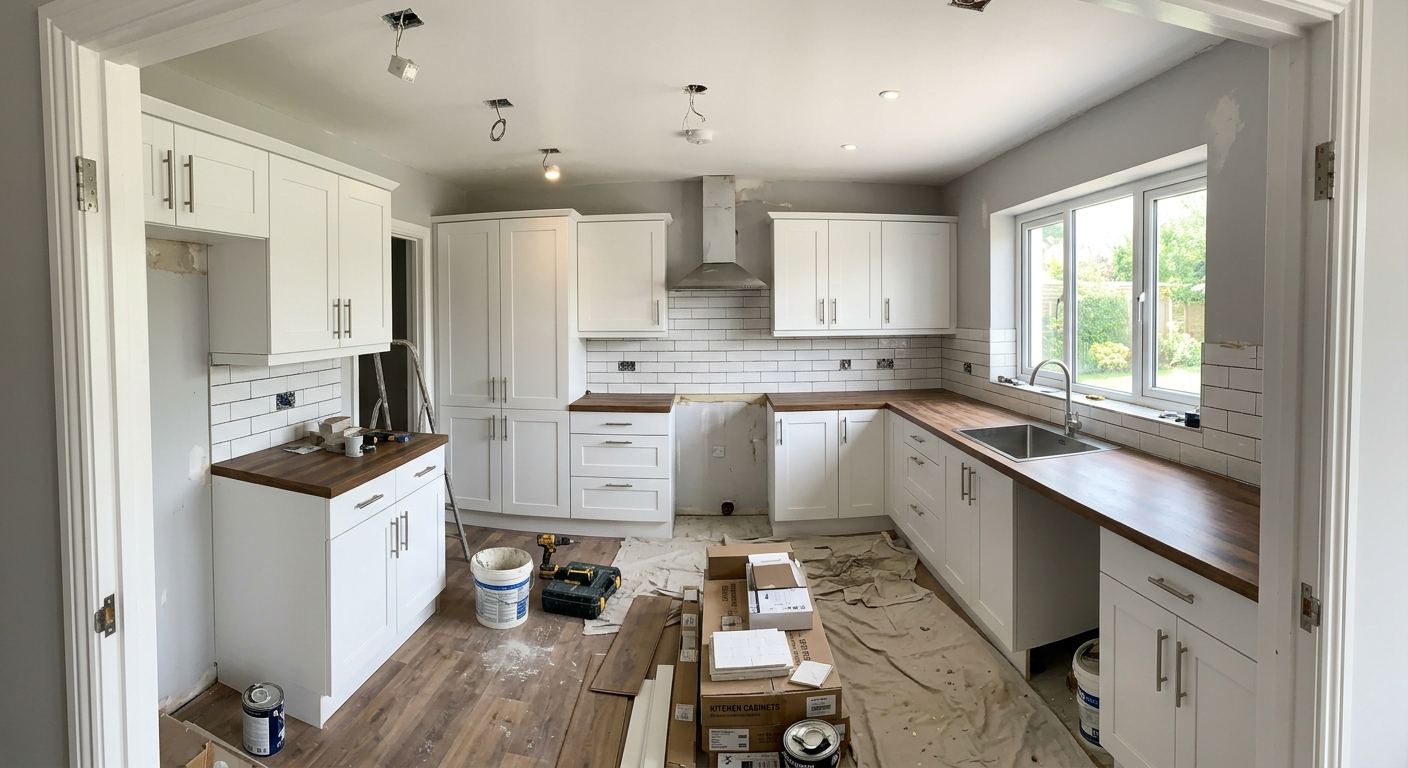
Kitchen renovation options and costs in Lincoln Park
Kitchen renovation options in Lincoln Park, British Columbia, typically start with three common goals: make the space look newer, improve function, and increase resale appeal. With Lincoln Park’s small community size—population of 4,040 (Statistics Canada, 2021 Census)—most homeowners are working with the same local supplier network and a fairly consistent set of trade crews who book out projects in-season. That availability matters for timelines and labour scheduling, especially when you’re combining cabinet installation, countertop templating, and electrical upgrades. In the Lower Mainland–Southwest, pricing is driven more by the expected finish tier and the value/income of the home than by weather alone; homeowners in higher-value pockets often default to semi-custom or custom cabinetry and quartz/stone counters because the upgrade is easier to justify at resale. The same plan can feel “reasonable” as a mid-range full renovation but escalate quickly once you change layout, add an island, or upgrade to stone and upgraded hardware.
On top of that market behaviour, contractor availability and material logistics influence cost. Even though the Lower Mainland climate is relatively mild, kitchens still take the full humidity swing of coastal weather—so proper ventilation, waterline detailing, and durable finishes (including backsplash sealing and moisture-tolerant flooring transitions) affect long-term performance and add small but real scope costs. In Lincoln Park, trade demand is especially steady around the local residential corridors where interior renos are common—meaning refinishing and tile work tends to get scheduled tightly to match cabinet and counter lead times.
Below is a practical way to compare options before you request a quote, so you can separate “must-haves” from “nice-to-haves” and choose the tier that fits your budget and timeline.
| Renovation Tier |
What's Included |
Typical Duration |
Price Range |
| Cosmetic refresh (paint, hardware, new appliances only) |
Cabinet repaint or touch-ups, new hardware/handles, caulking refresh, paint, swap in appliances (dishwasher/oven/microwave hood), and basic cleaning/trim work |
3–7 days |
$8,000–$25,000 |
| Mid-range full renovation (new cabinets, counters, sink, tile) |
New semi-custom or quality stock cabinets, countertop installation, sink and faucet swap, backsplash tile (standard height), new toe-kick lighting where applicable, and flooring transition/patching |
3–6 weeks |
$40,000–$75,000 |
| High-end full renovation (custom cabinets, stone counters, island) |
Fully custom cabinetry/made-to-fit millwork, stone counters (e.g., quartz/stone), island build-out, expanded backsplash (often to underside of uppers), upgraded hardware, sink + faucet upgrades, and more involved electrical/plumbing detailing |
6–12+ weeks |
$90,000–$120,000 |
| Cabinet refacing only (new doors + drawer fronts, same boxes) |
Door/drawer replacement, veneer/laminate refacing on existing boxes, hardware upgrade, touch-up paint where needed, and basic alignment/countertop protection |
1–3 weeks |
$8,000–$35,000 |
| Countertop swap only (laminate to quartz or stone) |
Remove/replace existing top, templating/measurements, install quartz/stone, seal where required, and reconnect sink as needed |
1–2 weeks (plus templating lead time) |
$3,000–$12,000 |
| Backsplash tile installation only |
Remove/prepare surface, install ceramic tile/stone look tile, waterproofing where required, grout/seal, and caulking at edges |
3–7 days |
$1,500–$6,000 |
Prices are estimates only and vary by project scope, site access and material selection.
What affects the price of kitchen renovation in Lincoln Park
For the same kitchen renovation scope, quotes in the Lower Mainland–Southwest can land 30–50% apart across British Columbia. Most of that spread isn’t because Lincoln Park has “extra harsh” weather—it’s because local home value, the finish level buyers expect at resale, and labour/material demand patterns strongly influence what contractors price into a job. In higher-value Lower Mainland–Southwest markets, homeowners more often choose quartz or stone counters and semi-custom cabinetry because the cost is easier to recover on resale. In more modest markets, laminate and stock cabinets dominate, and the budget stays closer to the practical “refresh” lane.
Layout changes are the wildcard regardless of finish tier: removing a wall to open the kitchen, adding an island, moving a sink, or relocating gas service will typically swing your budget more than swapping from mid-grade laminate to premium stone. A wall removal (even if it’s only partial) can also reveal wiring, plumbing runs, or framing issues that weren’t obvious during the initial walkthrough. Similarly, moving a gas line or adding a hood vent typically triggers permit requirements and licensed trade involvement, which increases labour sequencing and inspection steps.
Here are a few concrete Lincoln Park examples contractors commonly see. First, older homes may have undersized supply lines or dated shutoffs, so upgrading to meet modern appliance connections can add cost even when you keep the layout “mostly the same.” Second, if your kitchen currently has builder-grade laminate counters, bringing in quartz often requires more careful countertop support and shimming on uneven substrates—especially in homes with older floors or out-of-level cabinetry. Third, adding a tile backsplash behind existing cabinets can be less expensive if the drywall is smooth; if cabinets have been repeatedly removed and reinstalled, re-prep and patching can raise the backsplash portion closer to the upper band of $1,500–$6,000.
Bottom line: if you’re targeting a mid-range full renovation around $40,000–$75,000, keep plumbing/gas moves limited. If you want a high-end full renovation near $90,000–$120,000, budget for custom cabinetry, island complexity, and a longer trade schedule.
| Price Factor |
Why It Matters |
Cost Impact |
| Cabinet tier — stock vs. semi-custom vs. fully custom millwork |
Higher tiers cost more per linear foot and also change lead times, fit/finish detail, and installation complexity |
Often the biggest swing inside a full renovation; can separate a mid-range from a high-end job by tens of thousands |
| Countertop material — laminate vs. quartz vs. granite vs. stone |
Material choice affects price, labour time for heavy slabs, seam layout, and edge/detailing |
Typical countertop installs range roughly from $3,000–$12,000 depending on material and sink cut-outs |
| Layout change — wall removal, island add, plumbing/gas move |
Changes require re-framing, new service lines, coordination across trades, and more inspections |
Often the most unpredictable; can push a project upward even if finishes stay mid-range |
| Appliance package tier — builder vs. mid-range vs. pro-grade |
Higher tiers increase unit cost and may require electrical/gas specification changes |
Can add several thousand to the appliance line item and slightly expand electrical/plumbing scope |
| Flooring — refinish existing vs. full replacement |
Kitchen renos often disturb underlayment and transitions; matching can be harder with older flooring |
Full replacement commonly increases material and labour, especially with stairs/threshold work |
| Backsplash — ceramic tile vs. marble vs. full-height slab |
More delicate stone increases breakage risk and demands better waterproof detailing |
Backsplash tile install only typically lands around $1,500–$6,000 based on finish and height |
| Electrical — new circuits for island, under-cabinet lighting |
Modern kitchens commonly need additional outlets and task lighting |
May require licensed electrician work and adds labour + inspection scheduling |
| Permit fees and licensed trade requirements |
Permits and licensed trades add admin time, inspection steps, and labour coordination |
Can add several hundred to a few thousand, but the bigger impact is scheduling and sequencing |
Permits & regulations in British Columbia
In British Columbia, a lot of kitchen “swap and surface” work is straightforward, but anything that touches a service line or structural components can require permits and licensed trades. Cabinet and countertop swaps typically do not require a permit—so replacing your cabinet doors, drawer fronts, or installing new laminate/quartz tops usually stays in the renovation lane. However, moving plumbing supply or drain lines, relocating a gas stove/range, adjusting how a range hood vents when gas is involved, removing a load-bearing wall, or adding new electrical circuits generally requires permits and licensed trades.
Step-by-step, how a homeowner in Lincoln Park should verify compliance: first, ask the contractor which specific items require permits for your plan (e.g., “Are you pulling permits for gas/electrical?”). Second, verify licences before work starts. For gas-related work, confirm the contractor’s gas fitter credentials for any gas line relocation, stove connection changes, or related venting hookups. For electrical work, confirm a licensed electrician will be pulling permits and making connections for new circuits, under-cabinet lighting wiring, or island outlets. Third, request proof of liability insurance and WCB/WSIB coverage documentation (the names can vary by employer/worker setup). Fourth, ask for the inspection plan and who schedules it.
Where to look: use the provincial licence registries for trades, review the certificate of insurance for policy validity and coverage limits, and ensure your quote and contract clearly state permit responsibility and inspections. Keep these in writing—permit responsibility belongs in the contract, not in a verbal assurance.
Cabinets, countertops and layout decisions in Lincoln Park
Three decisions drive most kitchen renovation outcomes in Lincoln Park: (1) cabinet tier, (2) countertop material, and (3) layout changes. The Lower Mainland–Southwest resale market tends to reward kitchens that look “current” without feeling fragile. That means even when you’re not going premium, buyers typically expect straight lines, durable work surfaces, and a sensible storage plan.
For cabinets, stock is the fastest and cheapest path because it’s built for standard sizing. Semi-custom cabinets are usually the sweet spot locally: you get better internal storage and more colour/finish flexibility without the full lead times of custom millwork. Custom cabinets are best when your kitchen has unusual angles, requires made-to-fit panels, or you’re adding a complex island. On countertops, laminate is budget-friendly but can be more prone to chipping at edges if you’re rough with cookware; it also needs careful sealing around the sink. Quartz is popular because it’s tough, consistent in appearance, and easier to maintain for busy households. Natural stone like granite is durable too, but it’s heavier and needs attention to sealing and care. Marble looks high-end and elegant but is more sensitive to acidic spills.
Layout changes—open-concept wall removal, island addition, or plumbing/gas relocation—are justified when the space gain meaningfully improves flow. If your current kitchen already has good clearance and the island would block traffic, you may not recover the added spend.
Concrete example: upgrading from laminate to quartz is often a reasonable trade-off within a mid-range remodel, typically aligning with the countertop portion around $3,000–$12,000—especially if you keep the plumbing where it is. But changing a sink location and adding an island often pushes the job beyond the mid-range band of $40,000–$75,000 because of service moves, electrical coordination, and longer trade scheduling.
| Option |
Durability |
Maintenance |
Best For |
Price Range |
| Stock cabinets (big-box) |
Good durability with proper installation; standard sizes can limit fit |
Low day-to-day care; relies on regular cleaning and gentle hardware use |
Budget-first refreshes and faster timelines |
$8,000–$25,000 |
| Semi-custom cabinets (local dealer) |
Very solid build quality; better fit and upgraded internal features |
Low maintenance; hinges/draw slides perform well when maintained |
Most Lincoln Park homeowners aiming for resale-friendly upgrades |
$20,000–$50,000 |
| Custom cabinets (local millwork shop) |
Highest fit-and-finish; tailored storage and structural integration |
Low maintenance, but requires proper care of bespoke finishes |
Unusual layouts, custom islands, and design-led kitchens |
$40,000–$80,000 |
| Laminate countertop |
Moderate; edges can chip if impacted |
Easy to wipe clean; avoid abrasive pads at seams and edges |
Budget refreshes where layout stays the same |
$3,000–$6,500 |
| Quartz engineered countertop |
High; resistant to stains and everyday wear |
Very low maintenance; wipe clean and avoid extreme heat exposure |
Families who want a “set it and forget it” surface |
$6,000–$12,000 |
| Granite / natural stone countertop |
High; strong and heat tolerant |
Periodic sealing recommended; care for spills and use proper cleaners |
Premium look with natural variation |
$8,000–$14,000 |
| Butcher block countertop |
Good with proper care; can scratch without sealing |
Requires oiling/maintenance; sensitive to standing water if neglected |
Home cooking styles and a warmer look |
$5,000–$10,000 |
| Marble countertop |
Moderate to high; more prone to etching and staining than quartz |
Needs sealing and careful spill management |
Design-forward kitchens with lighter daily use |
$10,000–$18,000 |
How to choose a kitchen renovation contractor in Lincoln Park
Choosing the right kitchen renovation contractor in Lincoln Park (British Columbia) comes down to verification, clarity, and sequencing. Start with licensing and coverage: confirm the contractor is using licensed trades where required (gas fitter for gas-related work; electrician for electrical circuits). Ask for proof of liability insurance and for WCB/WSIB coverage for the workers involved. To check, review the certificates directly (valid dates, company name, and coverage limits) and verify trade licences through the relevant provincial registry tools. If they can’t provide documentation promptly, that’s your first sign to walk away.
Next, get 2–3 itemised written quotes. You want a breakdown that separates labour and materials (cabinets, counters, tile, plumbing/electrical allowances), not a single lump sum. Read the scope for inclusions and exclusions: does the quote include permit pulls if your job involves plumbing/gas/electrical? Is disposal and dump fees included? Are cabinet removal, surface prep, and patch/drywall included? Confirm who does demolition dust control and whether they protect floors and doorways.
Warranty matters too. Ask for a workmanship warranty length, what the manufacturer covers for products, and whether any warranties are transferable if you sell. Payment should follow a sensible schedule: never pay more than 10–15% upfront, and use a holdback until completion and punch-list sign-off. Finally, get a written start date and completion estimate that reflects cabinet/counter lead times—otherwise timelines in the Lower Mainland–Southwest can slip quickly.
- Ask for licence numbers for the trades doing gas and electrical work, and verify them before signing.
- Request liability insurance certificate and confirm it covers renovations to occupied homes.
- Confirm workers’ coverage (WCB/WSIB) for the team that will be on site.
- Get itemised quotes with labour/material line items, allowances, and taxes made clear.
- Ensure the permit responsibility is written in the contract (who pulls permits, who schedules inspections).
- Clarify disposal: demo debris removal, landfill fees, and whether bulky items are included.
- Check inclusions: drywall patching, underlayment changes, shims/level correction, and caulking details.
- Confirm countertop responsibilities: templating schedule, sink cut-outs, and seam/edge selections.
- Ask what happens if material delivery is delayed—schedule adjustment policy in writing.
- Review warranty terms: workmanship duration, manufacturer warranty coverage, and transferability.
- Set payment milestones that protect you (10–15% max upfront, holdback until punch-list completion).
- Require a written timeline with start date, cabinet/counter lead-time assumptions, and completion target.
Red flags in Lincoln Park include contractors who only provide lump-sum pricing without itemisation, won’t state who pulls permits for plumbing/gas/electrical scope, ask for large upfront payments, can’t show insurance/coverage documents, and provide vague timelines that don’t account for cabinet and countertop lead times.
Frequently asked questions — kitchen renovation in Lincoln Park
Custom vs stock cabinets — is custom worth it?
In Lincoln Park, custom cabinets are “worth it” when your kitchen layout doesn’t behave like a showroom plan—think awkward corners, a non-standard island size, or you need made-to-fit panels and storage that matches how you actually cook. Stock cabinets are the fastest and least expensive option, but their standard dimensions can force compromises in fit, filler sizing, and overall visual alignment. Many homeowners choose semi-custom instead because it balances cost and quality while staying resale-friendly in the Lower Mainland–Southwest. If you’re aiming for a mid-range full renovation near $40,000–$75,000, semi-custom is often the better ROI. If you’re already budgeting toward a higher-end rebuild around $90,000–$120,000, custom can justify the spend through better integration and a more “built-in” look.
How do I choose a kitchen contractor in Lincoln Park?
Start by confirming British Columbia compliance: ask which trades will be licensed for the work that requires it (gas fitter for any gas line/stove-related changes; licensed electrician for new circuits/outlets and wiring). Then verify liability insurance and workers’ coverage documentation (WCB/WSIB) before work begins. In practice, homeowners in Lincoln Park get better outcomes by requesting 2–3 itemised quotes that separate labour and materials, instead of comparing only one lump sum. Review the written scope carefully: permit responsibility, disposal/dump fees, drywall patching, countertop templating, and what happens with delays. Finally, compare warranties—workmanship coverage length, manufacturer warranty coverage, and whether warranties transfer if you sell. If the contractor won’t document these items, that’s a strong sign the project could become expensive midstream.
What order do kitchen renovation steps happen in?
A typical renovation sequence in British Columbia is designed to protect your schedule and minimize rework. First, demolition and rough-in prep happen (removing existing cabinets, protecting floors, and confirming plumbing/electrical/gas locations). Next, any required permitted work follows—licensed electrical and gas work (when needed) plus plumbing changes. After rough-in, you do drywall patching/paint preparation and flooring transitions. Then comes cabinet installation and leveling, followed by countertop templating (measurements) and installation. Only after counters are in do most installers finish with backsplashes and final trim/caulking, because the countertop and wall-to-counter alignment determines how tile and edge details should land. If you’re doing a backsplash-only upgrade, it can be scheduled later, but for full renos it’s usually best after counters to ensure clean seams and accurate layout.
Can I live at home during a kitchen renovation in Lincoln Park?
Often yes, but it depends on how extensive your renovation is. For a cosmetic refresh (paint/hardware/appliances only), you can usually stay home comfortably because the work is fast and doesn’t disturb services. For a mid-range full renovation around $40,000–$75,000, you can frequently live in the home if the contractor uses dust control, protects doorways, and stages the work—however, you may have limited kitchen function during cabinet installation and countertop templating. For high-end projects (especially with layout changes, island builds, or service moves), living at home can still be possible, but expect a disruption period that may extend for several weeks. In Lincoln Park’s neighbourhood setting, many homeowners plan meal prep in a temporary space and keep access to bathrooms and parking clear. Confirm the work area containment plan in writing before signing.
Should I renovate my kitchen before selling in Lincoln Park?
In the Lower Mainland–Southwest, timing depends on your goal: refresh to compete with newer listings or fully upgrade to capture buyers’ expectations. If your cabinets/counters look dated but your layout and services are functional, a mid-range approach can improve buyer perception without over-committing. If you’re choosing countertop upgrades, quartz is commonly a strong “buyer-friendly” choice because it presents well and is easier to maintain in daily life. A backsplash upgrade alone can also modernize the kitchen without major disruption, with backsplash tile install only often landing around $1,500–$6,000. If your kitchen needs structural or service changes, it can be smarter to renovate before listing so inspections don’t become a negotiating tool. However, avoid expensive layout work unless it clearly improves flow—because that cost is less predictable than cosmetic and countertop-level upgrades.
What's the most popular kitchen style in Lincoln Park right now?
Across Lincoln Park and the Lower Mainland–Southwest, the “most popular” style tends to be clean, modern transitional: simple cabinet lines, warm neutrals (creams/greiges), and quartz counters that read contemporary but don’t feel cold. Hardware is usually understated—matte black or brushed finishes are common—and backsplash designs often lean to full-height interest near the range area or a cohesive tile pattern that doesn’t fight the countertop. This style maps well to today’s resale expectations, where buyers respond to bright, durable surfaces rather than heavy decorative elements. In pricing terms, that typically shows up in semi-custom cabinet packages and quartz installations, which align with many mid-range full renos around $40,000–$75,000. If you’re aiming higher, stone counters and custom islands push the look into a more bespoke tier, where projects can move closer to $90,000–$120,000.