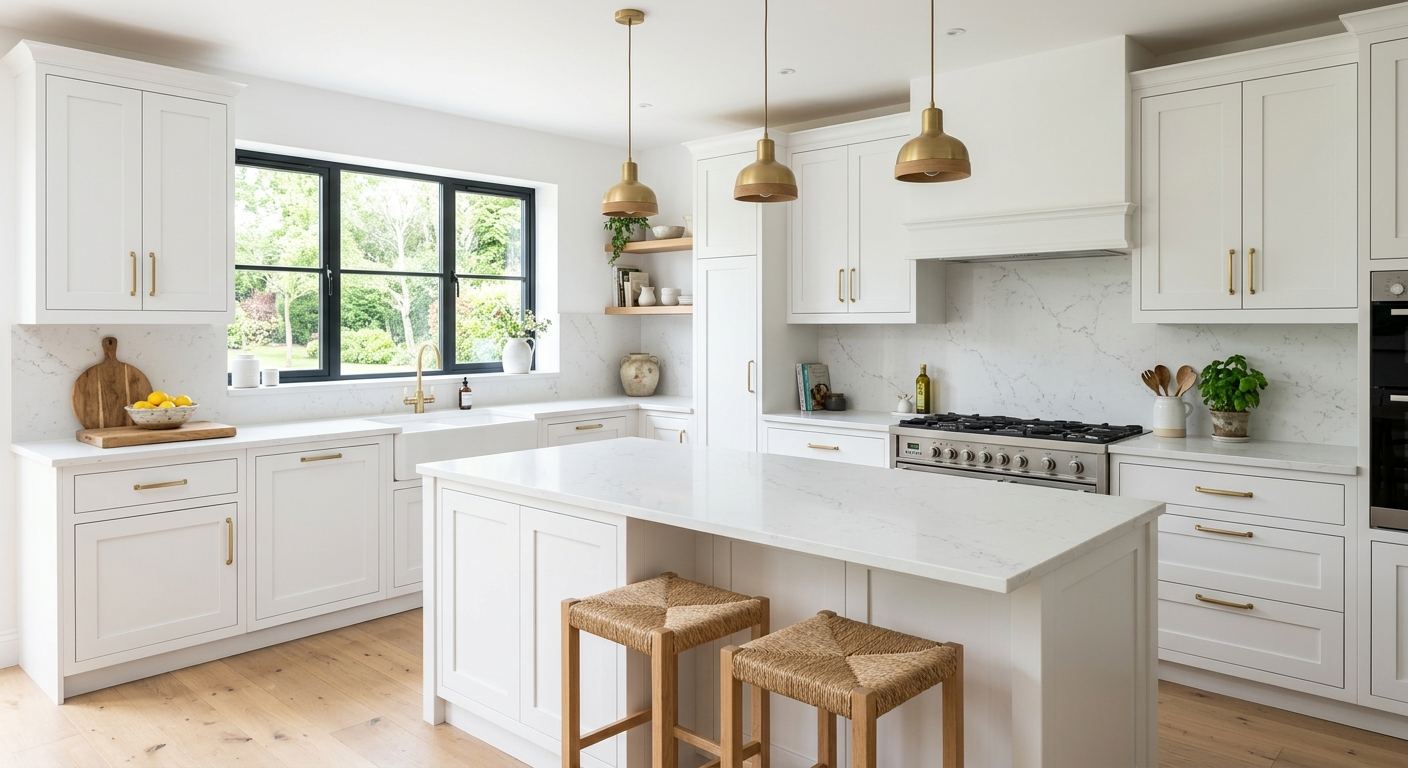
Kitchen renovation options and costs in Cape Horn
Cape Horn is a compact community in the Lower Mainland–Southwest, and kitchen renovations there tend to follow the same reality as the rest of Metro Vancouver: homeowners price in finish expectations and future resale value more than they price in weather. With a population of 12,680 (Statistics Canada, 2021 Census), the local contractor pool is smaller than big-city Vancouver, so scheduling can be tight in peak seasons. At the same time, many Cape Horn households are planning upgrades in line with the broader regional income and home-value profile—especially in higher-value neighbourhood pockets where upgrades feel “expected” (Statistics Canada, 2021 Census). That’s one reason the same kitchen size can land far apart in cost.
BC’s coastal climate (cool, wet winters and humid summers) mainly affects what you choose—think moisture-tolerant finishes, good ventilation, and durable cabinet coatings—rather than driving labour scarcity. In the Lower Mainland–Southwest, pricing is also shaped by market demand for semi-custom or custom cabinetry and quartz/stone counters in higher-value segments. If you’re updating a tired kitchen in an older home stock, you’ll often see additional labour for patching, refinishing subfloors, and replacing water-damaged edges around sink bases.
Builders in the Cape Horn area—particularly around the Tillicum / Ladner-adjacent corridor of the wider region—often see strong demand because homeowners want contemporary layouts, better lighting, and easier maintenance for day-to-day family use. From there, the budget usually determines whether you do a cosmetic refresh, a mid-range full renovation, or a higher-end rebuild. Use the ranges below as a starting point for comparing contractor quotes, then we’ll break down what moves the numbers most.
| Renovation Tier |
What's Included |
Typical Duration |
Price Range |
| Cosmetic refresh (paint, hardware, new appliances only) |
Cabinet paint or refinishing (where applicable), new hardware, new/like-for-like appliances, touch-up drywall, basic countertop polish/repair if minor |
1–2 weeks |
$8,000–$25,000 |
| Mid-range full renovation (new cabinets, counters, sink, tile) |
New semi-custom or quality stock cabinets, new countertops, sink and faucet, backsplash tile, installation of dishwasher and range (if replacing), updated plumbing connections, new flooring prep as needed |
4–8 weeks |
$45,000–$85,000 |
| High-end full renovation (custom cabinets, stone counters, island) |
Fully custom millwork, stone counters (quartz premium or natural stone), island with enhanced power/lighting, upgraded hardware and lighting package, detailed backsplash (often higher labour), premium finishes throughout |
8–14 weeks |
$90,000–$140,000 |
| Cabinet refacing only (new doors + drawer fronts, same boxes) |
New doors/drawer fronts, veneer/laminate panels for boxes, matching toe-kick and trim updates, new hardware, re-caulk and repaint touch-ups |
2–5 weeks |
$12,000–$38,000 |
| Countertop swap only (laminate to quartz or stone) |
Remove existing counters, fabricate and install new quartz/stone, adjust/replace sink cut-outs as needed, re-seal and caulk, backsplash allowance as required |
3–7 days (plus shop lead time) |
$6,000–$22,000 |
| Backsplash tile installation only |
Tile supply (or allowance), layout, tile installation, waterproofing/treatment where required, grout and caulking at edges, clean-up |
4–7 days |
$1,800–$6,500 |
Prices are estimates only and vary by project scope, site access and material selection.
What affects the price of kitchen renovation in Cape Horn
In Cape Horn and across the Lower Mainland–Southwest, two quotes for the “same” kitchen can easily differ by 30–50%—not because contractors are guessing, but because the finish tier and layout complexity change the labour hours and material allowances. In higher-value Metro Vancouver areas within the same region, homeowners more often select quartz or natural stone counters, semi-custom cabinetry, upgraded hardware, and design-led layouts. Those choices get priced into the project because buyers tend to recover more cost on resale when the kitchen is move-in-ready.
Climate does play a role, but mainly indirectly. BC’s coastal humidity and rainy-season moisture can expose weak cabinet box sealing, undersink leaks, and poor ventilation. That said, climate usually changes scope (for example, replacing water-damaged base panels or improving under-cabinet lighting and range hood venting) rather than changing the labour rate itself. Your local home values and typical household income expectations shape finish choices far more than weather. That’s why a project that starts as a “mid-range full renovation” around $45,000–$85,000 can climb quickly if you upgrade to a stone-and-island scope. Conversely, a practical refresh or a more restrained materials package can stay within the backbone bands.
Concrete Cape Horn examples I see often: (1) older homes with original cast-iron drain sections can require more demolition and labour to make plumbing run cleanly under new cabinetry; (2) if existing soffits conceal undersized electrical, under-cabinet lighting and island receptacles may require an electrical rework; (3) some layouts need a gas line adjustment—when that happens, cost becomes unpredictable even if you keep the same cabinetry line. And because Cape Horn has a smaller local contractor footprint than Vancouver, lead times for quality cabinets and stone slabs can add scheduling pressure, especially when you’re targeting a specific completion date.
| Price Factor |
Why It Matters |
Cost Impact |
| Cabinet tier — stock vs. semi-custom vs. fully custom millwork |
Custom boxes, better door styles, internal organization, and made-to-fit geometry drive fabrication time and material cost. |
Can shift the project by roughly $10,000–$45,000+ |
| Countertop material — laminate vs. quartz vs. granite vs. stone |
Material cost, thickness, edge profiles, seam planning, and installation demands change labour and template time. |
Typical variation of $3,000–$12,000+ for countertop-only portions |
| Layout change — wall removal, island add, plumbing/gas move |
Every moved line adds demolition, patching, potential structural coordination, and licensed trades. |
Often the biggest swing item: +$8,000–$30,000 or more |
| Appliance package tier — builder vs. mid-range vs. pro-grade |
Integration requirements, venting needs, and electrical/gas rough-in complexity increase costs. |
Common shift of $2,000–$10,000+ |
| Flooring — refinish existing vs. full replacement |
Demo footprints, subfloor condition, and match-to-existing issues can expand scope quickly. |
Typically +$1,500–$8,000+ |
| Backsplash — ceramic tile vs. marble vs. full-height slab |
Labour intensity rises with mitering, matching patterns, waterproofing, and slab handling. |
Can vary by $1,500–$6,000+ |
| Electrical — new circuits for island, under-cabinet lighting |
Adding outlets, dedicated circuits, and lighting can require new pulls and permit/inspection. |
Often +$1,000–$6,000+ |
| Permit fees and licensed trade requirements |
Permits and inspections add administration time, and licensed trades schedule impacts total duration. |
Usually +$500–$3,500+ depending on scope |
Permits & regulations in British Columbia
In British Columbia, a straightforward cabinet and countertop swap typically does not require a permit because you’re staying within the existing plumbing and electrical locations and there’s no structural change. However, in a Cape Horn kitchen renovation, permits and licensed trades become essential when you change systems—not just finishes.
Work that typically DOES require a permit (and licensed trades): moving or altering plumbing supply/drain lines (for example, relocating the sink), relocating gas components (range connection and any range hood tied to gas), removing a load-bearing wall or making structural changes, adding new electrical circuits for an island, relocating existing outlets, or adding under-cabinet wiring that requires new circuit work.
Work that typically does NOT require a permit: repainting/refinishing cabinets, replacing cabinet faces/doors, replacing countertops in place, installing a backsplash that doesn’t affect plumbing/electrical, and swapping appliances when connections remain unchanged and you don’t modify gas/plumbing/electrical lines.
Step-by-step, here’s how a homeowner in Cape Horn should verify a contractor’s compliance before work starts: (1) ask for the contractor’s business licence number (if applicable) and request their liability insurance certificate; (2) confirm the trades involved—electrical work should be by a licensed electrician, gas work by a licensed gas fitter; (3) request proof of workers’ compensation coverage (WSIB/WCB clearance) and keep it on file; (4) verify the contractor’s licence details through the relevant BC government online registries for the trades; (5) make sure the permit responsibility is explicitly assigned in the written contract—who pulls the permit, who pays fees, and who schedules inspections.
Cabinets, countertops and layout decisions in Cape Horn
The three most consequential decisions in a Cape Horn kitchen renovation are cabinet tier, countertop material, and whether you change the layout. Those choices drive both the look buyers notice and the labour hours contractors can’t “hide” in overhead. In the Lower Mainland–Southwest resale market, many buyers expect clean lines, modern hardware, and surfaces that can handle everyday wet-season humidity and fast-clean cooking messes.
1) Cabinet tier: Stock cabinets are the fastest and cheapest, but they’re less forgiving when your room has older framing or awkward angles. Semi-custom is the most popular mid-range option because it balances cost with better fit. Custom cabinets cost more, yet they’re ideal when you need exact storage planning for pantry pull-outs, appliance garages, or ceiling-height finishes.
2) Countertops: Laminate is budget-friendly, but it’s less impact- and heat-resistant and can wear around seams over time. Quartz is popular because it resists staining and holds up well to coastal humidity swings. Granite/natural stone looks premium but can be pricier to install and may require periodic sealing depending on the stone and finish. The realistic maintenance difference matters in daily use.
3) Layout changes: An open-concept wall removal or adding an island can be worth the cost if it improves flow and creates seating/storage—especially in family homes where the kitchen becomes a gathering hub. But moving plumbing or gas lines often adds the most unpredictable dollars, regardless of whether you choose $45,000–$85,000 mid-range finishes or push into higher-end builds.
Here’s a practical dollar example: if your existing sink is staying put but you’re upgrading from laminate to quartz, many homeowners stay within the countertop swap band (around $6,000–$22,000). If you move the sink to an island, the countertop alone may still be similar—but the plumbing change can add thousands in demolition and licensed trade labour, and the layout work becomes the driver.
| Option |
Durability |
Maintenance |
Best For |
Price Range |
| Stock cabinets (big-box) |
Solid for normal use, but limited sizing can force compromises in fit. |
Low; wipe clean, keep hardware tightened to prevent door sag. |
Budget-conscious refreshes with straightforward layouts |
$8,000–$25,000 |
| Semi-custom cabinets (local dealer) |
Very durable; improved door options and better internal organization. |
Low; avoid soaking around hinges and maintain caulking edges. |
Most Cape Horn remodels aiming for resale-friendly results |
$18,000–$55,000 |
| Custom cabinets (local millwork shop) |
Excellent fit and longevity; designed around your exact room geometry. |
Low; premium finishes may need periodic care per manufacturer guidance. |
Complex rooms, ceiling-height builds, and max storage planning |
$35,000–$90,000+ |
| Laminate countertop |
Moderate; can chip at edges and show wear near seams with heat. |
Easy daily care; use trivets and avoid standing water at seams. |
Shorter-horizon renovations or cost-controlled refreshes |
$3,000–$7,000 |
| Quartz engineered countertop |
High; strong against staining and most everyday impacts. |
Very low; wipe and rinse, avoid abrasive cleaners. |
Move-in-ready kitchens where durability and aesthetics both matter |
$6,000–$12,000 |
| Granite / natural stone countertop |
High; resilient to daily use, but performance varies by stone type. |
Moderate; sealing may be needed depending on finish. |
Homeowners prioritizing natural variation and premium look |
$7,000–$14,000 |
| Butcher block countertop |
Good; can last years with proper maintenance and drying. |
Higher; oil and protect regularly, keep it dry around sink edges. |
Warm, traditional styles and homeowners willing to maintain |
$4,500–$10,000 |
| Marble countertop |
Beautiful but softer; can etch or stain if not cared for. |
Higher; requires careful cleaning and periodic sealing. |
Statement kitchens where aesthetics outweigh heavy wear |
$10,000–$18,000+ |
How to choose a kitchen renovation contractor in Cape Horn
Choosing the right contractor in Cape Horn is mostly about verification, clarity, and control of the money. In British Columbia, confirm that your contractor and each trade are properly licensed for the work they’ll do. For electrical, you should see a licensed electrician; for gas-related changes, you should see a licensed gas fitter. Next, verify liability insurance by requesting a current certificate of insurance naming you as an additional insured when appropriate (at minimum, confirm the policy limits are active). Finally, get proof of workers’ compensation coverage—ask for a clearance letter or documentation showing WCB/WSIB coverage is in place and current. Don’t accept “we’re covered” without paperwork.
When you request quotes, avoid lump-sum numbers with vague scope. Ask for 2–3 itemised written estimates that break labour and materials by category (demolition, cabinetry install, countertop fabrication/installation, plumbing adjustments, electrical items, tile/backsplash, disposal, and any allowances). Read the scope carefully: what’s excluded (for example, hidden drywall repairs, subfloor replacement, or matching existing flooring)? Is permit pulling included, and who pays the fees? Is disposal included, or will you be billed per bin haul?
Warranties should be in writing: workmanship warranty length and what it covers (often 1–2 years for general workmanship, but it varies), plus product/manufacturer warranties for cabinets and countertops. Confirm whether warranties are transferable if you sell the home. For payments, never pay more than 10–15% upfront; hold back a portion until key milestones or completion. Lastly, get a start date and completion estimate in writing so you can plan around lead times common to cabinetry and stone.
- Ask for itemised labour + material breakdowns, not a single “all-in” figure.
- Confirm permit responsibility in the written contract (who pulls it, who pays, who schedules inspections).
- Require proof of liability insurance (current certificate) before demolition starts.
- Request WCB/WSIB clearance documentation for covered workers.
- Verify the specific licensed trades are used for plumbing/electrical/gas work.
- Check warranty wording: workmanship term, exclusions, and who handles claims.
- Confirm product warranty duration and whether it’s transferable on resale.
- Get disposal included in writing (bins, hauling, and any dump fees).
- Insist on an agreed finish schedule for cabinets, countertops, and tile lead times.
- Review the allowance amounts (cabinets, tile, fixtures) and what happens if you exceed them.
- Agree on payment milestones tied to completed, inspected stages.
- Get the proposed timeline and change-order process in writing.
Red flags I see in Cape Horn: a contractor unwilling to list the permits/trades needed, quotes that omit disposal or demolition scope, “materials allowances” that are unrealistically low, vague warranty terms, and payment requests that exceed 10–15% upfront without a signed contract and schedule.
Frequently asked questions — kitchen renovation in Cape Horn
Quartz vs granite countertops — which is better?
In British Columbia, both quartz and granite can perform very well in a kitchen, but they behave differently. Quartz is engineered, which means it’s generally more consistent in appearance and highly resistant to staining and everyday spills—great for busy Cape Horn households. Granite is natural stone with beautiful variation, but it’s more variable by slab and may require sealing depending on the stone type and finish. If you want the lowest-maintenance option for day-to-day cooking, quartz is usually the cleaner choice. If you want a unique natural look and don’t mind periodic care, granite works well. Budget-wise, countertop-only installs often fall around $6,000–$12,000 for quartz, while granite can run higher once you include template, seam planning, and installation complexity.
Should I reface or replace my cabinets?
Refacing is a smart decision when your cabinet boxes are still solid, straight, and properly sealed at the sink and corners. In Cape Horn, many older homes have boxes that are structurally fine but doors/finish that look dated—refacing can refresh the kitchen without the demolition and timeline of a full replacement. Replacing makes sense if boxes are damaged (water intrusion at sink base), if you need to fix functional issues like poor internal storage, or if the layout requires cabinet reconfiguration. Cost-wise, cabinet refacing is often in the $12,000–$38,000 range, while full cabinet replacement can be a much bigger step up depending on whether you go stock, semi-custom, or custom. The best way to decide is to have the contractor assess box condition and hardware alignment before committing.
Do I need a permit for a kitchen renovation in British Columbia?
In Cape Horn and throughout BC, simple swaps—like replacing cabinets or countertops in place—typically do not require a permit. You usually need permits and licensed trades when you alter systems: moving plumbing supply/drain lines (sink relocation), relocating gas lines or changing gas connections, removing a load-bearing wall or making structural changes, or adding new electrical circuits (for example, island receptacles and upgraded under-cabinet lighting that requires wiring changes). A good contractor will confirm permit responsibility in the written contract and schedule inspections. Before work starts, verify the relevant trade licences (licensed electrician for electrical work, licensed gas fitter for gas work) and request proof of liability insurance and WCB/WSIB coverage. That verification matters as much as permits because it protects you if something goes wrong.
What's the ROI on a kitchen renovation?
ROI depends on scope and on what buyers expect in the Lower Mainland–Southwest. In higher-value resale segments, kitchens with durable counters (commonly quartz/stone), modern cabinet styling, and improved lighting often hold value better because they reduce buyer “known risk” during inspection. However, ROI is lower if the renovation is purely cosmetic while key systems—plumbing, ventilation, or electrical—remain outdated. In practical terms, a mid-range full renovation often lands around $45,000–$85,000, and it can make a noticeable difference when you update finishes buyers notice right away. If you’re moving expensive items like plumbing and gas, ROI improves only when the layout genuinely creates usable space (better flow, island seating, storage). The safest ROI strategy is to match finish tier to neighbourhood expectations rather than overspending on custom details that won’t be valued on resale.
How do I budget for a kitchen renovation?
Start with the project tier: cosmetic refresh, mid-range renovation, or high-end rebuild. In Cape Horn, a cosmetic refresh with paint/hardware and new appliances only might begin around $8,000–$25,000, while a full mid-range renovation commonly falls in the $45,000–$85,000 band. Then build a realistic allowance for the “unknowns” that often show up in older homes: water-damaged sink-base areas, subfloor patching, drywall around old plumbing routes, and electrical updates for island receptacles or lighting. Plan for taxes, delivery/lead times, and any permit/inspection costs tied to moving lines. Finally, budget a contingency for change orders so you’re not forced into rushed decisions at demolition time. A detailed itemised quote is the best way to keep your budget aligned to actual scope.
Can I move my kitchen sink or stove?
Yes, you can move a kitchen sink or stove in Cape Horn, but it’s usually where projects get expensive and complex. Moving a sink typically means rerouting plumbing supply and drain lines, which usually triggers permits and requires licensed plumbing work. Moving a stove is often a gas or electrical issue—gas relocations generally require a licensed gas fitter and inspections; electrical cooktops/ranges may require dedicated circuits by a licensed electrician. Even if you pick mid-range finishes, the layout changes—demo, rough-in, patching, and rework to match cabinetry—are what drive the biggest cost swing. If you want to reduce risk, consider keeping plumbing and gas locations as-is while upgrading cabinets, countertops, lighting, and backsplash. When relocations are justified (for example, creating a functional island layout), ask your contractor for a clear scope breakdown and a confirmed timeline.