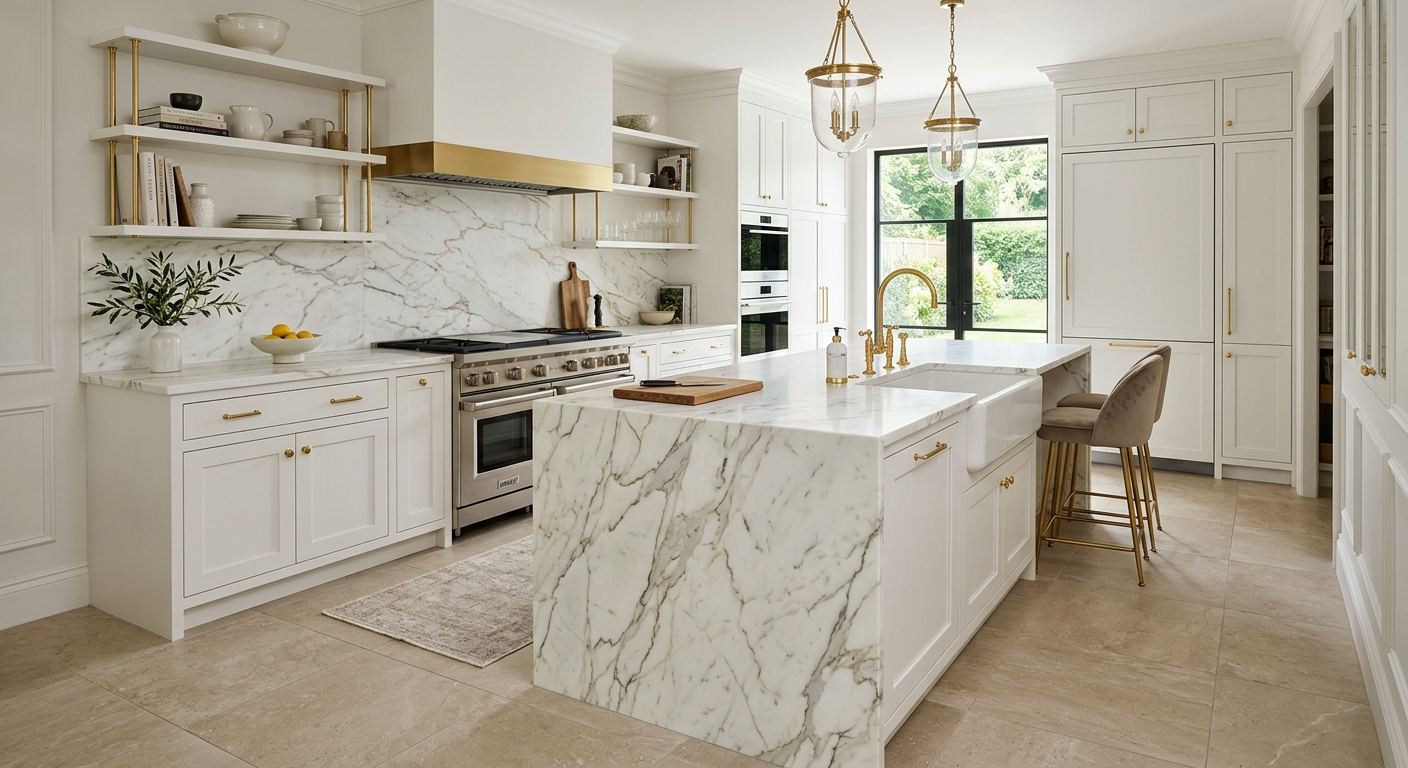
Kitchen renovation options and costs in Grand Forks
Kitchen renovation in Grand Forks typically starts with a clear budget conversation, because homeowners here—whether they’re renovating an older home or modernizing a more recent build—tend to choose finishes that make sense for both day-to-day living and resale. With a median household income of $61,600 (Statistics Canada, 2021 Census), most projects fall into a refresh-to-mid-range lane: owners update cabinets and counters, swap in a modern sink/faucet, and upgrade surfaces where wear is most visible. That aligns well with housing stock in the area too—55.6% of homes were built before 1981 (Statistics Canada, 2021 Census)—meaning many kitchens have layouts, wiring, or plumbing runs that need careful planning before contractors start ripping out cabinets.
In the Kootenay region, pricing is driven more by home values and household income than by climate alone. We do see seasonal swings that affect scheduling and installation (humidity, temperature changes, and longer drying times for finishes), but the bigger cost drivers are material tier decisions and labour availability. Around Grand Forks, trades are especially in demand in the Okanagan Street / downtown core area where older housing stock and tighter access can add a bit of labour time for haul-away, protective covering, and careful removal. From there, budgets commonly split into cosmetic refresh, mid-range full renovations, and higher-end custom millwork jobs—each with different expectations for quartz, stone, and layout changes.
Use the table below as a realistic starting point for comparing quotes and keeping your scope aligned before contractors price the job.
| Renovation Tier |
What's Included |
Typical Duration |
Price Range |
| Cosmetic refresh (paint, hardware, new appliances only) |
Cabinet paint or repaint, new hardware/pulls, backsplash patching where needed, appliance swaps (no plumbing/gas changes) |
1–3 weeks |
$8,000–$18,000 |
| Mid-range full renovation (new cabinets, counters, sink, tile) |
Semi-custom or stock cabinetry, new countertop (quartz or laminate), sink/faucet, backsplash tile, base and wall trim touch-ups |
4–8 weeks |
$30,000–$55,000 |
| High-end full renovation (custom cabinets, stone counters, island) |
Fully custom cabinetry, premium stone countertops, island with upgraded lighting, more extensive backsplash, upgraded flooring coordination |
8–14 weeks |
$55,000–$70,000 |
| Cabinet refacing only (new doors + drawer fronts, same boxes) |
Door/drawer front replacement, new hardware, new end panels where required, optional minor caulking and trim updates |
2–5 weeks |
$10,000–$25,000 |
| Countertop swap only (laminate to quartz or stone) |
Remove old top, template and install new quartz/stone or laminate, new sink cut-out adjustments if staying in same location |
1–3 weeks |
$6,000–$20,000 |
| Backsplash tile installation only |
Tile supply and install on typical backsplash area, grout/seal where appropriate, trim returns at corners |
3–10 days |
$1,200–$5,000 |
Prices are estimates only and vary by project scope, site access and material selection.
What affects the price of kitchen renovation in Grand Forks
In Grand Forks, even when homeowners describe the “same kitchen” in the same square footage, quotes can easily vary by 30–50% across Kootenay contractors and the broader British Columbia market. The difference usually isn’t from climate—it’s from how the contractor prices finish tiers, trades coordination, and allowances for unknowns when older cabinetry and dated rough-ins are removed. In higher-value British Columbia markets, homeowners commonly step up to quartz or stone counters and semi-custom cabinetry because owners can better recoup that spend on resale. In more modest housing markets, the return often favours laminate and stock/standard cabinet systems that deliver a big visual improvement without locking in premium millwork costs.
Local conditions in Grand Forks can also move budgets. For example, many homes built before 1981 can have older electrical runs or non-standard cabinet wall heights, which can add hours to prep and rework. Plumbing and venting locations may be less flexible too, especially when replacing a sink with a different drain/strainer configuration. Another cost swing is scheduling: if your kitchen timeline overlaps with heavy contractor demand in the downtown/core areas and you require custom ordering, lead times can push crews into partial-job staffing (more mobilization). Finally, layout changes carry the most uncertainty regardless of finishes: removing a wall, adding an island, or moving a gas line or plumbing can add material, inspection, and trade-mobilization costs that don’t show up in a basic cosmetic quote.
To keep comparison fair, anchor your quotes against common Kootenay ranges like mid-range full renovations at about $30,000–$55,000 and higher-end full projects at around $55,000–$70,000, then adjust from there based on cabinet tier, countertop choice, and whether you’re relocating services.
| Price Factor |
Why It Matters |
Cost Impact |
| Cabinet tier — stock vs. semi-custom vs. fully custom millwork |
Higher tiers cost more in materials, shaping, hardware, and installation time |
Typically shifts the total by about $10,000–$25,000 |
| Countertop material — laminate vs. quartz vs. granite vs. stone |
Material price, cutting complexity, and edge profiles affect both product and labour |
Can move countertop scope by $2,500–$12,000+ |
| Layout change — wall removal, island add, plumbing/gas move |
Reworking rough-ins adds trades, inspections, and schedule uncertainty |
Often adds $5,000–$20,000 |
| Appliance package tier — builder vs. mid-range vs. pro-grade |
Premium brands and ventilation systems increase purchase and sometimes electrical/gas complexity |
Often adds $2,000–$8,000 |
| Flooring — refinish existing vs. full replacement |
Older subfloors can require repairs once cabinets are removed |
Typically adds $1,500–$6,000 |
| Backsplash — ceramic tile vs. marble vs. full-height slab |
Premium materials and taller coverage increase material waste and install time |
Can add $1,200–$5,000+ |
| Electrical — new circuits for island, under-cabinet lighting |
Island outlets, lighting, and dedicated circuits require licensed work |
Often adds $800–$4,500 |
| Permit fees and licensed trade requirements |
Permits and inspection scheduling add administrative steps and trade coordination |
Typically adds $300–$2,500 (plus trade time) |
Permits & regulations in British Columbia
In British Columbia, cabinet and countertop swaps usually do not require a permit. Replacing cabinets in the same locations, installing a new countertop (including quartz or stone), swapping a sink where the drain connection stays consistent, and refreshing surfaces generally fall under normal renovation work that doesn’t trigger building permits. However, permits are commonly required when you change the services or structural conditions in the kitchen.
Examples of work that typically does require a permit include: moving plumbing supply or drain lines (even within the kitchen footprint), relocating gas equipment (stove/range/any gas-related appliance), installing or relocating electrical circuits for new island outlets and dedicated lighting circuits, and removing a load-bearing wall or otherwise altering structure. Gas work must be completed by a licensed gas fitter, and electrical work must be completed by a licensed electrician; both require the appropriate inspections after installation.
Step-by-step, here’s how a homeowner in Grand Forks can verify a contractor’s credentials before signing: (1) ask for the contractor’s licence details and check the relevant online registry entry if provided, (2) request a current certificate of insurance showing liability coverage limits, (3) ask for proof of workers’ compensation coverage (commonly referred to in coverage terms in British Columbia as WCB) for the contractor and their subcontractors, and (4) confirm, in writing, who is pulling permits for any permitted scope. Always ensure permit responsibility is clearly stated in your contract—don’t leave it to verbal promises.
Cabinets, countertops and layout decisions in Grand Forks
When you’re planning a kitchen renovation in Grand Forks, there are three decisions that typically determine the whole budget: (1) cabinet tier (stock for speed and cost, semi-custom for the most common balance, custom for the best fit), (2) countertop material (laminate, quartz, granite, butcher block, or marble), and (3) layout changes (open-concept wall removal, island addition, or plumbing/gas relocation). In a Kootenay resale-minded market, buyers often expect kitchens to feel clean, bright, and durable—so finish quality matters, but unnecessary structural changes can outweigh the payoff if the space doesn’t really improve function.
Climate in the Kootenays doesn’t “ruin” cabinets the way coastal salt air can, but moisture swings do matter. Seams, sink installation, and backsplash detailing protect cabinetry from day-to-day humidity. That’s one reason quartz and well-finished backsplashes are popular for mid-range refresh-to-renovation jobs: they handle typical household use with less maintenance than natural stone.
Here’s a practical dollar example: if you’re comparing a mid-range renovation budget near $30,000–$55,000 versus pushing into the higher tier, upgrading cabinets from semi-custom to custom may add several thousand dollars due to doors, specialty drawers, and longer lead times. If your layout remains the same, that incremental spend can be justified only when you have uneven wall lines or want built-ins that fit awkward corners. If you’re also adding an island or moving services, focus on making the layout work first—those changes often cost more than the countertop material difference.
For resale, many homeowners in Grand Forks find the best “buyer-friendly” outcome is semi-custom cabinetry paired with quartz, then invest remaining dollars in a clean island/electrical plan and a durable backsplash.
| Option |
Durability |
Maintenance |
Best For |
Price Range |
| Stock cabinets (big-box) |
Good durability with standard construction; limited style options |
Low day-to-day care; hinges/draw slides may require occasional adjustment |
Fast renovations, tighter budgets, straightforward layouts |
$5,000–$12,000 |
| Semi-custom cabinets (local dealer) |
Very durable; better fit, more internal storage options |
Low maintenance; customization reduces gaps and wear points |
Most Grand Forks mid-range renovations |
$12,000–$28,000 |
| Custom cabinets (local millwork shop) |
Highest fit and longevity; tailored for uneven walls and unique storage needs |
Low maintenance; quality hinges and finishes support long life |
High-end remodels and complex layouts |
$28,000–$45,000+ |
| Laminate countertop |
Solid for everyday use, but more vulnerable to heat and edge damage |
Easy to clean; avoid prolonged heat exposure and aggressive impact |
Value refreshes where budget control is priority |
$2,500–$5,500 |
| Quartz engineered countertop |
Highly durable surface with strong stain resistance |
Low maintenance; wipe clean and protect seams from standing water |
Busy households seeking a premium look without heavy upkeep |
$5,500–$11,500 |
| Granite / natural stone countertop |
Very durable; natural variation and thickness choices matter |
May require periodic sealing depending on stone and finish |
Premium finishes for higher-end renovations |
$8,000–$15,000+ |
| Butcher block countertop |
Durable but can dent; best when maintained properly |
Needs periodic oiling; protect from prolonged water exposure near sink |
Warm, traditional style kitchens and those who maintain surfaces |
$4,000–$10,000 |
| Marble countertop |
Beautiful and durable enough for everyday use, but more susceptible to etching |
Requires extra care; treat spills quickly and manage etch risk |
Showpiece kitchens where appearance is the priority |
$10,000–$18,000+ |
How to choose a kitchen renovation contractor in Grand Forks
Choosing the right contractor in Grand Forks starts with verifying British Columbia licensing, insurance, and workers’ compensation coverage before you ever compare prices. First, ask for proof of the contractor’s licensing relevant to the scope (for example, trades handling electrical or gas must hold the required licences for those scopes). Next, request a current certificate of liability insurance—this protects you if something is damaged during removal, installation, or countertop templating. Finally, confirm workers’ compensation coverage (commonly referenced as WCB/WC in Canadian documentation terms) for the contractor and their subs. If a contractor won’t provide documentation, that’s a fast “no” for many homeowners.
When you request quotes, get 2–3 itemised written options rather than a single lump sum. Itemization should show labour and materials separately, including allowances for demolition, disposal/haul-away, countertop templating, backsplash prep, and any electrical or plumbing coordination. Read the scope carefully: is permit pulling included if required, who completes it, and are exclusions listed (like structural work, subfloor repairs, or old wiring surprises)? Warranty matters too—ask for both workmanship warranty length and manufacturer warranties for cabinets and countertops, and whether warranties are transferable if you sell your home.
On payment schedule, avoid large early deposits. A common homeowner-friendly approach is no more than 10–15% upfront, then progressive payments tied to milestones; hold back until completion and final walkthrough. Also insist on a written start date and an estimated completion timeline that accounts for lead times.
- Confirm licences for any electrical or gas scopes; don’t assume the GC handles it.
- Ask for liability insurance certificate and verify dates/coverage limits.
- Request proof of workers’ compensation coverage (WCB/WC) for the contractor and subs.
- Get itemised quotes: labour, materials, disposal, and any fixtures/appliances handling.
- Ensure the contract states who pulls permits and who pays associated fees.
- Confirm disposal/haul-away is included or priced separately.
- Ask how they handle water shutoff, existing shutoffs, and sink/plumbing cutovers.
- Request a detailed schedule and lead-time plan for cabinets and countertops.
- Verify countertop process: template date, fabrication window, and installation date.
- Check warranty terms for workmanship and product; ask for written warranty statements.
- Use a payment schedule with a holdback at substantial completion.
- Ask for references from comparable Grand Forks kitchens, especially older-home turnarounds.
Red flags to watch for in Grand Forks: (1) quotes that exclude demolition/disposal but imply a “complete” renovation, (2) vague wording like “permits by buyer” or “may require permits” without a written plan, (3) no proof of insurance/WCB for subcontractors, (4) no countertop templating date or clear lead-time logic, and (5) pressure to pay most of the total upfront before materials are ordered.
Frequently asked questions — kitchen renovation in Grand Forks
How much does a kitchen renovation cost in Grand Forks?
In Grand Forks, most homeowners target a budget band based on finish tier and whether services move. A cosmetic refresh (paint, hardware, and new appliances only) is often the lowest-cost path, commonly landing around $8,000–$18,000 depending on appliance choices. For a mid-range full renovation—new cabinets and counters plus sink and tile—many projects sit near $30,000–$55,000. If you’re adding a functional island, upgrading to custom cabinetry, and moving into premium stone counters, higher-end budgets can reach $55,000–$70,000. Because 55.6% of homes were built before 1981 (Statistics Canada, 2021 Census), older wiring/plumbing sometimes adds preparation time after demolition, which is why itemised scopes matter.
How long does a kitchen renovation take in Grand Forks?
Typical timelines in British Columbia vary by cabinet and countertop lead times plus how much the layout changes. Cosmetic refresh projects often take about 1–3 weeks if plumbing/gas stays untouched. Mid-range full renovations commonly run 4–8 weeks, assuming cabinets are in the expected stock/semi-custom timeframe and the countertop is templated promptly. High-end custom projects can stretch to 8–14 weeks due to custom millwork fabrication and scheduling. In older Grand Forks homes, extra time may be needed for careful removal and patching around dated rough-ins, especially when service locations don’t line up perfectly after new cabinet installation. Always ask your contractor for written start/completion dates and a contingency plan for material delays.
Quartz vs granite countertops — which is better?
Quartz and granite both perform well, but they “feel” different for maintenance and long-term consistency. Quartz engineered countertops are very popular in Grand Forks mid-range renovations because they’re low maintenance and highly stain resistant; they don’t need the same sealing routine as many natural stones. Granite/natural stone offers a one-of-a-kind look and can be excellent for higher-end remodels, but it may require periodic sealing and you’ll want to protect from etching depending on finish. Price-wise, quartz commonly fits mid-range expectations (often roughly within a $5,500–$11,500 band for typical projects), while granite can push higher-end budgets (often roughly $8,000–$15,000+). For busy kitchens with frequent daily use, many homeowners prefer quartz for predictable care.
Should I reface or replace my cabinets?
Refacing can be a smart option when your existing cabinet boxes are still structurally sound—doors/drawer fronts are worn, outdated, or mismatched, but the framing is straight and stable. It can be less disruptive than full replacement because demolition is smaller, which may reduce project disruption in your home. However, if your boxes are racked, damaged by moisture, or have outdated layouts that don’t work for storage, replacement usually delivers a better long-term outcome. In Grand Forks, where many homes are older (over half built before 1981), owners sometimes discover the boxes need repair only after removal. Cost-wise, refacing typically sits around $10,000–$25,000, while a full cabinet replacement for a mid-range renovation commonly falls into the $30,000–$55,000 total renovation range once you add counters, sink, and tile.
Do I need a permit for a kitchen renovation in British Columbia?
In British Columbia, cabinet and countertop swaps generally do not require a permit when you’re keeping the same locations and not altering services. Many homeowners can replace cabinets, reinstall in-place, and update counters without permits. Permits are commonly required when you move plumbing supply/drain lines, relocate gas appliances or related piping, remove a load-bearing wall, or add/modify electrical circuits (for example, new island outlets or dedicated under-cabinet lighting circuits). If your scope includes any of those items, confirm with your contractor in writing who is responsible for pulling permits and scheduling inspections. Also ensure the work is performed by the correct licensed trades: gas by a licensed gas fitter and electrical by a licensed electrician. Even in Grand Forks, this paperwork step is the difference between a smooth close-out and late surprises.
What's the ROI on a kitchen renovation?
ROI depends heavily on your starting point and your finish tier, and in British Columbia it’s closely tied to how buyers perceive value at resale time. In Grand Forks, kitchens that feel bright, modern, and durable tend to sell well because they read as “move-in ready.” Projects that stay in a refresh-to-mid-range lane—like a mid-range full renovation often around $30,000–$55,000—tend to align with typical homeowner expectations and can recoup a larger portion because they avoid the highest-cost custom components while still delivering visible upgrades. In contrast, high-end custom cabinetry and premium stone may be justified when the home’s layout and finishes can support that spend on resale, but they don’t always deliver the same percentage return in lower- and mid-priced markets. Since 74.1% of households own homes (Statistics Canada, 2021 Census), homeowners here often prioritize resale appeal and practical maintenance.