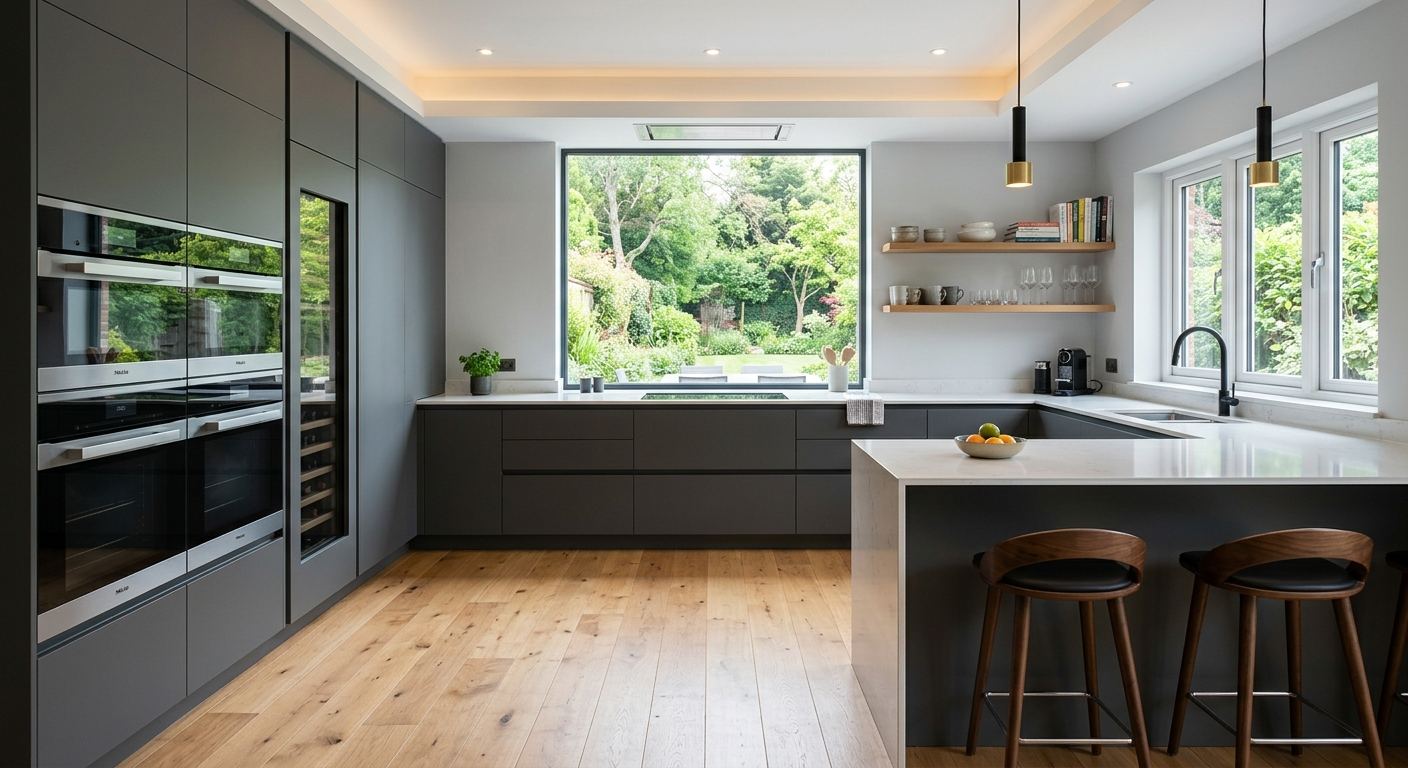
Kitchen renovation options and costs in Departure Bay
In Departure Bay, most homeowners start by comparing “what can we do without a full rebuild?” against “what would buyers expect if we sell in the Lower Mainland–Southwest?” The good news is there’s a wide range of options that can fit different budgets, and the deciding factor is often the finish tier you choose rather than the fact that we’re working in a coastal climate. According to the Statistics Canada, 2021 Census, the city’s population is 6,540, and that’s the kind of market where contractor availability and scheduling can shift quickly during peak summer renovation windows. It also matters that the Lower Mainland–Southwest tends to skew toward higher end finishes in higher-value neighbourhood pockets, where homeowners can recoup more of the upgrade value on resale (Statistics Canada, 2021 Census).
In our area, the coastal weather doesn’t usually drive the headline renovation price the way it affects long-term maintenance, but it does influence what’s worth paying for—think moisture-resistant cabinet interiors, well-sealed countertops, and ventilation upgrades when you open up the layout. Labour demand can also tighten around established trade routes, which is why the same scope—say, new cabinets, counters and tile—can land at different totals depending on whether you’re booking a flexible schedule or need a fast start.
In Departure Bay, demand is often strongest around the residential corridors near Departure Bay Road and the broader North Nanaimo area, where many homes are older and benefit from practical layout upgrades. With that context, here’s how common renovation tiers typically break down so you can compare apples to apples.
| Renovation Tier |
What's Included |
Typical Duration |
Price Range |
| Cosmetic refresh (paint, hardware, new appliances only) |
Cabinet paint or stain touch-up, new pulls/knobs, appliance swap, minor caulking and trim, basic clean-up |
3–7 days |
$8,000–$20,000 |
| Mid-range full renovation (new cabinets, counters, sink, tile) |
New semi-custom or upgraded stock cabinets, quartz or durable laminate counters, new sink and taps, backsplash tile, tile floor or partial repair, standard electrical/lighting allowances |
3–6 weeks |
$40,000–$75,000 |
| High-end full renovation (custom cabinets, stone counters, island) |
Fully custom cabinetry, stone counters (quartz/stone/granite options), large island, upgraded backsplash (feature tile/slab), improved lighting, coordinated plumbing/electrical moves, higher-end finishes and detailing |
6–12 weeks |
$90,000–$120,000 |
| Cabinet refacing only (new doors + drawer fronts, same boxes) |
Door/drawer-front replacement, new trim profiles, hardware upgrade, veneer/finish refinishing, resealing and minor patching |
1–3 weeks |
$8,000–$35,000 |
| Countertop swap only (laminate to quartz or stone) |
Template and install for new quartz/stone counters, sink/cooktop cut-outs, basic caulking and re-sealing, reuse of cabinets and backsplash unless specified |
3–10 days |
$12,000–$40,000 |
| Backsplash tile installation only |
Remove and prep old surface (as needed), backer prep, tile installation, grout/seal, trim and caulking, basic cleanup |
3–7 days |
$1,500–$6,000 |
Prices are estimates only and vary by project scope, site access and material selection.
What affects the price of kitchen renovation in Departure Bay
In the Lower Mainland–Southwest, it’s common to see quotes for the “same size” kitchen vary by 30–50%—not because of the weather alone, but because owners in higher-value areas often choose semi-custom or custom cabinetry and quartz/stone counters as the default. In practice, local home values and household income expectations shape the finish tier far more than climate. In higher-value Lower Mainland–Southwest neighbourhood markets, quartz or stone counters and upgraded hardware are easier to justify: the renovation cost is more readily recovered on resale, so builders build quotes around that finish level. In more modest markets, laminate and stock cabinet packages dominate because they offer better ROI while still refreshing the layout and function.
Lower Mainland–Southwest conditions also influence contractor scheduling. Trade availability and material lead times can tighten seasonally, and that impacts labour allocation and crew productivity. Climate plays a supporting role: our coastal air and frequent humidity swings mean you want properly ventilated cooking areas and well-sealed transitions around sinks and countertops to prevent long-term swelling or finish issues—those considerations are usually already included in quality installs, but they can add labour if your existing surfaces are worn or out of square.
In Departure Bay specifically, two examples often push the cost up. First, if an older home has dated plumbing runs under the sink, moving the sink or adding a dishwasher frequently adds both labour and materials beyond the countertop band you budgeted (for example, countertops alone can be in the $3,000–$12,000 range, but the sink move rarely stays “only countertop”). Second, if the kitchen is out of level or the walls aren’t true, tile and cabinet installation take longer; that’s a hidden driver in full renovations that otherwise fit the $40,000–$120,000 band.
The biggest unpredictable cost item is layout change—removing a wall, adding an island, or moving a gas line—because it triggers plumbing, electrical, and sometimes structural work regardless of whether you choose laminate, quartz, or stone.
| Price Factor |
Why It Matters |
Cost Impact |
| Cabinet tier — stock vs. semi-custom vs. fully custom millwork |
Higher tiers cost more per linear foot and often require more detailed installation, scribing, and specialty hardware |
$10,000–$60,000 |
| Countertop material — laminate vs. quartz vs. granite vs. stone |
Material choice changes both price and fabrication/installation effort, plus edge profiles and undermount sink cut-outs |
$3,000–$25,000 |
| Layout change — wall removal, island add, plumbing/gas move |
Triggers permits, licensed trades, patching and possibly structural coordination |
$8,000–$45,000 |
| Appliance package tier — builder vs. mid-range vs. pro-grade |
Pro-grade appliances and ventilation upgrade the electrical/gas and can require different rough-ins |
$2,000–$20,000 |
| Flooring — refinish existing vs. full replacement |
If floors aren’t true or need removal under cabinets, total labour and materials increase |
$1,500–$12,000 |
| Backsplash — ceramic tile vs. marble vs. full-height slab |
Premium materials add fabrication and careful waterproof detailing |
$1,500–$8,000 |
| Electrical — new circuits for island, under-cabinet lighting |
More outlets/lighting means more conduit, wiring, and fixture coordination |
$1,000–$10,000 |
| Permit fees and licensed trade requirements |
Permits and inspections add direct fees and scheduling constraints |
$500–$5,000 |
Permits & regulations in British Columbia
In British Columbia, many “like-for-like” kitchen swaps don’t require permits. Typically, cabinet and countertop swaps (for example, replacing counters with new quartz while keeping plumbing and gas connections in the same locations) are straightforward and usually fall under contractor-led trades without separate permitting. The permitting line usually comes when you change services: moving plumbing supply/drain lines, relocating gas appliances or work (stove/range hood with gas), removing a load-bearing wall, or adding new electrical circuits.
In practice, here’s what generally DOES require a permit and licensed trades. If you move a sink to a new location, reroute drains or water lines. If you shift a gas cooktop or modify the gas supply, gas work must be done by a licensed gasfitter and inspected. If you add circuits for an island (extra outlets) or add significant new lighting runs, electrical work must be by a licensed electrician, typically with inspection. If you remove or alter a load-bearing wall or adjust structural supports, permits are commonly required and you’ll need proper engineering documentation where applicable.
To verify a contractor in Departure Bay before you sign, do it step-by-step: (1) ask for their certificate of insurance and confirm the liability coverage matches the scope and duration; (2) check they have the right licensing/registration for the trades they’re managing—use the public online registry sources referenced by the licence you’re given; (3) request proof of coverage for workplace injury protection through the current WCB/coverage documentation applicable to the contractor’s workforce; (4) confirm who will pull permits, and make sure it’s written in the contract—“permit responsibility” should not be verbal only. If the contractor won’t provide clear documentation, that’s a major warning sign.
Cabinets, countertops and layout decisions in Departure Bay
For most Departure Bay kitchens, three decisions drive the result more than anything else: cabinet tier, countertop material, and whether you’ll change the layout. Cabinet tier affects how quickly your renovation moves from demolition to final detailing. Stock cabinets are typically fastest and cheapest, while semi-custom cabinets are the “sweet spot” in this region because they offer better fit and more options without fully custom lead times. Custom cabinets give the best fit and storage efficiency, but they’re the highest-cost path and can extend the schedule if lead times stack with other trades.
Countertops matter because they influence durability and day-to-day maintenance. Laminate can look great and keep budgets in check, but it’s less forgiving with heat and heavy impacts. Quartz is a popular compromise in the Lower Mainland–Southwest because it’s hardwearing, low maintenance, and aligns with what many resale buyers expect. Natural stone like granite offers unique character, while marble is beautiful but generally requires more careful maintenance and sealing.
Layout changes are where cost jumps unpredictably—open-concept wall removal, adding an island, or relocating plumbing/gas lines. Those moves can be worth it when they create genuinely usable circulation, better light exposure, or an island that supports real workflow. But if your layout is already practical, you can often keep the cabinet footprint and focus spending on cabinets and counters. For a concrete example: upgrading cabinets and counters into the mid-range full renovation band (around $40,000–$75,000) may be a better ROI than doing major layout changes that can push you toward the high-end full renovation band (up to $90,000–$120,000) without adding the kind of storage and seating buyers truly value in a specific home.
Finally, coastal humidity means ventilation and sealing are part of “good design,” not an afterthought. Selecting moisture-tolerant materials and ensuring proper cabinet sealing around sinks helps protect your investment over the long term.
| Option |
Durability |
Maintenance |
Best For |
Price Range |
| Stock cabinets (big-box) |
Good for standard dimensions; durability depends on door construction and finish quality |
Low; avoid standing water at the seams and use gentle cleaners |
Budget-friendly refresh with minimal structural changes |
$8,000–$25,000 |
| Semi-custom cabinets (local dealer) |
Very solid; better options for heights, widths, and internal storage |
Low; ensure caulking/seals stay intact near sinks and dishwashers |
Most Departure Bay renovations targeting “resale-ready” finishes |
$20,000–$55,000 |
| Custom cabinets (local millwork shop) |
Highest fit and material selection; ideal for awkward corners and legacy layouts |
Low to moderate; hinges and hardware quality matter |
Homes needing perfect alignment, niche storage, or signature design |
$45,000–$90,000 |
| Laminate countertop |
Moderate; can chip or wear at edges depending on thickness and installation |
Easy day-to-day care; protect from heat and sharp impacts |
Cost-controlled renovations where aesthetics are prioritized |
$3,000–$8,000 |
| Quartz engineered countertop |
High; resists staining and everyday wear well |
Low; wipe clean and avoid abrasive pads on glossy finishes |
“Buyer's expectation” option in the Lower Mainland–Southwest |
$7,000–$14,000 |
| Granite / natural stone countertop |
High; extremely durable but varies by slab |
Moderate; typically benefits from periodic sealing |
Owners who want natural variation and premium curb appeal |
$8,000–$18,000 |
| Butcher block countertop |
Good; can scratch but is repairable with refinishing |
Moderate; requires oiling and careful moisture management |
Family homes seeking warmth and an “active kitchen” feel |
$4,000–$12,000 |
| Marble countertop |
Beautiful but softer; more prone to etching depending on daily use |
Moderate; needs sealing and careful cleaning to prevent staining |
Design-led kitchens where maintenance habits are realistic |
$10,000–$22,000 |
How to choose a kitchen renovation contractor in Departure Bay
Choosing the right contractor in Departure Bay is mostly about verifying credentials, controlling scope, and protecting yourself financially. Start with British Columbia compliance. Ask whether the contractor holds the correct licensing for the work they’ll perform or manage, and request documentation for liability insurance. For workplace injury coverage, you should be shown current coverage documentation under the applicable WCB framework for their employees—don’t accept a verbal “we’re covered.” How you check: (1) ask for their licence/registration number and confirm it matches the contractor you’re hiring via the public online registry where applicable; (2) request their certificate of insurance and confirm coverage dates and limits; (3) confirm who carries what for WCB/coverage and that it covers their workforce for the project duration.
Next, get 2–3 itemised written quotes—not lump sums. You want labour and materials separated so you can compare like-for-like: cabinetry supply vs installation, countertop fabrication/templating, electrical allowances, tile prep, disposal, and any allowance for overages. Read the scope carefully: is permit pulling included if required, who orders materials, and is demolition/disposal part of the quote?
Warranty matters, too. Ask for the workmanship warranty length (how long they stand behind install issues), the product/manufacturer warranty for cabinets/counters, and whether the warranties are transferable if you sell your home. For payment, a safe schedule in our market is never paying more than 10–15% upfront; keep a holdback until the job is substantially complete and deficiencies are corrected. Finally, insist on a start date and completion estimate in writing, including key milestones like template date for counters and cabinet delivery windows.
- Request licence/registration numbers and verify them online before you sign.
- Collect certificate of liability insurance showing coverage and effective dates.
- Confirm current WCB/coverage documentation for the contractor’s workforce.
- Demand itemised labour + materials pricing (no “one number” quotes).
- Confirm exactly who pulls permits and which permits apply.
- Ask what disposal/recycling is included for demo materials.
- Get a written schedule with start date, cabinet/counter template dates, and completion estimate.
- Verify warranty details in writing: workmanship and product coverage.
- Clarify change-order process and how pricing is calculated.
- Confirm who is responsible for site protection (floors, counters during install).
- Ensure electrical/gas/plumbing scopes are listed under the correct licensed trades.
- Keep documentation: contract, plans, spec sheets, and receipts/receivable schedule.
Common red flags in Departure Bay include: vague scope language (“allowances” with no numbers), refusing to provide insurance/WCB documentation, a quote that omits demolition/disposal and then charges later, starting without a written timeline, or pushing for large upfront payments beyond 10–15%.
Frequently asked questions — kitchen renovation in Departure Bay
Can I move my kitchen sink or stove?
Yes, but in British Columbia the permit and licensed-trade requirements typically kick in once you change service locations. If you move the sink, you’ll usually need plumbing work to reroute water supply and drain lines, and that can add cost and schedule time. If you move a stove, it depends on fuel type: gas cooktops or range hoods may involve gasfitting, and relocating that equipment generally requires a licensed gas fitter and inspection. If you’re staying with a refresh (new appliances only) your scope may avoid the most complex permitting, but once plumbing/gas lines are involved, the layout change becomes one of the biggest cost drivers.
What's the most cost-effective kitchen upgrade?
For many Departure Bay homeowners, the best value upgrade is improving what you touch daily without triggering major demolition. A cosmetic refresh—paint, hardware, and appliance swaps only—can be the lowest-cost path (often landing in the $8,000–$20,000 range). If you want a more “full kitchen” feel without rebuilding the whole room, cabinet refacing or a countertop swap can deliver big visual impact faster than a full remodel. For example, refacing only (new doors and drawer fronts while keeping the boxes) commonly falls around $8,000–$35,000, while a countertop swap can be priced higher depending on material and sink cut-outs. The most cost-effective choice depends on whether your boxes/corners are solid and whether your layout is already working.
Custom vs stock cabinets — is custom worth it?
Custom cabinets are worth it when the space can’t be solved cleanly with stock or semi-custom—think awkward corners, non-standard ceiling heights, or an “every inch matters” storage plan. In the Lower Mainland–Southwest, homeowners often choose semi-custom as the practical middle ground: good fit, more style options, and usually fewer delays than fully custom. Stock cabinets are fastest and cheapest, but if you have legacy quirks common in older homes around Departure Bay, you may lose value if the installer has to scribe around gaps or if the layout forces inefficient storage. Price-wise, stock often fits the lower end of renovation budgets, while fully custom cabinetry can push totals toward the higher-end renovation band (up to $90,000–$120,000) especially when combined with stone counters and islands.
How do I choose a kitchen contractor in Departure Bay?
Start by verifying British Columbia compliance: ask for the contractor’s relevant licence/registration details and confirm them using the public online registry sources for that licence type. Next, request a certificate of liability insurance and confirm it covers the scope and dates. Ensure they have current WCB/coverage documentation for their workforce, and that subcontractors (plumbing, electrical, gas where applicable) are correctly licensed. Then get 2–3 itemised quotes that separate labour, materials, disposal, and allowances—especially for permits if your project needs them. Finally, confirm warranty terms (workmanship and product coverage) and don’t pay more than 10–15% upfront; hold a portion back until the job is substantially complete.
What order do kitchen renovation steps happen in?
A typical sequence in Departure Bay is: site protection and scheduling, then demolition and rough-in verification. If you’re changing plumbing/gas/electrical, those licensed trades usually complete rough work before cabinets and countertops. Next comes cabinet installation (including leveling and securing), then countertop templating and fabrication. After counters arrive, you install countertops, sink/cooktop cut-outs, and then complete backsplash and final trim. Flooring is often planned around cabinet installation depending on your scope—some projects replace flooring after demolition, others require flooring prep before cabinets for a clean transition. Finally, there’s caulking, painting touch-ups, appliance installation, and a walkthrough to address punch-list items.
Can I live at home during a kitchen renovation in Departure Bay?
Often, yes—especially for cosmetic refreshes or cabinet refacing where disruption is limited. For a full renovation, it can still be workable, but you’ll want a clear plan for a functional kitchen alternative and dust control. During demolition and tile/cabinet install, daily living can be messy; good contractors set up plastic containment and protect floors and doorways. If the project is in the mid-range full renovation scope (roughly $40,000–$75,000), you may be able to use a temporary setup (bar fridge, microwave, kettle) while trades work on rough-ins and cabinets. For high-end rebuilds with islands and layout changes, expect longer disruption. In all cases, confirm how long your “no sink/no cook” window will be and whether the contractor includes site protection and debris removal in the quote.