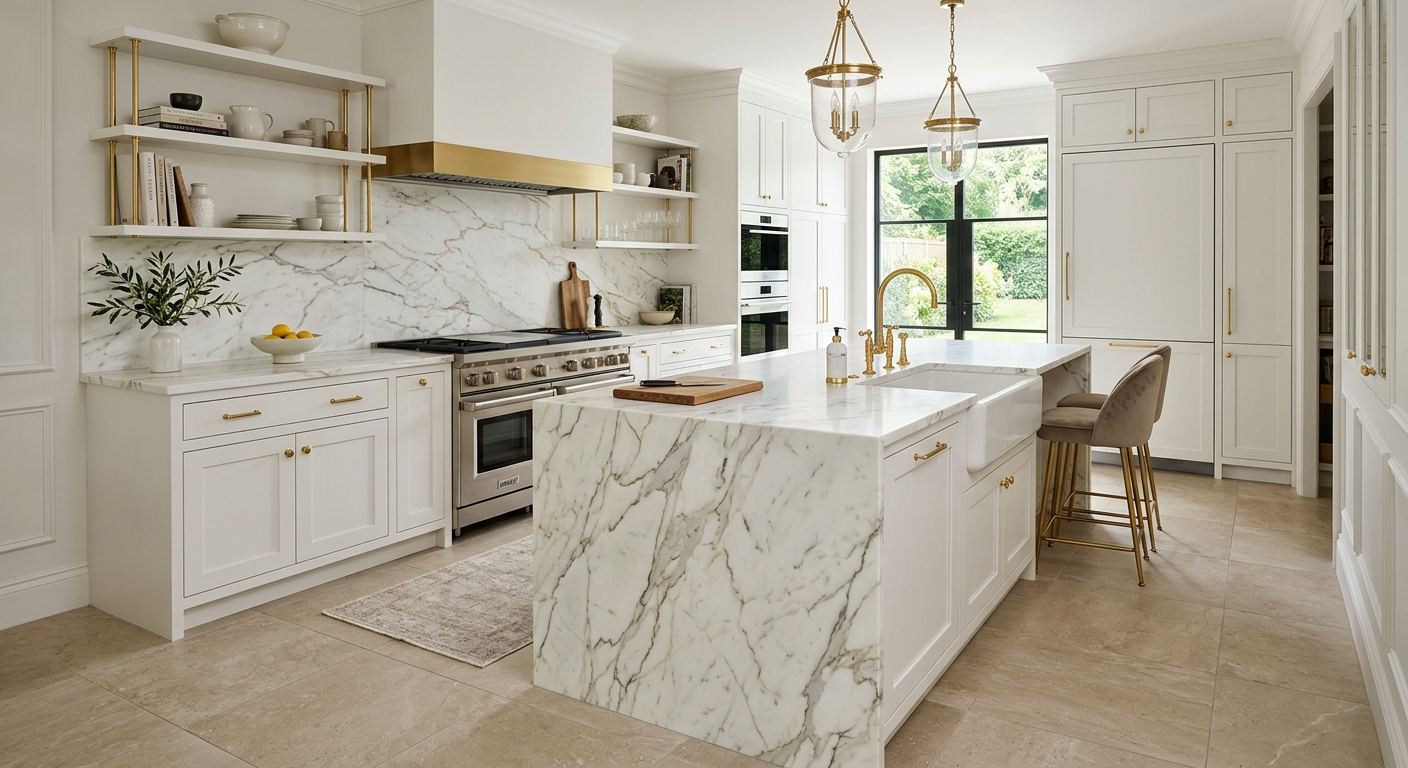
Kitchen renovation options and costs in Sechelt
Sechelt homeowners typically renovate with a goal in mind—either improving daily function or protecting resale value—so the options (and budgets) can look very different even for similar kitchen sizes. With a median household income of $73,500 in the region and a homeowner-leaning market (80.7% of households own), many projects land between practical upgrades and “move-ready” finishes rather than bare-minimum renovations. In the Lower Mainland–Southwest, pricing is often driven more by expected finish level and resale payoff than by the climate itself, although coastal humidity and salt-laden air can make material selection (especially fasteners, cabinet finishes, and stone care) more important. Contracting demand is especially steady in the Sechelt area around Porpoise Bay and the Sechelt Peninsula, where older housing stock is common and homeowners frequently refresh kitchens tied to pre-1981 homes (28.1% of dwellings). That mix of age and owner-occupied households means labour is competitive, but scheduling can still vary depending on how many trades are required for plumbing, electrical, or a layout change.
To help you compare scopes quickly, the tiers below show what most Sechelt contractors bundle together. Use them as a starting point before you request quotes—then confirm what’s included for demo, disposal, permits (if any), and installation sequencing. Once you decide whether you’re refreshing only, refacing cabinets, swapping counters, or doing a full rebuild, the total cost usually becomes much more predictable.
| Renovation Tier |
What's Included |
Typical Duration |
Price Range |
| Cosmetic refresh (paint, hardware, new appliances only) |
Cabinet/trim paint or staining touch-ups (where feasible), new pulls/knobs, appliance swap, basic caulking and countertop edge polish (no structural changes) |
3–7 days |
$8,000–$18,000 |
| Mid-range full renovation (new cabinets, counters, sink, tile) |
New stock or semi-custom cabinets, countertop installation, sink + faucet, backsplash tile, new flooring transitions/repair, labour for basic plumbing hookup |
3–6 weeks |
$40,000–$75,000 |
| High-end full renovation (custom cabinets, stone counters, island) |
Fully custom millwork, quartz/stone island, premium backsplash (tile or slab), higher-end hardware, upgraded lighting (including under-cabinet), potential layout changes and more complex finishes |
6–12 weeks |
$85,000–$120,000 |
| Cabinet refacing only (new doors + drawer fronts, same boxes) |
Refacing panels/doors/drawers, new hardware, surface prep, re-tiling limited to backsplash area as needed, countertop protection/limited touch-ups |
1–3 weeks |
$8,000–$30,000 |
| Countertop swap only (laminate to quartz or stone) |
Remove old laminate/counters, new quartz or stone install, seam planning, sink cut-out and faucet transfer (if staying in same location) |
5–12 days |
$3,000–$12,000 |
| Backsplash tile installation only |
Surface prep, tile supply and layout, waterproofing prep where required, grout/seal (as appropriate), finishing trim and caulking |
3–7 days |
$1,500–$6,000 |
Prices are estimates only and vary by project scope, site access and material selection.
What affects the price of kitchen renovation in Sechelt
In Sechelt and the broader Lower Mainland–Southwest, you can see the same “size of kitchen” quoted 30–50% apart, and it usually comes down to what the contractor is actually building—not just the finish labels. In higher-value parts of the Lower Mainland–Southwest, homeowners more often choose semi-custom or fully custom cabinetry, quartz or natural stone, upgraded hardware, and design-led layouts; contractors price accordingly because those choices increase labour time, material cost, and the complexity of installation. By contrast, more budget-conscious refreshes using stock cabinets and laminate counters can hold total costs closer to the lower end of the bands. British Columbia projects also vary by trade availability, logistics, and how many hidden conditions are discovered during demo—especially in homes built earlier in the housing stock.
Local economics shape the finish tier more than climate. In neighbourhoods where buyers expect premium counters and a clean, resale-friendly layout, quartz or stone counters and tighter cabinet finishing details are common, because the cost is easier to recover when selling. In more modest scopes, laminate and stock cabinets dominate because they deliver strong ROI without triggering the extra work that comes with moving plumbing or electrical. For budgeting, treat layout changes as the “wild card”: removing a wall, adding an island, or moving a gas line (where applicable) can add labour and permit effort even if finishes are kept mid-range.
Concrete Sechelt examples I see often: (1) older ducting and subfloor inconsistencies can add time when new cabinets need level bases; (2) if you’re upgrading from laminate to quartz, thicker stone sometimes forces minor cabinet hardware adjustments and sink support checks; (3) if you’re adding under-cabinet lighting, you may need new circuits and careful wiring routing along existing walls.
As a reference point, a mid-range full renovation often sits near $40,000–$75,000, while a high-end full renovation with an island and custom millwork typically pushes toward $85,000–$120,000, largely due to cabinetry complexity and the number of trades involved.
| Price Factor |
Why It Matters |
Cost Impact |
| Cabinet tier — stock vs. semi-custom vs. fully custom millwork |
Custom sizing, added mouldings, soft-close upgrades, and longer fabrication times directly increase material and labour. |
$10,000–$60,000 |
| Countertop material — laminate vs. quartz vs. granite vs. stone |
Material cost, fabrication complexity, edge profiles, and support requirements change the install effort. |
$3,000–$18,000 |
| Layout change — wall removal, island add, plumbing/gas move |
Layout changes trigger more demo, building work, permit processes, and licensed trades for plumbing/electrical/gas. |
$8,000–$40,000 |
| Appliance package tier — builder vs. mid-range vs. pro-grade |
Higher-end brands usually cost more and may require different cut-outs/clearances and additional install labour. |
$2,000–$20,000 |
| Flooring — refinish existing vs. full replacement |
If tile/wood needs to be removed to level the base cabinets or update transitions, the scope grows quickly. |
$1,500–$12,000 |
| Backsplash — ceramic tile vs. marble vs. full-height slab |
Premium stone and full-height installations require more precision, backer prep, and sometimes additional sealing. |
$1,500–$10,000 |
| Electrical — new circuits for island, under-cabinet lighting |
Adding circuits, relocating outlets, and installing lighting increases electrician time and materials. |
$1,500–$8,000 |
| Permit fees and licensed trade requirements |
Permits and inspections add administrative steps and licensed-trade scheduling, regardless of finish level. |
$500–$5,000 |
Permits & regulations in British Columbia
In British Columbia, not all kitchen updates require permits, but many common “upgrade paths” do. A straightforward cabinet and countertop swap typically does not require a permit because you’re replacing finishes without changing the building’s core systems. However, permits are generally required when you change plumbing supply or drain lines, relocate a gas connection (for example, moving a stove or modifying a range hood connection with gas), remove a load-bearing wall, or add new electrical circuits (such as wiring for an island receptacle or new under-cabinet lighting circuits). Gas work must be done by a licensed gas fitter, and electrical work must be done by a licensed electrician, with required inspections completed as part of that process.
For a homeowner in Sechelt, the practical process is: (1) ask the contractor what exact tasks trigger permits in your scope; (2) confirm in writing who is pulling the permit—contractors usually handle it, but responsibility should be explicit; (3) verify trade licensing before work starts. To verify licensing, check the online registry used in B.C. for licensed trades, request the contractor’s current certificate of insurance (liability coverage) and ask whether they carry coverage consistent with worker claims administration (commonly WSIB/WCB equivalents for their workers). Finally, ask for proof such as a clearance letter where applicable, and confirm it matches the job scope. If the contractor can’t clearly outline these items, that’s a strong signal to pause and revise the contract before signing.
Cabinets, countertops and layout decisions in Sechelt
Your three most consequential decisions in a Sechelt kitchen renovation are cabinet tier, countertop material, and whether you change the layout. Those choices drive not just aesthetics but also how the kitchen performs in daily life—humidity resilience near coastal air, how easy it is to clean, and how well the finish holds up to regular cooking. In the Lower Mainland–Southwest resale market, buyers tend to expect a cohesive look: clean cabinet lines, durable counters, and lighting that makes the workspace bright. At entry refresh budgets, laminate and stock cabinets can be a smart move because they deliver the “new kitchen” look without the complexity that comes from major carpentry. At higher budgets, semi-custom and custom cabinetry paired with quartz or natural stone can support a more built-in, tailored layout—especially if you’re adding an island or opening sightlines.
Here’s a realistic value example: swapping laminate counters to quartz often lands in the countertop swap tier ($3,000–$12,000), which can be a strong upgrade even if you keep your cabinet boxes. But if you’re also changing the layout (for example, moving plumbing to create an island), you may quickly shift into a full renovation range—where cabinetry and electrical/permit work can push totals toward $40,000–$75,000 or beyond. In coastal British Columbia, choose materials that resist moisture and consider maintenance: some natural stones and sealers are more demanding than engineered quartz.
| Option |
Durability |
Maintenance |
Best For |
Price Range |
| Stock cabinets (big-box) |
Solid for standard dimensions; less forgiving if walls are out of square |
Low; wipe-clean finishes, keep hardware adjusted |
Fast timelines and budget-controlled refreshes |
$8,000–$25,000 |
| Semi-custom cabinets (local dealer) |
Better fit and more options for internal organization |
Low to moderate; quality hinges/soft-close need occasional alignment |
Most Sechelt mid-range projects targeting resale-friendly upgrades |
$20,000–$50,000 |
| Custom cabinets (local millwork shop) |
Highest precision; handles irregular spaces well |
Low; requires quality installation for long-term performance |
Design-led layouts, islands, and fully tailored storage |
$45,000–$90,000 |
| Laminate countertop |
Decent everyday performance; edges can be the weak point over time |
Easy; avoid heavy impact on seams and edges |
Budget refreshes where you want a new surface without premium cost |
$1,500–$4,000 |
| Quartz engineered countertop |
Very durable for kitchens; consistent color and strong stain resistance |
Low; wipe-clean, no sealing required for typical quartz products |
Busy households and resale expectations in the Lower Mainland–Southwest |
$4,500–$12,000 |
| Granite / natural stone countertop |
Hard-wearing surface; quality varies by slab and finish |
Moderate; may require periodic sealing and careful care for certain finishes |
Homeowners wanting natural variation and a premium look |
$6,000–$15,000 |
| Butcher block countertop |
Durable but vulnerable to water sits at seams if not maintained |
Moderate; regular oiling and prompt drying are key |
Warm, casual kitchens where owners maintain surfaces |
$3,500–$9,000 |
| Marble countertop |
Beautiful but softer; can etch or stain with acidic foods |
High; sealing and cautious daily use are needed |
Low-traffic kitchens or showpiece design priorities |
$7,000–$18,000 |
How to choose a kitchen renovation contractor in Sechelt
Choosing the right contractor in Sechelt is less about glossy photos and more about verification and clarity. In B.C., confirm the trades your project requires are properly licensed: electricians for any new circuits or lighting changes; and gas fitters if you’re adjusting any gas connections. For your contractor itself, request proof of liability insurance and ask for their worker coverage documentation (commonly WSIB/WCB equivalent clearance where applicable). How to check: (1) look up the contractor and key trades in the relevant B.C. online registry for active status; (2) review the certificate of insurance—ensure it’s current and matches the work address; (3) request the clearance letter (where applicable) before work begins so you’re not left holding the risk.
Next, get 2–3 itemised written quotes instead of one lump sum. A good quote breaks labour and materials out separately (cabinet supply vs install, countertop fabrication vs install, tile supply vs labour), and it lists inclusions and exclusions clearly. Pay special attention to whether permits are included, whether disposal is included, and what happens if demolition reveals surprises (rotten subfloor, dated wiring, out-of-square framing). Also review warranty terms: you should see a workmanship warranty length for the install and a product/manufacturer warranty for cabinets/counters and whether it’s transferable if you sell. For payment schedule, never pay more than about 10–15% upfront; hold back a portion until completion and final walkthrough. Finally, demand a written timeline with start date and completion estimate that reflects trade sequencing.
- Ask which permits (if any) apply to your exact scope and who pulls them.
- Confirm licensed electrician and gas fitter involvement in writing if you’re changing circuits or gas.
- Require a site visit that measures for cabinet fit (don’t accept “quote from photos” without verification).
- Get an itemised labour + materials breakdown, not a single number.
- Clarify demo and disposal: what’s hauled away and what stays on site.
- Specify backsplash details: waterproofing prep, grout type, and grout/sealer expectations.
- Confirm countertop templating date and who pays for any remake due to templating errors.
- Review electrical scope: new circuits, outlet relocation, and lighting locations.
- Ask how they handle delays for cabinet or stone lead times (especially quartz/stone).
- Check that product selections are exactly named in the contract (finish, model, colour).
- Use a staged payment plan with a holdback until final punch list is complete.
- Get warranty in writing and confirm what it covers and how to submit a claim.
Red flags to watch for in Sechelt: they refuse to itemise labour/materials; they won’t provide insurance or won’t clearly name the licensed trades for your permit-requiring work; they pressure you for large upfront deposits; they promise an unrealistically short timeline without accounting for cabinet/stone lead times; or they treat the scope as “flexible” after you sign instead of locking selections and responsibilities in the contract.
Frequently asked questions — kitchen renovation in Sechelt
Should I renovate my kitchen before selling in Sechelt?
Often, yes—if you can refresh the kitchen without overbuilding for the neighbourhood. In Sechelt and the broader Lower Mainland–Southwest, many buyers look for clean, modern finishes and functional storage, so a mid-range refresh can make the home easier to market. A practical starting point is a cabinet and hardware refresh plus an appliance upgrade, or a mid-range full renovation around $40,000–$75,000 if your layout and counters are dated. If your cabinets are structurally solid, cabinet refacing or a countertop-only upgrade can improve perceived value with less disruption and faster timelines. The key is matching the finish tier to what buyers in your segment expect, not just what looks great in a showroom. (Statistics Canada, 2021 Census)
What's the most popular kitchen style in Sechelt right now?
Right now, Sechelt homeowners commonly choose a “clean contemporary” look: flat-panel or simple shaker-style cabinet doors, soft-close hardware, and light-to-medium warm neutrals that photograph well. Quartz counters with subtle veining and an understated backsplash tile are also very common because they stay timeless and are easy to maintain in coastal B.C. homes. Many projects include functional lighting—like under-cabinet LEDs—because it makes kitchens feel brighter without changing the whole layout. From a budget perspective, this style shows up in both mid-range full renovations and higher-end scopes, especially when paired with semi-custom cabinets. If you’re aiming for a cost-controlled refresh, laminate or refacing can still achieve the same visual direction. (Statistics Canada, 2021 Census)
How do I know if I need to update my kitchen plumbing in Sechelt?
You may need plumbing updates if you’re moving sinks, changing dishwashers, relocating a fridge line, or correcting leaks/slow drains that existed before the renovation. Plumbing often becomes part of the scope when contractors discover dated supply lines, improper venting, or corrosion behind the walls during demo—issues that can’t be seen until cabinets come down. Even if you don’t move plumbing, it’s worth budgeting for “like-for-like” hookup work and new shutoffs where required. If you’re considering an island with a new sink, expect more uncertainty and licensed work, and that’s where costs typically climb beyond a simple countertop swap. In British Columbia, changing supply or drain lines generally triggers permit and licensed-trade requirements, so verify the scope early in the quote process.
What is the difference between a galley and open-concept kitchen?
A galley kitchen is a straight, narrow layout where cabinets and counters run along two parallel walls with a passage between—great for smaller spaces and efficient work flow, but sometimes it can feel closed in. An open-concept kitchen removes walls or creates a broader connection to living areas, often improving light flow and social space, but it’s usually more complex and expensive because it can require structural checks, electrical changes, and sometimes permit-requiring building work. In Sechelt’s housing stock, many kitchens start as galley or semi-enclosed setups, especially in older homes, so owners often renovate by focusing on storage and counter upgrades first. If you’re thinking about open-concept, treat it as a major scope decision: even with the same cabinet tier, moving outlets, rerouting circuits, and potentially rethinking venting can shift the project toward the mid-range or high-end bands like $40,000–$75,000 or higher.
How do I get accurate kitchen renovation quotes in Sechelt?
Accurate quotes start with a site visit and measured drawings. Ask each contractor to quote the same scope in writing: cabinet tier, countertop material, backsplash type, appliance allowances, flooring transitions, demolition/disposal, and whether permits are included. Request an itemised breakdown rather than a lump sum—this helps you see whether pricing differences come from labour efficiency, material tier, or allowances. Also confirm how they handle unknowns discovered during demo (like subfloor damage or old wiring). For a realistic budget anchor, compare quotes against the local tiers: a backsplash tile installation-only project often falls near $1,500–$6,000, while a full renovation typically lands in the $40,000–$120,000 range depending on cabinetry and stone choices. In B.C., verify permit responsibility and licensed trades before signing so quotes reflect the true process, not assumptions.
What's the best countertop material for a busy Sechelt kitchen?
For busy Sechelt kitchens, quartz is often the best balance of durability, stain resistance, and low maintenance. It’s engineered for everyday use, typically doesn’t require sealing like many natural stones, and it holds up well to routine cooking in coastal British Columbia conditions. Many homeowners pick quartz when aiming for a mid-range full renovation because it upgrades the look without the extra day-to-day care. If you want natural character and can commit to occasional maintenance, granite is a strong option, while butcher block can be great for a warm feel but needs regular oiling and careful drying near seams. Laminate can work for budget refreshes but is more sensitive at seams and edges over time. In practical budgeting, countertop replacement alone commonly fits the $3,000–$12,000 band depending on material and cut-outs.