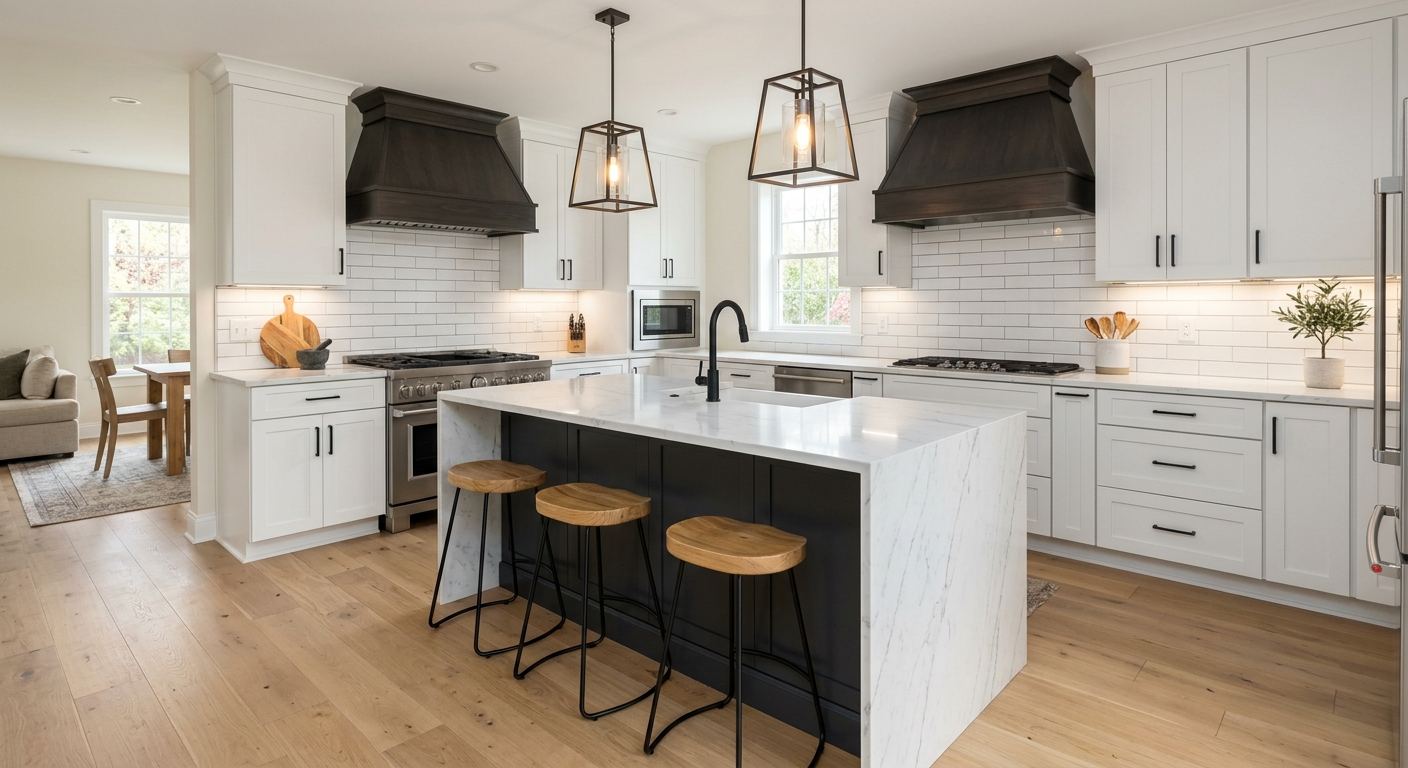
Kitchen renovation options and costs in Lucan
Kitchen renovations in Lucan, Ontario often start with the same goal—updating the kitchen to match how you live now—while the final price is shaped by how buyers in the broader Toronto economic region expect the finishes to look. Lucan’s population is 2,541 (Statistics Canada, 2021 Census), so the local market is small; that usually means less competition than major GTA hubs, but contractors who serve the area know what sells. In a Toronto-influenced housing market, renovations commonly align with mid-to-upper finish expectations, especially in older homes where kitchens feel dated by today’s standards. Even when the job is “just a refresh,” homeowners frequently choose better hardware, brighter lighting, and upgraded appliances because those details read well at resale.
As for cost drivers, Ontario pricing in the Toronto economic region tracks closely to home values and household incomes, not weather. Toronto-region demand can push projects toward custom cabinetry, quartz, and stone counters when owners want a kitchen that looks like it belongs in a higher-value listing—sometimes investing roughly 8–15% of home value in high-end builds. Climate plays a smaller role than the market itself, but winter freeze–thaw and seasonal humidity do matter for workmanship: if ventilation, caulking, and backer prep aren’t done properly, tile and grout can fail early. For many Lucan homeowners, kitchens in areas that are popular for trades—like the more established residential pockets off the main corridors where older bungalows are common—tend to be in demand for cabinet-and-counter upgrades each spring.
Below is a practical range of what you can expect, so you can compare bids with confidence before you pick materials or decide on layout changes.
| Renovation Tier |
What's Included |
Typical Duration |
Price Range |
| Cosmetic refresh (paint, hardware, new appliances only) |
Cabinet paint or stain (if applicable), new hardware, appliance swap, touch-up drywall/trim as needed |
3–7 days |
$5,000–$15,000 |
| Mid-range full renovation (new cabinets, counters, sink, tile) |
Semi-custom or stock cabinets, quartz or solid-surface counters, new sink/faucet, backsplash tile, flooring patching, basic plumbing recapture |
2–4 weeks |
$25,000–$55,000 |
| High-end full renovation (custom cabinets, stone counters, island) |
Fully custom millwork, granite/stone counters, island with electrical/plumbing if needed, full-height or upgraded backsplash, premium appliance package |
4–8 weeks |
$65,000–$90,000 |
| Cabinet refacing only (new doors + drawer fronts, same boxes) |
Refaced cabinet doors/drawer fronts, laminate or upgraded top decisions, new hardware, optional lighting upgrades |
1–2 weeks |
$8,000–$25,000 |
| Countertop swap only (laminate to quartz or stone) |
Remove old countertop, install new countertop, cut-outs for sink/cooktop, new caulking and seam finishing |
2–5 days |
$3,000–$15,000 |
| Backsplash tile installation only |
Surface prep, tile install, grout/seal, trim/edge finishing, cleanup |
3–7 days |
$2,000–$10,000 |
Prices are estimates only and vary by project scope, site access and material selection.
What affects the price of kitchen renovation in Lucan
Even when homeowners request “the same kitchen,” bids in the Toronto economic region can differ by 30–50% because contractors price risk, lead times, and allowances differently. In Ontario, the biggest reason is finish tier: local home values and household incomes in the Toronto market influence whether owners default to laminate and stock cabinets (better budget control) or move into quartz and semi-custom/custom cabinetry (better resale styling). Climate isn’t usually the main driver; it’s more about how builders protect materials during seasonal changes. Higher-value pockets in the region often push projects toward higher-end counters, and that shifts both material cost and the labour needed for clean installation and finishing. When you’re aiming for a full renovation budget in the $25,000–$55,000 band, semi-custom cabinetry and quartz tops are common. When you’re closer to the $65,000–$90,000 band, you typically see custom millwork, upgraded stone, and island work that includes electrical and possibly plumbing.
In Lucan specifically, a few local conditions tend to raise or lower costs. First, many homes have older framing and out-of-level walls; correcting those for new cabinet runs adds labour even if the finish tier stays “mid-range.” Second, winter humidity and condensation can affect backsplash adhesion—if substrate prep and moisture management aren’t handled well, tile can loosen and grout can crack, which forces rework later. Third, access matters: tight driveways, older stair layouts, and limited staging space can slow down material handling and disposal, and that adds hours.
The most unpredictable costs remain layout changes—moving plumbing supply/drain, shifting a sink location, relocating a stove, or adding an island. Those tasks drive permit requirements and licensed trade coordination, so they can swing a quote more than selecting between quartz versus good laminate.
| Price Factor |
Why It Matters |
Cost Impact |
| Cabinet tier — stock vs. semi-custom vs. fully custom millwork |
Pricing changes with customization level, interior options, door styles, and how precisely boxes match your site |
$8,000–$35,000 |
| Countertop material — laminate vs. quartz vs. granite vs. stone |
Material price and fabrication complexity (seams, edge profiles, cut-outs) drive both labour and waste |
$3,000–$15,000 |
| Layout change — wall removal, island add, plumbing/gas move |
Triggers structural work, inspections, and coordination across trades; also affects cabinet elevations and framing |
$5,000–$20,000 |
| Appliance package tier — builder vs. mid-range vs. pro-grade |
Install complexity rises with ventilation requirements and premium electrical specs |
$1,500–$10,000 |
| Flooring — refinish existing vs. full replacement |
Protection, patching, and subfloor corrections can be quick or time-consuming depending on the existing condition |
$800–$6,000 |
| Backsplash — ceramic tile vs. marble vs. full-height slab |
Higher-end finishes demand higher prep standards and more labour for cuts, alignment and sealing |
$2,000–$10,000 |
| Electrical — new circuits for island, under-cabinet lighting |
New receptacles, dedicated circuits, and lighting all require planning and licensed electrician work |
$1,200–$7,500 |
| Permit fees and licensed trade requirements |
Some work requires permits/inspections; trade coordination costs are real even when the finished surface looks simple |
$500–$3,500 |
Permits & regulations in Ontario
In Ontario, not every kitchen change needs a permit. Cabinet and countertop swaps typically do not require permits when you’re staying within the existing footprint and not changing plumbing, gas, load-bearing structure, or electrical systems. In plain terms: replacing cabinets in-place, swapping laminate for quartz, and installing a backsplash normally fall under “no permit required” work.
Permits and licensed trade involvement become necessary when you change the systems that inspectors care about. You’ll generally need permits for moving plumbing supply or drain lines (for example, relocating a sink), relocating gas lines or doing gas work for the stove/range setup, removing a load-bearing wall, or adding new electrical circuits (common with island outlets, vent hood circuits, and under-cabinet lighting). Gas work must be completed by a licensed gas fitter, and electrical work must be done by a licensed electrician; both typically require inspections after rough-in and/or completion.
For Lucan homeowners, verify before signing: (1) Ask the contractor for their licence information and match it to the online provincial registry for their trade category; (2) request a current certificate of insurance (liability) showing coverage limits; (3) confirm WSIB/WCB clearance if the contractor uses employees or subcontract labour; and (4) ensure permit responsibility is clearly assigned in the contract—who pulls it, who pays, and what happens if scope changes.
Cabinets, countertops and layout decisions in Lucan
When you renovate a kitchen in Lucan, the three decisions that most affect both day-to-day satisfaction and resale appeal are cabinet tier, countertop material, and layout. Cabinet tier sets the foundation: stock cabinets are fastest and often the cheapest, semi-custom is usually the sweet spot for local projects, and custom cabinets deliver the tightest fit—especially important if your walls are out of square. Countertops then define your look: laminate can be a budget win but may show wear sooner; quartz is a strong balance of durability and low maintenance; granite/natural stone adds character but usually comes with more care; butcher block and marble bring unique styling yet require more attention to sealing and maintenance. Finally, layout changes—like removing a wall for openness, adding an island, or relocating plumbing/gas—are the biggest cost swings because they involve trades, often permits, and more demolition/refit.
Toronto resale expectations matter. At mid-range budgets, buyers tend to expect a clean, modern cabinet profile and quartz-grade surfaces; at higher budgets, island seating, upgraded hardware, and premium stone reading “designer” are common. In Ontario’s seasonal humidity, proper sealing and ventilation help protect caulking lines behind sinks and around backsplash edges. For a concrete example, many homeowners start with a $35,000–$55,000 plan, where moving from laminate counters to quartz can be a worthwhile spend—often in the range of several thousand dollars—because the kitchen instantly looks more “updated” without the disruption of a full layout change. But if you’re adding an island and relocating plumbing, that cost is usually justified only when it truly improves workflow and storage; otherwise, you risk spending into the $65,000–$90,000 tier without gaining value proportionally.
| Option |
Durability |
Maintenance |
Best For |
Price Range |
| Stock cabinets (big-box) |
Good for straight runs; quality varies by line and installation accuracy |
Low day-to-day care; hinges/hardware may need occasional adjustment |
Quick refreshes and tighter budgets with minimal changes to layout |
$8,000–$20,000 |
| Semi-custom cabinets (local dealer) |
Very solid; better interior options and more finish/size choices |
Low maintenance; tune hardware as settling occurs over time |
Most Lucan renovations aiming for mid-range resale value and fit |
$15,000–$35,000 |
| Custom cabinets (local millwork shop) |
Highest consistency and best fit; ideal for awkward spaces |
Low care, but expect premium hardware/finishes and careful cleaning products |
High-end kitchens, island builds, and houses needing bespoke solutions |
$30,000–$55,000 |
| Laminate countertop |
Decent surface strength; sensitive to heat and impact at seams/edges |
Wipe clean; avoid prolonged heat exposure and harsh scraping |
Budget-conscious refreshes where look matters more than longevity |
$3,000–$7,500 |
| Quartz engineered countertop |
Highly durable and stain-resistant; handles daily use well |
Low maintenance; no sealing required for typical installations |
Mid-range to high-end renovations targeting modern resale appeal |
$6,000–$12,500 |
| Granite / natural stone countertop |
Very durable and heat-tolerant; performance depends on stone type and edge prep |
Generally seal periodically; use proper cleaners to preserve finish |
Homeowners wanting natural variation and premium look |
$8,000–$15,000 |
| Butcher block countertop |
Strong but can scratch; best with correct sealing and cutting habits |
Regular oiling and gentle cleaning; avoid soaking |
Warm, cottage-style kitchens and homes where you’re willing to maintain |
$4,500–$10,000 |
| Marble countertop |
Beautiful but more porous; can etch or stain without careful use |
Needs more sealing/attention; avoid acidic spills |
Statement kitchens for homeowners who prioritize appearance and upkeep |
$9,000–$15,000 |
How to choose a kitchen renovation contractor in Lucan
Choosing a contractor in Lucan is about more than price—it’s about verifying credentials, protecting yourself with clear documentation, and making sure the scope matches the way you actually want to live. Start with Ontario licensing: confirm the contractor’s trade credentials where applicable (for example, electrical and gas-related work must be performed by the licensed specialists). Request a certificate of liability insurance and ensure it’s current and includes work at your address. For coverage related to employees or subcontract labour, ask for WSIB/WCB clearance—don’t accept verbal assurances. Also, ensure their subcontractors are properly insured and scheduled under the right trade requirements.
Get 2–3 itemised written quotes with labour and materials broken out—don’t accept a single lump sum without line items, because kitchen budgets shift fast once demolition reveals hidden issues. Read the scope carefully: what’s included in permits, who pulls them, is disposal included, are old cabinets/counters hauled away, and does the quote include electrical rough-in and final connections for any island lighting or outlets? Warranty matters too: ask for the workmanship warranty length and what it covers, plus the manufacturer warranty details for cabinets, countertop fabrication, and appliances. Confirm whether warranties transfer if you sell the home.
For payment, avoid large upfront deposits; a safer approach is never more than 10–15% upfront, with holdback until key milestones are complete. Finally, insist on a written start date and completion estimate, and require a change-order process so extras don’t quietly become defaults.
- Ask for Ontario licence details and match them to the correct trade categories online.
- Require a current certificate of insurance (liability) before work starts.
- Confirm WSIB/WCB clearance in writing if the contractor uses employees.
- Get 2–3 itemised quotes with labour, materials, and allowances listed separately.
- Verify whether permits are included and who is responsible for pulling them.
- Confirm demolition and disposal are included (old cabinets, sinks, countertops).
- Check whether flooring is replaced, patched, or refinished after cabinet install.
- Review exclusions: mould remediation, subfloor repairs, electrical upgrades, framing corrections.
- Ask about countertop fabrication lead times and installation scheduling.
- Require a start date and target completion date in writing (with realistic buffer).
- Confirm warranty: workmanship coverage duration and whether it’s transferable.
- Use staged payments tied to milestones; hold back a portion until final walkthrough.
Red flags I often see with kitchen contractors in Lucan include: quotes that aren’t itemised (no labour/material breakdown), promises that “no permits are needed” even when plumbing/electrical is moving, missing or outdated insurance documents, refusal to put warranty terms in writing, and schedules that don’t match real material lead times (especially for quartz/stone and custom cabinetry).
Frequently asked questions — kitchen renovation in Lucan
Quartz vs granite countertops — which is better?
In Lucan and across Ontario’s Toronto economic region, quartz is often the “safe bet” because it’s engineered for consistent performance: it’s non-porous, resists stains well, and typically doesn’t need sealing. Granite is natural stone with beautiful variation and strong heat tolerance, but it’s more porous and usually needs periodic sealing and careful cleaning to prevent staining. If you want a low-maintenance surface that looks premium at resale, quartz commonly fits mid-range to high-end budgets—especially when you’re targeting a full kitchen in the $25,000–$55,000 range. Granite can absolutely be worth it when you want a distinct, natural look and you’re willing to maintain it. Either way, choose a contractor who plans for seams, cut-outs, and proper caulking around your backsplash transition so winter humidity doesn’t become a future grout problem.
Should I reface or replace my cabinets?
Refacing is usually the right move when your cabinet boxes are solid, level, and not sagging—because you keep the existing frame and just upgrade doors, drawer fronts, and hardware. It’s typically faster and can keep your total kitchen spend in a lower band, often around the cabinet-focused ranges like $8,000–$25,000 depending on scope. Replacement is better when boxes are damaged from past water exposure, when the layout is dated and you want new internal storage, or when your existing sizes don’t suit a modern layout. In Lucan’s older housing stock, I often see refacing work well on structurally sound boxes, but replacement is the better value when the wall behind the cabinets is rough or out-of-square—because reinstallation will look cleaner only if the base is corrected. The best approach is an in-person assessment and a clear explanation of what’s being reused versus replaced.
Do I need a permit for a kitchen renovation in Ontario?
Often, no—cabinet and countertop swaps typically don’t require permits in Ontario when you’re keeping plumbing, gas, structure, and electrical where they are. However, permits are commonly required when you move plumbing supply or drain lines, relocate gas (for the stove or certain range hood setups), remove a load-bearing wall, or add new electrical circuits (for island outlets and lighting). Gas work must be performed by a licensed gas fitter, and electrical work by a licensed electrician, with inspections required. For homeowners in Lucan, the key is making sure responsibility is written into the contract: who pulls permits, who pays, and what inspections are expected. If your contractor can’t clearly identify what work triggers permits, treat that as a warning—because an inspection failure can delay the project and add unexpected costs.
What's the ROI on a kitchen renovation?
ROI in the Toronto economic region is less about a single “guaranteed percentage” and more about how well the renovation matches buyer expectations at resale. In high-value pockets, homeowners often invest a larger share of home value—commonly around 8–15%—because upgraded kitchens support stronger listing appeal. In more price-sensitive areas, owners tend to balance affordability with upgrades that buyers clearly notice: fresh cabinet faces (or solid new cabinets), durable countertops, good lighting, and functional storage. If you’re staying in the mid-range ($25,000–$55,000), a smart refresh can improve buyer perception without overbuilding. If you jump into custom millwork and stone plus structural changes, the cost can climb toward $65,000–$90,000, and ROI depends heavily on whether the layout truly improves workflow. The best ROI comes from quality where it’s visible, and restraint where it isn’t—especially avoiding expensive layout changes unless they genuinely add usable space.
How do I budget for a kitchen renovation?
Start with your realistic total kitchen target for Lucan and the Toronto economic region—full kitchens commonly land between $25,000 and $90,000 depending on finish tier and whether you’re changing layout. Then budget by categories instead of guessing: cabinets, countertops, backsplash/tile, electrical and lighting, plumbing and any sink/stove move, demolition/disposal, and flooring patching or replacement. Don’t forget a contingency—kitchens frequently uncover surprises like out-of-level walls, older subfloor issues, or electrical that doesn’t meet modern needs. If you’re planning countertop-only upgrades, those are often in the $3,000–$15,000 range, which can be a good stepping stone before committing to full cabinet replacement. For cabinet refacing, budgets often sit around $8,000–$35,000 depending on door style, accessories, and number of elevations. The safest budgeting method is itemised quotes with allowances, so you can see what’s included and what could change after demolition.
Can I move my kitchen sink or stove?
Yes, you can move a sink or stove in Ontario—but it’s usually the most expensive and paperwork-heavy part of a kitchen renovation because it involves plumbing and/or gas/electrical work. If you move the sink, you’ll likely be changing plumbing supply and drain routing, which typically triggers permit requirements and must be coordinated with licensed plumbing work. If you move the stove/range, you may be dealing with gas line relocation (where applicable), which must be done by a licensed gas fitter, and that also generally requires permits and inspections. Stove and hood ventilation can further affect electrical circuits and duct routing. In practice for Lucan homes, I recommend mapping your proposed new locations to existing wall chases and floor joists first—sometimes you can reduce costs by keeping runs as short as possible. If your quote moves plumbing/gas without clear permit and trade responsibilities in writing, ask for clarification before proceeding.