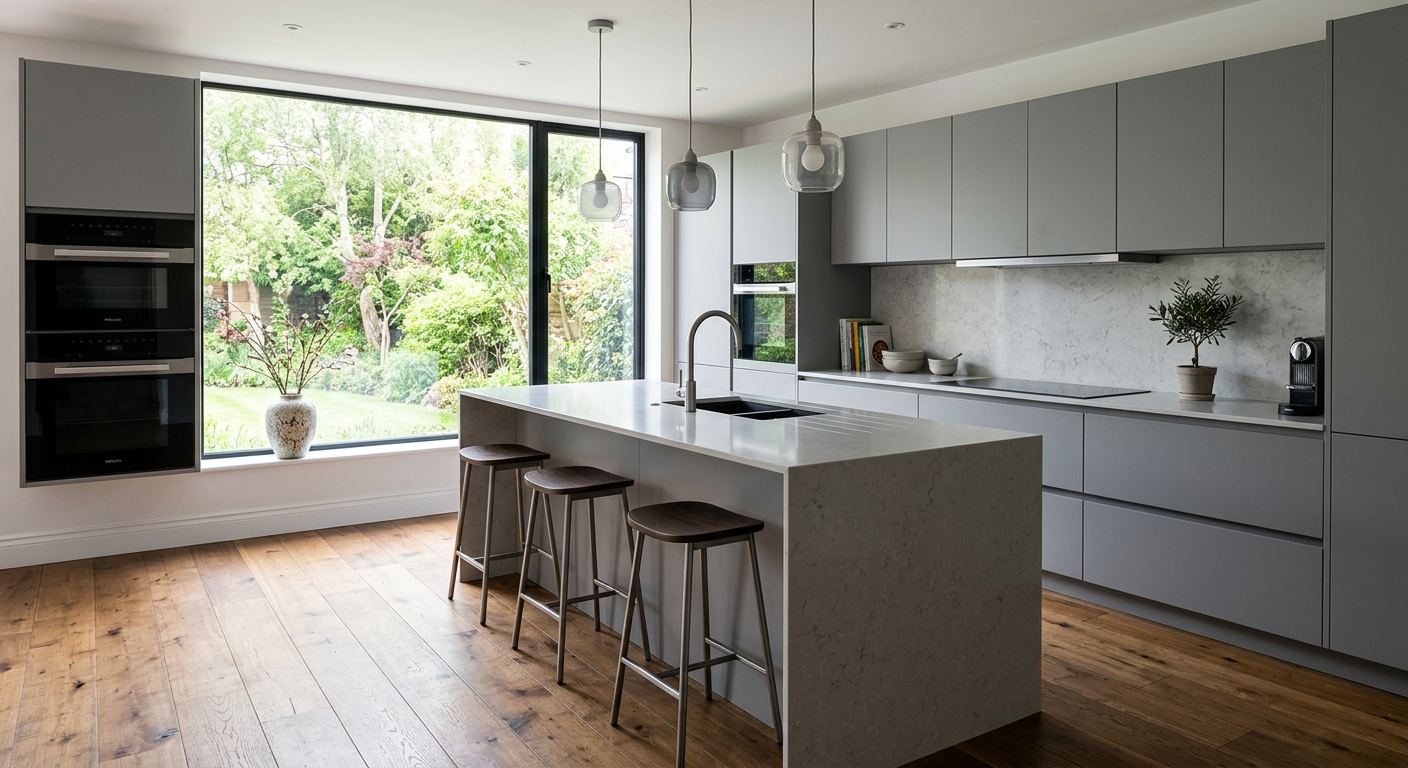
Kitchen renovation options and costs in Richmond
Kitchen renovations in Richmond, Ontario range from simple refreshes to full high-end rebuilds, and the right option usually depends on how close you are to selling and what finish buyers expect in the Ottawa area. Richmond’s smaller local population of 4,055 (Statistics Canada, 2021 Census) means fewer crews can be spread across jobs, so timing and availability can affect your schedule and pricing. In higher-value parts of the Ottawa region, homeowners often plan remodels with a “resale-ready” finish level—this is why many projects land in the $60,000 to $90,000 mid-tier window rather than the bare-bones end. Local market demand is especially strong in the west end areas near Airport/Manotick commuter corridors, where detached homes and long-term owner-occupancy create consistent demand for updated kitchens.
Ontario’s renovation pricing is shaped more by market expectations than harsh weather. The Ottawa economic region tends to push finish choices upward—quartz and natural stone are common, along with upgraded hardware and designer tile—because buyers readily recognize those upgrades. Climate still plays a role in the “how” (moisture control, ventilation, and durability of surfaces), but contractors generally price kitchens based on materials, scope, and labour availability. If you’re doing anything that involves plumbing, electrical, or reconfiguring the space, those trades drive the biggest cost swings. That’s also why two renovations with the same cabinet style can differ dramatically once you add a wall removal, an island, or relocate a gas line. Use the tier comparison below to align your expectations before you call for quotes.
| Renovation Tier |
What's Included |
Typical Duration |
Price Range |
| Cosmetic refresh (paint, hardware, new appliances only) |
Cabinet hardware swap, paint/stain touch-ups, appliance replacement (no plumbing/gas moves), basic trim refresh |
3–7 days |
$12,000–$25,000 |
| Mid-range full renovation (new cabinets, counters, sink, tile) |
New cabinets (stock or semi-custom), quartz counters, sink/faucet, backsplash tile, flooring refresh as needed, under-cabinet lighting (typical) |
4–7 weeks |
$60,000–$90,000 |
| High-end full renovation (custom cabinets, stone counters, island) |
Custom cabinetry, granite/stone counters, island with upgraded hardware, designer backsplash (often to full height in spots), enhanced lighting, premium finishes |
6–10 weeks |
$120,000–$150,000+ |
| Cabinet refacing only (new doors + drawer fronts, same boxes) |
Reface doors/drawers, new pulls/hinges, updated finish package, minor trim adjustments (no box replacement) |
2–4 weeks |
$12,000–$35,000 |
| Countertop swap only (laminate to quartz or stone) |
Remove old counters, template, install new quartz or stone, sink/cooktop cut-out adjustments as needed |
1–2 weeks |
$10,000–$18,000 |
| Backsplash tile installation only |
Surface prep, tile supply install, waterproofing details where applicable around sink, grout/seal, optional edge trims |
3–7 days |
$2,500–$12,000 |
Prices are estimates only and vary by project scope, site access and material selection.
What affects the price of kitchen renovation in Richmond
It’s common for homeowners in the Ottawa economic region to see quotes for the “same” kitchen vary by 30–50%. The difference usually isn’t the paint colour—it’s the finish tier, how much layout work is included, and how many licensed trades are required for plumbing, gas, or electrical changes. In higher-value communities, contractors often quote a more premium baseline (quartz or stone counters, semi-custom cabinetry, upgraded hardware, and nicer tile) because owners expect those upgrades to help on resale. That expectation pushes budgets into the $45,000 to $150,000+ band. In more modest finish plans, laminate counters and stock cabinetry dominate, keeping projects closer to the $12,000 to $45,000 cabinet-only or $45,000 to $60,000 refresh style work.
Local home values and household income in the Ottawa region shape the typical finish tier far more than climate. Even though Richmond winters are cold and humid indoor conditions can fluctuate, the main cost driver is still what you choose to install and whether you change the “in-wall” systems. For example, in older homes common in established neighbourhoods around Richmond, supply lines and drain runs may be tighter or less accessible, which can add labour time when upgrading a sink or relocating a dishwasher. Similarly, adding an island often means new electrical for outlets and lighting, and that can move the project from “routine” to “coordinated,” raising costs quickly. On the other hand, if your existing cabinet boxes and plumbing locations are staying put, countertop swaps and backsplash work can be relatively straightforward—countertop installations typically land in the $4,000 to $18,000 range depending on the material, with quartz usually sitting in the mid-to-upper portion.
| Price Factor |
Why It Matters |
Cost Impact |
| Cabinet tier — stock vs. semi-custom vs. fully custom millwork |
Material quality, door/drawer construction, interior upgrades, and lead times vary widely by tier |
Typically shifts the project by tens of thousands (major driver of mid-range vs luxury) |
| Countertop material — laminate vs. quartz vs. granite vs. stone |
Fabrication complexity, durability, and installation requirements change with each material |
Laminate keeps costs lower; quartz increases mid-tier budgets; stone often pushes into premium totals |
| Layout change — wall removal, island add, plumbing/gas move |
Structure and in-wall work create coordination needs across trades |
One of the largest “unpredictable” cost jumps regardless of finish level |
| Appliance package tier — builder vs. mid-range vs. pro-grade |
Width, ventilation requirements, and trim kits can affect install work |
Can move total budgets by several thousand and affect electrical/gas scope |
| Flooring — refinish existing vs. full replacement |
Subfloor condition and height transitions can require additional prep |
Refinishing saves cost; replacement adds labour, underlayment, and demo waste |
| Backsplash — ceramic tile vs. marble vs. full-height slab |
Weight, cutting complexity, and installation time vary by material and height |
Full-height or premium stone backsplashes can significantly exceed standard tile |
| Electrical — new circuits for island, under-cabinet lighting |
Adding outlets/lighting often requires a licensed electrician and inspection |
Can add both permit/inspection steps and labour coordination time |
| Permit fees and licensed trade requirements |
Some work requires permits and inspections; trade availability affects schedule |
Not always the biggest dollar line item, but it adds real time, cost, and risk management |
Permits & regulations in Ontario
In Ontario, straightforward cabinet and countertop swaps are typically permit-free. If you’re replacing cabinets with the same footprint and swapping counters (with no changes to plumbing, gas, or structural elements), permits usually aren’t required. Where permits and licensed trades come in is when you change the systems inside the walls or the building’s structure: moving plumbing supply or drain lines, relocating a gas stove or cooktop, removing a load-bearing wall, or adding new electrical circuits (for an island, under-cabinet lighting upgrades, or additional receptacles) generally requires permits, licensed work, and inspections.
For Richmond homeowners, verify contractor responsibility before signing. Step 1: ask which permits are required for your exact scope and who pulls them. Step 2: confirm gas work is performed by a licensed gas fitter and that electrical changes are done by a licensed electrician—both typically need inspection after installation. Step 3: check licences and safety coverage. Request the contractor’s proof of liability insurance and WSIB/WCB coverage (as applicable), then review the certificates for validity dates and listed insured parties. Finally, ask for a written “permit responsibility” statement in your contract so you’re not surprised by what’s included. Always confirm whether disposal, site protection, and inspection scheduling are handled by the contractor or the trades.
Cabinets, countertops and layout decisions in Richmond
In Richmond, the three decisions that most strongly shape cost and resale impact are: (1) cabinet tier, (2) countertop material, and (3) layout changes. Cabinet tier affects speed and fit: stock cabinets are usually the fastest and cheapest, semi-custom is the most popular mid-range because you can tailor heights and features, and fully custom millwork is the highest cost option with the best design flexibility. For counters, laminate is budget-friendly but less “premium-looking”; quartz is the common mid-to-upper choice for its consistency and low maintenance; granite/natural stone looks luxurious but requires more careful fabrication and sealing expectations; butcher block is warm and durable when maintained; marble is elegant but more sensitive to staining and requires a more disciplined maintenance routine.
Layout changes are where budgets can jump regardless of finishes. Removing a wall for an open-concept feel can trigger structural requirements, and adding an island usually means new electrical and sometimes venting planning. Plumbing or gas relocation is especially costly because it involves licensed trades and coordination. In the Ottawa resale market, buyers in the $60,000 to $90,000 range often expect quartz counters, solid cabinet hardware, and a clean backsplash story, while higher-price buyers pushing beyond $120,000 frequently look for an island, custom cabinetry detailing, and stone counters.
Here’s a realistic dollar example: if you’re considering a countertop upgrade only, quartz may add a meaningful premium over laminate, but it’s often far cheaper than reworking plumbing. A homeowner who swaps counters and improves lighting can typically stay within a $10,000 to $18,000 countertop installation plan, whereas moving a sink or stove can add thousands quickly once plumbing/drain runs and approvals are included. Climate-wise, Richmond’s temperature swings make good ventilation and moisture management important—especially around sinks, dishwashers, and any stone surfaces—so we build those details into the scope.
| Option |
Durability |
Maintenance |
Best For |
Price Range |
| Stock cabinets (big-box) |
Good daily durability; limited customization; depends on finish quality |
Low; wipe-clean surfaces and standard hardware care |
Fast timelines and budget-focused renovations |
$12,000–$35,000 |
| Semi-custom cabinets (local dealer) |
Very solid construction with better sizing and upgrade options |
Low; same care approach as typical painted/laminated finishes |
Most Ottawa-area homeowners targeting mid-tier resale-ready finishes |
$35,000–$60,000 |
| Custom cabinets (local millwork shop) |
Best fit and long-term refinements; superior hardware options |
Low, with careful day-to-day use and periodic hardware checks |
Unique layouts, premium buyers, and cabinetry that needs to “perfectly” fit |
$60,000–$95,000+ |
| Laminate countertop |
Serviceable for normal use; can be more sensitive to heat and edge wear |
Low; avoid prolonged heat exposure and sharp impacts |
Budget renovations that still want a clean, updated look |
$4,000–$8,000 |
| Quartz engineered countertop |
High durability; consistent look; resists staining better than many natural stones |
Low; routine cleaning and normal protective habits |
Mid-to-upper tier remodels with an “easy care” expectation |
$8,000–$14,000 |
| Granite / natural stone countertop |
Very durable and heat-tolerant; variation in each slab is part of the appeal |
Moderate; periodic sealing and careful cleaning products |
Premium kitchens where the stone look is the selling feature |
$12,000–$18,000 |
| Butcher block countertop |
Durable with daily prep; can scratch and needs proper maintenance |
Higher; regular oiling and surface care |
Homes seeking warmth and a practical, lived-in feel |
$5,000–$12,000 |
| Marble countertop |
Beautiful and sturdy in structure, but more vulnerable to etching/staining |
Higher; frequent sealing and careful stain/acid protection |
Luxury look for homeowners who maintain surfaces consistently |
$14,000–$22,000 |
How to choose a kitchen renovation contractor in Richmond
Choosing the right contractor in Richmond starts with proof, not promises. In Ontario, confirm the contractor’s licensing where required, and always obtain liability insurance and WSIB/WCB coverage details before work begins. Here’s how to check: request certificate of insurance (ensure it’s current and lists the work location or is properly applicable), then ask for WSIB/WCB clearance or equivalent coverage proof if they’re required to carry it. Also ask for documentation that their subcontractors (electrician and gas fitter, if involved) are properly licensed for their scope.
Next, get 2–3 itemised written quotes. You want a labour and materials breakdown rather than a single lump sum, including cabinetry, counters, tile, and any allowances. Read the scope line-by-line: what’s excluded (demo, patching, disposal, drywall repairs, floor transitions), whether permits are included, and whether inspections are scheduled by the contractor or by each trade. A strong warranty should be in writing: workmanship warranty length, what it covers, and how product/manufacturer warranties apply to cabinets, counters, and appliances. Also review the payment schedule—never accept more than 10–15% upfront; hold back a portion until the job is completed and deficiencies corrected. Finally, insist on a start date and completion estimate in writing so you can plan around contractor lead times.
- Ask for licence/coverage documents before signing: liability insurance and WSIB/WCB proof.
- Confirm which permits are needed for your exact scope and who pulls them.
- Require itemised pricing for labour, cabinets, counters, tile, and electrical/plumbing line items.
- Verify whether disposal and site protection (plastic, plywood, protection of floors) are included.
- Check that the quote includes electrical scope if you add island outlets or under-cabinet lighting.
- Confirm countertop fabrication/template timing to avoid install delays.
- Demand a written completion schedule with trade milestones (demo, rough-in, install, finish).
- Ask what happens if materials arrive late and how schedule changes are handled.
- Ensure warranty terms are specific: workmanship coverage and any call-back process.
- Clarify who manages inspections and who pays if re-inspection is needed due to corrections.
- Review colour/finish selections and note whether allowances apply to hardware and tile.
- Confirm payment terms: keep upfront low (10–15%) and hold back at completion.
Red flags in Richmond: vague “turnkey” wording with no exclusions list, quotes that don’t include disposal or permit responsibilities, pressure to pay high deposits early, missing insurance/coverage documentation, and timelines that ignore cabinet/counter lead times.
Frequently asked questions — kitchen renovation in Richmond
Can I move my kitchen sink or stove?
Yes, you can move a kitchen sink or stove in Richmond, Ontario, but it usually becomes a coordinated, multi-trade project. Moving a sink typically involves changes to supply and drain lines, and that work is the part most likely to trigger permits and licensed plumbing requirements. Relocating a gas stove or cooktop can also add permit steps and must be handled by a licensed gas fitter. Cost-wise, keeping your plumbing where it is is the easiest way to stay budget-friendly—many homeowners who focus on countertops and finishes can be around the $10,000 to $18,000 countertop installation range, while relocation work often pushes total kitchen budgets toward the higher end of the $45,000 to $150,000+ band once demolition, patching, and rework are included.
What's the most cost-effective kitchen upgrade?
The most cost-effective upgrades are usually the ones that deliver the biggest visual change without rewriting the “in-wall” systems. In Richmond and the broader Ottawa area, a countertop and backsplash refresh is often the sweet spot: it upgrades the look immediately and keeps trades simple if plumbing and gas stay put. For example, an update that includes a quartz countertop swap can land in the $8,000 to $14,000 range, and a backsplash tile installation typically fits within $2,500 to $12,000 depending on material and height. If you’re trying to save further, hardware and paint plus appliance swaps can be a low-disruption option. The biggest caution: don’t overspend on finishes before you’ve confirmed layout and service access—buyers value smart function as much as style.
Custom vs stock cabinets — is custom worth it?
Custom cabinets can be worth it in Richmond when you have an unusual wall length, need specialty storage (pantries, appliance garages, integrated charging), or want a truly built-in look that aligns with high-end resale expectations in Ottawa. If your goal is speed and budget control, stock cabinets are usually the fastest and cheapest route. Many homeowners choose semi-custom as the middle ground—often the most practical option for a mid-tier renovation where you still want better fit and upgraded interiors. As a planning guideline, if your full kitchen is targeting roughly $60,000 to $90,000, semi-custom plus quartz is a common approach; if you’re pushing beyond $120,000 for luxury, custom millwork and stone counters tend to match those expectations. Custom is less “worth it” if the layout forces expensive plumbing/electrical changes that wipe out the savings from cabinetry efficiency.
How do I choose a kitchen contractor in Richmond?
Start by requesting proof of liability insurance and WSIB/WCB coverage (or clearance letters where applicable), then verify that any subcontractors for electrical or gas are properly licensed for their scope. In Ontario, confirm permit responsibility in writing—especially if your kitchen changes involve plumbing supply/drain, gas relocation, load-bearing wall removal, or new electrical circuits. Get 2–3 itemised quotes with labour and materials breakdowns, not just a total. Make sure the quote states what’s excluded (demo scope, disposal, drywall patching, floor transitions) and whether permits/inspections are included. Finally, review warranty terms for workmanship and products. A good contractor can clearly explain their process and schedule—including material lead times—so you’re not surprised when cabinet or countertop templates affect installation dates.
What order do kitchen renovation steps happen in?
In most Richmond kitchen renovations, we follow a logical sequence to control rework. The typical order is: site protection and demo (remove old finishes/cabinets, assess subfloor/walls), then rough-in stage if plumbing/electrical changes are included (licensed trades do in-wall work first), followed by drywall/patching and any structural updates. Next comes countertop templating once cabinets are positioned and level. Cabinet installation usually happens before countertops so measurements are accurate. Then countertops and backsplash go in, followed by flooring transitions and final trim/finishing details. Appliance hook-up completes the job after finishes cure. If your project is closer to a mid-range full renovation (for example, $60,000–$90,000), schedule coordination matters most around rough-in and countertop templating so you don’t lose weeks due to parts arriving late.
Can I live at home during a kitchen renovation in Richmond?
Often, yes—many homeowners in Richmond keep living at home during a renovation, especially if the work is staged and the contractor sets up proper dust control. For smaller scopes like a backsplash installation or refacing, the disruption is usually manageable. For full renovations, you can still live at home if you have a workable plan for food prep and a safe path through the work zone. Expect temporary kitchen solutions (microwave station, kettle, and basic fridge access) and plan for noise during demo and cabinet installs. In cold weather, ventilation and humidity control matter for curing paint, drywall, and adhesive products, which is why we sequence finishing carefully. If your plan involves higher-end work pushing into $120,000+ territory, many families choose to relocate temporarily because the job duration and trade coordination are longer.