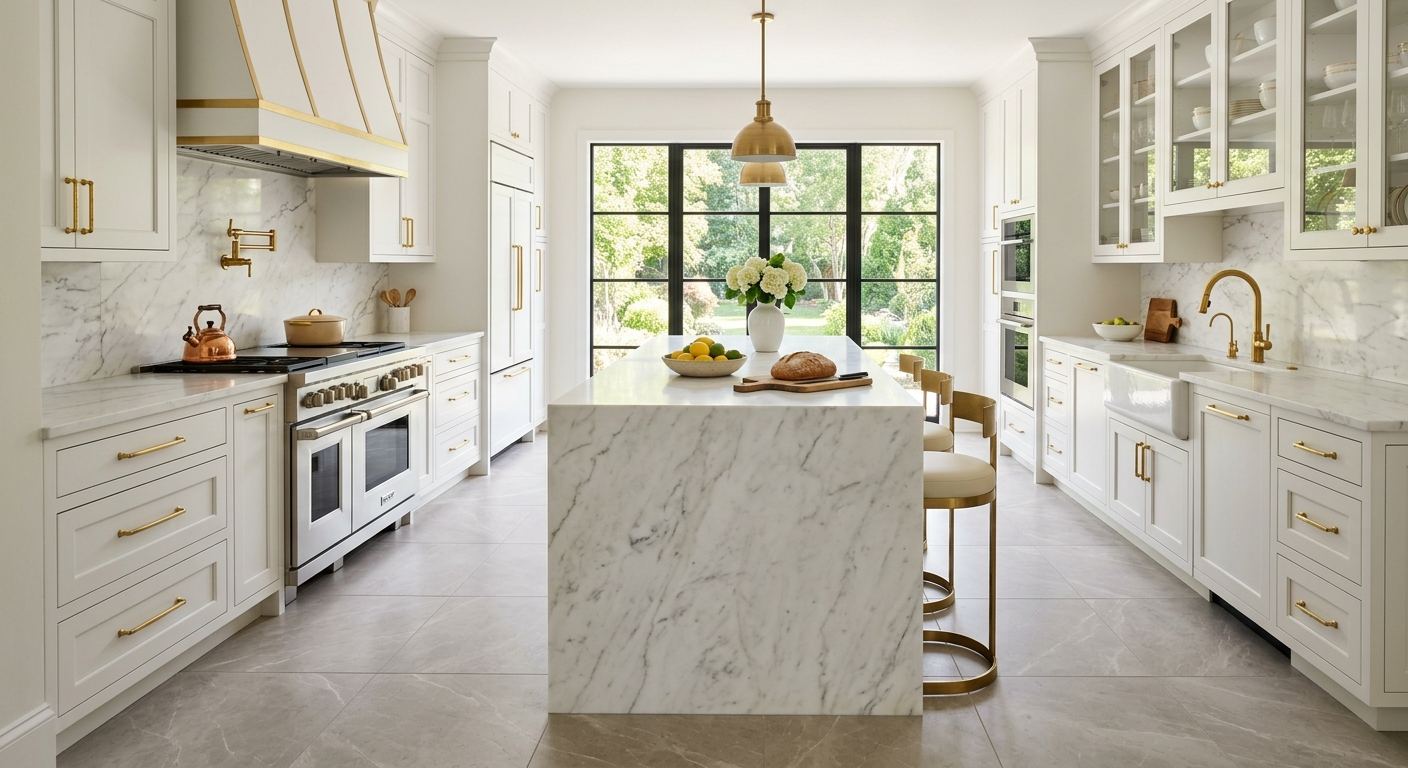
Kitchen renovation options and costs in Little Portugal
In Little Portugal, Ontario, kitchen renovations tend to track the expectations of the surrounding Toronto market—especially in how homeowners choose cabinetry and countertop finishes. With a population of 15,559 (Statistics Canada, 2021 Census), the neighbourhood has plenty of older homes and condos, which often means you’re renovating around existing plumbing runs, electrical locations, and sometimes dated finishes that were installed decades ago. That reality influences cost more than weather: in Toronto, budgeting is driven primarily by home values and buyer preferences. In higher-value Toronto pockets, many homeowners justify spending closer to 8–15% of their home value on upgraded kitchens (Statistics Canada, 2021 Census), which typically pushes projects toward semi-custom or custom cabinetry and quartz or natural stone. In more price-sensitive refreshes, families often keep costs down by staying with stock cabinets or refacing and choosing durable laminate or mid-grade quartz.
Toronto’s market also affects contractor availability and scheduling. When demand spikes, labour lead times tighten and detailed drawings become more important, because any change after demolition can mean expensive rework. Most costs in the Little Portugal area still fall under the common GTA bands: modest refreshes can remain mid-$20k, while full custom builds often land in the $80k+ range once you add structural work, island framing, and premium materials. Popular demand is especially strong around Ossington Avenue and the broader Little Portugal corridor, where many owners plan renovations to improve resale appeal.
Below is a practical way to compare renovation scopes and budgets before you request quotes.
| Renovation Tier |
What's Included |
Typical Duration |
Price Range |
| Cosmetic refresh (paint, hardware, new appliances only) |
Cabinet paint or stain (if offered), new pulls/hinges, appliance swap, basic touch-up caulking/trim |
3–7 days |
$5,000–$12,000 |
| Mid-range full renovation (new cabinets, counters, sink, tile) |
New semi-custom or stock cabinets, quartz or good laminate counters, sink/faucet, backsplash tile, flooring patching/tile coordination, standard electrical adjustments for lighting |
2–4 weeks |
$25,000–$55,000 |
| High-end full renovation (custom cabinets, stone counters, island) |
Fully custom millwork, upgraded quartz or granite/stone counters, island with electrical/plumbing provisions (as required), premium backsplash, enhanced lighting, more extensive layout coordination |
4–8 weeks |
$60,000–$90,000 |
| Cabinet refacing only (new doors + drawer fronts, same boxes) |
Replace doors/drawer fronts/trim, new hardware, prep and refinishing of visible surfaces; counters typically stay unless you choose a separate swap |
1–2 weeks |
$8,000–$35,000 |
| Countertop swap only (laminate to quartz or stone) |
Remove existing top, install new quartz/stone or quartz conversion; basic sealing/caulking, sink/cooktop reinstall where feasible |
3–7 days |
$3,000–$15,000 |
| Backsplash tile installation only |
Tile supply/installation (ceramic/porcelain and layout), prep/grout/seal where required, clean-up |
2–5 days |
$2,000–$10,000 |
Prices are estimates only and vary by project scope, site access and material selection.
What affects the price of kitchen renovation in Little Portugal
Even for the same kitchen size, quotes across Toronto and Ontario can vary by 30–50% because renovation scope is rarely identical: some bids include electrical and permit work, some assume the existing floor can be patched, and others price in contingencies for older plumbing runs and out-of-square walls. In Little Portugal specifically, many homes have older cabinets, uneven subfloors, and dated electrical—so contractors either absorb those issues or price them as an allowance. That’s where differences show up fast, regardless of the finish tier you select.
The biggest driver is still finish level, which aligns with local home value and buyer expectations rather than climate. In higher-value Toronto markets, homeowners more commonly move to quartz or stone counters and semi-custom cabinetry because the renovation cost is easier to recover on resale. In more price-sensitive scenarios, laminate and stock cabinets dominate, keeping you nearer the mid-$20k range for a refresh that feels “new” without the premium spend. Layout changes are the unpredictable cost layer across every tier: removing a wall, adding an island, or moving a gas line can add significant labour and permitting—even if your cabinets and countertops are mid-range.
Concrete Little Portugal examples: (1) if your current kitchen plumbing stack is farther from the new sink location, you may need longer drain runs and additional venting coordination, which can push a mid-range job toward the upper end of the $25,000–$55,000 band; (2) if you want a kitchen island with power for outlets or under-cabinet lighting, electrical scope can expand quickly; (3) if your floors are old and the subfloor is uneven, tile backer/level-labour increases and can add cost to both mid-range and high-end builds. While Toronto’s seasonal humidity and freeze-thaw cycles don’t “create” kitchen costs, they do expose installation gaps—so proper sealing, ventilation coordination, and premium underlay work matter for longevity.
| Price Factor |
Why It Matters |
Cost Impact |
| Cabinet tier — stock vs. semi-custom vs. fully custom millwork |
Determines lead times, fit/finish quality, internal storage options, and whether you’ll need fewer compromises around outlets and corners |
Typically shifts budgets by tens of thousands, often pushing mid-range toward $55,000+ when you move to custom |
| Countertop material — laminate vs. quartz vs. granite vs. stone |
Material cost, fabrication complexity (edges, overhangs), and durability for daily use and cleaning |
Can move projects from the low–mid range to the high-end tier; countertops alone commonly run $3,000–$15,000 installed |
| Layout change — wall removal, island add, plumbing/gas move |
Drives carpentry, engineering/structural coordination, drain/venting, gas line routing, and schedule length |
Often the biggest unknown; layout changes can add thousands even if finishes stay mid-range |
| Appliance package tier — builder vs. mid-range vs. pro-grade |
Impacts cabinetry dimensions, electrical requirements, ventilation expectations, and integration cost |
May add several thousand and can force electrical adjustments for correct hookups |
| Flooring — refinish existing vs. full replacement |
Existing flooring condition affects prep time, levelling, and how cleanly cabinets/base can be installed |
Replacement can add cost quickly; refinishing is usually cheaper but depends on wear and subfloor condition |
| Backsplash — ceramic tile vs. marble vs. full-height slab |
Material density and installation methods affect labour, anchoring, and breakage rate |
Backsplashes commonly run $2,000–$10,000 depending on coverage and material |
| Electrical — new circuits for island, under-cabinet lighting |
Changes power distribution, lighting placement, and where outlets must be accessible and code-compliant |
Can add meaningful cost and lead time; may require permits when adding circuits |
| Permit fees and licensed trade requirements |
Needed when the scope touches plumbing, gas, structural changes, or new electrical circuits |
Costs vary by scope, but paperwork and inspection scheduling can push labour timelines and total budgets upward |
Permits & regulations in Ontario
In Ontario, not every kitchen change needs a permit—but several common upgrades do. Typically, cabinet and countertop swaps do not require permits when they don’t move plumbing, gas lines, or major electrical. That means replacing existing cabinets with new ones that fit the same footprint, and swapping a laminate top for quartz, usually falls into the “no permit” bucket.
Where permits do come in is when you change services. Moving plumbing supply or drain lines (for example, relocating the sink), relocating gas (stove/range hood connections where applicable), removing a load-bearing wall, or adding electrical circuits for an island, new lighting zones, or upgraded ventilation can trigger permit requirements. Gas work must be performed by a licensed gas fitter, and electrical work must be performed by a licensed electrician; both require proper inspections before drywall/finishes close in the work.
For a homeowner in Little Portugal, the best practice is to verify before you sign. Step-by-step: (1) Ask the contractor for their business licence details where applicable and request a clear permit plan; (2) Review their Certificate of Insurance for liability coverage (and WSIB/WCB clearance letter or account details if they use employees); (3) Confirm trade licensing for the specific work—gas fitter for gas, electrician for any circuit additions; (4) Get everything written: who pulls permits, who pays fees, and who coordinates inspections. If the contractor can’t clearly state responsibility in the contract, that’s a red flag.
Cabinets, countertops and layout decisions in Little Portugal
Three decisions determine most of your kitchen’s value (and your budget) in Little Portugal: cabinet tier, countertop material, and layout changes. Start with cabinet tier. Stock cabinets are the fastest and usually the cheapest, but you may spend money negotiating fit around existing corners and outlet locations. Semi-custom is the most popular mid-range choice because it balances speed, storage upgrades, and better customization without the premium price tag. Custom cabinets deliver the best fit and the widest storage options, which is ideal if your kitchen has unusual dimensions typical of older Toronto housing stock.
Second, choose the countertop material. Laminate is budget-friendly and can look modern with the right finish, but it’s more vulnerable to heat damage and can show wear at seams over time. Quartz is a strong “Toronto all-season” performer: it resists staining and stands up well to regular cleaning, and it typically fits the mid-range to high-end tiers. Granite/natural stone and marble add luxury and variety, but they often require more careful maintenance and can carry a higher installed cost.
Third, decide whether to change layout. Open-concept wall removal and island additions can transform how the kitchen works, but the cost is justified when you gain real function—extra seating, better circulation, and a logical placement for plumbing/electrical. If your plan requires a plumbing or gas relocation, treat it as a scope risk that can increase budgets more than countertop selection.
Realistic pricing example: if you upgrade from laminate to quartz, you might spend an incremental amount within the $3,000–$15,000 countertop band. In most Little Portugal resale-oriented upgrades, that step is often easier to justify than an expensive layout rework—because buyers readily notice counter quality while a major reconfiguration can trigger permit and labour complexity.
| Option |
Durability |
Maintenance |
Best For |
Price Range |
| Stock cabinets (big-box) |
Good daily-use durability; limited customization can leave minor gaps or compromises |
Low; keep hardware tight and wipe dry to prevent swelling at edges |
Fast refreshes and smaller budgets where footprint stays the same |
$8,000–$20,000 |
| Semi-custom cabinets (local dealer) |
Very solid construction with better storage options and more accurate fit |
Low; regular cleaning of doors and drawer tracks keeps them smooth |
Most Little Portugal renovations aiming for resale appeal at a balanced cost |
$15,000–$35,000 |
| Custom cabinets (local millwork shop) |
Highest fit and detail; best for awkward dimensions and premium hardware/storage |
Low-to-moderate; use proper cleaners to preserve finishes and edges |
High-end full renovations and kitchens with unusual layouts |
$25,000–$55,000 |
| Laminate countertop |
Decent for everyday use; vulnerable to heat and can wear at seams depending on install quality |
Wipe-clean; avoid hot pans directly and prevent water at seams |
Cost-conscious refreshes where budget matters most |
$3,000–$7,000 |
| Quartz engineered countertop |
High resistance to staining and everyday wear; consistent performance |
Low; no sealing needed for most quartz products and it’s easy to maintain |
Toronto resale-driven upgrades that need a durable, modern look |
$6,000–$14,000 |
| Granite / natural stone countertop |
Very durable and heat-tolerant; performance varies by stone type and sealer |
Moderate; typically needs periodic sealing and careful stain management |
Premium aesthetics and owners who want natural variation |
$8,000–$15,000 |
| Butcher block countertop |
Durable and forgiving; can be nicked and must be protected from chronic moisture |
Higher; oiling and routine care keep it looking fresh |
Family kitchens and hybrid styles where warmth matters |
$6,000–$12,000 |
| Marble countertop |
Luxurious look but softer and more prone to etching/staining than quartz |
Higher; sealing and careful use are needed to reduce damage |
High-end statement kitchens where maintenance routines are acceptable |
$10,000–$15,000 |
How to choose a kitchen renovation contractor in Little Portugal
Choosing the right contractor in Little Portugal means checking both qualifications and the details of the quote. First, verify Ontario compliance and financial protection. For licensing: ensure the contractor uses licensed electricians for any circuit changes and licensed gas fitters for gas-related work. For coverage: request their Certificate of Insurance showing liability coverage, and confirm WSIB/WCB clearance (or equivalent coverage details) in writing—ask for a clearance letter if they operate with employees. If they can’t provide these documents promptly, you should keep looking.
Next, get 2–3 itemised written quotes—not a single lump sum. You want labour and materials broken out (demo, framing, cabinet install, countertop fabrication coordination, tile setting, electrical/plumbing allowances). Read exclusions carefully: disposal included or not, permit pulls included or not, and whether patching/level-labour is counted for floors and drywall repairs. Timeline clarity matters too—ask for a start date and completion estimate in writing, and ask what happens if deliveries are delayed (cabinet lead times and stone fabrication are common bottlenecks).
Payment schedule should protect you. Never pay more than 10–15% upfront, then use staged payments tied to milestones. Hold back a portion until the work is fully complete and you’ve received warranties in writing. Finally, check warranty: workmanship warranty length and what’s covered if there’s cabinet alignment, countertop install issues, or tile cracking. Confirm whether the product/manufacturer warranty is transferable to future owners if you sell.
- Provide valid business contact info and a written contract with scope, schedule, and pricing details.
- Itemised quote: labour, materials, disposal, and allowances separated.
- Confirm who pulls permits and pays permit fees for your specific scope.
- Verify licensed trades for gas and electrical work; request licence documentation for the relevant subcontractors.
- Request liability insurance proof and WSIB/WCB clearance letter before work starts.
- Ask for a demolition/disposal plan (bins, loading, and what “cleanup” includes).
- Clarify countertop measurement responsibility and who handles template changes.
- Ask about cabinet installation system (shimming/anchoring approach) for older Toronto floors and walls.
- Confirm under-cabinet lighting plan if you’re adding it—electrical scope is often forgotten.
- Get flooring/patching responsibilities in writing if cabinets are removed from an existing layout.
- Check warranty terms: labour duration, exclusions, and response time.
- Agree on a payment schedule with milestone holdbacks until final sign-off.
Specific red flags in Little Portugal include: (1) contractors who won’t provide insurance/WSIB clearance documents on request; (2) quotes that omit permits or bury electrical/gas work in a vague allowance; (3) demanding large upfront payments beyond 10–15% without a clear schedule; (4) “one price fits all” bids with no breakdown for cabinets, install, and countertop fabrication coordination; and (5) avoiding a written start/completion timeline or refusing to put warranty coverage in the contract.
Frequently asked questions — kitchen renovation in Little Portugal
How do I budget for a kitchen renovation?
Budgeting in Little Portugal works best when you start with your scope tier and then add realistic allowances for unknowns typical of older Toronto homes. If your goal is a refresh (paint, hardware, and appliance swaps), many projects sit in the $5,000–$12,000 range. For a true mid-range renovation—new cabinets and counters plus sink and tile—plan for roughly $25,000–$55,000. If you’re aiming for an island, custom cabinetry, and premium stone, budgets commonly move toward $60,000–$90,000. Quotes can swing because layout changes (moving plumbing or gas) and electrical circuit additions add complexity beyond finishes. Ask contractors for itemised labour and material breakdowns and a written contingency approach, so you’re not surprised after demo.
Can I move my kitchen sink or stove?
In Ontario, you can move a kitchen sink or stove, but whether it’s simple depends on how far you’re moving and what services need to change. Moving a sink usually means adjusting plumbing supply and drain lines, which often triggers permits and requires licensed plumbing work. Moving a stove can be straightforward if it stays within the existing gas/electrical routing, but relocating gas appliances typically involves licensed gas fitter work and inspections. In Little Portugal, older housing stock may hide smaller constraints—like limited access to drains or older subfloor conditions—which can affect schedule and cost. Before you commit, ask your contractor to confirm the feasibility of your exact locations and to spell out in the contract who pulls permits, who performs the licensed work, and what inspections are required.
What's the most cost-effective kitchen upgrade?
The most cost-effective upgrade is usually one that changes how the kitchen looks while avoiding major plumbing or structural work. In many Little Portugal kitchens, a cabinet refacing (new doors and drawer fronts while keeping the existing boxes) is a strong value path when your cabinet boxes are still solid. Another common win is a countertop swap—moving from laminate to quartz—because it updates the kitchen’s “main surface” and holds up well to daily cleaning. For true budget clarity, look at the typical bands: cabinet installation/refacing can run $8,000–$35,000, and countertop installation often lands in the $3,000–$15,000 range depending on material and edges. If your cabinets are dated but sound, start there; if your layout is functional, don’t pay for a wall move just to refresh finishes.
Custom vs stock cabinets — is custom worth it?
Custom cabinets can be worth it, but it depends on your kitchen’s dimensions and your resale expectations in Little Portugal. Stock cabinets are usually the fastest and cheapest, and they can still look great if your layout is straightforward and the kitchen isn’t full of out-of-square walls or unusual corners. Semi-custom is often the best middle ground for Ontario homeowners because it improves fit and storage options without the full custom price. Fully custom millwork is most beneficial when you need perfect alignment with tight spaces, want specialized storage (pantries, appliance garages, tailored drawers), or you’re doing a high-end full renovation where buyers expect a “built-in” look. A practical budgeting approach: if you’re already near the $25,000–$55,000 mid-range tier, moving to custom can push you quickly toward the high-end $60,000–$90,000 band once installation and coordination increase.
How do I choose a kitchen contractor in Little Portugal?
Start by verifying Ontario licensing and coverage, then verify the quote details. Ask for proof of liability insurance and WSIB/WCB clearance (a clearance letter is often provided). For the work that requires it, confirm that gas work is done by a licensed gas fitter and electrical changes are done by a licensed electrician. Then request 2–3 itemised written quotes with labour and materials separated—especially demolition, cabinet installation, tile setting, and countertop fabrication coordination. Review scope exclusions carefully: permit pulling, disposal, and whether patching/level-labour is included. Ask for warranty terms in writing, including workmanship duration and product/manufacturer warranty coverage (and whether it transfers). Finally, insist on a staged payment schedule with a holdback until completion and final sign-off.
What order do kitchen renovation steps happen in?
A typical sequence in Little Portugal is designed to keep trades from blocking each other. First, planning and measurements happen (especially for countertops and cabinet sizing). Then demolition and site protection occur, followed by rough-ins: plumbing/drain adjustments, gas work (if applicable), and electrical for new circuits or island power. After rough-ins are ready and inspections are completed where required, framing and drywall repairs happen, then flooring prep/patching. Next comes cabinet installation (including shimming/anchoring for older walls), then countertops templating/fabrication coordination and installation. Backsplash tile and final finishes (paint, trim, caulking) are usually done after cabinetry and countertop alignment. Finish with hardware installation, final appliance hookups, and a walkthrough for warranty documentation and any punch-list items.