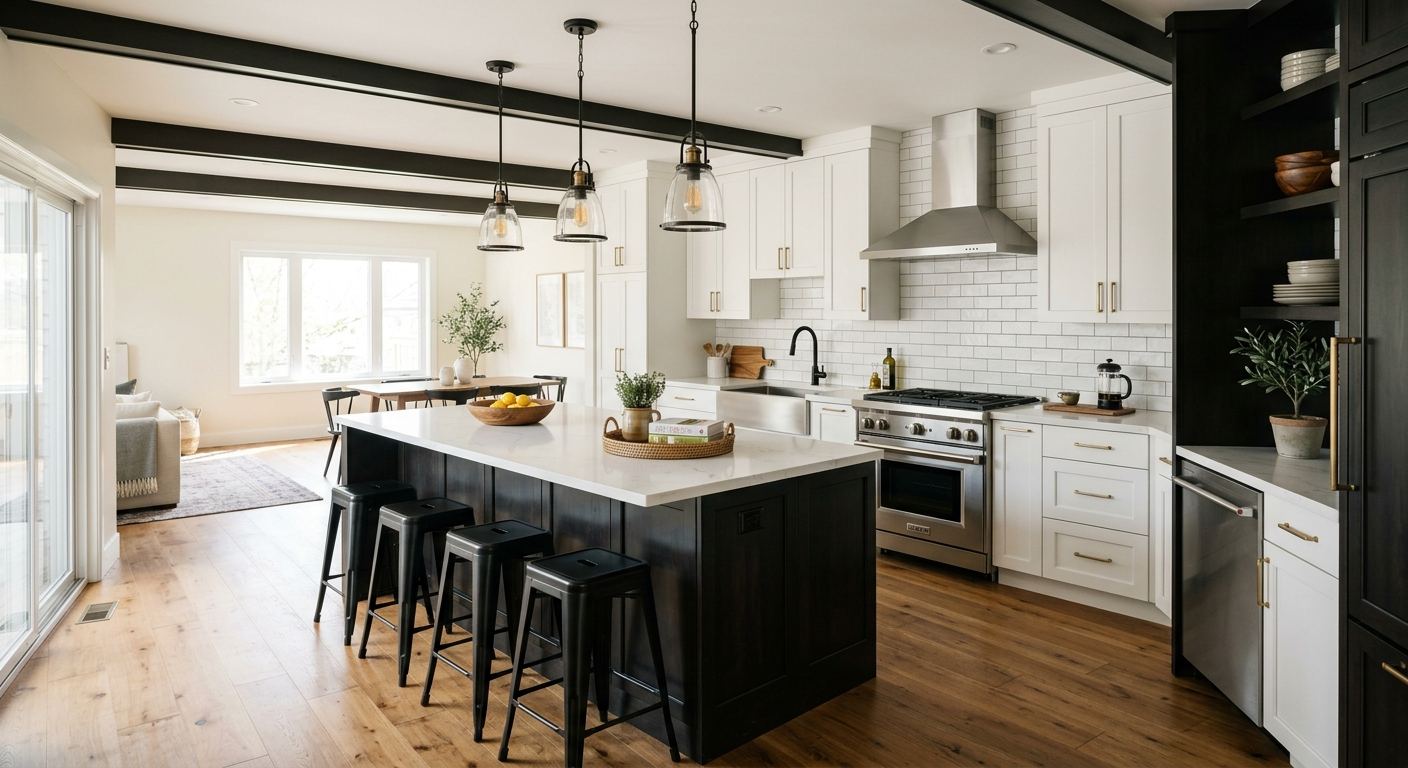
Kitchen renovation options and costs in Marmora
Marmora homeowners typically choose a kitchen renovation option based on how long they plan to stay, because the Toronto-area market is quick to reward kitchens that look updated and feel functional. With a 2021 Census population of 1,499 in Marmora (Statistics Canada, 2021 Census), local projects often come in waves—when one type of build is popular, you’ll see contractors booking similar scopes back-to-back. Regionally, homeowners’ choices also line up with typical resale expectations across the Toronto economic region; higher-value markets tend to steer projects toward better surfaces like quartz or natural stone and more fitted cabinetry, and that’s where budgets can quickly move toward the top of the local bands. In short: price doesn’t move because of “weather,” it moves because of what buyers pay attention to.
Even though Marmora’s cost drivers are more market than climate, Ontario winters still affect schedules. Cold snaps can slow site conditions for flooring, caulking, and finish curing, and they can extend lead times for delivery and onsite trades. Contractor availability can also vary by season in the Toronto region, so booking sooner is usually cheaper and less stressful—especially if you want an island that requires electrical and plumbing coordination.
In Marmora, the trade is especially in demand around newer subdivisions and areas where homes were built with compact kitchen footprints—many requests are for layout upgrades rather than just surface refreshes. If that sounds like your situation, the table below compares common options and what they usually include before you compare contractor quotes.
| Renovation Tier |
What's Included |
Typical Duration |
Price Range |
| Cosmetic refresh (paint, hardware, new appliances only) |
Cabinet paint (or re-finish where applicable), new hardware, appliance swaps, minor trim touch-ups, basic electrical for appliance hookups as needed |
1–3 weeks |
$4,000–$12,000 |
| Mid-range full renovation (new cabinets, counters, sink, tile) |
New or semi-custom cabinets, new countertop, sink & faucet, backsplash tile, removal & disposal, flooring protection/spot repair, plumbing connections, standard electrical for under-cabinet lighting if listed |
4–8 weeks |
$25,000–$55,000 |
| High-end full renovation (custom cabinets, stone counters, island) |
Custom cabinetry, premium stone/quartz counters, island (base + countertop), expanded electrical/plumbing scope for island, upgraded backsplash (often premium tile), appliance upgrades, enhanced trim/millwork details |
8–16 weeks |
$65,000–$90,000 |
| Cabinet refacing only (new doors + drawer fronts, same boxes) |
Refacing of cabinet exteriors, new doors/drawers/hardware, hinges/software adjustments where needed, countertop protection (typically no new counters unless bundled) |
2–4 weeks |
$8,000–$22,000 |
| Countertop swap only (laminate to quartz or stone) |
Removal & install of countertops, new sink/faucet hookups if selected, backsplash limited to countertop transition line (full backsplash typically separate) |
1–3 weeks |
$6,000–$15,000 |
| Backsplash tile installation only |
Tile supply & install (ceramic/porcelain), waterproofing/adhesive prep, caulking to edges, grout & final sealing where required |
3–7 days |
$2,000–$10,000 |
Prices are estimates only and vary by project scope, site access and material selection.
What affects the price of kitchen renovation in Marmora
Even when two homeowners request the “same” kitchen, Toronto-area quotes can differ by 30–50% because contractors price risk and uncertainty—especially around layout changes, electrical/plumbing tie-ins, and material lead times. In Ontario, the finish tier you choose is often more decisive than weather, since homeowners in higher-value pockets default to quartz or stone counters and semi-custom cabinetry, while more price-sensitive projects lean toward laminate and stock solutions. That choice aligns with resale strategy: if you’re upgrading for a future sale, many buyers expect a cohesive look—clean cabinet lines, durable countertops, and modern lighting—so the renovation cost is easier to justify at the higher end of the local $25,000–$90,000 full-reno bands.
Local conditions in Marmora can raise or lower cost in a few concrete ways. First, older housing stock can mean out-of-date wiring or undersized circuits, which pushes electrical scope (and sometimes under-cabinet lighting or island power). Second, kitchens with small, awkward footprints often require “rework,” such as adjusting cabinet runs to accommodate thicker backsplashes or widening a walkway—costly, but it can prevent constant fit issues later. Third, if you’re installing a new island that needs a venting path, a gas line adjustment, or a new plumbing tie-in, the work becomes schedule-driven and can move your project from the mid-range toward higher territory even if cabinet finishes stay in the moderate tier (for example, $25,000–$55,000 can creep toward $65,000–$90,000 once island utilities and stone countertops are included).
So while Marmora winters can delay curing and flooring timelines, most of the big budget swings come from design decisions and hidden condition checks, not temperature.
| Price Factor |
Why It Matters |
Cost Impact |
| Cabinet tier — stock vs. semi-custom vs. fully custom millwork |
Custom boxes, internal hardware, and made-to-measure frames fit better but require more shop time and installation coordination |
$8,000–$35,000 (cabinet portion varies widely by tier) |
| Countertop material — laminate vs. quartz vs. granite vs. stone |
Material cost and fabrication complexity drive the largest countertop differences; seams, edge profiles, and thickness matter |
$3,000–$15,000 |
| Layout change — wall removal, island add, plumbing/gas move |
Structural, plumbing, and ventilation/electrical dependencies add inspection steps and unpredictability |
$5,000–$25,000+ depending on scope |
| Appliance package tier — builder vs. mid-range vs. pro-grade |
Brand tier affects installation requirements, venting needs, and sometimes dimensions for fit |
$2,000–$12,000 commonly |
| Flooring — refinish existing vs. full replacement |
Kitchen renos often trigger subfloor inspection and replacement if damage or rot exists near plumbing |
$1,500–$8,000 |
| Backsplash — ceramic tile vs. marble vs. full-height slab |
Higher-end stone/large formats require more labour, heavier setting materials, and careful finishing |
$2,000–$10,000 |
| Electrical — new circuits for island, under-cabinet lighting |
Additional circuits, GFCI requirements, and lighting runs affect both permit and electrician time |
$800–$5,000+ |
| Permit fees and licensed trade requirements |
Work involving plumbing, gas, electrical, or structural changes requires approvals and licensed trades |
$500–$3,500+ typical permitting/admin |
Permits & regulations in Ontario
In Ontario, not every kitchen update needs a permit. Cabinet and countertop swaps—when you keep existing plumbing and gas where they are and you’re not changing load paths or adding new electrical circuits—typically don’t require permits. That said, permits and licensed trades often apply when the work touches critical systems. For example, moving plumbing supply or drain lines, relocating a gas stove or making changes to gas connections, removing a load-bearing wall, and adding new electrical circuits (common when you add an island with power or upgraded lighting) usually require permits and inspections.
Homeowners in Marmora can verify this up front by insisting the contractor spell out responsibility in writing: what you’re paying for, what permits are needed, and who pulls them. Step-by-step, ask for proof of licence and coverage before the first change order:
- Request the contractor’s Ontario business registration details and confirm they’re actively insured for renovation work.
- Ask for a certificate of insurance (liability) that lists the project location and coverage date range.
- Confirm WSIB/WCB coverage from the contractor and subcontractors who will be on site.
- For gas-related scope: verify the gas fitter is licensed and will perform the work with inspections as required.
- For electrical scope: verify an Ontario-licensed electrician will do any new circuits and that inspection is planned.
Where to look: use official online licence registries for trades, and review the insurance certificate plus any clearance documentation the contractor can provide before work starts. Always confirm who is pulling permits, and include it in your contract so responsibility doesn’t get disputed later.
Cabinets, countertops and layout decisions in Marmora
Your three most consequential decisions in a Marmora kitchen renovation are cabinet tier, countertop material, and layout. These choices drive both the feel of the finished room and how resale-ready the kitchen will be for Toronto-area buyers. Start with cabinets: stock cabinets are the fastest and cheapest, semi-custom is the most popular mid-range because it improves fit and storage without jumping to full custom costs, and custom millwork offers the tightest fit and the best storage planning—but at the highest price. Next, choose countertops. Laminate is budget-friendly and can look great with the right edge profile, but quartz typically wins on day-to-day durability and stain resistance for busy kitchens. Granite and other natural stones offer unique patterning and a premium look, though they can require sealing depending on the product.
Finally, decide whether you’ll change the layout. Removing a wall for an open-concept feel, adding an island, or relocating plumbing/gas can justify the expense when it solves a functional problem—like poor circulation, limited prep space, or an awkward sink line. In many Marmora homes, small kitchens are the reason island additions come up; however, islands often trigger electrical and plumbing planning, which can move your project upward even if cabinets are mid-range. For a practical dollar example: upgrading from laminate to quartz might add roughly a few thousand dollars, but that upgrade can be “worth it” if you’re already planning new cabinets and a cohesive backsplash. If you’re only doing cabinets and leaving old counters, the countertop swap becomes the single most visible durability upgrade buyers notice.
Toronto-area resale expectations usually reward clean sightlines, modern hardware, durable surfaces, and a practical layout—so align your decisions with your budget tier from the start rather than upgrading everything at the end.
| Option |
Durability |
Maintenance |
Best For |
Price Range |
| Stock cabinets (big-box) |
Good for standard use; limited customization can reduce fit in older spaces |
Low—wipe clean; adjust hardware if settling occurs |
Budget refreshes, quick timelines, straightforward layouts |
$8,000–$18,000 |
| Semi-custom cabinets (local dealer) |
Better material choices and more configuration options; strong longevity |
Low—regular cleaning; maintain drawer slides/hardware |
Most Marmora renovations aiming for resale value and storage |
$18,000–$30,000 |
| Custom cabinets (local millwork shop) |
Excellent fit and build quality when installed properly |
Low to moderate—proper cleaning and hinge/drawer adjustment as needed |
Odd layouts, integrated storage, premium finish matching |
$30,000–$55,000+ |
| Laminate countertop |
Decent everyday durability; edges and seams can be the weak points if poorly finished |
Easy—wipe clean; avoid cutting directly on the surface |
Value-minded updates, rental-friendly budgets, limited demolition |
$3,000–$6,500 |
| Quartz engineered countertop |
High durability and stain resistance; consistent look for modern designs |
Low—regular soap-and-water cleaning; no routine sealing |
Busy families, resale-focused upgrades |
$7,000–$12,000 |
| Granite / natural stone countertop |
Very durable but varies by stone; can chip if mishandled |
Moderate—may require periodic sealing depending on the stone |
Premium look with natural pattern variation |
$9,000–$15,000 |
| Butcher block countertop |
Great for warmth and prep space; can dent/scratch if not maintained |
Moderate—needs regular oiling and careful moisture protection |
Farmhouse-style kitchens, homeowners who prep and maintain |
$4,500–$9,000 |
| Marble countertop |
Premium and elegant but softer than quartz; can etch with acids |
Higher maintenance—avoid harsh cleaners; sealing is typically needed |
Design-forward kitchens where appearance is the priority |
$10,000–$18,000+ |
How to choose a kitchen renovation contractor in Marmora
Choosing the right kitchen renovation contractor in Marmora is mostly about proof and clarity. Start with licensing and coverage. In Ontario, kitchen renovations frequently involve multiple trades, so you want the contractor to show they can coordinate licensed work correctly. Ask for their liability insurance certificate (with the project address listed), confirm WSIB/WCB clearance or coverage for workers on your site, and verify subcontractors’ licences for any gas or electrical scope. If they can’t provide documentation quickly, pause—your timeline and budget take the hit later.
Then get 2–3 itemised written quotes rather than one lump sum. The breakdown should separate labour and materials (cabinets, countertops, tile/backsplash, plumbing fixtures, electrical work, demolition/disposal). Read the scope carefully for exclusions: is permit pulling included, who handles utility locating, and is waste removal/disposal included? Ask who replaces damaged drywall or flooring if it’s uncovered during demolition.
Warranty matters too. Confirm the workmanship warranty length, what it covers (cabinet installation, caulking/trim, grout/tile cracks), and whether the manufacturer warranty transfers with the property. Finally, keep the payment schedule sensible: never pay more than 10–15% upfront, and hold a portion back until completion and close-out items are done. Get a start date and a completion estimate in writing so you’re not guessing when deliveries or inspections cause delays.
- Request insurance certificate and WSIB/WCB proof before signing.
- Confirm subcontractors are licensed for gas and electrical work.
- Insist on an itemised labour/materials quote, not a single total.
- Make permit responsibility explicit in the contract.
- Confirm disposal/waste hauling is included and where materials are taken.
- Ask what happens if site conditions change (hidden wiring, subfloor issues).
- Verify cabinet measurements on-site and how they’ll handle out-of-square walls.
- Require countertop template and install dates tied to your cabinet delivery schedule.
- Ask who supplies and installs backsplash backer/waterproofing if needed.
- Confirm electrical scope includes lighting plans and switch locations (not “as required”).
- Review warranty terms in writing, including transferability and exclusions.
- Use a payment schedule with a holdback until you complete walkthrough and punch list.
Red flags to watch for in Marmora: quotes that don’t separate labour vs materials, vague language like “permit included” without stating who pulls it, refusal to provide insurance/WSIB/WCB documentation, schedules that ignore lead times for cabinets and stone, and change orders that aren’t documented in writing.
Frequently asked questions — kitchen renovation in Marmora
How do I get accurate kitchen renovation quotes in Marmora?
To get accurate quotes in Marmora, you need a clear scope and measurements before anyone totals a price. Start with your cabinet plan, appliance sizes, and whether you’re changing plumbing or gas locations. Then request 2–3 itemised quotes that separate labour and materials, including demolition/disposal and any electrical work for lighting or an island. If you’re comparing a full renovation, use the local band as a sanity check: many complete projects land in the $25,000–$90,000 range depending on cabinet tier and countertop choice. Also ask how they handle Ontario permit steps for any plumbing/gas moves or new circuits, since that’s a common source of mid-project surprises. Finally, confirm cabinet delivery lead times and countertop templating dates so the timeline doesn’t drift.
What's the best countertop material for a busy Marmora kitchen?
For a busy Marmora kitchen, quartz is often the safest “everyday performance” choice because it balances durability and low maintenance. Unlike laminate, it’s more resistant to staining and daily wear, and it typically doesn’t need routine sealing like many natural stones. If you want a premium look that still fits a resale-focused approach, quartz usually keeps you in the mid-to-upper portion of the countertop portion of the budget—commonly around the local $3,000–$15,000 countertop installation band depending on thickness, edges, and seams. Granite and natural stone can be excellent too, but you’ll want to confirm sealing requirements for your specific stone. Laminate can work well for budget refreshes, but if your household cooks often, quartz usually provides better long-term confidence and less fuss.
How do I add an island to my Marmora kitchen?
Adding an island is usually justified when it solves prep and storage bottlenecks—especially in smaller Marmora layouts—but it’s also the scope that most affects cost and timeline. First, decide if the island needs power, a hood/venting (if adding a cooktop), or a plumbing tie-in (if adding a sink). Those items often trigger permit requirements and inspections in Ontario, with licensed electrical and sometimes licensed gas fitting involved. Second, confirm clearance requirements so the island doesn’t block traffic flow; contractors typically measure walkways early. Third, plan countertop lead time: stone/quartz islands require templating and fabrication, which can extend schedule if your cabinet delivery slips. Budget-wise, an island can move you from a mid-range renovation toward higher-end territory depending on utilities and countertop choice.
How much does a kitchen renovation cost in Marmora?
In Marmora, kitchen renovation costs generally track the Toronto economic region’s finish expectations and resale strategy. For full renovations, realistic budgets commonly fall between $25,000–$90,000, with mid-range projects typically sitting closer to the lower end when you choose semi-custom cabinetry and quartz counters, and higher-end projects rising with custom cabinetry, stone countertops, and structural or island changes. Cabinet installation/refacing and countertop work have their own bands too—cabinet installation/refacing often falls around $8,000–$35,000, while countertop installation commonly lands in the $3,000–$15,000 range. If you want a quick refresh only, you can often keep costs much lower with paint/hardware and select appliance swaps, but that won’t fix layout problems or worn-out surfaces. The most important step is matching your scope to the finish tier you actually plan to purchase.
How long does a kitchen renovation take in Marmora?
Timelines in Marmora depend mainly on cabinet and countertop lead times plus whether you’re changing plumbing/gas or adding electrical circuits. A cosmetic refresh can often be done in 1–3 weeks, while a mid-range full renovation (new cabinets, counters, sink, and tile) commonly takes 4–8 weeks once demolition, rough-ins, and installation are sequenced. High-end builds with custom millwork and an island often take 8–16 weeks due to fabrication, stone templating, and coordination of multiple trades and inspections. Ontario winter conditions can also influence curing times for finishes and flooring, and it can slow certain onsite work if humidity/temperature targets aren’t met. The best way to get an accurate estimate is to ask your contractor for a written schedule that includes delivery dates and inspection windows, not just a total duration.
Quartz vs granite countertops — which is better?
“Better” depends on how you use your kitchen and what trade-offs you’re willing to accept. Quartz is usually preferred for busy kitchens because it’s highly consistent in appearance, resistant to staining, and typically requires no routine sealing—making day-to-day care simpler. Granite is very durable and visually unique, but it can be more variable from slab to slab and often requires periodic sealing depending on the specific stone. In budgeting terms, both can fit within the countertop installation band of $3,000–$15,000, but premium slabs, thicker edges, and complex seam layouts can push costs higher. For many Marmora homeowners aiming for strong resale appeal with minimal maintenance, quartz is the practical choice; for homeowners who want natural pattern and are comfortable with a bit more upkeep, granite can be a great fit.