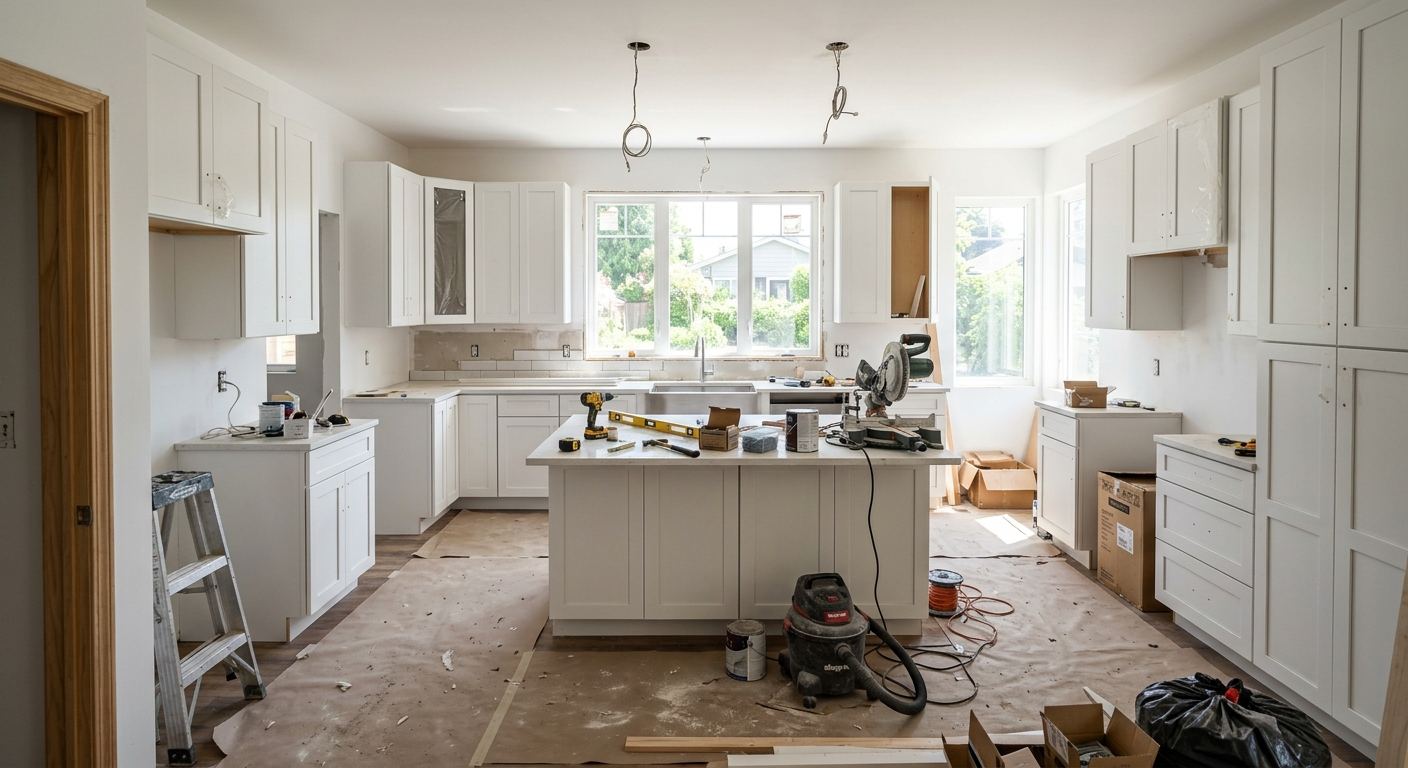
Kitchen renovation options and costs in Espanola
Espanola homeowners usually start their kitchen project by choosing a direction—cosmetic refresh, a mid-range full update, or a higher-end rebuild—because the finish tier is tied closely to what the home is worth and what buyers expect when it’s time to sell. In Espanola, with a median household income of about $78,000 (Statistics Canada, 2021 Census), most renovations land in the “practical upgrades” lane rather than ultra-luxury showpieces. And because 75.9% of local households own their homes and 80.7% of dwellings are single-detached (Statistics Canada, 2021 Census), owners often invest in durable materials that look good for years and handle family use.
In Ontario’s Northeast housing stock, a big share of homes were built before 1981, which can mean older plumbing runs, uneven floors, and dated electrical footprints—small surprises that influence labour time more than the choice of finishes. The region’s climate mainly affects scheduling and site logistics: winter freeze-thaw can slow subfloor fixes and tile work, and some contractors book earlier in the shoulder seasons to avoid delays. Availability can also tighten when multiple trades are needed at once (carpentry, countertop installation, electrical, and tile).
In Espanola, you’ll typically see especially strong trade demand around the residential core near downtown services, where many homeowners are upgrading older kitchens in-place instead of moving. That’s why most bids start with a tiered estimate and then refine the scope before materials are locked in. Below is a realistic comparison of common renovation levels.
| Renovation Tier |
What's Included |
Typical Duration |
Price Range |
| Cosmetic refresh (paint, hardware, new appliances only) |
Cabinet paint/stain or repaint, new hardware, new appliance package, caulking/tune-ups, basic cleaning and touch-ups |
1–3 weeks |
$7,000–$18,000 |
| Mid-range full renovation (new cabinets, counters, sink, tile) |
New semi-custom or stock cabinets, countertop install (often quartz or quality laminate), new sink and faucet, backsplash tile, updated lighting, disposal and minor plumbing adjustments |
4–8 weeks |
$30,000–$55,000 |
| High-end full renovation (custom cabinets, stone counters, island) |
Custom millwork, premium stone countertops, island with seating, upgraded appliance package, full backsplash/tile scope, improved lighting layout, more extensive electrical/plumbing changes |
8–14 weeks |
$60,000–$80,000 |
| Cabinet refacing only (new doors + drawer fronts, same boxes) |
Door/drawer front replacement, new hardware, optional re-lamination of interiors, countertop is typically retained (unless bundled), labour for fit-and-finish adjustments |
2–5 weeks |
$6,000–$20,000 |
| Countertop swap only (laminate to quartz or stone) |
Remove existing top, new countertop fabrication/installation, seam planning, sink cut-out transfer, caulking, minor edge modifications |
1–3 weeks |
$3,500–$15,000 |
| Backsplash tile installation only |
Tile removal/prepare as needed, tile layout and installation, grout/seal where required, clean-up and caulk at transitions |
1–2 weeks |
$2,500–$12,000 |
Prices are estimates only and vary by project scope, site access and material selection.
What affects the price of kitchen renovation in Espanola
Even when two homeowners ask for the “same” kitchen, quotes in Ontario’s Northeast can differ by 30–50% because the scope details aren’t identical and because different trades price risk differently. Labour calendars, lead times for cabinetry and stone, and how much drywall, flooring, and electrical/plumbing work gets uncovered all swing the final number. That’s why a clear scope and itemised allowances matter.
Local home values and median income typically influence finish tier far more than climate does. In higher-value markets, homeowners more often choose quartz or stone counters and semi-custom cabinetry because it’s easier to recoup value on resale. In more modest budgets, laminate counters and stock cabinetry keep the total spend closer to the feasible range—often paired with updated backsplash and lighting. In Espanola, many kitchens are in older homes (79.0% built before 1981, Statistics Canada, 2021 Census), so hidden work is common. Older supply/drain lines and dated wiring can mean added labour even if you’re staying “mid-range.”
Here are a few concrete examples that routinely raise or lower cost in the Espanola area:
- If your kitchen layout needs a new venting path or a gas appliance adjustment, the project can move from a countertop swap ($3,500–$15,000) into a full mid-range renovation range ($30,000–$55,000) because of added licensed-trade labour and permit steps.
- If the subfloor is out of level, tile backer and cabinet shimming can add time; that’s common in pre-1981 homes where settling may have occurred.
- If you replace only the counters and keep cabinetry in place, you avoid demo-heavy labour and keep costs closer to the countertop band; but if you discover warped cabinet boxes during removal, the scope grows quickly.
No matter the finish level, layout changes—moving a sink, adding an island, or relocating a gas line—create the biggest unpredictability because they trigger demolition, rough-in adjustments, inspection requirements, and rework risk.
| Price Factor |
Why It Matters |
Cost Impact |
| Cabinet tier — stock vs. semi-custom vs. fully custom millwork |
Higher tiers increase material quality, options for storage and finishing, and time for measuring and fine alignment |
Low to high swing; often the biggest driver of cabinet-and-install labour |
| Countertop material — laminate vs. quartz vs. granite vs. stone |
Material cost and fabrication complexity affect both price and lead time; seams and edge profiles change labour |
Laminate keeps projects closer to the lower end; quartz/stone pushes toward mid/high |
| Layout change — wall removal, island add, plumbing/gas move |
Triggers demolition, structural considerations, new rough-ins, and more inspections |
Can add major costs regardless of cabinet tier |
| Appliance package tier — builder vs. mid-range vs. pro-grade |
Pro-grade units cost more and may require dedicated power/venting specs |
Moderate to large depending on electrical/venting changes |
| Flooring — refinish existing vs. full replacement |
Kitchen renos often expose floor damage; new flooring extends demo, underlayment and finish time |
Usually moderate; increases if subfloor repairs are needed |
| Backsplash — ceramic tile vs. marble vs. full-height slab |
Premium materials increase cutting complexity, weight handling and sealing requirements |
From manageable add-ons to high-end escalations |
| Electrical — new circuits for island, under-cabinet lighting |
Electrical work must follow code and inspection; more outlets/lighting increases labour and materials |
Common “hidden” cost in layout upgrades |
| Permit fees and licensed trade requirements |
Permits and inspections add administrative time and licensed-trade scheduling |
Direct cost plus scheduling risk |
Permits & regulations in Ontario
In Ontario, cabinet and countertop swaps usually do not require permits when you’re keeping plumbing, gas, and electrical locations the same. For example, replacing cabinets in-place, installing new laminate or quartz counters, or updating a backsplash typically falls into the “no permit” category.
Permits and licensed trades are commonly required when you change the systems—not just finishes. That includes moving plumbing supply or drain lines, relocating a sink, relocating a stove or cooktop, and doing any gas work that changes the installation. Removing a load-bearing wall, adding an island that changes venting/rough-ins, or adding electrical circuits (such as new outlets and dedicated island lighting circuits) also typically requires permits and inspections. Gas work must be performed by a licensed gas fitter, and electrical work by a licensed electrician, with the proper inspections completed.
For homeowners in Espanola, verify before work starts:
- Ask for the contractor’s Ontario licence details (as applicable) and confirm which licensed trades will be on site.
- Request certificates of insurance and verify general liability limits.
- Confirm WSIB/WCB coverage (clearance letter or proof of account coverage, depending on the situation).
- Require the permit responsibility to be written into the contract—who pulls it, who pays for it, and who schedules inspections.
Then, keep everything in writing: the scope that triggers permits, the inspection plan, and the timeline impact. This prevents surprise delays and protects your project budget.
Cabinets, countertops and layout decisions in Espanola
In an Espanola kitchen renovation, three decisions make the biggest difference in both your day-to-day satisfaction and resale appeal: (1) cabinet tier, (2) countertop material, and (3) layout changes. First, cabinet tier: stock cabinets are the fastest and cheapest, semi-custom is the most popular mid-range option because you gain better storage and a wider finish look without fully custom pricing, and custom cabinets deliver the best fit and niche solutions (but at the highest cost and longest lead times).
Second, countertop material: laminate is budget-friendly and fast to install, quartz is the common “sweet spot” for durability and low maintenance, granite/natural stone adds a premium visual but typically comes with higher variation and sealing considerations, butcher block brings warmth but needs maintenance, and marble looks luxurious but is more sensitive to etching.
Third, layout changes: opening up a wall, adding an island, or relocating plumbing/gas creates the best space impact when the kitchen truly needs it—but it’s only “worth it” if the space gain is meaningful. In the Northeast resale market, buyers often respond well to modern work triangles, improved lighting, and a functional island—while still expecting practical, durable surfaces.
How the climate plays in: Ontario winters and indoor humidity swings can highlight drafty details and slow drying for flooring/tiling, so choosing durable, easily maintained surfaces (like quartz) helps you avoid long-term wear. Also, in older homes (79.0% built before 1981, Statistics Canada, 2021 Census), you may discover subfloor or wiring issues that make layout projects more labour-intensive—especially with tile and stone.
Dollar example: if you’re choosing between quartz and laminate for a similar kitchen size, a countertop swap alone can sit in the $3,500–$15,000 band. If your overall mid-range renovation is around $30,000–$55,000, upgrading to quartz often makes sense—because quartz durability reduces future replacement costs. If your budget is tight, keeping laminate but investing in new cabinetry hardware, backsplash tile, and lighting can deliver a bigger “wow” per dollar without pushing the full project into the high-end range.
| Option |
Durability |
Maintenance |
Best For |
Price Range |
| Stock cabinets (big-box) |
Good for everyday use; limited custom sizing |
Low; standard cleaning and hardware upkeep |
Fast timelines and tighter budgets |
$10,000–$18,000 |
| Semi-custom cabinets (local dealer) |
Very good build quality with better storage options |
Low; finish care per manufacturer |
Most homeowners aiming for a mid-range full renovation |
$18,000–$30,000 |
| Custom cabinets (local millwork shop) |
Excellent fit and finish; tailored storage |
Low to moderate; premium finishes may need careful cleaning |
When you want a specific layout and premium look |
$30,000–$50,000 |
| Laminate countertop |
Moderate; can be vulnerable to heat and impact |
Low, but avoid cutting directly and hot pans |
Cost control and quick refreshes |
$3,500–$7,500 |
| Quartz engineered countertop |
High; resistant to staining and daily wear |
Very low; wipe-clean and minimal upkeep |
Busy households and mid-range to high-end renovations |
$7,500–$12,000 |
| Granite / natural stone countertop |
High; strong and heat-tolerant |
Moderate; periodic sealing is often required |
Premium aesthetics with natural variation |
$10,000–$15,000 |
| Butcher block countertop |
Moderate to high; durable but shows wear |
Moderate; regular oiling and mindful heat use |
Home cooks who want warmth and patina |
$6,000–$10,500 |
| Marble countertop |
Moderate; softer surface than quartz/most stones |
Higher; avoid acidic spills and consider sealing |
Low-traffic looks or more formal use |
$11,000–$15,000 |
How to choose a kitchen renovation contractor in Espanola
Choosing the right contractor is less about marketing and more about proof. In Ontario, confirm licensing and coverage up front. Ask for the contractor’s general liability certificate and then verify the workers are properly covered under WSIB/WCB (request a clearance letter or proof of coverage, as applicable). Also confirm which specific licensed trades will do electrical and gas-related work—your renovation should not rely on unlicensed labour for any permit-triggering tasks.
Get 2–3 itemised written quotes, not just a lump sum. The best quotes break out labour and materials (demo, framing, cabinetry install, countertop fabrication/fit, tile setting, electrical/plumbing allowances, and disposal). Ensure the scope clearly lists what is included and what is excluded: permit pulling responsibilities, waste disposal and dump fees, floor protection, and whether patching/painting are part of the work. For homeowners in Espanola, older homes often need subfloor and drywall fixes, so ask how they handle unknowns and whether they provide allowances for contingencies.
Warranty matters too. Look for a workmanship warranty in writing (how long, what it covers) and separate product/manufacturer coverage for cabinets, countertops, and appliances. Ask whether warranties are transferable if you sell the home.
Payment schedules should be conservative. Don’t pay more than about 10–15% upfront. Hold back the final payment until punch-list completion and final clean-up are done, with photos of completed work. Finally, insist on a start date and estimated completion timeline in writing so you can plan around the realities of Northeast winter schedules.
- Provide proof of Ontario coverage: insurance certificate and WSIB/WCB documentation.
- Confirm licensed trades for electrical and gas scopes (names and credentials).
- Use itemised quotes with labour + materials breakdown, not a single “kitchen total.”
- List inclusions and exclusions (demo, patching, disposal, painting, under-cabinet lighting).
- State who pulls permits and who pays permit fees.
- Detail how they handle site conditions in pre-1981 homes (subfloor, wiring, plumbing).
- Confirm lead times for cabinets and countertops and who is responsible if deliveries shift.
- Require a workmanship warranty length and what triggers service calls.
- Ask whether product warranties are registered under your name.
- Use a written payment schedule with a small deposit (10–15%) and a holdback.
- Get a start date and a realistic completion estimate in writing.
- Confirm jobsite protection and dust control plans.
Red flags in Espanola to watch for: (1) contractors who won’t provide insurance/WSIB documentation; (2) quotes that don’t separate cabinet installation from countertop fabrication; (3) promises of a “fixed price” without allowances for older plumbing/electrical surprises; (4) no written warranty terms; and (5) requests for large upfront payments or pressure to sign before scope is clarified.
Frequently asked questions — kitchen renovation in Espanola
Quartz vs granite countertops — which is better?
For most Espanola homeowners, quartz is the easier “better” because it’s engineered for consistency and is very low maintenance. You’ll typically get a smooth, stain-resistant surface that works well for everyday cooking and family use—especially helpful in older homes where cleaning access can be tight. Granite/natural stone looks stunning and is generally heat-tolerant, but it varies by slab and often needs periodic sealing depending on the stone. In practical budgeting terms, a countertop swap can fall in the $3,500–$15,000 band, and quartz commonly sits in the middle of that range versus laminate. If you want the safest durability choice with fewer maintenance tasks, quartz usually wins.
Should I reface or replace my cabinets?
Refacing is a good choice when your cabinet boxes are solid, level, and not water-damaged. In that case, you keep the existing structure and only replace doors and drawer fronts, which usually lands around the cabinet refacing band of $6,000–$20,000. Replacement is the better route when boxes are warped, you need major storage redesign, or you’re planning layout changes that will involve rework anyway. Because many Espanola homes are older (79.0% built before 1981, Statistics Canada, 2021 Census), I often see refacing work well only after a site check confirms the boxes are truly straight and dry. If you’re staying near a mid-range budget ($30,000–$55,000), refacing plus quartz or updated lighting can be a strong value combo.
Do I need a permit for a kitchen renovation in Ontario?
Often, no—if you’re only changing finishes like cabinets in place, new countertop installation, or a backsplash update. In Ontario, permits typically become relevant when you move plumbing supply or drain lines, relocate a sink, change gas appliance connections, remove a load-bearing wall, or add new electrical circuits (for example, outlets and island lighting circuits). Gas work must be done by a licensed gas fitter, and electrical by a licensed electrician, with inspections required. The key in Espanola is to confirm permit responsibility in your contract before work begins. A credible contractor will clearly state which items trigger permits and how inspections will be scheduled so you don’t get stuck mid-reno.
What's the ROI on a kitchen renovation?
ROI depends on scope, finish tier, and how well the renovation aligns with buyer expectations in your area. In a market like Espanola, where many residents are homeowners (75.9% own, Statistics Canada, 2021 Census) and most dwellings are single-detached, durable updates tend to be valued. Mid-range full renovations that focus on cabinets, countertops, sink fixtures, and backsplash typically perform better than purely cosmetic work when the kitchen was visibly outdated. If you spend within the full renovation range ($30,000–$55,000) and choose practical finishes—like quartz counters and better storage—buyers can see the value. Ultra-high-end remodels don’t always pay back dollar-for-dollar, especially if the layout changes are excessive for the home’s overall size and buyer target segment.
How do I budget for a kitchen renovation?
Start by selecting a tier and then back into line items. Many homeowners in Espanola do a cosmetic refresh or move into the mid-range renovation band ($30,000–$55,000) for a meaningful transformation: new cabinets, counters, a new sink, and tile. Keep in mind that older kitchens can uncover surprises—plumbing runs, wiring, uneven floors—that push labour time. That’s why itemised quotes with allowances matter. Build a contingency into your plan even with good contractors, particularly in homes built before 1981 (79.0% built before 1981, Statistics Canada, 2021 Census). Also account for winter scheduling impacts on demo, tile and countertop installation lead times, which can affect how long you need temporary kitchen setup.
Can I move my kitchen sink or stove?
Yes, you can move a sink or stove, but it’s not “just carpentry,” and it’s where costs can jump. Moving a sink usually means relocating drain and supply lines, which can trigger permits and requires licensed plumbing work. Moving a stove/cooktop can also involve gas line relocation or venting changes, which must be handled by licensed trades and inspected. In practice, this is one reason layout changes are the most unpredictable expense regardless of whether you choose laminate or quartz. If you’re trying to control budget, consider keeping plumbing locations the same and upgrading cabinets and countertops first. If relocation is essential for function, get a contractor’s written plan for rough-in work, permits, and inspection timing before you finalize your materials.