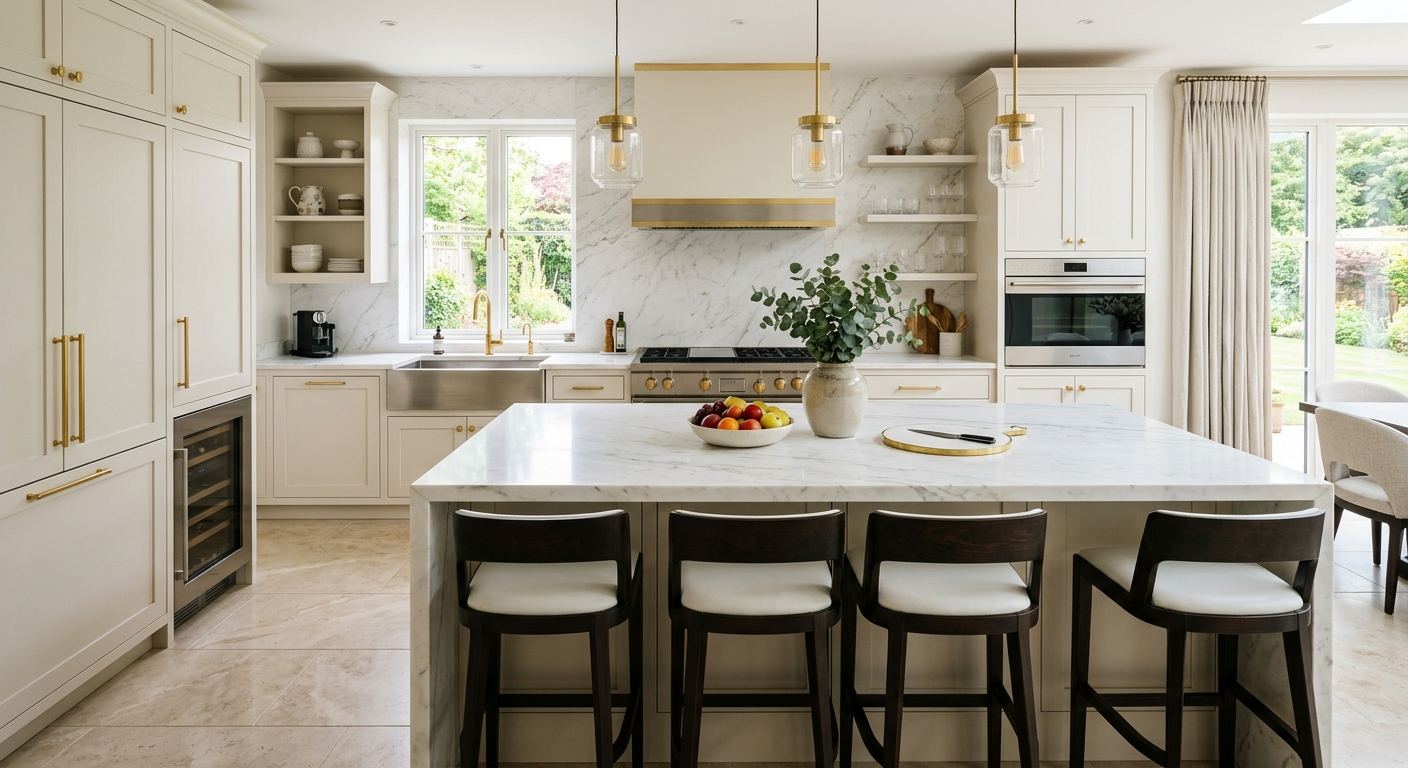
Kitchen renovation options and costs in Tobermory
Tobermory is a smaller community on the Bruce Peninsula (population 1,427, Statistics Canada, 2021 Census), and that shows up in how kitchen renos get planned: many projects start with a practical “refresh” because homeowners want a clean, durable kitchen for daily use and shoreline-season gatherings. In the wider Toronto economic region, the market tends to reward kitchens that look updated and stay that way—owners often choose finishes aligned with resale expectations rather than gambling on budget-only options. While Tobermory’s local spending power is tempered by its size, buyers across the Toronto region still guide what contractors stock and what suppliers recommend.
From a cost perspective, the Toronto area’s pricing pressure is driven more by home values and buyer expectations than by climate extremes. In higher-value pockets, renovations can land around 8–15% of home value, which pushes projects toward custom cabinetry, quartz, and upgraded appliances. In more price-sensitive areas, semi-custom or refaced cabinets with quartz or laminate tops are common because they balance resale value with affordability. Tobermory’s renovation pricing, labour availability, and delivery timelines are also affected by the supply chain realities of servicing a smaller peninsula market: materials often arrive with normal GTA lead times, but scheduling and site coordination can add a bit of slack compared with a downtown Toronto job.
If you’re comparing options, start by picking your “tier” first—then the rest of the budget usually follows. Use the table below to match your goal to a realistic Tobermory budget range.
| Renovation Tier |
What's Included |
Typical Duration |
Price Range |
| Cosmetic refresh (paint, hardware, new appliances only) |
Cabinet paint/stain, hardware swaps, appliance replacement, minor caulking, simple trim touch-ups (no cabinet reconfiguration) |
1–3 weeks |
$25,000–$35,000 |
| Mid-range full renovation (new cabinets, counters, sink, tile) |
New semi-custom or stock cabinets, new countertops, sink + faucet, backsplash tile, floor patching/tiling at interfaces, basic electrical for new fixtures |
4–8 weeks |
$40,000–$70,000 |
| High-end full renovation (custom cabinets, stone counters, island) |
Custom cabinetry, premium quartz/natural stone, island build (including electrical/plumbing coordination if needed), full backsplash/tile detailing, upgraded appliance package, upgraded lighting |
8–14 weeks |
$70,000–$90,000 |
| Cabinet refacing only (new doors + drawer fronts, same boxes) |
Refaced cabinet doors/drawer fronts, new crown/trim details, new hardware, optional interior upgrades, countertop protection if not swapping tops |
2–5 weeks |
$8,000–$35,000 |
| Countertop swap only (laminate to quartz or stone) |
Remove existing top, fabricate and install new quartz/stone (includes edge profile and undermount sink cut-out only if applicable to scope) |
1–2 weeks |
$3,000–$15,000 |
| Backsplash tile installation only |
Tile supply/installation for typical backsplash area, waterproofing/membrane where needed, clean finishing at outlets and corners |
3–7 days |
$2,000–$10,000 |
Prices are estimates only and vary by project scope, site access and material selection.
What affects the price of kitchen renovation in Tobermory
Even when homeowners in Tobermory pick the same cabinet style or countertop look, two quotes for a “similar” kitchen can still differ by 30–50% across Ontario. The biggest reason isn’t usually climate—it’s the mix of finish tier, labour sequencing, and what scope changes are hiding in the walls. In the Toronto economic region, the market pushes many owners toward quartz and semi-custom cabinetry because those choices translate cleanly to resale. In lower-cost-leaning areas, laminate and stock cabinets often dominate because they keep budgets in the mid-range while still achieving a noticeable refresh.
Layout changes add the most unpredictable cost, regardless of whether you’re aiming for mid-range around $40,000–$70,000 or a higher-end build around $70,000–$90,000. Moving plumbing supply or drain lines, relocating a gas stove or range hood, adding an island, or removing a wall all introduce trade coordination, inspection steps, and potential subfloor/wall repairs. Those unknowns are what drive wide quote variation.
Concrete examples from Tobermory jobs: (1) Older peninsula homes often have inconsistent framing or dated venting, which can add time and materials when installing a hood and aligning ducting. (2) If you’re upgrading from laminate to quartz, the stone itself may be the headline, but the real variation comes from edge profiles, sink cut-outs, and the need to correct cabinet level before installation. (3) If you keep your existing cabinet boxes for a refacing, you can control costs—however, if some boxes are out of square or water-damaged near the sink, replacement becomes unavoidable and budgets drift upward.
| Price Factor |
Why It Matters |
Cost Impact |
| Cabinet tier — stock vs. semi-custom vs. fully custom millwork |
Pricing changes per door/drawer complexity, hardware upgrades, internal storage, and how much gets built off-site |
Largest finish driver; can swing a full kitchen by tens of thousands |
| Countertop material — laminate vs. quartz vs. granite vs. stone |
Material cost and fabrication complexity vary widely, and thicker stone/edge details increase install time |
Can push a countertop-only budget from the low thousands to the mid-teens |
| Layout change — wall removal, island add, plumbing/gas move |
Trade coordination, permits, patching, and potentially structural work create variability |
Often the biggest “surprise” category on renovation days |
| Appliance package tier — builder vs. mid-range vs. pro-grade |
Higher-end units cost more and may require different clearances/venting and additional electrical capacity |
Moderate to high impact depending on whether venting/electrical upgrades are needed |
| Flooring — refinish existing vs. full replacement |
Kitchen builds are timing-heavy; matching hardwood/underlayment or replacing tile throughout affects labour |
Refinish saves money; full replacement increases labour and demolition disposal |
| Backsplash — ceramic tile vs. marble vs. full-height slab |
Complex patterns, heavy stone, waterproofing details, and height/coverage change install time |
Backsplash can range from low thousands to high-end premium slabs |
| Electrical — new circuits for island, under-cabinet lighting |
More fixtures and island receptacles increase wiring, boxes, and sometimes panel work |
Can move a project from “minor electrical” to a more expensive upgrade |
| Permit fees and licensed trade requirements |
Work that triggers permits requires scheduling inspections and using licensed trades |
Variable, but it’s a predictable cost that can also add schedule time |
Permits & regulations in Ontario
In Ontario, a lot of kitchen “swap” work can be done without pulling permits, but the moment you alter services or structural elements, the rules tighten. Cabinet and countertop swaps typically do not require a permit because you’re replacing finishes in place. However, if you move plumbing supply or drain lines (sink, dishwasher, or relocating a faucet/drain), relocate gas components (stove/range and certain venting configurations), remove a load-bearing wall, or add new electrical circuits (commonly for an island receptacle, new lighting circuits, or under-cabinet lighting tied into new wiring), permits and licensed trades are usually required.
Gas work must be performed by a licensed gas fitter, and electrical work must be performed by a licensed electrician. Inspections are also part of the process for permitted work, and your contractor should schedule them. Before you sign anything, confirm in writing who is responsible for permits and inspections, and whether the contractor includes permit fees, inspection scheduling, and any required engineering/structural steps.
To verify a Tobermory contractor properly, I recommend: (1) ask for certificate of insurance and confirm coverage limits; (2) request WSIB/WCB proof for the contractor and/or evidence they meet coverage obligations—then check the documentation provided; (3) confirm licensing through Ontario’s online registry for the relevant trade (gas fitter/electrician) when those trades are involved; and (4) verify they provide a clearance letter or evidence of compliance where applicable. Doing this up front prevents delays later when inspections are refused or documentation is missing.
Cabinets, countertops and layout decisions in Tobermory
When you’re planning a kitchen renovation in Tobermory, the best results usually come from making three big decisions early: (1) cabinet tier, (2) countertop material, and (3) whether your layout will change. Cabinets set the tone and storage performance; countertop material sets the day-to-day durability; and layout changes determine how much plumbing/electrical work you’ll need. Toronto-area resale expectations often steer homeowners toward clean, modern lines and finishes that photograph well and resist wear—especially when the project scope supports a long-term stay.
Start with cabinet tier. Stock cabinets are fastest and typically cheapest, but the size and door/style choices are more limited. Semi-custom is the popular mid-range choice because you can dial in common dimensions and storage features without paying full custom millwork pricing. Fully custom cabinets are best when you have an unusual room shape, want a highly integrated hood/island design, or want the tightest fit around older framing.
For countertops, Toronto buyers commonly expect quartz or natural stone because they balance stain resistance with a refined look. Tobermory’s real-world pressure points are spills, seasonal cooking, and humidity swings—so sealing and maintenance routines matter. Laminate is a budget-friendly workhorse, but it can wear at seams and edges over time. Butcher block looks warm and can be maintained with periodic oiling; it’s ideal if you’re comfortable with routine care. Marble is beautiful but needs more attention; if you’re renovating for busy family use, it’s often a “look” choice rather than the most forgiving option.
Layout changes are justified when they create functional space—like opening flow into the dining area, adding an island for seating, or reworking clearances for everyday movement. On pricing, it’s often not the countertop that breaks the budget—it’s the coordination. A quartz upgrade is frequently a smarter jump than redoing cabinetry tier if your cabinet boxes are sound, while an island that requires plumbing/gas/electrical relocation can quickly move a job toward the $70,000+ band.
| Option |
Durability |
Maintenance |
Best For |
Price Range |
| Stock cabinets (big-box) |
Good for standard sizes; longevity depends on box quality and installation accuracy |
Low; avoid moisture exposure at sink area |
Fast timelines and budget-conscious refreshes |
$8,000–$20,000 |
| Semi-custom cabinets (local dealer) |
Better storage options and fit; strong performance when installed level and square |
Low; routine cleaning and hardware tightening as needed |
Most Tobermory homeowners targeting resale-friendly results |
$20,000–$45,000 |
| Custom cabinets (local millwork shop) |
Excellent fit and longevity when built for your room conditions |
Low; durable finishes and precise hardware alignment |
Unusual layouts, integrated islands/hardware detailing |
$45,000–$80,000 |
| Laminate countertop |
Decent day-to-day performance; edges and seams are more vulnerable than stone |
Easy cleaning; avoid prolonged water pooling near seams |
Budget renovations and quick refresh upgrades |
$2,500–$6,500 |
| Quartz engineered countertop |
High stain and scratch resistance; consistent performance across the surface |
Low; wipe clean, avoid cutting directly with hard steel |
Busy households and resale-friendly aesthetics |
$7,000–$12,000 |
| Granite / natural stone countertop |
Very durable; heat resistant and strong surface life |
Periodic sealing and careful maintenance of the surface |
Owners wanting a unique, premium look |
$9,000–$15,000 |
| Butcher block countertop |
Durable but can dent; best with good cutting practices and care |
Requires oiling/maintenance; protect against water exposure |
Warm, traditional styles and meal-prep focused kitchens |
$4,500–$10,000 |
| Marble countertop |
Beautiful but more susceptible to etching/staining than quartz |
Higher maintenance; sealing and quick spill cleanup are important |
Low-traffic show kitchens or if you’re willing to maintain it |
$10,000–$15,000 |
How to choose a kitchen renovation contractor in Tobermory
Choosing the right contractor in Tobermory is mostly about proof: licensing for the trades involved, insurance coverage, and the ability to produce a clear, itemised scope you can compare. In Ontario, confirm that the electrician and gas fitter (when included) are licensed, and ask for their documentation through the contractor’s paperwork. For liability insurance, request a certificate of insurance and make sure the contractor is set up correctly for renovation work. For WSIB/WCB coverage, ask for proof of coverage or a clearance letter where applicable—don’t rely on verbal assurances.
Next, insist on 2–3 itemised written quotes. You want labour and materials broken out (cabinet supply, countertop fabrication/installation, tile labour, electrical scope, plumbing scope), not one lump sum. Read the scope carefully: what’s excluded (old material disposal, patching/drywall, subfloor repairs), is permit pulling included, and who coordinates inspections? Warranty terms matter too—ask for a workmanship warranty length (and whether it covers cabinet install, countertop install, and tile sealing), plus the manufacturer warranty details. Confirm whether any warranty is transferable to a future homeowner if you sell.
For payment schedule, protect yourself: never pay more than 10–15% upfront, keep a holdback until completion, and use milestones tied to measurable progress (demo complete, cabinets set, countertops installed, final trim/caulking done). Finally, require the timeline in writing with a start date and completion estimate—kitchens can pause for countertop fabrication and appliance delivery, so you need those checkpoints stated clearly.
- Verify trade licensing for electrician and gas fitter (where your scope includes electrical or gas).
- Request a certificate of liability insurance and check effective dates.
- Confirm WSIB/WCB coverage documentation (or clearance letter where applicable).
- Get 2–3 itemised quotes with labour + materials breakdowns.
- Ask if permits are included and who pulls them; require it in the contract.
- Confirm disposal is included (demo waste, old cabinets, packaging, tile debris).
- Clarify exclusions: drywall patching, subfloor repairs, paint touch-ups, and matching trims.
- Review the cabinet installation method (shimming/leveling process, anchoring details).
- Ask who is responsible for site measurements and confirming countertop templates.
- Confirm countertop fabrication timeline and contingency if the product arrives late.
- Check warranty terms: workmanship duration, manufacturer coverage, and transferability.
- Require a written schedule with milestone dates, not just a single completion date.
In Tobermory, red flags I see when homeowners get burned include contractors who won’t provide itemised quotes, vague scope language around permits and disposal, refusal to show proof of insurance/WSIB/WCB documentation, and payment requests that exceed 15% upfront. Another warning sign is a rushed timeline without allowance for countertop fabrication, and workmanship warranties that are “verbal” or not specific to install quality.
Frequently asked questions — kitchen renovation in Tobermory
What's the best countertop material for a busy Tobermory kitchen?
For most busy Tobermory households, quartz is usually the best balance of durability and low maintenance. It resists staining and holds up well to everyday cooking spills, which matters when you’re hosting during peak seasons and using the kitchen more intensely. If you’re comparing budgets, a countertop-only swap from laminate to quartz commonly lands around $7,000–$12,000 depending on sink cut-outs and edge details, while a laminate top can be lower. Granite and natural stone are also durable, but they often require periodic sealing and more careful spill management. Marble is beautiful but generally needs more upkeep. I recommend matching the material to your lifestyle: if you want “set it and forget it,” quartz is the safest choice; if you’re willing to maintain stone actively, granite or marble can work.
How do I add an island to my Tobermory kitchen?
Adding an island is achievable in Tobermory, but the approach depends on how your existing services run. If the island stays purely as a seating/breakfast surface with power only (receptacles), you’ll mainly be planning electrical. If you want a sink in the island or a gas cooktop, expect plumbing/gas relocation coordination and likely permits. The cost risk is highest when trades need to open walls, adjust ducting/venting, or correct subfloor levels to get the island perfectly square. In budgeting, an island project can push you from a mid-range full renovation (often $40,000–$70,000) toward the higher end, especially when electrical and plumbing coordination is included. The best first step is to confirm clearance distances and where the island will sit relative to existing countertops and walkways.
How much does a kitchen renovation cost in Tobermory?
In Tobermory, most full kitchen renovations realistically land in the $25,000–$90,000 range, depending on how much you’re changing. A cosmetic refresh is often cheaper, but as soon as you add new cabinets and countertops, you’re typically into the mid-range. Many homeowners targeting a practical upgrade—new cabinets, counters, sink, and backsplash—end up around $40,000–$70,000. Premium cabinetry, stone counters, and island builds tend to move projects toward $70,000–$90,000. If you’re only updating the “look,” cabinet refacing (new doors and drawer fronts) often sits around $8,000–$35,000, and a backsplash-only install can be about $2,000–$10,000. The key is scope clarity: layout changes and moving plumbing or electrical are what most often push budgets upward.
How long does a kitchen renovation take in Tobermory?
Timelines in Tobermory usually depend on cabinet and countertop lead times and how much demolition and trade coordination is required. A cosmetic refresh (paint, hardware, appliance swaps) can often be completed in 1–3 weeks. A mid-range full renovation typically takes about 4–8 weeks, assuming materials are available and the scope doesn’t expand once walls are opened. High-end renovations with custom cabinetry, premium stone, and an island can run 8–14 weeks, largely because fabrication and templating need scheduling. The “real” schedule is also shaped by inspection requirements when permits are needed for electrical/plumbing/gas or structural changes. Your contractor should provide a written timeline with milestones (demo complete, cabinets installed, countertop templating, final trim) so you can plan around countertop and appliance deliveries.
Quartz vs granite countertops — which is better?
“Better” depends on what you value most. Quartz is engineered, so it’s consistent in appearance and generally lower maintenance: it doesn’t need sealing like most natural stones, and it resists staining well for busy cooking routines. Granite is very durable and heat resistant, with natural pattern variation that many homeowners love, but it typically requires periodic sealing and more attention to spills depending on the stone. If you’re purely comparing day-to-day practicality for Ontario households, quartz is often the more forgiving choice. Cost-wise, a countertop swap can land roughly in the $3,000–$15,000 band for many typical projects, but quartz often sits in the mid-to-upper portion when you include fabrication details and sink cut-outs. Granite can be similarly priced but may vary based on slab selection and edge finishing.
Should I reface or replace my cabinets?
Refacing is usually the right call when your existing cabinet boxes are solid, level, and not water-damaged—especially if you’re aiming for a cost-controlled transformation. It replaces doors and drawer fronts and can give you a fresh look without the full demolition of a replacement job. Cabinet refacing commonly falls around $8,000–$35,000, which is often more budget-friendly than full replacement. Replacing cabinets makes sense when boxes are out of square, interiors are failing, or you want major layout/storage changes (like new pantries, deeper drawers, or moving heights). In older Tobermory homes, moisture near sinks can be the deciding factor. If there’s swelling or rot, refacing may not last as long, and replacement is the more durable long-term solution. Your contractor should assess box condition before you decide.