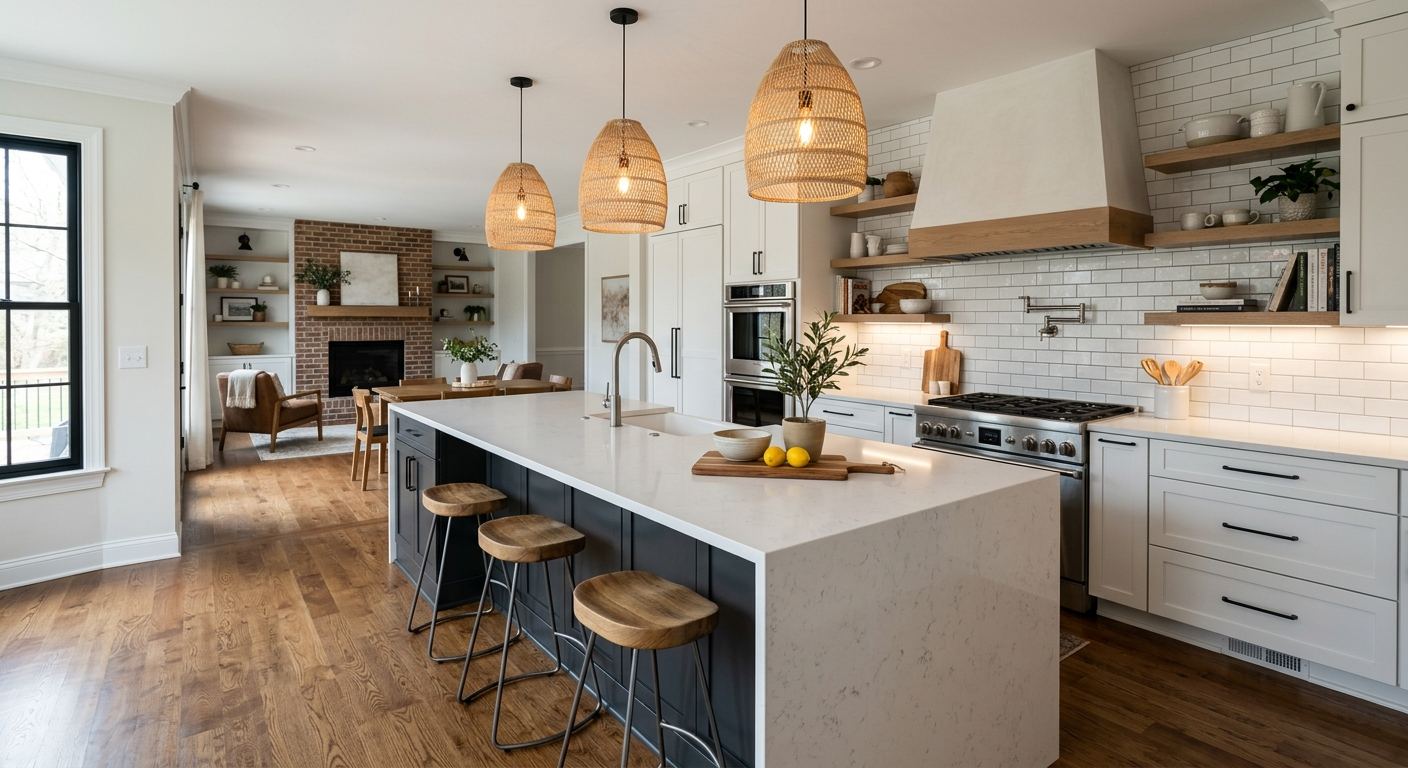
Kitchen renovation options and costs in ByWard Market
ByWard Market is one of Ottawa’s most character-rich neighbourhoods, and that shows up in how homeowners approach kitchen renovations: many want modern function without losing the feeling of the place. According to the 2021 Census, the ByWard Market resident population is 3,063, and that small-but-busy footprint typically means more in-demand contractor scheduling for occupied homes. At the same time, kitchen budgeting in the Toronto economic region is strongly driven by housing values and household purchasing expectations rather than weather—owners in higher-value areas commonly allocate roughly 8–15% of the home value to the kitchen. In practice, that finish expectation pushes many projects toward semi-custom cabinetry and premium countertop selections, even when the footprint stays the same.
Toronto’s market dynamics also affect pricing and timing. Labour and material supply are relatively consistent across the GTA, but demand concentrates on popular design periods, and the trades you’ll see most often—cabinet installers, countertop fabricators, and electricians—can book out sooner when multiple high-end refurbishments run at the same time. Climate isn’t the main cost driver in Ontario kitchens, but it does influence long-term durability decisions (for example, moisture-resistant materials near sinks and better sealing around tile).
In ByWard Market, trade demand is especially strong around the ByWard/market-adjacent rental and heritage-adjacent streets where homeowners balance resale appeal with workable timelines. If you’re comparing scopes, the tier-based ranges below are a solid starting point before you choose cabinets, counters, and whether you’ll change the layout.
| Renovation Tier |
What's Included |
Typical Duration |
Price Range |
| Cosmetic refresh (paint, hardware, new appliances only) |
Paint, cabinet hardware/knobs, appliance swap, minor caulking, basic cleanup |
1–3 weeks |
$6,000–$20,000 |
| Mid-range full renovation (new cabinets, counters, sink, tile) |
Semi-custom or quality stock cabinets, quartz counters, sink & faucet, backsplash tile, new flooring where needed |
4–7 weeks |
$25,000–$60,000 |
| High-end full renovation (custom cabinets, stone counters, island) |
Fully custom millwork, natural stone (granite/stone), island with upgraded details, enhanced lighting, higher-end finishes |
7–12 weeks |
$65,000–$90,000 |
| Cabinet refacing only (new doors + drawer fronts, same boxes) |
Door/drawer/front replacements, new hardware, ventilation considerations, touch-up and trim work |
2–4 weeks |
$10,000–$25,000 |
| Countertop swap only (laminate to quartz or stone) |
Removal and install of counters, sink cut-outs as needed, new undermount sink hookup (scope permitting) |
1–2.5 weeks |
$3,500–$12,000 |
| Backsplash tile installation only |
Tile install, surface prep, grout/caulk, trim pieces, basic electrical cover detailing |
3–7 days |
$2,000–$8,000 |
Prices are estimates only and vary by project scope, site access and material selection.
What affects the price of kitchen renovation in ByWard Market
In the Toronto economic region, two neighbours can get dramatically different kitchen renovation quotes for the “same” kitchen because pricing tracks closely to home values and household income expectations—finish choices change first, and everything else follows. In higher-value pockets, homeowners more often choose quartz or natural stone and custom or semi-custom cabinetry because the renovation spend is easier to justify on resale (often in the 8–15% of home value range). In more price-sensitive areas around the GTA, many projects stay mid-range with refacing or stock cabinets and better-value surfaces. That’s why you can see quote swings of roughly 30–50% even when the floorplan looks similar.
Layout changes are the biggest unpredictable cost regardless of finish. Removing a wall, adding an island, or moving a gas line/plumbing almost always introduces new framing, subfloor work, electrical updates, and sometimes permits—so labour and coordination costs can rise quickly. For example, in an older Toronto-area home with less modern rough-in locations, moving the sink or dishwasher can add several days and materials beyond a basic countertop/cabinet swap.
Concrete ByWard Market examples of how local conditions shift cost: (1) tighter access or older doorways can increase installation time for tall cabinetry, especially if you’re installing full-height panels; (2) if the home’s electrical panel is near capacity, upgrading circuits for under-cabinet lighting and an island can add cost; and (3) if you’re switching from laminate to quartz, the countertop budget changes substantially—most homeowners budget within a countertop-only band of about $3,000–$15,000, but a full mid-range renovation often sits in the $25,000–$60,000 band because it bundles cabinetry, sink work, and tile.
| Price Factor |
Why It Matters |
Cost Impact |
| Cabinet tier — stock vs. semi-custom vs. fully custom millwork |
Material quality, door styling options, internal organization, and fit/finish |
Often the largest swing within a “full” budget; can shift projects by tens of thousands |
| Countertop material — laminate vs. quartz vs. granite vs. stone |
Material pricing, fabrication complexity, and edge/profile options |
Typical countertop installs range from lower-cost laminate up to premium stone |
| Layout change — wall removal, island add, plumbing/gas move |
More demo, structural considerations, and licensed trade coordination |
Highly variable; frequently pushes projects into higher renovation bands |
| Appliance package tier — builder vs. mid-range vs. pro-grade |
Ventilation requirements, fit tolerances, and electrical/gas rough-in expectations |
Can add several thousand dollars and extend lead times |
| Flooring — refinish existing vs. full replacement |
Subfloor condition and whether cabinets must sit on new levels |
Refinishing saves; full replacement typically adds cost and schedule time |
| Backsplash — ceramic tile vs. marble vs. full-height slab |
Tile quantity, waterproofing prep, and premium surface handling |
Can move from a couple thousand to a higher-end installation depending on coverage |
| Electrical — new circuits for island, under-cabinet lighting |
Arc fault/GFCI requirements, wire runs, and panel capacity |
Often a mid-project add-on; costs rise with complexity |
| Permit fees and licensed trade requirements |
When plumbing/gas/electrical changes trigger inspections and paperwork |
Generally adds predictable administrative cost, but can affect timing |
Permits & regulations in Ontario
In Ontario, many “surface-level” kitchen jobs don’t trigger permits—for example, cabinet and countertop swaps typically do not require a permit because you’re not changing the building’s systems. Where permits and licensed trades come in is when you move plumbing supply or drains, relocate gas work (like a stove/range or gas-fired range hood venting), remove a load-bearing wall, or add new electrical circuits (common for islands, new lighting zones, or upgraded receptacle layouts). For gas-related work, it must be done by a licensed gas fitter, and electrical work must be completed by a licensed electrician, with required inspections.
For a homeowner in ByWard Market, the safest way to verify compliance is to make it a checklist before signing: (1) ask for the contractor’s licence number(s) for any licensed trades involved; (2) request proof of liability insurance and confirm whether they carry WSIB/WCB coverage for their employees (or your preferred equivalent arrangement); (3) verify the information matches what’s provided in writing; and (4) confirm which party is pulling permits and scheduling inspections.
Step-by-step: check the relevant Ontario online licence registry for the trade(s) that will perform gas/electrical work, then review the certificate of insurance for coverage limits and effective dates. Finally, ask for a written clearance or coverage confirmation where applicable and keep copies with your contract, because permit responsibility belongs in the written scope—not in a verbal assurance.
Cabinets, countertops and layout decisions in ByWard Market
When you’re planning a ByWard Market kitchen renovation, there are three decisions that determine most of your cost, durability, and resale confidence: cabinet tier, countertop material, and whether you’ll change the layout. In the Toronto resale market, buyers consistently respond to clean door styles, strong storage, and surfaces that look current but can handle everyday use. That’s why cabinet choices usually start with stock for speed, move to semi-custom for the best balance of options and price, and go fully custom only when you need non-standard sizing, built-ins, or distinctive layouts.
Countertops follow the same pattern. Laminate is budget-friendly and fine for low-volume households, but quartz is the most common upgrade because it resists staining and wipes clean with minimal fuss. Granite and other natural stones deliver premium look and heat resistance, but they can be more sensitive to maintenance habits. Butcher block is warm and repairable, yet it needs ongoing care to stay looking sharp—especially around sinks.
Layout changes—open-concept wall removal, adding an island, or relocating plumbing/gas—are justified when the space gain improves how people actually move through the kitchen. For example, if you’re considering an island, upgrading electrical for an island receptacle and under-cabinet lighting often costs more up front, but it can add functional value buyers notice. As a dollar reality check: moving from laminate to quartz might add a few thousand dollars within the countertop band (commonly $3,000–$15,000 depending on size and edges), and that’s often a better ROI than trying to “save” by choosing low-cost cabinets if your cabinet boxes and layout are still dated.
Seasonally, Ontario homes face freeze-thaw stress and indoor humidity swings, so I prioritize water-resistant materials near sinks and well-sealed tile junctions. The Toronto market also means lead times matter; choosing a standard cabinet line can keep your schedule predictable compared to highly custom runs.
| Option |
Durability |
Maintenance |
Best For |
Price Range |
| Stock cabinets (big-box) |
Good durability with standard finishes; limited sizing flexibility |
Low maintenance; hinges and drawer slides depend on brand |
Fast timelines and straightforward layouts |
$8,000–$22,000 |
| Semi-custom cabinets (local dealer) |
Very solid build; better interior organization and fit options |
Low to moderate; keep hardware clean and adjust slides as needed |
Most homeowners targeting a modern look with strong resale |
$15,000–$35,000 |
| Custom cabinets (local millwork shop) |
Highest durability and precision fit; tailored storage |
Low maintenance; crafted components hold up well with normal care |
Unique spaces, custom hood/trim details, and built-in features |
$30,000–$60,000 |
| Laminate countertop |
Decent for everyday use; can chip or peel if mishandled |
Wipe clean; avoid prolonged heat exposure and standing water at seams |
Budget-focused refreshes and rental-friendly updates |
$3,000–$8,000 |
| Quartz engineered countertop |
High durability; excellent stain resistance |
Low maintenance; wipe with mild soap and water |
Modern resale look with practical everyday performance |
$6,000–$15,000 |
| Granite / natural stone countertop |
Very strong; natural variation adds character |
Often requires periodic sealing depending on the stone |
Premium look and heat resistance for active households |
$8,000–$18,000 |
| Butcher block countertop |
Repairable; susceptible to cuts and moisture if neglected |
Regular oiling and careful water management near sinks |
Warm aesthetic and families who’ll maintain the surface |
$4,500–$12,000 |
| Marble countertop |
Elegant but softer; can scratch and etch with acidic spills |
Higher maintenance—sealing and careful cleaning routines |
Display-forward kitchens where homeowners will maintain surfaces |
$10,000–$25,000 |
How to choose a kitchen renovation contractor in ByWard Market
Choosing the right contractor in ByWard Market is mostly about verification and clarity. Start by confirming Ontario licensing for any trade that will touch gas or electrical: ask for licence details for the specific scope they’re performing and request proof of liability insurance. For coverage, ask whether they carry WSIB/WCB for employees (or provide the clearance/coverage information that applies to their structure). If a contractor can’t produce documents quickly, that’s a major scheduling and liability risk—especially when permits and inspections are involved.
Next, get 2–3 itemised written quotes. You want a labour-and-materials breakdown, not a single lump number—cabinet supply and install, countertop fabrication and install, tile preparation, electrical scope, plumbing changes, and disposal should each be identifiable. Read exclusions carefully: ask whether permits are included, who pulls them, whether demolition and debris removal are included, and what happens if your existing walls are damaged once cabinets come off.
Warranty matters too. Confirm workmanship warranty length, product/manufacturer warranty coverage, and whether warranties are transferable if you sell the home. Payment schedules should be conservative: never more than about 10–15% upfront, and keep a holdback until key milestones are completed and inspected where required. Finally, require a written start date and a completion estimate—kitchen renovations can stretch if orders are delayed, but good contractors protect the schedule with realistic lead-time planning.
- Ask for licence numbers relevant to gas/electrical scope and match them to the individuals named on the project.
- Request certificates of liability insurance and confirm coverage limits and effective dates.
- Provide WSIB/WCB clearance/coverage confirmation in writing.
- Get 2–3 itemised quotes (labour + materials line items).
- Confirm what’s included: demolition, site protection, disposal, and patching/finish carpentry.
- Clarify permit responsibility: who pulls permits, who schedules inspections, and what’s included in the price.
- Verify product specs: cabinet line, countertop thickness/profile, tile type, and underlayment details.
- Ask how they handle damaged subfloors, water staining, or hidden wiring once walls are opened.
- Confirm warranty terms: workmanship duration, manufacturer warranty, and transferability.
- Set payment milestones tied to measurable stages; keep 10–15% as holdback until closeout.
- Require a written timeline with lead-time assumptions for cabinets and countertops.
- Check references for recent kitchens in similar ByWard Market-style homes (older builds, tight access, occupied sites).
Red flags I see with kitchen renovation contractors in ByWard Market include: refusing to provide insurance/WSIB documentation upfront, quoting everything as a lump sum without a scope breakdown, vague warranty language (“warrantied” without dates or transfer terms), pushing for large upfront deposits beyond 10–15%, and not documenting who pulls permits when plumbing/electrical/gas changes are part of the plan.
Frequently asked questions — kitchen renovation in ByWard Market
What's the most cost-effective kitchen upgrade?
The most cost-effective kitchen upgrade in ByWard Market is usually a countertop-and-hardware refresh done as a “contained scope,” because it delivers a noticeable look change without opening walls. If your cabinets are structurally sound, cabinet refacing and a backsplash tile install can be smarter than replacing everything. In budget terms, a backsplash installation only commonly lands around $2,000–$8,000, and a countertop swap only can be in the $3,500–$12,000 range depending on whether you move from laminate to quartz. That approach keeps labour concentrated and avoids the biggest unpredictable cost—layout changes with plumbing or gas moves. If you do one upgrade first, prioritize surfaces that can handle Ontario’s day-to-day humidity and sink splash, then upgrade appliances if they’re outdated.
Custom vs stock cabinets — is custom worth it?
Custom cabinets can be worth it in Ontario when you have a layout that needs non-standard sizing, a distinctive hood/trim detail, or a storage plan you can’t achieve with standard sizes. In ByWard Market, where you may see older or tighter rooms, custom can solve fit issues cleanly and reduce the “gaps” that buyers notice at resale. That said, if your kitchen is fairly conventional, stock or semi-custom usually offers the best ROI. Stock cabinets are often the fastest and typically sit in a lower budget band (commonly $8,000–$22,000 for cabinets), while custom can move upward to $30,000–$60,000 because millwork, timelines, and finishing are higher. If you’re aiming for a mid-range full renovation, staying within the $25,000–$60,000 scope is more realistic unless the layout forces custom work.
How do I choose a kitchen contractor in ByWard Market?
Start by verifying Ontario compliance and paper—licensing for the trades involved (especially gas and electrical), liability insurance, and WSIB/WCB coverage. Ask what specific contractors will do the gas/electrical scope, then confirm their licence details match the jobsite team. Next, request 2–3 itemised written quotes so you can compare labour and materials separately. A good quote will clearly list what’s included for demolition, disposal, permit pulls (if needed), and any allowances for repairs once cabinets are removed. Finally, check workmanship and product warranty terms—how long the contractor stands behind the install and whether the manufacturer warranty is transferable. In ByWard Market, I also recommend asking for references on occupied-site renovations, because schedule discipline is critical when you’re renovating close to living areas.
What order do kitchen renovation steps happen in?
In ByWard Market kitchens, a typical order is: planning and measurements, then demolition and rough-in preparation, followed by installing new cabinetry, then counters, then tile, then final electrical/plumbing trim, and lastly finish work and hardware. If you’re moving plumbing supply/drain lines, relocating gas, or adding new electrical circuits, the licensed trades usually complete their rough-in before cabinets and countertops go in. After demo, the contractor confirms subfloor and wall conditions—water damage or loose framing needs repair before cabinetry is anchored. Next comes cabinet installation, then countertop templating/fabrication and install. Backsplash tile typically lands after counters are set so the tile can be scribed to a clean line. Finally, you finish with caulking, hardware installation, appliance hook-ups (as applicable), and a punch-list walk-through.
Can I live at home during a kitchen renovation in ByWard Market?
Often you can, but it depends on scope and how your contractor manages site protection. A cosmetic refresh or a cabinet refacing project is usually easier to live with because it’s shorter and less destructive. For bigger projects—especially full renovations that include changing layout, plumbing, or electrical—living at home can still be possible, but you’ll typically use a temporary cooking setup and expect louder work for several weeks. In ByWard Market, homes can be tight for staging materials, so good contractors bring dust control, cover floors, and plan safe routes. Communicate early if you need access to a second sink or a temporary electrical outlet. As a rule of thumb, a contained “countertop swap only” or backsplash-only job is the easiest live-at-home option (often priced in the smaller bands), while a full renovation tends to require more disruption.
Should I renovate my kitchen before selling in ByWard Market?
Renovating before selling in ByWard Market can make sense when your changes improve function and buyer confidence without overbuilding the finish tier. Toronto-area buyers often expect modern countertops (frequently quartz) and updated hardware, so smaller, high-impact upgrades can work even in mid-range budgets. If your goal is resale, prioritize projects that deliver broad appeal: clean cabinetry lines, a durable countertop, and a refreshed backsplash. A full mid-range renovation commonly falls in the $25,000–$60,000 band, while higher-end full renovations often approach $65,000–$90,000—those higher budgets can pay off only if the rest of the home supports that tier. Also consider timing: long countertop or custom cabinet lead times can delay listing. If you’re unsure, start with the upgrade that gives the biggest visible improvement per dollar, then reassess.