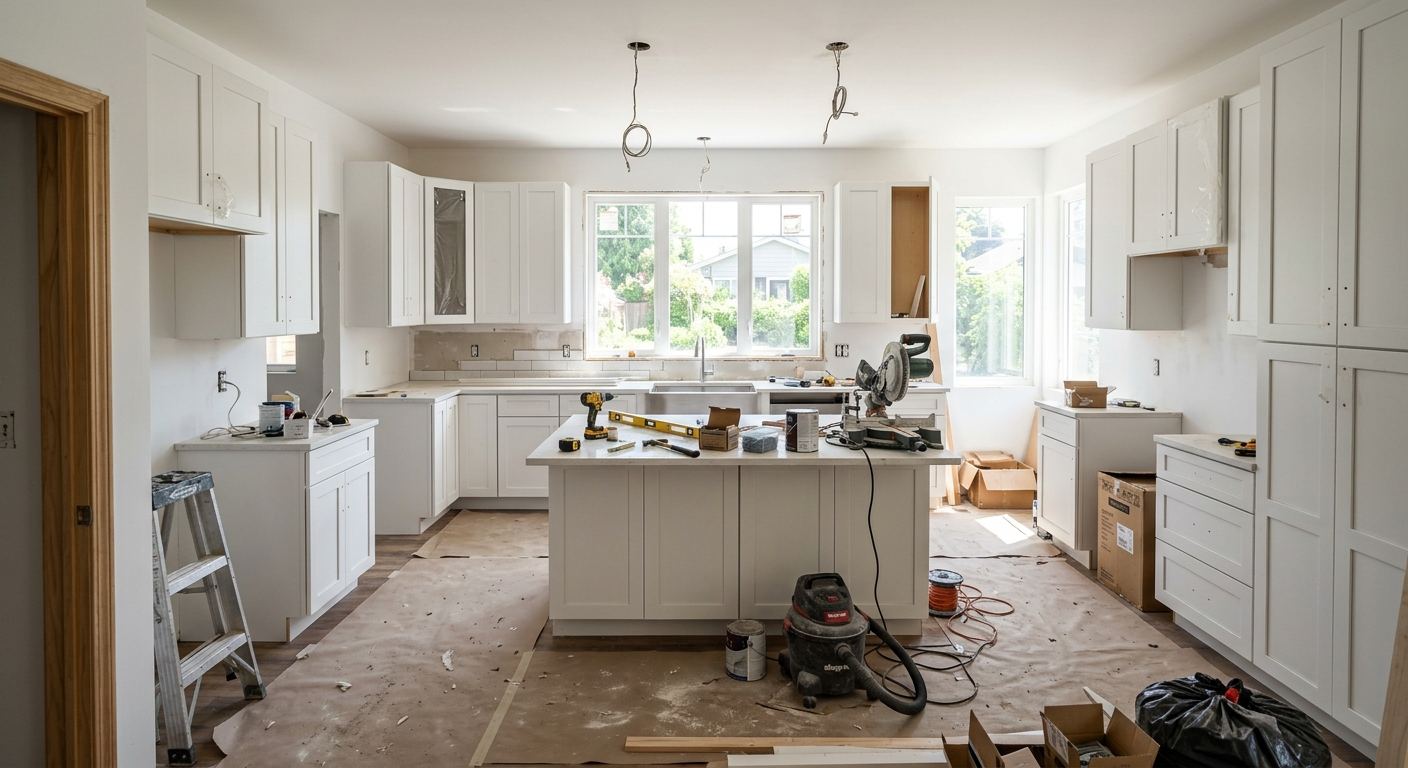
Kitchen renovation options and costs in Central
Kitchen renovations in Central, Ontario vary a lot by finish expectations because the local market reflects what buyers are willing to pay for updated kitchens. With a population of 12,650 in Central (Statistics Canada, 2021 Census), most work is tied to the broader Toronto economic region where kitchen spend often tracks closely to home values and household incomes—meaning higher-value pockets commonly invest a larger share of property value into millwork and surfaces. In Toronto-area homes, it’s common to see homeowners push toward custom cabinetry, quartz, and upgraded appliances, while more price-sensitive projects lean on stock or refaced cabinets paired with laminate or good-value quartz.
Ontario’s “cost engine” is less about weather and more about trade scheduling and material pricing. Winter demand tends to smooth out (many trades book earlier), but the GTA’s steady resale market means cabinets and counters can still have lead times, especially for custom work. Availability is generally good near major corridors, but island builds, plumbing/gas changes, and electrical upgrades add site sequencing complexity—which is where contractors spend time and where change orders often happen. In Central, the trade is especially busy around established retail and transit-adjacent communities such as Etobicoke and North York (often referred to collectively in conversations as part of the Toronto core/subcore demand), because homeowners there tend to renovate ahead of listing.
Below are realistic budget bands you can use to compare contractor quotes, then we’ll break down what drives the differences from job to job.
| Renovation Tier |
What's Included |
Typical Duration |
Price Range |
| Cosmetic refresh (paint, hardware, new appliances only) |
Prep, paint, new pulls/handles, lighting tweaks, appliance swap (no plumbing/gas moves), basic disposal |
1–3 weeks |
$7,000–$18,000 |
| Mid-range full renovation (new cabinets, counters, sink, tile) |
New cabinet installation (semi-custom or stock), countertops, sink + faucet, backsplash tile, under-cabinet lighting allowance, flooring/trim touches as scoped |
4–8 weeks |
$25,000–$55,000 |
| High-end full renovation (custom cabinets, stone counters, island) |
Fully custom cabinetry, quartz or natural stone counters, island with added electrical/plumbing as needed, upgraded appliance package, full backsplash, more extensive tile/finishing |
8–14 weeks |
$70,000–$90,000 |
| Cabinet refacing only (new doors + drawer fronts, same boxes) |
Remove/replace doors/drawer fronts, reface panels, hardware install, adjust hinges, patch/paint touch-ups, new cabinet lighting allowance |
2–5 weeks |
$8,000–$28,000 |
| Countertop swap only (laminate to quartz or stone) |
Remove old tops (and existing undermount sink/tap reinstallation if scoped), install new quartz/stone, sealing/finishing where required |
1–3 weeks |
$3,000–$15,000 |
| Backsplash tile installation only |
Tile supply allowance, surface prep, grout/seal, caulking at countertop/wall transitions |
5–10 days |
$2,000–$10,000 |
Prices are estimates only and vary by project scope, site access and material selection.
What affects the price of kitchen renovation in Central
Even when two homeowners request the same “new cabinets and countertops” scope in Central, Ontario, quotes can differ by roughly 30–50% across the GTA because contractors price risk and uncertainty differently—especially around layout, subfloor condition, and how many trades have to coordinate. In the Toronto economic region, local home values and household income largely decide the finish tier. In higher-value markets, quartz or natural stone and semi-custom cabinetry are common defaults because the cost is easier to justify on resale. In more cost-sensitive areas, laminate and stock cabinetry dominate because the ROI feels safer and the project can stay within the mid-range bands (for many full renos, that’s typically around $25,000–$55,000 rather than $70,000–$90,000).
Climate matters less than people expect. Central and Toronto’s real impact is indirect: older housing stock may have dated rough-ins, and colder months can slow drying times for patching and coatings, which can affect schedule efficiency. The bigger driver is site condition and permitting. Layout changes—like removing a wall, adding an island, or moving a gas line—are where your quote can jump because they require new framing, venting coordination, and detailed inspections.
Two concrete examples I see in Central projects: (1) an island that’s “just a cabinet run” on paper often becomes plumbing/electrical work under the floor, pushing labour into the high range even if finishes stay mid-tier; (2) swapping laminate for quartz may look straightforward, but if the existing cabinets are not level or the backsplash line isn’t true, contractors spend extra time on shimming, patching, and re-tiling—especially in homes with older walls.
| Price Factor |
Why It Matters |
Cost Impact |
| Cabinet tier — stock vs. semi-custom vs. fully custom millwork |
Material quality, door styles, interior options, and install complexity rise quickly with custom work |
Often the largest swing between mid-range ($25,000–$55,000) and high-end ($70,000–$90,000) renos |
| Countertop material — laminate vs. quartz vs. granite vs. stone |
Pricing, fabrication templates, and installation requirements (seams/edges) change by material |
Can add thousands, commonly moving projects from “budget” to “premium” tiers |
| Layout change — wall removal, island add, plumbing/gas move |
Demolition, structural work, new rough-ins, and more inspections increase labour and schedule risk |
Typically the most unpredictable line item; where change orders often appear |
| Appliance package tier — builder vs. mid-range vs. pro-grade |
Energy features, venting compatibility, and cutout/installation specs vary |
Higher tiers can move you several thousand dollars even with the same cabinetry |
| Flooring — refinish existing vs. full replacement |
Kitchen floors absorb demolition dust and moisture; existing subfloor condition drives patching costs |
Replacement is usually meaningfully more, but can avoid long-term failures |
| Backsplash — ceramic tile vs. marble vs. full-height slab |
Water resistance, special setting/finishing, and layout complexity increase with premium materials |
Can shift a job by thousands; full-height slab is a major premium |
| Electrical — new circuits for island, under-cabinet lighting |
Licensed electrician work, load calculations, and code-compliant placement can’t be improvised |
Often adds notable cost on top of appliances/lighting allowance |
| Permit fees and licensed trade requirements |
Some work triggers permitting and inspections; licensed trades must be scheduled |
Usually a smaller line item, but can affect overall timeline and coordination |
Permits & regulations in Ontario
In Ontario, not every kitchen update needs a permit. Generally, cabinet and countertop swaps (replacing what’s already there) typically do not require permits, and most homeowners can proceed with those scopes without municipal paperwork. However, you will need a permit and licensed trades when you do work such as: moving plumbing supply or drain lines, relocating a sink, changing the location of a dishwasher, relocating or modifying gas appliances (including the stove/range and any gas-related venting or related work), removing a load-bearing wall or doing structural demolition, and adding new electrical circuits (commonly for island receptacles, under-cabinet lighting that needs new feed, or other code-driven power changes).
For a homeowner in Central, here’s how to verify before you sign: (1) ask for the contractor’s Ontario licence details (where applicable) and confirm the licensed trade’s jurisdiction for gas/electrical; (2) request a Certificate of Insurance showing liability coverage and obtain the current expiry; and (3) verify WSIB/WCB coverage documentation for workers performing the work.
Then keep it simple: make sure the contractor clearly states in writing who pulls permits, pays permit fees, and coordinates inspections—because permit responsibility should be contractually assigned, not assumed.
Cabinets, countertops and layout decisions in Central
The three decisions that most strongly shape a Central kitchen renovation are your cabinet tier, your countertop material, and whether you change the layout. In the Toronto resale mindset, buyers often expect a clean, modern look paired with durable surfaces; that’s why cabinet quality and countertop choice tend to correlate with your budget level. Pick cabinets first: stock is fastest and typically cheapest, semi-custom is the most common mid-range choice, and custom is the highest cost but delivers the best fit and storage planning.
Next, decide on counters. Laminate is cost-effective but won’t deliver the same long-term “premium” perception as quartz or stone. Quartz offers a strong balance of durability and low maintenance; it resists staining better than many natural surfaces with the right sealing routine. In a colder Ontario home, consider how your kitchen handles seasonal movement: wood cabinetry and installers’ attention to shimming/leveling matter as much as the countertop material, because uneven bases can stress joints and seams over time.
Finally, decide on layout. Open-concept wall removal or an island add can justify the spend if it improves flow, adds storage, or supports hosting—especially in homes where kitchen visibility to living/dining is a resale selling point. But plumbing or gas relocation is where budgets often balloon, even if the finishes remain “mid-range.” For example, moving a sink and adding an island can push a project out of the typical $25,000–$55,000 band and toward $70,000–$90,000 territory once labour coordination, rough-ins, and finishes are accounted for.
| Option |
Durability |
Maintenance |
Best For |
Price Range |
| Stock cabinets (big-box) |
Solid for day-to-day use, but limited sizes can reduce perfect fit |
Low; standard cleaning, tighten hardware as needed |
Fast timelines and entry budgets |
$8,000–$20,000 |
| Semi-custom cabinets (local dealer) |
Good build quality and better storage options; strong value over time |
Low; follow manufacturer care for finishes and hardware |
Most Central renovations targeting resale-ready results |
$18,000–$35,000 |
| Custom cabinets (local millwork shop) |
Best fit, strongest planning for awkward spaces and full storage |
Low-to-moderate; careful cleaning for specialty finishes |
High-end kitchens and tailored layouts (islands, pantries) |
$35,000–$60,000 |
| Laminate countertop |
Practical for busy kitchens; can chip if impacted strongly |
Easy—avoid harsh abrasives; keep seams clean and dry |
Budget refreshes and rental-friendly upgrades |
$3,000–$7,000 |
| Quartz engineered countertop |
Very durable for everyday cooking; stable and less porous than natural |
Low—normal countertop cleaners; wipe up spills promptly |
Resale-ready kitchens without the sealing routine |
$7,000–$15,000 |
| Granite / natural stone countertop |
Extremely durable; performance varies by stone type and finish |
Moderate—sealing schedule and careful cleaning for longevity |
Premium look where you want natural variation |
$10,000–$20,000 |
| Butcher block countertop |
Durable with proper care; sensitive to water exposure at seams |
Higher—regular oiling and immediate spill wipe-up |
Warm, traditional kitchens and food-prep focused households |
$4,500–$10,000 |
| Marble countertop |
Beautiful but more prone to etching/staining than quartz (varies by use) |
Higher—frequent sealing and gentle, careful cleaning |
Design-led kitchens with lighter wear expectations |
$12,000–$25,000 |
How to choose a kitchen renovation contractor in Central
Choosing the right contractor in Central, Ontario comes down to verification, clarity, and control. First, verify Ontario compliance and coverage: request your contractor’s liability insurance certificate and check it’s current (expiry date visible) and for adequate coverage. Ask for proof of WSIB/WCB coverage for workers. If the project includes gas work or electrical changes, confirm that the licensed trades are properly credentialed and that their certificates/inspections are included in the process. You can also cross-check licensing and good standing through provincial/online registry sources and by reviewing any clearance letters or documentation they provide.
Next, get 2–3 itemised written quotes, not lump sums. You want a labour-and-materials breakdown: demolition, cabinet install, countertop fabrication/installs, tile, electrical, plumbing/gas allowances, disposal, and any permit and inspection fees if applicable. Read the scope carefully: are permits included or extra, is debris disposal included, and are changes handled by change order with written approval?
Finally, protect yourself with scheduling and payments: keep the upfront deposit within 10–15%, and plan a holdback until the job is complete (not just “mostly complete”). Make sure timelines include a start date and a completion estimate in writing, and confirm how the contractor handles cabinet and countertop lead times so you’re not left waiting on materials mid-project.
- Provide a written contract with scope, inclusions, exclusions, and a line-item budget.
- Show proof of liability insurance (certificate of insurance) with current dates.
- Confirm WSIB/WCB coverage for workers on site.
- For gas/electrical work, verify licensed trade credentials and inspection responsibility.
- Request itemised pricing for cabinets, countertops, tile, labour, and site disposal.
- Ask whether permit fees are included and who pulls the permit.
- Confirm which appliances are connected/installed and whether cutouts/venting are included.
- Clarify warranty: workmanship duration and manufacturer warranty terms.
- Ask whether warranties are transferable to the next homeowner (important for resale).
- Set a payment schedule: no more than 10–15% upfront; holdback until close-out.
- Get a written schedule with milestone dates and lead-time assumptions.
- Require written change-order process for electrical/plumbing/layout discoveries.
Concrete red flags I see in Central kitchen projects: (1) quotes that won’t itemise labour vs. materials (everything lumped together); (2) “permit-free” claims despite any plumbing, gas, or electrical relocation; (3) no proof of WSIB/WCB or liability insurance; (4) payment requests that exceed 10–15% upfront or refuse a holdback; and (5) vague timelines like “about a month” with no lead-time plan for cabinets and countertops.
Frequently asked questions — kitchen renovation in Central
Should I reface or replace my cabinets?
In Central, Ontario, refacing is often the best move when your cabinet boxes are structurally sound, level, and not sagging—especially if the layout already works. Refacing typically costs less than a full install, often landing in the $8,000–$28,000 band depending on scope and hardware. Replacement makes sense when boxes are worn, storage is inefficient, or you want major reconfiguration (including new corner solutions, pantries, and improved internal fittings). If you’re planning a full mid-range renovation around $25,000–$55,000, many homeowners choose replacement for a consistent look and to correct any installation issues. Ask your contractor to inspect boxes, hinges, and the wall alignment before deciding—repairs discovered late are where budgets drift.
Do I need a permit for a kitchen renovation in Ontario?
In Ontario, many straightforward cabinet and countertop swaps typically do not require permits, especially when plumbing and electrical points are staying put. Permits are commonly required when you move plumbing supply/drain lines, relocate a sink, change gas appliance locations, remove a load-bearing wall, or add new electrical circuits (for example, additional island receptacles or major lighting wiring). For Central homeowners, the practical step is to confirm permit responsibility in the written contract: who pulls the permit, who pays the fees, and who schedules inspections. Also ensure gas work is done by a licensed gas fitter and electrical work by a licensed electrician. If the contractor can’t clearly map your scope to “permit/no permit,” that’s a sign you should tighten the contract before work starts.
What's the ROI on a kitchen renovation?
Kitchen renovation ROI in Central usually depends on finish tier, layout changes, and how your updates compare to what nearby buyers expect. In the Toronto economic region, higher-value homes often support premium finishes like quartz and custom millwork, and those updates can be easier to justify at resale. That said, the ROI isn’t only about cost—it’s also about avoiding overbuilding beyond your neighbourhood’s pricing reality. Many projects that land in the mid-range full renovation range—commonly around $25,000–$55,000—tend to be easier to “recover” because buyers still view them as credible and functional without expecting luxury millwork everywhere. Structural or utility-heavy changes that push a kitchen into $70,000–$90,000 territory should be justified by clear space gains (like a functional island or improved flow) rather than aesthetics alone.
How do I budget for a kitchen renovation?
Budgeting in Central should start with choosing your tier and then adding allowances for the items most often discovered mid-project. A useful approach is to base your plan on the region’s realistic bands: a full kitchen renovation typically falls between $25,000–$90,000, while cabinet refacing is commonly $8,000–$35,000 and backsplash/tile work can be several thousand depending on material and height. Then add a contingency for surprises like old shutoffs, uneven floors, water-damaged drywall behind the toe kick, or the need for extra electrical receptacles. If you’re considering layout changes (new island, moving gas/plumbing), budget higher because these are schedule and coordination drivers. Finally, request itemised quotes so you can compare apples-to-apples—especially labour, disposal, and whether permits are included.
Can I move my kitchen sink or stove?
Yes, you can move a sink or stove in Central, Ontario, but it’s rarely a “simple DIY-style” change. Moving a sink almost always involves plumbing supply/drain work, which typically requires permits and licensed plumbing work. Moving a stove can be more involved, especially if your range is gas; gas relocation or modifications should be done by a licensed gas fitter with inspection sign-off. If you’re switching from gas to electric (or vice versa), plan for electrical capacity changes and venting considerations—those are common cost drivers. Budget accordingly: utility relocation is usually the main reason a project slides from the $25,000–$55,000 mid-range into higher territory like $70,000–$90,000. Ask your contractor for a clear plan that includes where the lines will run, how they’ll protect finishes, and what the permit/inspection steps are.
What's the most cost-effective kitchen upgrade?
The most cost-effective upgrade in many Central kitchens is usually the one with high visual impact and minimal plumbing/electrical disruption—often a cabinet-focused update. If your boxes are still solid, refacing can be a very efficient path, commonly in the $8,000–$28,000 range, because you transform the look without replacing everything. Pairing that with a countertop swap can also give a “new kitchen” feel without the full structural cost of a remodel. If you’re staying budget-tight, a backsplash installation can be another strong visual upgrade; it’s often priced in the $2,000–$10,000 band depending on tile type and coverage height. The least cost-effective upgrades are usually those that require tearing out finishes and redoing surfaces due to hidden rough-in issues—so it’s wise to start with what you know is in good shape and leave layout moves as the last step.