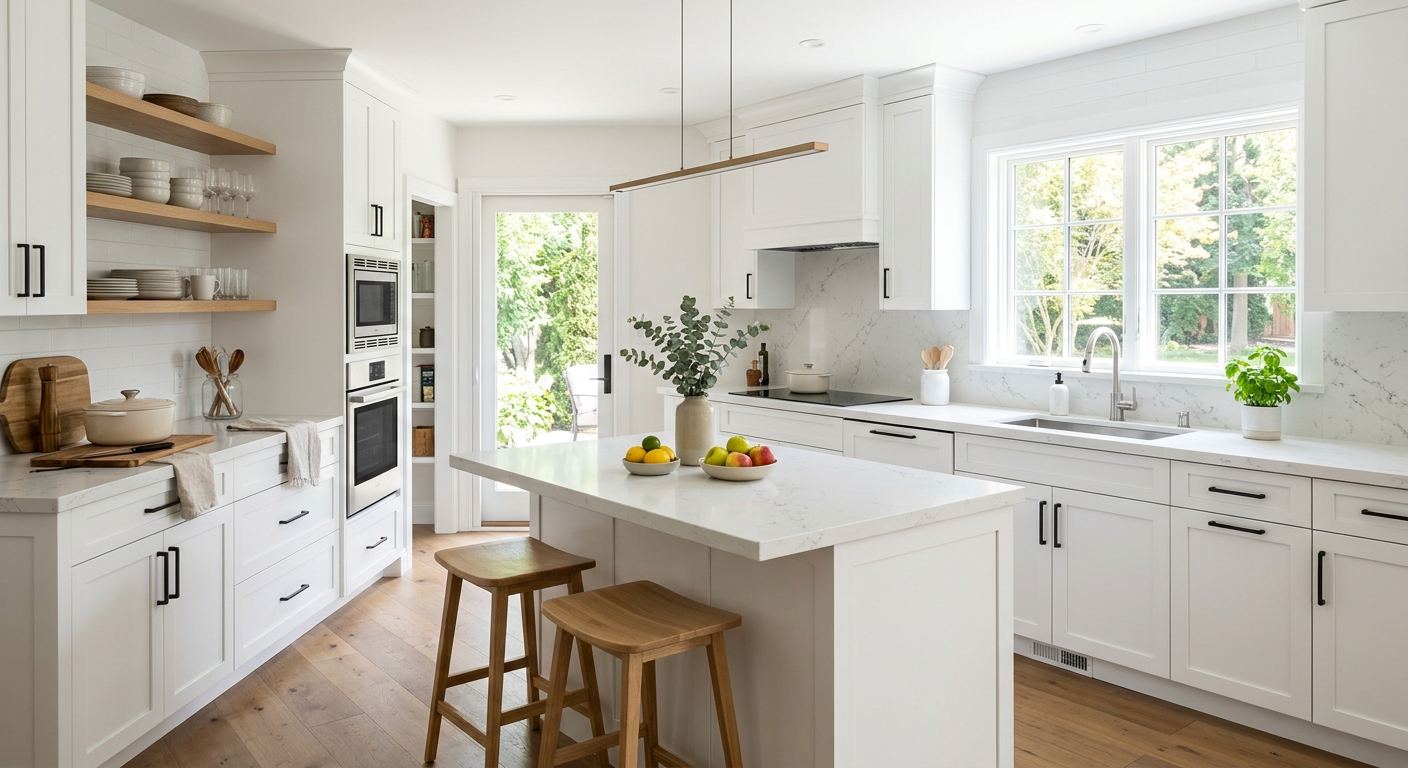
Kitchen renovation options and costs in Alpine
Kitchen renovation in Alpine starts with choosing how big of a change you want, because that decision drives both materials and labour. Alpine is a small community with a population of 3,203 (Statistics Canada, 2021 Census), so most kitchen trades focus on scheduling around limited local capacity and nearby GTA job flow. In the Toronto economic region, homeowners often choose finish levels based more on resale expectations and household buying power than on climate.
That said, the Toronto market’s “value-first” approach matters for budgeting: in higher-value pockets, owners frequently invest roughly 8–15% of their home value into the kitchen, steering projects toward custom cabinetry, quartz, and upgraded appliances. When finishes move up a tier, the labour and fabrication time increase too—especially if you’re adding an island or changing circulation around the sink.
Alpine homeowners also feel pricing pressure from the wider GTA supply chain. During peak renovation months, lead times for cabinet production and countertop templating can extend timelines, while installers may be booked further out. Weather affects logistics more than the interior build itself: winter delivery and curb access can slow material drop-offs, and cold-site conditions can complicate some flooring and caulking work. If your home is near active shopping or commuter routes—where turnover and resale interest are higher—kitchen upgrades tend to be in demand.
Below is a practical comparison of common renovation tiers in Alpine, so you can line up your scope with a realistic budget.
| Renovation Tier |
What's Included |
Typical Duration |
Price Range |
| Cosmetic refresh (paint, hardware, new appliances only) |
Cabinet paint or stain (if selected), new hardware, new appliances (no electrical or plumbing changes), minor touch-ups, countertop cleaning/protective sealing |
3–7 days |
$6,000–$18,000 |
| Mid-range full renovation (new cabinets, counters, sink, tile) |
New semi-custom or stock cabinets, new countertop, sink and faucet, backsplash tile, new ventilation/trim as needed, under-cabinet lighting allowance, floor refinishing or partial replacement |
2–4 weeks |
$25,000–$55,000 |
| High-end full renovation (custom cabinets, stone counters, island) |
Fully custom millwork, quartz or natural stone counters, island with upgraded lighting, premium backsplash (tile + specialty), upgraded appliance package, possible plumbing/gas relocation and electrical upgrades |
4–8 weeks |
$65,000–$90,000 |
| Cabinet refacing only (new doors + drawer fronts, same boxes) |
Door/drawer replacement, new veneer panels, new hardware, alignment adjustments, optional countertop reseal (no full swap), minor touch-up painting |
1–2 weeks |
$8,000–$28,000 |
| Countertop swap only (laminate to quartz or stone) |
Template and install new counters, sink cut-out adjustments as needed, silicone/seal, basic edge finishing, haul-away of existing laminate |
3–10 days |
$3,500–$15,000 |
| Backsplash tile installation only |
Remove/prepare surface, waterproofing where needed, install ceramic tile, grout/seal, caulk detailing at counters and corners |
3–7 days |
$2,000–$10,000 |
Prices are estimates only and vary by project scope, site access and material selection.
What affects the price of kitchen renovation in Alpine
In the Toronto economic region (including Alpine’s wider market pull), it’s common to see the “same” kitchen quoted 30–50% apart between contractors. The biggest driver isn’t climate—it’s finish tier and how much structural or utility work is included. Home values and household purchasing strength shape what buyers expect to see, so higher-value markets push homeowners toward quartz or natural stone counters and semi-custom cabinetry. When that happens, labour time rises (custom framing, more detailed carpentry, more fabrication coordination), and the project budget moves accordingly into the $80k+ territory for full, high-end builds. In more price-sensitive segments, many homeowners keep budgets in the mid-range by using stock or refacing options and laminate or mid-tier quartz tops.
Local cost swings in Alpine are also influenced by what trades can fit into the schedule. If you’re trying to start quickly, installers may prioritize simpler scopes, while complex layouts—like removing a wall or adding an island—often require longer lead times and additional site coordination. These changes add the most unpredictable cost regardless of finish level because you’re not just swapping surfaces; you’re altering how plumbing, electrical, and ventilation connect.
Concrete examples we see in Alpine: (1) an island add with a sink or dishwasher often drives electrical and plumbing costs into the mid-range to high-end band (commonly pushing the full kitchen toward $55,000–$90,000 depending on cabinet and stone tier); (2) upgrading from laminate to quartz can move a countertop-only portion into the $3,000–$15,000 range depending on slab size, edge profiles, and cut-outs; (3) replacing a worn subfloor in an older home can turn a “simple tile” line item into a longer, higher labour scope due to prep and level correction. Housing age can matter—more older kitchens need rework before new counters and cabinets sit properly.
| Price Factor |
Why It Matters |
Cost Impact |
| Cabinet tier — stock vs. semi-custom vs. fully custom millwork |
Different construction tolerances, hardware options, and door styles change material and labour time. |
~20–55% of total kitchen labour/material spread |
| Countertop material — laminate vs. quartz vs. granite vs. stone |
Materials vary in cost per slab, edging options, and fabrication complexity. |
~$3,000–$20,000 swing depending on size and edges |
| Layout change — wall removal, island add, plumbing/gas move |
Utilities relocation and structural considerations introduce permits, inspections, and trade coordination. |
Often the largest “unknown” cost; can add $10,000–$30,000+ |
| Appliance package tier — builder vs. mid-range vs. pro-grade |
Power/venting needs, fit & finish, and installation complexity increase with tier. |
~$2,000–$12,000+ spread |
| Flooring — refinish existing vs. full replacement |
Removal, subfloor prep, and matching transitions can expand scope. |
~$1,500–$8,000+ |
| Backsplash — ceramic tile vs. marble vs. full-height slab |
Waterproofing, cutting, and material density affect labour and waste. |
~$2,000–$10,000+ depending on coverage |
| Electrical — new circuits for island, under-cabinet lighting |
Additional outlets, lighting runs, and panel work increase electrician time. |
~$500–$5,000+ for modest adds; more for major changes |
| Permit fees and licensed trade requirements |
Permits and inspections add administrative time and licensed labour coordination. |
Typically hundreds to several thousand, depending on scope |
Permits & regulations in Ontario
In Ontario, cabinet and countertop swaps typically do not require permits. If you’re replacing cabinets in the same footprint and swapping countertops without moving plumbing or venting, most projects can proceed as a contractor-led renovation without permit approvals. However, several common kitchen tasks do trigger permits and licensed trades—especially when utilities or structure change.
Work that typically requires permits and licensed trades includes: moving plumbing supply or drain lines (sink, dishwasher, or bar/prep lines), relocating gas appliances or making changes to gas piping (including gas stove/range changes and certain venting-related work), removing a load-bearing wall or doing structural changes, and adding electrical circuits (new outlets for an island, upgrading to accommodate a new range/hood, or adding substantial under-cabinet lighting runs that require new circuiting). Gas work must be done by a licensed gas fitter, and electrical work by a licensed electrician, with inspections as required.
For an Alpine homeowner, the best verification process is straightforward: first, ask your contractor for their Ontario business registration details and licence evidence as applicable for their trade scope. Next, request a certificate of insurance (liability) and confirm WSIB/WCB coverage (workers’ compensation) for anyone working on-site. Keep copies in your project binder. Finally, ensure the written contract states who is pulling which permits—responsibility for permits should be explicit before you sign. This protects you if the scope changes or inspections uncover hidden issues in older housing stock.
Cabinets, countertops and layout decisions in Alpine
The three most consequential decisions in a kitchen renovation in Alpine are cabinet tier, countertop material, and whether you change the layout. Cabinet tier sets how quickly the project moves and how well the kitchen fits your space: stock cabinets are fastest and most predictable, semi-custom is the most popular “sweet spot,” and custom cabinets deliver the best fit but demand more design time and fabrication coordination. For countertops, laminate is budget-friendly and durable for everyday use, while quartz and natural stone are the resale-friendly choices many GTA buyers expect—particularly where kitchen updates can represent a meaningful share of home value. Those materials also tolerate Toronto-area temperature swings and everyday cooking better than lower-tier alternatives, which matters during cold storage seasons and winter heavy cooking.
Layout changes are where budgets can jump. Removing a wall or adding an island can justify the cost when it improves traffic flow and storage, but it also triggers plumbing/gas/electrical coordination and often permits. If you’re keeping plumbing and electrical in place, you can usually keep the project near the mid-range bands. For example, choosing semi-custom cabinets and quartz may land in the $25,000–$55,000 range for a typical full renovation, but adding an island with relocated plumbing can push the same footprint into the higher band—commonly $65,000–$90,000—because you’re paying for trades, rework, and additional fabrication details.
In Alpine’s climate and housing mix, older kitchens may have uneven floors or dated rough-ins. That can make it worth addressing cabinet level and countertop support properly up front, rather than trying to “make it fit” later—especially if you’re upgrading from laminate to heavier stone.
| Option |
Durability |
Maintenance |
Best For |
Price Range |
| Stock cabinets (big-box) |
Good everyday durability; limited flexibility for awkward spaces |
Basic cleaning; hinges and hardware stay serviceable with normal use |
Budget-conscious updates with a straightforward layout |
$8,000–$22,000 |
| Semi-custom cabinets (local dealer) |
Very solid build; better sizing and storage options |
Low maintenance; hardware upgrades help longevity |
Most homeowners aiming for an on-trend, resale-friendly kitchen |
$18,000–$45,000 |
| Custom cabinets (local millwork shop) |
Highest fit and finish; best for complex layouts |
Low maintenance with proper care; premium finishes can last decades |
High-end renovations with islands, unusual dimensions, or bespoke storage |
$35,000–$70,000 |
| Laminate countertop |
Resists stains; less impact-resistant than stone |
Wipe clean; avoid prolonged moisture at seams/edges |
Fast, economical countertop swaps for a cosmetic refresh |
$3,000–$7,000 |
| Quartz engineered countertop |
High impact and scratch resistance; consistent colour |
Low maintenance; routine cleaning only |
Resale-focused kitchens where buyers expect a premium look |
$7,000–$15,000 |
| Granite / natural stone countertop |
Natural durability; can be heat-tolerant with proper sealing |
Sealing schedule and stain control depending on stone type |
Owners prioritizing unique veining and a luxury finish |
$9,000–$18,000 |
| Butcher block countertop |
Good for cutting; needs protection from water pooling |
Regular oiling; wipe-dry after heavy use |
Warm, traditional styles and lighter-duty everyday kitchens |
$6,000–$14,000 |
| Marble countertop |
Elegant but softer; can scratch and etch |
More care required; sealing and mindful cleaning |
Design-forward renovations that can support maintenance |
$10,000–$22,000 |
How to choose a kitchen renovation contractor in Alpine
Choosing the right contractor in Ontario comes down to verification, clarity, and control over scope. Start by confirming Ontario trade licensing where applicable for the work being done. Electrical must be by a licensed electrician and gas-related work by a licensed gas fitter—your contractor should coordinate this and provide proof on request. Next, ask for a certificate of liability insurance and confirm WSIB/WCB coverage for workers on-site. In Alpine, kitchen jobs often require multiple trades, so you want to know that coverage is in place for everyone who will touch your home.
Get 2–3 itemised written quotes instead of one lump sum. Itemisation should separate labour and materials, include demolition/disposal, show what’s included in cabinet installation and countertop templating, and list any allowances (like appliance upgrades, lighting, or floor patching). Read the scope carefully: is permit pulling included if you move plumbing or add electrical circuits? Is disposal included, and does it include drywall/cardboard haul-away? Also confirm warranty terms—workmanship warranty length, product/manufacturer warranty details, and whether the warranty is transferable if you sell your home.
On payment schedule, a safe approach is to avoid large upfront payments. Never pay more than about 10–15% initially; hold back a portion until key milestones are complete (template/approval, cabinet install, countertop install, final trim and punch list). Finally, insist on a start date and a completion estimate in writing, with lead-time assumptions for cabinets and stone.
- Request proof of relevant Ontario licences for each trade they manage (electrician/gas where applicable).
- Confirm a current certificate of liability insurance.
- Verify WSIB/WCB coverage for all workers and subcontractors.
- Get 2–3 itemised quotes with line-by-line allowances and exclusions.
- Ensure disposal/dump fees are clearly stated (what’s hauled, where, and how much).
- Confirm who is responsible for permits when plumbing/gas/electrical scope changes.
- Ask about countertop templating timing and who pays if re-template is required.
- Review cabinet warranty and installation workmanship warranty in writing.
- Clarify what happens if materials are delayed (schedule updates, interim protections).
- Set milestone-based payments: deposit, then holdbacks at measurable completions.
- Require a written start date, practical completion target, and daily work schedule.
- Ask for a project contact plan (who answers during construction and for punch-list items).
Concrete red flags in Alpine: (1) quotes that don’t list what’s included/excluded (especially permits, disposal, and electrical scope); (2) willingness to start without verifying licensed trade needs; (3) large upfront payments beyond 10–15% with little milestone structure; (4) vague “we’ll handle it” answers when asked who pulls permits; and (5) refusal to provide insurance/WSIB/WCB documentation or a workmanship warranty in writing.
Frequently asked questions — kitchen renovation in Alpine
What order do kitchen renovation steps happen in?
In Alpine, Ontario, the typical sequence is planned to protect rough-ins and keep lead times moving. First comes site prep and demolition, followed by verifying measurements for cabinets and countertops. If you’re changing plumbing drains/supplies or gas lines, licensed trades do rough work early—before drywall/patching and before cabinet installs. Electrical work (new circuits for an island, under-cabinet lighting, new outlets) is also done before final wall finishes. Next is cabinet installation, then countertop templating and fabrication coordination. Once counters arrive, they get installed, then backsplash and final trim follow. Flooring transitions should be handled so counters/cabinets sit properly and seams look clean. Finally, appliances are set in, caulking is done, and you complete the punch-list.
Can I live at home during a kitchen renovation in Alpine?
Often yes, but it depends on how extensive the work is and how much dust and utility disruption you’re comfortable with. A cosmetic refresh (paint/hardware and new appliances only) can usually be lived with comfortably because it’s limited and fast. For a mid-range full renovation (commonly in the $25,000–$55,000 band), you’ll typically need a temporary kitchen setup because cabinets and counters may be out for weeks, and there can be noise during demolition and flooring prep. If you’re adding an island and relocating plumbing or gas, expect longer disruption and more trade traffic, so plan for meals elsewhere temporarily. Good contractors protect floors, control dust, and stage materials to keep walkways clear. In Ontario winters, we also schedule ventilation and dry time carefully so patches and sealants cure properly.
Should I renovate my kitchen before selling in Alpine?
In many Alpine and broader Toronto-market listings, a kitchen refresh can help buyers feel confidence, but timing and scope matter. If you’re planning to sell soon, focus on changes that buyers notice immediately: updated cabinetry (or refacing), a modern backsplash, and a countertop upgrade. A countertop-only swap or backsplash-only project can be less disruptive and still look “new,” while a full high-end build may not always recoup if you over-upgrade relative to the rest of the home. That said, in value-conscious segments, homeowners often land in the mid-range renovation zone—around $25,000–$55,000—because it balances resale appeal and affordability. If your home’s current kitchen is functionally dated (outdated plumbing, poor layout, or worn flooring), updating sooner can reduce negotiation risk. Your REALTOR can compare your planned scope against recent local comps.
What's the most popular kitchen style in Alpine right now?
Most homeowners in Alpine who renovate for resale lean toward clean-lined, modern-meets-transitional styles: simple slab or shaker cabinetry, neutral colours, and bright, durable surfaces. Quartz counters (often in lighter or warm-toned colours) and an accent backsplash—like textured tile or a subtle pattern—are common because they photograph well for listings and stay timeless. Hardware is typically upgraded to matte black or brushed finishes to make the kitchen look intentional without being overly trendy. If you’re aiming for a modest refresh, new hardware plus paint can shift the look immediately. For a higher-end full renovation (often $65,000–$90,000), homeowners frequently add an island with integrated lighting and premium cabinet storage, since space and fit matter most when you want a “showpiece” kitchen that buyers can envision living with.
How do I know if I need to update my kitchen plumbing in Alpine?
You may need plumbing updates if you’re changing the layout or if you see signs of ageing rough-ins. If you plan to move the sink, dishwasher, or add a new island with plumbing, the decision is usually straightforward: those changes require reconnecting or relocating supply and drain lines, and that typically triggers permit and licensed trade work. Even without moving fixtures, look for red flags: recurring leaks under the sink, discoloured water near the kitchen tap, weak water pressure, frequent clogs in the kitchen drain, or dated shutoff valves that don’t fully stop water. In older Ontario homes, plumbing can also be mismatched or difficult to access once walls are opened, so it’s smart to schedule a inspection before you close up after demo. A reputable contractor will discuss whether to replace exposed sections versus doing targeted repairs.
What is the difference between a galley and open-concept kitchen?
A galley kitchen is a narrow, corridor-style layout with counters and storage on two parallel walls. It’s efficient for workflow, but it can feel tight for entertaining, and it limits where you can place an island or seating without reworking circulation. An open-concept kitchen connects the kitchen to the living/dining space, usually by removing or reducing barriers and widening sightlines. In Ontario, moving toward open-concept often increases scope because it may involve structural evaluation, potential permit requirements, and changes to electrical/plumbing routing. Budget impact varies: if you simply repaint and upgrade finishes, you can stay in the cosmetic band; but if you remove a wall or add an island, it can push a full renovation toward the $55,000–$90,000 range depending on cabinet tier and whether you relocate utilities. Planning around real traffic flow helps avoid “pretty but impractical.”