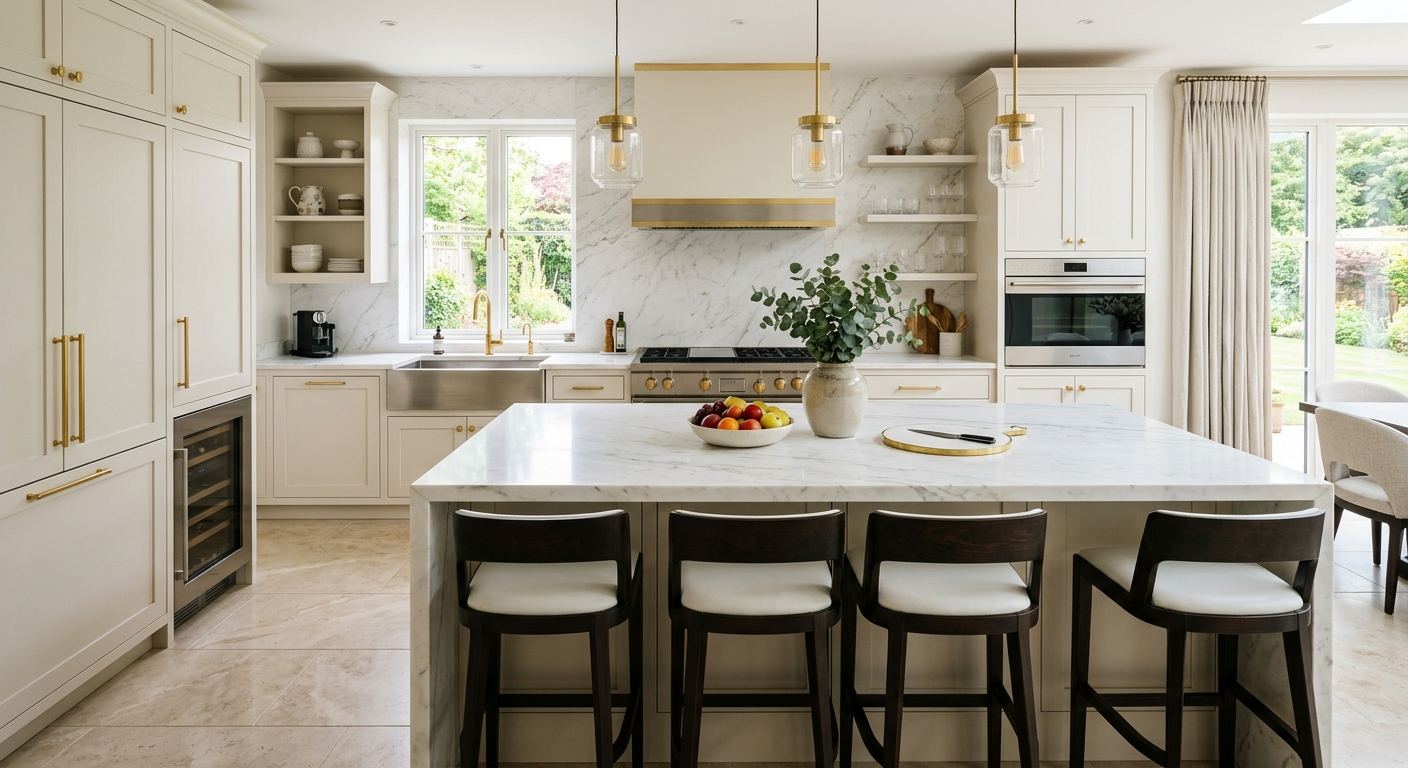
Kitchen renovation options and costs in Millbrook
Kitchen renovation in Millbrook, Ontario usually starts with simple choices—how much to keep, how far to move plumbing and electrical, and what finish level you want. With Millbrook’s smaller population of 1,695 people (Statistics Canada, 2021 Census), you often see fewer crews competing for the same job than in bigger GTA hubs, which can slightly tighten scheduling for demolition, cabinet install, and countertop templating. On the other hand, the Toronto economic region’s high owner expectations are a major cost driver: in the GTA, higher-value neighbourhood pockets tend to push owners toward upgraded cabinetry and quartz or natural stone, with many projects landing around $25,000–$90,000 depending on scope.
Toronto-area market dynamics affect availability more than weather. Local climate isn’t the reason cabinets warp or countertops fail; it’s typically moisture control, ventilation, and how well the contractor handles sealing at seams and around plumbing penetrations. Still, winter freeze-thaw cycles can make jobsite access tricky (especially with sidewalks, driveways, and indoor humidity during drywall/paint), and that can add a few days to “dry-in” and curing steps. In Millbrook, trade demand tends to be especially strong around the country-lane areas and older housing pockets where homeowners update layouts for modern buyers.
Below is a practical way to compare renovation options and budgets before you request quotes—then we’ll break down the price factors that make the same project swing by 30–50% across the region.
| Renovation Tier |
What's Included |
Typical Duration |
Price Range |
| Cosmetic refresh (paint, hardware, new appliances only) |
Cabinet paint/stain or repainting (if applicable), new hardware, touch-up/trim work, new sink & faucet only if replacing fixtures, appliance install (no duct/gas relocation), minor caulking and sealants |
3–7 days on-site (plus 1–2 weeks for ordering) |
$8,000–$18,000 |
| Mid-range full renovation (new cabinets, counters, sink, tile) |
New semi-custom or quality stock cabinets, quartz or laminate countertops, new sink & faucet, backsplash tile, flooring refinishing or replacement (as selected), electrical for standard outlets/lighting, drywall patching |
3–6 weeks |
$25,000–$65,000 |
| High-end full renovation (custom cabinets, stone counters, island) |
Fully custom cabinetry, natural stone (granite/marble or premium slab), island with upgraded base/overhang, integrated storage, designer backsplash (higher labour), coordinated lighting, upgraded appliance package |
6–12 weeks |
$70,000–$90,000 |
| Cabinet refacing only (new doors + drawer fronts, same boxes) |
Door and drawer front replacement, new veneer/face panels, hardware change, new toe-kick options, basic prep and finishing; counters typically not included |
1–3 weeks |
$8,000–$35,000 |
| Countertop swap only (laminate to quartz or stone) |
Remove and dispose old surface, templating, install new countertop and sink cut-out (if sink location unchanged), basic silicone/edge finishing |
1–2 weeks (plus templating lead time) |
$3,000–$15,000 |
| Backsplash tile installation only |
Surface prep, tile install, grout and sealing; removal of existing backsplash (if included in scope), standard height backsplash |
3–7 days |
$2,000–$10,000 |
Prices are estimates only and vary by project scope, site access and material selection.
What affects the price of kitchen renovation in Millbrook
In Ontario, quotes for the “same” kitchen can vary by 30–50% across the Toronto economic region because contractors price risk and choices differently—especially cabinet quality, countertop material, and whether the work triggers permits and inspections. In higher-value GTA areas, homeowners often treat the kitchen as a resale investment, so you see defaults toward quartz or natural stone counters and semi-custom cabinetry. In more price-sensitive pockets, many owners choose laminate tops, refacing, or stock cabinets to protect budget while still improving day-to-day function. The key point: Toronto market expectations shape the finish tier far more than climate.
Two common Millbrook scenarios show why. First, an unchanged layout using stock or semi-custom cabinets typically keeps you closer to the mid-range full renovation band of $25,000–$65,000. Second, once you add a new island or move plumbing/gas, you’re paying for carpentry, new supply/drain connections, electrical coordination, and often more patching and inspection steps—pushing the job toward the $70,000–$90,000 end when you combine that with custom cabinetry and stone counters. Finish upgrades matter, but layout work is what most reliably adds unpredictable cost regardless of whether you select laminate or quartz.
Concrete Millbrook examples: older homes can have electrical runs or plumbing routes that don’t align with the planned island, which can add labour for rerouting and drywall repair. Winter work can also slow down paint/drywall milestones—contractors must manage indoor humidity and curing times so cabinets and trim are installed on stable, fully dry surfaces. That schedule ripple can make lead times feel “more expensive” even when materials don’t change.
| Price Factor |
Why It Matters |
Cost Impact |
| Cabinet tier — stock vs. semi-custom vs. fully custom millwork |
Custom boxes, special sizes, soft-close systems, internal organizers, and door styles drive both material and install time |
Typically shifts the project by $8,000–$25,000 depending on scope |
| Countertop material — laminate vs. quartz vs. granite vs. stone |
Material cost, fabrication complexity, seam layout, and edge profiles change labour and templating/fit-up time |
Common swings of $3,000–$12,000 for a typical kitchen |
| Layout change — wall removal, island add, plumbing/gas move |
Structural work, new subfloor support, duct/plumbing reroutes, and inspection scheduling add variability |
Often adds $10,000–$25,000 when major moves are required |
| Appliance package tier — builder vs. mid-range vs. pro-grade |
Electrical requirements, ventilation needs, and install details differ by brand and model |
Can move budgets by $2,000–$8,000 plus installation allowances |
| Flooring — refinish existing vs. full replacement |
Floor prep during demo, underlayment matching, and transition trims affect both time and material |
Typically shifts $1,500–$6,000 depending on what’s underneath |
| Backsplash — ceramic tile vs. marble vs. full-height slab |
Pattern alignment, substrate prep, and higher-end materials increase labour and waste |
Usually ranges by $2,000–$10,000 for backsplash-only work |
| Electrical — new circuits for island, under-cabinet lighting |
Licensed electrical scope can expand if you add outlets, switches, or lighting runs |
Often adds $1,000–$6,000 depending on circuit count |
| Permit fees and licensed trade requirements |
Permits/inspections and scheduling licensed trades add administrative and sequencing costs |
Can add $500–$3,500 and affect timeline |
Permits & regulations in Ontario
In Ontario, many kitchen “swap” jobs do not require a permit. Cabinet and countertop swaps typically fall into the non-permit category when you’re keeping the existing plumbing, drain, gas connections, and electrical locations. That means replacing cabinets, installing new quartz or laminate countertops, and upgrading finishes like backsplash tile are generally straightforward from a permit standpoint—so long as you’re not altering key systems.
Where permits and licensed trades come in is when you move the work, not when you replace it. If you move plumbing supply or drain lines, relocate a gas stove or modify a range hood with gas, remove a load-bearing wall, or add new electrical circuits (for example, outlets for an island, under-cabinet lighting runs beyond existing circuits, or new dedicated circuits), that work typically requires permits and inspections. Gas work must be performed by a licensed gas fitter, and electrical work must be performed by a licensed electrician.
Step-by-step for homeowners in Millbrook: (1) Ask for the contractor’s licence details before work starts; (2) request certificates of insurance, including liability and WSIB/WCB coverage; (3) verify coverage on the date of signing or renewal period; (4) confirm who pulls permits in writing; (5) check the written contract for inspection responsibilities and scope exclusions; and (6) keep a folder with licence numbers, insurance certificates, and any clearance letters you receive. Don’t rely on verbal promises—make permit responsibility explicit in the contract.
Cabinets, countertops and layout decisions in Millbrook
For most Millbrook homeowners, three decisions shape the end result more than anything else: cabinet tier, countertop material, and layout changes. Start with cabinets. Stock cabinets are typically the fastest and cheapest option, while semi-custom is the most popular mid-range choice because it balances better sizing and storage with predictable lead times. Custom cabinets provide the best fit and storage design, but they’re the most expensive due to design time and more complex fabrication.
Next, countertops. Laminate is durable for everyday use and often the best budget lever; quartz is the most common “upgrade” because it’s low-maintenance and resistant to staining. Natural stone (granite/other stone) looks premium and can handle heavy use, but it may require sealing and more careful care at installation seams. Butcher block is warm and repairable, though it demands regular maintenance to protect against moisture. Marble is striking but more sensitive to etching and requires careful cleaning habits.
Finally, decide whether to change layout. Removing a wall for open-concept space or adding an island can be worth it if you’re improving flow for how Toronto-area buyers live today—more gathering space, better sightlines, and practical prep/storage zones. But moving plumbing or gas lines is where you’ll see the biggest cost volatility. As a dollar example: upgrading from laminate to quartz might cost roughly $3,000–$6,000 depending on size, while adding an island often triggers extra labour for electrical, possible venting considerations, and carpentry—so the “return” comes from how the new layout meets daily use and buyer expectations.
| Option |
Durability |
Maintenance |
Best For |
Price Range |
| Stock cabinets (big-box) |
Good everyday durability with standard finishes; limited sizing flexibility |
Low—use normal care; hinges/soft-close depend on the model |
Budget-focused refreshes that still need a clean, modern look |
$8,000–$25,000 |
| Semi-custom cabinets (local dealer) |
Very solid durability; better internal options and door styles |
Low—typically stable finishes and reliable hardware |
Most Millbrook renovations aiming for resale-ready finishes without custom pricing |
$18,000–$45,000 |
| Custom cabinets (local millwork shop) |
Excellent fit and build quality; made for unique ceiling lines and storage needs |
Low to moderate—depends on hardware and finish type |
Irregular layouts, full-height storage, appliance garages, and a one-of-a-kind design |
$35,000–$65,000 |
| Laminate countertop |
Good impact resistance; seams and heat tolerance depend on install and care |
Easy daily care; avoid prolonged heat exposure and heavy standing water |
Cost-controlled renovations where you want a refreshed surface fast |
$3,000–$8,000 |
| Quartz engineered countertop |
Highly durable and consistent; handles everyday wear well |
Low—generally stain-resistant; wipe clean and avoid abrasive pads |
Homeowners who want low-maintenance “premium look” at a predictable cost |
$6,000–$14,000 |
| Granite / natural stone countertop |
Very durable for heavy use; variation in veining/porosity by slab |
Moderate—may need periodic sealing depending on the stone and finish |
Premium appearance and long-term durability for buyers who notice materials |
$8,000–$20,000 |
| Butcher block countertop |
Durable but can scratch; performs well if maintained |
Higher—regular oiling/sanding cycles and careful moisture control |
Warm, heritage-leaning designs where you’re willing to maintain the surface |
$4,000–$10,000 |
| Marble countertop |
Beautiful but softer; more prone to etching from acidic foods |
Moderate—requires careful cleaning and prompt wipe-ups |
Statement kitchens where the look is the priority and you’ll maintain properly |
$10,000–$25,000 |
How to choose a kitchen renovation contractor in Millbrook
Choosing the right kitchen renovation contractor in Millbrook comes down to verification, clarity, and control of risk. First, confirm Ontario licensing where applicable and verify insurance coverage. Ask for the contractor’s liability insurance certificate and evidence of WSIB/WCB coverage (or equivalent coverage documentation for their work arrangements). You can typically check the relevant contractor credentials through provincial online resources and verify that insurance is current (not expired) for the dates you’ll be working. If the project includes gas or electrical work, ensure those licensed trades are named in the scope and provide their licence/coverage documentation as well.
Then get 2–3 itemised written quotes. A good quote breaks labour and materials by line item (demo, drywall patching, cabinet install, countertop templating/install allowances, tile setting, electrical work, disposal) rather than hiding everything inside a lump sum. Read exclusions carefully: confirm whether permits are included, whether old materials disposal is included, and what happens if hidden damage is discovered behind cabinets or under old flooring.
Warranty and payment terms matter. Look for a workmanship warranty length in writing, plus product/manufacturer warranty details (and whether it’s transferable to future owners). For payments, never pay more than 10–15% upfront; use milestone payments and hold back a portion until the job is complete and walkthrough issues are corrected. Finally, require a start date and completion estimate in writing so you can plan around lead times for cabinets and countertops.
- Ask for a detailed scope and confirm who is pulling permits (if needed).
- Confirm cabinet lead times and countertop templating dates in writing.
- Request a full disposal plan for demo debris and packaging.
- Verify liability insurance certificate is active at signing and start date.
- Verify WSIB/WCB coverage for labour on site.
- Check that gas and electrical trades are licensed and named in the quote.
- Ensure your quote lists allowances (fixtures, backsplashes, underlay, trims).
- Confirm warranty coverage for installation—especially cabinets level/fastening and countertop support.
- Use a clear payment schedule with a final holdback until punch list completion.
- Ask for proof of past similar kitchen renovations (photos and references).
- Get a written schedule that identifies inspections and hard-stop milestones.
- Clarify how change orders are priced and how you approve them.
Red flags I see in Millbrook kitchen projects include contractors who won’t itemise labour/materials, vague timelines that ignore countertop templating, missing proof of WSIB/WCB or liability insurance, quotes that treat electrical or gas work as “not included” without explaining who will handle it, and payment requests that exceed 10–15% upfront or skip a completion holdback.
Frequently asked questions — kitchen renovation in Millbrook
Custom vs stock cabinets — is custom worth it?
In Millbrook, custom cabinets are worth it when you need a precise fit or a storage plan that stock can’t deliver—like full-height pantry towers, unusual ceiling lines, or a layout that demands tighter tolerances. For many homeowners, semi-custom is the sweet spot because it delivers better internal organization and more style choices without the longest lead times. If your goal is to stay in a mid-range full renovation budget of $25,000–$65,000, semi-custom plus a quartz countertop often gives the biggest “buyer wow” for resale. Custom becomes harder to justify if the layout is standard and you’re already close to budget; in that case, spending extra on a higher-quality countertop or better door hardware usually improves day-to-day satisfaction more.
How do I choose a kitchen contractor in Millbrook?
Start by choosing a contractor who can document scope clearly and verify credentials. Ask for liability insurance and WSIB/WCB coverage evidence, and confirm licensing for any electrical or gas work that’s part of your plan. In Ontario, swaps (like replacing cabinets and countertops) usually don’t need permits, but layout changes that move plumbing supply/drain, relocate gas, remove a load-bearing wall, or add new electrical circuits typically do—so the right contractor explains who pulls permits and what inspections are required. Get 2–3 itemised quotes with a labour/material breakdown and a written schedule. If the contractor can’t explain the sequencing (demo → rough-in → install → tile → counters) or won’t put warranty details in writing, that’s a major risk signal for a kitchen project in Millbrook.
What order do kitchen renovation steps happen in?
A typical order in Millbrook follows what must be “rough” first, then what needs fully cured surfaces. Generally: 1) demolition and site protection, 2) any required rough-in work for plumbing supply/drain changes and electrical circuits (licensed trades), 3) drywall patching and painting prep, 4) cabinet install (level/base first), 5) tile backsplash installation (after cabinets are set and surfaces are ready), 6) countertop templating and then install (often once cabinets are stable), and 7) final hardware, sink/faucet connections, caulking, and appliance installs. If you’re upgrading countertops only, the sequence changes slightly because templating must be done after the existing base is confirmed and sealed. This ordering helps avoid rework—especially around seams, sealing, and electrical outlets behind or under the cabinet line.
Can I live at home during a kitchen renovation in Millbrook?
Yes, many Millbrook homeowners can live at home during a kitchen renovation, but it depends on how disruptive your scope is. A cosmetic refresh or backsplash-only work is usually manageable because you can keep most of the kitchen functional. With a mid-range full renovation in the $25,000–$65,000 band, you may need to use a temporary sink and keep key appliances accessible while cabinets are installed and countertops are templated. If you’re doing a high-end renovation with layout changes, island construction, and stone counters, the kitchen may be non-functional longer—often aligning with 6–12 weeks for completion. Contractors typically set up a temporary cooking station and protect floors with coverings. The best approach is to plan for a “limited kitchen” phase and confirm what you’ll still have access to during each milestone.
Should I renovate my kitchen before selling in Millbrook?
Often, yes—but only if the renovation matches the buyer expectations for your area and doesn’t overbuild your budget. In the Toronto economic region, resale buyers frequently expect a modern cabinet style, clean tile/backsplash work, and a durable countertop surface; higher-value markets in the GTA lean toward quartz or natural stone, while more budget-sensitive upgrades still sell when the workmanship looks tight. If you’re considering a full renovation, keep your scope aligned with what buyers will value in your price bracket. For example, a mid-range refresh that reaches $25,000–$65,000 can be easier to justify than an island + custom millwork project that pushes you toward $70,000–$90,000 unless your home’s overall value supports that level. A contractor can also help you set a realistic “highest ROI” finish tier for your specific kitchen size and condition.
What's the most popular kitchen style in Millbrook right now?
In Millbrook and across the Toronto economic region, the most requested look continues to be clean-lined, bright, and timeless: shaker-style cabinetry, warm neutral finishes (greige/soft white/oak tones), and durable countertops like quartz. Homeowners often pair this with a simple, elegant backsplash—ceramic tile in classic patterns or subtle stone-look materials—because it photographs well and stays “safe” for a wide buyer pool. Many projects also include an island for seating and improved flow, but only when the layout makes sense and when plumbing/electrical constraints are handled correctly. Even when budgets vary, the consistent trend is prioritizing functional storage and modern surfaces over short-lived decor, because that’s what tends to convert when homes are listed for sale in Ontario.