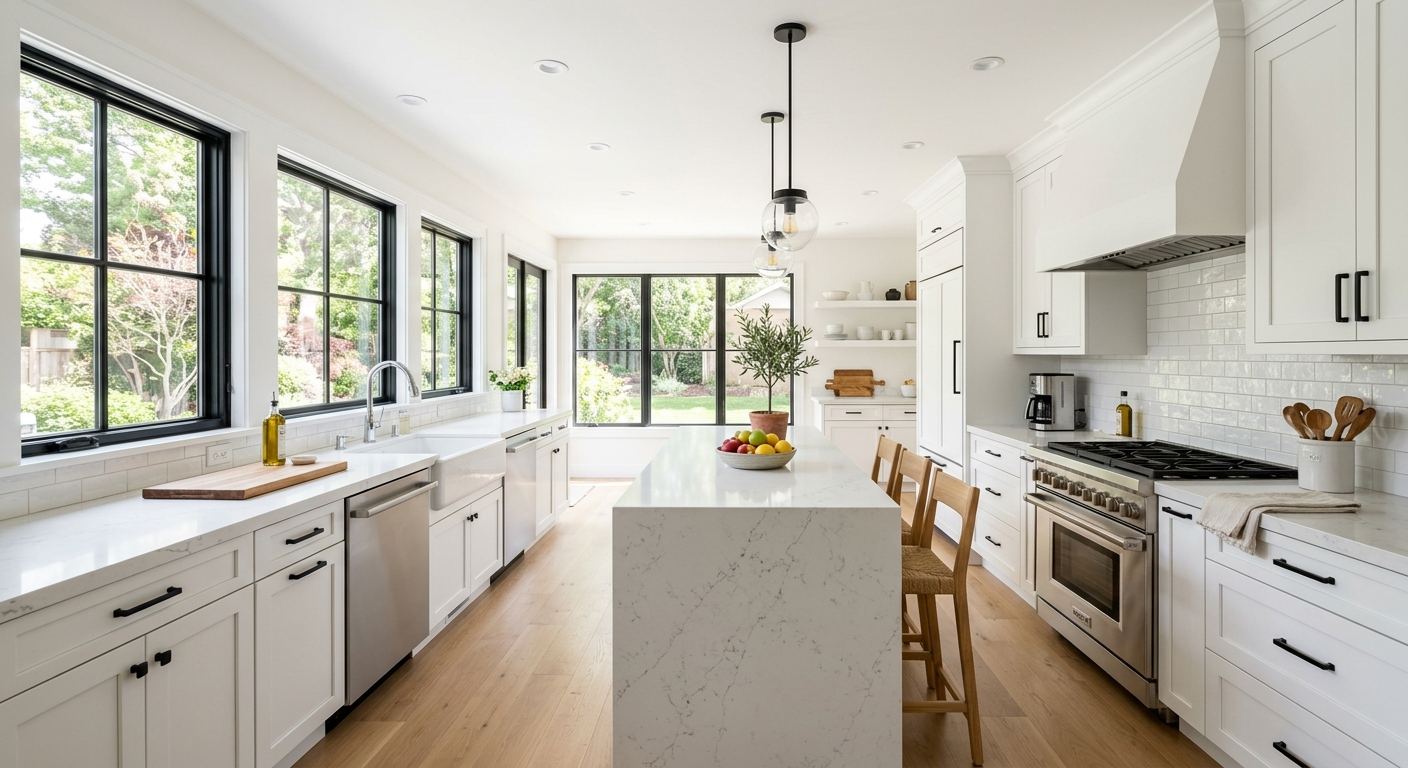
Kitchen renovation options and costs in South Riverdale
South Riverdale homeowners usually start their kitchen renovation planning by comparing style first, then quickly realising the budget is driven by finishes and the amount of “trade work” inside the walls. With a population of 27,876 in South Riverdale (Statistics Canada, 2021 Census), the neighbourhood’s steady owner-occupant demand means contractors stay busy—especially around the Danforth and Gerrard corridors where many older row homes need updates. In the Toronto economic region, kitchen spend often tracks higher home values and household income expectations, pushing owners toward quartz countertops, better hardware, and more precise cabinet layout.
Climate doesn’t change the labour rate the way it does in far colder provinces, but it does affect day-to-day conditions: humidity swings in spring and longer shoulder seasons can slow drying times for finishes and adhesives, and poor ventilation can extend countertop and flooring curing. The bigger driver in Toronto is the market: homeowners often choose renovations that buyers can “see” at a glance—clean lines, durable tops, and upgraded appliances—so quotes for the same footprint can land in very different tiers. In practice, cosmetic refreshes can keep you near the lower end of the range (think mid-$20k full projects for modest changes), while a full high-end build can move you into the $80k+ territory once you add custom millwork, an island, and stone.
To help you benchmark, here’s a realistic tier-by-tier comparison for South Riverdale projects, leading into the pricing table below.
| Renovation Tier |
What's Included |
Typical Duration |
Price Range |
| Cosmetic refresh (paint, hardware, new appliances only) |
Cabinet paint or stain touch-up, new pulls/knobs, new range/hood or dishwasher, minor trim/caulking, basic prep |
3–7 days |
$6,000–$18,000 |
| Mid-range full renovation (new cabinets, counters, sink, tile) |
Semi-custom or stock cabinetry, new quartz or laminate counters, sink + faucet, backsplash tile, flooring refinishing or replacement, plumbing refresh |
3–6 weeks |
$25,000–$55,000 |
| High-end full renovation (custom cabinets, stone counters, island) |
Fully custom cabinets, stone countertops (quartz/granite/stone), larger island, upgraded appliance suite, detailed tile/backsplash, lighting upgrades |
6–12 weeks |
$70,000–$95,000 |
| Cabinet refacing only (new doors + drawer fronts, same boxes) |
New fronts, veneer/laminate wraps where appropriate, updated hardware, careful alignment to existing boxes |
1–3 weeks |
$8,000–$28,000 |
| Countertop swap only (laminate to quartz or stone) |
Remove and reinstall tops, new quartz/stone slab fabrication, sink cut-out adjustments, caulking and sealing |
5–10 business days |
$3,500–$15,000 |
| Backsplash tile installation only |
Demo of old backsplash (if required), tile supply and install, grout/sealing, finishing around outlets |
3–7 days |
$2,000–$9,500 |
Prices are estimates only and vary by project scope, site access and material selection.
What affects the price of kitchen renovation in South Riverdale
Even when homeowners describe the “same” kitchen—same size, similar style—the quotes can differ by 30–50% across Toronto and Ontario because contractors price risk and unknowns differently. A big portion of variance comes from how much hidden work they expect: water-damaged base cabinets, outdated electrical, subfloor condition, and whether the layout truly allows for clean plumbing and electrical runs without opening more wall than anticipated. In high-value Toronto pockets, homeowners are more likely to default to quartz or stone counters and semi-custom cabinetry because the renovation cost is easier to recover on resale. In more budget-sensitive areas, laminate and stock cabinets still dominate because the resale story is often “updated, clean, and functional” rather than “fully bespoke.”
In South Riverdale specifically, a few local conditions raise costs. First, many kitchens are in older row-home layouts where walls are not perfectly square—so “level” installation and cabinet alignment take more time, especially if you’re moving from laminate to quartz or stone tops (often in the $3,500–$15,000 band for a countertop-only swap, before you add changes). Second, winter and shoulder-season humidity swings in the Toronto area can slow adhesive and finish schedules, which affects sequencing even when the scope is fixed. Third, you’ll often see older rough plumbing or wiring that triggers electrical upgrades once you add island outlets and under-cabinet lighting, which can quickly push a modest refresh toward the mid-range $25,000–$55,000 renovation tier.
The most unpredictable cost is layout change—removing a wall, adding an island, or moving a gas line—regardless of finish level. That’s why two quotes can be far apart even with the same cabinet and counter choices.
| Price Factor |
Why It Matters |
Cost Impact |
| Cabinet tier — stock vs. semi-custom vs. fully custom millwork |
Higher tiers add better fit, finish options, internal organization, and longer lead times |
Low tier: smaller delta; mid/high tier can add roughly 20–45% to cabinet-and-install portions |
| Countertop material — laminate vs. quartz vs. granite vs. stone |
Material cost and fabrication complexity drive price more than most other items |
Laminate is lowest; quartz/stone typically add thousands, especially with edge profiles and undermount sinks |
| Layout change — wall removal, island add, plumbing/gas move |
Triggers demolition, reframing, trade coordination, and inspections |
Can increase project cost substantially—often the largest swing factor |
| Appliance package tier — builder vs. mid-range vs. pro-grade |
Pro-grade units add cost and sometimes require different electrical/venting specs |
Mid-range upgrades often add moderate cost; pro-grade can raise appliance portion significantly |
| Flooring — refinish existing vs. full replacement |
Refinishing limits demolition; replacement expands demo and install scope |
Full replacement can add notable labour and material costs, especially with subfloor repairs |
| Backsplash — ceramic tile vs. marble vs. full-height slab |
Complexity, tolerances, and material handling affect labour and waste |
Full-height premium finishes can move backsplash from a few thousand to the high end quickly |
| Electrical — new circuits for island, under-cabinet lighting |
New circuits require licensed work and coordinated scheduling |
Often adds several thousand where you add outlets, lighting runs, or relocate panels |
| Permit fees and licensed trade requirements |
Work involving plumbing, gas, electrical, or structural changes usually requires permits/inspections |
Adds direct administrative and trade coordination costs, plus scheduling lead time |
Permits & regulations in Ontario
In Ontario, many “finish-only” kitchen updates don’t require permits—like cabinet swaps (including refacing work) and countertop replacement. If you’re simply replacing laminate or installing new quartz over the existing base cabinet tops, that typically stays in the no-permit zone. However, once your plan involves moving plumbing supply/drain lines, relocating a gas appliance (stove/range) or gas components, removing a load-bearing wall, or adding new electrical circuits, permits and licensed trades almost always come into play.
Here’s a practical way to think about it for South Riverdale homeowners. Allowed without typical permitting: painting cabinets, changing hardware, installing a backsplash, and swapping countertops as long as you’re not altering plumbing or electrical connections beyond like-for-like. Likely requiring permits and inspections: moving a sink to a new location, changing where a dishwasher ties in, relocating a gas line, adding outlets for an island, installing under-cabinet lighting on new circuits, or opening walls to re-route ducting/venting.
Step-by-step verification: (1) Ask for the contractor’s Ontario licence details (where applicable to the scope) and confirm each licensed trade’s status; (2) request certificates of insurance—general liability plus proof of coverage that fits the project scope; (3) obtain evidence of WSIB/WCB coverage for workers involved in the job; and (4) ask for the clearance letter or coverage documentation your contractor provides. Keep copies with your signed contract so responsibility is clear before work starts.
Cabinets, countertops and layout decisions in South Riverdale
For South Riverdale kitchens, the three most consequential decisions are cabinet tier, countertop material, and layout change—because those choices shape both resale appeal and how much hidden work you uncover. First, cabinet tier determines lead time and fit: stock is fastest and usually cheapest, semi-custom is the practical “best value” tier in the Toronto resale market, and custom is best when you need to solve an awkward footprint. Second, countertop material governs durability and maintenance. Quartz is popular here because it resists staining better than many laminate choices and handles daily use well in a busy family kitchen. Third, layout changes—open-concept wall removal, adding an island, or relocating plumbing/gas—should only be done when the space gain is worth the unpredictable coordination and permit work.
Toronto buyers typically expect bright, modern finishes at mid-range budgets, and they’re quicker to notice counter and cabinet style than they are to notice the exact brand of backsplash grout. If you’re targeting a renovation budget around the $25,000–$55,000 band, semi-custom cabinetry and quartz (or good laminate in certain zones) lets you deliver an “updated” look without paying for structural changes. If you’re moving to a $70,000–$95,000 high-end build, custom millwork and stone counters plus an island are where you can truly justify the spend with better storage and better flow.
Climate-wise, the Toronto heating season and humidity swings matter mainly for sequencing: you want proper ventilation and drying time for paint/finishes and for any flooring adhesives. For a concrete example, upgrading from laminate to quartz might add thousands, but it’s often justified because the countertop becomes the visual centerpiece every day—whereas relocating a sink to chase an aesthetic without changing the overall layout can cost far more than most homeowners expect.
| Option |
Durability |
Maintenance |
Best For |
Price Range |
| Stock cabinets (big-box) |
Good for daily use; limited custom sizes can lead to compromises in fit |
Wipe clean; depends on door finish quality |
Fast projects and cost-sensitive renovations with a straightforward layout |
$8,000–$20,000 |
| Semi-custom cabinets (local dealer) |
Very solid construction; better door options and storage features |
Simple cleaning; hardware upgrades improve long-term wear |
Most South Riverdale homeowners aiming for a polished mid-range finish |
$18,000–$35,000 |
| Custom cabinets (local millwork shop) |
Highest fit and finish; best for irregular spaces and premium hardware packages |
Maintain finishes as directed; hinges and organizers last longer with proper use |
High-end renovations, challenging footprints, and maximum storage |
$35,000–$65,000 |
| Laminate countertop |
Moderate; can chip or scorch; edges and seams need careful installation |
Easy daily cleaning; avoid heat directly on surface |
Budget-friendly refreshes where you want a “new look” quickly |
$3,000–$7,000 |
| Quartz engineered countertop |
High durability; resists staining and everyday wear well |
Low maintenance; clean with mild soap and water |
Most popular upgrade for Ontario kitchens balancing look and longevity |
$6,000–$15,000 |
| Granite / natural stone countertop |
Very durable with unique patterns; performance varies by stone type and seal |
Typically periodic sealing and careful stain management |
Homeowners who want natural variation and a premium, timeless look |
$8,000–$20,000 |
| Butcher block countertop |
Medium; susceptible to moisture and requires good upkeep |
Needs oiling and careful protection around sinks |
Warm, traditional styles and kitchens with attentive maintenance habits |
$4,500–$12,000 |
| Marble countertop |
Beautiful but more sensitive to etching and staining |
Higher maintenance; requires sealers and careful cleaning habits |
High-end look-focused renovations where homeowners understand upkeep |
$12,000–$25,000 |
How to choose a kitchen renovation contractor in South Riverdale
Choosing the right contractor in South Riverdale comes down to verifying credentials, getting comparable quotes, and controlling the scope in writing. First, confirm Ontario licensing where required by the work type, and request proof of liability insurance. Next, make sure the contractor can provide WSIB/WCB coverage documentation for their workers; you don’t want to discover gaps after a claim. Ask for certificates of insurance and any clearance letter your contractor uses to demonstrate coverage—then confirm the details match the company on your contract.
Get 2–3 itemised written quotes rather than lump sums. A proper quote breaks labour and materials separately: cabinet supply and install, countertop fabrication and set, plumbing/electrical line items, tile labour, disposal, and any demolition allowances. Carefully read the exclusions—common ones include moving appliances, patching drywall, repairing subfloor damage, permit pull responsibility, and waste removal. Ask: is permit pulling included in the price, or is it billed separately? Is disposal included, and where does debris go?
Warranty matters too. You should receive both a workmanship warranty (how long the contractor stands behind installation) and product/manufacturer warranty details for cabinets, countertops, and appliances. Confirm whether warranties are transferable to future owners—this can affect resale appeal in a city where home upgrades are evaluated quickly. Payment schedule should be conservative: never pay more than 10–15% upfront, and insist on a holdback until the job is completed and snag list items are addressed. Finally, require a written start date and an estimated completion timeline based on typical lead times.
- Ask for their liability insurance certificate (and verify it’s current).
- Request WSIB/WCB clearance documentation and confirm coverage for the job dates.
- Confirm which licensed trades they will use for electrical, gas, and plumbing changes.
- Get 2–3 itemised quotes with labour vs material breakdown.
- Ensure the scope lists demo, drywall patching, and floor/subfloor prep expectations.
- Confirm permit responsibility and inspections: who pulls permits and who pays fees.
- Clarify disposal: is cabinet/toxin-free disposal included, and is recycling handled?
- Verify countertop measurements, template date, and responsibility for fabrication delays.
- Check cabinet warranty terms (doors/hinges/finish) and workmanship coverage.
- Use a payment schedule with 10–15% max upfront and a completion holdback.
- Require a written schedule with lead times for cabinets and countertops.
- Ask about change-order process: pricing method and approval in writing.
Red flags to watch for in South Riverdale: (1) quotes that don’t itemise demolition, electrical/plumbing, and disposal; (2) refusal to provide insurance and WSIB/WCB proof; (3) “we’ll handle permits” without stating who is responsible in the contract; (4) vague start/completion dates without acknowledging material lead times; and (5) heavy upfront payments beyond 10–15% or no completion holdback.
Frequently asked questions — kitchen renovation in South Riverdale
Should I reface or replace my cabinets?
In South Riverdale, refacing is often the right move when the existing cabinet boxes are solid, the layout is working, and you mainly want a fresh look. If your boxes are warped from past leaks, have sagging rails, or don’t align cleanly, replacing usually costs less over the long run because you avoid rework. Refacing only typically lands in a mid-cost band—many homeowners see cabinetry refacing around $8,000–$35,000 depending on how many doors/drawers and how complex the trim is. Replacing cabinets pushes you toward a full renovation budget such as $25,000–$90,000 depending on countertop and whether you add an island. A contractor should assess box condition in person before recommending either path.
Do I need a permit for a kitchen renovation in Ontario?
In Ontario, countertop swaps and cabinet refacing typically don’t require permits, and many cosmetic updates (paint, hardware, backsplash only) are usually done without permits. Where permits commonly become necessary is when you change systems: moving plumbing supply or drain lines, relocating a gas stove or gas components, removing a load-bearing wall, or adding new electrical circuits for island outlets or lighting. If you’re planning a “like-for-like” appliance replacement with no change to connections, permits are often not required—but you should still confirm the plan with your contractor. Before you sign, ask for a written statement of who pulls permits, who pays permit fees, and which inspections are expected so responsibility is clear for the South Riverdale job site.
What's the ROI on a kitchen renovation?
ROI in Toronto is real but it isn’t automatic: a kitchen upgrade can significantly improve buyer confidence, yet the return depends on how closely the finishes match what local buyers expect at your price point. In high-value areas of the Toronto region, homeowners often invest a larger share of home value into the kitchen—commonly around 8–15%—which supports higher-end choices like quartz or stone and more custom cabinetry. In more cost-sensitive pockets, ROI tends to be strongest when you spend on visible durability (counters, hardware, clean lighting) rather than expensive structural changes. If you keep the scope to a mid-range full renovation, many owners target the $25,000–$55,000 band to balance resale appeal and cost control. If you’re considering a high-end custom build, budgets can move into the $80,000+ territory, and the ROI expectation should be aligned with your home’s market segment.
How do I budget for a kitchen renovation?
Start by choosing your renovation tier and then separate your budget into “materials you see” and “work inside the walls.” For example, a cosmetic refresh might keep you near a smaller spend, while a full mid-range renovation usually sits around $25,000–$55,000. For high-end custom work (often including an island and stone counters), budgets commonly reach $70,000–$95,000. Then add contingency: in older South Riverdale homes, hidden plumbing/electrical and drywall patching can appear once walls open. Plan for licensed trade coordination and potential permit fees if you’re changing plumbing, gas, or electrical. Finally, get itemised quotes so you can compare labour vs materials and avoid surprises from missing items like disposal, drywall patching, or under-cabinet lighting wiring.
Can I move my kitchen sink or stove?
Yes, but moving a sink or stove changes the job complexity the most—so it can increase cost and scheduling time quickly. A sink move usually means new plumbing supply and drain routing, more demolition, and more inspection coordination. Moving a stove is even more sensitive if gas is involved: gas work must be done by a licensed gas fitter, and permits are typically required depending on the changes. If you’re replacing a stove with a like-for-like unit without relocating connections, the scope is simpler. Homeowners in South Riverdale often find the “best value” is to move only when the layout gain is clear (better work triangle, better traffic flow) rather than for small cosmetic reasons.
What's the most cost-effective kitchen upgrade?
The most cost-effective upgrade is usually the one with the highest visual impact per dollar and the least trade disruption. For many South Riverdale kitchens, that’s either updating the backsplash or upgrading the countertop surface. A backsplash tile installation only is often one of the simplest options, commonly around $2,000–$9,500, and it can modernise the entire room quickly. Another strong value move is a countertop swap: switching laminate to quartz or stone can land in the $3,500–$15,000 range depending on size, edge profile, and sink cut-outs. If your cabinet boxes are in decent shape, upgrading hardware and doing a clean paint refresh can also deliver a noticeable result with lower disruption—especially when you’re trying to control budget while staying resale-ready.