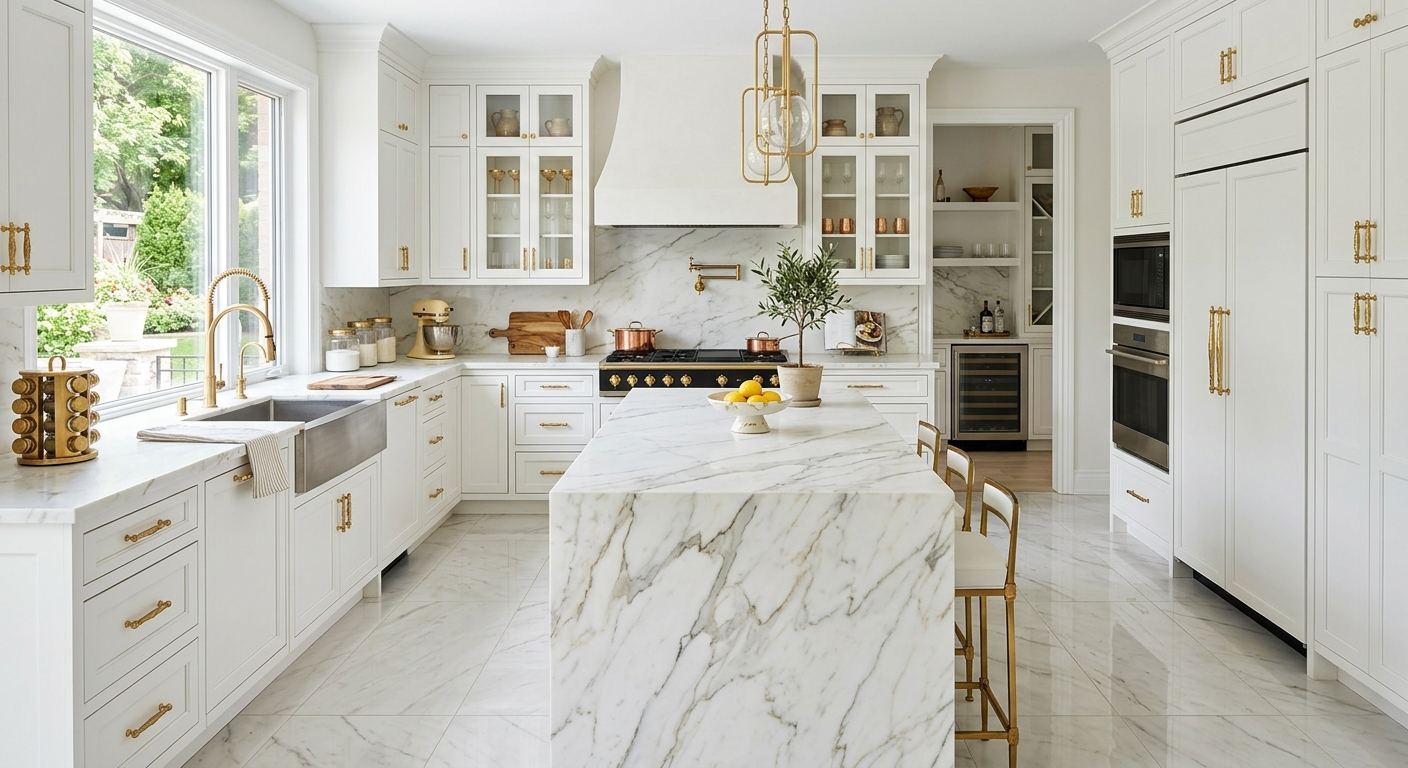
Kitchen renovation options and costs in Alta Vista
Alta Vista, Ontario homeowners typically start their planning by asking which kitchen renovation path fits their home and resale goals. With Alta Vista’s population at 24,726 (Statistics Canada, 2021 Census), the local market is active year-round, and contractors tend to stay booked when multiple projects overlap. In the Toronto economic region, projects also reflect neighbourhood-by-neighbour finish expectations tied more to home values and household incomes than to weather, so two kitchens that look identical on paper can price out very differently. In higher-value areas of the GTA, owners often invest roughly 8–15% of their home value into the kitchen, which pushes choices toward semi-custom or custom cabinetry, quartz or natural stone countertops, and appliance upgrades. In more price-sensitive pockets, many renovations stay in the low–mid range with refacing or stock cabinet installs plus quartz or laminate tops.
Climate plays a smaller role here than you might think: Toronto winters and seasonal humidity mainly affect how materials are protected during installation and how ventilation is designed during cooking. Where cost does rise is market-driven—labour demand, schedule length, and material pricing tend to be steadier but competitive. If you’re aiming for a custom island, premium stone, or a layout change, availability of experienced carpenters and countertop installers becomes the pacing item, not the permit paperwork. In Alta Vista, demand is especially strong around the Stittsville–Richmond area corridor where homeowners often prioritize modern storage, brighter lighting, and durable surfaces that hold up to day-to-day cooking.
To help you compare bids quickly, use the price bands below as a backbone before you decide on finishes and layout complexity.
| Renovation Tier |
What's Included |
Typical Duration |
Price Range |
| Cosmetic refresh (paint, hardware, new appliances only) |
Cabinet paint or trim repaint, new hardware, appliance swap (no plumbing/gas moves), minor caulking and touch-ups |
3–7 days |
$8,000–$18,000 |
| Mid-range full renovation (new cabinets, counters, sink, tile) |
New cabinets (stock or semi-custom), countertops, sink + faucet, backsplash tile, installation of flooring transitions as needed, basic lighting updates |
2–4 weeks |
$25,000–$60,000 |
| High-end full renovation (custom cabinets, stone counters, island) |
Custom millwork, premium quartz or natural stone, island construction, upgraded appliance package, enhanced lighting (e.g., under-cabinet/pendants), full backsplash feature |
4–8 weeks |
$60,000–$90,000 |
| Cabinet refacing only (new doors + drawer fronts, same boxes) |
Door/drawer replacement, veneer/finish on existing boxes, new pulls, optional internal hardware refresh |
1–3 weeks |
$8,000–$35,000 |
| Countertop swap only (laminate to quartz or stone) |
Remove existing counters, template + install new countertop, sink cut-out adjustments, reinstall sink (no plumbing moves) |
3–10 days |
$3,000–$15,000 |
| Backsplash tile installation only |
Tile supply and install, surface prep, grout and caulking, optional outlet trim and finishing |
2–5 days |
$2,000–$10,000 |
Prices are estimates only and vary by project scope, site access and material selection.
What affects the price of kitchen renovation in Alta Vista
The same kitchen renovation can land anywhere from 30–50% apart in Toronto and across Ontario because bids often differ in three places: finish tier, how much the layout changes, and how much “shop time” the contractor needs for custom work. In our region, finish choices are the biggest driver—higher-value neighbourhoods tend to default to quartz or stone counters and semi-custom cabinetry because the renovation is easier to justify on resale. In more modest areas, laminate and stock cabinets dominate because they keep ROI sensible while still modernizing the space.
Local conditions in Alta Vista also create cost swings. First, older housing stock can mean out-of-date rough-in plumbing or wiring behind the cabinetry; if your shut-offs are unreliable or the electrical isn’t set up for an island circuit, the contractor may need to open walls and ceilings, pushing you from a counter swap into a broader plan. Second, kitchen ventilation expectations are rising; homeowners increasingly want stronger range hoods and better make-up air planning, which can add labour even when the layout doesn’t change. Third, material lead times matter: if you’re selecting premium quartz or natural stone, delays can extend timelines and add “hold” costs for crews.
As a rule of thumb, layout changes add the most unpredictable cost regardless of finish. Removing a wall, adding an island, or moving a gas line can turn a mid-range plan (for example, $25,000–$60,000 for a full renovation tier) into high-end territory quickly—especially once electrical and plumbing must be opened, inspected, and finished. On the other hand, if you keep the footprint and upgrade surfaces, countertop work alone can stay nearer $3,000–$15,000, assuming no plumbing relocation.
| Price Factor |
Why It Matters |
Cost Impact |
| Cabinet tier — stock vs. semi-custom vs. fully custom millwork |
Custom boxes, interior organization, and fit/finish tolerances drive labour and material cost |
Can shift budgets by $10,000+ depending on how much millwork is involved |
| Countertop material — laminate vs. quartz vs. granite vs. stone |
Material price plus templating/installation complexity; stone requires heavier handling and polishing options |
Often a $2,000–$8,000+ spread on the same kitchen footprint |
| Layout change — wall removal, island add, plumbing/gas move |
Opening walls and floors triggers trades, inspection cycles, and structural/MEP coordination |
Most unpredictable; commonly adds thousands even before finishes |
| Appliance package tier — builder vs. mid-range vs. pro-grade |
Electrical, ventilation compatibility, and installation requirements differ by tier |
Can add $1,500–$10,000+ depending on range hood, built-ins, and fuel type |
| Flooring — refinish existing vs. full replacement |
Kitchen footprint coverage and subfloor condition determine whether boards can be reworked |
Full replacement typically costs materially more than patch/refinish |
| Backsplash — ceramic tile vs. marble vs. full-height slab |
Higher-end materials require tighter layout, more cutting, and longer installation time |
Can double or triple labour/material depending on height and material size |
| Electrical — new circuits for island, under-cabinet lighting |
Rewiring for new receptacles, lighting, and load changes is labour + inspection-dependent |
Often adds $1,000–$4,000+ for typical kitchen upgrades |
| Permit fees and licensed trade requirements |
Permit handling and inspection scheduling can add direct fees and scheduling overhead |
Costs vary by scope; typically a few hundred to over a thousand for multi-trade work |
Permits & regulations in Ontario
In Ontario, not every kitchen change triggers a permit. A straightforward cabinet and countertop swap—like replacing boxes/doors or upgrading laminate to quartz—typically does not require a permit because you’re not altering the building’s plumbing, gas, or electrical systems. However, the moment you move plumbing supply/drain lines, relocate a gas appliance (including the stove/range), remove a load-bearing wall, or add new electrical circuits, permits and licensed trades usually come into play. Gas work must be performed by a licensed gas fitter, and electrical work must be performed by a licensed electrician; both require inspections after rough-in and/or completion depending on the project scope.
For Alta Vista homeowners, the practical way to verify compliance is to make contractor responsibility explicit in writing. Step one: ask the contractor, in plain language, “What work requires a permit, and which trade will pull it?” Step two: request proof of licensing for the trades involved. Step three: review their liability insurance certificate of insurance and confirm coverage limits. Step four: ask for proof of WSIB/WCB coverage (or equivalent coverage status where applicable) before work begins. Step five: keep the permit number(s) and inspection schedule in your job binder so you can match the schedule to the work stages. Before signing anything, ensure the contract clearly states who applies for permits, who pays fees, and what happens if something is discovered mid-demo.
Cabinets, countertops and layout decisions in Alta Vista
For most Alta Vista renovations, the biggest decisions are the ones that affect daily use and buyer appeal: (1) cabinet tier, (2) countertop material, and (3) layout changes. Start with cabinets: stock installs are the fastest and cheapest because lead times are shorter and installation is straightforward. Semi-custom cabinets are the sweet spot in Toronto—more sizes and storage options without the full custom premium. Custom cabinets give you the best fit for awkward corners and ceiling heights, but they cost more because every piece is built around your space.
Countertops come next. Laminate is budget-friendly and durable enough for many homes, but it can show wear at seams and edges. Quartz is popular in the GTA because it’s low-maintenance, stain-resistant, and handles busy kitchens well. Granite and natural stone look premium and are highly desirable on resale, but they may require periodic sealing and careful handling around installation. Butcher block can feel warm and inviting; just plan for sealing and moisture discipline, especially during winter condensation cycles near exterior doors.
Finally, consider layout changes. Open-concept wall removal or adding an island can be justified when it improves traffic flow, provides real workspace, and supports an upgraded ventilation plan. Yet layout changes also introduce the most variable cost—plumbing/gas moves, new electrical circuits, and additional build-out time. For example, if moving from laminate to quartz is roughly a few thousand dollars, that change is often worth it immediately. But if you’re also moving plumbing to support a different sink location, that “small” upgrade can become a full rebuild of rough-in work.
On the Toronto resale side, buyers tend to expect quartz or stone at mid-to-upper budgets, which is why kitchens in the $25,000–$60,000 range often upgrade beyond laminate, while high-end projects push toward premium stone and custom millwork in the $60,000–$90,000 tier.
| Option |
Durability |
Maintenance |
Best For |
Price Range |
| Stock cabinets (big-box) |
Good durability; depends on door hardware and installation quality |
Low maintenance; easy to replace components later |
Fast updates, smaller budgets, straightforward layouts |
$8,000–$25,000 |
| Semi-custom cabinets (local dealer) |
Very solid; better fit options reduce gaps and stress points |
Low to moderate; depends on finish and hardware choice |
Most Toronto-area renovations balancing cost and storage |
$15,000–$45,000 |
| Custom cabinets (local millwork shop) |
Highest durability; tailored bracing and fit for heavy use |
Low maintenance; benefits from pro installation and proper curing |
Unique layouts, ceiling-height storage, high-end finishes |
$30,000–$70,000+ |
| Laminate countertop |
Moderate durability; seams/edges are the common wear points |
Wipe clean; avoid prolonged standing water at seams |
Budget refreshes where you want a clean look quickly |
$3,000–$7,000 |
| Quartz engineered countertop |
High durability; resists staining and day-to-day wear |
Low maintenance; wipe and dry, no sealing required |
Busy households and buyers expecting a “modern” finish |
$5,000–$12,000 |
| Granite / natural stone countertop |
Very high durability; each slab has unique chip/edge considerations |
Often needs periodic sealing depending on the stone |
Premium look with statement veining and resale appeal |
$7,000–$15,000 |
| Butcher block countertop |
Good durability when maintained; susceptible to prolonged moisture |
Oiling/sealing required; gentle cleaning and prompt drying |
Warm, functional cooking styles and prepared-food prep |
$4,500–$10,000 |
| Marble countertop |
Elegant but more sensitive to acidic spills and scratches |
Higher maintenance; seal and respond quickly to spills |
Showpiece kitchens where maintenance is part of the plan |
$8,000–$20,000+ |
How to choose a kitchen renovation contractor in Alta Vista
Choosing the right contractor in Alta Vista is less about flashy photos and more about proof. Start by verifying Ontario licensing for any work that requires it: electrical work must be performed by a licensed electrician and gas work by a licensed gas fitter. Ask for the company’s liability insurance certificate of insurance and confirm coverage dates and limits. Then check WSIB/WCB coverage status for the trades the contractor plans to use; request the documentation before you sign so you’re not left holding risk if an incident happens onsite.
Next, get 2–3 itemised written quotes. You want labour and materials broken out clearly—cabinet supply, install, countertop template and install, tile supply and labour, demolition, disposal, and electrical/plumbing/gas line items if they apply. Avoid quotes that only give one lump number without scope details. Read the scope carefully: what’s excluded (e.g., old cabinet removal, drywall repair beyond a stated allowance, subfloor repairs), is permit pulling included, and is disposal included?
Warranty matters too. Ask for the workmanship warranty length and what it covers (labour for re-leveling, caulking failures, cabinet alignment issues, etc.). Also check product/manufacturer warranties and whether they’re transferable to future homeowners, which is important in the Toronto resale market. For payment, keep it controlled: never pay more than 10–15% upfront, and hold back a final portion until the job is complete and site cleanup is done. Finally, insist on a start date and completion estimate in writing so you’re not surprised by lead-time gaps for cabinets and countertops.
- Verify licensing for gas and electrical when those trades are involved (ask for licence details).
- Request certificate of insurance and confirm it covers kitchen renovation work.
- Confirm WSIB/WCB coverage status for workers (or subcontractors) before demolition.
- Insist on itemised quotes with labour and materials separated (no “mystery allowances”).
- Confirm whether permits are included and who pulls them (contractor vs homeowner).
- Clarify disposal and dump fees: demolition debris removal is often an add-on.
- Ask how drywall, flooring, and paint touch-ups are handled after rough-in.
- Confirm countertop templating timing and who is responsible for measurements.
- Ask what happens if a cabinet arrives late (schedule update plan).
- Review the warranty in writing: workmanship coverage + start/end dates.
- Require a project schedule with milestones (demo, rough-in, cabinets, counters, final).
- Set a payment schedule with retainage; avoid large upfront payments.
Red flags I see too often in Alta Vista: (1) contractor offers a “fixed price” without a clear scope or measurements, (2) won’t provide insurance/WSIB documentation, (3) refuses itemised quotes or uses vague allowances for cabinets and counters, (4) skips discussion of permits and licensed trade responsibility, and (5) pushes for large upfront deposits beyond 10–15%.
Frequently asked questions — kitchen renovation in Alta Vista
What's the most popular kitchen style in Alta Vista right now?
In Alta Vista and across the Toronto economic region, the most common direction I see is a clean, modern transitional look: flat-panel or simple shaker cabinet doors in two-tone combinations (often a darker island base with lighter uppers), paired with quartz countertops and a simple backsplash like slim subway tile or large-format ceramic. Homeowners favour durable finishes that photograph well for resale, especially when budgets sit around $25,000–$60,000 for a mid-range full renovation. Because many homes in the area are older, contractors also help buyers make the kitchen feel brighter—better lighting placement and a more efficient layout often matter as much as the style itself. (Statistics Canada, 2021 Census)
How do I know if I need to update my kitchen plumbing in Alta Vista?
You may need plumbing updates if you notice persistent leaks under the sink, slow drains that keep recurring, corrosion around shut-offs, or water hammer when taps turn off. In older Alta Vista homes, it’s also common to find supply lines and valves that don’t shut reliably, which complicates renovation work when new cabinets and flooring are installed. During quoting, a good contractor will assess shut-offs, the condition of drain lines, and whether any part needs replacement before walls are closed. If you’re staying in the same location, a swap might be enough; if you’re moving the sink, dishwasher, or adding a second sink, plan for rough-in changes. That kind of work typically pushes the project beyond a simple countertop swap band of $3,000–$15,000.
What is the difference between a galley and open-concept kitchen?
A galley kitchen is a narrow, corridor-style layout with counters on two sides, often limiting circulation but maximizing efficiency for small footprints. An open-concept kitchen removes or replaces walls so the kitchen flows into adjacent living/dining areas. In Toronto-area homes, galley kitchens are common in older builds; they’re usually cheaper to renovate because plumbing and electrical can stay near existing rough-ins. Open-concept remodels typically involve more coordination: structural checks for any wall removal, potential permits, and often new electrical circuits and ventilation planning for the cooking zone. That’s why open-concept projects commonly land closer to full-reno budgets like $25,000–$90,000, depending on cabinetry tier and whether you add an island.
How do I get accurate kitchen renovation quotes in Alta Vista?
Accurate quotes start with scope clarity. Provide a basic plan (dimensions, existing layout photos, and what you want changed) and confirm whether you’re keeping the footprint. Ask for 2–3 itemised quotes with labour and materials separated: demolition/disposal, cabinet supply and install, countertop templating and install, tile labour, and any licensed trade work (electrical/gas/plumbing) spelled out. Make sure the quote states what’s excluded—especially drywall repairs, flooring patching, and permit pulling. Then match the quote to realistic material pricing: if you choose quartz, don’t compare it to a laminate assumption. A credible contractor will also schedule templating and note lead times so there are fewer “surprise” additions. Use price bands like $25,000–$60,000 for mid-range full renovations as a reality check before you approve.
What's the best countertop material for a busy Alta Vista kitchen?
For a busy Alta Vista household, quartz is usually the best balance of durability and convenience. It resists staining, handles daily cooking well, and doesn’t require the sealing routines that come with many natural stones. If you’re entertaining often or cooking frequently, quartz’s low-maintenance nature reduces downtime and keeps your kitchen looking consistent through the year. That said, granite is also an excellent option if you love natural veining and are comfortable with periodic sealing depending on the slab. Laminate can work for budget refreshes, but edges and seams may show wear sooner in high-use kitchens. If you’re planning a full renovation, quartz often fits mid-range budgets like $25,000–$60,000 while still giving a premium look.
How do I add an island to my Alta Vista kitchen?
Adding an island is doable, but it’s rarely a “drop-in” job. The contractor needs to verify clearances for circulation, confirm floor/subfloor support, and determine whether you’re adding plumbing or a cooktop/sink on the island. If you’re moving plumbing supply/drain lines or relocating a gas appliance, that triggers permits and licensed trades in Ontario. Even without plumbing moves, electrical work is common for island receptacles and under-cabinet/pendant lighting, which should be done by a licensed electrician. Climate-wise, focus on ventilation performance for cooking heat and moisture—range hood ducting and fan sizing should match the new layout. A typical cost range is highly dependent on whether it’s just an island base and countertop versus full MEP rough-in; budgeting for a full renovation can quickly reach $60,000–$90,000 when island plumbing/gas is involved.