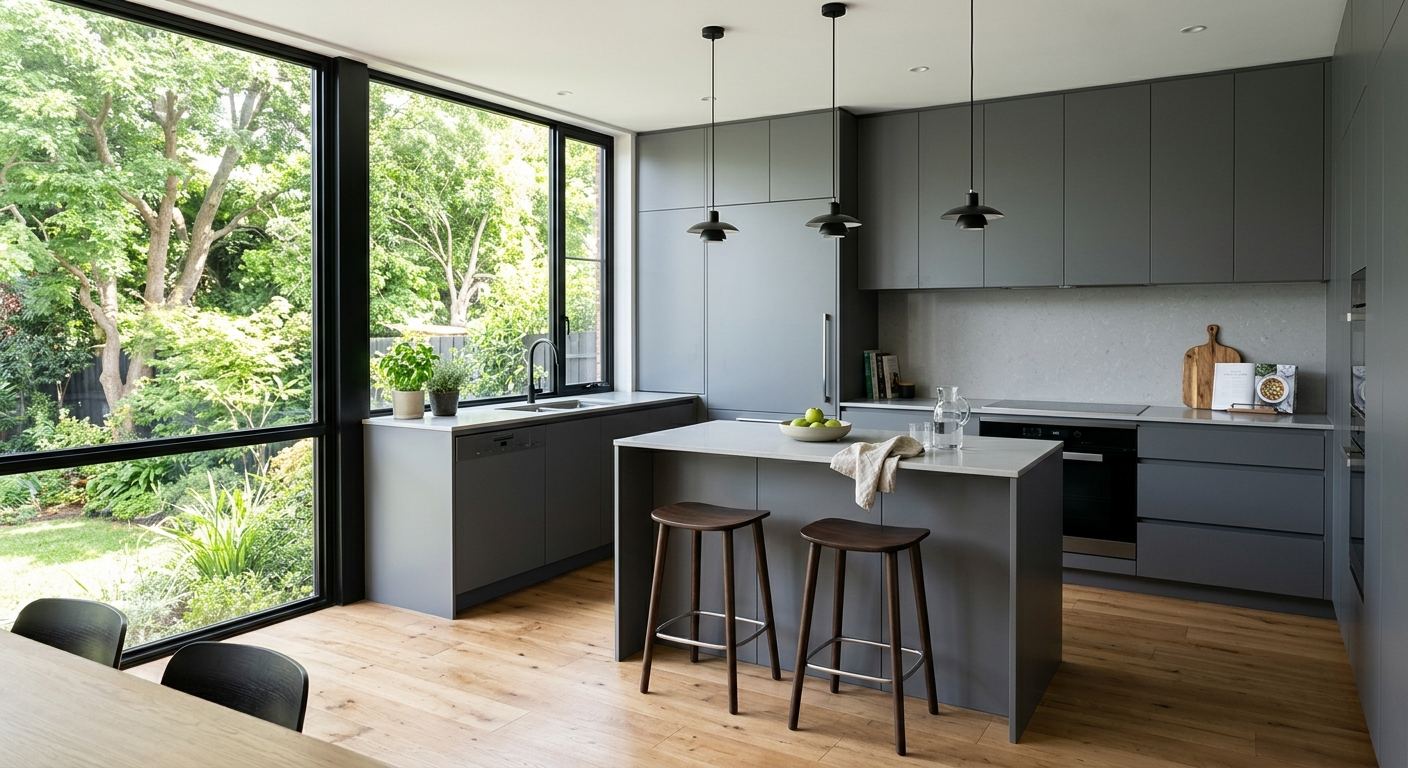
Kitchen renovation options and costs in Terrace Bay
Terrace Bay kitchen renovations are shaped by what homeowners can realistically expect to pay and what buyers down the road will notice. With a median household income of about $86,000 (Statistics Canada, 2021 Census) and a local housing mix where single-detached homes make up 86.6% of dwellings, most projects trend toward practical, durable finishes rather than purely showpiece upgrades. At the same time, the Northwest Ontario market often sees finish expectations run higher in well-kept neighbourhood pockets—so cabinet quality and countertop selection can move you from a basic “refresh” into a full mid-range build quickly.
Northwestern Ontario’s winter doesn’t usually add dramatic construction complexity to kitchen work the way it does for roofing or foundations, but it does influence scheduling and drying/adhesion performance. Old homes are common here: 80.4% of dwellings were built before 1981, which often means more time for careful removal, checking out-of-level framing, and addressing older plumbing rough-ins before new work goes in. Contractor availability can also tighten during peak renovation months, so timelines and labour pricing can shift even for the same scope.
In Terrace Bay, trade demand is especially steady around the residential areas near the waterfront and downtown core, where households often prioritize kitchens for resale and day-to-day comfort. If you’re comparing options, the tier you choose usually matters more than climate details—so use the table below as your starting point for a realistic budget.
| Renovation Tier |
What's Included |
Typical Duration |
Price Range |
| Cosmetic refresh (paint, hardware, new appliances only) |
Wall paint, new pulls/knobs, minor countertop accessory swaps, appliance swap (no plumbing/gas moves), basic labour to prep and install |
3–7 days |
$7,000–$18,000 |
| Mid-range full renovation (new cabinets, counters, sink, tile) |
Semi-custom or quality stock cabinets, new countertop, new sink and taps, backsplash tile, updated ventilation/lighting as needed, disconnect/reconnect for typical appliance setup |
3–6 weeks |
$30,000–$55,000 |
| High-end full renovation (custom cabinets, stone counters, island) |
Custom cabinetry, quartz or natural stone counters, island build, upgraded tile/backsplash, enhanced lighting plan, more complex plumbing/gas coordination if required |
6–10 weeks |
$60,000–$90,000 |
| Cabinet refacing only (new doors + drawer fronts, same boxes) |
Refaced cabinet fronts, new hardware, new trim where needed, light prep/paint, typically keeps existing layout and plumbing |
1–3 weeks |
$6,000–$22,000 |
| Countertop swap only (laminate to quartz or stone) |
Remove laminate, prep and fit new countertop, sink cut-outs/edge upgrade, caulking and sealing, backsplash “tie-in” limited to countertop edges |
3–10 days |
$2,500–$12,000 |
| Backsplash tile installation only |
Tile supply/installation, surface prep, grout/caulk, electrical outlet plate work, standard backsplash height (premium layouts may cost more) |
3–7 days |
$1,500–$8,000 |
Prices are estimates only and vary by project scope, site access and material selection.
What affects the price of kitchen renovation in Terrace Bay
In Terrace Bay and across Northwestern Ontario, quotes for the “same” kitchen can vary by 30–50% because contractors price risk and uncertainty differently—especially when walls conceal outdated plumbing, electrical runs, or uneven framing. In practice, the biggest drivers are finish tier and scope complexity, not whether you’re building through a cold winter. Material pricing for cabinets, quartz, and stone tends to track regionally, so the labour line and the scope changes determine much of the spread.
Local home economics strongly steer the finish tier. With a median household income around $86,000 (Statistics Canada, 2021 Census), many homeowners choose a semi-custom cabinet approach and durable counters that look premium without pushing all-in costs into the highest band. Where the market expects easier resale appeal, you’ll see more quartz or natural stone and more upgraded lighting—tending to align with mid-range full renovation budgets (often in the $30,000–$55,000 range) rather than low-cost refreshes. In more modest scopes, stock cabinets and laminate counters are common, and projects stay closer to smaller budget lines like cabinet refacing or countertop-only swaps.
Layout changes are where costs swing. Removing a wall, adding an island, or relocating plumbing/gas adds unpredictable trades coordination even if finishes stay basic. For example: (1) in pre-1981 homes (80.4% built before 1981), we often see older shutoffs and questionable venting that requires extra patching before new sinks go in; that can stretch the plumbing and tile schedule. (2) If you add under-cabinet lighting, you may need new circuits and upgraded cable routing—this can raise electrical labour even on a modest cabinet layout. (3) If the existing floor is uneven from earlier wear, levelling under tile adds cost even when cabinets are budget-tier.
In short: climate influences scheduling windows, but “hidden” conditions in older housing stock plus layout and trade scope drive the dollars—so it’s smart to budget with both the mid-range and high-end bands in mind.
| Price Factor |
Why It Matters |
Cost Impact |
| Cabinet tier — stock vs. semi-custom vs. fully custom millwork |
Tier changes material cost, installation complexity, and how much matching/adjustment is needed to fit an older opening |
Can swing a full kitchen budget by tens of thousands |
| Countertop material — laminate vs. quartz vs. granite vs. stone |
Premium slabs cost more and often require more precise template/edge work |
Typically shifts countertop line item by several thousand |
| Layout change — wall removal, island add, plumbing/gas move |
New rough-ins and coordination with licensed trades add both labour and schedule risk |
Often the largest swing factor regardless of finish |
| Appliance package tier — builder vs. mid-range vs. pro-grade |
Pro-grade units can require different clearances, ventilation upgrades, and higher electrical capacity |
Can add noticeable cost without changing the kitchen “look” |
| Flooring — refinish existing vs. full replacement |
If you keep floors, you reduce demo/disposal; if you replace, you add underlayment and finish labour |
Moderate to high impact depending on subfloor condition |
| Backsplash — ceramic tile vs. marble vs. full-height slab |
Large-format tile, premium stone, and full-height runs increase cut complexity and material waste |
Commonly several hundred to multiple thousand |
| Electrical — new circuits for island, under-cabinet lighting |
New circuits, GFCI/arc fault requirements, and routing through older walls increase labour and inspection steps |
Can add thousands even on cosmetic upgrades |
| Permit fees and licensed trade requirements |
When plumbing, gas, electrical, or structural work is involved, trade scheduling and inspection time changes the total |
Raises cost and extends timeline when scope triggers permits |
Permits & regulations in Ontario
In Ontario, a straightforward cabinet and countertop swap typically does not require a permit because you’re not altering major building systems. You can usually replace cabinets, swap laminate for quartz, and install new backsplash tile without permits—provided you’re not moving plumbing/drain lines, relocating gas equipment, or making structural changes. However, permits and licensed trades become necessary when your scope touches life-safety systems and building integrity.
Work that typically requires permits includes moving plumbing supply/drain lines (for example, changing where the sink lands), relocating a gas line or moving a gas stove/range, removing a load-bearing wall or doing structural changes, and adding new electrical circuits (such as dedicated island circuits or major upgrades for under-cabinet lighting that requires new wiring). For gas work, you need a licensed gas fitter and inspections as required. For electrical work, a licensed electrician must complete the changes and coordinate inspections.
Step-by-step, here’s how a Terrace Bay homeowner should verify a contractor and the trades involved:
- Ask for the contractor’s written scope and confirm in writing who pulls permits (if any).
- Request certificate of insurance (liability) and confirm it’s current for the project duration.
- For trades: ask for WSIB/WCB coverage documentation (or proof of coverage/clearance as applicable to the trade).
- Confirm gas work is done by a licensed gas fitter; confirm electrical is done by a licensed electrician.
- Check the relevant Ontario licensing registry or licensing credential number for each licensed trade subcontractor.
Never assume responsibility. Make permit responsibilities and inspection sequencing part of your contract before work begins.
Cabinets, countertops and layout decisions in Terrace Bay
For a Terrace Bay kitchen renovation, three choices determine most of your cost, look, and resale appeal: (1) cabinet tier (stock, semi-custom, or custom), (2) countertop material (laminate, quartz, granite, butcher block, or marble), and (3) layout changes (open-concept wall removal, island addition, or plumbing/gas relocation). In the Northwest market, buyers tend to notice cohesive surfaces first—cabinet colour, countertop colour/edge, and whether the layout feels efficient and bright for daily use.
Cabinet tier is usually the biggest lever. Stock cabinets install fastest and help control labour time, while semi-custom is the most common “best value” path for older Terrace Bay homes where openings aren’t perfectly square. Custom cabinets are ideal if you’re correcting dated layouts, adding built-ins, or need specialized sizing around uneven walls and older framing (common in pre-1981 houses).
Countertops should match your lifestyle. Laminate is budget-friendly and fine for light use, but it can be less forgiving than stone for heat and impact. Quartz offers a balanced option—durable and low-maintenance—with price points that typically sit between laminate and natural stone. Natural stone (granite/stone) looks premium and can be very resilient, but it requires more careful edging and sealing decisions depending on the product.
On layout: removing a wall or adding an island can be justified when it improves circulation and lighting lines. But if it requires plumbing/gas relocation, it’s usually where the budget grows fastest—often pushing a project into the higher band (closer to the $60,000–$90,000 range for full high-end installs). For example, if your current layout limits usable workspace, adding an island might add significant plumbing/electrical coordination; in that case, it can be worth keeping countertops mid-range (quartz) to protect overall budget.
| Option |
Durability |
Maintenance |
Best For |
Price Range |
| Stock cabinets (big-box) |
Good for standard spans; hinges and finishes vary by model |
Low maintenance; touch-ups if chips occur |
Fast installs and budget-focused remodels |
$30,000–$55,000 |
| Semi-custom cabinets (local dealer) |
Better fit and options for uneven/older openings |
Low maintenance; more finishing choices |
Most common mid-range renovations in Terrace Bay |
$45,000–$65,000 |
| Custom cabinets (local millwork shop) |
Highest fit and detail; ideal for complex layouts |
Low maintenance but requires good care of finishes |
When you want built-ins, unique dimensions, or custom island work |
$60,000–$90,000 |
| Laminate countertop |
Moderate; can be susceptible to heat/impact at seams |
Easy day-to-day cleaning; protect edges and avoid prolonged heat |
Cost control and lighter-use households |
$2,500–$6,000 |
| Quartz engineered countertop |
High durability and consistent look; resists staining |
Low maintenance; wipe clean, avoid abrasive pads |
Busy kitchens wanting a premium look without natural-stone variability |
$6,000–$12,000 |
| Granite / natural stone countertop |
Very durable; natural differences create unique patterns |
Often benefits from periodic sealing depending on the slab |
Premium visual impact and long-term durability |
$8,000–$15,000 |
| Butcher block countertop |
Solid, warm surface; can dent and requires surface care |
Needs periodic oiling and mindful heat/water use |
Home chefs who want a traditional feel |
$4,000–$9,000 |
| Marble countertop |
Beautiful but more sensitive to acids/etching and chipping |
Higher maintenance; sealing and prompt spill cleanup matter |
Lower-heat, less abrasive daily routines and statement kitchens |
$10,000–$18,000 |
How to choose a kitchen renovation contractor in Terrace Bay
Choosing the right contractor in Terrace Bay comes down to proof, clarity, and control of the details that cause overruns. Start by verifying Ontario licensing and coverage for the trades involved. For the contractor and/or subcontractors, ask for liability insurance and proof of WSIB/WCB coverage (or the appropriate clearance documentation). When you receive certificates, check they’re current and that the project date range is covered.
Next, get 2–3 itemised quotes, not just one lump-sum number. A good quote breaks labour and materials so you can compare cabinet supply, countertop fabrication, plumbing/electrical allowances, tile quantities, and disposal. Make sure the scope defines what’s included: permit pull responsibility (if any), demolition and haul-away, protection for floors and nearby finishes, and whether old materials are disposed of or requires separate arrangements. Also confirm whether backsplash height, caulking/trim, and electrical outlet modifications are explicitly included.
Warranty matters. Ask for (1) workmanship warranty length and what it covers, (2) manufacturer warranty for cabinets/countertops, and (3) whether the warranty is transferable if you sell the home. Payment terms should protect you: never pay more than about 10–15% upfront; hold back a portion until completion and punch-list sign-off.
Finally, require timeline clarity. Your start date and completion estimate should be in writing, including key milestones like template/measure for countertops and inspection timing for any electrical/plumbing/gas scope.
- Provide itemised quote with labour + materials, not only totals.
- List exact cabinet line/door style and countertop thickness/edge profile.
- Confirm who pulls permits and who pays for permit fees (if required).
- Show inclusions for demolition, disposal/hauling, and protection for floors.
- Specify backsplash scope (height, tile type, grout/colour) and outlets/switch plates.
- Confirm whether under-cabinet lighting requires new circuits and is included.
- Ask for proof of liability insurance and WSIB/WCB coverage (or clearance).
- Verify subcontractor licensing for gas and electrical work (where applicable).
- Confirm warranty terms: workmanship duration and product/manufacturer coverage.
- Use a payment schedule with a small deposit and a holdback until completion.
- Get a written start date, lead-time assumptions, and completion estimate.
- Require a clear change-order process for added scope or discovered conditions.
Common red flags in Terrace Bay kitchen projects: (1) quotes that only list “labour” without showing cabinet/countertop/fixture line items, (2) refusing to confirm who is pulling permits or handling inspections, (3) no proof of insurance or WSIB/WCB coverage provided up front, (4) vague timelines with no countertop templating schedule, and (5) pushing for large upfront payments (well beyond 10–15%).
Frequently asked questions — kitchen renovation in Terrace Bay
How long does a kitchen renovation take in Terrace Bay?
A typical Terrace Bay kitchen renovation timeline depends on scope and whether you’re changing the layout. Cosmetic refreshes (paint, hardware, and new appliances only) are often completed in about 3–7 days. A mid-range full renovation—new cabinets and counters plus sink and tile—commonly runs 3–6 weeks when materials are ordered promptly. If you’re going high-end with custom cabinetry and a stone island, expect about 6–10 weeks, mainly due to countertop templating and longer cabinet lead times. For kitchens in older homes (80.4% built before 1981), extra time for careful demo and fixing hidden plumbing or electrical rough-ins can add days. Always ask your contractor for a written start date and completion estimate tied to the actual product lead times.
Quartz vs granite countertops — which is better?
In Ontario kitchens, quartz is often the practical “better overall” choice for many homeowners because it’s consistently engineered, resists staining well, and usually doesn’t require periodic sealing like many natural stones. Granite is also very durable and looks unique slab-to-slab, but it may need sealing depending on the stone and can be a bit more variable in pattern and finish. If you’re comparing budgets in Terrace Bay, a countertop-only swap can land around $2,500–$12,000 depending on material and edge work—quartz typically sits comfortably in the mid-to-upper part of that range. If you want premium, consider granite when appearance uniqueness matters most and you’re willing to follow stone care guidance. Either way, choose an installer who templates accurately, especially with older counters and slightly out-of-square cabinets.
Should I reface or replace my cabinets?
Refacing is usually the right move when your cabinet boxes are solid, the layout works, and you want a cost-effective refresh. Cabinet refacing commonly falls around $6,000–$22,000, and it’s often faster than a full replacement because it keeps the existing frames. Replacement makes more sense if boxes are damaged from moisture, if the layout needs correcting, or if you’re changing sizes around plumbing/electrical. In Terrace Bay’s older housing stock (80.4% pre-1981), refacing can be a smart option if the walls are stable and the cabinet runs are true enough to accept new doors/drawer fronts. If you’re also reworking the kitchen into a more modern configuration, replacement is typically the better long-term value—even if it pushes you toward mid-range full renovation budgets like the $30,000–$55,000 band.
Do I need a permit for a kitchen renovation in Ontario?
Often, no permit is needed for a straight cabinet and countertop swap in Ontario—especially if you’re not moving plumbing, gas lines, or doing structural work. Changing paint, hardware, and installing new backsplash tile typically falls under “no permit required” situations. Permits are more likely when you relocate plumbing supply/drain lines, move gas appliances or gas lines, remove a load-bearing wall, or add electrical circuits (for example, to support island outlets or new lighting that requires new wiring). In Terrace Bay, the best approach is to confirm permit responsibility in your contract before work starts. Ask your contractor which parts of your scope require permits and which licensed trades will handle them, then request proof of licensing and insurance documentation.
What's the ROI on a kitchen renovation?
ROI depends on how buyers in your market perceive the upgrade and how much you spend relative to the home. In Terrace Bay, kitchens tend to drive value through functionality—storage layout, lighting, and durable surfaces—more than through ultra-luxury finishes alone. Because many homes are owner-occupied (77.6% of households own) and a large share were built before 1981, practical upgrades that look clean and work reliably can improve day-to-day satisfaction and resale confidence. Staying in a sensible budget band helps: a mid-range full renovation often aligns with $30,000–$55,000, while high-end projects can climb into $60,000–$90,000. ROI usually improves when the project matches your neighbourhood expectations and avoids paying for scope changes that don’t materially improve layout. Your contractor can help you prioritize the changes buyers notice first.
How do I budget for a kitchen renovation?
Budgeting starts with choosing a renovation tier and then adding a contingency for older-home surprises. For Terrace Bay, you can use the local Ontario cost bands as a baseline: full renovations commonly land between $30,000–$90,000 depending on cabinet and countertop tier, while refacing is often around $6,000–$30,000 and backsplash tile installation can range from $1,500–$8,000. If your home is pre-1981 (80.4% of dwellings in the area), plan for potential extra labour for aligning cabinets, updating older shutoffs, or addressing hidden wiring/drain conditions. I recommend requesting 2–3 itemised quotes that clearly separate labour, materials, permits (if any), and disposal. That way, you can compare apples to apples and decide where to invest—like quartz over laminate—or where to hold back.