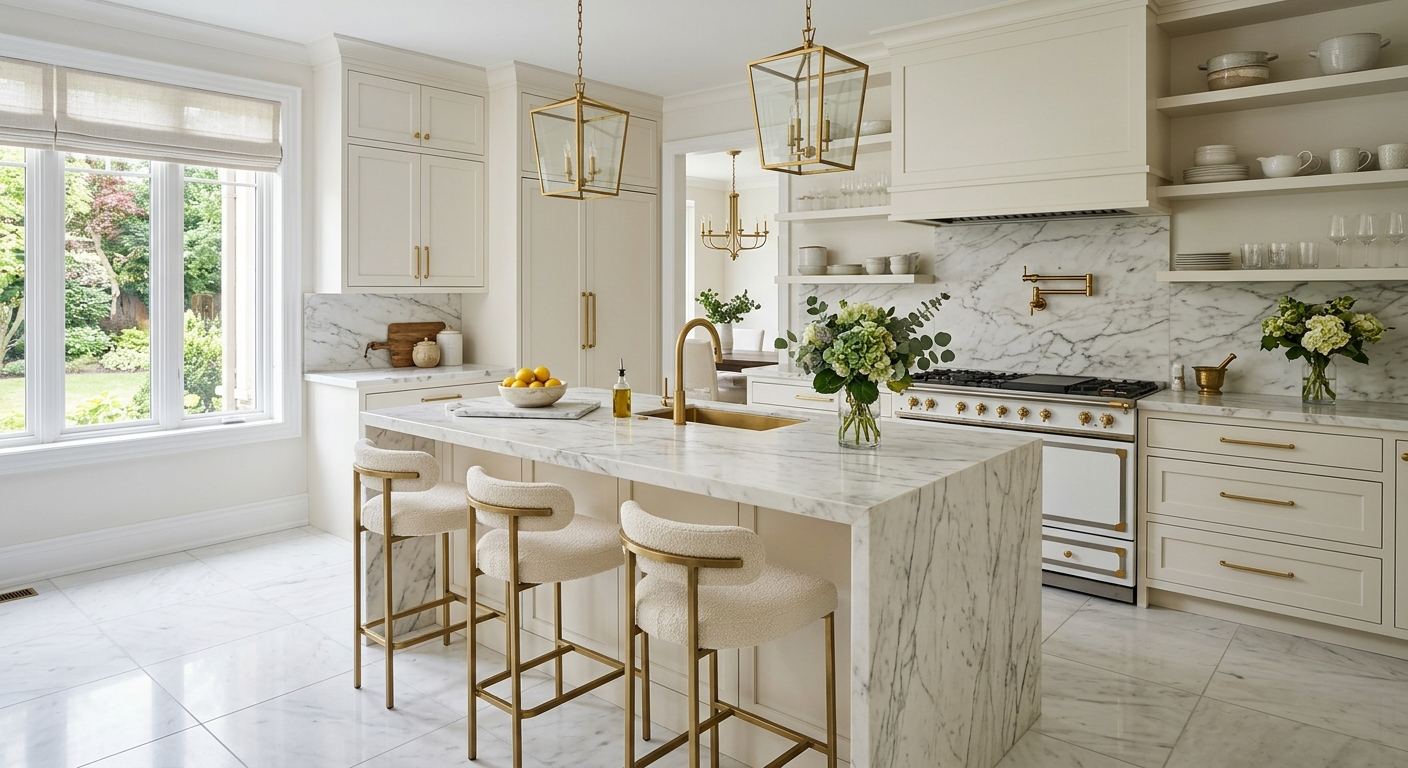
Kitchen renovation options and costs in Central Lynn
Central Lynn, British Columbia is a great place to renovate because the Lower Mainland–Southwest has steady demand and a mature network of installers for cabinets, counters, flooring and tile. With a population of 4,850 (Statistics Canada, 2021 Census), the market can still feel boutique—especially around Heritage-style homes and older neighbourhood pockets near commercial strips—so scheduling can depend on installer availability. In this region, kitchen budgets are driven more by what homeowners expect to recoup on resale than by the weather itself. That’s why the same footprint can land in very different price tiers: many buyers in higher-value areas gravitate toward semi-custom or custom cabinetry and quartz or stone counters, while more cost-sensitive homeowners choose stock cabinetry and laminate. Lower Mainland–Southwest pricing tends to reflect local home value and household affordability trends more than climate. (Statistics Canada, 2021 Census)
Climate plays a smaller role here than people assume. Central Lynn’s coastal weather means kitchens see regular humidity swings and occasional moisture exposure from everyday cooking, but materials are typically chosen for durability regardless—what really changes costs is finish selection, labour rates and the complexity of trades coordination. Renovations are also shaped by contractor capacity: when multiple trades are booked at once (plumbing, electrical, cabinet installers and tile setters), your “wait time” can affect overall project duration and pricing. If you’re in the demand zone around the Central Lynn retail corridor, trades often get prioritized for occupied homes with tight turnarounds, which can push labour coordination into the premium end of mid-range projects.
Below is a practical way to compare options before you request quotes, so you can see where your budget typically lands in Central Lynn.
| Renovation Tier |
What's Included |
Typical Duration |
Price Range |
| Cosmetic refresh (paint, hardware, new appliances only) |
Cabinet paint or refinishing, new pulls/knobs, caulking + minor trim touch-ups, swap appliances (range/dishwasher/range hood if ducted appropriately), protect flooring and counters already in place |
5–10 business days |
$8,000–$22,000 |
| Mid-range full renovation (new cabinets, counters, sink, tile) |
Stock to semi-custom cabinets, countertop install (laminate or quartz), new sink + faucet, backsplash tile, new or refreshed flooring prep, basic lighting refresh, disposal + trade coordination |
3–6 weeks |
$40,000–$85,000 |
| High-end full renovation (custom cabinets, stone counters, island) |
Fully custom millwork, quartz or granite/stone counters, island build-out, upgraded hardware and under-cabinet lighting, more extensive tile detailing, potential minor layout refinement |
6–12+ weeks |
$85,000–$120,000 |
| Cabinet refacing only (new doors + drawer fronts, same boxes) |
Door and drawer-front replacement, new trim/finials, veneer or surface refresh as required, hardware upgrades, reinstall existing counters only if still in good shape |
2–4 weeks |
$8,000–$35,000 |
| Countertop swap only (laminate to quartz or stone) |
Remove and dispose of old countertop, new countertop template and install, sink/cooktop reseat, seam sealing and finishing, reuse existing base cabinets if condition allows |
1–3 weeks |
$10,000–$28,000 |
| Backsplash tile installation only |
Prep and set tile, grout and seal where required, finish edges at counters, caulk transitions, typical allowance for electrical outlet cut-ins |
3–7 business days |
$1,500–$6,000 |
Prices are estimates only and vary by project scope, site access and material selection.
What affects the price of kitchen renovation in Central Lynn
In Central Lynn and across the Lower Mainland–Southwest, quotes for the “same” kitchen can vary by 30–50% because the biggest drivers aren’t the coastal climate—they’re finish tier, labour coordination, and how much your layout or services change. British Columbia pricing can feel even more spread out because cabinet lead times, stone fabrication scheduling and trade availability differ from season to season. When you choose premium materials, you also increase scheduling complexity: custom cabinetry and stone counters often require shop builds, templates and multiple inspection points, which can add both cost and timeline.
Local home values and household income shape the typical finish tier far more than climate. In higher-value Lower Mainland–Southwest pockets, homeowners often default to quartz or stone counters and semi-custom cabinetry because buyers expect that finish level and the upgrade is easier to justify on resale. In more modest areas, laminate surfaces and stock cabinetry dominate because they offer better ROI and faster replacement without waiting on custom fabrication. Meanwhile, layout changes—removing a wall, adding an island, or moving a gas line—are the most unpredictable costs regardless of finish. Even if you keep cabinetry mid-range, services relocation can push a project toward the top of the mid-range band or into high-end territory.
Concrete examples from Central Lynn: (1) an older kitchen with dated plumbing runs may require more than “swap and reconnect,” raising costs quickly even with laminate counters; (2) replacing worn tile flooring under cabinets can add subfloor prep and moisture mitigation—small on paper, significant in labour; (3) if you add an island and want under-cabinet lighting plus dedicated circuiting, electrical scope expands and your quote climbs. As a reference point, a typical mid-range full renovation often lands around the $40,000–$85,000 band, while moving into custom millwork and stone can jump into the $85,000–$120,000 range.
| Price Factor |
Why It Matters |
Cost Impact |
| Cabinet tier — stock vs. semi-custom vs. fully custom millwork |
Higher tiers use better materials, more precise sizing, and more options for internal layouts (pull-outs, organizers, hardware packages) |
Often shifts a full renovation by tens of thousands; custom can move you from mid-range (around $40,000–$85,000) toward high-end ($85,000–$120,000) |
| Countertop material — laminate vs. quartz vs. granite vs. stone |
Material affects fabrication complexity, seam layout, and long-term wear; stone also requires careful templating |
Quartz/stone typically increases countertop installation budgets (e.g., moving beyond $3,000–$12,000 depending on slab and edge work) |
| Layout change — wall removal, island add, plumbing/gas move |
Layout changes trigger drywall/structural assessment, trade reroutes, and more time on-site |
Can add the largest unpredictability; costs can rise even with stock finishes due to service relocation |
| Appliance package tier — builder vs. mid-range vs. pro-grade |
Brand tier affects installation fit, venting needs, electrical requirements and sometimes appliance lead times |
Generally increases total spend; pro-grade packages can push project totals upward without changing cabinetry |
| Flooring — refinish existing vs. full replacement |
Pre-existing floors may be salvageable, but kitchen demo often reveals damage or moisture issues |
Floor repairs can be minor or major; replacement expands labour and underlayment/prep scope |
| Backsplash — ceramic tile vs. marble vs. full-height slab |
Harder materials increase cutting, sealing, and handling; full-height adds more surface area and detailing |
Backsplash tile installations typically fall in $1,500–$6,000, with premium options pushing higher |
| Electrical — new circuits for island, under-cabinet lighting |
More fixtures and outlets means permit scope and licensed trade labour |
Often impacts mid-range vs. high-end more than homeowners expect when islands and specialty lighting are added |
| Permit fees and licensed trade requirements |
Some tasks require permits and inspections; that adds admin time plus licensed contractor scheduling |
Can add both direct costs and time; skipping steps is risky and can stall work |
Permits & regulations in British Columbia
In British Columbia, many straightforward upgrades in a Central Lynn kitchen are low-friction from a permitting standpoint. Cabinet and countertop swaps typically do not require permits because you’re replacing finishes without changing the building services. However, permits and licensed trades usually come into play when you move or alter the systems behind the walls—especially plumbing supply/drain, gas, electrical circuits, and structural elements.
Work that typically DOES require permits and licensed trades includes: moving or modifying plumbing supply lines and drain lines; relocating a gas appliance connection or doing any gas work (including range/stove hookups or changes that affect venting); removing a load-bearing wall or doing structural modifications; adding new electrical circuits for an island, upgrading panel circuits to support additional load, or installing new wiring for features like under-cabinet lighting (when it requires new circuit work). Work that typically DOES NOT require permits includes: repainting cabinets, swapping out existing cabinet boxes for the same footprint, replacing countertops in place, and installing a backsplash where plumbing/electrical locations remain unchanged.
Step-by-step verification for homeowners: (1) request the contractor’s licence details for the relevant trades (gas fitter/electrician where applicable), (2) ask for certificate of insurance covering general liability and confirm coverage aligns with the scope, (3) for workers, confirm coverage status through the contractor’s workforce arrangements (in practice, many crews have WCB coverage; your contractor should provide documentation), and (4) verify clearance letter(s) if your project uses subcontracted labour. Before signing, confirm in writing who pulls permits, schedules inspections, and pays permit fees.
Cabinets, countertops and layout decisions in Central Lynn
The three most consequential decisions in a Central Lynn kitchen renovation are your cabinet tier, countertop material, and whether you change the layout. These choices drive both budget and the “buyer appeal” factor that tends to matter in the Lower Mainland–Southwest resale market.
First, cabinet tier: stock cabinets are fastest and usually cheapest, but you’re limited in size flexibility and internal organization. Semi-custom cabinets are the most popular mid-range approach because they balance lead times and cost with better fit—especially important if your walls aren’t perfectly square, which is common in older housing stock. Custom cabinets offer the best fit and maximum storage customization, but they’re where budgets climb quickly and schedules extend. Second, countertop material: laminate is budget-friendly and easy to maintain, but it can be less forgiving with heat and can show wear at seams over time. Quartz is the middle ground most homeowners choose in BC because it resists staining well and typically requires less ongoing care. Granite/stone looks premium and performs well, while butcher block adds warmth but needs ongoing sealing and careful moisture management in a coastal humidity environment. Third, layout changes: open-concept wall removal and island additions can be justified when they create true circulation and seating, but they usually trigger electrical and plumbing/gas reroutes, drywall/structural work, and more coordination. That’s why you can’t decide layout purely by finish tier—an island with new services can push even a “mid-range look” into a higher total.
Dollar example: if your base renovation is targeting the $40,000–$85,000 band, upgrading from laminate to quartz might add a few thousand to the countertop line, but adding an island and moving a sink can change the project by much more—often the difference between staying mid-range and moving toward the $85,000–$120,000 high-end band. In Central Lynn, many homeowners find the best value by keeping cabinetry tier mid-range and spending selectively on quartz counters and a well-designed backsplash, unless the space gain from layout changes is clearly worth it.
| Option |
Durability |
Maintenance |
Best For |
Price Range |
| Stock cabinets (big-box) |
Good for everyday use; durability depends on finish and hinge/soft-close hardware |
Low; wipe clean, avoid prolonged moisture at seams |
Fast timelines and practical upgrades in Central Lynn |
$8,000–$25,000 |
| Semi-custom cabinets (local dealer) |
Very durable with better options for organizers and improved fit |
Low; routine cleaning and checking hardware screws after seasonal movement |
Most “mid-range full reno” budgets aiming for a clean, modern look |
$20,000–$55,000 |
| Custom cabinets (local millwork shop) |
Highest fit and build quality; best for complex angles and premium storage |
Low to moderate; proper sealing and care for long-term finish appearance |
High-end rebuilds and homeowners planning long-term stay |
$45,000–$90,000+ |
| Laminate countertop |
Moderate; can chip or scorch if abused, seams vary by installer and product |
Easy—avoid heat directly and keep seams dry |
Budget-friendly refreshes without major layout/service changes |
$3,000–$8,000 |
| Quartz engineered countertop |
High; resists staining and wear with consistent performance |
Low; normal cleaners, avoid harsh abrasives |
Most popular “upgrade-from-laminate” option in BC |
$6,000–$12,000 |
| Granite / natural stone countertop |
High; strong and heat-tolerant with correct sealing |
Moderate; needs periodic sealing depending on stone |
Premium look when you want natural variation |
$7,000–$14,000 |
| Butcher block countertop |
Moderate to high; can scratch, but can be sanded/renewed |
Moderate; requires sealing and quick wipe-down of spills |
Warm, rustic style where you’ll maintain it |
$5,000–$11,000 |
| Marble countertop |
Moderate; elegant but can etch and stain more easily than quartz |
Moderate to high; careful cleaning, sealing, and protection from acids |
High-end aesthetics for owners willing to maintain |
$8,000–$16,000+ |
How to choose a kitchen renovation contractor in Central Lynn
Choosing the right contractor in Central Lynn, British Columbia comes down to verification, clarity and accountability. Start by confirming the licences needed for your scope. Ask the contractor to identify which parts will be done by licensed trades—especially electrical and gas work—and then verify those trades through official registries where you can. For insurance, request a current certificate of insurance showing general liability coverage; if subcontractors are involved, ensure the contractor’s policy and subcontractor coverage align with the work being performed. For worker coverage, confirm WCB coverage status documentation (or clearance letter where applicable) so you’re not left holding risk for workplace incidents.
Next, get 2–3 itemised written quotes—not just one number. Your estimate should break down labour and materials separately: demolition, framing/drywall, electrical scope, plumbing scope, cabinet supply/installation, counter fabrication/install, tile/backerboard, and finish carpentry. Also read exclusions carefully: what is not included for permits, disposal, floor protection, appliance hookups, and patch/paint? A quote should state whether permit pulling is included and who pays permit fees.
Warranty matters. Ask for workmanship warranty length and whether it’s transferable if you sell. Confirm product warranties for cabinets, countertops and tile (manufacturer warranties) and what “reasonable” maintenance is required to keep coverage valid. For payment, never pay more than 10–15% upfront; hold back a portion until punch-list items are complete. Finally, insist on a written start date and a completion estimate, including cabinet/counter lead-time assumptions.
- Confirm which trades are licensed for your exact work (gas/electrical especially).
- Request certificate of insurance and verify coverage limits align with your project.
- Ask for WCB/clearance documentation where subcontracted labour is used.
- Get 2–3 itemised quotes with line-by-line labour and materials.
- Ensure the quote states who pulls permits and whether permit fees are included.
- Clarify disposal: demo waste hauling and recycling—what’s included.
- Confirm protection and cleanup standards (flooring protection, dust control).
- Ask what’s excluded: patch/paint, underlay repairs, caulking/sealants.
- Demand an installation schedule that lists template dates for counters.
- Check warranty terms for workmanship and products (and transferability).
- Use a payment schedule with a holdback until completion and sign-off.
- Verify communication: who you contact for changes, delays, and approvals.
Red flags in Central Lynn often include contractors who won’t provide itemised quotes, promise “fixed price” while treating plumbing/electrical as unknowns, start work without clear lead-time expectations for cabinets and counters, refuse to show insurance or provide licensing details for the trades they use, or ask for large deposits (well beyond 10–15%) before demolition is even scheduled.
Frequently asked questions — kitchen renovation in Central Lynn
What order do kitchen renovation steps happen in?
In Central Lynn, a typical renovation flows from planning to demo to install—so trades don’t work over each other. First, you lock the cabinet plan and order cabinets, then counters get templated after base cabinets are installed and leveled. If you’re changing plumbing or gas, rough-in work (licensed trades) happens before drywall is closed. Next comes demolition, drywall/patching, electrical and plumbing rough-ins (as needed), and then cabinet installation. After that, countertops are templated and fabricated, then installed with proper sealing around sink/cooktop. Finally, backsplash and trim finish, then paint/cure steps, followed by appliance installation and hookup. The key is sequencing: if you move services late, cabinet and countertop scheduling gets bumped—and that’s where budgets expand.
Can I live at home during a kitchen renovation in Central Lynn?
Often yes, especially for a refresh or a mid-range renovation where you’re not gutting everything at once. In British Columbia, homeowners frequently stay in place with a temporary kitchen setup—microwave, kettle, small fridge—while the main work happens. Cosmetic refreshes (paint, hardware and appliances only) can usually be done faster; many projects in that tier finish within about 5–10 business days, keeping disruption manageable. For full renovations, expect a longer period of limited access, dust control needs and periodic shutoffs for plumbing/electrical work. If your project is closer to the $40,000–$85,000 band, plan for at least several weeks of partial function. Your contractor should outline daily work hours, noise expectations, and how they protect flooring and keep pathways clear. A good crew makes it workable without “surprises” to your routine.
Should I renovate my kitchen before selling in Central Lynn?
It can be smart, but it depends on your market positioning and what condition buyers are comparing against nearby homes. In the Lower Mainland–Southwest, many buyers respond to a modern look, clean lines, and durable surfaces like quartz counters and solid cabinet storage—often because it signals “move-in ready.” If your current kitchen is outdated but structurally sound, a focused upgrade can help without spending toward the top of the $85,000–$120,000 range. For example, upgrading countertops and updating cabinet fronts, then adding a new tile backsplash, can refresh the kitchen while keeping costs restrained. However, if you’re considering changing layout (like adding an island or moving plumbing), weigh the time and budget against resale timing—layout work is where schedules stretch. In Central Lynn specifically, older homes can hide wiring/plumbing condition issues, so it’s wise to get a proper assessment before you commit to a full rebuild for resale.
What's the most popular kitchen style in Central Lynn right now?
Homeowners in Central Lynn and the broader Lower Mainland–Southwest are commonly choosing bright, modern “transitional” kitchens: clean shaker-style fronts, soft neutral colours, and simple hardware that doesn’t look dated quickly. Quartz countertops in light greys, warm whites or subtle creams remain a favourite because they photograph well, resist staining and suit everyday cooking. Many projects also include an island or at least expanded prep space, even when full open-concept isn’t feasible. In budget-sensitive scopes, laminate can still work well visually, but quartz is often the upgrade that makes the kitchen feel “finished” to buyers. If your reno is in the mid-range band—roughly $40,000–$85,000—you’ll usually see semi-custom or stock cabinets paired with a durable countertop and a backsplash that ties into flooring and lighting.
How do I know if I need to update my kitchen plumbing in Central Lynn?
You might need plumbing updates if you’re seeing slow drains, leaks under sinks, water hammer, inconsistent hot water at the faucet, or corrosion around supply connections. It’s also worth planning for plumbing work if you’re moving the sink, dishwasher, or adding an island that changes where drains/supplies run. In Central Lynn kitchens—especially in older housing—behind-wall conditions can be unpredictable, and renovation often reveals what was hidden. A licensed plumber can do a quick assessment and advise whether lines can be reused or should be replaced. If your scope includes moving plumbing, permit and licensed-trade requirements typically apply, and you should confirm that responsibility in your written contract. Even if the cabinet/counter swap is “no permit,” plumbing relocation changes the project. That’s why itemised quotes are important before you commit.
What is the difference between a galley and open-concept kitchen?
A galley kitchen is a narrow layout with counters on two parallel sides, usually with a corridor through the middle. It can be very efficient for cooking, and it often fits well in smaller homes without major structural changes—meaning renovation costs can stay more predictable when you keep services in place. An open-concept kitchen removes barriers so the kitchen flows into living/dining space, improving sight lines and how the space feels for hosting. In British Columbia, open-concept projects can trigger higher costs because wall removal or reconfiguration may involve permitting and licensed trades, plus electrical and potentially gas/plumbing reroutes. In Central Lynn, homeowners sometimes choose an island to bridge functions, but that’s where service changes and electrical circuits can add significant scope. If you’re aiming for mid-range pricing, it’s often easier to refresh a galley; open-concept usually pushes higher once you add structural and service complexity.