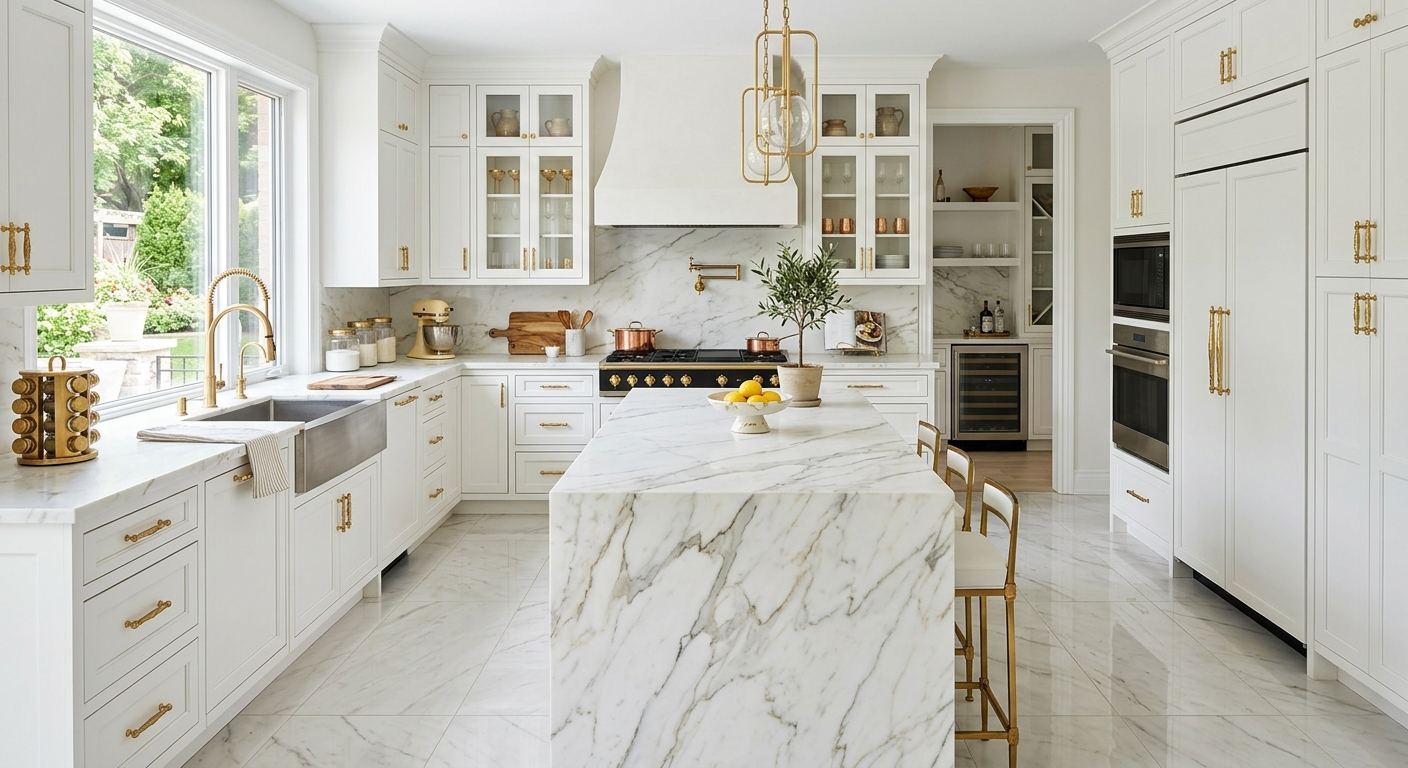
Kitchen renovation options and costs in Heritage Mountain
Kitchen renovations in Heritage Mountain typically start with a clear choice of scope, because the same kitchen can cost very differently from one home to the next. Heritage Mountain has a small-town feel within the Lower Mainland–Southwest market, with a population of 4,664 (Statistics Canada, 2021 Census), but the finish expectations are often influenced by the broader Metro Vancouver resale mindset and what buyers will pay for stone counters, modern layouts, and updated hardware. At the same time, household earning power matters: many homeowners plan renovations with the long-term value recovery in mind, and prices in higher-value areas of the region tend to move upward as people select semi-custom or custom cabinetry and quartz/stone surfaces rather than lower-cost laminate.
In the Lower Mainland–Southwest, the climate itself is less of the driver than the housing value and contractor demand. Coastal humidity and temperature swings do affect how materials behave over time—especially adhesives, caulking, and how quickly finishes cure—but kitchens here usually price off labour availability, site access, and the selected cabinet/counter package. You’ll also find that work crews are busiest around well-established hubs where trades are concentrated, and in and around Surrey/Abbotsford corridors (servicing the wider south-of-Fraser demand), scheduling can tighten. That means a practical refresh can move faster, while larger remodels with plumbing, electrical, and made-to-fit millwork often need earlier booking.
Use the table below to compare common renovation tiers in Heritage Mountain, then we’ll break down the biggest price drivers and what to verify before signing a contract.
| Renovation Tier |
What's Included |
Typical Duration |
Price Range |
| Cosmetic refresh (paint, hardware, new appliances only) |
Cabinet paint or stain touch-up, new pulls/knobs, new appliance package, minor caulking, basic lighting tweaks |
1–3 weeks |
$8,000–$20,000 |
| Mid-range full renovation (new cabinets, counters, sink, tile) |
New cabinetry (semi-custom or upgraded stock), new countertop, sink and tap, backsplash tile, flooring refinishing or limited replacement, ventilation/lighting updates as needed |
4–8 weeks |
$40,000–$85,000 |
| High-end full renovation (custom cabinets, stone counters, island) |
Fully custom cabinetry, stone/quartz counters, large island or layout redesign, upgraded hardware/undercabinet lighting, premium backsplash (tile-to-slab look), enhanced plumbing/electrical scope |
8–14 weeks |
$85,000–$120,000 |
| Cabinet refacing only (new doors + drawer fronts, same boxes) |
Door/drawer replacement, new veneer or wrap on existing boxes (if viable), updated hinges/soft-close hardware, finish matching, minimal demo |
2–5 weeks |
$8,000–$35,000 |
| Countertop swap only (laminate to quartz or stone) |
Removal and install of existing top, new quartz/stone fabrication, sink cut-outs if compatible, undermount sink install where included, basic backsplash allowance depending on scope |
1–3 weeks |
$3,000–$12,000 |
| Backsplash tile installation only |
Tile selection and install, waterproofing prep where needed, grout/finish, cut-outs for outlets and minor edge detailing |
3–7 days |
$1,500–$6,000 |
Prices are estimates only and vary by project scope, site access and material selection.
What affects the price of kitchen renovation in Heritage Mountain
In the Lower Mainland–Southwest, you can see the same kitchen renovation quote land 30–50% apart across British Columbia because the pricing is driven more by market expectations and labour scheduling than by day-to-day climate conditions. In higher-value parts of Metro Vancouver, homeowners commonly choose semi-custom or custom cabinetry, quartz/stone counters, upgraded hardware, and design-led layouts—so the “typical” finish tier is higher. In lower-cost markets, laminate and stock cabinets dominate because they still deliver strong functionality and better short-term ROI. That difference in default expectations is exactly why a refresh at one address can look like a premium rebuild at another.
In Heritage Mountain and the surrounding Lower Mainland–Southwest, there are also a couple of concrete cost shifters. First, layout changes are the unpredictable part: removing a wall, adding an island, or moving a gas line can swing the budget more than choosing between laminate and quartz. Second, housing age impacts hidden prep. Older homes often have older plumbing runs, uneven subfloors, or less accessible shutoffs, and that extra labour can add several thousand dollars even before finishes are selected.
As a rule of thumb, an appliance/hardware-only refresh can stay in the $8,000–$20,000 band, while upgrading to a mid-range full renovation with cabinets and counters frequently lands in the $40,000–$85,000 range. If you’re pushing into custom millwork and stone counters with a new island, budgets commonly follow the $85,000–$120,000 band once electrical, ventilation, and premium cabinetry details are included. Coastal humidity in the Lower Mainland can also affect drying timelines and finishing tolerances, which matters when schedules are tight and crews are working to the same contractor availability windows.
| Price Factor |
Why It Matters |
Cost Impact |
| Cabinet tier — stock vs. semi-custom vs. fully custom millwork |
Material quality, door styles, internal components, and fit/finish all change the labour and material cost |
Can move a full renovation by tens of thousands |
| Countertop material — laminate vs. quartz vs. granite vs. stone |
Fabrication complexity, weight, edge profiles, and sink/cut-out accuracy drive install pricing |
Typically adds several thousand to the project total |
| Layout change — wall removal, island add, plumbing/gas move |
Triggers structural, trade coordination, and additional rough-in work |
Often the biggest unpredictable swing (up to many thousands) |
| Appliance package tier — builder vs. mid-range vs. pro-grade |
Ventilation requirements, electrical needs, and finish compatibility differ by tier |
Broad range; can affect total by several thousand |
| Flooring — refinish existing vs. full replacement |
Subfloor repairs, transitions, and removal/concealment labour differ dramatically |
May add or remove several days of trades work |
| Backsplash — ceramic tile vs. marble vs. full-height slab |
Higher-end materials require more precise layout, specialty cutting, and finishing |
Can double the backsplash line item |
| Electrical — new circuits for island, under-cabinet lighting |
Licensed electrical scope, permits/inspections, and new load planning change costs |
Can add a meaningful amount to labour and materials |
| Permit fees and licensed trade requirements |
Some work is permit-required and adds administrative and inspection time |
Usually moderate, but delays can raise labour totals |
Permits & regulations in British Columbia
In British Columbia, cabinet and countertop swaps typically do not require a permit when you’re keeping the same locations and not altering rough-ins. That means a straight countertop replacement (for example, laminate to quartz) and most cabinet replacements are generally treated as finish work. However, permits and licensed trades usually kick in when you’re changing the functional systems behind the scenes: moving plumbing supply or drain lines, relocating a gas stove/range, altering ventilation for a gas appliance, removing a load-bearing wall, or adding new electrical circuits (such as dedicated power for an island, under-cabinet lighting that requires new wiring runs, or new outlets).
For Heritage Mountain homeowners, the practical step-by-step verification is simple. First, ask the contractor for their British Columbia licence details (and the specific trade class where applicable), then request a certificate of insurance for general liability and confirm coverage limits for renovation work. Next, check for workers’ compensation coverage documentation (WCB/clearance letter) before work starts—this protects you if a worker is injured on site. Most reputable contractors can provide current clearance documentation on request. Finally, confirm in writing who is pulling permits—do not assume it will be included. The written contract should clearly assign permit responsibility.
If a contractor tells you “it’s all included” but can’t explain what they’re permitted to do, or can’t show documentation for licensed trades, treat that as a warning sign.
Cabinets, countertops and layout decisions in Heritage Mountain
When planning a kitchen renovation in Heritage Mountain, focus on three decisions that most directly set your budget and your resale appeal in the Lower Mainland–Southwest market: (1) cabinet tier, (2) countertop material, and (3) layout changes. Cabinet tier determines both the look and how clean the install can be—stock cabinets are the fastest and typically the cheapest, semi-custom is the most popular mid-range path, and custom cabinetry is the highest cost but gives you the best fit around ceilings, soffits, and out-of-square walls common in many older British Columbia homes.
Countertops are where buyers notice the upgrade. Laminate is budget-friendly and practical, but it can be harder to repair cleanly if the surface gets chipped. Quartz engineered stone offers strong stain resistance and a consistent look, while granite/natural stone adds prestige but can involve more care and higher material and fabrication costs. In the Lower Mainland’s coastal humidity, good sealing and proper installation practices matter for all materials, and the backsplash transition/detailing can be the difference between a crisp, long-lasting finish and one that needs attention sooner.
Layout changes—opening up an area, adding an island, or relocating plumbing/gas—should be justified by real space gain. If your plan is to add seating, improve workflow, or create clear sightlines, the cost can be worth it. But if the “layout change” only moves the same footprint around a little, it often isn’t. For example, upgrading from a basic countertop swap (about $3,000–$12,000) to quartz can be a smart, targeted spend, while tearing out walls or moving a gas line can push you well beyond a simple renovation refresh and into a full rebuild budget range.
| Option |
Durability |
Maintenance |
Best For |
Price Range |
| Stock cabinets (big-box) |
Good for everyday use; fit can be more standardized |
Low; wipe clean, tighten hardware as needed |
Fast refreshes and tighter budgets |
$8,000–$25,000 |
| Semi-custom cabinets (local dealer) |
Very durable with better internal options and finish quality |
Low; manage moisture around sinks and dishwasher edges |
Most Heritage Mountain homeowners targeting mid-range resale value |
$20,000–$55,000 |
| Custom cabinets (local millwork shop) |
Best fit and strongest build-to-space detailing |
Low to moderate; keep humidity stable near coastal coastal fluctuations |
Sloped ceilings, awkward layouts, and design-forward kitchens |
$40,000–$90,000 |
| Laminate countertop |
Durable for normal use; can chip or scratch if abused |
Easy daily cleaning; avoid prolonged heat exposure on seams |
Budget-conscious renovations that still want a refreshed look |
$3,000–$7,000 |
| Quartz engineered countertop |
High durability; consistent performance across the surface |
Low; wipe clean, avoid heavy impact on edges |
High-value finishes that buyers recognize quickly |
$6,000–$12,000 |
| Granite / natural stone countertop |
Very durable; natural character varies by slab |
Moderate; periodic sealing is commonly recommended |
Premium look with natural patterning |
$8,000–$16,000 |
| Butcher block countertop |
Solid performance; sensitive to long-standing water |
Moderate; oiling and careful drying around sinks are essential |
Warm, casual styles and households that maintain wood properly |
$5,000–$11,000 |
| Marble countertop |
Beautiful but can be less forgiving to etching from acidic spills |
Higher maintenance; protect from acids and seal appropriately |
Showpiece kitchens where maintenance habits are realistic |
$10,000–$20,000 |
How to choose a kitchen renovation contractor in Heritage Mountain
Choosing the right contractor in Heritage Mountain is mostly about proof: proof they’re licensed where required, insured for the scope, and organized enough to manage trade scheduling in the Lower Mainland–Southwest. Start by asking for documentation for British Columbia licensing for trades that need it (notably electrical and gas work), then request general liability insurance certificates. Next, verify workers’ compensation coverage (WCB/clearance documentation). In practice, contractors who are serious will provide a current clearance letter and an insurance certificate without pushing you to “trust the process.” If they can’t provide documents promptly, that’s your cue to keep shopping.
Then get 2–3 itemised, written quotes. You want a breakdown that separates labour and materials (cabinets, countertops, tile, plumbing/electrical allowances) rather than one lump sum that hides cost drivers. Carefully read the scope: what’s excluded (disposal, drywall patching, subfloor repairs, permit applications), and is permit pulling included if required? Confirm warranty terms too—workmanship warranty length, product/manufacturer warranty details, and whether warranties transfer if you sell your home. Finally, plan the payment schedule: never pay more than 10–15% upfront, and hold back a portion until the job is complete and deficiencies are corrected. Ask for a start date and a completion estimate in writing so you’re not relying on verbal timelines.
- Ask which licensed trades are being used for electrical and gas (if applicable) and request proof
- Confirm general liability insurance and document workers’ compensation clearance
- Require 2–3 itemised quotes with labour/materials breakdowns
- Verify who pulls permits and who pays permit fees
- Clarify disposal, dump fees, and haul-away responsibilities
- Confirm what’s included for demolition, drywall patching, and surface prep
- Get countertop fabrication details: template day, edge profile, sink cut-outs, and lead times
- Ask about cabinet install process and how they handle out-of-square walls
- Require a written timeline and trade coordination plan
- Review warranty: workmanship term, how to file a claim, and any exclusions
- Confirm payment schedule (10–15% max upfront) and holdback amount
- Ask what happens if materials arrive late (schedule impacts and cost responsibility)
In Heritage Mountain kitchens, common red flags include: quotes that omit electrical/gas/permit responsibility details, “allowance” pricing that’s so low it guarantees change orders, no written schedule, warranties that only cover materials but not installation, and refusal to provide insurance/clearance documentation up front.
Frequently asked questions — kitchen renovation in Heritage Mountain
How do I choose a kitchen contractor in Heritage Mountain?
Start by confirming the contractor’s readiness to do regulated work in British Columbia: ask for proof of licensing for electrical and gas-related scopes, plus general liability insurance and workers’ compensation clearance (WCB) before any demolition starts. Then request 2–3 itemised written quotes where labour and materials are clearly separated—especially cabinet, countertop, tile, and allowances—so you can compare apples to apples. Review the scope for permit pulling, disposal, and who handles any drywall/subfloor repairs found during demo. If a kitchen refresh is your target, it should still be scoped realistically; even a “small” move can creep from the $8,000–$20,000 range if plumbing or electrical is discovered to be outdated.
What order do kitchen renovation steps happen in?
In a typical Heritage Mountain renovation, we plan in layers. First comes demolition and assessment, which reveals whether plumbing shutoffs, drain runs, subfloor conditions, and electrical rough-ins can be reused. Next are any required permit-based rough-in trades: plumbing supply/drain moves, gas relocation, and electrical updates like new circuits or under-cabinet lighting wiring. After inspections and sign-offs (when required), framing/drywall patching and flooring prep happen. Cabinets go in once the base plane is set, followed by countertop templating and fabrication scheduling. Finally, installs complete with counters, backsplash tile, fixtures, appliances, and finishing touches. This sequence helps avoid damaging newly installed cabinetry with later trade work and reduces rework during coastal humidity swings.
Can I live at home during a kitchen renovation in Heritage Mountain?
Often yes—particularly for cosmetic refreshes and countertop-only projects—because the work is faster and typically less disruptive. For a mid-range full renovation, many homeowners keep a functional setup using a temporary cooktop/microwave in another room and protect floors and doorways with proper containment. High-end custom rebuilds with wall or island changes can be messier and take longer, so a “living at home” plan depends on your tolerance for dust management and daily accessibility. If you’re aiming for a mid-range scope (commonly $40,000–$85,000), ask your contractor about dust barriers, parking/loading plans, and how they stage materials. Also consider older home layouts: limited water access during plumbing work can make living at home more complicated if shutoffs or drain runs need replacement.
Should I renovate my kitchen before selling in Heritage Mountain?
In many Lower Mainland–Southwest homes, updating the kitchen before selling can improve perceived value, especially when finishes move into the buyer-recognizable range—like quartz counters and modern cabinet hardware. That said, you should time it to your resale plan and avoid over-improving for the neighbourhood. If you’re mostly keeping the footprint and you can target a countertop refresh, it can be a practical spend; countertop swaps are often in the $3,000–$12,000 band depending on material and complexity. For families planning a larger upgrade, a mid-range full renovation (often $40,000–$85,000) tends to align better with how many buyers evaluate turnkey kitchens. Because the broader region’s buyer expectations are shaped by higher-value finish choices, very budget-only refreshes may not deliver the “complete kitchen” impression you’re hoping for.
What's the most popular kitchen style in Heritage Mountain right now?
Most homeowners in the Heritage Mountain area are leaning toward clean, modern transitional styles: shaker-style cabinetry, warmer neutrals, and stone-look surfaces that photograph well in listing photos. Quartz countertops are especially popular because they combine durability with a consistent appearance, and semi-custom cabinetry is frequently chosen to balance cost and fit—particularly where ceilings, corners, or soffits are not perfectly square. You’ll also see under-cabinet lighting and upgraded hardware because they make the kitchen feel finished and brighter, even in homes with less natural light. Style is ultimately personal, but in the Lower Mainland–Southwest market the “safe bet” tends to be timeless rather than trendy, so buyers can imagine their own items in the space.
How do I know if I need to update my kitchen plumbing in Heritage Mountain?
You usually don’t know for sure until demolition, but there are telltale signs: slow drains, persistent leaks under the sink, corrosion or mineral buildup at supply lines, and inconsistent water pressure. If you’re moving a sink location, changing dishwasher hookups, or relocating plumbing for an island, updating is often required because new rough-ins are part of the scope. For homes with older plumbing layouts, hidden shutoff valve condition can also matter—especially in British Columbia’s older housing stock where access can be limited. If you’re staying in the same footprint, plumbing may be “good enough,” but ask for a condition review as part of your quote. This is where itemised quotes help: you want allowances for plumbing refresh if fixtures or lines can’t be safely reused.