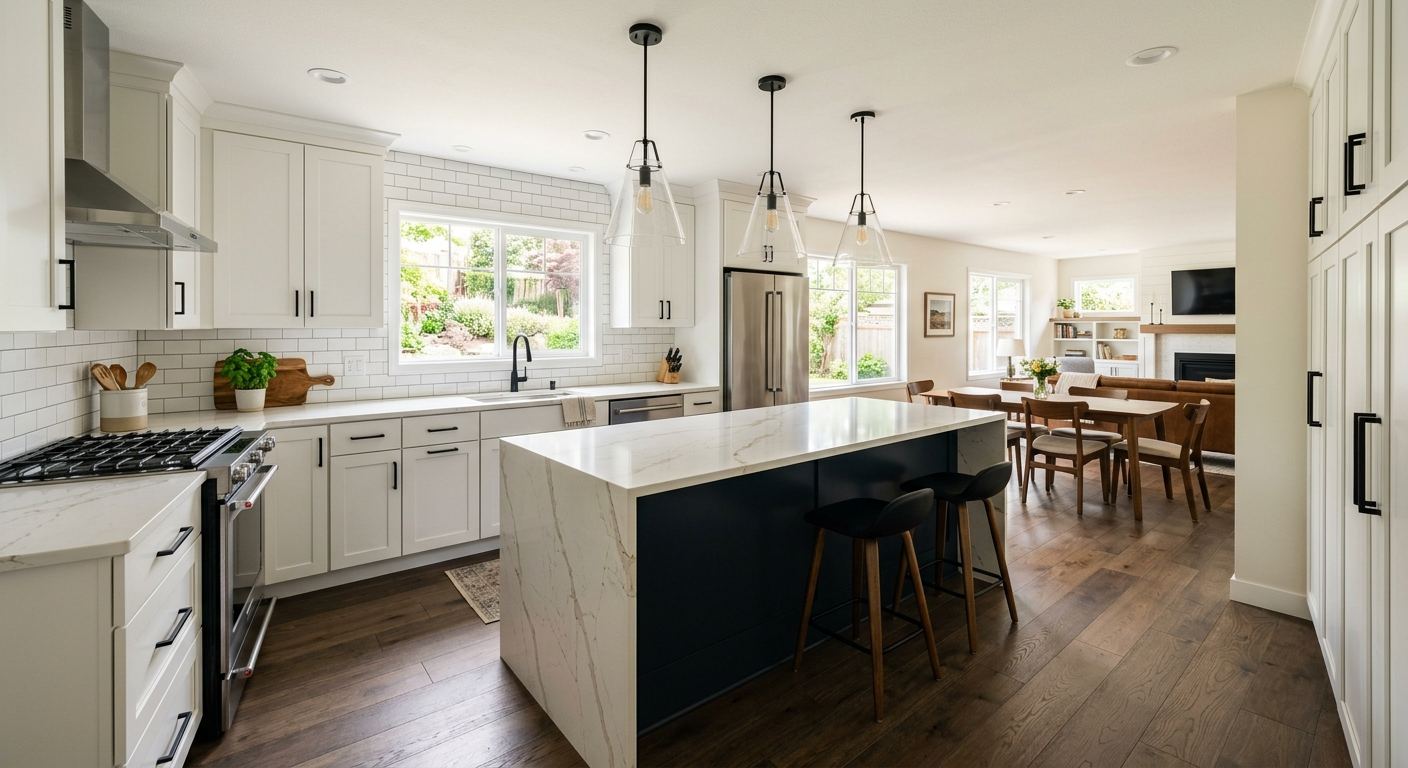
Kitchen renovation options and costs in Valemount
Renovating a kitchen in Valemount usually starts with a simple question: are you refreshing what you have, or rebuilding the whole space? In Valemount, the typical homeowner reality matters. With a median household income of $60,400 (Statistics Canada, 2021 Census) and 68.9% of households owning their home, most projects are planned to hold value and avoid surprises. That same homeowner profile often lines up with the bigger spend categories in the Cariboo region—cabinetry and counter materials—because finishes drive resale appeal more than weather.
In Cariboo, kitchen renovation costs are shaped more by local home value expectations than by climate. British Columbia’s cooler, wetter winters can affect drying times for adhesives and tile, and older homes can require more subfloor or wall prep, but the pricing swing across similar jobs is still usually labor demand and material tier. Availability can be a factor in smaller centres, so booking sooner helps lock in trades. Also, Valemount’s housing stock is older—57.3% of homes were built before 1981—so upgrades often include electrical updates and reinforcement behind finishes.
If you’re near the downtown corridor where many homes date back decades, demand for practical upgrades like flooring, appliance swaps, and updated cabinetry is especially steady. From there, the path splits into cosmetic refreshes, mid-range full renovations, and premium builds with custom millwork—so next, here’s how the main options typically stack up.
| Renovation Tier |
What's Included |
Typical Duration |
Price Range |
| Cosmetic refresh (paint, hardware, new appliances only) |
Prep/paint for walls and trim, new cabinet hardware, appliance swap, basic caulking and finish touch-ups |
1–3 weeks |
$2,000–$10,000 |
| Mid-range full renovation (new cabinets, counters, sink, tile) |
New cabinets (stock or semi-custom), laminate or quartz counters, sink and faucet, backsplash tile, updated flooring plan as needed |
4–8 weeks |
$28,000–$65,000 |
| High-end full renovation (custom cabinets, stone counters, island) |
Custom cabinetry, quartz/granite or natural stone counters, island build-out, higher-end backsplash, coordinated electrical/plumbing moves |
8–14 weeks |
$65,000–$95,000 |
| Cabinet refacing only (new doors + drawer fronts, same boxes) |
Refacing/door replacement, drawer fronts, fresh hardware, optional interior organizers |
2–5 weeks |
$5,000–$28,000 |
| Countertop swap only (laminate to quartz or stone) |
Remove/replace counters, new sink cut-in if needed, sealing and finishing, minor backsplash trim adjustments |
1–2 weeks |
$3,000–$14,000 |
| Backsplash tile installation only |
Tile supply and install, proper waterproofing/adhesion, grout sealing, trim and finishing around outlets |
3–7 days |
$1,500–$9,000 |
Prices are estimates only and vary by project scope, site access and material selection.
What affects the price of kitchen renovation in Valemount
In Valemount and across the Cariboo region, you can see the same “new kitchen” idea quoted 30–50% apart between contractors and material tiers. The biggest drivers aren’t the occasional cool stretch of weather; they’re the economics behind each quote—homeowner expectations, cabinet and countertop choices, and how much structural work (layout changes, electrical, plumbing) gets bundled in. In higher-value pockets of B.C., homeowners more often choose quartz or natural stone counters and semi-custom cabinetry because the upgrade is easier to justify on resale. In more value-conscious markets, laminate and stock cabinets are common because they deliver the look while keeping the payback closer to what local buyers typically want.
Two local conditions frequently change the cost in Valemount. First, older homes (57.3% built before 1981) often hide older wiring, uneven walls, and dated plumbing routes. That means additional electrical prep and patching before tile and cabinet installation. Second, winter moisture and colder indoor temperatures can slow drying for patching compounds and underlayment prep, which can extend schedules by days even when the scope looks straightforward.
For example, if you’re keeping the existing layout, a mid-range full renovation often lands in the $28,000–$65,000 range. If you add an island and move plumbing or a gas line, the same finish package can push toward the upper bands because the most unpredictable items are trades coordination and rough-in work—where the layout, not the countertop, becomes the cost swing. Conversely, a countertop swap only (often $3,000–$14,000) can be a cost-controlled upgrade when the existing sink and cabinet tops are already squared and supported.
With that in mind, here are the factors that most reliably move quotes up or down.
| Price Factor |
Why It Matters |
Cost Impact |
| Cabinet tier — stock vs. semi-custom vs. fully custom millwork |
Cabinet boxes, door styles, internal organizers, and lead times vary widely by tier |
Often the largest swing; can move a project by tens of thousands |
| Countertop material — laminate vs. quartz vs. granite vs. stone |
Material cost plus fabrication/installation complexity changes total pricing |
Switching to quartz or natural stone commonly adds several thousand |
| Layout change — wall removal, island add, plumbing/gas move |
Rough framing, waterproofing, venting, and trade coordination add uncertainty |
Can add major cost even if finishes stay mid-range |
| Appliance package tier — builder vs. mid-range vs. pro-grade |
Delivery, electrical requirements, and trim kits affect install labour |
Mid-range swaps are usually predictable; pro-grade can escalate add-ons |
| Flooring — refinish existing vs. full replacement |
Uneven subfloors and patching needs grow with age of the home |
Full replacement typically adds labour and material; refinish keeps costs down |
| Backsplash — ceramic tile vs. marble vs. full-height slab |
Handling, cutting around outlets, and material weight increase install time |
Premium tile or slab can raise costs quickly |
| Electrical — new circuits for island, under-cabinet lighting |
New circuits require licensed work and inspections, plus fixture wiring labour |
Common in island builds; can materially increase totals |
| Permit fees and licensed trade requirements |
Permitting and inspections add administrative steps and licensed scheduling |
Not every change triggers permits, but when it does, timelines and costs rise |
Permits & regulations in British Columbia
In British Columbia, many “swap-in” kitchen tasks don’t require permits. Cabinet and countertop swaps typically fall into the category of like-for-like or cosmetic replacements: changing cabinet doors, installing new cabinets on existing bases, or replacing counters usually proceed without a building permit. However, once you start moving plumbing, relocating gas components, changing load paths, or adding electrical capacity, permits and licensed trades usually come into play.
Work that commonly does require permits includes moving supply or drain lines for a sink/dishwasher, relocating a gas stove or making changes that affect gas connections, removing a load-bearing wall (or altering structural framing), and adding new electrical circuits—especially for an island, additional outlets, or new ventilation controls. Electrical work should be done by a licensed electrician, and gas work must be completed by a licensed gas fitter, with inspections scheduled as required.
For a homeowner in Valemount, the verification process should be straightforward. First, ask for the contractor’s current licence details (and the names of the specific licensed trades they’ll use). Second, request a certificate of insurance showing liability coverage. Third, confirm workplace coverage documentation for the contractor and their trades (commonly referenced as WSIB/WCB coverage depending on the employer). Finally, ask the contractor to provide clearance or evidence documents before work starts, then ensure all responsibilities—permits, scheduling, and inspections—are clearly stated in the written contract.
Cabinets, countertops and layout decisions in Valemount
For most Valemount kitchens, three decisions determine both satisfaction and cost: (1) cabinet tier, (2) countertop material, and (3) whether you change the layout. Start with cabinets. Stock cabinets are the fastest and often cheapest because they’re readily available and designed for quick installs. Semi-custom cabinets are the mid-range sweet spot: you can usually adjust sizing, pull styles, and internal organizers without paying full custom millwork prices. Custom cabinetry delivers the best fit and storage planning, but it’s the priciest option and can extend lead times.
Next, counters. Laminate is budget-friendly and practical, but it’s less forgiving for heat and can be more sensitive to impact over time. Quartz is a durable, low-maintenance choice that holds up well to everyday use and is a common resale-friendly upgrade. Granite/natural stone can look premium and last long, but it typically requires more attention for sealing and chip/edge care. Butcher block suits some homes well for warmth and style, while marble is beautiful but generally higher maintenance due to staining potential.
Finally, layout changes—open-concept wall removal, adding an island, or relocating plumbing/gas—should be justified by real space gains. The cost often jumps because you’re paying for framing, rough-ins, and inspections, not just finishes. A concrete example: if you’re already planning quartz counters and upgraded tile, you may keep within the $28,000–$65,000 mid-range band when the sink stays put. But if you move the sink and add an island with new electrical and a revised plumbing route, it’s easy to push toward the $65,000–$95,000 high-end range even before considering custom cabinets.
Cariboo’s resale reality also matters: buyers typically expect a modern, clean-lined cabinet look and durable surfaces—so prioritizing cabinetry and counter upgrades usually delivers more perceived value than smaller aesthetic changes.
| Option |
Durability |
Maintenance |
Best For |
Price Range |
| Stock cabinets (big-box) |
Good for daily use; limited size options can affect fit |
Low; wipe-clean surfaces, check hardware tightness |
Refresh-focused projects and tighter budgets |
$5,000–$25,000 (cabinet portion varies by kitchen size) |
| Semi-custom cabinets (local dealer) |
Strong build quality with better fit and options |
Low; organizers and soft-close hardware reduce wear |
Most Valemount “best value” renovations |
$15,000–$45,000 (cabinet portion varies by kitchen size) |
| Custom cabinets (local millwork shop) |
Excellent fit and build longevity; supports unique storage |
Low to moderate; depends on finish type |
Hard-to-fit spaces, premium storage planning, resale-focused upgrades |
$35,000–$80,000+ (cabinet portion varies by kitchen size) |
| Laminate countertop |
Good everyday durability; can chip at edges and be sensitive to heat |
Low; avoid prolonged heat exposure and harsh abrasive cleaners |
Cost-controlled upgrades while keeping cabinets moving |
$3,000–$7,000 |
| Quartz engineered countertop |
Very durable and consistent; resists stains and everyday impacts |
Very low; regular soap-and-water care |
Balanced performance and resale appeal |
$7,000–$14,000 |
| Granite / natural stone countertop |
High durability; edges and thin sections require careful handling |
Moderate; periodic sealing may be needed |
Premium look where maintenance expectations are manageable |
$8,000–$16,000 |
| Butcher block countertop |
Durable with proper care; can show dents or water marks if neglected |
Moderate; regular oiling and prompt drying |
Farmhouse/warm design and homes with consistent maintenance habits |
$4,500–$11,000 |
| Marble countertop |
Elegant but more prone to scratching and staining |
Higher; requires protective habits and careful cleaners |
Design-forward kitchens where appearances are the priority |
$10,000–$20,000+ |
How to choose a kitchen renovation contractor in Valemount
Choosing the right kitchen renovation contractor in Valemount starts with proof, not promises. In British Columbia, confirm they’re operating with the correct licensing for the trades they manage or subcontract. Ask for their liability insurance certificate and verify that the coverage matches the scope of work (not a generic minimum). Also request documentation for WSIB/WCB-type workplace coverage for the employer/trades involved—so you’re not left holding the risk if something goes wrong on site.
Next, get 2–3 itemised written quotes. You want labour and materials broken out separately, not one lump-sum number that hides assumptions. Read scope details line-by-line: what’s excluded (e.g., drywall repair depth, subfloor patching), whether permits are included, and whether waste disposal is part of the contract. A quote should also state how electrical/plumbing work will be handled when layout changes are involved.
Warranty matters as much as price. Ask for a workmanship warranty length, plus separate manufacturer warranties on cabinets, countertops, and fixtures. Confirm whether warranties transfer to a new owner if you sell. For payment, avoid large upfront payments—generally keep deposits around 10–15% maximum and use a holdback until the work is complete and deficiencies are corrected. Finally, require a start date and a realistic completion estimate in writing, including a schedule for lead items like custom doors or stone fabrication.
- Request written proof of British Columbia licensing for the contractor and each specialty trade used.
- Verify liability insurance: ask for the certificate and confirm it’s current.
- Confirm WSIB/WCB workplace coverage for the employer and key trades involved.
- Get 2–3 itemised quotes with labour + materials, not a single total.
- Check whether permits are included and who is responsible for pulling them.
- Confirm disposal/recycling of demolition materials is included.
- Ask who does the demolition, how dust control will be handled, and where materials are stored.
- Review cabinet lead times and what happens if deliveries are delayed.
- Ensure the quote includes backsplash and tile prep details (waterproofing/adhesion specifics).
- Ask for workmanship warranty terms in writing and what “call-back” covers.
- Use a payment schedule: no large upfront payment; keep a holdback for completion and punch-list items.
- Get a written timeline with milestones (demolition, rough-ins, cabinet install, countertops, final trim).
In Valemount, I consider these red flags: (1) a contractor who won’t provide licence/insurance proof before quoting, (2) quotes that omit permit responsibility when layout or gas/plumbing changes are proposed, (3) vague scopes like “materials included” without brand/tier details, (4) pressure to pay a large deposit early, and (5) refusal to put warranty and start/completion dates in writing.
Frequently asked questions — kitchen renovation in Valemount
Can I move my kitchen sink or stove?
Yes, but in British Columbia it can trigger permits and definitely requires licensed trades. Moving a sink usually means altering supply and drain lines, which typically adds rough-in work, patching, and inspection requirements. If you’re moving a stove and especially if you have gas, relocating gas connections must be done by a licensed gas fitter, and you should expect extra coordination and inspections. For planning, moving services often changes cost more than finish upgrades—so a project that might land in the mid-range (for example, a $28,000–$65,000 full renovation with no major plumbing moves) can climb toward the upper band when rough-ins, electrical updates, and lead times are added. Also consider your older-home conditions in Valemount: pre-1981 homes can have dated plumbing routes that are harder to modify cleanly.
What's the most cost-effective kitchen upgrade?
Most homeowners in Valemount get the biggest “wow” for the money by prioritizing cabinets and changing the look of surfaces without doing a full layout rebuild. If your cabinet boxes are sound, cabinet refacing can be a strong value route; it typically falls in the $5,000–$28,000 range depending on door styles, interior organizers, and prep needs. If your layout is already working, a countertop swap only is also a cost-controlled upgrade—commonly $3,000–$14,000—because you’re paying for fabrication and install without redoing cabinets or major plumbing. Pair either upgrade with a thoughtful backsplash (often $1,500–$9,000) to tie the look together. Climate matters less than you’d think; the main “real-world” factor in Valemount is scheduling and drying time for patching/tile prep in cooler conditions, which can affect how fast the crew can move to the next step.
Custom vs stock cabinets — is custom worth it?
Custom cabinets can be worth it when your kitchen layout is irregular, you need very specific storage, or you want a built-in look that resale buyers notice. But if your goal is maximum value per dollar, semi-custom is often the practical middle ground in Valemount. Stock cabinets are typically the fastest and cheapest because they’re readily available, and many homeowners are satisfied with the result—especially when paired with quartz counters and a clean backsplash. The tradeoff with stock is fit and limited options, which can lead to more filler, adjustments, or less efficient storage. If you’re planning a full renovation, remember that the cabinet tier is usually the biggest cost swing: a mid-range full renovation (for example $28,000–$65,000) often works well for most owners, while going fully custom is more common when you’re targeting the higher-end band ($65,000–$95,000) with an island or more complex finishes.
How do I choose a kitchen contractor in Valemount?
Start by verifying licensing and coverage before you sign anything. In British Columbia, ask for proof of the contractor’s licence, plus their liability insurance certificate (current date and coverage amount). For the trades, confirm workplace coverage documentation (often described as WSIB/WCB depending on employer), and request evidence before work begins. Next, compare 2–3 itemised written quotes that separate labour vs materials. Make sure the scope is clear: what’s included (cabinet install, countertop template and install, disposal, tile prep), and what’s excluded. Confirm who is responsible for permits if you’re moving plumbing, adding electrical circuits, altering structure, or relocating gas. Finally, check warranty terms in writing and how long workmanship is covered, plus whether it transfers on resale. Avoid contractors who push large deposits early or won’t put the timeline (start/completion) in writing.
What order do kitchen renovation steps happen in?
A typical order keeps rough-ins efficient and prevents rework. First comes design finalization and measurements—especially for cabinets and countertops. Then demolition and site prep happen, followed by any framing/patching and rough plumbing/electrical/gas work (when part of your scope). After rough-ins are approved, you move into drywall finishing and underlayment prep, then flooring and tile work. Cabinet installation comes next, followed by countertop fabrication and install (which relies on accurate templates). Finally, you complete backsplash tile, sealants, trim, hardware, appliance connections, and a thorough punch-list inspection. In Valemount’s cooler months, drying times for patching and tile prep can extend the schedule a bit, so a contractor who accounts for product cure times is less likely to rush the critical path. If your scope includes an island with new wiring or relocated plumbing, that usually adds sequencing complexity—so your contractor should explain the trade handoffs clearly in the schedule.
Can I live at home during a kitchen renovation in Valemount?
Often yes, but it depends on scope and how your contractor plans containment and access. With a cosmetic refresh or cabinet refacing, many homeowners stay in place because demolition is limited and the project is shorter. For full renovations—especially when countertops are removed and plumbing/electrical work is underway—living at home can be challenging but still workable with a temporary setup. In Valemount, the practical factor is whether you’ll have safe food prep and a usable sink/dishwashing option during rough-ins. Many crews can protect floors with dust control and keep a work zone separated, but you’ll want a clear plan for where appliances and water access will be during the rough-in phase. Cost-wise, a full mid-range renovation often sits in the $28,000–$65,000 range; higher-end projects can extend longer. Longer schedules typically make “living in place” more disruptive, so discuss the timeline and access logistics up front.