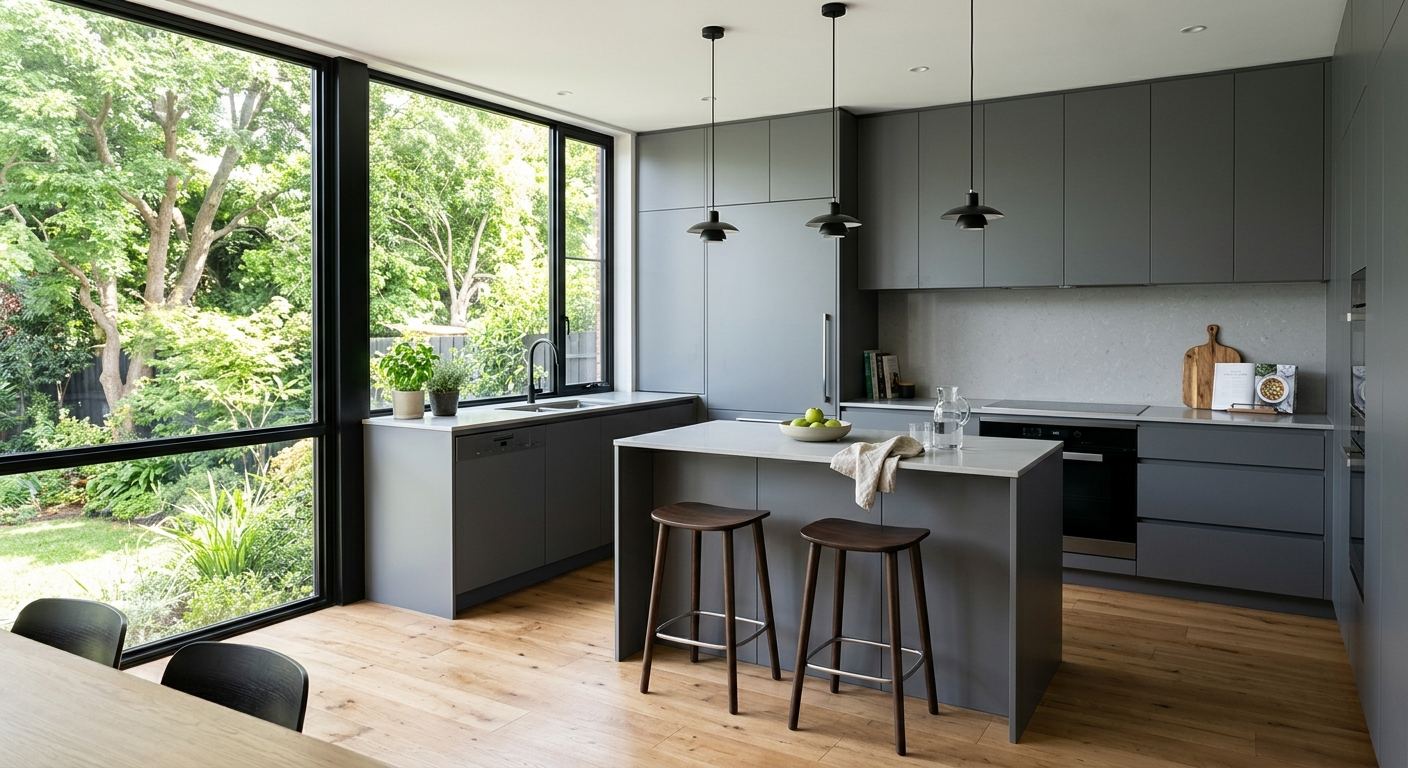
Kitchen renovation options and costs in Mission
Kitchen renovation in Mission, British Columbia is often driven by what homeowners want the room to look like when they’re doing day-to-day life and, importantly, what buyers expect when the home changes hands. With a median household income of about $98,000 (Statistics Canada, 2021 Census) and a homeowner-leaning housing mix—10,835 homeowner households (76.9% of all households)—many upgrades are planned as “value upgrades,” not just cosmetic changes. That local reality shapes the options you’ll see: more homeowners choose practical, mid-range finishes first, then stretch for higher-end materials when they’re updating layouts.
In the Lower Mainland–Southwest, pricing is less about climate damage and more about market economics and the finish tier. Mission sits within Metro Vancouver’s broader demand: labour capacity and material lead times can tighten during peak renovation seasons, which nudges labour-heavy scopes higher. The weather can still matter in a direct way—older, pre-1981 homes (42.4% built before 1981) may have uneven flooring or dated ductwork that complicates cabinet installation and tile detailing. That’s why a “standard kitchen size” can land very differently between a quick refresh and a full rebuild.
If you’re near demand pockets like Port Kells area and the Highway 7 corridor, you’ll notice trades scheduling is especially competitive. Contractors there often prioritize jobs with clear scopes—so the same kitchen can come in lower when you choose stock cabinets and simpler plumbing paths, and higher when you add islands or upgrade to quartz and stone.
Use the table below as a practical starting point for comparing renovation tiers in Mission.
| Renovation Tier |
What's Included |
Typical Duration |
Price Range |
| Cosmetic refresh (paint, hardware, new appliances only) |
Paint, new pulls/knobs, appliance swap (no plumbing/gas relocation), minor touch-ups; countertop use stays the same |
3–7 days |
$8,000–$20,000 |
| Mid-range full renovation (new cabinets, counters, sink, tile) |
Semi-custom or stock cabinetry, new counters (quartz or laminate), new sink and tap, backsplash tile, flooring prep, basic lighting updates |
3–5 weeks |
$40,000–$85,000 |
| High-end full renovation (custom cabinets, stone counters, island) |
Custom millwork, stone counters (granite/engineered stone), island with upgraded plumbing/electrical, higher-end tile/backsplash, premium hardware |
6–10 weeks |
$85,000–$120,000 |
| Cabinet refacing only (new doors + drawer fronts, same boxes) |
Refinish existing cabinet boxes, new doors/drawer fronts, new hardware; reuse layout and most plumbing lines |
1–2 weeks |
$8,000–$30,000 |
| Countertop swap only (laminate to quartz or stone) |
Remove old counters, prep and fabricate new surface, install and seal (where required), backsplash tie-in if included |
2–5 days |
$3,000–$12,000 |
| Backsplash tile installation only |
Tile removal (if needed), substrate prep, tile install, grout/seal, minor caulking and cleanup |
3–7 days |
$1,500–$6,000 |
Prices are estimates only and vary by project scope, site access and material selection.
What affects the price of kitchen renovation in Mission
In the Lower Mainland–Southwest, it’s very common to see quotes for the “same kitchen” vary by 30–50% across British Columbia. The biggest drivers aren’t the local weather—they’re home values, buyer expectations at resale, and the chosen finish tier. In higher-value parts of the region, homeowners often default to quartz or stone counters and semi-custom cabinetry because renovation costs are easier to justify on resale. In more modest scopes, laminate counters and stock cabinets dominate because they protect ROI while still improving function.
Layout changes are the most unpredictable line item, regardless of finish level. Removing a wall for an open-concept look, adding an island, or moving a gas line/plumbing supply can turn a mid-range scope into a higher band quickly. As an example, upgrading from laminate to quartz might land around the countertop band ($3,000–$12,000), but adding island plumbing/electrical can push the project toward the full renovation totals ($40,000–$120,000) because it triggers trade scheduling, wall openings, and inspection requirements.
In Mission specifically, older housing stock affects labour time. With 42.4% of homes built before 1981 (Statistics Canada, 2021 Census), it’s not unusual to uncover off-level floors or older venting paths during demo. That can add subfloor work and extra prep time before cabinets go in. Conversely, if your kitchen is already modern and plumbing locations are staying put, you can keep costs more controlled—especially if you choose practical cabinet tiers and avoid shifting major lines.
Below are the price factors I see most often when Mission homeowners compare contractor quotes.
| Price Factor |
Why It Matters |
Cost Impact |
| Cabinet tier — stock vs. semi-custom vs. fully custom millwork |
Higher tiers offer better door/drawer options, more fitting precision, and stronger long-term fit/finish |
Often shifts the total by several tens of thousands on full projects |
| Countertop material — laminate vs. quartz vs. granite vs. stone |
Material cost plus labour/edge detail; stone also adds fabrication weight and install care |
Typical countertop band: $3,000–$12,000; stone/complex edges trend higher |
| Layout change — wall removal, island add, plumbing/gas move |
Creates hidden scope: framing, rework, inspections, and longer trade coordination |
Usually the biggest swing factor; can move you from mid-range toward high-end totals |
| Appliance package tier — builder vs. mid-range vs. pro-grade |
Dimensional differences, ventilation requirements, and install complexity vary |
Can add noticeable cost even when cabinetry stays the same |
| Flooring — refinish existing vs. full replacement |
Refinish reduces demo and dust; replacement allows correcting subfloor issues |
Refinish generally lower; full replacement adds labour and materials |
| Backsplash — ceramic tile vs. marble vs. full-height slab |
Material hardness, pattern matching, and cutting complexity change labour time |
Backsplash & tile band: $1,500–$6,000 depending on coverage and material |
| Electrical — new circuits for island, under-cabinet lighting |
Lighting and outlets affect circuit planning, rough-in time, and inspection |
Can add cost quickly when island power is required |
| Permit fees and licensed trade requirements |
Permits/inspections aren’t optional for certain scope; licensed trades can’t be substituted |
Mostly impacts labour scheduling and compliance, and can add direct permit/trade fees |
Permits & regulations in British Columbia
In British Columbia, many “swap-only” kitchen upgrades are straightforward from a permit standpoint, but anything that changes life-safety systems or structural elements typically requires permits and licensed trades. Cabinet and countertop swaps generally do not require permits. However, if you move plumbing supply or drain lines, relocate gas for a stove, range, or gas-rated appliance connection, remove a load-bearing wall, or add new electrical circuits (for example, power to an island or under-cabinet lighting tied to new wiring), that work commonly requires permits and inspections.
Step-by-step for homeowners in Mission: first, ask the contractor to confirm in writing who is pulling the permit for each scope item. Next, verify the contractor’s British Columbia licence and business details on the appropriate online registry, then request their liability insurance certificate and confirm the named insured matches the company doing the work. For WSIB/WCB coverage, ask for proof of coverage or a clearance letter (as applicable for the contractor’s situation) and ensure the coverage is current. Also ask who is responsible for licensed trades (gas fitter/electrician) and request their proof of licensing/insurance for their portion of the work.
Finally, make sure the contract spells out permit responsibility, inspection timing, and what happens if concealed conditions require scope changes.
Cabinets, countertops and layout decisions in Mission
In a Mission kitchen renovation, three decisions determine most of your cost and your resale impact: (1) cabinet tier, (2) countertop material, and (3) layout changes. For cabinet tier, stock cabinets are fastest and cheapest because they’re manufactured as standard sizes. Semi-custom is the most popular mid-range choice in the Lower Mainland–Southwest because it balances fitting and lead times: you can improve the look with better door styles and more flexibility around odd wall lengths. Custom cabinets cost the most, but they’re ideal when you need a perfect fit, special storage (pantries, appliance garages, concealed trash), or unusual room geometry.
Countertops follow a similar logic. Laminate can be a budget win, while quartz is the common “best overall” for Mission homeowners because it handles everyday impacts well and doesn’t demand the same sealing schedule as some natural stones. Granite/natural stone can look exceptional, but it adds fabrication cost and needs careful handling at install. Butcher block can suit certain homes for warmth, though it requires more maintenance and is sensitive to moisture cycles common in older houses if ventilation is inadequate.
Layout changes are where justification matters. If you add an island, you’re often buying space, storage, and flow. But if the island forces you to move plumbing or gas, costs climb because openings, rough-in work, and inspections increase the project timeline. A realistic example: upgrading from laminate to quartz might sit roughly within the countertop band (often $3,000–$12,000). By comparison, moving the plumbing path to support island seating can push the job into a higher total range because it’s no longer “counter-only,” it becomes a broader renovation scope.
These choices should match the Lower Mainland–Southwest resale expectations at your budget level—buyers notice storage quality, countertop look, and how the kitchen works more than paint alone.
| Option |
Durability |
Maintenance |
Best For |
Price Range |
| Stock cabinets (big-box) |
Good everyday durability with standard sizing; performance depends on hardware and assembly quality |
Low; typical wipe-down and tightening of hardware over time |
Fast timelines, budget-first renovations, straightforward layouts |
$8,000–$25,000 |
| Semi-custom cabinets (local dealer) |
Very solid; better options for door styles, internal storage, and fit to walls |
Low to moderate; hinges/rails benefit from occasional adjustment |
Most Mission remodels seeking a “real upgrade” without fully custom costs |
$20,000–$55,000 |
| Custom cabinets (local millwork shop) |
Highest fit and finish; tailored storage and often longer-lived materials/structure |
Low; similar care to other wood cabinets but craftsmanship is built to last |
Unusual layouts, maximum storage, premium design, and tight space constraints |
$45,000–$85,000 |
| Laminate countertop |
Resists stains well, but edges can be more vulnerable with impact if not well-finished |
Low; avoid prolonged standing water at seams and edges |
Budget refresh when you’re keeping the kitchen footprint unchanged |
$3,000–$7,000 |
| Quartz engineered countertop |
High everyday durability; consistent surface reduces surprises after install |
Low; no routine sealing required; wipe-clean only |
Best balance for Mission homeowners wanting a premium look with manageable upkeep |
$6,000–$12,000 |
| Granite / natural stone countertop |
Very durable surface; each slab varies and requires careful selection |
Moderate; may need periodic sealing depending on product |
Premium appearance where homeowners value unique stone character |
$7,000–$13,000 |
| Butcher block countertop |
Solid for cutting surfaces but can dent/scratch with heavy impact |
Higher; regular oiling and careful moisture management are needed |
Homes where warmth is a priority and homeowners will maintain the surface |
$4,000–$9,000 |
| Marble countertop |
Beautiful but more susceptible to etching/staining than quartz and some granites |
Higher; requires attention to acids and spills, plus sealing considerations |
Design-led kitchens where lifestyle and care habits match the material |
$10,000–$18,000 |
How to choose a kitchen renovation contractor in Mission
Choosing the right contractor in Mission starts with verifying licensing and coverage for British Columbia. Ask for proof that the contractor is properly licensed (where applicable) and obtain their liability insurance certificate—confirm it’s current and that the coverage limits are appropriate for a kitchen renovation scope that includes demolition, carpentry, and finishing trades. For workers’ compensation coverage, request proof of WSIB/WCB coverage or a clearance letter where applicable; don’t accept “we’re covered” without a document. Then verify that any specialty trades (gas fitting, electrical) are licensed for their scope and that you’ll have inspection sign-off as required.
Next, get 2–3 itemised written quotes. You want a breakdown that separates labour and materials rather than a single lump sum. Make sure the quote clearly lists: cabinet supply (brand/tier), countertop material and edges, tile scope, appliance inclusions, and whether disposal/delivery charges are included. Also confirm whether permits are part of the contractor’s responsibility, and whether any inspections are scheduled within the timeline.
Warranty and payments matter. Request workmanship warranty length and whether it covers labour-only or labour plus labour-related adjustments. Clarify manufacturer warranty details for cabinetry/counters and whether the warranty is transferable if you sell. For payments, never agree to more than 10–15% upfront; structure progress payments so there’s a holdback until completion and punch-list sign-off. Finally, insist on a start date and completion estimate in writing so you can plan around lead times for cabinets and stone.
- Provide a detailed, line-by-line quote (labour + materials), not just totals
- Confirm who pulls permits and schedules inspections for gas/plumbing/electrical changes
- Ask for proof of liability insurance and clear workers’ compensation coverage documents
- Check product specs: cabinet tier, countertop thickness, edge profile, and backsplash coverage
- Verify disposal is included (and how it’s handled during demolition)
- Request a clear scope of what’s excluded (lighting fixtures? moulding trims? caulking?)
- Confirm site protection: dust control, floor protection, and how they manage debris
- Ask about lead times and whether storage/handling fees apply for cabinets/counters
- Ensure warranty terms are written and cover workmanship for a defined period
- Review payment schedule and insist on a holdback until completion/punch list
- Get a timeline with milestones (demo, rough-in, install, finish, final walkthrough)
- Ask who your daily contact is during construction and how change orders are handled
Red flags I see in Mission include: quotes that exclude disposal but assume it’s “included somewhere,” vague scopes like “plumbing adjustments” without specifics, requests for large deposits (beyond 10–15%) early in demo, warranties that are only verbal, and contractors who won’t provide insurance/coverage documents before you sign.
Frequently asked questions — kitchen renovation in Mission
What's the most cost-effective kitchen upgrade?
The most cost-effective upgrade in Mission is usually a cosmetic refresh paired with targeted appliance swaps—especially if your cabinet boxes are still structurally sound. Painting, new hardware, and replacing appliances can refresh the room quickly without triggering major plumbing or electrical changes, which keeps scope predictable. If you want a bigger visual impact without the full cost of a remodel, swap the countertops (often within the $3,000–$12,000 countertop band) and add a backsplash (commonly $1,500–$6,000) to modernize the focal areas buyers look at. In older homes (42.4% built before 1981; Statistics Canada, 2021 Census), plan to address any moisture/ventilation concerns first so new surfaces last. As a starting point, many homeowners aim for a refresh range around $8,000–$20,000 before deciding whether to step up to a full renovation.
Custom vs stock cabinets — is custom worth it?
Custom is worth it when your layout has challenges (out-of-square walls, tight appliance clearances, awkward pantry spaces) or when you want highly tailored storage. Stock cabinets can be the most economical path, but they rely on standard sizing; you may need more filler, and you can be limited in internal organization. Semi-custom is often the “sweet spot” for Mission homeowners because it offers better fit and storage options without the full custom price jump. With today’s Lower Mainland–Southwest buyer expectations, cabinetry quality is more noticeable than people think—so if you’re already investing toward a mid-range or full renovation total ($40,000–$120,000), upgrading cabinetry tier can pay off. If your main goal is budget control, start with semi-custom for better function and invest in quartz counters first, then move toward custom only if the room truly demands it.
How do I choose a kitchen contractor in Mission?
Choose a contractor by verifying British Columbia coverage and matching their scope discipline to your kitchen plan. First, ask for proof of liability insurance and current workers’ compensation coverage (WSIB/WCB or a clearance letter, as applicable), plus evidence of licensing for any trade that must be licensed. Next, request 2–3 itemised written quotes that break out labour vs materials and clearly state what’s included: cabinet supply, countertop edges, backsplash coverage, disposal, and whether permits are included. In Mission, kitchens often involve older building details (many homes pre-1981), so a good contractor will proactively note potential conditions that can affect timeline and costs. Confirm warranty terms in writing and request a payment schedule with limited upfront deposit (generally 10–15%) and a holdback until completion. If they won’t share documents or the scope is vague, that’s a practical sign to keep looking.
What order do kitchen renovation steps happen in?
In a typical Mission kitchen renovation, the order follows trade sequencing to avoid rework. It starts with planning and approvals, then demo and site protection. Next comes rough-in: electrical, plumbing, and gas (if you’re changing anything) are installed and inspected where required. After that, framing and subfloor/flooring prep happen if needed—this is especially important in older homes where levels may be off. Cabinets then get installed, followed by countertop fabrication and installation (quartz/stone needs accurate templates). Tile/backsplash is usually installed after cabinets are set so lines align correctly. Finally, trim, painting/finishing touch-ups, fixture install, appliance hookup, and the final walkthrough/punch list complete the job. A clear schedule should include lead times for cabinets and counters, which is often a bigger timeline factor than demolition itself.
Can I live at home during a kitchen renovation in Mission?
Often yes, but it depends on how invasive your scope is and how quickly your contractor can sequence trades. For a cosmetic refresh or cabinet refacing, you may be able to stay in the home with minimal disruption. For a full renovation—especially mid-range full projects around $40,000–$85,000—living in the home is possible for some families, but you’ll need a workable temporary kitchen setup (typically a microwave, hot plate, kettle, and basic sink access) and clear dust protection. Many homeowners in Mission choose to stay if plumbing and electrical work can be contained and a timeline is tight. If you’re doing an island with plumbing/gas relocation, expect more disruption and longer dust exposure during wall openings and rough-ins. Ask your contractor about dust control, where the fridge/microwave will go, and whether they can provide a daily pathway plan during installation days.
Should I renovate my kitchen before selling in Mission?
It can be a smart move, but you’ll want to match the renovation tier to the buyer pool and avoid overspending beyond what your neighbourhood can support. In Mission, where many homes have been lived in for years and a large share were built before 1981 (Statistics Canada, 2021 Census), buyers often expect functional updates: clean, modern surfaces, reliable cabinetry fit, and counters/backsplash that don’t look dated. A refresh or selective upgrades can offer strong visual return; for example, new counters and backsplash can modernize the room within the $3,000–$12,000 countertop band plus the $1,500–$6,000 backsplash range. If you’re planning a full renovation, align it with the mid-range or high-end band you can realistically recoup based on your expected sale timing and local competition—full renovations commonly run $40,000–$120,000 in the region. The best approach is to decide your target finish level first, then choose the scope that supports it without unnecessary layout changes.