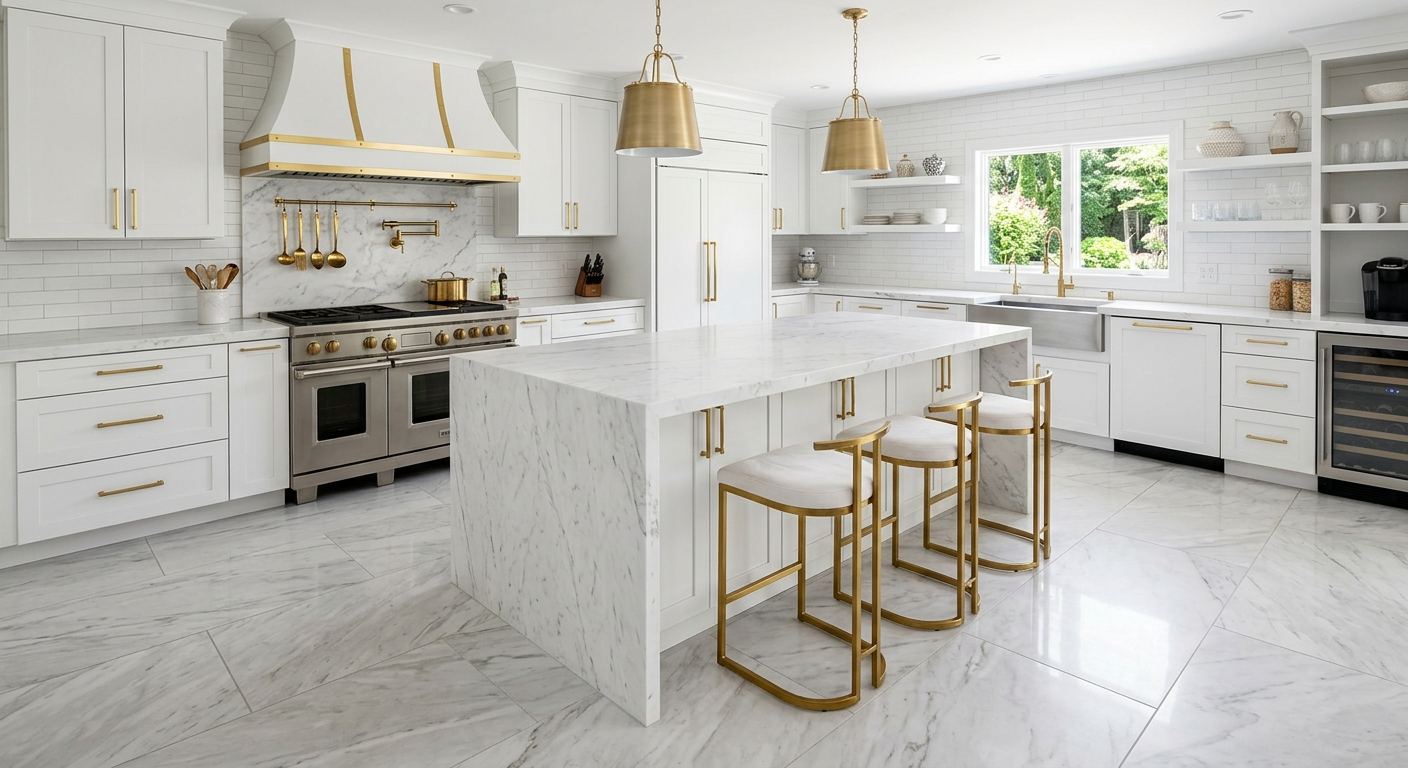
Kitchen renovation options and costs in Campbell River
Kitchen renovation options in Campbell River can run the gamut from simple cosmetic updates to full rebuilds, and the right path usually comes down to how you want the space to look—and how long you plan to stay in your home. With a median household income of $78,000 (Statistics Canada, 2021 Census), many homeowners choose either a mid-range remodel or a targeted upgrade that delivers the biggest visual impact. Campbell River’s homeowner base is largely established (11,165 homeowner households, 71.8% of households own), which also supports demand for cabinets and countertops that hold up to daily coastal wear. In higher-value pockets across Vancouver Island and the Coast, buyers commonly expect quartz or natural stone counters and semi-custom or custom cabinetry—finish choices that push projects toward the upper end of provincial ranges. In more modest settings or secondary-suite style homes, stock cabinetry and laminate/entry quartz are more common to keep budgets closer to “refresh” levels.
Climate isn’t the main driver of pricing in Vancouver Island and the Coast the way it is in more extreme interior regions; contractors still price mostly off labour availability, material tier, and the complexity of plumbing and electrical. That said, Campbell River’s older housing stock matters: with 40.0% of homes built before 1981 (Statistics Canada, 2021 Census), it’s common to see dated framing, older supply lines, and less flexible electrical capacity—details that can affect how smoothly a remodel goes. Trade demand can be especially strong around the North Island/Bute Inlet corridor and near downtown during spring and early summer.
Use the table below to compare typical scope and pricing bands before you start requesting quotes.
| Renovation Tier |
What's Included |
Typical Duration |
Price Range |
| Cosmetic refresh (paint, hardware, new appliances only) |
Cabinet paint/stain (or touch-ups), new hardware, new/compatible appliances, minor caulking and trim work |
1–2 weeks |
$15,000–$35,000 |
| Mid-range full renovation (new cabinets, counters, sink, tile) |
New cabinet installation (stock to semi-custom), new countertops, sink + faucet, backsplash tile, floor protection/partial refinishing, basic plumbing trim-in, standard electrical allowance |
4–7 weeks |
$40,000–$85,000 |
| High-end full renovation (custom cabinets, stone counters, island) |
Custom millwork, stone countertops (granite/stone), island build, upgraded lighting/undercabinet lighting, more extensive tile/finishes, sink relocation and/or gas/220V appliance provisions if required |
8–14 weeks |
$90,000–$150,000+ |
| Cabinet refacing only (new doors + drawer fronts, same boxes) |
Refacing doors/drawers, hardware swap, new end panels/trim where needed, optional cabinet paint on visible surfaces, basic inspection of box condition |
2–4 weeks |
$8,000–$35,000 |
| Countertop swap only (laminate to quartz or stone) |
Removal and install of new countertop surface, under-mount sink and faucet allowance where applicable, simple backsplash tie-in (not full tile) |
3–7 days |
$3,000–$12,000 |
| Backsplash tile installation only |
Tile supply and install, surface prep, waterproofing/adhesive as needed, grout and sealing, edge finishing to cabinetry and counters |
4–10 days |
$2,500–$9,000 |
Prices are estimates only and vary by project scope, site access and material selection.
What affects the price of kitchen renovation in Campbell River
Across Vancouver Island and the Coast, the same “kitchen renovation” can land 30–50% apart between quotes, even when the visible finish list looks similar. The big reason is that contractors price for what’s hidden: cabinet carcass quality, countertop fabrication method, how much plumbing/electrical gets touched, and whether an “island-ready” design requires structural or service changes. Local home values and median income tend to steer homeowners toward a finish tier—so budgets commonly shift based on whether you’re aiming for a stock refresh, a mid-range remodel, or a fully custom build. In higher-value coastal markets, it’s common for homeowners to default to quartz or stone counters and semi-custom cabinetry because the higher material cost is more easily recovered when the renovation matches buyer expectations. In more modest pockets, laminate and stock cabinets often offer better ROI and faster lead times, keeping the project closer to the mid-teens to mid-thirties “refresh” style budgets.
Layout changes are where pricing becomes unpredictable regardless of finish tier. Removing a wall, adding an island, or moving a gas line or plumbing can add days of coordination and licensed trade time. In Campbell River, older homes (40.0% built before 1981) frequently mean surprises like supply line routing restrictions, knob-and-tube era remnants, or limited breaker capacity—issues that can push electrical allowances upward. On the other hand, a direct cabinet-and-counter replacement with minimal service moves can keep you nearer the $35,000–$90,000 full renovation band. If you add an island and relocate a sink, expect to budget toward the upper side, especially when stone fabrication and extended tile work are included.
| Price Factor |
Why It Matters |
Cost Impact |
| Cabinet tier — stock vs. semi-custom vs. fully custom millwork |
Carcass construction, adjustability, internal organizers, door styles, and lead times vary widely |
Often the largest swing: custom can materially raise the project into the high-end band |
| Countertop material — laminate vs. quartz vs. granite vs. stone |
Material and fabrication (templates, edge profiles, seam planning, install method) change labour and waste |
Countertops can move a project from “refresh” toward mid-range or beyond |
| Layout change — wall removal, island add, plumbing/gas move |
May require structural assessment, new service runs, and more trade coordination |
Typically the most unpredictable add-on cost |
| Appliance package tier — builder vs. mid-range vs. pro-grade |
Electrical/gas requirements, trim kits, and installation complexity increase with higher tiers |
Can shift overall budget by several thousand dollars depending on specs |
| Flooring — refinish existing vs. full replacement |
Protection and refinishing are less disruptive; full replacement adds demo, underlayment, and install labour |
Can add time and cost even when cabinets and counters stay the same |
| Backsplash — ceramic tile vs. marble vs. full-height slab |
Material thickness, sealing needs, and cutting around outlets/vents affect labour |
Full-height and premium stone commonly raise the backsplash line item |
| Electrical — new circuits for island, under-cabinet lighting |
Lighting layouts, pot lights/LED runs, and dedicated circuits trigger licensed work and inspection |
Varies with the number of new drops and how much wall opening is required |
| Permit fees and licensed trade requirements |
Work that involves gas, plumbing relocations, electrical additions, or structural changes triggers approvals and inspections |
Can add both direct fees and scheduling time |
Permits & regulations in British Columbia
In British Columbia, a straightforward swap is often simpler than a remodel that changes how your kitchen functions. Cabinet and countertop replacements generally do not require a permit because you’re not altering building services. However, moving plumbing supply or drain lines, relocating a gas appliance (including a stove), removing a load-bearing wall, or adding electrical circuits typically requires permits and licensed trades. Gas work must be performed by a licensed gas fitter, and electrical work must be completed by a licensed electrician, with inspections as required.
For a Campbell River homeowner, the key is to separate “finishes” from “systems.” Finishes you can usually do without permits include replacing cabinet boxes/doors, installing countertops on existing bases, and adding a backsplash with tile (assuming no structural or service changes). Work that commonly triggers permitting includes: relocating a sink drain and trap, installing new shut-offs in a different location, cutting in new gas piping and relocating the cooktop/hood connections, and adding under-cabinet lighting that requires new wiring runs or new circuits.
To verify your contractor properly, ask for: (1) their licence details for relevant trades (or documentation showing their licensed partners are engaged), (2) a current certificate of insurance naming you as an additional insured where possible, and (3) proof of worker coverage through WCB/WSIB equivalents (documentation should be provided before work starts). You can also request a clearance letter from the contractor’s insurance/WCB provider and confirm licence status through the province’s public registries where applicable. Always ensure permit responsibility is spelled out in the signed contract.
Cabinets, countertops and layout decisions in Campbell River
Your three biggest decisions in a Campbell River kitchen renovation are cabinet tier, countertop material, and whether you change the layout. First, choose cabinet tier: stock cabinets are the fastest and generally cheapest, semi-custom is the most popular “best balance” option for mid-range budgets, and custom cabinets provide the best fit—especially for older, slightly out-of-square spaces—but come at a premium. Second, select countertop material. Laminate is budget-friendly and easy to replace, while quartz is a practical middle ground for daily use and coastal kitchen lifestyles. Granite/natural stone adds premium appearance and heat resistance, but it’s more expensive and requires care around sealing (depending on the stone). Butcher block brings warmth and a softer look; it needs routine oiling and mindful moisture control.
Third, decide on layout changes. Opening up a wall can be justified when you’re targeting an open-concept living flow that better matches how Vancouver Island and the Coast buyers evaluate kitchens, but wall removal adds complexity and scheduling. An island addition is most cost-justified when it improves work triangle efficiency and adds seating—otherwise you’re paying for square footage you may not use. Plumbing or gas relocation is the cost jump you can’t ignore: even when you stay near the $40,000–$85,000 mid-range band, moving a sink and adding an island can push toward the upper range because it increases licensed trade involvement and coordination.
Example: if your kitchen is functional but visually dated, a cabinet refacing plus quartz countertop swap can be a smarter path than a full rebuild—especially in older homes where structural changes can add uncertainty. But if you want an island and a sink relocation, you’re usually investing closer to the high-end full renovation band for custom millwork and stone counters.
| Option |
Durability |
Maintenance |
Best For |
Price Range |
| Stock cabinets (big-box) |
Good day-to-day durability; limited adjustments and standard sizing |
Low; wipe clean and keep hardware aligned |
Short timelines and tighter budgets; straightforward layouts |
$8,000–$25,000 |
| Semi-custom cabinets (local dealer) |
Very solid performance with better internal options and sizing flexibility |
Low; similar care to stock |
Mid-range remodels where you want upgrades without going fully custom |
$20,000–$55,000 |
| Custom cabinets (local millwork shop) |
Excellent longevity with built-to-fit construction and premium hardware/organizers |
Low to moderate; hinges and hardware may be serviceable/adjustable longer term |
Challenging dimensions, premium design, and highest resale expectations |
$45,000–$120,000+ |
| Laminate countertop |
Resists staining; seams and edges can wear faster than stone in heavy use |
Low; avoid prolonged standing water at seams/edges |
Budget-first refresh and rental/secondary use priorities |
$3,000–$7,000 |
| Quartz engineered countertop |
High durability; consistent patterning and strong stain resistance |
Low; routine cleaner only, no routine sealing |
Most homeowners wanting premium look without the care of natural stone |
$6,000–$12,000 |
| Granite / natural stone countertop |
Excellent heat and scratch resistance; variation in stone hardness matters |
Moderate; periodic sealing may be required depending on stone |
Luxury finish and distinctive look |
$8,000–$18,000 |
| Butcher block countertop |
Durable with proper care; can dent/scratch |
Moderate; regular oiling and careful water protection |
Warm aesthetic and homeowners who cook a lot and maintain surfaces |
$5,000–$12,000 |
| Marble countertop |
Stunning look; more susceptible to etching if not maintained |
Higher maintenance; sealing and careful use with acids |
Statement kitchens where you’re okay with ongoing care |
$10,000–$22,000+ |
How to choose a kitchen renovation contractor in Campbell River
Start by verifying the contractor’s British Columbia compliance in plain language. Ask for proof of relevant licences (or confirmation that licensed trades will be used for gas and electrical scope), and request a certificate of liability insurance. For workers’ coverage, insist on documentation showing they have active WCB/WSIB coverage through the appropriate provincial system (a clearance letter can help). In Campbell River, you’ll also want to confirm the contractor has experience scheduling stone templating and cabinet lead times, since material delays can stretch timelines quickly in the Vancouver Island market.
Next, request 2–3 itemised written quotes—labour and materials broken down, not a single lump sum. The scope should state what’s included and what’s excluded: demolition, disposal, protected surfaces during installs, whether old cabinets are removed and hauled, and whether permits/pull-ins are included when required. Warranty matters: look for a workmanship warranty length (commonly stated as a period for install quality), and separate product/manufacturer warranties for cabinets, counters, and appliances. Ask whether warranties are transferable if you sell your home.
Payment schedule should be conservative: never agree to more than 10–15% upfront. Use a holdback until the job is complete and the punch list is signed off. Finally, insist on a written start date and completion estimate (with allowances for material lead time) so you’re not relying on verbal timelines.
- Request licence details and proof of insurance before signing.
- Confirm licensed gas fitter involvement for any stove/gas line changes.
- Confirm licensed electrician involvement for any new circuits or lighting runs.
- Get itemised quotes (labour, cabinets, counters, tile, plumbing/electrical allowance).
- Ask exactly who pulls permits and who pays permit fees.
- Ensure disposal/dump fees are stated (or excluded) in writing.
- Confirm what happens if stone templating slips (timeline responsibility).
- Clarify countertop seam plan and edge profile allowances.
- Verify cabinet box condition checks for any refacing scope.
- Confirm warranty coverage for workmanship and how long it lasts.
- Use a payment schedule with 10–15% max deposit and progress payments.
- Require a start date, target completion date, and communication cadence.
Red flags in Campbell River: (1) quotes that don’t itemise labour vs materials, (2) a contractor who can’t clearly explain permit responsibility, (3) pushing for large upfront payments, (4) vague timelines without material lead-time assumptions, and (5) no written warranty terms for workmanship or product limitations.
Frequently asked questions — kitchen renovation in Campbell River
Quartz vs granite countertops — which is better?
In Campbell River and across British Columbia, quartz is often the easiest “best overall” choice because it’s low-maintenance and consistent in look. Quartz is engineered, so it resists staining well and typically doesn’t require routine sealing like many natural stones. Granite can be an outstanding premium option—especially if you want natural variation and heat resistance—but it may need periodic sealing depending on the stone type and how it’s treated. In budget terms, quartz countertop installs often land in the $6,000–$12,000 range, while granite/natural stone commonly sits higher (often $8,000–$18,000+) once fabrication and install details are included. If you want a premium look with less day-to-day care, quartz is usually the practical pick; if you’re building a statement kitchen and you’ll maintain it, granite can be worth the extra.
Should I reface or replace my cabinets?
Refacing is usually best when your cabinet boxes are solid—doors/drawer fronts are worn or out of style, but the carcasses are still straight, secure, and usable. In that scenario, cabinet refacing can cost about $8,000–$35,000, which is often far more economical than a full cabinet replacement within a $40,000–$85,000 mid-range remodel. Replace cabinets when the boxes are sagging, water-damaged, poorly aligned, or when your layout needs meaningful changes (new sizes, relocating storage, or adding features that require different internal configuration). For Campbell River’s older homes (many built before 1981), it’s smart to ask contractors to inspect box condition carefully before choosing refacing—hidden moisture damage is the main reason a “reface” job turns into a replacement.
Do I need a permit for a kitchen renovation in British Columbia?
Often, finish-only work doesn’t require permits in British Columbia, but kitchen renovations commonly cross into permit territory when you touch building systems. Cabinet and countertop swaps generally do not require permits. You typically do need permits (and licensed trades) if you move plumbing supply/drain lines, relocate gas for a stove, remove a load-bearing wall, or add electrical circuits (for example, new power to an island or updated under-cabinet lighting that requires new wiring runs). In Campbell River, where a lot of homes are older, the practical “permit triggers” are the same: any changes to drain/supply routing, gas connections, or new electrical circuits. Always confirm in writing who is responsible for permits and inspections—this belongs in your contract, not in a verbal assurance.
What's the ROI on a kitchen renovation?
ROI depends on what you do and how closely your updates match what buyers expect on Vancouver Island. In Campbell River, homeowners often get the best value when they focus on kitchen upgrades that buyers can quickly evaluate—cabinets, counters, and layout usability—without overbuilding for the home’s size and existing structural constraints. A complete remodel can sit in the $35,000–$90,000 range, while mid-range projects often land around $40,000–$85,000 when you’re upgrading cabinets and counters and adding tile. ROI is typically strongest when you choose durable, broadly appealing finishes like quartz and semi-custom cabinets, and avoid expensive layout moves unless they create real functional gains (like clear traffic flow or effective island seating). The safest approach is to balance finish tier with the neighbourhood’s buyer expectations, especially since many Campbell River kitchens are in older homes where unforeseen electrical/plumbing upgrades can affect final cost.
How do I budget for a kitchen renovation?
Start with a realistic target band based on your goals: cosmetic refreshes can be around $15,000–$35,000, while full renovations in Campbell River commonly land between $35,000 and $90,000 depending on cabinet tier, countertop selection, and whether you’re changing the layout. Budget for the big drivers first: cabinets (often the largest line item), countertops, and any plumbing/electrical moves. Then add allowances for tile/backsplash (commonly $2,500–$9,000) and contingency for older home surprises—especially in kitchens in homes built before 1981. A practical method is to request itemised quotes and compare apples-to-apples scope: what’s included in demo, disposal, permits, and backsplash tie-ins to counters. Finally, keep a contingency line item so one or two unexpected service corrections don’t force cutbacks mid-job.
Can I move my kitchen sink or stove?
Yes, but it’s where costs and permitting commonly change in British Columbia. Moving a kitchen sink usually means relocating drain and supply lines, which can require permits and licensed plumbing work; it also affects cabinet base sizing, venting considerations, and how far you can practically run certain plumbing routes. Moving a stove is even more sensitive because gas relocation (if you’re staying on gas) requires a licensed gas fitter and typically triggers permit/inspection steps. In Campbell River, older homes sometimes have constraints that make relocation harder—tight walls, dated service paths, and limited electrical capacity can add time. If you’re aiming for a full rebuild budget of $40,000–$85,000, plan for the possibility that moving sink/stove pushes you toward the upper end, particularly if you’re also adding an island and updating electrical circuits for lighting or small appliances.