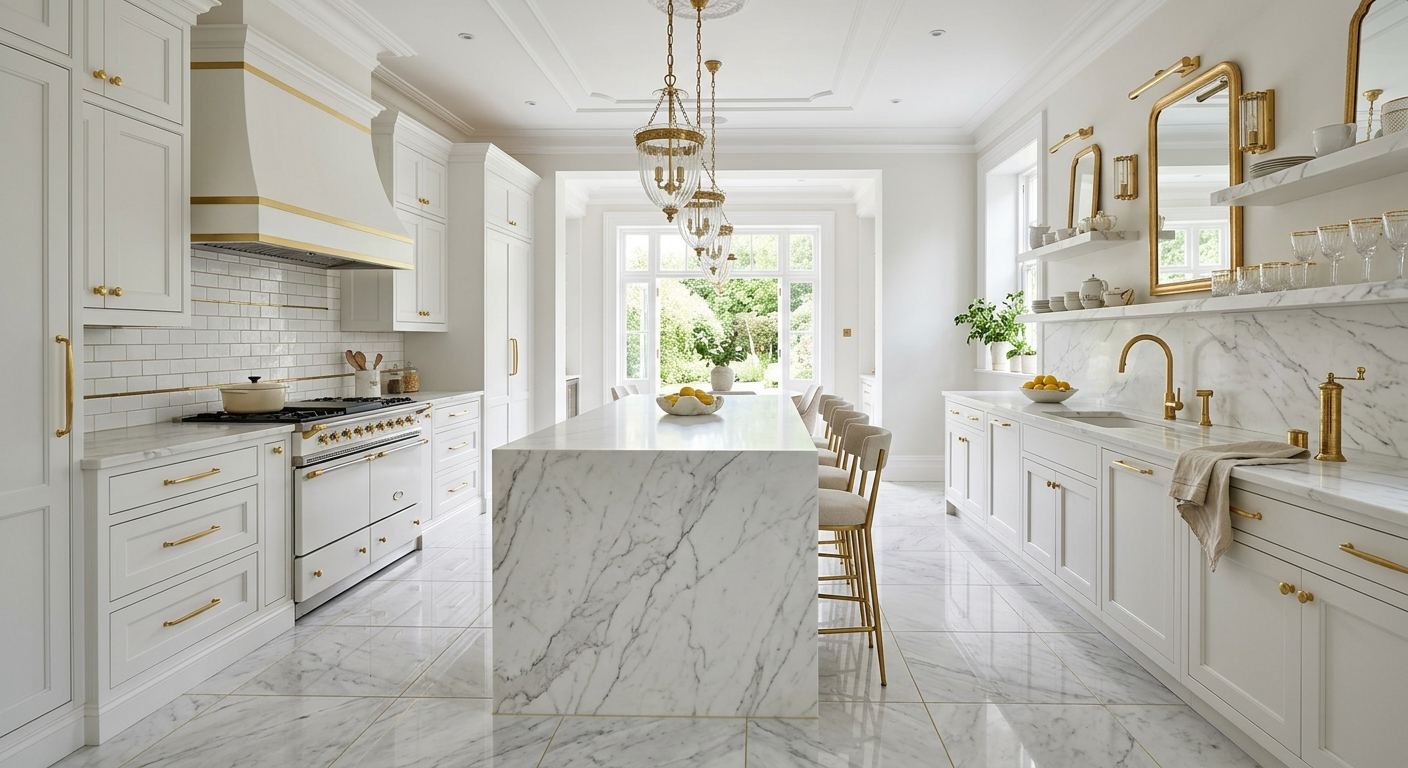
Kitchen renovation options and costs in Abbotsford
Kitchen renovations in Abbotsford usually start with a simple question: refresh or full remodel? With a median household income of about $90,000 (Statistics Canada, 2021 Census), many homeowners can justify mid-range upgrades that look “current” without going fully custom. At the same time, Abbotsford has a large base of owner households—homeowner households make up 68.8% of households (Statistics Canada, 2021 Census)—which tends to support projects aimed at resale rather than quick, temporary fixes. In the Lower Mainland–Southwest, costs are driven more by expected finish level and resale expectations than by climate. While Abbotsford does see moisture swings from seasonal rain and snow melt, pricing is still mostly tied to labour availability, cabinet supply, and material selection.
That’s why neighbourhoods with more active trades demand—especially in and around the East Abbotsford / Vedder Crossing corridor—often see faster scheduling for cabinet installation and countertop work. If you’re keeping the footprint, a cosmetic refresh or cabinet refacing can stay far closer to the lower end of the regional bands. If you’re changing the layout (like adding an island or moving plumbing), the job typically shifts into a full renovation range because drywall, electrical, and mechanical work add unpredictability.
Below is a practical way to compare options by scope, timing, and typical total price, before you request itemised quotes.
| Renovation Tier |
What's Included |
Typical Duration |
Price Range |
| Cosmetic refresh (paint, hardware, new appliances only) |
Cabinet paint or stain only (no box changes), new knobs/pulls, new appliances (if fit/locations stay the same), minor caulking and trim touch-ups |
3–7 business days |
$8,000–$25,000 |
| Mid-range full renovation (new cabinets, counters, sink, tile) |
New stock or semi-custom cabinets, new countertop (quartz or laminate), sink and faucet, backsplash tile, new flooring updates as needed, basic lighting refresh |
3–6 weeks |
$40,000–$80,000 |
| High-end full renovation (custom cabinets, stone counters, island) |
Fully custom cabinetry, stone counters (granite/marble/advanced stone), island with upgraded details, full backsplash to ceiling or feature wall options, upgraded hardware and lighting |
6–12 weeks |
$80,000–$120,000 |
| Cabinet refacing only (new doors + drawer fronts, same boxes) |
New door/drawer fronts, refinish or prep of existing boxes, new pulls/handles, adjust hinges and alignments, optional new hardware package |
1–3 weeks |
$8,000–$35,000 |
| Countertop swap only (laminate to quartz or stone) |
Remove and dispose of old countertop, template and install new quartz/stone, new seams and sink cut-outs as required, basic backsplash tie-in where possible |
3–10 business days |
$3,000–$12,000 |
| Backsplash tile installation only |
Tile supply and install (ceramic/porcelain), backer prep, grout/seal where required, finishing at outlets and edges |
2–5 business days |
$1,500–$6,000 |
Prices are estimates only and vary by project scope, site access and material selection.
What affects the price of kitchen renovation in Abbotsford
In Abbotsford and across the Lower Mainland–Southwest, you can see the same kitchen land 30–50% apart from one quote to the next—even when the floor plan looks similar. The biggest reason isn’t climate; it’s the finish tier buyers expect relative to home value and household purchasing power. In higher-value parts of the Lower Mainland, homeowners more often choose quartz or stone counters, semi-custom cabinetry, and upgraded hardware, because the renovation cost is easier to recover on resale. In more modest areas or for “stay-put” buyers, laminate and stock cabinets still dominate because they deliver a fresh look with a more predictable budget.
Lower Mainland–Southwest pricing can also swing based on layout risk. Removing a wall, adding an island, or moving a gas line tends to add the most unpredictability regardless of finish level. One contractor may price the same island confidently; another may carry more contingency because of older framing or unexpected chase routes behind existing cabinets.
Concrete Abbotsford examples: (1) Homes built before 1981 account for 29.0% of dwellings (Statistics Canada, 2021 Census), and older services sometimes require added electrical routing or plumbing adjustments when you replace countertops and sink assemblies. That can push a “mid-range” plan from roughly $40,000 into the higher end once you factor in trades coordination. (2) Kitchens with limited site access or parking—common on smaller lots—can raise disposal and material handling costs, even when you’re only swapping counters in the $3,000–$12,000 range. (3) If your backsplash includes outlets on an uneven wall behind cabinets, expect extra prep and tile labour even when materials are similar.
Because homeowner expectations track resale more than weather, budgeting should focus first on cabinet tier, countertop choice, and layout changes—then on the detail work that older Abbotsford homes may require.
| Price Factor |
Why It Matters |
Cost Impact |
| Cabinet tier — stock vs. semi-custom vs. fully custom millwork |
Custom and semi-custom demand more shop time, better fit, and more options for doors, drawers, and internal storage |
Can shift a full renovation by tens of thousands |
| Countertop material — laminate vs. quartz vs. granite vs. stone |
Material and fabrication complexity varies; natural stone often includes higher waste and premium finishing |
Typically the largest controllable variable besides cabinetry |
| Layout change — wall removal, island add, plumbing/gas move |
Re-routing services and structural considerations add subcontractor coordination and inspection time |
Most likely driver of unexpected overruns |
| Appliance package tier — builder vs. mid-range vs. pro-grade |
Electrical requirements, venting specs, and install tolerances differ |
Can add several thousand dollars quickly |
| Flooring — refinish existing vs. full replacement |
Protection and subfloor condition determine whether you can keep what’s there |
Replacement adds labour, materials, and potential leveling |
| Backsplash — ceramic tile vs. marble vs. full-height slab |
Slabs and statement materials require higher precision, specialty cuts, and more waste handling |
Can move backsplash projects from “simple” to “premium” labour |
| Electrical — new circuits for island, under-cabinet lighting |
New circuits require licensed work and permit/inspection depending on scope |
Often spikes when lighting and island outlets are added |
| Permit fees and licensed trade requirements |
Complex changes trigger permitting and inspections; labour must be performed by licensed professionals |
Adds both direct costs and scheduling lead time |
Permits & regulations in British Columbia
In British Columbia, many “surface-level” kitchen changes don’t require permits. A cabinet and countertop swap typically falls under normal renovation work—especially when you’re keeping plumbing and electrical locations the same. However, if you’re moving plumbing supply or drain lines, relocating gas (including stove/range locations or certain hood configurations), removing a load-bearing wall, or adding electrical circuits (like new outlets for an island or upgrading lighting that requires new wiring runs), you’ll typically need permits and licensed trades to do the work.
Here’s the homeowner-friendly way to think about it: if the work touches gas, electrical, or structural framing—assume permits and inspections are in play. If you’re swapping doors, painting cabinets, replacing countertops, or installing a backsplash without moving services, permits are usually not required.
To verify a contractor’s BC compliance in Abbotsford, ask for three things before work starts. First, check licensing: confirm the electrician and gas fitter credentials through the relevant online registries (use their certificate numbers on the quote documents). Second, request a current certificate of insurance for liability coverage; it should match the legal name of the company performing the work. Third, verify work coverage (commonly discussed as WSIB/WCB coverage depending on the contractor’s setup) via a clearance letter or proof document. Then, ensure the written contract clearly assigns who pulls permits (and who pays) if any are required—don’t rely on verbal assurances.
Cabinets, countertops and layout decisions in Abbotsford
In an Abbotsford kitchen renovation, the three most consequential decisions are cabinet tier, countertop material, and whether you change the layout. Cabinet tier shapes the fit and the “built-in” look: stock cabinets are the fastest and cheapest, semi-custom is typically the most popular mid-range choice, and custom cabinetry delivers the best fit and storage but costs the most. Countertop material then sets daily durability and maintenance expectations: laminate is budget-friendly, quartz is the workhorse for low maintenance, natural stone brings prestige and heat/character variations, and butcher block adds warmth but needs more ongoing care. Finally, layout changes are where value is either unlocked or lost—an open-concept wall removal or island addition can create the space buyers expect, but moving plumbing or gas can add significant cost and scheduling complexity.
Because Lower Mainland–Southwest buyers tend to expect modern, clean lines and durable surfaces at higher price points, kitchen finishes often track resale expectations more than moisture concerns. Abbotsford’s seasonal humidity and wet winters don’t change whether quartz is better than laminate, but they do make it more important to choose materials and installation details that resist moisture at seams, around sinks, and behind dishwashers.
A realistic dollar example: if your plan is a full remodel around $40,000–$80,000, upgrading from laminate to quartz often stays manageable when you’re not moving plumbing or changing cabinetry layout. But if you add an island and relocate the sink or adjust a gas run, that same upgrade can become a smaller part of the total, and you may want to keep the cabinet and countertop selections cohesive to avoid compounding trade hours.
Spend strategically: choose cabinetry and countertops first, then confirm whether the layout change is truly worth it for the space you’ll use every day—and for how future buyers will interpret the renovation.
| Option |
Durability |
Maintenance |
Best For |
Price Range |
| Stock cabinets (big-box) |
Good durability with standard materials; limited sizes can affect fit |
Low; protect from water at joints and use proper cleaners |
Fast timelines and tight budgets |
$10,000–$25,000 |
| Semi-custom cabinets (local dealer) |
Very solid build with better sizing and more storage options |
Low; hinges and drawers stay serviceable with normal care |
Most Abbotsford renovations targeting resale balance |
$20,000–$45,000 |
| Custom cabinets (local millwork shop) |
Highest durability and best fit for older homes with uneven walls |
Low to moderate; requires careful installation to keep seals tight |
Design-led kitchens and complex layouts/islands |
$35,000–$75,000 |
| Laminate countertop |
Good for everyday use; can chip or wear faster at edges and seams |
Easy cleaning; avoid standing water at seams |
Budget refreshes where you’re not changing the whole kitchen |
$3,000–$6,000 |
| Quartz engineered countertop |
Very durable and consistent; resistant to staining for most household use |
Very low; wipe clean and avoid abrasive pads |
Most popular choice for a long-term “set and forget” surface |
$6,000–$10,000 |
| Granite / natural stone countertop |
Extremely durable; unique veining and hardness vary by slab |
Moderate; may need periodic sealing depending on the stone |
Premium look and heat-tolerant work surfaces |
$8,000–$12,000 |
| Butcher block countertop |
Durable with proper care; can scratch but is repairable |
Higher upkeep; regular oiling and prompt drying after wet work |
Homes seeking a warm, traditional feel |
$4,000–$8,000 |
| Marble countertop |
High prestige but more sensitive to etching from acids |
Moderate to high; needs careful cleaning and spill management |
Design-focused kitchens with lighter-duty use |
$10,000–$15,000 |
How to choose a kitchen renovation contractor in Abbotsford
Choosing the right contractor in Abbotsford comes down to proof. Start with British Columbia licensing and coverage. Ask for the certificate of the electrician and gas fitter (if your scope includes gas or new circuits), and request the company’s liability insurance certificate showing the correct legal entity. For work coverage, ask whether the contractor provides WSIB/WCB coverage documentation (often via a clearance letter or proof certificate) and confirm it applies to the workers on your jobsite. Don’t accept “we’re covered” without seeing the document.
Next, get 2–3 itemised written quotes. You want a breakdown that separates labour and materials: cabinet supply and install, countertop fabrication/installation, tile labour and materials, and electrical/plumbing sub-trade line items if applicable. Then read the scope carefully: confirm what’s included for permits, drywall patching, disposal/hauling, and any protection of floors and cabinets during demo. A quote should also state whether there’s an allowance for missing measurements or unexpected wall conditions.
Warranty matters too. Look for a workmanship warranty length, clarity on what’s covered (e.g., cabinet installation, tile setting, caulking/trim), and whether it’s transferable if you sell the home. On payment schedule, avoid large deposits: never pay more than 10–15% upfront, and hold back funds until substantial completion (as defined in the contract). Finally, require the timeline in writing—start date and a realistic completion estimate based on cabinet/counter lead times.
- Verify contractor licensing for each relevant trade (electrical and gas) before signing.
- Check liability insurance certificate dates and ensure it lists the correct jobsite/address.
- Request WSIB/WCB (or equivalent) proof/clearance letter before demo begins.
- Demand itemised quotes (labour vs. materials) instead of one lump sum.
- Confirm permit responsibility and whether permits are included in the price.
- Ask who supplies and hauls away demolition waste and packaging.
- Confirm countertop template and fabrication timelines (especially for quartz/stone).
- Get details on backsplash prep, backer board, and outlet finishing.
- Clarify flooring protection and who repairs scratches/damage.
- Review warranty terms in writing, including workmanship coverage and duration.
- Use a payment schedule with no more than 10–15% upfront and a holdback.
- Ensure the contract includes start date, milestones, and cleanup standards.
Red flags we see locally: (1) a contractor who won’t provide insurance/licensing proof in writing; (2) quotes that omit disposal/hauling and later add change fees; (3) payment requests that ask for large upfront sums; (4) no written scope for permits or who pulls them; and (5) vague timelines that ignore cabinet or countertop lead times—critical in Abbotsford’s active contractor season.
Frequently asked questions — kitchen renovation in Abbotsford
Should I reface or replace my cabinets?
In Abbotsford, refacing is often the smart move when your cabinet boxes are solid, doors are the main problem, and the layout is staying the same. If your frames are still square and the existing hardware locations are workable, refacing can deliver a “new kitchen” look without the full cost of a cabinet replacement. As a guide, cabinet refacing projects often land around the $8,000–$35,000 band, while a full cabinet-and-counters remodel typically sits higher—commonly around $40,000–$80,000 depending on finishes. Replace cabinets when boxes are sagging, water-damaged near the sink, or when you want major storage changes that can’t be addressed with new doors alone. If you’re unsure, ask your contractor to assess box condition and alignment during a site visit before you commit.
Do I need a permit for a kitchen renovation in British Columbia?
In British Columbia, cabinet and countertop swaps usually don’t require a permit when plumbing and electrical locations are unchanged. But if you’re moving plumbing supply/drain lines, relocating gas (including the stove or certain hood scenarios), removing a load-bearing wall, or adding new electrical circuits (for example, new island outlets or upgraded wiring that extends beyond like-for-like replacement), permits and licensed trades are typically required. In Abbotsford, the contractor should explain what triggers permitting and who is responsible for pulling permits before you sign. As a practical step, request the written scope and confirm it lists permits, inspections, and trade responsibilities clearly. If the quote is silent, ask—because you don’t want surprises midway through demolition.
What's the ROI on a kitchen renovation?
ROI depends heavily on finish tier and whether the renovation meaningfully improves layout and functionality. In Abbotsford and the wider Lower Mainland–Southwest, homeowners often aim for a resale-ready kitchen that buyers will recognize as durable and modern—quartz counters, upgraded hardware, and a layout that feels open and efficient. That’s why many projects land in the mid-range full renovation band (often $40,000–$80,000) when the goal is to improve everyday use without going fully custom. ROI can drop if the renovation is “overbuilt” for the neighbourhood or if the kitchen becomes too bespoke relative to nearby homes. On the other hand, a well-executed refresh—like refacing plus countertop upgrades—can be a good value path if your boxes are in good shape and you keep the plumbing/electrical footprint stable.
How do I budget for a kitchen renovation?
Budgeting starts with choosing a scope tier and then adding a realistic contingency. For Abbotsford, a full kitchen renovation commonly falls in the $40,000–$120,000 range depending on cabinet tier, countertop material, and whether you change the layout. If you want a more controlled budget, a cabinet refacing plus countertop swap can often keep you closer to $8,000–$35,000 for refacing plus $3,000–$12,000 for a countertop install (depending on material and size). Build in extra for older homes built before 1981 (29.0% of dwellings in the region, Statistics Canada, 2021 Census), because service routing and wall conditions can add labour even when materials stay the same. Always request an itemised quote with allowances for demolition surprises, disposal, and permit-related work so you can compare apples to apples.
Can I move my kitchen sink or stove?
Yes, you can often move a sink or stove, but it’s the highest-cost portion of many kitchen renovations because it usually requires plumbing and/or gas changes and associated electrical adjustments. In British Columbia, moving plumbing supply/drain lines and relocating gas typically requires permits and licensed trade work, plus inspections—so it’s not just a “carpentry change.” For the homeowner, the key question is whether the space gain is worth the complexity: moving a sink can make sense if you’re improving sightlines or adding usable counter space, but it can also introduce cost drivers like new pipe runs, wall rebuilding, and schedule delays. When considering movement, ask for a clear plan and a line item breakdown for plumbing, gas, and electrical work so the estimate stays transparent.
What's the most cost-effective kitchen upgrade?
The most cost-effective upgrade in Abbotsford is usually the one that delivers the biggest visual change while keeping the footprint stable—typically refreshing cabinets and improving surfaces rather than moving services. If your layout works, consider cabinet refacing plus a countertop upgrade: refacing commonly sits around $8,000–$35,000, and countertop installation for laminate to quartz or stone often ranges from $3,000–$12,000. That combination can look “new” without triggering the permit-and-trade complexity that comes with moving plumbing or gas. If you’re not ready to change countertops, a backsplash tile installation can be a lower-cost way to modernize the kitchen—often $1,500–$6,000—especially when paired with new hardware and a fresh paint/stain job. Choose upgrades that match the finish tier expected by buyers in your neighbourhood rather than chasing one premium material alone.