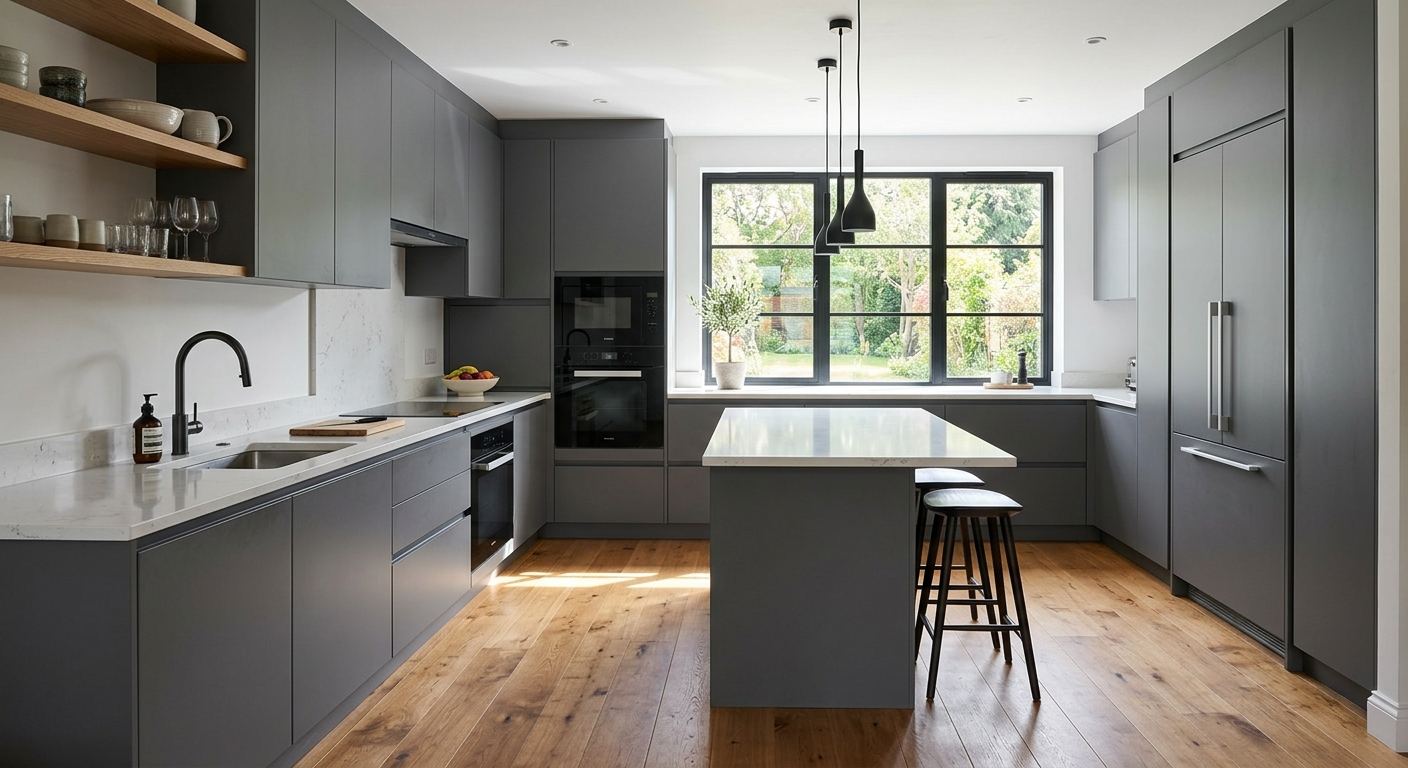
Kitchen renovation options and costs in Quesnel
Quesnel homeowners typically look at kitchen renovation options based on how long they plan to stay in their home and what finish level buyers will expect. With a population of 9,889 (Statistics Canada, 2021 Census) and a median household income of $67,000 (Statistics Canada, 2021 Census), many projects in the Cariboo lean practical: laminate or modest solid-surface finishes, and standard or semi-custom cabinet packages. That said, higher-value homes and resale-focused renos in and around town can justify premium materials, because the renovation cost is easier to recover when the kitchen reads “current.”
In the Cariboo, climate doesn’t drive the budget as much as materials and labour—contractors aren’t charging for “cold-weather add-ons” the way they might for exterior work. The real cost signals come from availability and scope: Quesnel’s older housing stock (62.3% built before 1981) often means you’re budgeting for hidden surprises like out-of-square framing, dated electrical, or plumbing that needs relocating to suit new cabinet layouts. Labour demand also rises when multiple renovations overlap during the drier spring-to-fall season, especially in established areas where owner-occupiers are updating kitchens before listing.
In Quesnel, the North Nechako/Westwood area sees steady renovation demand because there’s a broad mix of long-term homes and growing family households. From there, it’s easiest to compare options by renovation tier—see the typical ranges below.
| Renovation Tier |
What's Included |
Typical Duration |
Price Range |
| Cosmetic refresh (paint, hardware, new appliances only) |
Cabinet paint or repaint, new hardware, appliance swap (no layout change), touch-up repairs, basic countertop polishing if applicable |
3–7 days |
$5,000–$12,000 |
| Mid-range full renovation (new cabinets, counters, sink, tile) |
Semi-custom or quality stock cabinets, countertop install (solid surface/quartz or similar), new sink and faucet, backsplash tile, allowance for flooring transition, basic electrical refresh, plumbing reconnect |
3–5 weeks |
$28,000–$65,000 |
| High-end full renovation (custom cabinets, stone counters, island) |
Custom cabinetry, quartz or natural stone counters, island design, upgraded backsplash (tile feature or upgraded materials), higher-end plumbing fixtures, expanded electrical (task lighting), more complex demolition/finish detailing |
6–10 weeks |
$65,000–$95,000 |
| Cabinet refacing only (new doors + drawer fronts, same boxes) |
Refacing of existing boxes, new doors/drawer fronts, updated hardware, new crown/base details where feasible, paint/finish touch-ups, countertop not included |
1–3 weeks |
$5,000–$18,000 |
| Countertop swap only (laminate to quartz or stone) |
Remove existing top, measure/templating, new quartz/stone laminate disposal, reconnect sink if needed (no major layout changes), basic sealants and finishes |
3–10 days |
$3,000–$14,000 |
| Backsplash tile installation only |
Surface prep, tile setting and grouting, trim/edge finishing, allowance for minor wall repair, no cabinet/counter replacement |
2–5 days |
$1,500–$9,000 |
Prices are estimates only and vary by project scope, site access and material selection.
What affects the price of kitchen renovation in Quesnel
In Quesnel and across the Cariboo, you’ll sometimes see quotes for the “same” kitchen that differ by 30–50%. The swing usually comes from how each contractor prices the hardest parts of the job: cabinet complexity, countertop material and fabrication, and whether the scope includes layout changes, electrical upgrades, and permit-related work. Even when homeowners choose similar finishes, layout decisions can force higher labour hours—shuffling plumbing, relocating gas, or reworking electrical bays tends to be where estimates either tighten or drift.
Local home values and household income shape the typical finish tier far more than climate. With a median household income around $67,000 (Statistics Canada, 2021 Census), many Quesnel renos are aimed at dependable upgrades rather than “fully custom” showpieces. That’s why the mid-range full renovation band ($28,000–$65,000) often uses semi-custom or quality stock cabinetry with durable engineered counters, while higher-end projects push toward custom millwork and premium stone to match resale expectations. In more modest markets, laminate and stock cabinets dominate because they deliver better ROI for the dollar. In higher-value pockets—where homes sell faster and buyers scrutinise detail—quartz or stone becomes a default because it’s easy to market during resale.
Here are a few Quesnel-specific examples that move the price up or down. First, many homes were built before 1981 (62.3%), so you may need extra time for out-of-plumb walls and older wiring—often affecting the labour allowance for electrical and trim finishes. Second, if your kitchen framing is tight (common in older footprints), adding an island can require additional demolition and relocation work; that’s the kind of scope change that can add thousands even if cabinets stay within the $28,000–$65,000 tier. Third, the time window matters: contractor scheduling in peak season can increase costs when crews need to coordinate trades back-to-back rather than in a relaxed sequence.
| Price Factor |
Why It Matters |
Cost Impact |
| Cabinet tier — stock vs. semi-custom vs. fully custom millwork |
Cabinet tier drives the largest variable: sizing, door styles, internal storage options, and finish quality |
Typically the biggest swing—often several thousand dollars to tens of thousands within the same renovation tier |
| Countertop material — laminate vs. quartz vs. granite vs. stone |
Material affects fabrication complexity, edge profiles, and how sinks/cooktops are supported |
Laminate tends to be the budget option; quartz/stone can raise the overall project by a noticeable margin |
| Layout change — wall removal, island add, plumbing/gas move |
Changes force demolition, framing adjustments, and trade coordination (plumbing/electrical/gas) |
Most unpredictable cost; frequently adds the largest labour + permit-driven expenses |
| Appliance package tier — builder vs. mid-range vs. pro-grade |
Higher-end appliances can require different electrical or ventilation specs and affect clearance/tolerance |
Can add several hundred to several thousand depending on brands and venting needs |
| Flooring — refinish existing vs. full replacement |
Renovations often uncover damage under existing flooring and may need matching transitions |
Refinish/reuse lowers cost; full replacement can add material + labour |
| Backsplash — ceramic tile vs. marble vs. full-height slab |
Higher-grade materials increase setting complexity and require more precise substrate preparation |
Tile can be modest; upgraded stone or tall-surface installs can be a significant add-on |
| Electrical — new circuits for island, under-cabinet lighting |
Task lighting, island outlets, and appliance circuits require proper wiring, boxes, and GFCI protection |
Adds labour and parts; cost rises when walls need opening or rerouting |
| Permit fees and licensed trade requirements |
Some work requires inspections and specific licensed trades, affecting scheduling and overhead |
Small fee line-items, but can add project time and coordination costs |
Permits & regulations in British Columbia
In British Columbia, a simple cabinet and countertop swap usually doesn’t require a building permit because you’re not changing building systems. That typically includes replacing cabinets in the same footprint and installing new countertops over existing plumbing connections where you’re not moving supply/drain lines.
Permits and licensed trades do come into play when you change core systems. Common kitchen items that typically require a permit include moving plumbing supply or drain lines (even a sink relocation), relocating or installing new gas piping or changing a gas stove setup, removing a load-bearing wall (or doing structural modifications), and adding new electrical circuits (for example, under-cabinet lighting with new wiring runs, or a new island outlet circuit). Gas work must be done by a licensed gas fitter, and electrical work must be done by a licensed electrician—both require inspection sign-off after the work is complete.
For homeowners in Quesnel, the best verification process is simple and documented. Step 1: ask the contractor for their licence numbers and proof of current liability insurance. Step 2: request a certificate of insurance (COI) that names you and your address where applicable. Step 3: confirm workers’ coverage by requesting proof of WSIB/WCB (coverage wording varies by trade/coverage provider, but the idea is the same: insured, covered workforce). Step 4: cross-check licences using the appropriate online registry and make sure the electrician/gas fitter names match who will be on site. Finally, confirm in writing who is pulling permits and paying fees—responsibility should be clearly stated in the contract.
Cabinets, countertops and layout decisions in Quesnel
Your three biggest “lever” decisions in a Quesnel kitchen renovation are cabinet tier, countertop material, and whether you change the layout. The Cariboo market tends to reward kitchens that look clean, bright, and durable for everyday use—especially in homes built before 1981 where buyers may look for updates that feel seamless and move-in-ready.
Cabinet tier controls the fit and feel. Stock cabinets are the fastest and cheapest; semi-custom is the most popular mid-range choice because you can adjust widths and storage without custom lead times. Custom cabinets cost more, but they’re worth it when you’re dealing with awkward wall conditions, want a specific island arrangement, or need integrated storage that matches your lifestyle.
Countertops should be chosen with realistic maintenance in mind. Laminate is a budget-friendly upgrade and can look sharp after a fresh install, but it’s more sensitive to damage at seams and edges. Quartz engineered counters are popular because they resist stains and are easier to maintain than natural stone. Granite and natural stone are durable but require more care and periodic sealing depending on the product. Marble is the most elegant look, but it’s also the most demanding for long-term stain resistance.
Layout changes are where costs can jump even if your finish tier stays reasonable. Removing a wall or adding an island can be justified when it improves flow and storage enough to change how the whole home functions. But if your goal is primarily aesthetics, staying in the existing footprint often keeps you closer to the mid-range band (for example, $28,000–$65,000) instead of drifting toward high-end full renos ($65,000–$95,000).
Dollar example: if you’re debating quartz vs. stone, you might spend a few thousand more on quartz, but that upgrade is usually easier to justify than paying for a full plumbing or gas relocation. In Quesnel’s older housing stock, moving a plumbing line can add both labour and trade coordination time—often outweighing the benefit of moving up a countertop category.
| Option |
Durability |
Maintenance |
Best For |
Price Range |
| Stock cabinets (big-box) |
Good for everyday use; depends on door/box quality and careful installation |
Low—wipe-clean surfaces; minimize moisture at seams |
Fast timelines and budget-focused renos |
$10,000–$25,000 |
| Semi-custom cabinets (local dealer) |
Very solid; improved storage layouts and better finishing options |
Low—normal cleaning; minor touch-up if handled aggressively |
Most Quesnel mid-range projects that want a tailored look without custom pricing |
$18,000–$38,000 |
| Custom cabinets (local millwork shop) |
Highest potential fit and finish; ideal for uneven walls and unique storage needs |
Low to moderate—surface care depends on finish type |
Resale-driven kitchens where the details must match a specific layout and style |
$30,000–$55,000 |
| Laminate countertop |
Durable for normal cooking; vulnerable at lifted edges or heavy seam wear |
Low—avoid prolonged standing water at seams |
Value-forward renos and rental-style budgeting |
$1,800–$4,500 |
| Quartz engineered countertop |
High durability; resists staining and typical kitchen impacts well |
Low—wipes clean; no sealing usually required |
Busy households wanting a “stone-like” look with easy care |
$3,500–$9,500 |
| Granite / natural stone countertop |
Very durable; heat tolerant and resistant to everyday wear |
Moderate—may need periodic sealing depending on finish |
Buyers who want natural variation and classic durability |
$5,500–$12,500 |
| Butcher block countertop |
Durable but can scratch; best with proper sealing and routine care |
Moderate to high—oiling/sealing and prompt drying |
Warm, family-friendly kitchens with regular maintenance habits |
$2,800–$7,500 |
| Marble countertop |
High-end look; can etch or stain more easily than quartz/granite |
Moderate—requires careful cleaning and protective routines |
Low-wear kitchens where aesthetics outweigh heavy-duty use |
$6,500–$14,000 |
How to choose a kitchen renovation contractor in Quesnel
Choosing the right contractor in Quesnel starts with licensing and coverage checks before you even compare prices. In British Columbia, ask for each relevant trade’s licence number and proof of liability insurance. Then verify workers’ compensation coverage (WSIB/WCB coverage) so you’re not exposed if a worker gets injured on site. The easy way is to request certificates by email and to check that licence names match the trades who will actually show up (not just the salesperson who quoted).
Next, get 2–3 itemised written quotes. Look for a line-by-line breakdown that separates labour and materials rather than a lump sum. Good quotes show cabinet pricing by scope, countertop fabrication and installation, plumbing/electrical allowances (if included), demo/disposal, drywall/painting, and flooring transitions. Also confirm whether permits are included—if permits are required, the quote should state who pulls them and whether scheduling is impacted. Disposal is another common omission: ask if construction debris hauling is included or billed separately.
Warranty matters too. Ask for the workmanship warranty length and whether it covers labour for rework, not just “materials only.” Confirm manufacturer warranty coverage on cabinets, countertops and appliances, and whether warranties are transferable to you (important if you sell the home). For payments, keep it safe: never pay more than 10–15% upfront, and hold back a portion until key milestones are completed (typically final install, inspection sign-off where applicable, and clean-up).
Finally, insist on a written timeline with a start date and completion target. Kitchen renovations often run in phases; a good contractor will explain demolition sequencing, cabinet lead times, countertop templating and when inspections are scheduled.
- Confirm BC trade licences for electrician and gas fitter (when any gas/electrical work is part of the scope).
- Request liability insurance COI before signing, and verify the address/jobsite is covered as appropriate.
- Verify WSIB/WCB coverage with proof of coverage for the trades working on your project.
- Get 2–3 itemised quotes with labour and material breakdown (not one lump number).
- Ask what’s excluded: permits, disposal, patch/prime/paint, flooring transitions, and backsplash trim details.
- Confirm whether demolition and hauling are included in price or charged separately.
- Check cabinet scope: does it include installation, fillers, toe kicks, hardware, and crown/base updates?
- Confirm countertop scope: templating included? Edge profiles? Sink/cooktop cut-outs?
- Ask about electrical scope: GFCI/outlets, under-cabinet lighting, and circuit additions.
- Clarify plumbing scope: reconnection only vs. supply/drain relocation allowance.
- Review warranty terms in writing: workmanship length and who provides coverage.
- Agree on payment schedule: 10–15% max upfront, with holdback until completion/inspection sign-off.
Red flags I see in Quesnel: contractors who won’t provide itemised labour/material quotes, vague scope wording (especially around plumbing/gas/electrical), insisting on large upfront payments, avoiding permit/inspection discussions when layout/system changes are planned, and giving a “quick turnaround” without acknowledging cabinet lead times and countertop templating requirements.
Frequently asked questions — kitchen renovation in Quesnel
What's the ROI on a kitchen renovation?
ROI in Quesnel is usually strongest when you improve durability and buyer appeal without overspending for the neighbourhood’s price point. In practical terms, a mid-range renovation targeting a modern, clean layout and easy-care finishes often lands in the $28,000–$65,000 band, which is more realistic to recover in resale than fully custom spend in every scenario. Buyers around Cariboo communities tend to respond well to quartz-type surfaces, functional storage, and updated hardware—especially because many Quesnel homes are older (62.3% built before 1981) and need visible “care and maintenance” upgrades. Because kitchen values are also influenced by household income, some projects perform better where incomes support higher finish expectations. (Statistics Canada, 2021 Census)
How do I budget for a kitchen renovation?
Start by picking a tier, then budget for the scope risks that show up most often in Quesnel: older electrical, dated plumbing routing, and uneven framing. If you want a refresh only, cosmetic work plus appliance replacements typically stays in the $5,000–$12,000 range. For a full upgrade with new cabinets and counters, many homeowners plan around the mid-range full renovation band ($28,000–$65,000), then add a contingency for surprises—often a modest percentage of the total—because pre-1981 homes can hide issues behind drywall and under existing flooring. If you’re planning custom cabinetry, a stone island, or major layout changes, expect to budget closer to the high-end full renovation band ($65,000–$95,000). Confirm whether your quote includes disposal, patching/painting, and any permit-driven trade work so you don’t get caught by add-ons later.
Can I move my kitchen sink or stove?
Yes, but it affects cost and scheduling because it’s not just carpentry. In British Columbia, moving plumbing supply or drain lines typically requires a permit and licensed trade coordination, and it can add time if walls need to be opened or framing modified. Relocating a stove can also trigger gas work requirements if you’re moving a gas connection—gas fitting must be done by a licensed gas fitter, with inspections afterward. If your quote only covers cabinets and counters, ask for a separate plumbing/gas/electrical allowance when you plan a sink or stove move. For Quesnel’s older home stock (62.3% built before 1981), I often recommend assessing existing supply/drain routing early so you can price the “real” path rather than relying on the assumption that lines are easy to re-route.
What's the most cost-effective kitchen upgrade?
For the money, the most cost-effective upgrade is usually one that changes the visual impact without triggering major trade work. In Quesnel kitchens, a countertop swap within the $3,000–$14,000 band can dramatically modernise the space with comparatively low disruption. Another strong option is a backsplash tile installation only, typically $1,500–$9,000, especially when the cabinets are already in good shape. If cabinets are tired but the boxes are sound, cabinet refacing only (often $5,000–$18,000) can refresh the look without the full demolition and reinstall costs. If you’re deciding between options, consider avoiding layout changes unless you genuinely need the space to function differently—moving plumbing or gas is the main thing that turns “cost-effective” into “budget-stretching.”
Custom vs stock cabinets — is custom worth it?
Custom cabinets are worth it when you need a precise fit, unique storage, or a layout that stock cabinets can’t accommodate cleanly—like tight older footprints common in Quesnel, where walls can be out of square. Stock cabinets can be the better choice if you want speed and value. Custom typically raises your spend because of lead times and shop-built sizing. For many homeowners, the best “middle path” is semi-custom, which usually delivers a more tailored look than stock while keeping the timeline and cost closer to a mid-range renovation plan (often $28,000–$65,000 for the whole kitchen). If your goal is resale, buyers generally notice storage quality, door style consistency, and how the kitchen reads as finished—so compare total project value rather than just comparing cabinet prices. Also consider that countertop and backsplash materials can sometimes give a bigger visible payoff per dollar than an upgrade from stock to custom.
How do I choose a kitchen contractor in Quesnel?
Choose a contractor who can prove coverage, explain permits clearly, and provide itemised written quotes. In British Columbia, verify licences for any trades involved (especially electrical and gas if your scope includes circuits or gas appliances). Ask for liability insurance and proof of WSIB/WCB coverage before signing, and keep those documents on file. Get 2–3 itemised quotes that break down labour and materials—what’s included for disposal, patching/painting, backsplash preparation, and countertop templating. Read the scope: confirm whether permits are included, who pulls them, and whether inspections are expected. For payment terms, keep the upfront payment modest (10–15% max is a good rule of thumb) and hold back a portion until completion. Finally, demand a written timeline that accounts for cabinet lead times and countertop fabrication so you’re not stuck with unfinished work during peak season.