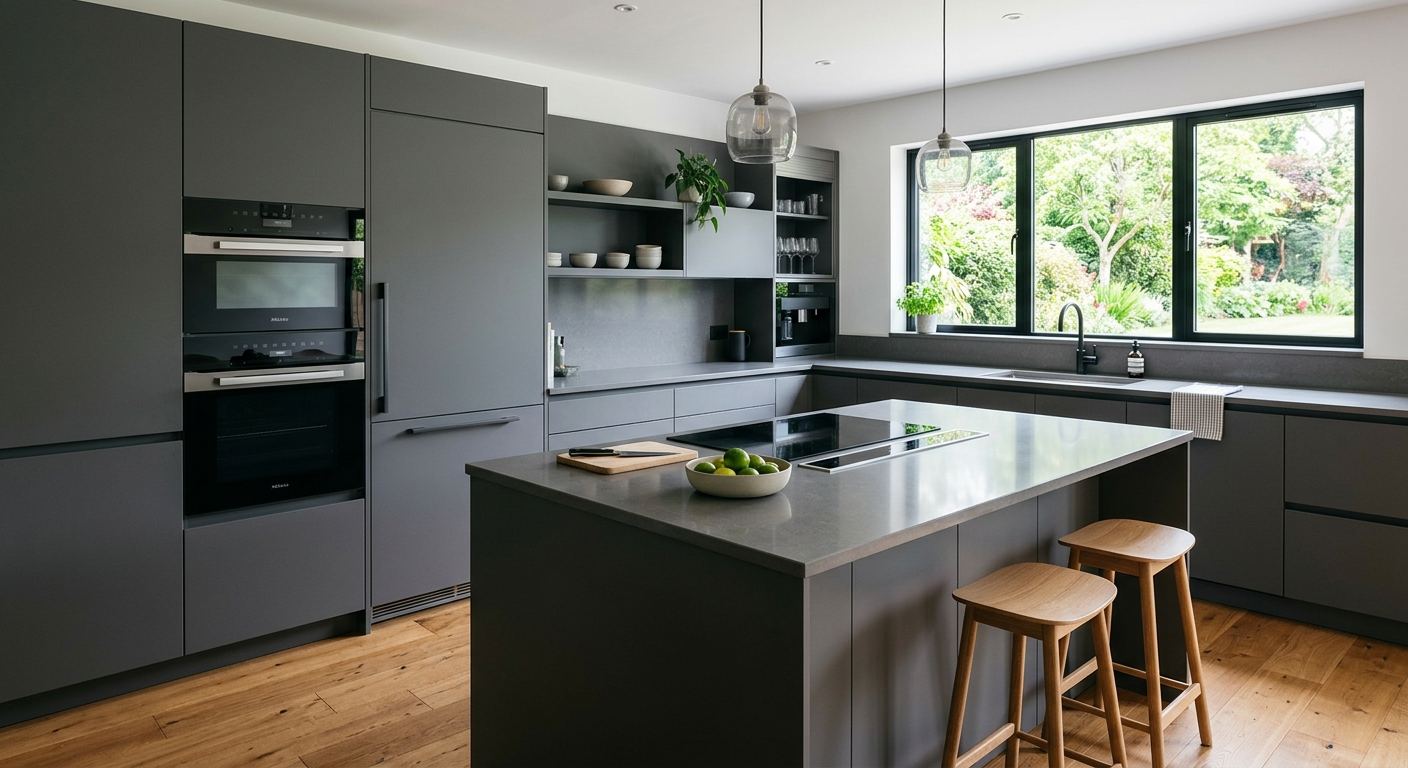
Kitchen renovation options and costs in Vanier
Kitchen renovations in Vanier, Ontario can range from a simple refresh to a full rebuild, and the right path depends on how much you want to change visually and how much you can comfortably invest. In a community of about 17,000 people (Statistics Canada, 2021 Census), homeowners often renovate with resale in mind, and in Ottawa-area markets the finish expectations are commonly higher than in many parts of the province. That matters because many buyers in the Ottawa economic region gravitate toward updated cabinetry hardware, quartz or natural-stone-look counters, and upgraded tile work—choices that push budgets into the mid-to-upper tiers. In practice, the Ottawa market’s contractor availability and pricing are influenced more by demand for premium finishes and repeatable designer layouts than by climate.
Ottawa winters don’t directly “drive” labour rates, but they do affect kitchen renos indirectly: prolonged moisture exposure risk in older homes, scheduling constraints (especially for tile setting and adhesive cure times), and the need to protect countertops and flooring while crews work around heating and humidity changes. In older neighbourhood housing stock around Overbrook, you’ll also see more kitchens with dated plumbing runs and uneven subfloors, which can add time even when cabinet styles stay similar. If your goal is to plan realistically, the easiest way is to compare options by scope, then align materials to your target renovation tier. Use the table below as a starting point for what most Ottawa-area contractors quote for full projects versus focused upgrades.
| Renovation Tier |
What's Included |
Typical Duration |
Price Range |
| Cosmetic refresh (paint, hardware, new appliances only) |
Paint, cabinet hardware swaps, minor touch-ups, appliance install (no plumbing/gas moving) |
3–7 days |
$8,000–$22,000 |
| Mid-range full renovation (new cabinets, counters, sink, tile) |
Demolition, new semi-custom cabinets, countertop install, sink + faucet, backsplash tile, new flooring trim/finish as needed |
3–5 weeks |
$60,000–$90,000 |
| High-end full renovation (custom cabinets, stone counters, island) |
Custom cabinetry, natural stone counters, island build, upgraded backsplash (higher labour), often enhanced lighting and more complex plumbing |
6–10 weeks |
$120,000–$150,000 |
| Cabinet refacing only (new doors + drawer fronts, same boxes) |
Door/drawer replacement, new fronts, re-hardware, fresh mouldings; existing box integrity determines scope |
1–3 weeks |
$12,000–$35,000 |
| Countertop swap only (laminate to quartz or stone) |
Remove existing surface, new quartz/stone template and install; includes sink cut-outs where applicable |
1–2 weeks |
$4,000–$18,000 |
| Backsplash tile installation only |
Tile supply (ceramic) and labour; surface prep and sealing as required |
3–7 days |
$2,500–$12,000 |
Prices are estimates only and vary by project scope, site access and material selection.
What affects the price of kitchen renovation in Vanier
Even when two homeowners ask for the “same” kitchen renovation in Ottawa or elsewhere in Ontario, quotes can still swing by 30–50%. The biggest drivers are local housing value and finish expectations—where the renovation sits on the buyer’s mental ladder—plus how complex the site is. In higher-value Ottawa-area neighbourhoods, many owners default to quartz or natural stone counters and semi-custom cabinetry because those upgrades are easier to justify at resale. In more modest areas, laminate and stock cabinets tend to win on ROI because they deliver a noticeable visual improvement without paying for premium millwork. Ottawa’s demand for designer tile and upgraded hardware also tightens scheduling for in-demand crews, and that labour premium shows up in mid-tier and high-end scopes.
Layout changes are the wildcard regardless of finishes. Removing a wall, adding an island, or moving plumbing for a new sink or dishwasher can add materials, labour, and permitting steps—and those costs stack quickly. In Vanier specifically, older homes near Overbrook can have dated supply lines and less level subfloors, which means more time for repairs and re-labelling of rough-in measurements before cabinets go in. If your baseline budget is, for example, $60,000–$90,000 for a mid-range full renovation, changing the island location or relocating a vent can push you toward the upper band. Conversely, keeping plumbing in the existing footprint often keeps the project closer to the lower portion of $45,000–$150,000 full-kitchen planning ranges.
Bottom line: in Ottawa, climate matters mainly for sequencing and protection, but “what you move” (plumbing/gas/electrical) matters most for cost certainty.
| Price Factor |
Why It Matters |
Cost Impact |
| Cabinet tier — stock vs. semi-custom vs. fully custom millwork |
Custom boxes, specialty sizes, and better finishing increase labour and materials |
Often shifts the job by $15,000–$45,000 within the same layout complexity |
| Countertop material — laminate vs. quartz vs. granite vs. stone |
Material cost, template accuracy, and fabrication complexity change the install time |
Typical spread of $4,000–$18,000 for countertops alone depending on choice and cut-outs |
| Layout change — wall removal, island add, plumbing/gas move |
Structural work, new rough-ins, and trades coordination drive uncertainty |
Can add $10,000–$40,000+ even before cabinets are considered |
| Appliance package tier — builder vs. mid-range vs. pro-grade |
Premium models may require different clearances and electrical/venting specs |
Often $2,000–$12,000+ difference across the appliance set |
| Flooring — refinish existing vs. full replacement |
Kitchen floors take hits during demo; replacement protects the finished look |
Minor refresh might be a few thousand; full replacement commonly adds several thousand more |
| Backsplash — ceramic tile vs. marble vs. full-height slab |
Higher-end materials raise material cost and require more precise installation |
Often shifts backsplash scopes within the $2,500–$12,000 range and beyond for full-height work |
| Electrical — new circuits for island, under-cabinet lighting |
New lighting points and dedicated circuits require electrician time and planning |
Commonly adds $1,500–$6,000+ depending on wiring complexity |
| Permit fees and licensed trade requirements |
Jobs that touch gas, electrical circuits, or plumbing generally trigger permitting/inspections |
Can add a few hundred to several thousand depending on scope and trade coordination |
Permits & regulations in Ontario
In Ontario, many “surface-level” kitchen upgrades don’t require a permit, but work that changes building services usually does. For example, cabinet replacement or countertop swaps typically do not trigger permits when you’re keeping the existing layout and not altering plumbing, electrical, or gas lines. Likewise, replacing finishes like backsplash tile or repainting cabinets is generally permit-free. However, moving plumbing supply or drain lines, relocating a sink location beyond simple re-hookups, relocating a gas stove or changing a gas range hood setup, and adding new electrical circuits for an island or under-cabinet lighting often require permits and inspections, completed by licensed trades.
Step one for a homeowner in Vanier is to confirm responsibility in writing: ask your contractor who will pull the permit (if needed) and who covers the licensed trades. Step two is to verify the contractor and trades credentials. Check licensing for electricians and gas fitters through the appropriate Ontario licensing bodies (use their online registries and match the name/business as it appears on the quote). Step three is insurance proof: request a current certificate of insurance showing liability coverage. For workers, ask for WSIB/WCB coverage documentation (or confirmation of how the contractor manages workplace coverage). A strong contractor can also provide clearance letters or coverage evidence on request.
Always review the contract before signing so permit pulls, inspections, and any required licensed trade work are assigned clearly—because that’s where most cost and schedule surprises start.
Cabinets, countertops and layout decisions in Vanier
When you renovate in Vanier, the three decisions that most affect both your daily use and your resale appeal are: (1) cabinet tier (stock for speed and budget, semi-custom for the best balance, custom for the tightest fit), (2) countertop material (laminate for lowest cost, quartz for durability and low maintenance, granite/natural stone for premium character, and marble for a high-design look that needs more care), and (3) layout changes (open-concept wall removal, island addition, and plumbing/gas relocation). Ottawa buyers commonly expect a clean, modern line with well-finished edges, consistent hardware, and a countertop surface that can handle winter cooking routines and heavy everyday wear.
Climate in Ottawa can influence how you plan sequencing and protection, but it doesn’t change the performance basics: quartz and stone are still far more impact-resistant than many laminate surfaces, and they’re usually easier to wipe down during winter-heavy meal prep. The biggest dollar decisions come from layout. An island can justify its cost if it improves circulation, adds seating, or reduces bottlenecks between the fridge, sink, and stove. But moving plumbing to relocate the sink or dishwasher is where costs rise fast—especially in older Vanier homes where rough-in locations aren’t always ideal.
Here’s a concrete example: if you’re in the $60,000–$90,000 mid-range renovation band and you upgrade from laminate to quartz only (keeping the cabinet plan and countertop footprint similar), the countertop upgrade typically lands closer to the $4,000–$18,000 countertop band. That’s often a high-ROI change because you get a major visual and durability improvement without adding the labour burden of moving plumbing, gas, or electrical.
| Option |
Durability |
Maintenance |
Best For |
Price Range |
| Stock cabinets (big-box) |
Good for straightforward layouts; hinges and finishes are solid but limited in sizes |
Low maintenance; touch-ups depend on finish type |
Quick turnarounds and budget-first renovations |
$20,000–$35,000 |
| Semi-custom cabinets (local dealer) |
Very good durability; improved storage options and better fit-and-finish for Ottawa homes |
Easy cleaning; minor hardware upkeep |
Most Vanier homeowners targeting a modern look without custom lead times |
$30,000–$60,000 |
| Custom cabinets (local millwork shop) |
Excellent durability; built around your exact measurements and special storage |
Low maintenance if finished properly; hardware service as needed |
Designer layouts, challenging spaces, and premium resale expectations |
$50,000–$90,000+ |
| Laminate countertop |
Moderate; can chip or scratch depending on thickness and edge profile |
Wipe clean; avoid prolonged heat exposure |
Budget renovations and rental or short-hold scenarios |
$3,500–$7,500 |
| Quartz engineered countertop |
High durability; resistant to staining and everyday impacts |
Very low maintenance; no sealing for typical quartz products |
Busy family kitchens and resale-focused upgrades |
$8,000–$15,000 |
| Granite / natural stone countertop |
High durability; strong surface with natural variation |
Typically requires periodic sealing depending on the stone |
Premium look where you want unique veining |
$10,000–$18,000 |
| Butcher block countertop |
Good durability but sensitive to moisture and impact |
Needs regular oiling and careful drying |
Warm, traditional kitchens and homeowners who maintain wood surfaces |
$7,000–$14,000 |
| Marble countertop |
Premium look; softer and more prone to etching/scratching |
Higher maintenance; sealing and careful use are important |
Design-forward renovations where appearance is the top priority |
$12,000–$22,000+ |
How to choose a kitchen renovation contractor in Vanier
Choosing the right contractor in Vanier means checking more than photos. Start with Ontario licensing and coverage. For licensed trades, verify the individual business/contractor name matches the quote and request proof of current licence. Ask for liability insurance documentation (current certificate of insurance) and confirm workplace coverage such as WSIB/WCB. If the contractor is subcontracting trades, you want to know who is responsible for pulling permits and who is insured for their scope.
Next, get 2–3 itemised written quotes. “Lump sum” is fine only if the scope is tight, but kitchen renos usually benefit from a line-by-line breakdown for labour, demolition, cabinetry, countertop template/fabrication, tile setting, and any electrical/plumbing allowances. Carefully read exclusions: demolition disposal, protection of floors, patching/drywall, permit pull, and whether the quote includes electrical permits or rough-ins. Warranty is another must: ask for workmanship warranty length, product/manufacturer warranty details, and whether the warranty is transferable if you sell the home.
Finally, payment schedule matters. As a rule, don’t pay more than 10–15% upfront for materials or mobilization, and hold back a portion until completion and punch-list sign-off. Get a start date and completion estimate in writing—plus what triggers schedule changes (like countertop lead times) so you’re not surprised mid-project.
- Request licence and insurance proof before signing
- Confirm who pulls permits (if any) and who pays for them
- Get an itemised quote (labour + materials + allowances)
- Ask what’s included in demolition and disposal
- Confirm flooring protection and patching/drywall responsibilities
- Verify countertop template timing and who coordinates measurements
- Check cabinet warranty and door/hinge warranty terms
- Ask for backsplash layout approval process and grout/edge finish selections
- Clarify electrical scope (lighting, outlets, island circuits)
- Confirm plumbing/gas scope is assigned to licensed trades where required
- Review payment schedule and keephold policy in the contract
- Get a written schedule with milestone dates
Red flags I frequently see in Vanier-area calls: vague scopes without line items, refusal to provide insurance or coverage documentation, “permit is handled” but no written responsibility, unusually low prices that don’t include disposal or electrical/plumbing allowances, and no clear warranty terms for workmanship or materials.
Frequently asked questions — kitchen renovation in Vanier
How long does a kitchen renovation take in Vanier?
In Vanier, timelines usually track renovation tier more than season, but Ontario winter can affect cure times for some finishes and the sequencing of tile/drywall work. A cosmetic refresh is often completed in 3–7 days if appliances are ready and plumbing/gas lines aren’t being moved. A mid-range full renovation (new cabinets, counters, sink, tile) commonly runs about 3–5 weeks, while high-end custom work with an island and premium stone tends to be 6–10 weeks. If your contractor is scheduling multiple trades, lead times for cabinet manufacturing and countertop fabrication can be the biggest delay. When planning, also account for inspection scheduling where permits are required (especially for electrical and gas-related changes).
Quartz vs granite countertops — which is better?
Both quartz and granite are strong, premium surfaces, but they behave differently. Quartz is engineered for consistency, and it’s typically easier to maintain because it’s non-porous for most everyday spills. Granite is natural and offers unique veining, but it usually needs periodic sealing depending on the specific stone. In the Ottawa market (including Vanier), quartz is often the “safer” choice for busy households because it resists staining and reduces maintenance routines. If you’re comparing price bands, countertop-only upgrades commonly land around $4,000–$18,000, with stone choices often pushing you toward the upper end when there are more cut-outs (sink, cooktop) or complex edges. The best “better” depends on whether you prioritise low maintenance (quartz) or one-of-a-kind natural character (granite).
Should I reface or replace my cabinets?
Refacing is often the right choice when your existing cabinet boxes are solid, square, and structurally sound—common in older homes if the frames were built well and haven’t been water-damaged. It can be a good way to refresh the look without the full demo mess of replacement. Replacement is the better option if you need layout changes, want new internal storage (wider drawers, better pull-out systems), or if the boxes are bowed, damaged, or poorly aligned. In pricing terms, cabinet refacing typically falls in the $12,000–$45,000 band depending on door style complexity and size of the run, while full cabinet replacement is more likely to move your project toward the $60,000–$90,000 mid-range renovation tier once you add new counters, sink, and tile. A contractor should confirm box condition with a careful inspection before you decide.
Do I need a permit for a kitchen renovation in Ontario?
In Ontario, many kitchen renovations do not require permits if you’re staying within non-structural, non-service scope—typically repainting, replacing cabinet doors/hardware, and swapping countertops where plumbing/gas/electrical aren’t moved. However, permits are usually required when you change things like plumbing supply/drain runs, relocate gas appliances or a gas range hood setup, remove a load-bearing wall, or add new electrical circuits for island lighting and power. In Vanier, the practical approach is to ask your contractor to specify exactly what triggers permitting in your project and who is responsible for pulling permits. Always verify the licensed trades credentials (gas fitter for gas work; electrician for electrical work), and confirm coverage such as WSIB/WCB and liability insurance before work starts.
What's the ROI on a kitchen renovation?
ROI varies by neighbourhood desirability, finish quality, and whether the renovation improves layout functionality—not just aesthetics. In the Ottawa economic region, homeowners often target a renovation spend that aligns with expected buyer standards, and premium finishes like quartz counters and modern cabinetry tend to hold attention at resale. While no renovation guarantees a specific dollar return, kitchens commonly influence buyer perception heavily in higher-value Ontario markets, including Vanier. To budget sensibly, keep your scope aligned with your home’s condition: if your goal is resale, upgrading visible surfaces (cabinets, counters, backsplash) usually performs better than “moving everything” without a strong functional reason. If you’re aiming for a mid-tier scope, planning within $60,000–$90,000 can be a realistic target for many Ottawa-area homes; higher-end custom work can exceed $120,000, which makes sense when layout and finish match buyer expectations for your street and home value.
How do I budget for a kitchen renovation?
Start by selecting a renovation tier and then build your budget from the biggest line items: cabinetry tier, countertop material, and whether you’re changing layout. A useful planning baseline is that full kitchen renovations in the Ottawa area often fall between $45,000–$150,000, with mid-tier work commonly around $60,000–$90,000. Cabinet installation/refacing typically ranges from $12,000–$45,000, and countertop swaps alone are commonly $4,000–$18,000, depending on material and cut-outs. Build in a contingency for older home surprises—like uneven floors, outdated plumbing rough-ins, or additional subfloor repair—especially in older Vanier housing stock. Finally, request 2–3 itemised quotes so you understand labour vs materials vs allowances, and confirm permit and licensed trade responsibilities are included where needed.