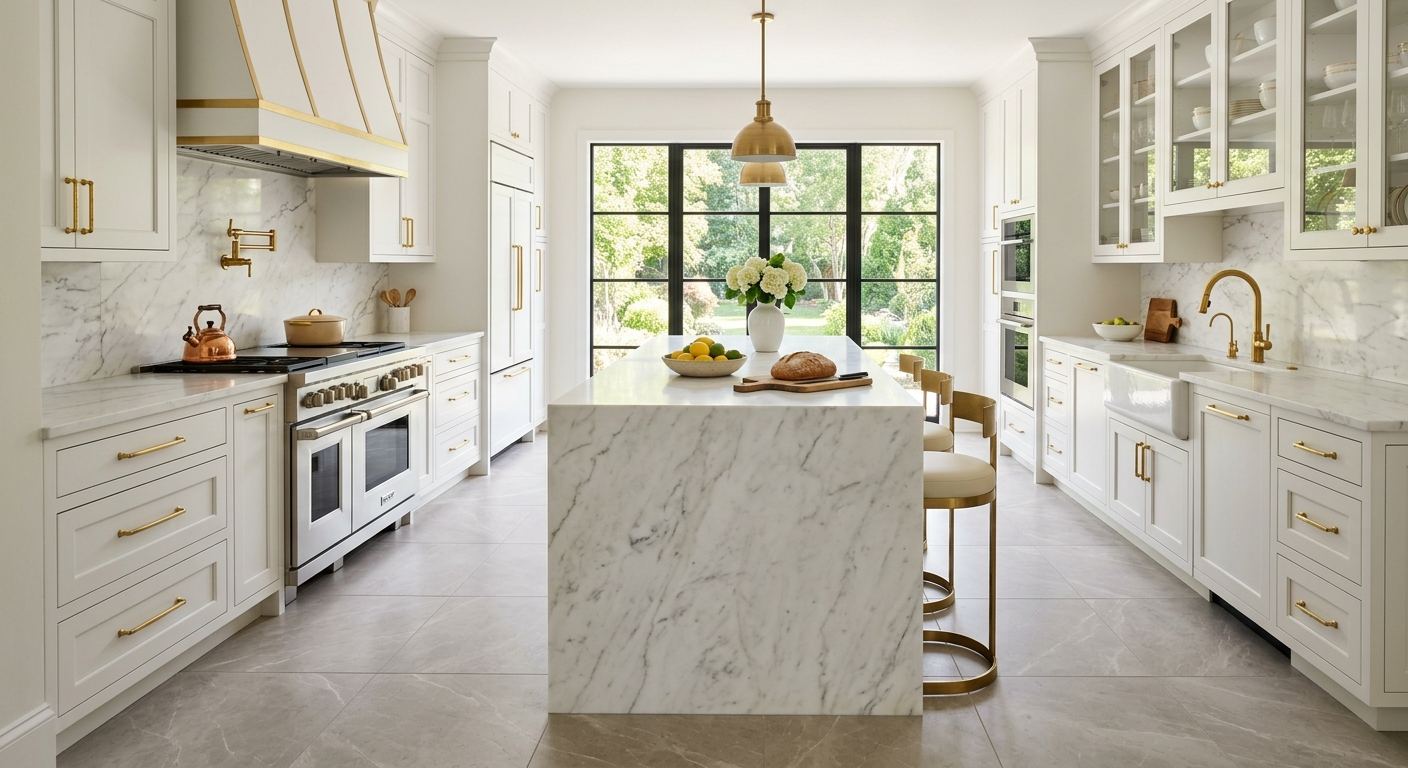
Kitchen renovation options and costs in London
Kitchen renovation in London is strongly influenced by what homeowners think their kitchen “should” look like at resale, not by weather swings alone. With a median household income of $76,500 (Statistics Canada, 2021 Census), many households can justify upgrades beyond basic repainting, especially in move-up neighbourhoods where buyers expect more than builder-grade finishes. London’s broader housing mix also matters: about 52.3% of homes were built before 1981 (Statistics Canada, 2021 Census), which often means older plumbing runs, different cabinet wall framing, and more variation in how straight walls and floors are—so prep work can add cost even when cabinetry and counters look similar on paper.
Across the city, contractor availability is typically best for cosmetic refreshes and cabinet/counter swaps, while full gut renovations are scheduled less frequently because they require more trades and longer site coordination. Neighbourhoods such as North London tend to see steady demand for mid-range to high-end projects as homeowners update older homes for functional improvements like better storage, a more durable countertop surface, and upgraded lighting.
Budgets in London also tend to align with the region’s income-to-home-value expectations: higher-end finishes (like quartz or natural stone) are more common in the $40,000–$65,000 range, while cost-controlled options cluster closer to the $18,000–$30,000 band. Use the comparison below to match your scope to a realistic price tier.
| Renovation Tier |
What's Included |
Typical Duration |
Price Range |
| Cosmetic refresh (paint, hardware, new appliances only) |
Cabinet painting or touch-ups (if applicable), new hardware, appliance swap (dishwasher/range/hood/microwave), countertop polishing only (no replacement), and basic fixture updates. |
3–7 days |
$18,000–$25,000 |
| Mid-range full renovation (new cabinets, counters, sink, tile) |
New stock or semi-custom cabinets, new countertops, sink and faucet, backsplash tile, new flooring finish (refinish or partial replacement), and coordinated electrical/plumbing for swap-in locations. |
2–4 weeks |
$30,000–$45,000 |
| High-end full renovation (custom cabinets, stone counters, island) |
Custom millwork, quartz or natural stone countertops, island with enhanced storage and lighting prep, higher-spec backsplash (tile or slab), upgraded fixtures, and more complex layout coordination. |
4–7 weeks |
$45,000–$65,000 |
| Cabinet refacing only (new doors + drawer fronts, same boxes) |
Replace doors/drawer fronts, update hardware/soft-close, re-surface/repair box frames as needed, and optionally adjust trim and toe-kicks. Countertops may remain. |
1–3 weeks |
$3,500–$12,000 |
| Countertop swap only (laminate to quartz or stone) |
Remove old surface, template/measure, install quartz/stone (or upgrade laminate), new sink cut-out if needed, basic caulking and countertop junction finishing. |
3–10 days |
$2,500–$12,000 |
| Backsplash tile installation only |
Demo of existing backsplash (if required), tile install, grout/seal where applicable, and finishing trims. Does not include cabinetry or countertop replacement. |
3–6 days |
$1,500–$4,500 |
Prices are estimates only and vary by project scope, site access and material selection.
What affects the price of kitchen renovation in London
In London and across Ontario, two homeowners can receive quotes for the “same” kitchen and still see a 30–50% difference. The usual drivers aren’t climate—they’re finish tier choices, how much carpentry and electrical/plumbing coordination is required, and how much the existing home conditions force the crew to correct.
In London’s higher-value pockets, homeowners often expect a more resale-ready look, so projects skew toward quartz or natural stone counters and semi-custom cabinetry. In more entry-level or rental stock, laminate countertops and stock cabinets dominate because those materials deliver the best budget-to-result ratio. In practical terms, if you’re aiming for a full renovation in the $18,000–$30,000 band, you typically limit layout changes and choose cost-controlled cabinet and countertop selections. If you move into the $45,000–$65,000 range, you can usually afford island work, higher-end tile, and upgraded lighting and trim details that buyers notice during viewings.
Layout changes are the biggest unpredictability regardless of finish: removing a wall can expose hidden structure, adding an island may require electrical and plumbing rough-ins, and moving a gas line (or changing hood venting) can add scheduling and inspection steps. London’s older housing stock also plays a role—homes built before 1981 (52.3% of dwellings) often have older supply/drain lines and less consistent wall framing, which can add $1,000–$5,000 in prep and repairs before new cabinets sit square.
Concrete examples: a countertop swap only might land in the $2,500–$12,000 range, but if your sink location must shift and plumbing needs rework, that typically pushes the job toward the upper end. Likewise, a backsplash-only project can be straightforward, while full-height tile or complex outlets can move the budget upward within the $1,500–$8,000 band depending on how many cuts and returns are involved.
| Price Factor |
Why It Matters |
Cost Impact |
| Cabinet tier — stock vs. semi-custom vs. fully custom millwork |
Higher tiers improve fit, storage configuration, and finish quality, but require more measuring, built-in planning, and sometimes longer lead times. |
Can swing thousands of dollars; often the single largest line-item after scope |
| Countertop material — laminate vs. quartz vs. granite vs. stone |
Material cost, template complexity, and install risk (especially for natural stone) change both labour and fabrication fees. |
Typical countertop installations span $2,500–$12,000 depending on material and cuts |
| Layout change — wall removal, island add, plumbing/gas move |
More demolition and re-framing means more trade coordination, inspection steps, and schedule risk. |
Often adds the most unpredictable cost; can shift a job by $5,000–$20,000+ |
| Appliance package tier — builder vs. mid-range vs. pro-grade |
Cut-out specs, venting/clearances, and electrical requirements vary by appliance line. |
Can add or save several thousand depending on selections |
| Flooring — refinish existing vs. full replacement |
Kitchen renovations frequently disturb subfloors during cabinet installs; the finish tier determines how far you need to replace. |
Refinish keeps cost controlled; full replacement increases labour and material |
| Backsplash — ceramic tile vs. marble vs. full-height slab |
Premium stone and full-height coverage require more prep, careful layout, and more finishing time. |
Backsplash & tile projects commonly range $1,500–$8,000 |
| Electrical — new circuits for island, under-cabinet lighting |
Adding circuits and proper lighting layout requires a licensed electrician and inspection. |
Can add meaningful labour and permit-related overhead |
| Permit fees and licensed trade requirements |
Certain work triggers permits and inspections, which affects contractor sequencing and documented responsibility. |
Varies by scope; can materially affect final totals |
Permits & regulations in Ontario
In Ontario, a straight cabinet and countertop swap typically doesn’t require a building permit—if you’re keeping plumbing and gas lines in the same locations and you’re not altering load-bearing structure. For London homeowners, the “permit boundary” usually comes down to whether you’re changing how the kitchen is serviced and whether the structure is modified.
Work that typically does require permits and licensed trades includes: moving plumbing supply or drain lines (including changing sink location), relocating a gas line for the stove/range or making changes related to gas range installations, removing a load-bearing wall (or structural alterations), and adding new electrical circuits (for example, dedicated circuits for an island or additional lighting/vents that change electrical layout). Gas work must be done by a licensed gas fitter, and electrical work must be done by a licensed electrician; both generally require inspections before you can complete the “safe to use” portion of the job.
Step-by-step: how to verify a contractor for London projects:
- Ask for the contractor’s licence details (where applicable for your scope) and confirm they sub-contract licensed trades where required.
- Request a Certificate of Insurance (liability) showing the current policy and limits.
- Ask for WSIB/WCB clearance or documentation (as applicable) and keep it with your contract files.
- Verify the electrician/gas fitter credentials directly with their own documentation and contact information before work starts.
- Confirm in writing who is pulling permits (and when) and that inspections are included in the schedule.
Always confirm permit responsibility with the contractor before you sign—permit responsibility needs to be clearly stated in the written contract.
Cabinets, countertops and layout decisions in London
When planning a kitchen renovation in London, the three most consequential decisions are the cabinet tier, the countertop material, and whether you’re changing the layout. These choices strongly influence both daily usability and how easily the finished kitchen sells—particularly important in established neighbourhoods where buyers compare photos and finishes across similar price points.
1) Cabinet tier: Stock cabinets are the fastest and cheapest path, but they can limit storage customization. Semi-custom is usually the “sweet spot” for London homeowners because it offers better storage options, improved doors/drawer fronts, and a more tailored look without fully custom lead times. Custom cabinets cost more, but they can resolve real site challenges in older homes—like slightly out-of-square walls common in pre-1981 builds (52.3% of dwellings) —so the kitchen looks deliberate rather than “patched.”
2) Countertop material: Laminate is budget-friendly and can look sharp with the right edge profile, but it’s less durable for heavy cutting and high-traffic use. Quartz offers a strong balance—stain resistance and consistent appearance—with a realistic price jump over laminate. Granite/natural stone can be beautiful and durable, but natural variation and fabrication complexity can increase cost.
3) Layout changes: Removing a wall, adding an island, or relocating plumbing/gas lines is where costs can climb quickly. The cost is justified when the layout gain improves circulation and work triangle efficiency—not just for aesthetics. For example, moving from a cabinet-and-counter scope in the $30,000–$45,000 band to a higher-end full renovation in the $45,000–$65,000 band can be worth it if you’re also adding an island with better storage and lighting, upgrading tile, and selecting higher-spec cabinetry.
| Option |
Durability |
Maintenance |
Best For |
Price Range |
| Stock cabinets (big-box) |
Good for everyday use; performance depends on box quality and installation. |
Low; wipe clean, avoid over-wetting around seams. |
Cost-controlled refreshes and straightforward layouts |
$12,000–$22,000 |
| Semi-custom cabinets (local dealer) |
Very good; better options for organizers, widths, and door styles. |
Low; similar care to stock—keep hardware tightened and clean. |
Most London mid-range renovations targeting resale-ready finishes |
$18,000–$35,000 |
| Custom cabinets (local millwork shop) |
Excellent fit and finish; designed for irregular spaces. |
Low to moderate; premium finishes may require gentler cleaning products. |
Challenging rooms, unique storage needs, and “built for this house” results |
$28,000–$50,000 |
| Laminate countertop |
Moderate; edges and seams are the common wear points. |
Easy daily care; avoid prolonged standing water and use cutting boards. |
Budget-first projects and quick upgrades |
$2,500–$5,500 |
| Quartz engineered countertop |
High; resistant to stains and everyday impacts compared to laminate. |
Low; routine cleaning and periodic care with appropriate products. |
Busy households that want a consistent look for resale |
$6,000–$10,500 |
| Granite / natural stone countertop |
High; durable for cooking and cutting with proper sealing (as applicable). |
Moderate; sealing schedule and cleaning suited to the stone. |
Homeowners prioritizing unique natural appearance |
$8,000–$12,000 |
| Butcher block countertop |
High when maintained; can scratch but can be sanded/refinished. |
Higher care; regular oiling and careful moisture management. |
Warm, traditional kitchens and homeowners who want a repairable surface |
$4,000–$8,000 |
| Marble countertop |
High beauty, but softer and more prone to etching/staining than quartz. |
Higher care; use sealing/appropriate cleaners and manage acids/spills. |
Low-to-moderate wear households prioritizing luxury aesthetics |
$9,000–$14,000 |
How to choose a kitchen renovation contractor in London
To choose a kitchen renovation contractor in London, start by confirming three things: licensing where applicable for your scope, liability insurance, and WSIB/WCB coverage. Ask for a Certificate of Insurance and ensure it lists you (or shows proper coverage and amounts) and matches the contractor legal name on your contract. For coverage, request WSIB/WCB clearance documentation (or equivalent proof of coverage status, depending on the contractor’s setup). If permits are required for electrical, gas, plumbing, or structural work, verify that the licensed trades subcontracted by the contractor are properly insured and credentialed.
Next, get 2–3 itemised written quotes, not just a lump sum. A good quote should separate labour and materials, show allowances for cabinets and counters, list demo and disposal, and clearly note what’s included in the schedule. Read the scope carefully: Is permit pulling included? Who handles inspections? Is flooring removal included? If you’re upgrading to quartz or stone (often in the $6,000–$12,000 countertop install band), confirm templating and seam placement details—these affect both appearance and cost.
Also review warranty terms: workmanship warranty length, product/manufacturer warranty coverage, and whether the warranty is transferable if you sell the home. Payment schedule matters—never pay more than 10–15% upfront. Use a holdback until key milestones are complete (cabinets installed, countertops set, trim and punchlist done). Finally, insist on a start date and a completion estimate in writing, with lead-time assumptions for cabinets and countertops.
- Confirm insurance (liability) and keep the certificate on file.
- Request WSIB/WCB clearance documentation.
- Ask whether permits are needed for your exact scope and who pulls them.
- Get quotes itemised by labour vs materials (not one lump number).
- Confirm cabinet tier and exact model/spec, not just “similar style.”
- Verify countertop fabricator and templating process in writing.
- Ask who provides disposal/dump fees and whether it’s included.
- Confirm electrical and gas work is done by licensed trades where required.
- Review warranty length for workmanship and what voids it.
- Use a payment schedule with no more than 10–15% upfront.
- Require a detailed schedule with lead-time assumptions and contingencies.
- Ensure the contract states change-order process and approved pricing method.
Local red flags in London: (1) quotes that don’t address permits/licensed trade responsibility, (2) refusal to provide an itemised breakdown, (3) asking for a large upfront payment, (4) vague warranty language (“covered” but no time frame or exclusions), and (5) not discussing lead times for cabinets/counters when your timeline is tight.
Frequently asked questions — kitchen renovation in London
What's the most cost-effective kitchen upgrade?
In Ontario homes around London, the most cost-effective upgrade is usually a change that upgrades the “look” without major demolition. For many homeowners, that’s either a cabinet refacing scope or a countertop + hardware refresh combined. A cabinet refacing-only project typically sits around $3,500–$12,000, and a countertop swap alone can be roughly $2,500–$12,000, so you can often refresh the kitchen dramatically without paying for full cabinet replacement and floor rework. If your layout is functional and your cabinets are structurally solid, refacing plus new hardware and an updated backsplash tile can deliver a high-impact result that still makes sense for pre-1981 housing conditions common in the city. (Source: Statistics Canada, 2021 Census). Always confirm what needs to be repaired before re-facing so you’re not paying to cover underlying issues.
Custom vs stock cabinets — is custom worth it?
Custom cabinets can be worth it in London when your room has site challenges—out-of-square walls, awkward corners, or a layout that needs more tailored storage. That said, many homeowners get stronger value choosing semi-custom for the majority of cabinetry and reserving custom pieces for difficult areas like pantry niches or fridge/column gaps. Stock cabinets are the fastest and usually the lowest-cost option, but they’re less forgiving if your walls are not true or if you want specialized internal organizers. In price terms, if you’re aiming for a full renovation budget around the $30,000–$45,000 band, semi-custom commonly fits better than fully custom without pushing the schedule and total cost. If you’re targeting the $45,000–$65,000 tier for a higher-end project, custom millwork can help you achieve a “built-in” look that aligns with resale expectations in higher-value neighbourhoods.
How do I choose a kitchen contractor in London?
Start by verifying the contractor can legitimately deliver your scope in Ontario: request proof of liability insurance and WSIB/WCB coverage/clearance documentation, then confirm that licensed trades will be used for permits-required work. For cabinet and countertop swaps only, permits often aren’t needed—but if you’re moving plumbing/drains, relocating gas, removing a load-bearing wall, or adding electrical circuits, you will need permits and licensed work. Get 2–3 itemised quotes with labour and materials separated, including disposal, site protection, and whether permit pulling is included. Also ask for warranty details: workmanship warranty length, product/manufacturer warranty, and whether the warranty transfers on resale. In London, many projects depend on cabinet and countertop lead times; a contractor should clearly state start/completion dates with assumptions. Pricing that excludes major items or won’t show how the numbers are built is usually where problems start.
What order do kitchen renovation steps happen in?
A typical London kitchen renovation sequence goes: (1) site protection, measurements, and final template/confirmation; (2) demolition and removal of existing cabinets, countertops, and affected tile/flooring; (3) rough-ins and any permit-required work (plumbing/gas/electrical) before enclosing—this is where moving sink lines, adding island wiring, or changing venting can add time; (4) install cabinets and level/secure them; (5) countertop templating/fabrication and then installation; (6) backsplash tile install; (7) flooring refinishing or replacement; (8) fixtures and appliance hookups; (9) trim/finishing and final punchlist; (10) final inspection steps when permits apply. This order matters because cabinets need a stable base and countertops depend on accurate templating after cabinet alignment. If you’re doing only a countertop swap or backsplash-only, the order is shorter, but the “plumbing/electrical first if changing locations” rule still applies.
Can I live at home during a kitchen renovation in London?
Often, yes—depending on scope and how much demolition you’re doing. Many London homeowners stay in the home during cosmetic refreshes and smaller scopes like backsplash tile installation or countertop swaps, because the kitchen can sometimes be made functional with temporary access. For mid-range or high-end full renovations, the kitchen may be partially unusable for weeks due to cabinet installs, countertop fabrication time, and tile/floor curing. Plan for a workable “backup” setup: a microwave, kettle, and basic fridge access in a different area, plus a safe way to manage dust. Also consider older London housing conditions: if your home is built before 1981 (52.3% of dwellings), access points for plumbing/electrical may be less predictable, which can extend downtime if unexpected repairs appear. If you’re in a tight timeline and want a smoother living arrangement, schedule the noisiest demolition first and coordinate cabinet installation early to reduce the “dead” period.
Should I renovate my kitchen before selling in London?
In London, it usually makes sense to renovate before selling if your kitchen is holding back buyer perception—damaged finishes, outdated cabinet doors, worn countertops, or poor lighting—especially because buyers compare quickly and kitchens are a high-visibility room. Focus on projects that improve the look and functionality without overspending. Many sellers target the mid-range full renovation tier around $30,000–$45,000, or choose targeted upgrades like cabinet refacing (commonly $3,500–$12,000) plus new countertops and a refreshed backsplash. A full high-end kitchen in the $45,000–$65,000 range can be beneficial, but it needs to align with your neighbourhood’s expectations and the home’s value; otherwise you may not recoup the difference. Since London has a large share of pre-1981 homes (52.3% of dwellings), it’s smart to budget for prep/repair so you don’t delay staging. If you’re unsure, compare your kitchen’s condition to active listings in your area (Statistics Canada, 2021 Census for city housing profile).