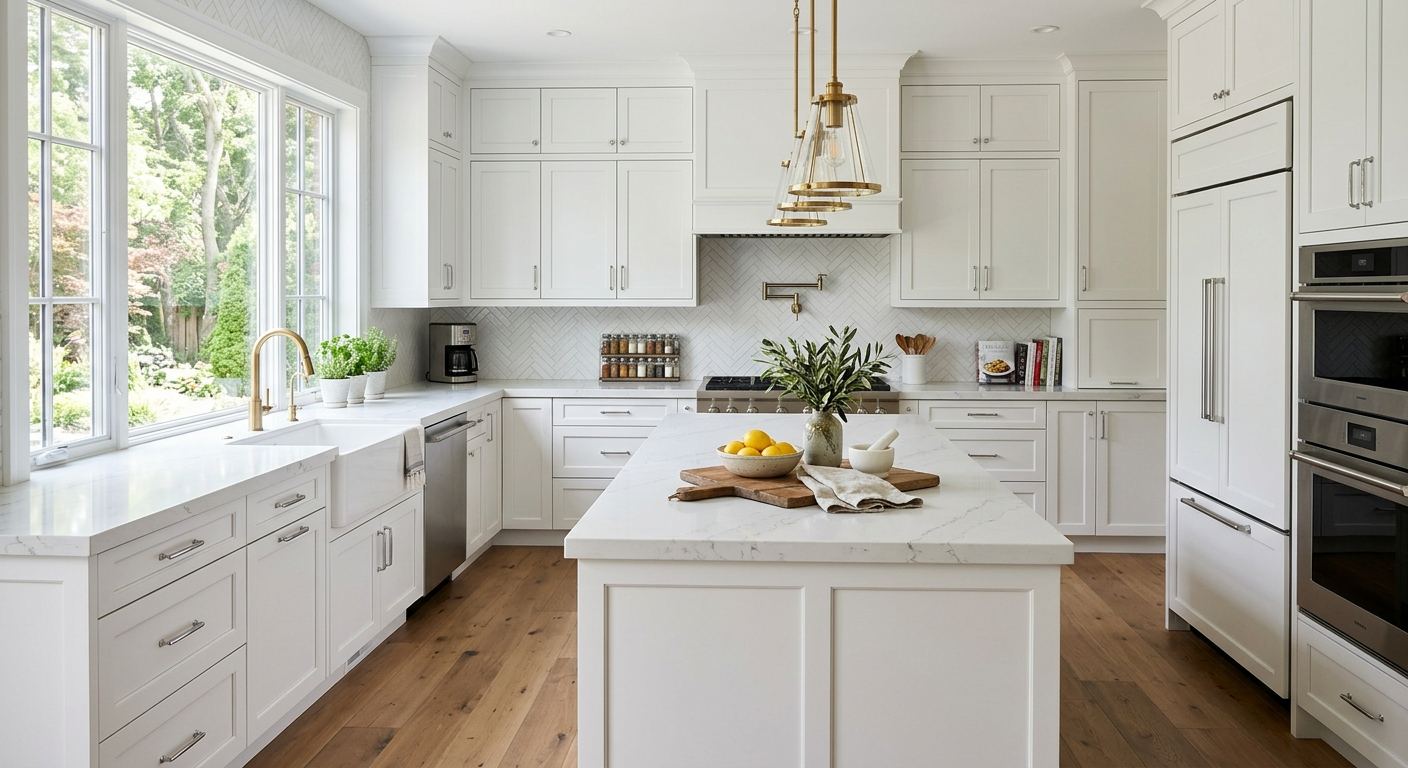
Kitchen renovation options and costs in Forest Hill North
Kitchen renovations in Forest Hill North typically start with one question: do you want a noticeable refresh, a well-planned mid-range upgrade, or a fully custom transformation? Homeowners here often make that call based on budget and resale expectations in a higher-value pocket of Toronto, where buyers are used to seeing updated surfaces and modern layouts. In a neighbourhood community of 12,806 people (Statistics Canada, 2021 Census), the demand for better-looking, more functional kitchens stays steady because homes frequently turn over with kitchens that need to compete with current buyer preferences. At the Toronto economic-region level, many projects target finishes that feel “worth the money” on resale—often pushing owners toward quartz counters and more tailored cabinetry rather than purely budget materials.
Toronto’s market—and not “weather”—is the bigger price driver. In practice, contractor availability, material lead times, and the pricing of premium stone and labour are what move your budget around week to week. Climate matters mainly through the condition of existing materials: older kitchens in the area can show moisture-related wear around sinks and exterior walls, so prep work and re-plumbing can add cost. If you’re in demand areas around Forest Hill Village and the broader mid-to-high-rise corridor near Eglinton/Forest Hill Avenue, you’ll usually find more trade crews competing for timelines, which can affect scheduling.
Below is a clear comparison of renovation tiers you can use to sanity-check contractor quotes before you move to a detailed scope and measurements.
| Renovation Tier |
What's Included |
Typical Duration |
Price Range |
| Cosmetic refresh (paint, hardware, new appliances only) |
Paint/finishes, new pulls/knobs, backsplash touch-ups (if needed), appliance swap (fridge/range/dishwasher), basic electrical match (like-for-like) |
1–3 weeks |
$6,000–$20,000 |
| Mid-range full renovation (new cabinets, counters, sink, tile) |
Semi-custom or stock cabinets, countertop (quartz or laminate), new sink and tap, full backsplash tile, under-cabinet lighting (optional), flooring patch/replace as required |
4–8 weeks |
$25,000–$60,000 |
| High-end full renovation (custom cabinets, stone counters, island) |
Fully custom cabinetry, premium stone (granite or natural stone), oversized island, upgraded appliance package, enhanced lighting, detailed tile/finishing, potential layout refinement |
7–14 weeks |
$70,000–$90,000 |
| Cabinet refacing only (new doors + drawer fronts, same boxes) |
Reface doors/drawers, new hardware, new toe-kicks, cabinet box conditioning, refinishing, often pairs well with countertop swap |
2–5 weeks |
$8,000–$28,000 |
| Countertop swap only (laminate to quartz or stone) |
Measure, remove/replace existing top, new quartz/stone installation, sink cut-out and caulking, basic backsplash integration (if applicable) |
1–3 weeks |
$3,000–$15,000 |
| Backsplash tile installation only |
Tile supply/installation, edge trimming, substrate prep, grout/caulking, sealing where required |
1–2 weeks |
$2,000–$10,000 |
Prices are estimates only and vary by project scope, site access and material selection.
What affects the price of kitchen renovation in Forest Hill North
Even when two homeowners ask for “the same kitchen,” quotes in Toronto can differ by 30–50% because contractors price risk, timing, and finish tier—not just the visible work. The biggest drivers are local home values and household income expectations: in higher-value neighbourhood pockets around Toronto, buyers tend to expect quartz or natural stone and better-fitting cabinetry, so many projects land in the $80k+ range when layout work and premium finishes show up. In more price-sensitive areas across the GTA, contractors can often keep budgets lower by using stock or refaced cabinetry and sticking with laminate or value-focused quartz. In other words, climate doesn’t typically “make” kitchens cost more here; it’s the market’s finish preference and the complexity of the scope that moves the needle.
Layout changes create the most unpredictable cost in Forest Hill North. Removing a wall, adding an island, or moving a gas or plumbing line can require additional trades and rework. For example, converting a galley into an open flow often pushes labour and electrical/plumbing coordination; the same cabinet line without structural work may stay near the lower end of the mid-range band, while the “same look” plus an island and rerouted services can quickly climb toward the high-end band. Another cost swing comes from how well your existing framing is aligned—older homes can have out-of-square walls, which affects cabinet installation time and sometimes forces additional shimming or drywall repair before counters go on.
Local site conditions also matter: tight downtown-style access and parking can extend labour time for material deliveries and disposal. If you’re replacing flooring fully in an older kitchen, subfloor prep can add thousands, but refinishing where possible can protect your budget and keep you closer to the $25,000–$60,000 mid-range.
| Price Factor |
Why It Matters |
Cost Impact |
| Cabinet tier — stock vs. semi-custom vs. fully custom millwork |
Higher tiers increase component quality, fit/finish, and design flexibility (including drawers, corner solutions, and storage depth) |
Can shift a full kitchen by roughly $10,000–$30,000 |
| Countertop material — laminate vs. quartz vs. granite vs. stone |
Premium stone adds both material and install complexity (templating, weight, special handling) |
Often adds $2,000–$15,000 depending on selection and seams |
| Layout change — wall removal, island add, plumbing/gas move |
Changes increase demolition, structural coordination, and licensed trade scope |
Frequently the largest swing factor; can add $5,000–$25,000+ |
| Appliance package tier — builder vs. mid-range vs. pro-grade |
Pro-grade appliances can require different dimensions, electrical/venting needs, and premium installation hardware |
Can vary by $1,500–$12,000+ across the full package |
| Flooring — refinish existing vs. full replacement |
Refinishing keeps demo/disposal lower; replacement can require underlayment and subfloor corrections |
Typically $1,500–$10,000+ |
| Backsplash — ceramic tile vs. marble vs. full-height slab |
Complex patterns and full-height coverage increase labour, waste, and material cost |
Can range $2,000–$10,000 or more for premium installs |
| Electrical — new circuits for island, under-cabinet lighting |
New loads require proper permitting, circuiting, and inspection; lighting adds labour for layout and wiring |
Commonly $800–$4,500+ |
| Permit fees and licensed trade requirements |
When plumbing/gas/electrical/structural work is involved, scope expands and costs include inspections and coordination |
Often adds $500–$5,000+ depending on project complexity |
Permits & regulations in Ontario
In Ontario, not every kitchen upgrade triggers a permit. Typical cosmetic changes—like swapping cabinet doors, painting, installing a backsplash, or replacing a countertop—generally do not require permits. A cabinet and countertop swap is usually treated as a finish replacement, not a new system. However, permits and licensed trades come into play when you change the “services” behind your kitchen: moving plumbing supply or drain lines, relocating gas for a stove or range/venting setup, removing a load-bearing wall, or adding new electrical circuits (for example, power outlets for an island or dedicated under-cabinet lighting) typically require approvals and inspections.
For Forest Hill North homeowners, the practical step-by-step verification is straightforward. First, ask the contractor for their Ontario licence details (for trades that need licences). Second, request a current Certificate of Insurance (liability) and proof of WSIB/WCB coverage where applicable—your contractor should also provide clearance letters or documentation if they use subcontractors. Third, before you sign anything, confirm who is pulling permits: the written contract should clearly state whether the contractor or homeowner is responsible, and list which permits are included in the quote.
Finally, never approve “we’ll sort it out later.” A responsible contractor will schedule inspections alongside the build timeline (often before drywall and before final close-in) and document the work accordingly.
Cabinets, countertops and layout decisions in Forest Hill North
The three most consequential decisions in a Forest Hill North kitchen renovation are: cabinet tier, countertop material, and whether you change the layout. Start with cabinet tier because it locks in function. Stock cabinets are the fastest path to a completed kitchen, semi-custom is the most popular mid-range choice for storage and better door styles, and custom millwork gives you the best fit when your walls aren’t perfectly square or when you want a built-in look for a fridge wall or pantry. Countertops come next: laminate can be a budget-friendly upgrade, quartz is the most common “sweet spot” for durability and low maintenance, while granite/natural stone gives a premium look that buyers notice. Then consider layout—open-concept wall removal, island addition, or relocating plumbing/gas—only when the space gain truly improves daily use and resale appeal.
Toronto resale buyers generally prefer clean lines, integrated storage, and countertops that look current. That preference matters more than weather. In practice, Ontario’s seasonal freeze-thaw doesn’t directly raise cabinet pricing, but it can affect older homes: if your current sink area has water damage or framing swelling, you’ll pay more for prep before installation. For a concrete dollar example, moving from laminate to quartz can add roughly a few thousand within a mid-range project; if you’re already budgeting around $25,000–$60,000 for new cabinets and counters, quartz is often justified because it holds up to daily use with minimal sealing and looks more “new” on showings. If your plan is only a fast refresh, a countertop swap-only project in the $3,000–$15,000 band can deliver the visual impact without the full labour of a cabinet rebuild.
Layout changes are the place to be selective. An island can be worth it if your kitchen has the room for comfortable circulation—otherwise the project can drift into high-end complexity without improving how you actually cook.
| Option |
Durability |
Maintenance |
Best For |
Price Range |
| Stock cabinets (big-box) |
Solid for typical use; limited sizing flexibility |
Low—wipe clean; minor adjustments if walls aren’t perfect |
Fast timelines, budget-conscious refreshes |
$8,000–$25,000 |
| Semi-custom cabinets (local dealer) |
Better drawer hardware options; good longevity |
Low—regular cleaning and gentle hardware care |
Most Forest Hill North homeowners who want an elevated look |
$18,000–$40,000 |
| Custom cabinets (local millwork shop) |
Highest fit and finish; tailored storage and door profiles |
Low—built for long-term use; proper leveling helps performance |
Custom islands, difficult spaces, premium resale presentation |
$35,000–$65,000 |
| Laminate countertop |
Good for everyday, but more vulnerable to heat/impact than stone |
Easy cleaning; avoid hot pans and aggressive cuts |
Budget upgrades and short-term “looks new” goals |
$3,000–$7,000 |
| Quartz engineered countertop |
Very durable and resistant to staining; consistent surface |
Low—no sealing for typical quartz; wipe and go |
High-traffic kitchens wanting a premium look without high upkeep |
$7,000–$15,000 |
| Granite / natural stone countertop |
High durability; unique patterning and thermal resistance |
Moderate—stone may require periodic sealing depending on product |
Premium statement kitchens where aesthetics matter |
$10,000–$20,000 |
| Butcher block countertop |
Durable but can scratch and needs protection from water |
Moderate—regular oiling and careful drying after spills |
Warm, traditional styles and homeowners who cook often |
$5,000–$12,000 |
| Marble countertop |
Beautiful but more susceptible to etching and staining |
Higher care—use mats, clean promptly, sealing recommended |
Design-forward kitchens accepting more maintenance |
$12,000–$25,000 |
How to choose a kitchen renovation contractor in Forest Hill North
Choosing the right kitchen renovation contractor in Forest Hill North starts with proof, not promises. Verify Ontario licensing for the trades involved (especially when permits and inspections are required), then confirm liability insurance and WSIB/WCB coverage so you’re not exposed if a worker is injured. Ask to see the Certificate of Insurance directly and request clearance documentation where applicable; if a contractor relies on subcontractors, you still want those coverage details for the trades they send to your home.
Next, get 2–3 itemised written quotes. A proper quote breaks labour and materials out by line item (cabinet supply, countertop fabrication/templating, plumbing/electrical scopes, demolition, disposal, drywall patching) rather than giving you one lump sum. Read the scope carefully: what’s excluded (old cabinet removal, tile backer board, plywood reinforcement under stone, appliance hookup), is permit pulling included, and is disposal/recycling part of the budget? Don’t accept “allowances” you can’t verify—ask what the allowance covers and what happens if you choose a higher-tier finish.
Finally, review warranty terms. You want a workmanship warranty length in writing (often covering a defined period after completion), plus the product/manufacturer warranties for cabinets, counters, and appliances. Confirm whether any warranties are transferable if you sell your home. For payment schedule, a responsible approach keeps upfront payments to about 10–15% maximum and uses progress payments tied to milestones; hold back until close-in and final cleanup are complete. Get start and completion timing estimates in writing so you have a baseline to manage delays.
- Confirm Ontario trade licensing for gas, electrical, and any permit-required work before the build starts.
- Request liability insurance certificate and verify it covers renovation work at your address.
- Ask for WSIB/WCB coverage proof (or clearance letters) for the contractor and subcontractors.
- Get 2–3 itemised quotes with labour/materials separated, not a single number.
- Clarify who pulls permits and whether permit fees are included.
- Confirm disposal and demolition haul-away are included (or priced separately).
- Check electrical scope: island outlets, under-cabinet lighting, and the number of circuits.
- Verify plumbing scope if you’re moving a sink, tap, or dishwasher drain.
- Ask for countertop templating and installation sequencing so it aligns with cabinetry.
- Review backsplash expectations: substrate prep, backer board, and grout/caulk finish.
- Request a written warranty for workmanship and separate manufacturer warranty details.
- Use a milestone-based payment schedule; keep at least 10–15% holdback until completion.
In Forest Hill North, red flags to watch for include: a contractor who won’t provide insurance/coverage documentation, quotes that omit disposal and substrate prep, “permit included” claims without specifying which trades require it, overly vague timelines (no start/end dates in writing), and warranties described only verbally without a document you can reference later.
Frequently asked questions — kitchen renovation in Forest Hill North
How do I add an island to my Forest Hill North kitchen?
Adding an island in Forest Hill North usually starts with a space plan: you want comfortable walking clearance and enough room for opening drawers and doors. If you’re moving a sink or adding power outlets for an island, the job becomes more than cabinetry—expect additional electrical and sometimes plumbing scope, which can affect your budget more than finish tier. In Ontario, new electrical circuits and any plumbing re-routing typically require permits and licensed trade work, so make sure your contractor lists these items clearly in the quote. If you’re aiming for a mid-range plan, a full renovation budget often sits in the $25,000–$60,000 band, but an island with service relocations can push costs into the higher end depending on cabinetry choice and countertop selection.
How much does a kitchen renovation cost in Forest Hill North?
For Forest Hill North homeowners, realistic full-kitchen budgets commonly fall between $25,000 and $90,000 depending on finish tier and whether you change the layout. Cosmetic refreshes (paint, hardware, appliance swaps only) can be much lower, but once you include new cabinets, counters, and tile, you should plan for at least the mid-range band. If you choose fully custom cabinetry, stone counters, and structural/layout changes like an expanded island, your project more often lands toward the $80k+ range. Toronto’s market also influences expectations—higher-value areas tend to steer homeowners toward quartz or natural stone, which shifts material cost upward more than “weather” does. (Statistics Canada, 2021 Census) data supports that Forest Hill North’s population base supports consistent demand, so you’ll want quotes that account for lead times and trade availability.
How long does a kitchen renovation take in Forest Hill North?
Timing depends on how complex the scope is. A cosmetic refresh can be as short as 1–3 weeks because cabinets aren’t removed and services don’t change. Mid-range full renovations typically take about 4–8 weeks once demolition, cabinet install, countertop templating/installation, and tile work are scheduled. High-end projects with custom millwork, stone counters, and layout/structural changes generally run 7–14 weeks, especially when permits and inspection steps are involved. In Ontario, work that triggers electrical, gas, or permit inspections can introduce scheduling pauses—your contractor should coordinate inspection dates into the plan rather than treat them as an afterthought. For a neighbourhood with steady demand like Forest Hill North, build in some buffer for material lead times (cabinet fabrication and stone templating), so you aren’t surprised by delays.
Quartz vs granite countertops — which is better?
“Better” depends on how you cook and the look you want. Quartz is engineered for consistency and is typically low-maintenance—most quartz surfaces don’t require sealing like many natural stones. It’s also very resistant to staining and is a strong choice for busy households that want minimal upkeep. Granite is natural, with one-of-a-kind veining and can be extremely durable as well, but it may require periodic sealing depending on the specific stone and finish. In Ontario kitchens like those in Forest Hill North, both options handle daily use well, but quartz often wins when buyers want a sleek, modern look with simpler care. Budget-wise, countertop swaps commonly sit in the $3,000–$15,000 band for many installs, and higher-end stone selections move beyond that depending on slab, seams, and edge profiles.
Should I reface or replace my cabinets?
Refacing is usually the right move when your cabinet boxes are solid, square, and structurally sound—think of it as “replace the faces, keep the framework.” It’s typically faster and can keep your budget lower than full replacement, making it attractive if you want to refresh the look without opening everything behind the walls. Replacement makes more sense when you have damaged boxes, poor layout, or you want significant storage redesign (like better corner solutions, new drawer configurations, or changes that require new rail heights). In many Forest Hill North renovations, homeowners pair refacing with a countertop upgrade, since the visual “wow” often comes from counters and fronts. Cabinet refacing budgets often run in the $8,000–$35,000 range, while full cabinet replacement can push a full-kitchen project toward the mid- to high-end bands depending on the layout and finish tier.
Do I need a permit for a kitchen renovation in Ontario?
In Ontario, many finish-only updates don’t require a permit—cabinet door and drawer front replacements, countertop swaps, backsplash tile installations, and paint typically fall into the non-permit category. However, permits and licensed trade work are commonly required when you change plumbing supply or drain lines, relocate gas for a stove or range hood, remove a load-bearing wall, or add new electrical circuits (for example, outlets for an island or new dedicated lighting circuits). In practice, the safest approach is to confirm the “permit triggers” in writing before you start. For Forest Hill North homeowners, ask your contractor who is responsible for permits, what inspections are expected, and to include those items in the contract. Gas work must be completed by a licensed gas fitter, and electrical work by a licensed electrician, with inspections coordinated through the licensed trades.