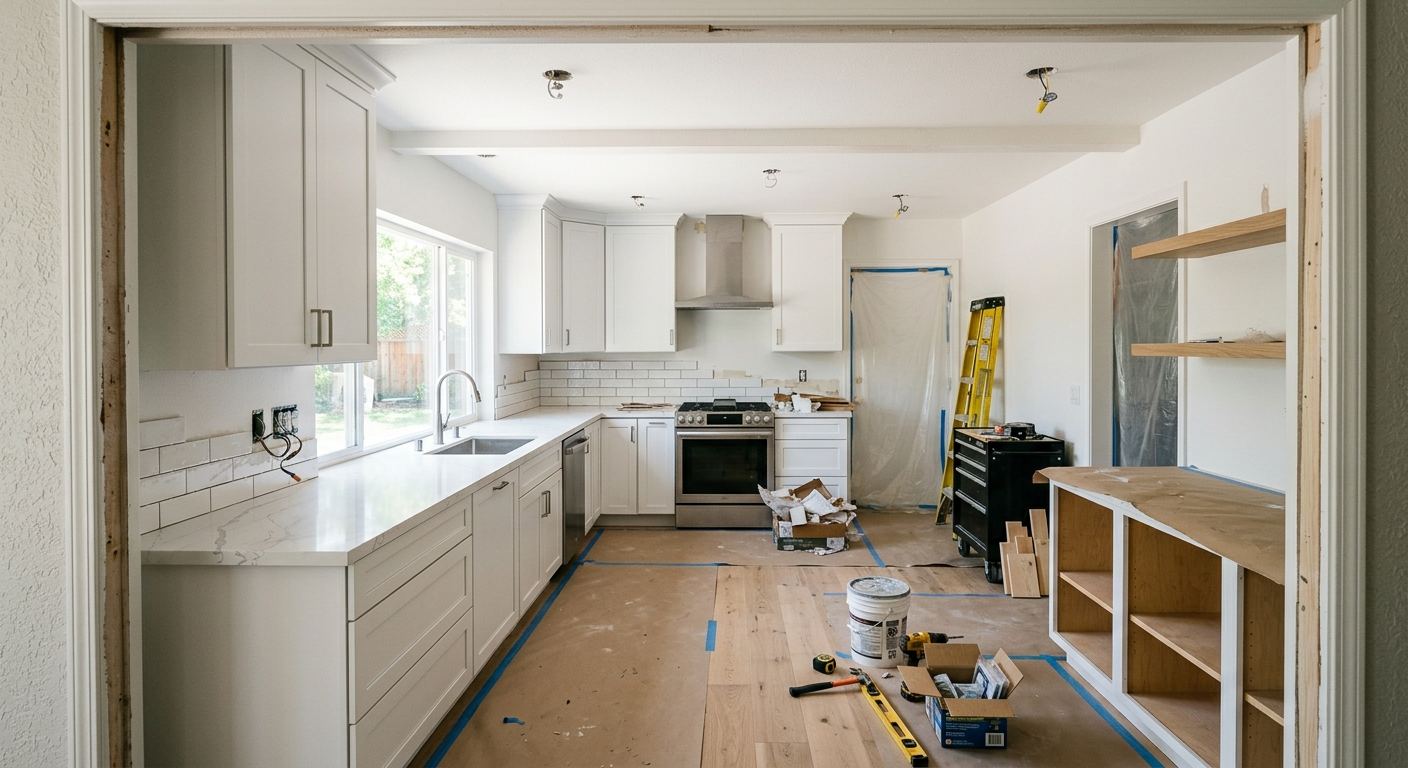
Kitchen renovation options and costs in Preston Heights
Preston Heights, Ontario homeowners typically start their kitchen renovation planning by deciding how “deep” they want to go—because the options range from a fast cosmetic refresh to a full rebuild. With a small local population of 2,869 (Statistics Canada, 2021 Census), you often see fewer fully custom shops competing for work nearby, so scheduling and lead times can matter just as much as price. In the Toronto economic region, budgets also correlate with local buying expectations: in higher-value pockets, many owners aim for an upgrade-heavy finish tier (quartz or natural stone and more custom-looking cabinetry), while more budget-conscious projects lean on refacing, laminate, and selective layout changes. That’s why two kitchens with the same square footage can land 30–50% apart when one owner upgrades materials and the other focuses on functionality.
Ontario’s costs are also shaped less by weather than by market demand. Toronto-area trade availability is strong, but as interest rates and housing turnover shift, contractor crews can get booked faster, which can add scheduling premiums. Climate still plays a role in practical details: kitchens in older homes can have more moisture history around plumbing walls, and the Greater Toronto Area’s seasonal humidity swings make it important to use properly sealed underlayments and to plan for ventilation upgrades early—before cabinets go in. Areas where people renovate frequently tend to be along busy arterials and near retail clusters in Preston Heights, where accessibility and parking planning are consistent enough to support quicker contractor turnaround. With that in mind, the table below will help you align your goals to realistic budget bands, then you can refine scope for the exact quote.
| Renovation Tier |
What's Included |
Typical Duration |
Price Range |
| Cosmetic refresh (paint, hardware, new appliances only) |
Paint (walls/trim), new cabinet hardware, appliance swap, minor touch-ups; no cabinet structural work |
3–7 days |
$8,000–$18,000 |
| Mid-range full renovation (new cabinets, counters, sink, tile) |
New semi-custom cabinets, quartz or good laminate counters, new sink + faucet, backsplash tile, flooring patching/refresh, basic plumbing updates |
3–6 weeks |
$25,000–$55,000 |
| High-end full renovation (custom cabinets, stone counters, island) |
Fully custom cabinetry, natural stone (granite/marble) or premium quartz, island with upgraded lighting, upgraded appliance package, full-height backsplash option, electrical upgrades |
6–10 weeks |
$60,000–$90,000 |
| Cabinet refacing only (new doors + drawer fronts, same boxes) |
Reface doors/drawer fronts, new pulls/hinges, rework minor cosmetic wear; reuse existing cabinet boxes where sound |
1–3 weeks |
$8,000–$25,000 |
| Countertop swap only (laminate to quartz or stone) |
Remove/replace countertop, new undermount sink cut-outs as needed, backsplash caulk/edge finishing, proper sealing and installation |
3–10 days |
$3,000–$15,000 |
| Backsplash tile installation only |
Tile supply/installation (backsplash area only), prep/leveling, grout/seal, cleanup; excludes cabinet replacement |
2–7 days |
$2,000–$10,000 |
Prices are estimates only and vary by project scope, site access and material selection.
What affects the price of kitchen renovation in Preston Heights
In Toronto and across Ontario, two quotes for the same “kitchen swap” can differ by 30–50% because contractors price risk and variability: material tier, how much hidden work is uncovered once walls are open, and how complicated the trades sequencing becomes. Even when you keep the same layout, demolition can reveal dated plumbing vents, worn subflooring, or moisture-affected backing behind older toe-kicks—issues that change labour hours and disposal costs. Market behaviour also matters. In the Toronto economic region, finish choices tend to follow home value and resale expectations more than climate. When owners target higher resale value, they often default to quartz or natural stone counters and semi-custom cabinetry because the investment reads clearly to buyers; in more price-sensitive areas, laminate and stock/refaced cabinets keep the project in the low–mid range while still refreshing the space.
In Preston Heights specifically, older housing stock and typical kitchen footprints affect your budget. A common example: swapping laminate for quartz can be a relatively predictable upgrade (often near the $3,000–$15,000 band for countertop-only work), but changing the sink location or cut-outs turns it into a more involved job that can climb into a broader renovation budget. Another example is layout: adding an island or removing a wall may require additional electrical and sometimes new plumbing pathways; that unpredictable part is where costs surge even if you keep cabinets mid-range. Lastly, tile choices swing budgets quickly—ceramic backsplash is often closer to the $2,000–$10,000 band, while full-height tile or premium stone tile tends to push higher labour and material costs.
Because the cost drivers are mostly materials and trade scope—not Ontario “weatherproofing”—you’ll get the most savings by clarifying what you’re actually changing: cabinets, counters, and electrical/plumbing first. That approach makes the quote easier to compare and reduces the chance of surprises.
| Price Factor |
Why It Matters |
Cost Impact |
| Cabinet tier — stock vs. semi-custom vs. fully custom millwork |
Higher tiers add better finishes, interior upgrades, better door/drawer fit, and more design options |
Can swing the project by roughly 15%–40% depending on size and customization |
| Countertop material — laminate vs. quartz vs. granite vs. stone |
Material cost and templating/installation complexity rise with premium stone and thicker slabs |
Typically adds or reduces $3,000–$15,000+ relative to the base plan |
| Layout change — wall removal, island add, plumbing/gas move |
More demolition, framing, and licensed trade coordination increases labour and uncertainty |
Often the largest variable; can change totals by 20%–50% even with similar finishes |
| Appliance package tier — builder vs. mid-range vs. pro-grade |
Dimensions, power requirements, and trim kits differ by tier; installation time varies |
Commonly shifts totals by $1,500–$8,000+ |
| Flooring — refinish existing vs. full replacement |
Kitchen renos frequently require patching or removal; transitions affect labour |
May add $2,000–$12,000+ depending on what’s underneath |
| Backsplash — ceramic tile vs. marble vs. full-height slab |
More complex cuts, higher material weight, and extra sealing increase labour |
Often adds $2,000–$10,000+ based on surface area and material tier |
| Electrical — new circuits for island, under-cabinet lighting |
New circuits and lighting layouts add licensed electrician time and inspections |
Can increase costs by $800–$5,000+ |
| Permit fees and licensed trade requirements |
Work like plumbing/gas relocation and electrical upgrades may require permits, inspections, and scheduling |
Usually a few hundred to several thousand dollars depending on scope |
Permits & regulations in Ontario
In Ontario, a straightforward cabinet and countertop swap often does not require a permit—especially when you keep plumbing and gas connections where they are and you’re not altering load-bearing structures. However, permits and inspections do come into play for the work that changes building systems. Moving plumbing supply or drain lines, relocating a gas stove or range hood when gas is involved, removing a load-bearing wall, and adding new electrical circuits (for example, for an island with outlets or new lighting runs) typically require permits and licensed trades. Gas work must be performed by a licensed gas fitter, and electrical work must be performed by a licensed electrician; both require proper inspection before you proceed to finish stages.
For a Preston Heights homeowner, the safest way to verify permit responsibility is to confirm it in writing before signing. Ask your contractor: “Is the permit included in your quote, or is it my responsibility?” Then confirm licences and coverage by checking the contractor’s licence documentation and insurance certificates, not just their website claims. Step-by-step: (1) request the contractor’s certificate of insurance (general liability) and confirm the policy is active for the start date; (2) ask for proof of WSIB/WCB coverage and confirm clearance is in place for the work site; (3) for any gas or electrical scope, verify the tradesperson’s licence through Ontario’s public registration/verification resources and ensure the installation aligns with inspection requirements; (4) keep the clearance letter and insurance certificate in your reno folder.
Finally, treat the written scope like a contract checklist: it should spell out what triggers permits, what the contractor pulls (if applicable), and when inspections are scheduled relative to cabinet installation and countertop templating.
Cabinets, countertops and layout decisions in Preston Heights
In Preston Heights, the three biggest decisions that drive both cost and buyer appeal are: (1) cabinet tier, (2) countertop material, and (3) layout changes. Choosing stock cabinets is usually the fastest path to a refreshed look because lead times and installation are predictable; semi-custom is the most popular mid-range option because you get better storage interiors and nicer finishes without paying for full custom millwork. Custom cabinets provide the best fit for unusual walls and ceiling lines, but they’re the highest cost and require careful measurement and longer lead times.
Countertops are where many Toronto-area buyers “read” quality quickly. Laminate is budget-friendly and still works well when you want a clean, modern surface without a large materials investment, but it’s less forgiving for heavy daily abuse. Quartz is popular because it resists staining and handles everyday cooking better with low maintenance. Granite and other natural stones add premium visual depth but can require more care depending on sealers and usage patterns. For layout, an open-concept wall removal or an island can be justified only when you’re creating meaningful circulation and storage—not just because it’s trendy. If you add an island, plan for electrical outlets and lighting early; if you move plumbing or gas, understand that it’s the unpredictable part of your budget regardless of cabinet tier.
Local Toronto resale expectations often reward visible consistency: at mid-range budgets (think $25,000–$55,000 full renovations), semi-custom cabinets paired with quartz or a strong laminate can feel “complete.” A concrete dollar example: upgrading from laminate to quartz on a typical family kitchen can be a worthwhile add (often within the countertop swap bands), but paying for a full custom cabinet system “just to match” a countertop without changing the layout may not deliver a proportional resale bump. In older Preston Heights kitchens, where wall cavities and moisture history can exist, spending first on ventilation and proper sealing under cabinets often protects the finish longer than chasing the most expensive stone.
| Option |
Durability |
Maintenance |
Best For |
Price Range |
| Stock cabinets (big-box) |
Solid for everyday use when properly installed; limited custom sizing |
Low—basic cleaning; focus on door alignment and hardware adjustments |
Fast turnarounds and tighter renovation budgets |
$8,000–$25,000 |
| Semi-custom cabinets (local dealer) |
Good durability with improved internal options and finish consistency |
Low—routine wipe-down; occasional hinge/track adjustments |
Most Preston Heights renos aiming for “wow” without full custom |
$18,000–$45,000 |
| Custom cabinets (local millwork shop) |
Highest fit and build quality; best for awkward layouts and storage goals |
Low—stays serviceable with proper care; premium hardware helps |
High-end kitchens, unusual dimensions, maximum storage design |
$35,000–$70,000 |
| Laminate countertop |
Good daily performance; can be vulnerable at seams if not installed well |
Low—avoid prolonged standing water at edges; use gentle cleaners |
Budget-focused refreshes where layout stays mostly unchanged |
$3,000–$7,000 |
| Quartz engineered countertop |
High durability and stain resistance for busy family kitchens |
Low—wipe clean; minimal sealing compared to natural stone |
Toronto-area buyers who want a premium look with low upkeep |
$6,000–$12,000 |
| Granite / natural stone countertop |
Very durable; performance depends on stone type and edge details |
Moderate—periodic sealing may be needed depending on stone |
Owners seeking classic premium appearance and unique veining |
$8,000–$15,000 |
| Butcher block countertop |
Durable when cared for; surface shows character but needs protection |
Moderate—oil/maintenance to prevent drying and water damage |
Family-friendly kitchens where warmth and edge-to-edge design matter |
$5,000–$10,000 |
| Marble countertop |
Can scratch/stain more easily; needs careful daily handling |
Higher—regular sealing and cautious cleaning recommended |
High-end, display-focused kitchens that still get daily use carefully |
$10,000–$18,000 |
How to choose a kitchen renovation contractor in Preston Heights
Choosing a contractor in Preston Heights starts with proof, not promises. First verify Ontario licensing for any work that requires it: electrical must be performed by a licensed electrician, and gas work must be done by a licensed gas fitter. Ask for the certificate of insurance (general liability) and confirm the policy covers renovation work for the project address and start date. For work coverage and site safety, request proof of WSIB/WCB coverage (and a clearance letter if provided in your contractor’s process). You should be able to see these documents before work begins—not after you’ve signed.
Next, get 2–3 itemised quotes that break down labour and materials. Avoid lump-sum numbers that don’t say what’s included for demolition, subfloor repairs, cabinet install, countertop templating, electrical scope, and waste disposal. Read exclusions carefully: confirm whether permit pulling is included, whether disposal is included, and whether patching and finishing for drywall and flooring are part of the scope. Warranty matters too—ask for the workmanship warranty length and whether product/manufacturer warranties apply directly to you or are assigned through the contractor. Also clarify if warranties are transferable if you sell the home.
For payment, keep it controlled: never pay more than about 10–15% upfront, and hold back a portion until the job is complete and items like caulking, door alignment, and final cleanup are done. Insist on a written timeline with a start date and a completion estimate. If a contractor can’t commit in writing, plan for delays.
- Request licence numbers and confirm coverage documents before scheduling any demolition.
- Get quotes that list labour and materials line-by-line, including allowances for fixtures and tile.
- Ask who pulls permits and who pays permit fees if plumbing/electrical/gas changes are included.
- Confirm disposal: dumpster rental, haul-away, and drywall/tile debris removal.
- Verify that countertop templating and installation dates are planned relative to cabinet install.
- Check whether flooring patching and transitions are included (especially around the sink and dishwasher).
- Ask for sample finishes and hardware specs, not just “premium” descriptions.
- Confirm electrical scope: new circuits, under-cabinet lighting, island outlets, and fixture mounting.
- Ensure their warranty covers both workmanship and common failure points (doors, drawers, sealants).
- Clarify your role for selections (who holds the final choice list and when it’s due).
- Require a written change-order process with pricing before any added work starts.
- Use a payment schedule that ties to milestones and includes a final holdback.
Common red flags in Preston Heights include: (1) quotes that aren’t itemised and don’t show disposal, patching, or permit responsibility; (2) “cash-only” requests or no willingness to provide insurance/coverage proof; (3) vague timelines without lead-time assumptions for cabinets and stone; (4) no workmanship warranty details; and (5) promises that gas or electrical work will be handled without the appropriate licensed trades and inspections.
Frequently asked questions — kitchen renovation in Preston Heights
How do I choose a kitchen contractor in Preston Heights?
Start by verifying Ontario-required credentials and coverage. Ask for the contractor’s certificate of insurance and proof of WSIB/WCB coverage (and clearance, if they provide it). For work tied to building systems, make sure the right trades are licensed: gas work must be done by a licensed gas fitter, and electrical by a licensed electrician. Then compare 2–3 itemised quotes (labour + materials) rather than lump sums, and confirm what’s excluded—permits, disposal, drywall finishing, and flooring patching. In Preston Heights, lead times for cabinetry and stone matter, so pick the contractor who schedules templating and delivery realistically. If you’re budgeting a full renovation in the mid-range (for example, $25,000–$55,000), ensure the quote clearly defines cabinet tier and countertop type so you’re comparing like-for-like.
What order do kitchen renovation steps happen in?
A typical Preston Heights kitchen renovation sequence starts with measurement and design finalization, then demolition, and only after that do trades rough-in their work. Cabinet installation usually follows any electrical/plumbing rough-ins (like new circuits, under-cabinet lighting wiring, sink hookups, and venting requirements). Next, countertops are templated after cabinets are set and level. Tile/backsplash is commonly installed after countertops are secured so edges and caulking lines are consistent. Finishing trades—drywall touch-ups, paint, and final flooring transitions—wrap up before the last hardware and appliance connections. This sequencing helps prevent rework, especially in older kitchens where hidden plumbing behind toe-kicks or wall cavities can require adjustment once demolition reveals conditions.
Can I live at home during a kitchen renovation in Preston Heights?
Many homeowners in Preston Heights do live at home, especially on cosmetic refreshes or countertop-only projects where the kitchen remains mostly functional. For a mid-range renovation that involves cabinet replacement and tile, you can often manage daily routines by setting up a temporary microwave/coffee station in another room and using a portable induction burner if safe and approved for your situation. Expect the most disruption during demolition, rough-in plumbing/electrical work, and countertop templating/installation days. If your project moves plumbing drains, changes electrical circuits, or includes an island with power, temporary meal planning becomes more important. Contractors sometimes schedule the “no-cooking” stretch for the days when cabinets are out and counters are removed, which helps you plan around deliveries and inspection windows.
Should I renovate my kitchen before selling in Preston Heights?
Usually, renovations pay off best when they improve usability and buyer-visible finishes without over-customizing for one family. In the Toronto market, kitchens are often valued for clean lines, durable surfaces, and reliable storage. A cosmetic refresh or cabinet refacing can deliver a strong “updated” look while keeping costs contained, whereas a full high-end rebuild (often $60,000–$90,000) may only be justified if the home’s overall condition supports it. Consider your timeline and the condition of plumbing and electrical behind the walls—if those systems are aging, delaying can lead to higher redo costs later. With a local population of 2,869 (Statistics Canada, 2021 Census), there’s a steady stream of buyers looking for move-in-ready kitchens, so focus on finishes and layout functionality that show well in photos and during inspections.
What's the most popular kitchen style in Preston Heights right now?
Across the Toronto economic region, the most common “safe bet” styles are modern transitional kitchens: shaker-style fronts, warm neutral palettes, and brighter lighting at counter level. Many homeowners pair semi-custom shaker cabinets with quartz countertops for a clean, low-maintenance look that suits both everyday use and buyer expectations. You’ll also see more islands and functional pendant or under-cabinet lighting, because it photographs well and improves work zones. That said, style should still match your home’s age and layout. In Preston Heights, where many kitchens are in established housing stock, contractors often recommend finishes that look cohesive with existing floors and trim so you don’t end up with a mismatched “renovated room” feeling.
How do I know if I need to update my kitchen plumbing in Preston Heights?
You may need plumbing updates if you’re moving the sink, adding a dishwasher, relocating the cooktop, or you discover corrosion, slow drains, or past moisture staining during demolition. Many Preston Heights kitchens in older homes have supply line wear and older drain layouts that can complicate installation once you replace cabinets and add new appliance packages. A good contractor will inspect access points before closing walls—especially around the sink wall, dishwasher connection, and any venting. Updating plumbing is also worth considering for long-term reliability even when you’re staying within a mid-range renovation budget (for example, projects in the $25,000–$55,000 range) because it can prevent repeat disruption. If gas is involved for the stove/range, remember gas work requires a licensed gas fitter and inspection.