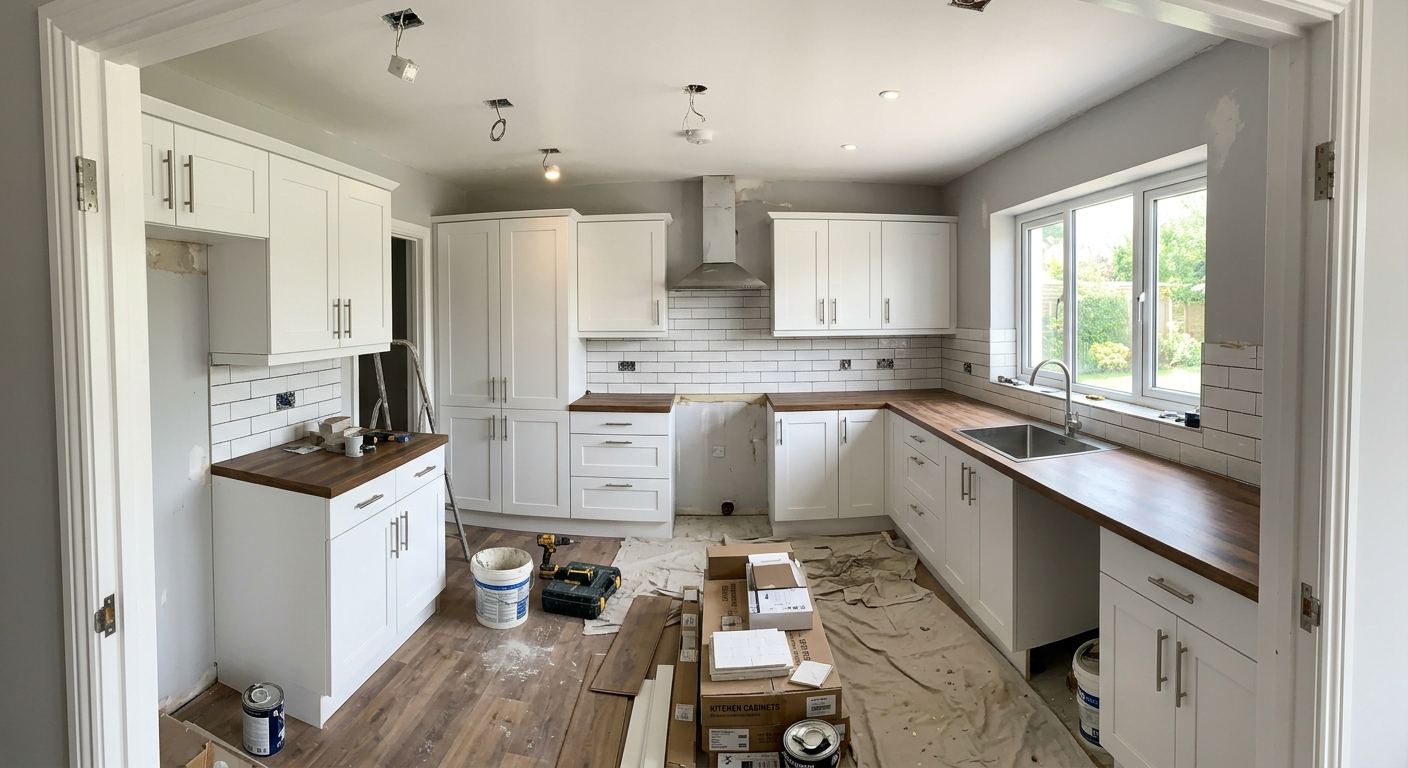
Kitchen renovation options and costs in Fergus
Fergus homeowners can renovate a kitchen in several ways, from a quick cosmetic update to a full layout overhaul. With Fergus sitting in the Toronto economic region and a 2021 population of 20,767 (Statistics Canada, 2021 Census), local demand is steady—especially from families updating older homes around the town core and nearby rural properties. At the same time, kitchen expectations generally track household purchasing power across the GTA, where the higher-value end of the market tends to invest more heavily in cabinets and countertops for resale appeal.
In practice, the “finish tier” is what moves your budget the most, not climate. Toronto-area pricing is driven by home value and income, and many owners target a kitchen spend that can realistically be recovered on resale—often pushing decisions toward quartz and semi-custom cabinetry. That’s why two homes doing “similar” work can differ by tens of thousands: one client chooses laminate and stock cabinets to stay near the low–mid band, while another upgrades to stone and custom millwork. Labour, permits, and trade availability are broadly consistent across the GTA, but neighbourhood-level buyer preferences shift where people land on the options spectrum.
In Fergus, trades are especially busy for renovations in and around the downtown area and the established residential pockets where older floorplans and dated fixtures are common. If your kitchen has visible wear and you want a modern look without structural risk, start with the options below—then compare scope and pricing in the table.
| Renovation Tier |
What's Included |
Typical Duration |
Price Range |
| Cosmetic refresh (paint, hardware, new appliances only) |
Cabinet paint or refinishing (no box changes), new pulls/hinges, appliance swap, touch-up caulking, basic prep |
1–3 weeks |
$8,000–$18,000 |
| Mid-range full renovation (new cabinets, counters, sink, tile) |
New stock or semi-custom cabinets, countertop (quartz or good laminate), sink and faucet, backsplash tile, minor plumbing adjustments, disposal connection, standard under-cabinet lighting (optional) |
4–8 weeks |
$25,000–$55,000 |
| High-end full renovation (custom cabinets, stone counters, island) |
Fully custom millwork, premium quartz/natural stone, island with seating, upgraded appliance package, full-height backsplash option, flooring refinishing or replacement (scope-dependent), more extensive electrical/plumbing coordination |
8–14 weeks |
$70,000–$90,000 |
| Cabinet refacing only (new doors + drawer fronts, same boxes) |
Remove/replace doors and drawer fronts, new veneer or refacing materials, upgraded hardware, internal adjustments where boxes allow, paint/finish coordination |
2–5 weeks |
$8,000–$30,000 |
| Countertop swap only (laminate to quartz or stone) |
Remove existing top, install new countertop, seam/corner finishing, reconnect sink and cut-outs, basic backsplash tie-in (optional) |
1–2 weeks |
$5,000–$15,000 |
| Backsplash tile installation only |
Tile layout and installation, thinset/grout, trim returns, caulking at edges, silicone at changes of plane, disposal of debris |
3–7 days |
$2,000–$9,500 |
Prices are estimates only and vary by project scope, site access and material selection.
What affects the price of kitchen renovation in Fergus
In Fergus and across Ontario, two homeowners can receive quotes for the “same” kitchen remodel that differ by 30–50% because estimators price differently based on product tier, tolerances, and what trades are required behind the walls. In the Toronto economic region, the biggest driver is local buying power and home-value expectations—many owners default to quartz or stone counters and semi-custom cabinetry because it aligns with what buyers notice at sale time. By contrast, more price-sensitive projects often land in the low–mid range using stock or refaced cabinets and laminate counters while still updating layout details in a cost-controlled way.
Layout changes add the most unpredictable costs regardless of finish: removing a wall, adding an island, or moving a gas line can quickly expand labour hours, materials, and coordination between electricians and plumbers/gas fitters. In a Fergus kitchen, even “small” shifts—like raising a cabinet run to clear ducting or relocating a refrigerator line—can change how countertops are templated and can trigger additional countertop fabrication or modified plumbing connections.
Concrete examples: (1) If your budget is closer to the $25,000–$55,000 mid-range band, choosing semi-custom cabinets plus quartz often keeps you on track, but adding an island with new plumbing may push the project toward the upper end. (2) If you start at the low–mid range and plan a countertop upgrade alone, moving from laminate to quartz (typically $5,000–$15,000 for the swap scope) usually costs less than redoing the whole cabinet package. (3) Older Fergus homes sometimes have dated wiring or limited circuit capacity; adding under-cabinet lighting and island receptacles can mean extra electrical work and new runs. Climate plays a lesser role in Toronto-area pricing, but humidity swings still matter for finish prep—poor cabinet surface prep can mean premature paint or veneer failure, which costs money to fix.
| Price Factor |
Why It Matters |
Cost Impact |
| Cabinet tier — stock vs. semi-custom vs. fully custom millwork |
Box size, door quality, interior options (pull-outs, soft-close), and fit/finish tolerances change labour and material cost |
Can swing roughly from low–mid cabinet budgets up into high-end full renovation territory |
| Countertop material — laminate vs. quartz vs. granite vs. stone |
Material pricing, edge options, and fabrication complexity affect total installed cost |
Laminate keeps costs down; quartz/stone moves you toward mid–high bands |
| Layout change — wall removal, island add, plumbing/gas move |
Triggers structural assessment, new rough-in work, and more coordination between trades |
Often the fastest way to add tens of thousands even with “nice” finishes |
| Appliance package tier — builder vs. mid-range vs. pro-grade |
Installation requirements (venting, electrical draw, panel readiness) and premium features change costs |
Appliance choice can be a major line item without changing your layout |
| Flooring — refinish existing vs. full replacement |
Subfloor condition and matching patterns affect labour, dust control, and re-install time |
Full replacement adds cost and schedule risk |
| Backsplash — ceramic tile vs. marble vs. full-height slab |
Material weight, cut complexity, and whether you go to ceiling impact time and waste |
Small tile jobs are manageable; slab/wet-look finishes increase labour |
| Electrical — new circuits for island, under-cabinet lighting |
New lighting and receptacles may require additional circuits and inspections |
Can add meaningful cost and lead time |
| Permit fees and licensed trade requirements |
Permits and inspections are required for certain work; licensed trades have fixed compliance steps |
Cost varies by scope, but unplanned permit triggers can expand the budget |
Permits & regulations in Ontario
In Ontario, many straightforward kitchen cosmetic updates do not require a permit, but several common “upgrade” tasks do. Cabinet and countertop swaps typically do not need a permit because they’re considered finish replacements. If you’re only swapping a laminate top for quartz, changing cabinet doors, or installing a backsplash with no changes to plumbing, gas, structural elements, or major electrical, the work usually proceeds as a standard renovation.
However, permits are typically required when you change the underlying services or structure. That includes moving plumbing supply or drain lines, relocating a gas stove or modifying gas venting (including certain changes around range hoods), removing a load-bearing wall, or adding new electrical circuits (for example, dedicated island receptacles or additional lighting circuits). Gas work must be performed by a licensed gas fitter, and electrical work must be done by a licensed electrician, with inspections where required.
For a homeowner in Fergus, the best approach is verification before you sign. Ask your contractor for: (1) their Ontario licence/registration details (for the relevant trade where applicable), (2) a current certificate of insurance and clearance wording where relevant, and (3) proof of WSIB/WCB coverage for workers involved. Then confirm the contract spells out who pulls permits (if any), who pays permit fees, and what inspections are included. Responsibility belongs in writing.
Cabinets, countertops and layout decisions in Fergus
The three most consequential decisions in a Fergus kitchen renovation are cabinet tier, countertop material, and whether you change the layout. Cabinet tier affects lead time, installation labour, and how well the kitchen fits your room—especially in older Fergus homes where walls may not be perfectly square. For most homeowners, semi-custom cabinets are the “sweet spot” because they bring better door/drawer quality and interior options while avoiding the highest custom premium. Fully custom cabinets can be worth it when you have unusual dimensions, want built-in features, or need a very precise storage layout for a busy family kitchen.
Countertops should match how you use the kitchen and what you’ll tolerate for maintenance. Laminate is the budget-friendly choice but is more sensitive to heat and impacts at seams. Quartz offers a strong balance: it’s durable, stain-resistant, and typically easier to maintain than natural stone. Granite and other natural stones look premium and hold up well, but they often require periodic sealing depending on the specific stone and finish. Butcher block adds warmth and can be revived with refinishing, but it’s more maintenance-oriented—important if your kitchen sees heavy cooking.
Layout changes are where ROI reasoning matters most in the Toronto resale market. If you’re budgeting around the mid-range band (for example, $25,000–$55,000), you’ll usually get more value from smart storage and cosmetic upgrades than from expensive plumbing or gas moves. In many cases, an island is justified only when it improves circulation and seating without forcing major service relocations. As a dollar example: upgrading counters alone can run about $5,000–$15,000; adding an island with new rough-in work can cost far more than that, even if you keep cabinet finishes mid-range.
| Option |
Durability |
Maintenance |
Best For |
Price Range |
| Stock cabinets (big-box) |
Good everyday durability; limited customization can reduce fit in irregular spaces |
Low—cleaning and standard hardware care |
Fast installs, tight timelines, and budgets anchored to value |
$8,000–$18,000 |
| Semi-custom cabinets (local dealer) |
Very durable with better door quality and interior options |
Low—soft-close hardware helps keep wear consistent |
Most Fergus renovations aiming for resale-ready finishes |
$15,000–$30,000 |
| Custom cabinets (local millwork shop) |
Highest durability and best fit; built to your room and storage plan |
Low to moderate—depends on finish and hardware selection |
Unique layouts, built-ins, and premium kitchen goals |
$30,000–$55,000 |
| Laminate countertop |
Decent for daily use; edges and seams are the weak points |
Low to moderate—avoid excessive heat and prolonged moisture exposure |
Budget-focused refreshes and rental-style turnover speeds |
$3,000–$7,000 |
| Quartz engineered countertop |
High durability with strong resistance to staining and everyday impacts |
Low—routine cleaning only; no sealing required |
Families wanting a premium look without heavy upkeep |
$7,000–$12,000 |
| Granite / natural stone countertop |
Very durable; natural variation and strong heat tolerance depending on stone |
Moderate—often requires periodic sealing |
Premium aesthetics and long-term wear |
$9,000–$15,000 |
| Butcher block countertop |
Durable with proper care; susceptible to water rings and deep scratches |
Moderate—oil/refinish and protect from standing moisture |
Warm, farmhouse-style kitchens and light-to-medium heavy cooking routines |
$6,000–$10,000 |
| Marble countertop |
Premium look; softer surface that can etch with acids |
Moderate to high—requires careful cleaning and sealing |
Low-impact kitchens prioritizing luxury appearance |
$10,000–$18,000 |
How to choose a kitchen renovation contractor in Fergus
Choosing the right contractor in Fergus starts with verifying Ontario requirements and then confirming the details in writing. Ask for proof of liability insurance (and ensure the certificate names the project address or includes coverage for renovation work). For workers on site, check WSIB/WCB coverage—request a current clearance letter or coverage documentation. If your scope includes electrical or gas work, confirm those trades are licensed for the specific tasks (and that the permit/inspection responsibilities are clear).
Next, get 2–3 itemised written quotes. You want a breakdown that separates labour from materials (cabinets, countertops, tile, fixtures), and lists allowances so you can compare apples to apples. A quote that only shows a single lump sum often hides uncertainty in demolition, disposal, millwork adjustments, and electrical/plumbing coordination. Carefully read the scope for what’s excluded: demolition, drywall repair, subfloor checks, disposal, protection for floors, and whether permit pulling is included if required.
Warranty and payments matter. Look for a workmanship warranty stated in plain language (and a reasonable duration for cabinet install and countertop fabrication/fit). Confirm product manufacturer warranties and whether they transfer to you as the homeowner. For payments, never start with more than 10–15% upfront; use progress payments and a holdback until punch-list completion. Finally, request a written timeline: start date, duration estimate, and what happens if materials are delayed (especially quartz, natural stone, and custom cabinetry).
- Request proof of Ontario licensing/registration for trades used in your scope.
- Confirm liability insurance is active and ask for the certificate of insurance.
- Ask for WSIB/WCB coverage clearance documentation before work starts.
- Get 2–3 itemised quotes with allowances broken out by line item.
- Ensure the quote states who pulls permits (if any) and includes permit/inspection fees.
- Check disposal and site protection are included (especially during demolition).
- Verify who repairs drywall, patching, and painting touch-ups after trade work.
- Confirm countertop template and fabrication timing (and who pays for remake if measurements change).
- Ask about flooring transition details—thresholds and underlayment tie-ins.
- Review warranty length for labour and ask how manufacturer warranties apply to you.
- Use a payment schedule with 10–15% max upfront and retain a holdback until completion.
- Get a written schedule with dates and a clear process for change orders.
Red flags in Fergus include: (1) no written scope or vague “allowance only” numbers that can balloon later, (2) refusing to itemise labour and materials, (3) promising a start date without confirming material lead times, (4) saying permits aren’t needed even when you’re moving plumbing/electrical or doing gas-related work, and (5) asking for large upfront payments or no holdback for a punch-list.
Frequently asked questions — kitchen renovation in Fergus
Custom vs stock cabinets — is custom worth it?
In Fergus, custom cabinets are worth it when you have an irregular space, non-standard measurements, or you want a specific storage plan (pantry systems, pull-outs, appliance garages, or built-ins). Stock cabinets can be a smart choice if your dimensions are straightforward and you want a faster path—especially when your budget is anchored to the lower end of a full kitchen renovation, like the mid-$20k range. Semi-custom often sits in the best spot for most homeowners: improved quality and options without the full premium of custom millwork. If you’re planning quartz or stone counters, pairing them with semi-custom can deliver a premium look without overpaying. The key question is whether the customization solves a functional problem in your kitchen, not just whether it looks high-end. (Statistics Canada, 2021 Census)
How do I choose a kitchen contractor in Fergus?
Start by verifying the contractor’s coverage and compliance for Ontario projects: request a current certificate of insurance, confirm WSIB/WCB coverage (clearance documentation), and make sure relevant trades are licensed—especially if you’re adding electrical circuits or moving gas appliances. Next, get 2–3 itemised quotes so you can compare labour and materials allowances, not just a final number. Confirm what’s included: demolition, disposal, drywall patching, permit pulling (if needed), and whether inspections are part of the package. A credible contractor should also provide a clear workmanship warranty and a payment schedule that keeps upfront payments around 10–15% max. If your scope is aiming for a full kitchen renovation budget like $25,000–$55,000, insist the quote clearly shows how it stays within that range—or what upgrades will push it toward $70,000–$90,000.
What order do kitchen renovation steps happen in?
A typical order in Fergus is: design and measurements (including appliance and countertop template planning), demolition, rough-in work (plumbing, electrical, and gas work where applicable), then drywall repairs and underlayment/flooring prep. Cabinets usually get installed after the rough-ins are complete and the walls/floor are ready. Countertops follow cabinet install, after templating and fabrication—usually coordinated so seams and sink cut-outs align. Backsplash tile comes after countertops to ensure clean edge lines. Appliances and final trim typically land near the end, followed by final caulking, hardware adjustments, and your walkthrough. If your project includes permits and inspections for electrical or service changes, those inspections must be scheduled before you close walls or proceed to finish surfaces.
Can I live at home during a kitchen renovation in Fergus?
Often yes, but it depends on the scope and how disruptive the rough-in work is. In Fergus, many homeowners choose to stay home for cosmetic refreshes and even mid-range renovations when there’s a workable plan for a temporary cooking area (microwave, kettle, and fridge access) and dust control. For full renovations, especially those that involve removing walls, relocating plumbing/gas lines, or replacing flooring, living in the home is possible but you’ll likely lose the kitchen zone for weeks. Cosmetic refreshes and cabinet refacing are usually the least disruptive because demolition is limited. If you’re doing a full project near $25,000–$55,000, expect better “stay-at-home” practicality than high-end builds closer to $70,000–$90,000, which often involve longer schedules and more trades. Your contractor should provide a phasing plan and protective measures for floors, countertops, and HVAC airflow paths.
Should I renovate my kitchen before selling in Fergus?
It can be a good move in Fergus when the renovation improves what buyers immediately notice: cabinet condition, countertop look, lighting, and floor continuity. In the Toronto economic region, buyers often expect a modern, resale-ready kitchen—meaning upgrades like quartz counters and updated cabinet fronts can increase perceived value. However, it’s not always worth doing major structural changes before selling, because costly layout moves carry risk and can overrun budgets. If you’re targeting a mid-range renovation budget like $25,000–$55,000, focus on high-visibility upgrades rather than complex service relocations unless your current layout is truly hard to live with. For a lower-risk path, consider refacing (doors/drawer fronts) or a countertop swap, then evaluate whether a backsplash and lighting refresh completes the look. The right timing depends on your home’s condition and your selling timeline, not just the renovation trend.
What's the most popular kitchen style in Fergus right now?
In Fergus (and across the GTA), the most common “current favourite” is a clean, bright modern look with warm neutrals—think shaker-style or simple slab fronts in white, cream, or natural wood tones, paired with quartz counters in soft greys or warm whites. Many homeowners also choose a functional island and upgraded lighting (like under-cabinet LEDs) to make the space feel larger and more inviting. This style fits both family use and resale expectations in the Toronto market, where finishing choices often mirror what buyers are actively seeking. When budgets are mid-range, semi-custom cabinetry and quartz are a frequent combination; when budgets stretch higher, custom millwork, stone counters, and more detailed backsplash treatments become more common. The goal is timeless, not trendy—especially if you want the renovation to hold up well through changing tastes.