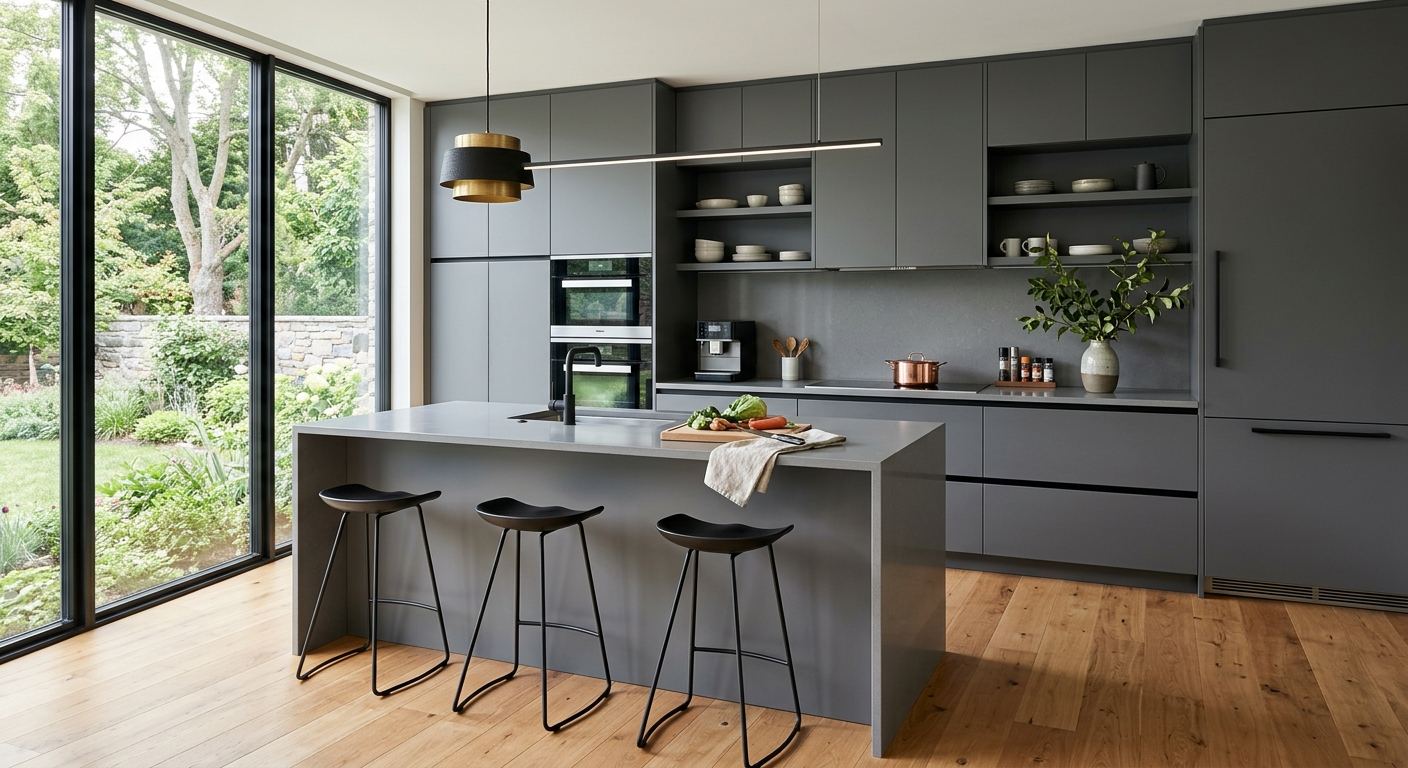
Kitchen renovation options and costs in Northward
Kitchen renovation in Northward is shaped less by weather and more by the Toronto-area payers and buyer expectations. With a population of 1,003 (Statistics Canada, 2021 Census), Northward’s housing stock is small enough that homeowners often rely on a tighter network of cabinet installers, countertop fabricators, and licensed trades, which can influence scheduling. In the broader Toronto economic region, higher-value markets tend to push finish selections upward—many owners aim their budgets toward custom-looking kitchens, upgraded appliances, and durable tops, with real projects commonly ranging from the mid-$20k zone for modest refreshes into the $80k+ territory for larger, design-forward renovations.
Even so, local “cost creep” still shows up. Ontario’s freeze–thaw cycles and humidity swings don’t directly raise cabinet pricing, but they can expose older subfloor and wall issues once cabinets come out, adding remediation before new installs. Likewise, many Northward kitchens sit in homes built across different eras; older wiring, undersized electrical capacity for island lighting, or missing insulation behind exterior walls can add labour time. Contractor availability can also tighten when multiple homeowners in the same mature neighbourhoods start renovations at once—especially around the Northward core area where open-concept knockdowns and appliance upgrades are popular.
Below is a practical comparison of common renovation tiers you’ll see in Northward, with typical durations and realistic budget ranges to help you line up quotes and expectations.
| Renovation Tier |
What's Included |
Typical Duration |
Price Range |
| Cosmetic refresh (paint, hardware, new appliances only) |
Cabinet painting or touch-ups (no cabinet box changes), new hardware, new fridge/range/dishwasher, caulking and basic trim updates |
3–7 days |
$25,000–$35,000 |
| Mid-range full renovation (new cabinets, counters, sink, tile) |
New semi-custom or stock cabinets, quartz or laminate counters, new sink and faucet, backsplash tile, vanity-style lighting updates, basic flooring refresh |
3–6 weeks |
$45,000–$70,000 |
| High-end full renovation (custom cabinets, stone counters, island) |
Fully custom millwork, premium stone/quartz, island with seating, upgraded appliance package, full-height backsplash or feature wall, coordinated lighting and trim, upgraded electrical scope |
6–12 weeks |
$75,000–$90,000 |
| Cabinet refacing only (new doors + drawer fronts, same boxes) |
New door and drawer fronts, new veneer/trim, new hardware, optional cabinet interior upgrades (shelves/pull-outs), paint/finish matching |
1–3 weeks |
$8,000–$25,000 |
| Countertop swap only (laminate to quartz or stone) |
Template, remove and dispose of existing top, install new quartz or stone, reconnect sink, reseal and patch minor countertop edges |
5–10 business days |
$3,000–$15,000 |
| Backsplash tile installation only |
Surface prep, tile install, grout/seal where needed, caulking around outlets and counters, optional minor backsplash drywall patch |
3–7 days |
$2,000–$10,000 |
Prices are estimates only and vary by project scope, site access and material selection.
What affects the price of kitchen renovation in Northward
Even when homeowners in Northward request the “same kitchen,” quotes can swing by 30–50% across the Toronto area and Ontario because the biggest drivers aren’t cosmetic—they’re structural, electrical, and finishing tier decisions. In the Toronto economic region, local home values and typical household purchasing power push many owners toward quartz or natural stone and semi-custom cabinetry in higher-value pockets, while more price-sensitive renovations often lean on laminate tops and stock or refaced cabinets to protect resale ROI.
Climate plays a secondary role. Freeze–thaw and seasonal humidity don’t usually inflate cabinet or countertop unit costs, but they can increase prep and repair time in older homes—especially around exterior walls, window surrounds, and the kitchen’s boundary with basements or crawlspaces. That’s why two kitchens priced the same “on paper” may come out different once we open the walls.
Concrete examples from Northward-area projects: (1) relocating an outlet run for under-cabinet lighting can add labour if the existing wiring route isn’t accessible, even when the backsplash is “just tile.” (2) Removing an undersized range hood duct run often reveals damaged drywall behind the cabinet soffit; patching and repainting can add days. (3) An island addition is frequently worth it when it solves storage and traffic flow, but it can trigger plumbing or gas adjustments—particularly if the kitchen previously had minimal service lines near the wall. That’s where your finish tier stops being the main cost driver and layout becomes the swing factor.
As a rule of thumb, cabinetry and countertop choices anchor the budget: a laminate-to-quartz upgrade can sit in the lower bands, while a fully custom look with stone counters and an island quickly moves into the $80k+ full-renovation zone. Next, use the table below to map those cost swings to real line items.
| Price Factor |
Why It Matters |
Cost Impact |
| Cabinet tier — stock vs. semi-custom vs. fully custom millwork |
Higher tiers add custom sizing, better hardware integration, and more labour-intensive fabrication and finishing |
Often shifts the project by roughly $10,000–$30,000 within the same layout |
| Countertop material — laminate vs. quartz vs. granite vs. stone |
Material pricing and fabrication complexity increase with thickness, edge profiles, and cut-outs |
Typical countertop installs can range about $3,000–$15,000 depending on material and scope |
| Layout change — wall removal, island add, plumbing/gas move |
Unexpected framing, venting/ducting, and line extensions create the most variable costs |
Can add $5,000–$25,000+ regardless of cabinet tier |
| Appliance package tier — builder vs. mid-range vs. pro-grade |
Power requirements, venting, and specialty dimensions affect install time and sometimes electrical/vent upgrades |
Appliances themselves can move the budget by several thousand dollars |
| Flooring — refinish existing vs. full replacement |
Removing cabinets may require subfloor repairs or matching new flooring transitions |
Often adds $2,000–$10,000 depending on damage and flooring type |
| Backsplash — ceramic tile vs. marble vs. full-height slab |
Natural stone and full-height installs increase material cost and labour for alignment |
Backsplash tile-only work commonly sits around $2,000–$10,000 |
| Electrical — new circuits for island, under-cabinet lighting |
Electrical work must meet Ontario safety requirements; hidden routing can increase labour |
Can add $1,500–$8,000 depending on circuit complexity |
| Permit fees and licensed trade requirements |
Permits and inspections increase compliance steps and schedule |
Usually adds a few hundred to several thousand dollars when major work is involved |
Permits & regulations in Ontario
In Ontario, simple swaps and finish work typically do not require permits: repainting cabinets, replacing cabinet doors or drawer fronts (refacing), swapping a countertop, and installing a new backsplash on existing walls usually fall into the “no permit” lane because they don’t alter plumbing, gas, structural elements, or electrical systems. Where homeowners in Northward get tripped up is assuming that “cosmetic” includes everything. If you move plumbing supply/drain lines, relocate a sink, change the venting/ducting connected to a hood, add new electrical circuits (common for island lighting or outlets), or you remove a load-bearing wall, permits and licensed trades are usually required. Gas-related adjustments must be done by a licensed gas fitter, and electrical work requires a licensed electrician with inspections.
Step-by-step verification for a contractor in Northward: (1) ask for the company’s Ontario licence details for the trades involved (or the trade licence number where applicable); (2) request an up-to-date certificate of insurance (liability) naming the correct parties; (3) confirm WSIB/WCB coverage for the contractor and any subcontractors—get the clearance/coverage documents, not just a verbal claim; (4) ensure the quote’s scope states who pulls the permit(s) and who covers inspection fees; and (5) keep everything in writing before work starts. If permit responsibility isn’t clearly stated in the contract, that’s a negotiation point before any demolition begins.
Cabinets, countertops and layout decisions in Northward
Your three biggest “decision levers” in a Northward kitchen renovation are cabinet tier, countertop material, and layout. Cabinet tier sets how fast the project moves and how tailored the final fit looks. Stock cabinets are typically the fastest and cheapest, semi-custom is the most common mid-range choice because you get better sizing and options without fully custom lead times, and custom cabinets give the tightest design fit and the highest-end look. Next is countertop material: laminate is budget-friendly but more prone to chipping at edges and needs careful care around heat; quartz offers consistent colour and strong daily durability; granite/natural stone can look premium but may require periodic sealing depending on the stone; butcher block warms the room visually but benefits from oiling and careful water management; marble is elegant but is more vulnerable to etching.
Finally, layout changes are where ROI can truly improve—or where budgets inflate. In the Toronto resale market, buyers increasingly expect practical storage and efficient traffic flow. Adding an island can justify costs when it improves seating and circulation, but moving a sink or stove may trigger plumbing/gas relocation and permit steps. In Northward kitchens built with older electrical routing and sometimes minimal capacity for modern lighting, island upgrades can also require additional electrical work—so we plan for those line items up front.
A practical dollar example: if you’re choosing between refacing plus laminate and a mid-range full replacement with quartz, the step-up might be only a few thousand dollars more, while the perceived upgrade value is often much higher. That’s why many homeowners aim for quartz in the $45,000–$70,000 full renovation band rather than settling for the lowest possible surface option—especially when resale buyers will be comparing finishes side-by-side.
| Option |
Durability |
Maintenance |
Best For |
Price Range |
| Stock cabinets (big-box) |
Durable for everyday use; limited custom sizing can create compromises at odd wall widths |
Low—routine cleaning and hardware care |
Speed-focused refreshes and simpler layouts |
$8,000–$25,000 |
| Semi-custom cabinets (local dealer) |
Strong daily durability; better internal organization options |
Low to moderate—depends on door finish and hardware type |
Most Northward renovations targeting strong look-to-cost balance |
$25,000–$50,000 |
| Custom cabinets (local millwork shop) |
Excellent durability and fit; supports specialized storage and premium finishes |
Low—built for long-term use, with care for finishes and hardware |
High-end designs, awkward spaces, and resale-targeted upgrades |
$50,000–$90,000 |
| Laminate countertop |
Good for budget use; edges can chip if exposed to impact or repeated heat |
Low—wipe clean; use trivets for hot items |
Lower-cost kitchens and projects staying in the mid-range |
$3,000–$8,000 |
| Quartz engineered countertop |
Very consistent and strong for daily wear; resists staining better than many natural options |
Low—routine cleaning; avoid impact on seams/edges |
Homeowners wanting a premium feel without excessive upkeep |
$7,000–$15,000 |
| Granite / natural stone countertop |
High durability; variations in hardness by stone type |
Moderate—often requires sealing depending on the stone and finish |
Premium look with unique patterning |
$9,000–$15,000 |
| Butcher block countertop |
Good durability but susceptible to water exposure around sinks and seams |
Moderate—regular oiling/sanding cycles |
Warm, traditional kitchens and lighter-use households |
$4,500–$10,000 |
| Marble countertop |
Beautiful but softer; can show etching and staining over time |
Higher—needs careful cleaning products and sealing vigilance |
Statement kitchens where aesthetics outweigh heavy daily wear |
$10,000–$15,000 |
How to choose a kitchen renovation contractor in Northward
Choosing the right contractor in Northward starts with verification. Ask who holds the Ontario licences for any trade categories involved (especially electrical and gas). Then confirm liability insurance by requesting a certificate of insurance with your project named where required. For worker protection, verify WSIB/WCB coverage: look for clearance letters or coverage verification documents that match the company name on the contract and any listed subcontractors. Don’t accept “we’re covered” without paperwork—during a kitchen demo, accidents happen fast.
Next, get 2–3 itemised written quotes. You want a breakdown that separates labour and materials (cabinets, countertop fabrication/install, tile/backsplash, electrical/plumbing labour, disposal, and finish carpentry). Avoid lump sums where major scopes are blended together, because it’s hard to compare. Read the scope carefully: what’s excluded (subfloor repairs, drywall patching, venting upgrades), whether permits are pulled and included, and whether disposal and protection during demolition are part of the price. Confirm warranty terms: workmanship warranty length, what’s covered for cabinets/countertops, and whether manufacturer warranties are transferable to you as the homeowner.
Finally, payment scheduling matters. Never pay more than 10–15% upfront; hold back a portion until the job is complete and punch list items are addressed. A proper timeline should include a start date, milestones (demo, rough-in, cabinet install, countertop templating, final inspection), and a completion estimate in writing.
- Ask for licence/coverage documents before signing; verify company names match the paperwork.
- Require itemised quotes (labour + materials + allowances) instead of one blended number.
- Confirm who pulls permits and schedules inspections, and whether permit fees are included.
- Ask whether disposal (dump fees) and protection (floor/cabinet guarding) are included.
- Check whether the quote includes electrical reconnection and fixture testing.
- Clarify countertop responsibility: templating, fabrication lead time, and crack/edge break protocol.
- Review demolition details: what gets removed, what gets retained, and how surfaces are prepped.
- Confirm backsplash scope: grout/sealer specifics, outlet refinishing, and caulking plan.
- Get warranty details in writing, including workmanship duration and exclusions.
- Set a payment schedule with milestones; keep a holdback until completion/punch list.
- Demand a written schedule with start date and estimated completion date.
- Ask for references from recent GTA projects with similar cabinet/countertop tiers.
Concrete red flags in Northward: (1) only providing a lump-sum without itemised line items; (2) refusing to put permit responsibility and scope exclusions in the contract; (3) asking for large deposits beyond 10–15% upfront; (4) missing or outdated WSIB/WCB and liability paperwork; and (5) promising countertop install dates without confirming template/fabrication lead times.
Frequently asked questions — kitchen renovation in Northward
Should I reface or replace my cabinets?
In Northward, refacing is usually the smart move when your cabinet boxes are solid, your layout is staying put, and you’re aiming to refresh the look without full demolition. Refacing can run roughly $8,000–$25,000 depending on door/drawer choices and whether you upgrade interiors. Replacing cabinets makes more sense if boxes are warped from past moisture swings, the layout is inefficient, or you want structural changes like new filler styles, pull-out pantry systems, or a new island plan. If you’re considering a broader full renovation budget (often $45,000–$70,000 for mid-range scope), replacement can help you future-proof storage and electrical planning for features like under-cabinet lighting. Bottom line: inspect the box condition and measure diagonals—if the frames are square and secure, refacing is typically the best value.
Do I need a permit for a kitchen renovation in Ontario?
Often, you don’t need a permit in Ontario for countertop swaps and cosmetic cabinet work, including refacing and backsplash tile installation, as long as you’re not moving plumbing, gas lines, structural walls, or adding new electrical circuits. You do typically need permits (and licensed trades) when the project includes relocating a sink (moving supply/drain lines), changing gas components (stove/range hood ducting connected to gas or any gas relocation), removing a load-bearing wall, or adding new electrical circuits—commonly for island outlets and under-cabinet lighting. In Northward specifically, many older homes have wiring routes that require careful planning, so permits become part of the process when electrical scope expands. Always confirm, in writing, who pulls permits and who covers inspection costs before signing—contract clarity prevents surprises mid-renovation.
What's the ROI on a kitchen renovation?
ROI in Ontario varies by neighbourhood demand and finish tier, so the biggest predictor is whether your renovation matches what buyers expect in the Toronto market. Higher-finish kitchens (quartz/stone tops, durable cabinetry, modern lighting, and practical layouts) generally hold value better than purely cosmetic changes, especially when you’re targeting long-term resale. In the Toronto economic region, many homeowners spend a meaningful share of their home value on kitchen upgrades in higher-value pockets, which supports ROI when the kitchen feels “move-in ready.” For budgeting, a mid-range full renovation often sits around $45,000–$70,000, while full high-end renovations can reach $75,000–$90,000. The best ROI usually comes when you improve function—storage, traffic flow, and lighting—rather than chasing the most expensive material.
How do I budget for a kitchen renovation?
Start by selecting your scope tier and then assign budget to each trade and material category. For many Northward homeowners, a “modest refresh” that stays largely cosmetic typically lands in the mid-$20k range when you include new appliances and finish labour; a mid-range full renovation (new cabinets, counters, sink, and tile) commonly sits around $45,000–$70,000. If you’re planning custom cabinetry, stone counters, and an island with upgraded electrical or plumbing, realistic budgets often move into the $75,000–$90,000 range. Then add a contingency for what we discover after demo—especially in older Toronto-area homes where wiring, subfloor condition, and duct/venting can differ from what’s visible. A good quote process will be itemised, show allowances, and clearly state what’s excluded, so your final number doesn’t drift.
Can I move my kitchen sink or stove?
Yes, you can move a sink or stove in Northward, but it’s not the same as “just relocating fixtures.” Moving the sink typically means extending or rerouting supply lines and drain lines, which usually triggers permitting and licensed plumbing work. Moving a stove can also impact gas connections and venting/hood configuration; gas work must be performed by a licensed gas fitter. From a cost perspective, the layout move is often the most unpredictable part of the job, sometimes adding thousands even if your cabinet and countertop tiers stay the same. If you’re considering a layout change, ask your contractor for a line-item breakdown for plumbing/gas/electrical modifications, and confirm the permit plan before demo. Done well, it can dramatically improve function, but budgets must include the hidden infrastructure.
What's the most cost-effective kitchen upgrade?
The most cost-effective upgrade is usually the one that delivers visible impact while minimizing demolition and infrastructure changes. In practice, many Northward homeowners get strong value from either (1) a cabinet refacing plus a hardware refresh, or (2) a countertop swap that upgrades from laminate to quartz. Refacing only can often fall in the $8,000–$25,000 range, and a countertop installation can commonly be around $3,000–$15,000 depending on the material and sink cut-outs. A backsplash tile install is also relatively contained and can come in around $2,000–$10,000, especially when the wall condition is good and outlets are already aligned. If your goal is maximum “new kitchen” look per dollar, prioritize cabinets and countertops first, then finish with lighting and a backsplash—rather than tearing out the whole kitchen for minor functional changes.