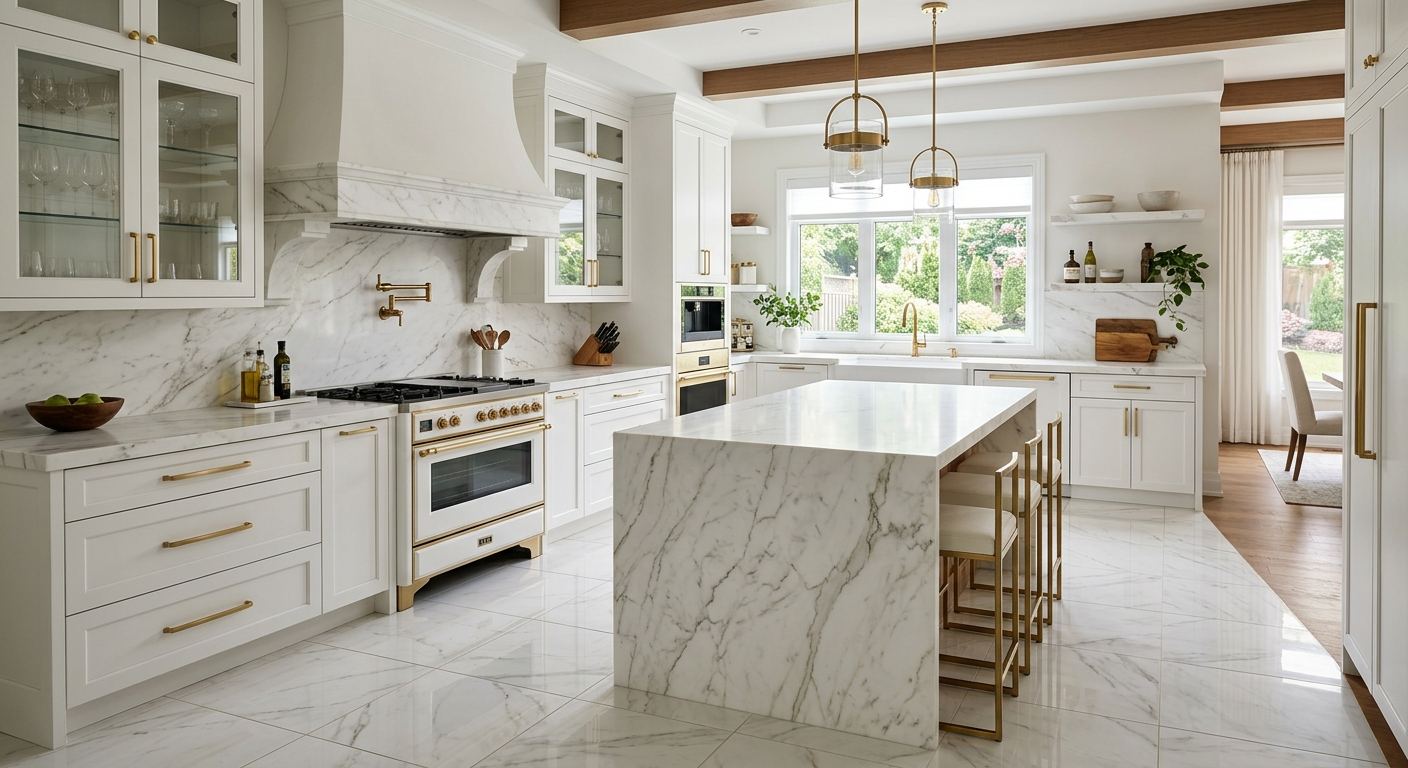
Kitchen renovation options and costs in New Edinburgh
New Edinburgh is a small, residential neighbourhood in the Toronto area, and kitchen renovations there tend to track the broader GTA market. With a 2021 population of 3,539 in the local profile (Statistics Canada, 2021 Census), most homeowners are renovating to improve daily function and resale appeal, not to overhaul entire home systems. In higher-value Toronto-adjacent pockets, buyers expect a more polished kitchen finish—often pushing owners toward better cabinetry and upgraded surfaces—because the renovation cost is more easily recovered on resale. That pattern is consistent across the Toronto economic region, where kitchen spend often aligns with the share of home value owners are willing to invest (commonly 8%–15% in higher-priced pockets).
Toronto’s costs are also shaped less by climate and more by market demand: labour availability, material lead times, and competition for skilled cabinet installers. That said, Ontario’s freeze–thaw cycles and humid summers can affect how quickly new caulking, grout, and sealants cure around backsplashes, windows, and exterior-facing walls—so good prep and ventilation matter. In New Edinburgh, trades are especially busy for work coming from nearby communities and corridors, where renovation interest is steady and cabinetry lead times can move the schedule.
If you’re comparing scope before you request bids, start with the budget tiers below, then match the option to how much you want to change the layout, finish quality, and plumbing or electrical.
| Renovation Tier |
What's Included |
Typical Duration |
Price Range |
| Cosmetic refresh (paint, hardware, new appliances only) |
Paint, cabinet hardware, appliance swap, minor caulking/touch-ups; no cabinet removal and no layout moves |
3–7 days |
$8,000–$18,000 |
| Mid-range full renovation (new cabinets, counters, sink, tile) |
New cabinets (stock or semi-custom), new countertops, sink + taps, backsplash tile, flooring touch-ups, electrical allowance |
3–5 weeks |
$25,000–$55,000 |
| High-end full renovation (custom cabinets, stone counters, island) |
Custom millwork, quartz or natural stone counters, island (often with upgraded electrical), full backsplash upgrade, premium fixtures |
6–10 weeks |
$70,000–$90,000+ |
| Cabinet refacing only (new doors + drawer fronts, same boxes) |
Refacing panels, new doors/drawers, updated hardware, optional under-cabinet lighting, cleanup + trim updates |
1–3 weeks |
$8,000–$30,000 |
| Countertop swap only (laminate to quartz or stone) |
Remove/replace laminate, new quartz or stone tops, sink cut-out, basic edge finishing, professional sealing as needed |
2–5 days |
$3,500–$15,000 |
| Backsplash tile installation only |
Surface prep, tile install, grout/seal (as required), matching to existing countertop and outlets |
3–7 days |
$2,000–$10,000 |
Prices are estimates only and vary by project scope, site access and material selection.
What affects the price of kitchen renovation in New Edinburgh
In Toronto and the wider Ontario market, the same “kitchen renovation” can land 30%–50% apart between quotes because contractors may price different risk levels: how much demolition is needed, how old wiring/plumbing is once walls open, and whether the design includes structural or mechanical changes. Local home values and household income are usually the stronger drivers than weather. In higher-value areas of the Toronto economic region, homeowners more often choose quartz or stone counters and semi-custom cabinetry because those finishes match buyer expectations and are easier to justify at resale. In more price-sensitive pockets, laminate counters and stock or refaced cabinets dominate, keeping the project closer to the low–mid price bands, like a mid-range full renovation at $25,000–$55,000.
In New Edinburgh specifically, there are a few practical conditions that commonly raise cost even when finish choices stay similar. First, older housing stock can hide surprises behind cabinets—misaligned walls, outdated shutoff valves, or undersized venting—so a “straight swap” becomes a rebuild of allowances. Second, adding an island or moving plumbing/gas increases subcontracting and scheduling (plumber/gas fitter + electrician coordination), and it’s the most unpredictable line item regardless of whether you’re in a $3,500–$15,000 countertop swap or a full kitchen. Third, Toronto’s summer humidity and winter cold can extend cure/finish times for grout and sealants in exterior-facing sections, which matters if the schedule is tight.
The takeaway: finish tier sets the baseline, but layout changes, service moves, and hidden site conditions often decide whether you stay in a refresh budget or move toward a higher-end build.
| Price Factor |
Why It Matters |
Cost Impact |
| Cabinet tier — stock vs. semi-custom vs. fully custom millwork |
Pricing changes with lead times, materials, tolerances, and whether boxes are built to your exact elevations |
Stock: lower; semi-custom: moderate; fully custom: can push a full kitchen into the high-end range |
| Countertop material — laminate vs. quartz vs. granite vs. stone |
Material and fabrication cost vary widely, and edges/sink cut-outs increase shop time |
Laminate keeps you in low–mid budgets; quartz/stone lifts overall project cost substantially |
| Layout change — wall removal, island add, plumbing/gas move |
Re-routing services and structural considerations add trades, inspections, and demolition complexity |
Often the biggest swing factor; can move you up 30%+ even with similar finishes |
| Appliance package tier — builder vs. mid-range vs. pro-grade |
Voltage requirements, venting, and installation specs vary; premium units may require more custom trim |
Smaller line item but can add meaningful totals when multiple appliances are upgraded |
| Flooring — refinish existing vs. full replacement |
Subfloor condition and matching transitions affect how much is replaced versus repaired |
Replacing floors increases demolition and install labour; refinishing can reduce scope |
| Backsplash — ceramic tile vs. marble vs. full-height slab |
Tile labour depends on layout and outlet detailing; slab work increases templating and sealing |
Full-height and stone backsplashes typically raise cost and schedule |
| Electrical — new circuits for island, under-cabinet lighting |
Adding circuits and code-compliant placements require an electrician and inspections |
Can add several thousand dollars and requires coordination to avoid rework |
| Permit fees and licensed trade requirements |
Certain work triggers permits and inspections; trade availability can affect timelines |
Costs are usually predictable, but the knock-on scheduling effect can increase project overhead |
Permits & regulations in Ontario
In Ontario, many “finish-only” kitchen updates do not need a building permit. For example, swapping cabinets in place, replacing countertops, installing a backsplash, or changing cabinet hardware and appliances typically fall under normal renovation work—no permit required. However, permits and licensed trade involvement are commonly required when you change the building systems: moving plumbing supply or drain lines, relocating a gas stove or making changes related to a range hood connected to gas, removing a load-bearing wall (or any work that affects structure), and adding new electrical circuits or relocating/adding panel capacity for an island or major appliance.
For homeowners in New Edinburgh, the safest approach is to verify three things before signing: (1) Ontario licence/registration for the relevant trade, (2) liability insurance, and (3) WSIB/WCB coverage (for workers). Start by asking the contractor for the company number and relevant licence details, then check the public online registry for active status. For insurance, request a certificate of insurance naming you as an additional insured where possible, and confirm the policy is current for the project dates. For WSIB/WCB, ask for a clearance letter or proof of coverage—your contractor should be able to provide it without hesitation. Finally, make sure the permit responsibility is clearly written into your contract (who pulls permits, who pays, and who schedules inspections), because that’s where misunderstandings most often happen.
Cabinets, countertops and layout decisions in New Edinburgh
The three most consequential decisions in a New Edinburgh kitchen renovation are cabinet tier, countertop material, and whether you change the layout. First, cabinet tier determines both look and schedule. Stock cabinets are the fastest and cheapest path because they’re ready-to-install; semi-custom (the most popular mid-range choice in the Toronto area) balances flexibility with budget; fully custom millwork costs more and takes longer, but it’s the best option when ceilings aren’t level, openings are awkward, or you want a true built-in look. Second, countertop material affects day-to-day life: laminate is budget-friendly but more vulnerable to heat and deep scratches; quartz offers strong stain resistance and consistent looks with relatively low maintenance; natural stone like granite/other stone adds character but needs proper sealing routines; butcher block can be warm and functional but requires oiling and mindful care around moisture; marble is premium and beautiful yet typically needs more careful maintenance to avoid etching.
Third, layout changes are where value is either earned or lost. An open-concept wall removal or adding an island can justify the cost if it creates real circulation and workspace that suits how your household lives now and during resale. But moving plumbing or gas can add significant complexity—especially on older homes where shutoffs, drain runs, and venting may not be ideal. In Toronto resale terms, buyers often expect an upgraded, cohesive finish package at higher price points, which is why quartz or stone plus semi-custom cabinets frequently shows up in renovations aiming for the $25,000–$55,000 band and beyond.
Concrete example: upgrading from laminate to quartz often costs enough that it pays off when you’re already doing a full renovation; it usually isn’t worth doing as a standalone change if your existing cabinets are dated and the layout still feels tight. If your aim is flexibility and longevity, align the countertop choice with the cabinet tier and the layout scope.
| Option |
Durability |
Maintenance |
Best For |
Price Range |
| Stock cabinets (big-box) |
Solid for most kitchens; durability depends on door construction and hardware |
Low—regular cleaning and gentle hardware care |
Fast turnaround, budget-controlled refreshes, straightforward layouts |
$8,000–$22,000 |
| Semi-custom cabinets (local dealer) |
Generally higher build quality and better fit; good long-term stability |
Low—typical cleaning, protect from standing water near sink |
Most homeowners aiming for a resale-friendly look without going fully custom |
$18,000–$40,000 |
| Custom cabinets (local millwork shop) |
Highest fit and detail; tailored storage and finishes |
Low—same care principles, plus attention to custom hardware alignment |
Irregular spaces, ceiling-height planning, premium finishes, unique storage needs |
$35,000–$70,000+ |
| Laminate countertop |
Moderate; heat and heavy impacts can damage the surface |
Easy everyday cleaning; use trivets and avoid long wet contact |
Keeping costs in check while updating the overall kitchen look |
$3,000–$7,000 |
| Quartz engineered countertop |
High; resistant to staining and everyday wear |
Low—routine cleaning; avoid abrasive pads |
Busy households, consistent look, and strong Toronto buyer appeal |
$5,500–$12,500 |
| Granite / natural stone countertop |
High; very durable with proper care |
Medium—seal as recommended and wipe spills promptly |
Premium look with natural variation and a classic resale feel |
$7,000–$15,000 |
| Butcher block countertop |
Medium to high; sensitive to moisture if not maintained |
Higher—periodic oiling and careful drying at seams |
Casual-to-modern kitchens where warmth matters and you’re willing to maintain |
$4,000–$10,000 |
| Marble countertop |
Premium but less forgiving; can etch and stain |
Higher—requires careful cleaning practices and sealing |
Design-forward kitchens where appearance is the priority |
$9,000–$18,000+ |
How to choose a kitchen renovation contractor in New Edinburgh
Choosing the right contractor matters as much as cabinet and countertop selection. In Ontario, you should verify licensing by trade (for example, electrical work is done by a licensed electrician, and gas-related changes require a licensed gas fitter). Ask for proof of liability insurance—request a certificate of insurance and confirm the coverage limits and project dates. For worker coverage, ensure WSIB/WCB coverage is in place; contractors should provide a clearance letter or acceptable proof upon request. If a contractor cannot produce paperwork promptly, that’s often a sign of organizational risk.
Next, get 2–3 itemised written quotes, not one lump sum. A proper quote separates labour and materials, and it lists inclusions and exclusions: permit pulling, disposal/garbage, protection of floors and finishes, whether plumbing/electrical rough-ins are included, and what happens if demolition uncovers damage. Confirm the warranty details: ask for the workmanship warranty length (in plain language), the product/manufacturer warranty, and whether warranties are transferable if you sell the home. For payment, avoid large deposits—typically keep upfront payments to about 10%–15% and use a holdback until the job is complete and the warranty walkthrough is done. Finally, ask for a written start date and completion estimate with key milestones so you can plan around cabinet and countertop lead times.
- Confirm Ontario trade licences where your scope includes plumbing, electrical, or gas-related work.
- Verify liability insurance is current and request the certificate in writing.
- Ask for WSIB/WCB clearance proof before demolition starts.
- Use itemised quotes (labour vs. materials) so apples-to-apples comparisons are possible.
- Check what’s included for demo, disposal, and site protection (dust barriers, tarps, coverings).
- Clarify permit responsibility and inspection scheduling—who pulls permits and who pays.
- Confirm electrical scope: circuits for an island, under-cabinet lighting, and outlet relocation.
- Confirm plumbing scope: shutoffs, valve replacements, sink installation details.
- Review countertop templating and fabrication assumptions (edge type, sink cut-out, finish).
- Ask about cabinet installation tolerances, shimming, and whether walls are levelled before install.
- Get warranty terms in writing, including what “workmanship” covers and timelines for service calls.
- Lock a payment schedule with a holdback until punch list completion and final walkthrough.
Red flags in New Edinburgh: (1) quotes without line items for cabinets, counters, electrical/plumbing allowances, and disposal; (2) refusal to provide insurance/WSIB/WCB proof; (3) vague warranty language or no warranty walkthrough; (4) “permit not needed” claims despite scope that moves plumbing, gas, structural walls, or adds circuits; and (5) asking for large upfront payments (well above 10%–15%) without a clear milestone schedule.
Frequently asked questions — kitchen renovation in New Edinburgh
Custom vs stock cabinets — is custom worth it?
In New Edinburgh, custom cabinets are worth it when your kitchen has real constraints—uneven walls, awkward angles, tall pantry goals, or you want a built-in look that matches the rest of the home. If your layout is fairly standard and you mainly need better storage and updated finishes, semi-custom usually gives you the best balance of fit and cost. Many homeowners find custom only “pays back” when the design improvements are visible and functional at resale. If you’re trying to keep the overall project within a full renovation budget like $25,000–$55,000, stock or semi-custom is typically the safer route. Custom is also harder to schedule due to fabrication timelines, so plan lead time early.
How do I choose a kitchen contractor in New Edinburgh?
Start by requiring itemised written quotes with clear inclusions: what demolition covers, whether disposal is included, whether permits are pulled, and exactly which trades are responsible for plumbing, electrical, and any gas-related work. In Ontario, also verify licensing for the relevant trade before anything begins—ask for proof and check the online registry for active status. Request liability insurance documentation and confirm WSIB/WCB coverage with a clearance letter or acceptable proof. Then compare quotes side-by-side; if one contractor is much cheaper, ask what they excluded (often electrical scope, countertop templating, or hidden condition allowances). A good contractor won’t pressure you into a large deposit and will provide a written timeline.
What order do kitchen renovation steps happen in?
Typically, the process starts with demolition and assessment, then rough-ins and inspections if you’re moving plumbing/electrical/gas. Cabinets are installed only after the walls are prepared and measurements are finalized. Countertops come after cabinets are securely levelled and set (so templates are accurate). Backsplashes are usually installed after countertops, because they finish neatly against the counter edge and align with outlet height. Flooring touch-ups or replacement are planned around this sequence—sometimes flooring is done before cabinetry if the plan requires it. In New Edinburgh (and across Ontario), good ventilation and curing time matter in summer and during humid stretches; contractors should schedule grout and sealant steps so they aren’t rushed. Your contract should include sequencing and inspection milestones.
Can I live at home during a kitchen renovation in New Edinburgh?
Often, yes—especially for a refresh, refacing, or a countertop/backsplash-only job. For a full mid-range renovation, plan for periods where the kitchen is partially usable, but expect the sink, stove, and prep surfaces to be out of commission during critical install days. In New Edinburgh, many homeowners choose to stay put because the work is scheduled in phases (rough-in, cabinet install, then countertop templating/fitting). If your scope includes plumbing/gas relocation or an island with new electrical circuits, you may have longer downtime in the “demo to rough-in” phase while inspections are completed. If you need full usability throughout, consider narrowing the scope first or timing work around travel. Even a $8,000–$30,000 cabinet refacing can still require temporary access planning for countertops and backsplash work.
Should I renovate my kitchen before selling in New Edinburgh?
If you’re planning to sell soon, the goal is to improve buyer appeal without overbuilding for the neighbourhood. In the Toronto economic region, buyers often reward kitchens with updated cabinetry hardware, cohesive surfaces, and a clean backsplash; that’s why mid-range renovations can be a strong value move when your layout already works. However, large structural changes or premium stone in a tight kitchen can be hard to recoup unless the layout is truly improved. If you’re selling within a short window, start with a scope that refreshes visible surfaces (paint, hardware, lighting, backsplash) and upgrades high-impact areas like countertops—many homeowners move from laminate to quartz while staying within realistic full renovation bands such as $25,000–$55,000. For older homes, consider a pre-renovation inspection to avoid surprises that delay sale timelines.
What's the most popular kitchen style in New Edinburgh right now?
Across New Edinburgh and the wider Toronto market, the most common “safe bet” styles right now are modern-transitional looks: shaker-style or simple slab cabinet fronts, warm neutrals (whites, greiges, light greys), and matte hardware finishes. Quartz counters in lighter tones with subtle veining remain a frequent choice because they photograph well and fit both contemporary and traditional homes. Many homeowners also add an island with seating and brighter under-cabinet lighting to increase perceived space—especially on main-floor layouts that need better flow. If you’re considering a higher-end finish tier, that trend aligns with custom or semi-custom millwork and premium stone/engineered surfaces. If you’re working within a mid-range budget like $70,000–$90,000+ for a larger high-end build, focus on consistent colours and durable materials for day-to-day use.