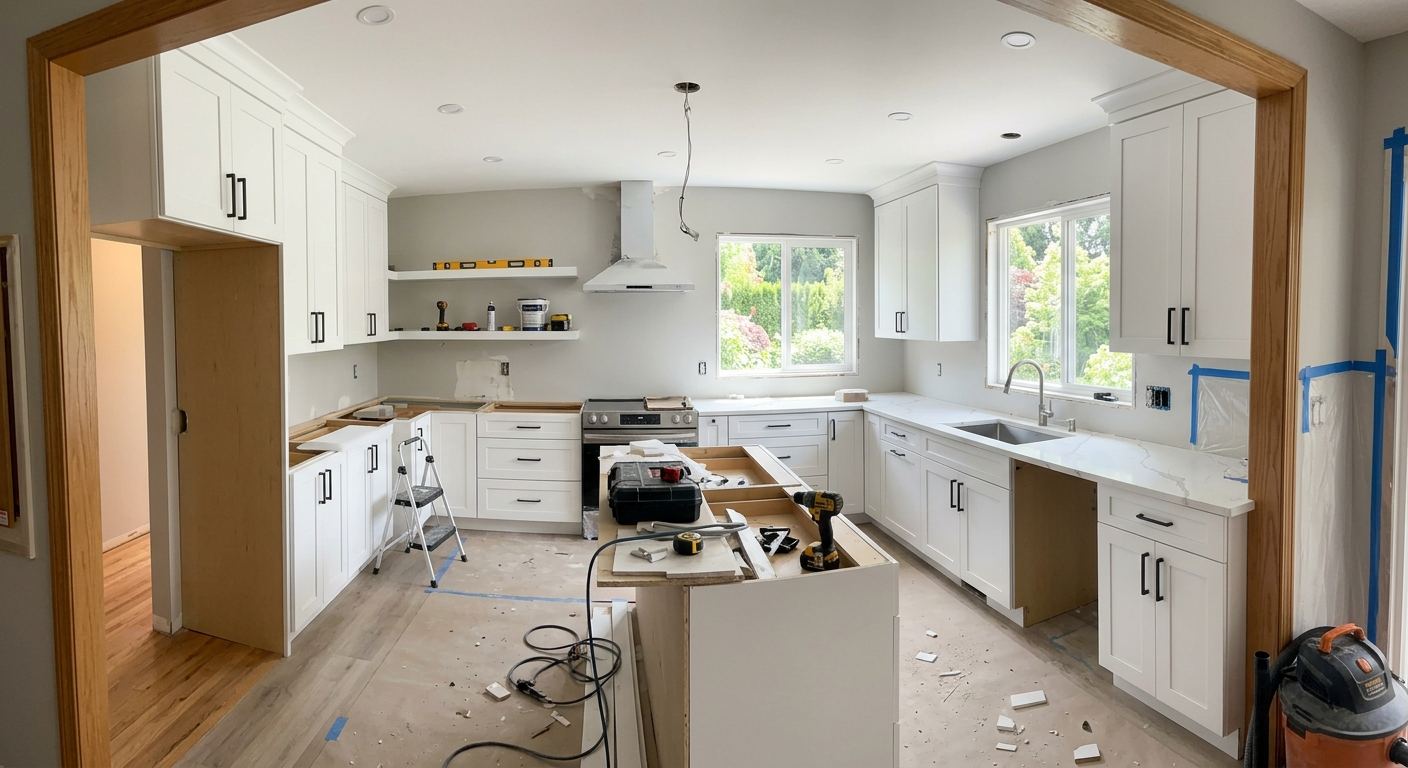
Kitchen renovation options and costs in North Riverdale
North Riverdale homeowners usually start their kitchen planning with a budget, then quickly realize cost in the Toronto economic region isn’t driven by weather—it’s driven by what buyers will pay and what finish tier feels “normal” for your home. In a community of 11,916 residents (Statistics Canada, 2021 Census), kitchen upgrades often track the broader Toronto market expectation: many owners are willing to spend for updated cabinetry, cleaner sightlines, and durable surfaces that look current at resale. At the same time, the project cost isn’t “one-size-fits-all.” In higher-value pockets of Toronto, owners commonly allocate roughly 8–15% of home value toward renovations, which nudges kitchens toward quartz, natural stone, and semi-custom or custom cabinetry. In more price-sensitive areas, the same layout goals may be achieved with refaced cabinets and laminate or mid-tier quartz.
Across Toronto, labour and material pricing are relatively steady, but quotes can differ because of scope risk: removing a wall, tying into plumbing/drains, updating electrical for island lighting, and matching finishes to older housing details. North Riverdale homes also skew older in many streetscapes, so expect some variability in subfloor flatness, cabinet-wall straightness, and existing venting routes—each one can add hours. Demand is especially strong around the vibrant areas near the downtown core where walkable living keeps resale pressure high. That’s where kitchen contractors see the most frequent mid-range to high-end build-outs.
Use the tiers below to compare what you’re paying for, then we’ll break down the price drivers and how permits affect your schedule.
| Renovation Tier |
What's Included |
Typical Duration |
Price Range |
| Cosmetic refresh (paint, hardware, new appliances only) |
Paint, new cabinet hardware, appliance swap, minor caulking/trim, haul-away |
3–7 days |
$4,000–$12,000 |
| Mid-range full renovation (new cabinets, counters, sink, tile) |
Semi-custom or good-stock cabinets, countertop, sink + faucet, backsplash tile, flooring spot work, electrical updates as needed |
2–4 weeks |
$25,000–$55,000 |
| High-end full renovation (custom cabinets, stone counters, island) |
Fully custom cabinetry, premium quartz/stone, island (often electrical + plumbing), full backsplash feature, coordinated lighting |
4–8 weeks |
$70,000–$90,000 |
| Cabinet refacing only (new doors + drawer fronts, same boxes) |
Door/drawer replacement, new veneer + hardware, interior touch-ups, re-seal and alignment |
1–2 weeks |
$8,000–$25,000 |
| Countertop swap only (laminate to quartz or stone) |
Remove old top, install new quartz/stone, sink cut-outs, new edge profile (if changing) |
3–7 days |
$4,000–$15,000 |
| Backsplash tile installation only |
Tile supply + install, surface prep, waterproofing where required, grout + caulking at edges |
2–5 days |
$2,000–$10,000 |
Prices are estimates only and vary by project scope, site access and material selection.
What affects the price of kitchen renovation in North Riverdale
In North Riverdale and across Ontario, two contractors can quote the “same” kitchen and still land 30–50% apart because Toronto pricing is scope-sensitive: hidden conditions, trade coordination, and how much you change the core systems. The finish tier matters—but so does risk. If you’re choosing quartz, stone edges, and semi-custom cabinetry in a higher-value Toronto market, owners often treat the renovation as a resale investment, so budgets commonly target the mid-range to high-end bands (for example, moving from $25,000–$55,000 toward $70,000–$90,000 when an island and upgraded materials are added). In lower-cost projects, laminate and stock cabinets dominate because they reduce exposure to delays and labour hours while still refreshing the room.
Local conditions in North Riverdale can raise or lower cost in practical ways. First, older housing stock can mean floors aren’t perfectly level; that can add hours for shimming and improved cabinet alignment before countertops are installed. Second, existing plumbing and venting runs sometimes don’t line up with modern island layouts, so moving drains or supplying lines can add the most unpredictable costs regardless of whether you pick laminate or stone. Third, electrical needs—like adding under-cabinet lighting or an island circuit—are frequently discovered late when homeowners decide on lighting after cabinets arrive.
Climate doesn’t usually drive budget the way it does for exterior work, but Ontario’s freeze-thaw cycles can affect how buildings have settled over time. That shows up as small wall/ceiling deviations that installers must correct. The takeaway: layout changes (removing a wall, adding an island, or moving a gas line) tend to swing the budget more than the countertop choice alone—then finish tier determines how far the final number stretches within the region.
| Price Factor |
Why It Matters |
Cost Impact |
| Cabinet tier — stock vs. semi-custom vs. fully custom millwork |
Pricing changes with material quality, door styles, internal organization, and lead times |
Can shift the total by ~$10,000–$35,000 depending on scope |
| Countertop material — laminate vs. quartz vs. granite vs. stone |
Material pricing, edging, and fabrication complexity vary widely |
Often ranges from ~$3,000 to $15,000+ for install alone |
| Layout change — wall removal, island add, plumbing/gas move |
More demolition, more trade coordination, and more inspection requirements |
Typically adds the biggest unpredictable swing—commonly several thousand to tens of thousands |
| Appliance package tier — builder vs. mid-range vs. pro-grade |
Higher tiers cost more and may require different electrical/venting provisions |
Can add ~$1,500–$8,000+ over a mid-range set |
| Flooring — refinish existing vs. full replacement |
Matching old surfaces or leveling for new cabinets changes labour and waste |
Often adds ~$2,000–$6,000+ depending on how extensive it is |
| Backsplash — ceramic tile vs. marble vs. full-height slab |
Slab installs require more precision; full-height adds time and material |
Usually ~$2,000–$10,000+ depending on coverage |
| Electrical — new circuits for island, under-cabinet lighting |
Licensed work, routing, and fixture coordination affects timeline |
Often ~$800–$3,500+ for added runs and fixtures |
| Permit fees and licensed trade requirements |
Permits and inspections add process time; missed scope costs can stall the build |
Can add ~$500–$2,500+ plus scheduling overhead |
Permits & regulations in Ontario
In Ontario, a straight swap of cabinets or countertops typically does not require a building permit, because you’re finishing the room without changing structural elements or core building services. A homeowner can often move forward with cabinet installation, countertop replacement, and backsplash work without permits—provided you’re not altering supply/drain lines, gas, or electrical circuits. Where costs and paperwork change is when you touch “systems,” not surfaces.
Work that typically does require permits and licensed trades includes: moving plumbing supply or drain lines (sink relocation, dishwasher/drain changes, venting adjustments), relocating gas appliances (stove/range) or doing gas-related work, removing a load-bearing wall or changing structural support, and adding new electrical circuits for island outlets, range hoods, or under-cabinet lighting. Gas work must be done by a licensed gas fitter, and electrical work must be done by a licensed electrician—both usually require inspection sign-off.
Step-by-step verification in North Riverdale: (1) Ask your contractor for their Ontario licence details and confirm they match the specific trade(s) performing the work. (2) Request a current certificate of insurance naming you as the beneficiary where applicable, and confirm they have liability coverage. (3) Ask for WSIB/WCB clearance letters or proof of coverage for the trades on site. (4) Confirm who is pulling permits in the written contract—don’t assume. For your peace of mind, review the scope line-by-line before you sign.
Cabinets, countertops and layout decisions in North Riverdale
The biggest three decisions in a North Riverdale kitchen renovation are: (1) cabinet tier, (2) countertop material, and (3) whether you change layout. These choices directly affect both the price band you land in and how well your kitchen performs in everyday use—long after installation day. In Toronto resale terms, buyers increasingly expect clean modern hardware, strong lighting, and durable tops that can handle daily spills and cooking heat.
Cabinet tier: stock cabinets are the fastest and cheapest; semi-custom is the sweet spot for most mid-range renovations; custom cabinetry is highest cost, best when you need a perfect fit around older framing or want a specific layout/organization. Countertops: laminate is budget-friendly and practical, while quartz is a popular middle ground for maintenance and durability. Granite/natural stone and marble add a premium look; they require more care and cost more to fabricate and install. Layout changes: open-concept wall removal or island additions can add value by improving flow, but the plumbing/gas/electrical scope can push budgets upward quickly. In older North Riverdale homes, expect potential surprises with venting routes and wall straightness that can affect how smoothly an island lands.
A realistic way to justify the upgrade: if you’re already in the mid-range ($25,000–$55,000) and you want an island, spend your “extra” where it matters most—upgraded cabinetry and a durable quartz top usually deliver better day-to-day ROI than moving to the highest-end stone on a small galley refresh. But if you’re moving toward $70,000–$90,000 with a larger footprint and premium finishes, stone countertops and custom millwork often make sense because the overall look is cohesive and resale-oriented.
Ontario’s indoor climate swings (dry winter air, summer humidity) don’t typically damage quartz, but older cabinets can be sensitive to poor humidity control and uneven surfaces—so cabinet installation quality is part of countertop performance.
| Option |
Durability |
Maintenance |
Best For |
Price Range |
| Stock cabinets (big-box) |
Solid for everyday use; tolerances can be less forgiving in older homes |
Low—clean with mild soap; handle replacement doors if needed |
Time-sensitive updates and tighter budgets |
$8,000–$20,000 |
| Semi-custom cabinets (local dealer) |
Better fit and organization; more styles to match modern Toronto expectations |
Low—keep hinges adjusted and wipe spills promptly |
Most full renovations in North Riverdale |
$15,000–$35,000 |
| Custom cabinets (local millwork shop) |
Highest fit quality; ideal for odd layouts and built-ins |
Low to moderate—finish quality matters; use recommended cleaners |
High-end builds and complex spaces |
$30,000–$55,000 |
| Laminate countertop |
Good impact resistance; edges and seams can be the weak points |
Wipe clean; avoid prolonged standing water at seams |
Cost-conscious refreshes |
$3,000–$8,000 |
| Quartz engineered countertop |
Very durable for daily cooking; resists stains and most household wear |
Low—no sealing; clean with pH-neutral products |
Busy kitchens that still look premium |
$6,000–$14,000 |
| Granite / natural stone countertop |
Hard and heat-tolerant; natural variability in pattern and strength |
Moderate—requires periodic sealing and careful edge maintenance |
Owners who want a true stone look |
$9,000–$18,000 |
| Butcher block countertop |
Strong for prep use; can scratch and needs protection |
Moderate—oil regularly; keep it dry around sinks |
Warm, modern farmhouse styles and lighter-duty kitchens |
$4,500–$12,000 |
| Marble countertop |
Beautiful but softer; can be more prone to etching |
Higher care—seal well, clean quickly for acids |
Statement kitchens where appearance matters most |
$10,000–$20,000 |
How to choose a kitchen renovation contractor in North Riverdale
Choosing the right contractor in North Riverdale comes down to verification, clarity, and risk control. Start with Ontario licensing and coverage. For the trades involved, confirm the correct licences are held for gas and electrical work, then ask for liability insurance documentation. Also request WSIB/WCB coverage confirmation (clearance letter or proof of coverage) for workers who will be on site. If they can’t provide this promptly, that’s a sign they aren’t set up for responsible jobsite management.
Next, get 2–3 itemised written quotes—not just a lump sum. You want a labour + materials breakdown that shows what’s included (demolition, protection, cabinet install, countertop fabrication/installation, backsplash prep, disposal, and any electrical/plumbing allowances). Ensure the scope includes permit pulling when required, plus who pays for inspections. Confirm disposal: kitchen renovations generate drywall, old cabinets, and packaging waste, and you don’t want that cost hiding in “miscellaneous.”
Warranty matters in Toronto’s rental-and-resale environment. Ask for workmanship warranty length (often covering installation issues), plus manufacturer warranties for cabinets/counters, and whether warranties are transferable if you sell the home. Finally, protect your cash flow: never pay more than 10–15% upfront, and hold back a portion until the job is complete and you’ve confirmed all finish details. Timeline should be written: start date, cabinet/counter lead times, and a completion estimate.
- Verify Ontario trade licensing for gas and electrical work (and ensure only licensed trades perform that scope).
- Ask for proof of liability insurance and confirm you’re covered for damages during the renovation.
- Request WSIB/WCB clearance letters or proof of coverage before demolition starts.
- Require 2–3 itemised quotes with line-by-line labour and materials.
- Confirm who pulls permits and whether permit fees are included in the quote.
- Ensure the quote states disposal/haul-away is included (or clearly priced).
- Check inclusions for under-cabinet lighting, venting routes, and electrical allowances for an island.
- Confirm countertop measurements are taken after cabinetry is set (not just “estimated”).
- Ask about caulking/sealing details at sink edges, backsplash edges, and countertop joints.
- Review the schedule: cabinet lead time, countertop fabrication lead time, and inspection windows.
- Get workmanship and product warranty details in writing (including transferability).
- Agree on payment milestones tied to measurable milestones—not vague “progress.”
In North Riverdale, red flags I see often include: quotes that don’t specify who handles permits, missing proof of insurance/WSIB coverage, unrealistic timelines that ignore cabinet/counter lead times, vague exclusions around electrical/plumbing changes, and “lowball” pricing that later appears as change orders after demolition.
Frequently asked questions — kitchen renovation in North Riverdale
How do I know if I need to update my kitchen plumbing in North Riverdale?
In North Riverdale, you usually don’t know until you inspect what’s already behind the walls—especially in older homes where supply shutoffs, drain slopes, or venting may not match current expectations. Signs include slow drains, recurring odours, corrosion at visible joints, loose connections under the sink, or inconsistent water temperature. If you’re keeping the sink in the same spot, many projects can proceed with a faucet swap and a minor refresh, but if you’re moving the sink or adding an island with plumbing, plan for new supply and drain connections. The most cost-effective approach is a plumbing assessment during demolition so you can budget accurately. This is where detailed quotes matter: a countertop-only job can stay near the countertop band, but plumbing relocation can push you into a full mid-range renovation scope (Statistics Canada, 2021 Census) level of investment.
What is the difference between a galley and open-concept kitchen?
A galley kitchen is a narrow, efficient layout with counters along two parallel walls and typically limited circulation. It’s common in older Toronto homes because framing and mechanicals were positioned around the original room plan. An open-concept kitchen removes a barrier to connect the kitchen to living space, which can improve sightlines and social flow—often a key selling point in the Toronto market. The key difference for cost is scope risk: converting to open-concept may involve structural support decisions, electrical rewiring, venting coordination, and potentially permit-required work if there’s a load-bearing wall. For budgeting, a galley refresh can often stay in the cosmetic range, but an open-concept change usually aligns more with mid-range to high-end renovations (for example $25,000–$55,000 or higher if an island is added).
How do I get accurate kitchen renovation quotes in North Riverdale?
Accurate quotes start with a clear scope and realistic assumptions. Ask for 2–3 itemised quotes that separate labour and materials, and insist they list what’s included: demolition, disposal/haul-away, cabinet installation, countertop fabrication and installation, backsplash prep, and any electrical/plumbing allowances. Make sure the quote states whether permits are included when required. For North Riverdale homes, include an allowance for site surprises like out-of-level floors or uneven walls—contractors who have done enough renovations will either note “site conditions may affect alignment/levelling” or include a contingency line. For reference, a modest refresh can land near the low end of the bands, while a mid-range full renovation with new cabinets and counters typically sits around $25,000–$55,000. If your quote to reach that number looks too good to be true, check whether exclusions are hiding in the fine print.
What's the best countertop material for a busy North Riverdale kitchen?
For a busy household in Ontario, quartz is often the best balance of durability and low maintenance. It resists staining well, handles daily cooking use, and doesn’t require the periodic sealing that natural stone may need. If you want the premium look and you’re budgeting within the full renovation bands, quartz commonly fits cleanly into the $6,000–$14,000 countertop install ranges depending on size, edge profiles, and sink cut-outs. Laminate is a valid choice for budget refreshes, but it’s more sensitive at seams and edges. Granite/natural stone is strong and heat-tolerant, but maintenance is higher due to sealing schedules. Marble looks spectacular but is more prone to etching from acids, so it’s better when you’re willing to be careful. The “best” choice also depends on whether you’re planning layout changes—if you’re moving the sink or adding an island, the countertop must align precisely to plumbing and electrical plans.
How do I add an island to my North Riverdale kitchen?
Adding an island usually starts with spacing and services. First measure clearances for walkways and confirm appliance ventilation/hood plans if the cooktop is moved or expanded. If the island will include a sink or dishwasher, you’ll need plumbing supply and drain relocation—this is typically where permits and licensed trade involvement become more complex in Ontario. If it’s a prep island without plumbing, you can still add electrical for outlets or under-cabinet lighting, which often requires a licensed electrician and inspection. Budget-wise, island projects can move you from a mid-range full renovation toward higher-end pricing if you’re also upgrading cabinetry and countertops. For many homeowners targeting the $70,000–$90,000 band, custom millwork plus stone and coordinated electrical is common. The best results come from planning the island layout early so cabinets, countertops, and services coordinate instead of fighting for space after demolition.
How much does a kitchen renovation cost in North Riverdale?
For North Riverdale homeowners, realistic kitchen budgets generally fall into the regional GTA bands depending on scope and finish tier. A cosmetic refresh (paint, hardware, and appliance swaps) can be relatively quick, while a mid-range full renovation with new cabinets, counters, sink, and tile often lands around $25,000–$55,000. If you’re planning fully custom cabinetry, premium stone, and a new island with upgraded lighting and services, budgets commonly move into the $70,000–$90,000 range. Cabinet refacing alone (new doors and drawer fronts with the same boxes) is typically $8,000–$25,000, and countertop swaps generally sit around $4,000–$15,000 depending on material. The final number depends most on whether you change layout and utilities, not the “weather.” For broader planning, keep in mind Toronto home values and resale expectations; many owners choose finish tiers that feel current for buyers.