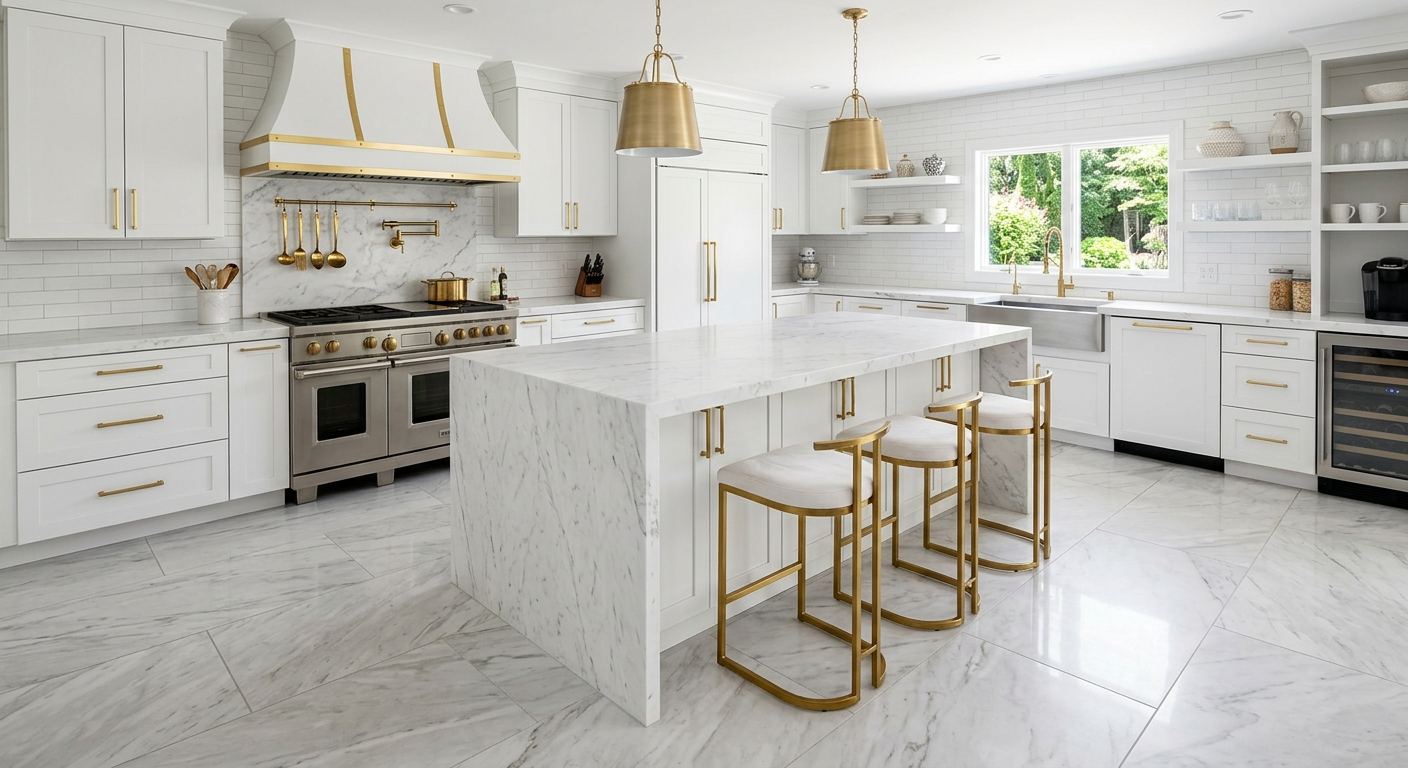
Kitchen renovation options and costs in Columbia
Kitchen renovations in Columbia, Ontario typically start with three practical questions: what you want to change, what you want to keep, and what finish tier you’re aiming for. With a population of 13,635 in 2021, Columbia is big enough to support multiple trades, but smaller than central Toronto, so demand concentrates when homeowners are updating older homes or preparing for resale (Statistics Canada, 2021 Census). In the Toronto economic region, higher-value pockets tend to push owners toward better long-wearing finishes, because kitchen upgrades are easier to justify on resale; that same reality shows up in typical project scopes across the region’s price bands. Toronto market dynamics matter more than weather: while Ontario winters demand good ventilation and moisture control around plumbing and tile edges, kitchen pricing is driven primarily by labour and material tiers rather than climate.
Contractor availability is also shaped by the GTA’s building rhythm. In spring and early summer, scheduling tightens because many homes are refreshed after winter wear, and that can influence turnaround time even when the budget is modest. In Columbia’s established residential areas—especially the older housing stock closer to Highway 7/9 corridors—remodels are in steady demand for better storage, safer electrical layouts, and counters that tolerate everyday cleaning. From there, budgets usually split into cosmetic-only refreshes, mid-range full renovations, or higher-end custom builds with stone and islands. Next, here’s how the most common options typically price out for homeowners in Columbia.
| Renovation Tier |
What's Included |
Typical Duration |
Price Range |
| Cosmetic refresh (paint, hardware, new appliances only) |
Cabinet paint or touch-ups (no box replacement), new hardware, new appliances, minor caulking/trim, optional paint on ceiling/walls |
1–3 weeks |
$2,500–$12,000 |
| Mid-range full renovation (new cabinets, counters, sink, tile) |
New semi-custom cabinets, quartz/laminate countertops, sink and taps, backsplash tile, flooring refresh/replace as needed, new ventilation check, basic electrical adjustments |
4–8 weeks |
$25,000–$60,000 |
| High-end full renovation (custom cabinets, stone counters, island) |
Custom cabinetry, natural stone (quartzite/granite/marble depending on selection), larger island with upgraded plumbing/electrical, full backsplash to ceiling height options, premium appliance package, more extensive tile and trim |
8–14 weeks |
$70,000–$90,000 |
| Cabinet refacing only (new doors + drawer fronts, same boxes) |
Refacing material (wood/veneer), new doors/drawer fronts, updated hardware, cabinet repaint/stain on visible components, minor adjustments for alignment |
2–4 weeks |
$8,000–$30,000 |
| Countertop swap only (laminate to quartz or stone) |
Removal of existing top, new quartz or stone installation, new undermount sink install if required, sealants and edge finishing, basic countertop backsplash transition if included |
3–7 days (plus scheduling) |
$3,000–$15,000 |
| Backsplash tile installation only |
Ceramic tile or stone tile, surface prep, waterproofing details where needed, grout/seal, caulking at walls/counters |
2–6 days |
$2,000–$10,000 |
Prices are estimates only and vary by project scope, site access and material selection.
What affects the price of kitchen renovation in Columbia
In Columbia and across the Toronto economic region, homeowners often see quote swings of 30–50% for what sounds like the “same” kitchen. The biggest reason isn’t climate—it’s finish tier, how much structural or mechanical work is triggered, and how a contractor prices labour risk (especially when walls conceal old wiring, plumbing, or damaged subfloor). In higher-value markets around the Toronto core and higher-priced parts of the region, many owners default to quartz or natural stone and semi-custom or custom cabinetry because the spend is easier to recover on resale; that’s why a modest $25,000–$60,000 mid-range kitchen can quickly move toward the $70,000–$90,000 high-end range once an island and premium stone are included.
In more price-sensitive areas of the GTA, many projects stay in the lower–mid range by using stock or refaced cabinets, laminate or good-value quartz, and limited layout changes—often protecting resale value without overspending. In Columbia, two local conditions frequently shift costs either up or down. First, older homes may have dated electrical or undersized supply runs, so adding an island’s outlets and under-cabinet lighting can create extra scope; second, kitchen ventilation and moisture control matters in Ontario winters, so we frequently plan for proper range hood venting and sealed transitions to prevent edge lifting and tile failures. That kind of “unseen” work is where quotes diverge.
Concrete examples: swapping from laminate to quartz usually lands in the $3,000–$15,000 countertop band, but if the old countertop includes moisture-damaged cabinetry, the same upgrade becomes a cabinet repair or replacement budget. Adding an island can look simple on paper, yet relocating plumbing or gas lines (when applicable) pushes projects toward the higher end, even if cabinets stay mid-range. Next, the cost drivers below break down what’s changing in those quotes.
| Price Factor |
Why It Matters |
Cost Impact |
| Cabinet tier — stock vs. semi-custom vs. fully custom millwork |
Tier changes how boxes are built, how doors/drawers fit, and how much time is spent on measurement, adjustment and installation |
Can shift a full kitchen from mid-range to high-end pricing, often the largest labour-and-material driver |
| Countertop material — laminate vs. quartz vs. granite vs. stone |
Material price, fabrication complexity, edge profiles, and weight affect install time and risk |
Typically moves projects within the $3,000–$15,000 countertop band and can add more if extra cut-outs are needed |
| Layout change — wall removal, island add, plumbing/gas move |
Structural and mechanical work introduces permitting, scheduling coordination and hidden-condition costs |
Often the main “unpredictable” cost; can push budgets upward regardless of finish tier |
| Appliance package tier — builder vs. mid-range vs. pro-grade |
Electrical requirements, venting, and rough-in changes vary by brand and configuration |
May add several thousand dollars and sometimes triggers electrical work or venting upgrades |
| Flooring — refinish existing vs. full replacement |
Subfloor condition and removal effort change labour time, dust control and disposal scope |
Lower-cost refresh keeps labour tighter; full replacement can increase time and cost materially |
| Backsplash — ceramic tile vs. marble vs. full-height slab |
Tile layout, stone slab handling, sealing and alignment requirements change installation complexity |
Typically falls in the $2,000–$10,000 range, with stone increasing the upper end |
| Electrical — new circuits for island, under-cabinet lighting |
New outlets, lighting, and sometimes vent fan control require licensed work and inspections |
Can add noticeable cost even when finishes are kept mid-range |
| Permit fees and licensed trade requirements |
Some moves require permits and coordinated licensed trades; inspection scheduling affects timelines |
Costs are usually incremental, but schedule and coordination can add more than homeowners expect |
Permits & regulations in Ontario
For Ontario homeowners in Columbia, most “like-for-like” kitchen swaps are straightforward. Typically, cabinet and countertop replacements (removing old counters and installing new tops; replacing cabinets with no changes to structural walls or major services) generally do not require permits. However, permitting is commonly triggered when you change the kitchen’s plumbing, gas, structure, or electrical load. That includes moving plumbing supply or drain lines, relocating a gas stove or range-related components (including a hood connection where gas is involved), removing a load-bearing wall, adding new electrical circuits for an island (outlets, lighting, or dedicated breakers), and any related work that requires inspections.
In practice, gas work must be done by a licensed gas fitter, and electrical work must be done by a licensed electrician; both typically require inspections after installation. Before signing a contract, confirm who is responsible for permits and licensed trades—this should be written directly in the scope (not just discussed verbally).
To verify a contractor in Ontario, start with their Ontario licence details via the applicable online registry/verification pages (or ask for the licence numbers and check them). Next, request a current certificate of insurance for liability coverage and confirm it covers renovation work at your address. For workers, ask about WSIB/WCB coverage documentation. Then, request proof of clearance where applicable. Finally, insist that any permit responsibilities and inspection milestones are stated in writing so your project doesn’t stall due to missed compliance steps.
Cabinets, countertops and layout decisions in Columbia
In Columbia kitchens, three decisions usually determine both the final cost and whether the renovation feels “worth it” when you live with it: (1) cabinet tier, (2) countertop material, and (3) layout changes. Cabinet tier is the foundation. Stock cabinets are typically the fastest and cheapest because they’re mass-produced and require less custom measuring; semi-custom cabinets are the most popular mid-range choice because they offer better options for storage, finishes and sizing; custom cabinets provide the tightest fit and best integration for unusual walls, but they’re the most expensive due to shop fabrication and detailed installation.
Countertop material is where durability meets day-to-day maintenance. Laminate is budget-friendly and can look very modern with the right pattern, but it’s more vulnerable to heat and can show wear at seams over time. Quartz engineered stone is popular because it resists staining and stands up well to Ontario’s busy kitchen routines (and the seasonal cleaning habits that come with winter). Granite/natural stone offers premium appearance and durability, while requiring sealing habits depending on the specific stone. Butcher block is warm and easy to repair, but it needs periodic oiling and extra attention to moisture management.
Layout changes justify cost when the space gain improves flow. Adding an island can be a resale-friendly upgrade, especially if it replaces a cramped work triangle with better circulation. The cost becomes justified when you’re also upgrading electrical and ventilation readiness. As a dollar example, moving from laminate to quartz is often within the $3,000–$15,000 countertop band; that change alone might keep you in a $25,000–$60,000 mid-range renovation. But if the island requires plumbing or a gas/venting-related move, budgets often climb toward the $70,000–$90,000 range even with mid-range cabinets—because coordination and labour risk rise.
| Option |
Durability |
Maintenance |
Best For |
Price Range |
| Stock cabinets (big-box) |
Solid performance for everyday use; limited customization means fit depends on your wall conditions |
Low maintenance; hinges and adjustments may be needed for older wall tolerances |
Fast refreshes and budget-conscious full renovations |
$8,000–$25,000 |
| Semi-custom cabinets (local dealer) |
Good strength and better sizing options; improved door/drawer hardware choices |
Low to moderate; keep up with normal hardware tightening and cleaning |
Most common Columbia mid-range renovations with better storage and appearance |
$15,000–$45,000 |
| Custom cabinets (local millwork shop) |
Best fit and build quality; designed around your exact room measurements |
Low maintenance; relies on quality finish products and careful installation |
High-end kitchens, unusual layouts, and homeowners staying long-term |
$35,000–$70,000 |
| Laminate countertop |
Durable for normal use but can be more sensitive to heat and impacts at seams |
Easy daily cleaning; avoid hot pans directly and protect seams from water |
Budget-first renovations and rental-style practicality |
$3,000–$7,500 |
| Quartz engineered countertop |
High resistance to staining and wear; consistent appearance across the surface |
Minimal—wipe clean and use cutting boards; no routine sealing required |
Busy households wanting a “set it and forget it” surface |
$6,000–$12,000 |
| Granite / natural stone countertop |
Excellent durability; natural patterning and strong heat resistance depending on the stone |
May require periodic sealing; clean with stone-appropriate products |
Owners seeking a premium, natural look with long-term performance |
$7,500–$15,000 |
| Butcher block countertop |
Strong but can dent/scratch; best performance with proper sealing and care |
Requires regular oiling/maintenance; must be protected from prolonged wetting |
Families who want a warm, repairable prep surface |
$5,000–$10,000 |
| Marble countertop |
Premium look; softer than some stones and can etch with acidic spills |
Higher maintenance; requires careful cleaning and often more sealing attention |
Low-to-moderate traffic kitchens or owners willing to maintain |
$10,000–$20,000 |
How to choose a kitchen renovation contractor in Columbia
Choosing the right contractor in Columbia (and across Ontario) is less about flashy photos and more about verifying paperwork, clarity of scope, and a realistic schedule. Start with Ontario licensing and proof of liability insurance—ask for the certificate of insurance and confirm the renovation work is covered for your project address. Next, request WSIB/WCB coverage documentation for their workers. If they can’t provide clear proof or consistently delay paperwork, that’s a warning sign.
Then collect 2–3 itemised written quotes. The best quotes break labour and materials down, rather than lumping everything into one number. You want to see cabinet supply, counter fabrication, tile labour, electrical/plumbing rough-ins (if any), disposal, and any site protection. Read the scope for exclusions: is drywall repair included, is old material disposal included, are permit fees included (when required), and does the quote include any rework if there are hidden issues after demo? A reputable contractor will describe how they handle surprises and what assumptions they’ve made.
Warranty matters. Ask for the workmanship warranty length and whether it’s transferable if you sell the home. Confirm manufacturer warranties on cabinets and countertops, and document what happens if a part fails early (door alignment, delamination, stone defects). For payment, keep it safe: never pay more than 10–15% upfront, and use a holdback until final completion. Finally, ensure the timeline includes a stated start date, milestone dates, and a completion estimate in writing.
- Ask for Ontario licence details and the correct trade classifications for the scope.
- Confirm liability insurance certificate is current and covers renovation activity at your address.
- Request WSIB/WCB coverage proof for workers before demo begins.
- Get 2–3 itemised quotes with labour and materials separated.
- Check if permits are required for any plumbing/gas/electrical changes and who pays.
- Verify whether disposal and dumpster/haul-away are included.
- Confirm drywall repair, paint touch-ups, and floor prep are in scope.
- Ask who is responsible for scheduling inspections (if permits apply).
- Review warranty terms for workmanship and product components; get it in writing.
- Set a payment schedule with no more than 10–15% upfront and a final holdback.
- Require a written timeline with start date and estimated completion date.
- Confirm materials lead times for cabinets and countertops so the schedule is realistic.
Red flags I commonly see with kitchen renovation contractors in Columbia include vague or non-itemised quotes, promises that “no permits are ever needed” even when plumbing/gas/electrical will move, refusal to provide insurance/WSIB documentation, and payment demands that exceed 10–15% upfront. Also watch for contractors who won’t put the scope, exclusions, warranty coverage, and timeline in writing—those omissions become costly change orders later.
Frequently asked questions — kitchen renovation in Columbia
How do I get accurate kitchen renovation quotes in Columbia?
To get accurate kitchen renovation quotes in Columbia, start by sharing the same baseline information with every contractor: your kitchen measurements, a clear wish list (what stays vs. what changes), and photos from multiple angles. Ask for 2–3 itemised written quotes that separate labour and materials, including cabinets, countertops, tile, electrical/plumbing adjustments (if any), disposal, and drywall/paint repair. If you’re considering an upgrade from laminate to quartz, keep it apples-to-apples and reference the typical countertop band of $3,000–$15,000 so bids aren’t inflated by scope differences. Finally, confirm who pulls permits when needed for plumbing/gas/electrical changes, and ask each contractor to list assumptions—especially around older wiring, subfloor condition, and ventilation. (Statistics Canada, 2021 Census) data isn’t used directly in the estimate, but it helps explain why lead times and contractor availability can vary with local demand.
What's the best countertop material for a busy Columbia kitchen?
For a busy Columbia kitchen, quartz engineered countertops are often the best balance of durability and low maintenance. Quartz is highly resistant to staining and stands up well to everyday prep, spills, and routine cleaning—important in Ontario homes where winter routines can mean more frequent cleaning and heavier use of the kitchen. Laminate can work well if you’re managing budget, but it’s more sensitive to heat and seam wear over time. If you’re targeting a mid-range renovation, most homeowners find quartz fits comfortably in the typical countertop budget of $6,000–$12,000, and it can still keep the overall kitchen within the $25,000–$60,000 mid-range band. Natural stone like granite is also durable, but it may need sealing depending on the exact stone. Marble is beautiful but generally requires more day-to-day care.
How do I add an island to my Columbia kitchen?
Adding an island in a Columbia kitchen usually starts with checking clearance and the existing services. If the island is “feature-only” (no sink, no dishwasher, no dedicated cooktop), the work is mostly cabinetry and countertop—often staying more manageable. But if you want a sink and taps in the island, or outlets/under-cabinet lighting, plan for plumbing/electrical scope and possible permit requirements. Layout-wise, target smooth traffic flow around the island and ensure the new electrical circuit plan supports your appliance needs (outlets, lighting, and any power requirements). If your island requires moving plumbing or gas-related components, it can push the project toward the higher end of the full renovation range—commonly into the $70,000–$90,000 territory when combined with premium finishes. The key is to have a contractor review rough-in locations before demo so you don’t discover service conflicts late in the schedule.
How much does a kitchen renovation cost in Columbia?
In Columbia, kitchen renovation costs typically land within the regional Toronto economic range, depending on finish tier and whether you change layout or services. A cosmetic refresh (paint, hardware, and new appliances only) is often relatively affordable, while full renovations swing widely. For a realistic full kitchen budget, many homeowners see projects in the $25,000–$90,000 range overall. A mid-range full renovation commonly falls around $25,000–$60,000 when you’re selecting semi-custom cabinets, updated counters, and tile without major structural changes. High-end full renovations with custom cabinetry, stone countertops, and an island typically move toward $70,000–$90,000. As you compare quotes, don’t just focus on the total—confirm what’s included for demolition, disposal, permits (if required), and any plumbing/electrical relocations. (Statistics Canada, 2021 Census) shows Columbia’s population size supports steady contracting capacity, but local demand cycles still affect scheduling and pricing.
How long does a kitchen renovation take in Columbia?
Timelines in Columbia depend mainly on cabinet and countertop lead times and whether the renovation requires permits or service relocations. A cosmetic refresh can be as quick as 1–3 weeks. Mid-range full renovations usually take about 4–8 weeks when cabinets and counters are available on schedule and the layout doesn’t require structural changes. High-end renovations with custom cabinetry and stone countertops can take 8–14 weeks, especially if an island involves more coordination with electrical and plumbing. Countertop-only swaps are often 3–7 days once materials are ready, but you still need scheduling time for fabrication and safe handling. If permits are required for plumbing, gas, load-bearing wall removal, or new electrical circuits, inspections can add time if paperwork isn’t filed promptly. In Ontario, build the schedule around licensed trade availability and inspection windows, and ask your contractor to provide a written start date and completion estimate.
Quartz vs granite countertops — which is better?
“Better” depends on how you use your kitchen. Quartz is often the best all-round choice for busy households in Ontario because it’s very resistant to staining and doesn’t usually require routine sealing. That makes day-to-day maintenance simpler, particularly in kitchens where spills happen and regular cleaning is the norm. Granite is also extremely durable and many types handle heat well, but natural stone can require sealing depending on the specific granite. Granite’s appeal is its unique natural pattern, and it can look especially premium in higher-value Toronto-area kitchens where homeowners select premium finishes. If you want a clear budget comparison, quartz commonly sits in the mid countertop band of $6,000–$12,000, while granite/natural stone commonly ranges within $7,500–$15,000. If you’re considering tradeoffs, choose quartz for consistency and low maintenance; choose granite when appearance variety and natural character are top priorities.